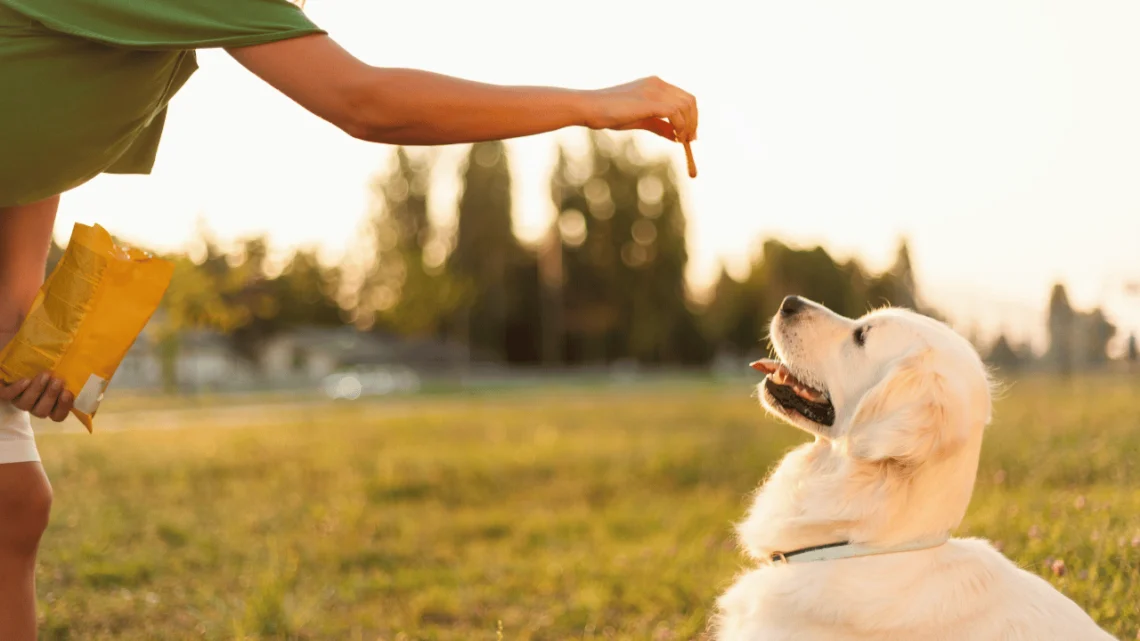
You know that moment when your dog stares at you like you’re a confusing TV remote with 500 buttons? Let’s fix that. Hand signals cut through noise, help in busy places, and make you look like a low-key dog-whisperer. Plus, they work wonders with distracted pups and senior dogs who don’t hear as well. Ready to chat with your hands?
Why Train With Hand Signals?

Hand signals give your dog clear, visual cues. Dogs watch our bodies all day—might as well use that superpower, right? Benefits you’ll notice fast:
- Clarity: Visual cues don’t get lost in noise or emotions.
- Consistency: Your hand stays calm even when your voice doesn’t.
- Accessibility: Great for dogs with hearing loss.
- Focus: Your dog learns to watch you—hello, better engagement.
How to Pair Words With Signals (Then Ditch the Words)

Start with both. Say the word, show the signal, reward. Then fade the word. Quick method:
- Say the cue (“Sit”), give the hand signal, reward the behavior.
- Repeat until your dog clearly connects the two.
- Whisper the word, keep the signal big and obvious.
- Drop the word entirely. Reward only when your dog responds to the signal.
Pro tip: Keep your hands steady and your signals distinct. Wavy jazz hands confuse dogs. And people, honestly.
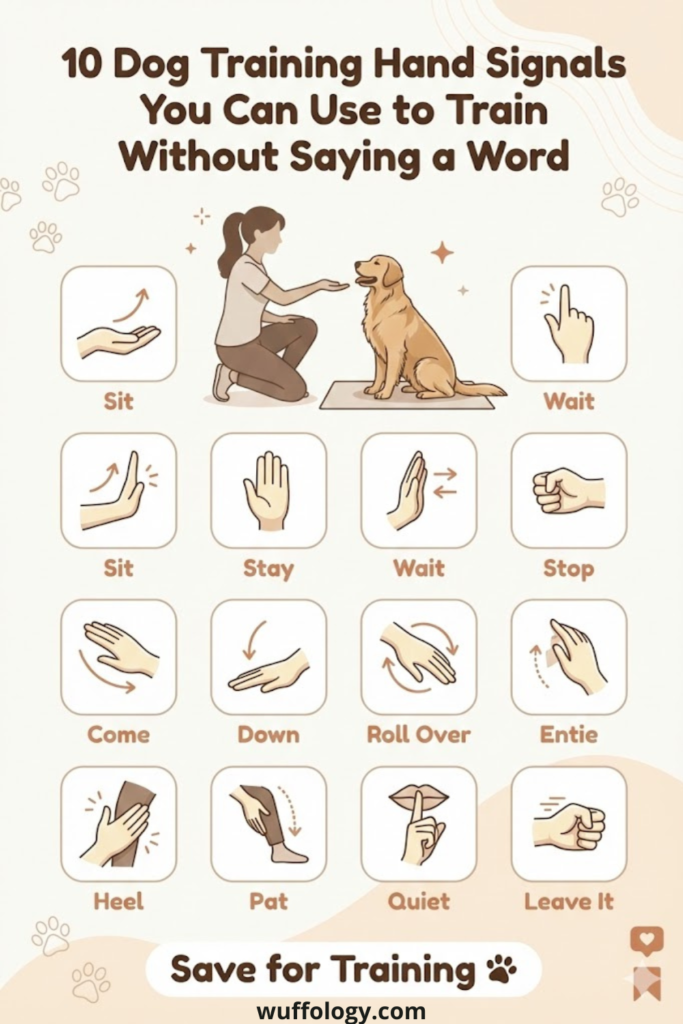
10 Hand Signals Every Dog Can Learn

Below are widely used signals that feel natural. You can tweak them, but keep them consistent.
1) Sit
Signal: Palm facing up, move your hand up from your waist to chest level like you’re lifting a tray. Why it works: That upward motion invites your dog to rock back into a sit. Common mistake: Wiggling fingers. Keep it smooth and simple.
2) Down
Signal: Point to the floor with your index finger, palm down, then sweep your hand down. Trainer tip: Lure with a treat at first. Move from nose to ground, then fade the food. IMO: “Down” pairs nicely after “Sit” when your dog already settles a bit.
3) Stay
Signal: Open palm facing your dog like a stop sign. How to build it: One second, reward. Three seconds, reward. Step away, reward. FYI: Add duration and distance slowly. Overachievers break stays.
4) Come (Recall)
Signal: Arm outstretched to the side, then sweep your hand in toward your chest. Make it irresistible: High-value treats, party voice, and praise when they get to you. Never do this: Call your dog to scold or end fun. Recall should always pay.
5) Stand
Signal: Palm up, move your hand slightly forward from your body like you’re presenting a plate. Use case: Grooming, vet visits, or wiping muddy paws without a wrestling match.
6) Heel (Walk at My Side)
Signal: Pat your hip or sweep your hand backward along your side. Teach it: Reward often when your dog lines up with your leg. Short sessions. Sarcasm moment: No, your dog won’t magically heel just because you bought a fancy leash.
7) Leave It
Signal: Closed fist held slightly out to the side. Training flow: Show fist with low-value item, reward eye contact back to you, then upgrade the challenge. Real-life win: Dodging chicken bones on the sidewalk like a pro.
8) Drop It
Signal: Palm down, open hand toward the ground, gentle downward flick. Pro tip: Trade up. Offer a better treat the second they release the item. Important: Don’t chase. You’ll turn it into a fun game you will never win.
9) Wait
Signal: Index finger raised like “one sec.” When to use: Doorways, car exits, crossing streets. Difference from Stay: Wait = brief pause until released. Stay = hold position until you return.
10) Free/Release
Signal: Open your hand and sweep it outward like “you’re free.” Why it matters: Signals only stick when you clearly mark the end. IMO: A solid release cue makes your whole training system cleaner.
Make Your Signals Crystal Clear

Small changes make or break your results. Keep it visual, crisp, and repeatable.
- One signal = one behavior. Don’t reuse gestures.
- Start big, then shrink. Teach with exaggerated motions, then make them subtle.
- Practice in short bursts. Two to five minutes beats marathon sessions.
- Pay fast. Reward within one second when your dog nails it.
- Face your dog. Stand still when teaching. Add movement later.
Hand Positioning 101
– Keep your elbows relaxed and your hands at your dog’s eye level when possible. – Avoid stacking signals accidentally (like lifting your hand while saying “Down”). – If your dog looks confused, simplify, step closer, and slow down.
Training Games to Lock It In
Make practice fun so your dog doesn’t zone out faster than a teen in algebra.
Signal Switch
Give two easy cues back to back—Sit, Down, Sit—reward each. Build speed slowly. You’ll sharpen responsiveness without shouting.
Find My Eyes
Stand quietly and wait for eye contact. Flash a hand signal, reward. This creates a tight “look at me, read my hands, get paid” loop.
Silent Sequences
Run a mini routine—Heel, Sit, Down, Stay, Release—using only hand signals. Keep it short and upbeat. You’re building your silent language.
Troubleshooting When Your Dog Says “Huh?”
Common hiccups and fixes:
- Dog ignores you outside: Your environment is too hard. Go back a step and increase rewards.
- Dog only responds indoors: Practice near mild distractions, then level up.
- Dog stares at your treat hand: Hide treats in a pouch; pay from the other hand randomly.
- Dog confuses signals: Make gestures more distinct. Change hand height or direction.
- Dog anticipates: Mix the order. Toss in a “Wait” or “Release” to reset the brain.
FAQ
Do I need standard signals, or can I make my own?
You can make your own. Just keep them consistent and easy to see. If multiple people handle your dog, agree on the same signals to avoid muddy communication.
How long does it take to switch from verbal to hand signals?
Most dogs connect the dots in a week or two with daily practice. Tougher cues like Heel or reliable Stay can take longer. Keep sessions short and fun, and you’ll get there.
Can I use hand signals with a puppy?
Absolutely. Puppies read body language well. Pair signals with treats and gentle guidance, and you’ll build focus early without overwhelming them.
Will my dog still understand me if I talk sometimes?
Yes. You can mix both. Over time, your dog will likely respond faster to whichever cue you’ve practiced more consistently. When you want silence, just keep your mouth zipped.
My dog is older and losing hearing—will this still work?
Hand signals shine for senior dogs. Use bigger, slower motions and reward generously. Add a gentle floor tap or vibration to get attention if needed.
What if my dog doesn’t look at me?
Teach a “Watch me” with a treat lure to your eyes, then reward. Practice indoors first. Once your dog checks in reliably, your signals will land.
Wrap-Up: Talk Less, Train More
Hand signals turn training into a clean, calm conversation. Pick your 10, stay consistent, and reward like you mean it. A few minutes a day, and your dog will read your hands like subtitles—no yelling required. And hey, FYI: looking like a dog-training ninja feels pretty great.