Chihuahuas may be tiny, but their paws do big work—balancing big personalities, zoomies, and dramatic stares. Those little toe beans deal with hot sidewalks, rough trails, and cold floors more than we realize. Want your Chi sprinting happily for years?
Start with the paws. Let’s get into the good stuff—simple, practical tips you can actually use today.
Know Your Chihuahua’s Paw Anatomy (Without Getting Weird About It)
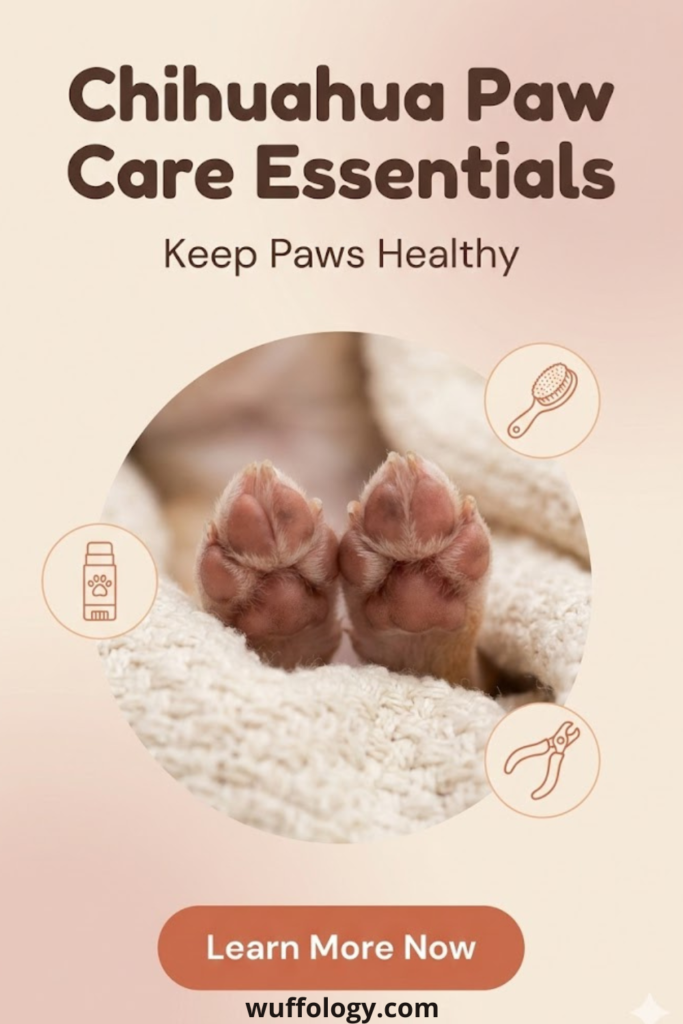
You don’t need a vet degree, just a quick tour. Chis have four digital pads and a larger metacarpal/metatarsal pad—aka the main squishy part.
Nails protect the toes, dewclaws (if present) act like thumbs, and fur between pads keeps dirt out. Why this matters: If you know what’s normal, you’ll catch problems fast. A cracked pad? Odd redness?
Nail growing sideways? You’ll spot it early and help your pup avoid pain.
What “normal” looks like
- Pads: smooth, slightly rough texture—no deep cracks
- Nails: short enough that they don’t click loudly on floors
- Webbing/fur: tidy, not matted
- Smell: neutral, not funky (yes, go ahead and sniff)
Make Paw Checks a Weekly Ritual
Quick weekly inspections save you vet bills. Sit with your Chi, keep it chill, and look at each paw.
Flex the toes gently and check between pads—stuff hides there. Look for:
- Redness, swelling, or warm spots
- Splinters, foxtails, pebbles, or stickers
- Cracked pads or flaking skin
- Excessive licking (your Chi will snitch on themselves)
Make handling fun
Pair paw handling with treats and praise. Short sessions work best. You’re not wrestling an alligator—keep it calm, and they’ll tolerate more over time.
Trim Nails Like a Pro (Or Close Enough)
Long nails mess with posture and put pressure on joints—especially in small breeds.
Aim for trims every 2–3 weeks. IMO, little-and-often beats the big scary trim day. Tools that help:
- Guillotine or scissor-style clippers made for small dogs
- Nail grinder for smoothing edges (great for nervous humans)
- Styptic powder or cornstarch (for unexpected quick nicks)
How short is short?
Cut a tiny bit at a time until you see the lighter inner circle (before the quick). For black nails, trim in tiny slices.
If nails still click-clack on tile, go a bit shorter next session.
Moisturize Those Beans (But Not With Your Hand Cream)
Dry, cracked pads hurt. Use a dog-safe balm—especially after walks on hot, cold, or rough surfaces. Apply a thin layer and distract your Chi for a minute so they don’t lick it off immediately.
Puzzle toy = your best friend. Good times to use balm:
- After walks on concrete
- Before winter walks (to create a barrier)
- At bedtime as a mini spa routine
DIY vs store-bought
You can DIY with coconut oil and shea butter, but store-bought paw balms usually absorb better and feel less greasy. FYI: avoid products with tea tree oil for dogs.
Protect Against Heat, Cold, and Chemicals
Hot asphalt can fry little paws. Cold, salted sidewalks can sting and crack them.
Your Chi won’t tell you—they’ll just prance, freeze, or lick like crazy. Read the signs. Heat test: Place your hand on the pavement for 7 seconds. Too hot for your hand = too hot for their pads.
Walk early or late, stick to grass, or use booties. Winter tips:
- Use booties or paw wax to block ice melt chemicals
- Rinse and dry paws after walks to remove salt
- Trim fur between pads to prevent ice balls
Booties: yes or no?
Some Chis act like you glued bricks to their feet. Try lightweight, flexible booties with a snug (not tight) fit. Start indoors, reward like crazy, and keep sessions short.
Not every dog accepts them, and that’s okay—paw wax and smart route choices also work.
Keep the Fur Between Pads Neat
Overgrown fur traps debris and reduces traction. Use blunt-tipped scissors or a small trimmer to tidy the hair level with the pads. Take it slow, work with good lighting, and break it into tiny sessions if your Chi gets squirmy. Pro tip: If your Chi has sensitive skin, a small battery trimmer beats scissors.
Less risk, cleaner lines. IMO, worth the investment.
Choose Smart Surfaces and Smarter Routes
Your Chi doesn’t need a 10K on gravel. Vary surfaces to build pad toughness gently.
Grass and dirt are paw-friendly; fresh asphalt and salt-treated sidewalks are not. On walks:
- Stick to shaded paths in summer
- Avoid sharp gravel and broken sidewalks
- Use parks or trails with softer footing
After-walk rinse
A quick rinse and pat-dry removes allergens, salt, and chemicals. Keep a small towel and a spray bottle by the door. Two minutes now, fewer vet visits later.
Address Licking and Chewing Early
Constant paw chewing isn’t just “quirky Chi behavior.” It often signals allergies, pain, or boredom.
Look for redness between toes and dark staining on fur. Common triggers:
- Environmental allergies (grass, pollen, dust)
- Food sensitivities
- Yeast or bacterial infections
- Anxiety or under-stimulation
If the licking continues for more than a few days, call your vet. You might need medicated wipes, allergy meds, or a food trial. Meanwhile, add enrichment—snuffle mats, short training sessions, and puzzle toys can reduce anxious licking.
Build a Simple Paw-Care Kit
Keep your essentials in one place so you actually use them.
Nothing fancy—just reliable and ready. What to include:
- Nail clippers or grinder
- Paw balm or wax
- Blunt-tipped scissors or mini trimmer
- Styptic powder
- Dog-safe antiseptic wipes
- Small towel and spray bottle
Store it near your leash. You’ll remember to do quick touch-ups before and after walks.
Teach Cooperative Care (Your Future Self Will Thank You)
Train your Chi to offer a paw instead of snatching it. Use a mat, reward calmness, and gradually increase duration.
Think “spa day,” not “WWE smackdown.” Simple routine:
- Touch paw, treat
- Hold paw for 2 seconds, treat
- Clip one nail, treat
- Breaks often, party after
Hate nail trims? Hire a groomer or vet tech for quick visits. No shame.
Your dog doesn’t care who trims as long as it’s low stress.
FAQ
How often should I trim my Chihuahua’s nails?
Every 2–3 weeks works for most Chis. If you hear clicking on hard floors or see the nail touching the ground when they stand, trim sooner. Frequent small trims keep the quick short and make life easier.
What’s the best paw balm for Chihuahuas?
Look for a dog-specific balm with ingredients like shea butter, beeswax, and vitamin E.
It should absorb fast and be lick-safe. Avoid strong essential oils. Apply before winter walks and after rough-surface outings.
My Chihuahua hates booties.
Any alternatives?
Yes—use a paw wax barrier and choose shaded or grassy routes. Keep walks short during extreme temps, and rinse paws after. You can also work on gradual bootie desensitization with tiny sessions and big rewards.
Are cracked pads normal?
Minor dryness happens, but deep cracks or bleeding never counts as normal.
Start moisturizing, reduce rough surfaces for a bit, and see your vet if cracks persist or your Chi seems sore.
Why does my Chi keep licking one paw?
One-paw focus often points to a localized issue: a splinter, bug bite, or small cut. Check between the toes and pads closely. If you see redness, swelling, or your dog won’t let you touch it, call the vet.
Can diet affect paw health?
Absolutely.
A balanced diet supports skin integrity and reduces some allergy symptoms. Omega-3s (from fish oil) can help with inflammation and itchiness. FYI: Always ask your vet before adding supplements.
Conclusion
Tiny paws, big responsibility—but it doesn’t need to be complicated.
Keep nails short, protect from harsh surfaces, moisturize, and do quick weekly checks. With a little routine and a few treats, your Chihuahua will strut happily—and, IMO, with even more swagger.