Older dogs don’t need pity—they need smart fuel. When joints start complaining and naps get longer, the right homemade meals can revive energy and comfort. You don’t need a culinary degree (or a sous-chef Poodle). You just need simple recipes, smart supplements, and consistency. Let’s cook for bouncy tails and comfy hips.
Senior Dog Nutrition 101 (Without the Boring Lecture)
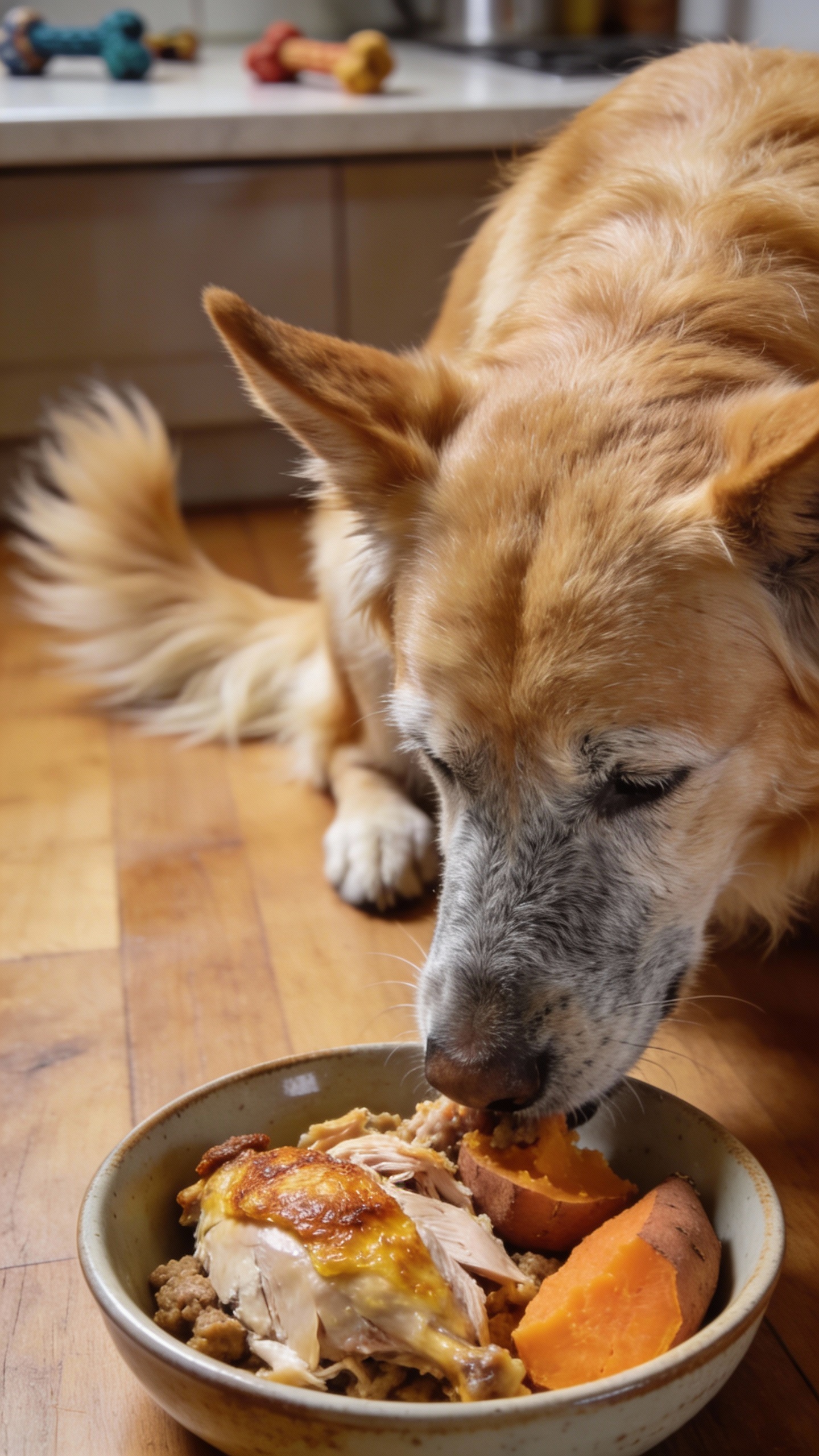
Senior pups need calories that actually do something—like support joints, fight inflammation, and maintain lean muscle. Empty carbs? Hard pass. Key goals for a senior dog’s menu:
- High-quality protein to preserve muscle
- Anti-inflammatory fats (hello, omega-3s)
- Gentle carbs for steady energy
- Joint support from ingredients like bone broth, green-lipped mussel, or turmeric
- Easy-to-digest fiber for gut health
Senior-Safe Add-Ons That Actually Help
- Fish oil (EPA/DHA): anti-inflammatory for joints and brain
- Green-lipped mussel: powerhouse joint support
- Bone broth: hydration + collagen support
- Probiotics: happy gut, better nutrient absorption
- Turmeric + black pepper: light anti-inflammatory kick
7 Best Homemade Dog Food Recipes for Energy and Joint Health
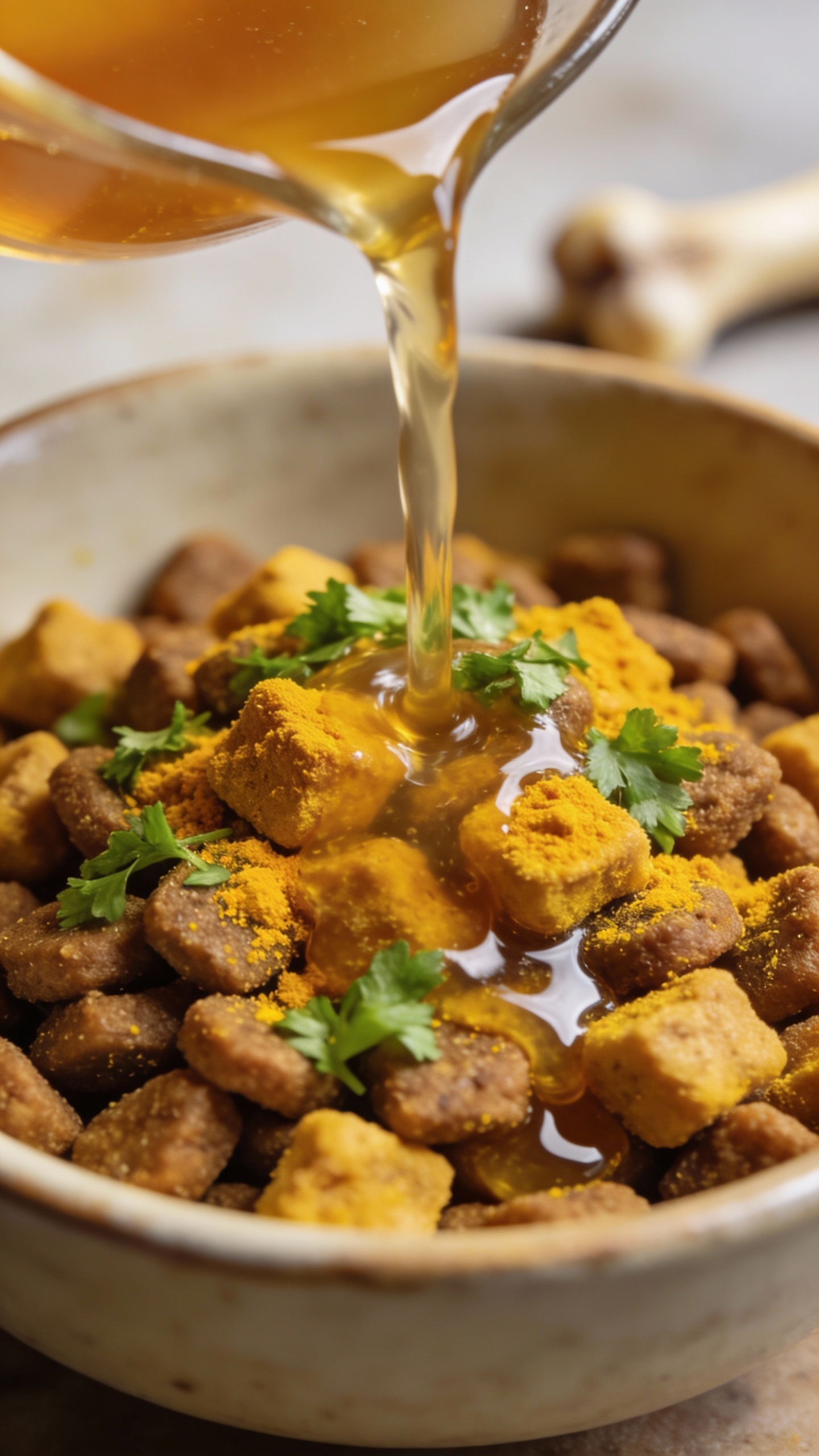
FYI: Always introduce new foods slowly and adjust portions for your dog’s size, activity level, and your vet’s advice. These are balanced templates, but you should still rotate proteins and add a quality canine multivitamin for complete micronutrients.
1) Salmon & Sweet Potato Power Bowl
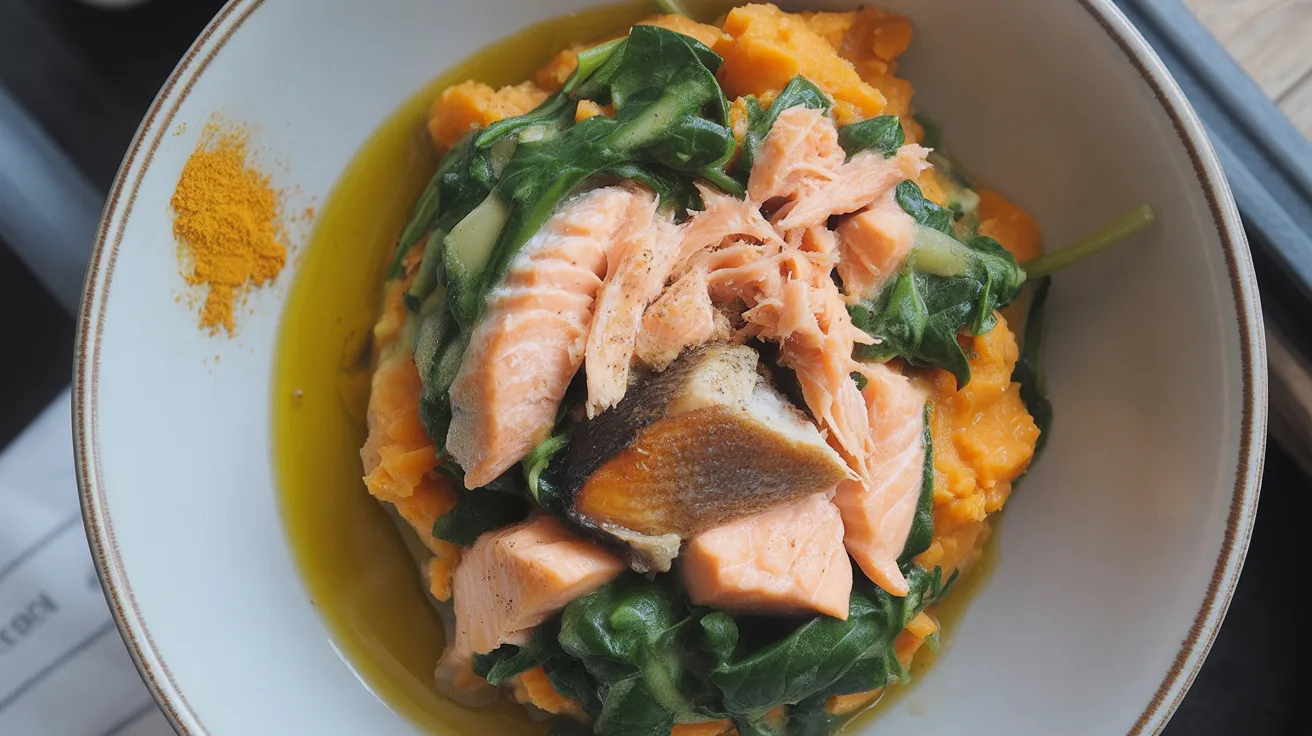
Why it rocks: Omega-3s for joints, steady carbs for energy.
- Cooked, flaked salmon (boneless, skin on is great)
- Mashed sweet potato
- Steamed spinach or kale (chopped)
- Olive oil or fish oil drizzle
- Optional: pinch of turmeric + black pepper
Tip: Start with roughly 40% protein, 40% carbs, 20% veggies by volume and tweak as needed.
2) Turkey, Quinoa & Greens Joint Saver
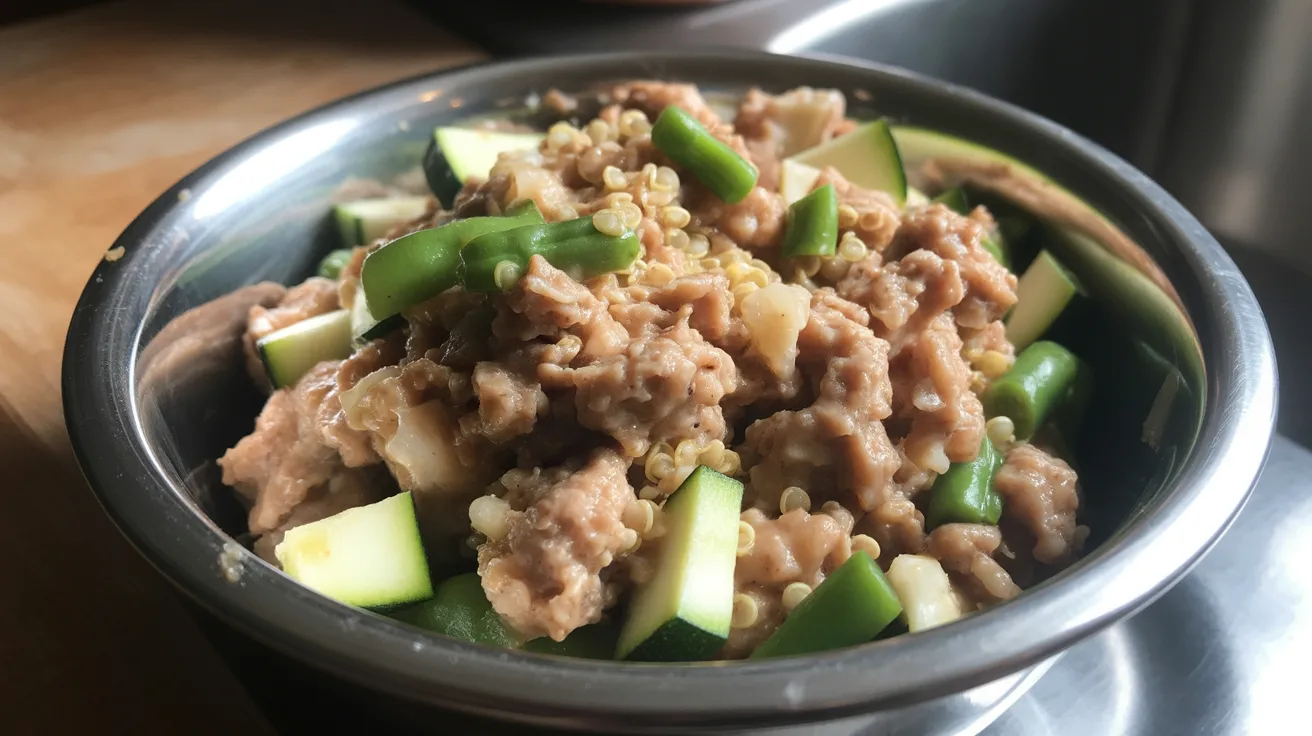
Why it rocks: Lean protein + quinoa for amino acids and fiber.
- Ground turkey (cooked, drained)
- Cooked quinoa
- Chopped green beans and zucchini
- Low-sodium bone broth splash
- Optional: green-lipped mussel powder
IMO: This one’s great for pups who gain weight easily.
3) Beef & Pumpkin Muscle Builder
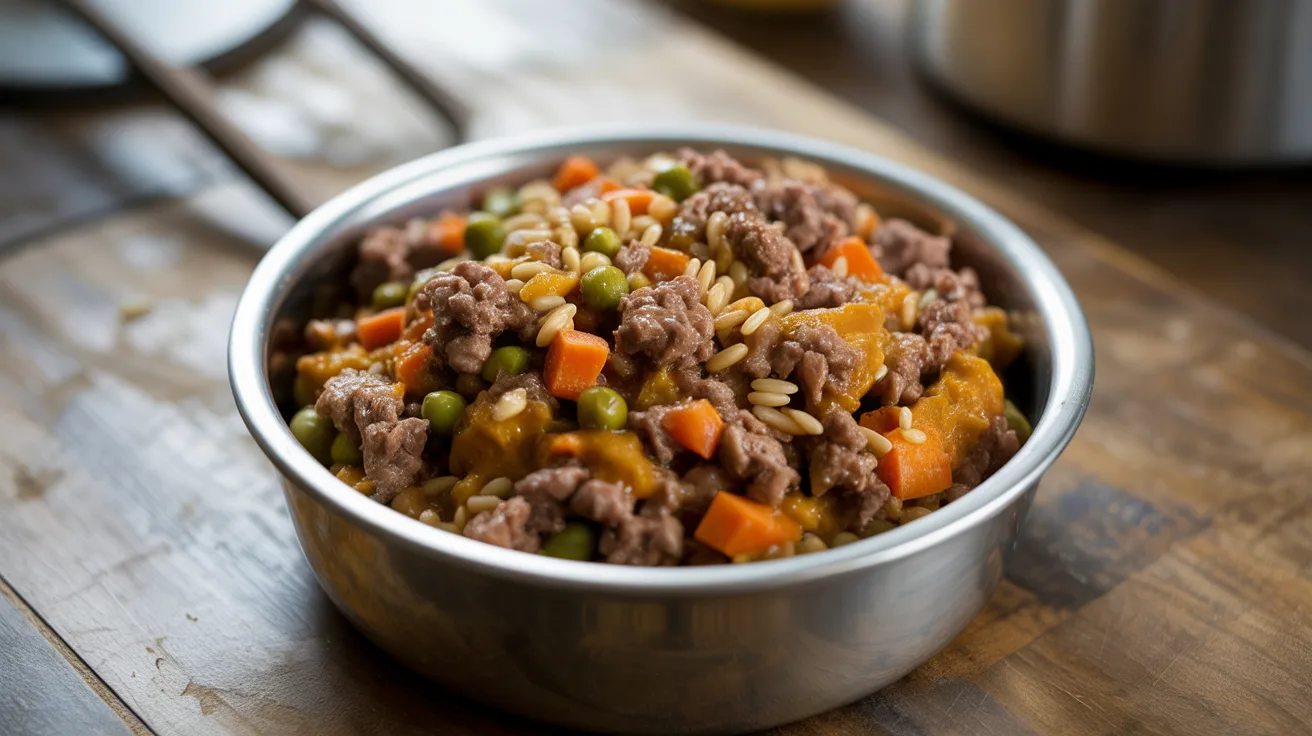
Why it rocks: Higher iron content and pumpkin for gut health.
- Lean ground beef (90%+)
- Cooked brown rice or barley
- Pumpkin puree (plain, not pie filling)
- Peas and carrots (steamed)
- Fish oil for balance
Pro move: Brown the beef, drain well, then simmer briefly in bone broth to keep it moist for older teeth.
4) Chicken & Oats Comfort Stew
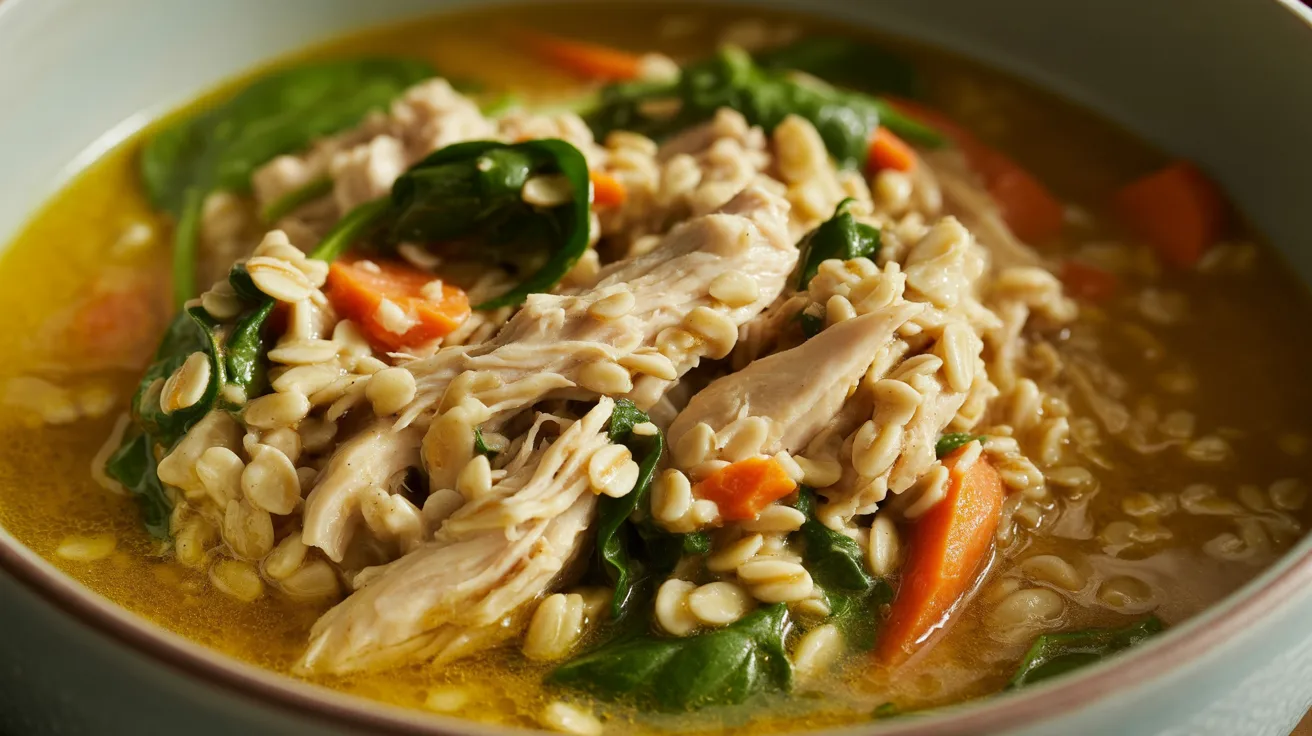
Why it rocks: Gentle on the belly, easy to chew, and hydrating.
- Shredded boiled chicken breast and thighs
- Rolled oats (cooked soft)
- Chopped spinach and shredded carrot
- Bone broth to stew it all
- Turmeric + a little coconut oil
Texture tip: Add extra broth for dogs with dental issues.
5) Lamb, Lentils & Blueberries Anti-Inflammatory Mix
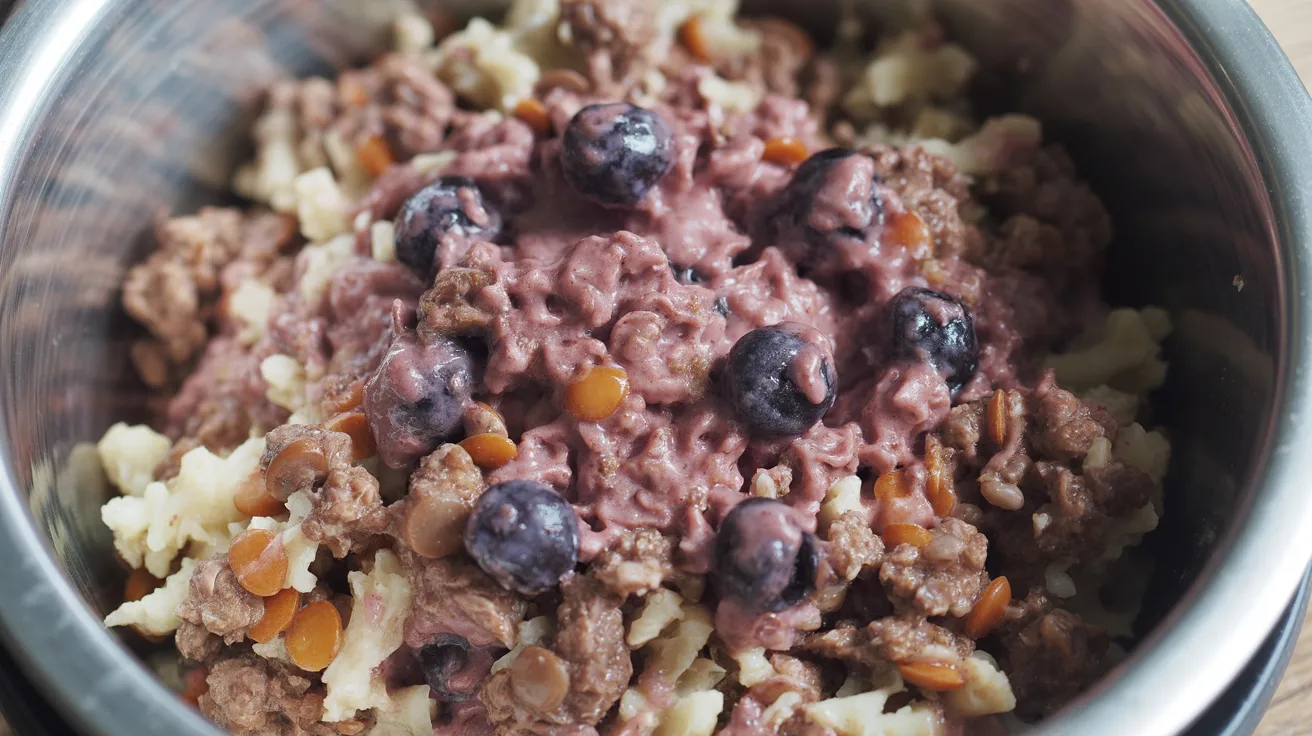
Why it rocks: Lamb adds flavor for picky seniors; blueberries bring antioxidants.
- Lean ground lamb (cooked, drained)
- Cooked red lentils (very soft)
- Cauliflower rice (lightly steamed)
- Blueberries (a few, mashed)
- Fish oil or algae oil
Note: Lentils can cause gas; introduce slowly.
6) Sardine & Brown Rice Brain Booster
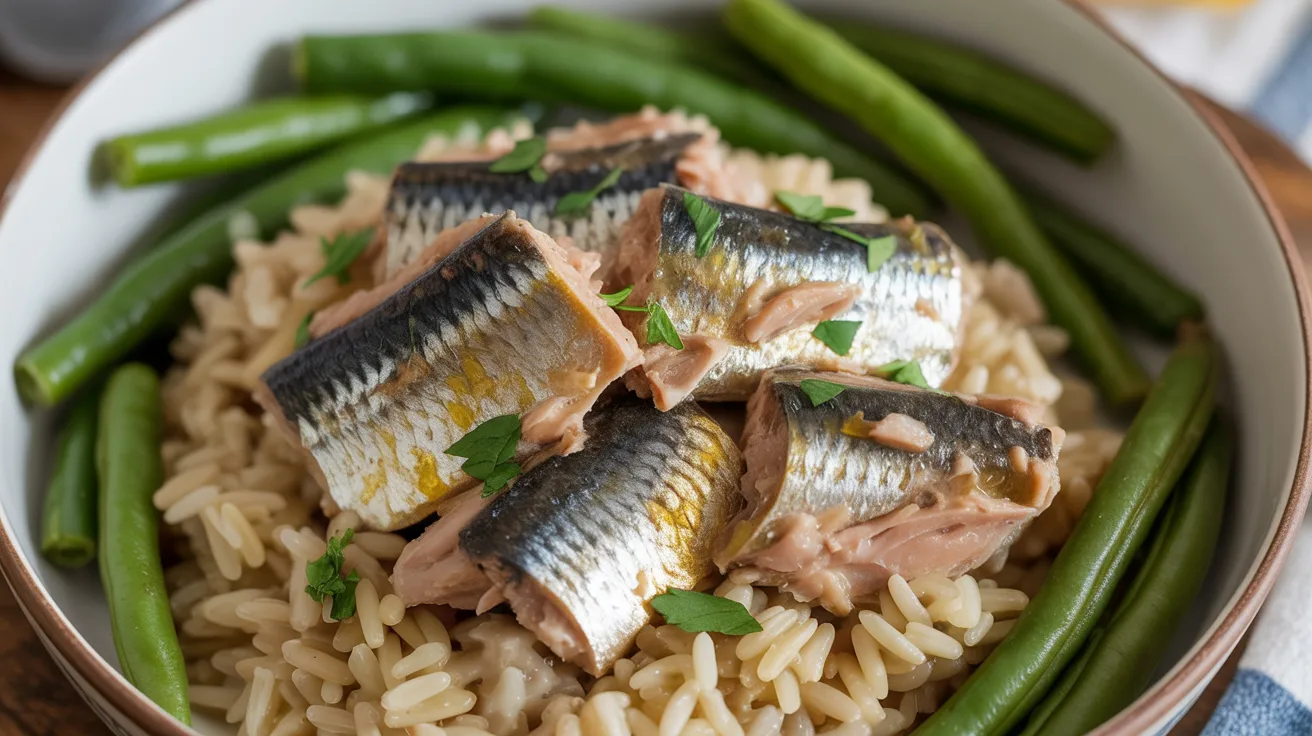
Why it rocks: Sardines = omega-3 bomb for joints and cognition.
- Canned sardines in water (no salt, drained)
- Cooked brown rice
- Chopped parsley (breath bonus)
- Green beans (steamed)
- Drizzle of olive oil
Easy win: This is the fastest recipe in the bunch.
7) Egg, Cottage Cheese & Veggie Scramble
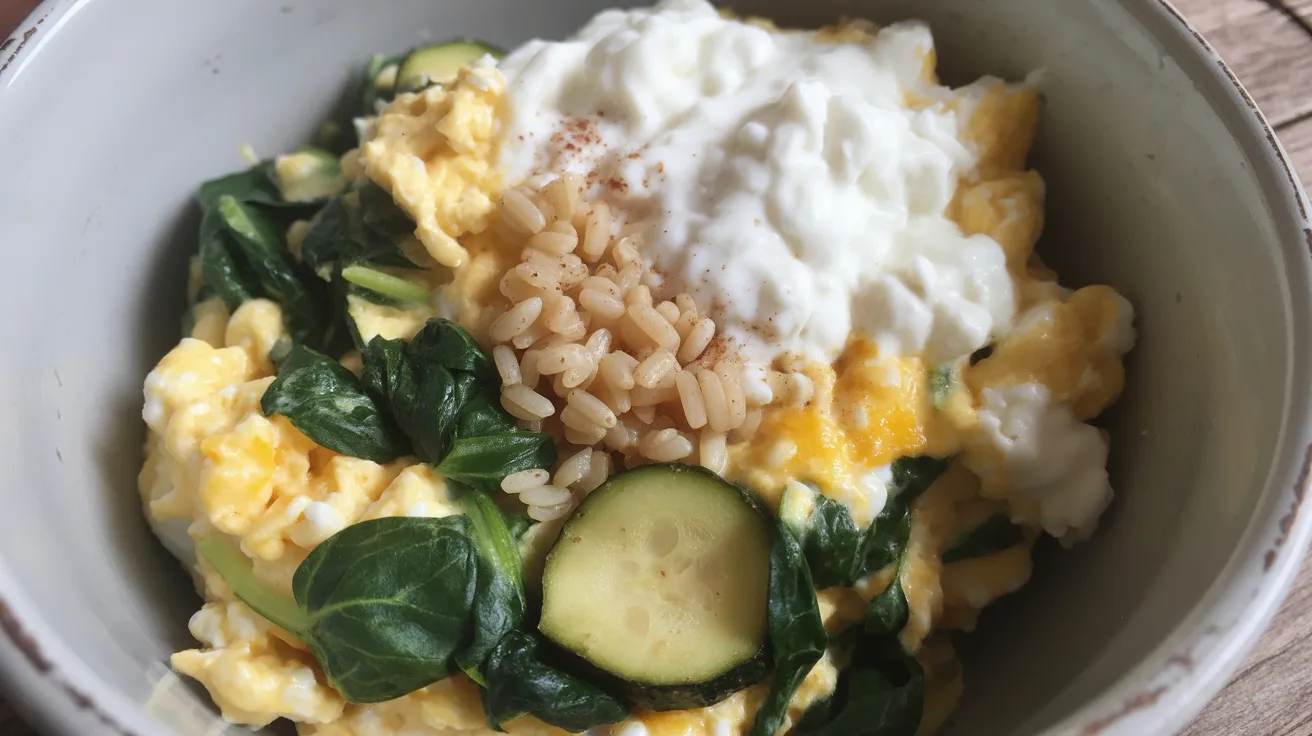
Why it rocks: Great for low-appetite days and senior dogs needing soft foods.
- Scrambled eggs (cooked in a little water, not butter)
- Low-fat cottage cheese
- Steamed zucchini and spinach
- Cooked millet or white rice
- Turmeric pinch
Balance it: Add fish oil to round out the fatty acids.
The Senior Dog Superfood Pantry
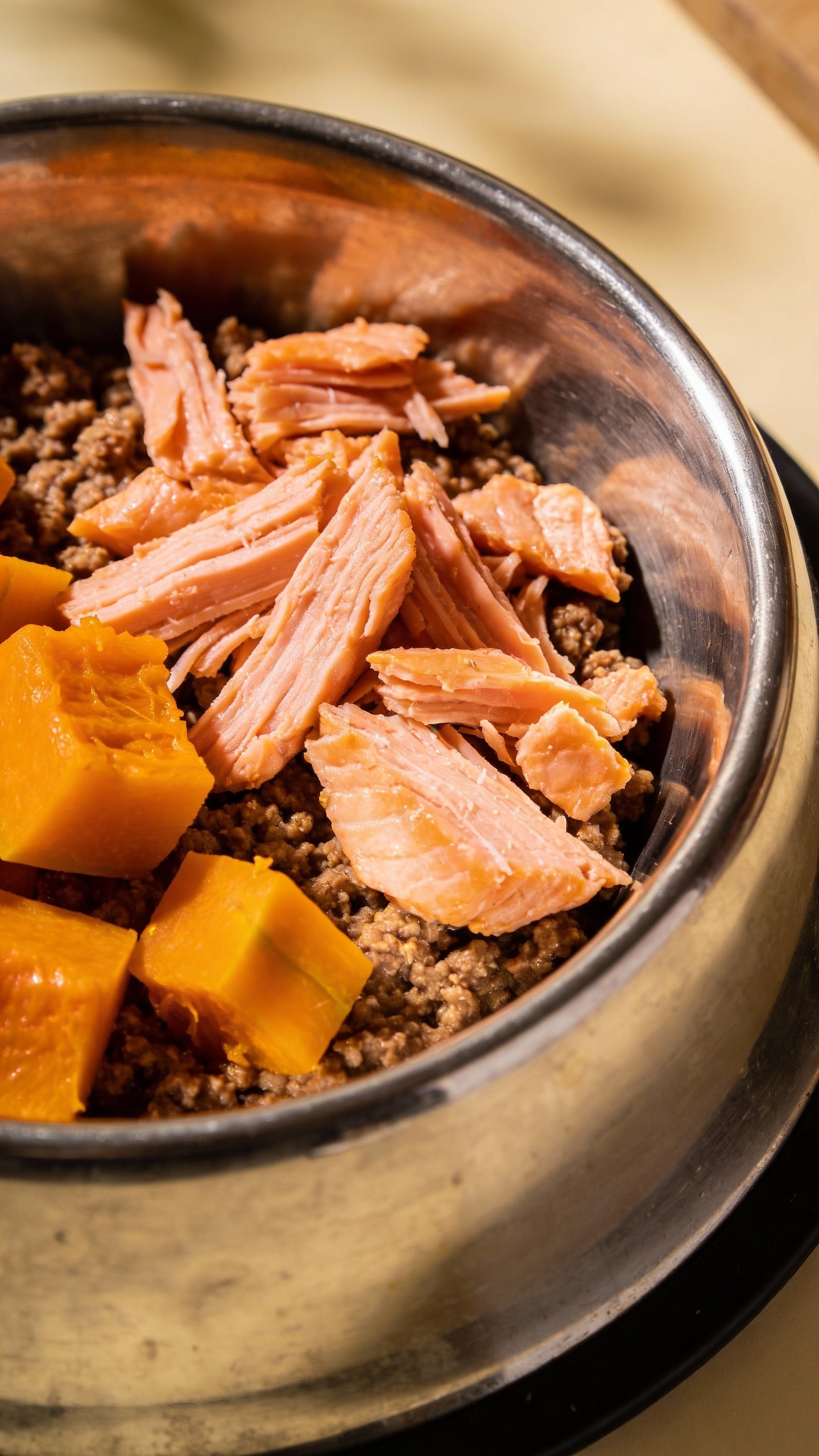
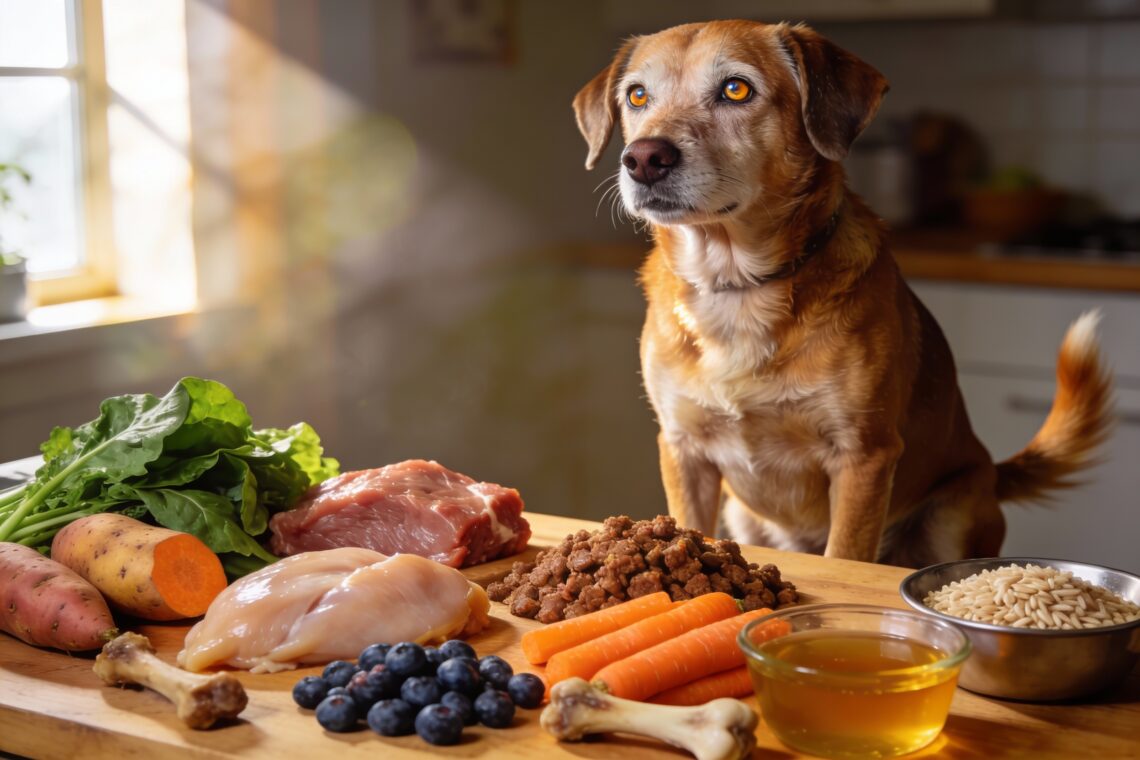
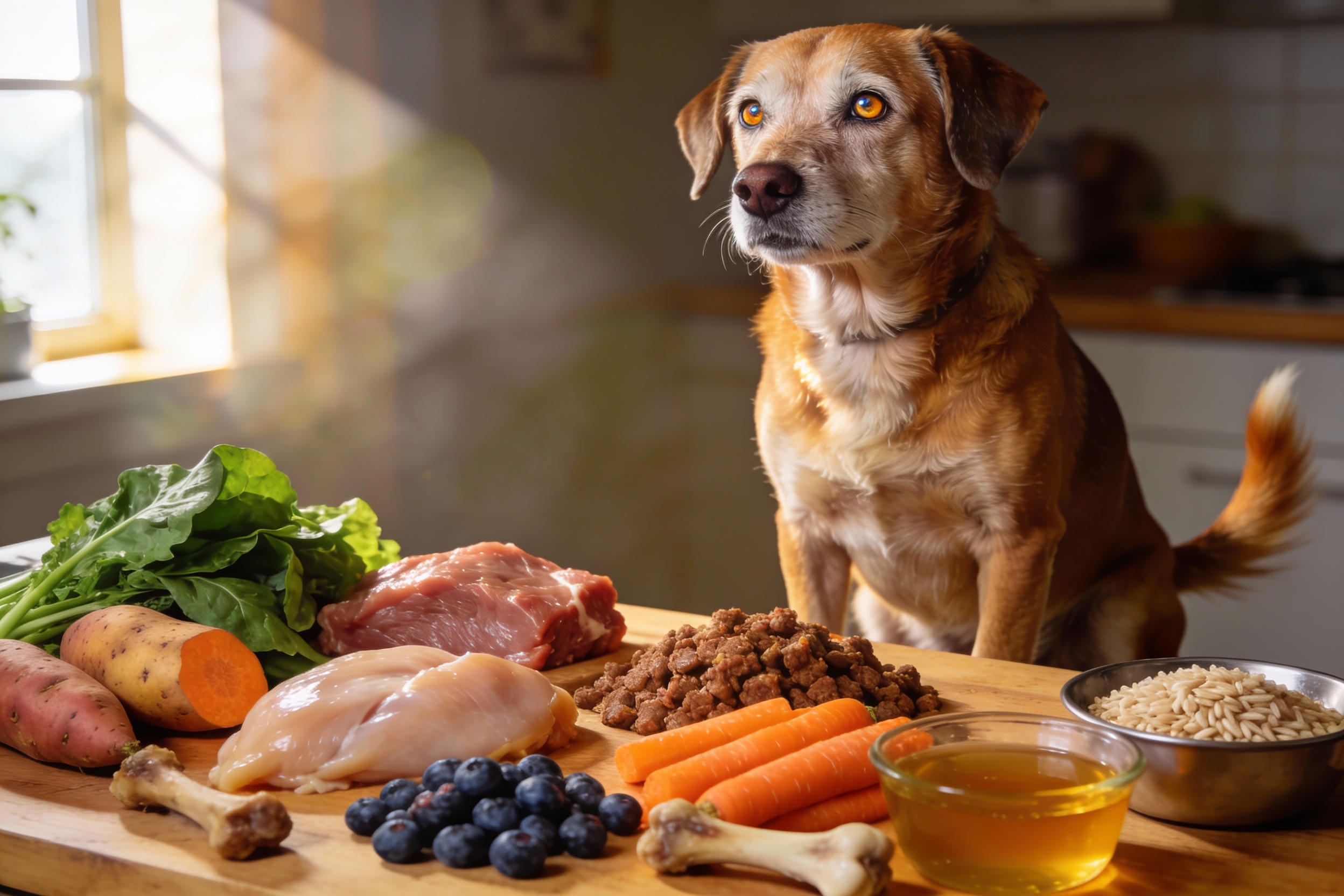
Stock these and you’ll always have a joint-friendly meal ready.
- Proteins: salmon, sardines, turkey, chicken thighs, lean beef, eggs
- Carbs: sweet potato, oats, quinoa, brown rice, barley
- Veggies: spinach, kale, green beans, zucchini, cauliflower rice
- Extras: pumpkin puree, blueberries, parsley, turmeric, bone broth
- Supplements: fish oil, green-lipped mussel, glucosamine/chondroitin, probiotic
Portions, Prep, and Preventing Tummy Drama
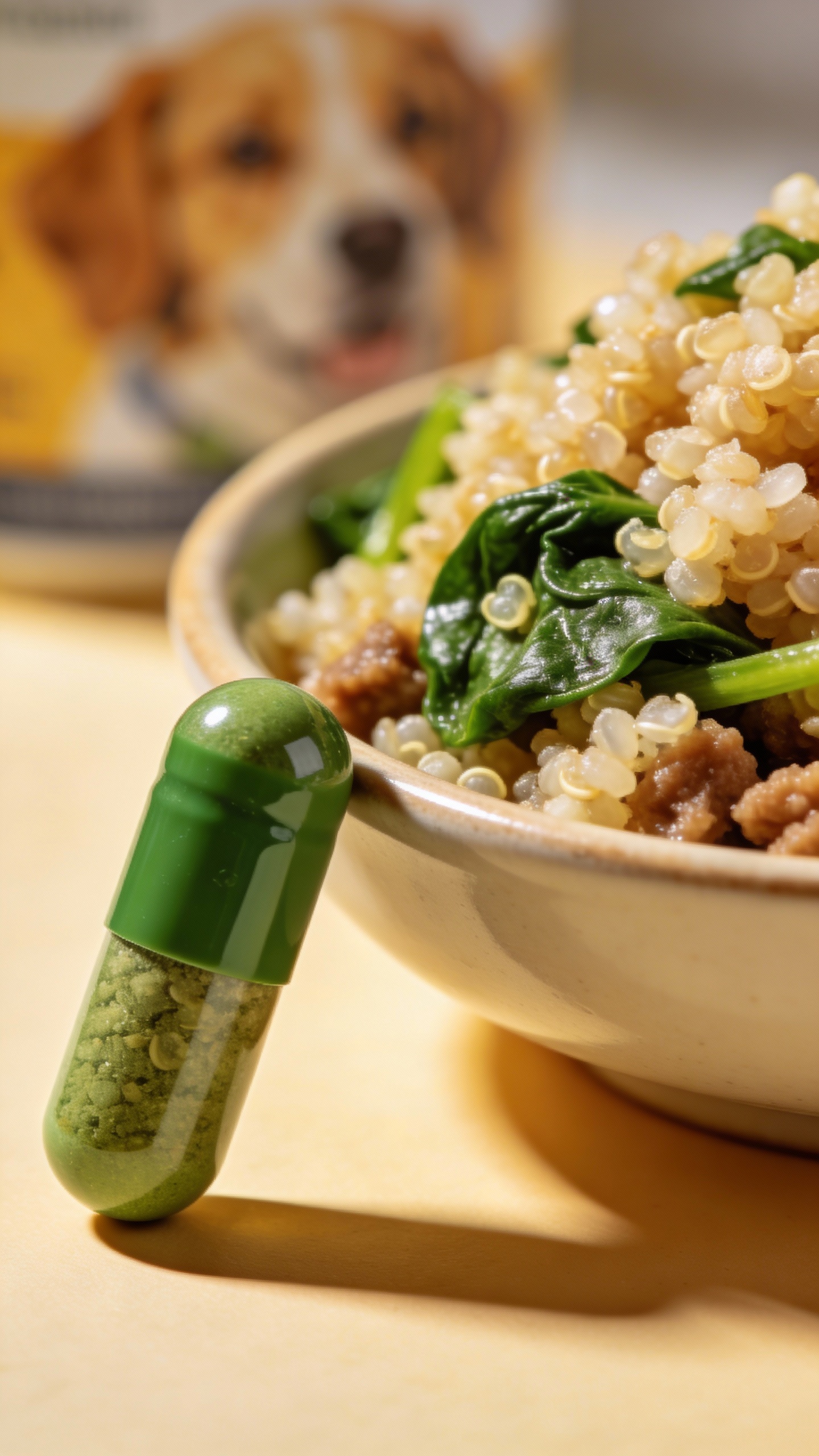
You want energy without weight gain and joint support without upset bellies. Easy enough with a few rules.
Portion Basics
- Start around 2–3% of body weight per day (split into two meals). Adjust for activity and body condition.
- Watch the ribs and waistline. If your dog looks like a footstool, reduce portions. If they’re gaunt, add more.
Cooking and Food Safety
- Cook all animal proteins thoroughly for seniors to minimize risk.
- Avoid onions, garlic, chives, grapes/raisins, xylitol, and excessive salt.
- Introduce new recipes over 3–5 days to keep digestion happy.
- Refrigerate portions for 3–4 days max; freeze extras in meal-size containers.
Easy Balancing Tricks
- Add a canine-specific multivitamin to cover micronutrient gaps.
- Use iodized salt sparingly for thyroid support, if your vet agrees.
- Rotate proteins weekly to diversify nutrients and keep picky eaters interested.
Joint Health Boosters You’ll Actually Notice
You can cook like a pro and still miss the joint support piece. Don’t.
- Fish oil or algae oil: daily omega-3s for mobility and coat.
- Green-lipped mussel: reduces stiffness; many seniors perk up within weeks.
- Glucosamine + chondroitin: long-term cartilage support.
- Bone broth: easy hydration and collagen; great for picky eaters.
- Turmeric: mild anti-inflammatory effect; pair with black pepper and fat for absorption.
IMO: If you pick just two, go with fish oil and green-lipped mussel.
Signs Your Senior’s Meal Plan Works
Look for changes you can actually see and feel.
- More pep on walks and quicker morning get-ups
- Softer, shinier coat and less flaking
- Regular stools and less gas (the nose appreciates it)
- Stable weight with visible waist
- Smoother movement and fewer post-nap limps
FAQ
How much protein should a senior dog eat?
Most healthy seniors thrive on moderate-to-high protein from quality sources. Aim for meals where at least one-third to one-half of calories come from protein, unless your vet says to limit it for kidney or liver issues.
Can I switch to homemade food cold turkey?
You could, but your carpet might hate you. Transition over 3–7 days by mixing increasing amounts of the new food with the old to avoid stomach upset.
Do I need supplements if I cook balanced meals?
Short answer: yes, usually. Homemade diets often miss trace minerals and certain vitamins. A canine multivitamin, plus fish oil and a joint supplement, fills those gaps reliably.
Is raw food better for seniors?
Not necessarily. Seniors have more sensitive immune systems, so cooked diets are safer and easier to digest. If you’re set on raw, work with a veterinary nutritionist and handle food meticulously.
What if my dog has kidney disease or pancreatitis?
Pause and talk to your vet first. Kidney issues often require controlled phosphorus and adjusted protein; pancreatitis needs lower fat. A one-size recipe won’t cut it here.
Can I batch cook and freeze meals?
Absolutely. Cook big batches, cool fast, portion into meal-size containers, and freeze for up to 2–3 months. Thaw in the fridge overnight and reheat gently with a splash of broth.
Wrapping It Up (With a Wag)
You don’t need 20 ingredients or a lab coat to feed your senior like a champ. Pick a protein, add a smart carb, pile on greens, and finish with omega-3s and joint support. Keep portions sensible, rotate recipes, and watch your old buddy move like a pup again—maybe not zoomies every day, but pretty darn close. FYI: the best recipe is the one your dog eats happily and thrives on.