Imagine this: You’re relaxing after a long day, and suddenly you hear it—the unmistakable sound of your dog systematically destroying your favorite throw pillow. Or maybe you’ve returned home to find your couch cushions rearranged and your houseplants “redecorated.” Sound familiar? These destructive behaviors aren’t signs of a bad dog; they’re desperate cries for mental and physical stimulation. When dogs get bored, they create their own entertainment, and it’s rarely what we’d choose! The good news? Finding the right activities for bored dogs can transform your restless pup into a content, well-behaved companion who’s too happily tired to cause trouble. 🐕
Whether your furry friend is tearing up the house, barking excessively, or simply giving you those pleading eyes that say “entertain me,” this comprehensive guide will equip you with dozens of proven strategies to keep your dog mentally sharp, physically fit, and blissfully content.
Key Takeaways
- Physical exercise alone isn’t enough: Dogs need 20-60 minutes of daily physical activity PLUS 15 minutes of mental stimulation 1-2 times daily to prevent boredom-related behaviors
- Variety is essential: Rotating toys weekly, exploring new environments, and alternating activities prevent habituation and keep dogs engaged
- Mental workouts tire dogs faster: Food puzzles, trick training, and nose work can exhaust a dog’s brain more effectively than a simple walk
- Social interaction matters: Regular playdates and group activities provide irreplaceable enrichment that solo activities can’t match
- Balance creates the best results: Combining physical exercise, mental challenges, and social opportunities creates a comprehensive enrichment routine that addresses all aspects of canine wellness
Understanding Why Dogs Get Bored
Before diving into solutions, it’s important to understand the why behind canine boredom. Dogs are intelligent, social creatures descended from wolves who spent their days hunting, exploring territories, and solving complex problems to survive. Modern domesticated dogs, however, often spend hours alone in quiet homes with minimal stimulation.
Common signs of a bored dog include:
- Excessive barking or whining
- Destructive chewing on furniture, shoes, or household items
- Digging holes in the yard or “digging” in carpets
- Hyperactivity or inability to settle down
- Attention-seeking behaviors like jumping or pawing
- Escape attempts or fence-jumping
- Overeating or food obsession
When dogs lack appropriate outlets for their energy and intelligence, they’ll find inappropriate ones. The solution isn’t punishment—it’s providing engaging activities for bored dogs that satisfy their natural instincts and intelligence.
Physical Activities for Bored Dogs: Getting Those Legs Moving
Physical exercise forms the foundation of any good enrichment plan. Dogs require daily varied physical exercise of at least 20-30 minutes twice per day, though many breeds need significantly more[1]. The key word here is varied—the same walk around the block every day quickly becomes boring.
High-Energy Exercise Options
Jogging and Biking 🚴♀️
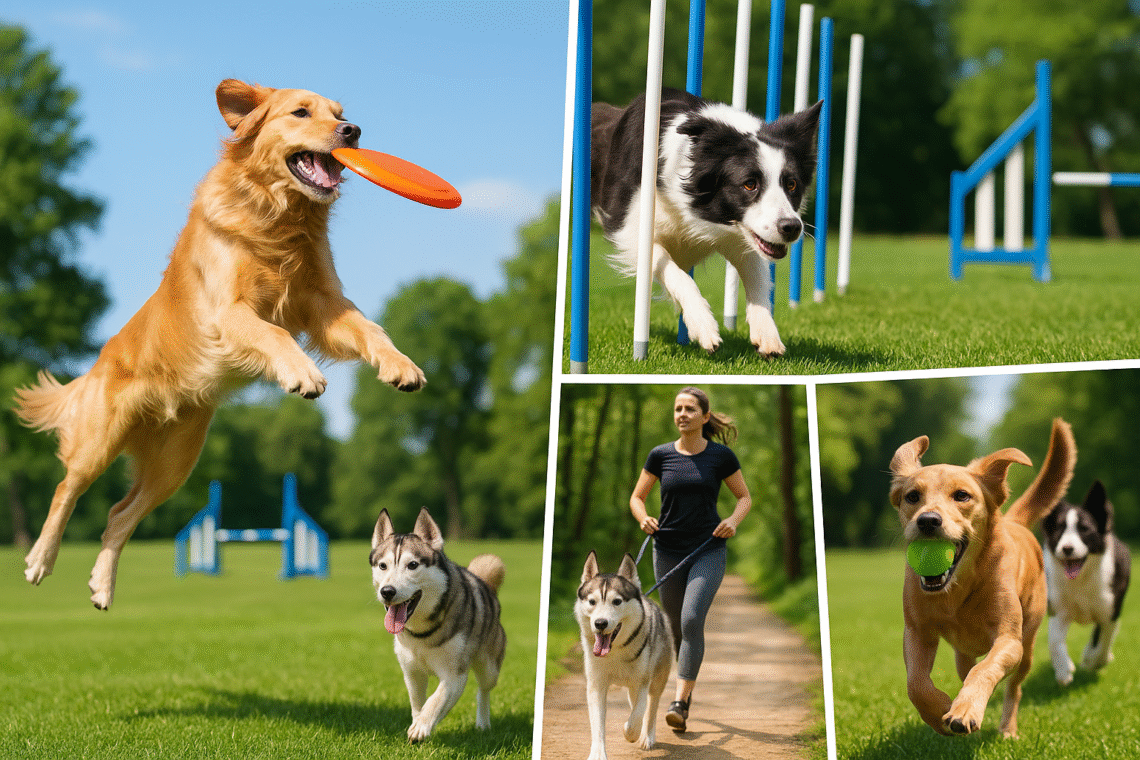
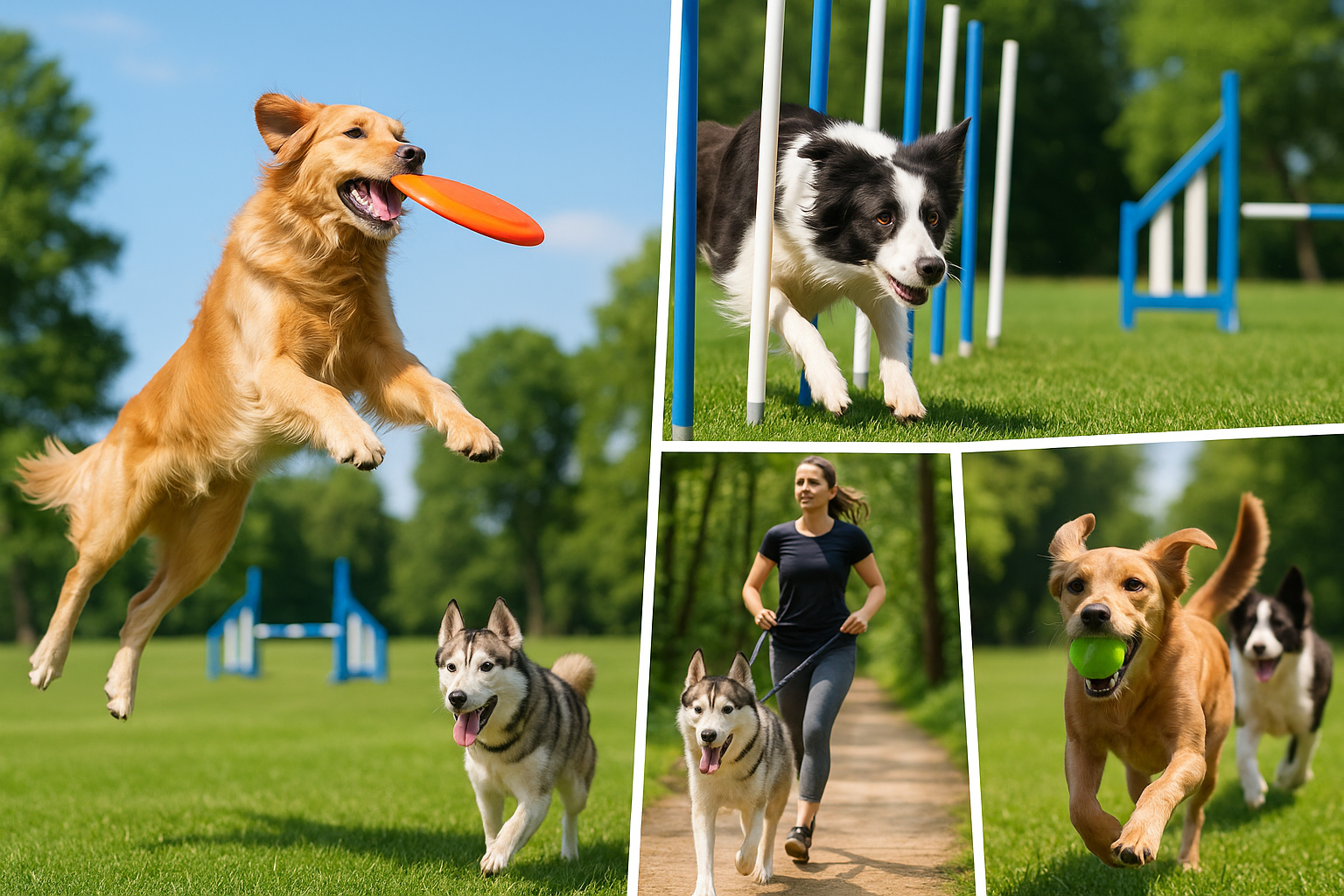
For athletic breeds like Border Collies, Australian Shepherds, or Labrador Retrievers, jogging alongside you or running next to your bike provides excellent cardiovascular exercise. Start slowly and build endurance gradually, always considering weather conditions and your dog’s fitness level.
Fetch and Frisbee
These classic games challenge both mind and body as dogs track moving objects, calculate trajectories, and sprint at full speed. Fetch variations include:
- Using different types of balls (tennis balls, rubber balls, squeaky balls)
- Throwing at varying distances and heights
- Playing fetch in water for low-impact exercise
- Teaching “drop it” and “wait” commands to add mental challenges
Agility Training
Setting up a backyard agility course with jumps, tunnels, and weave poles transforms exercise into an exciting adventure. Even without formal equipment, you can create DIY obstacles using household items.
Exploring Novel Environments
Here’s a game-changer: novel environments and routes spark curiosity in dogs[2]. Instead of walking the same neighborhood loop daily, try:
| Activity Type | Benefits | Frequency Recommendation |
|---|---|---|
| Trail walks | New smells, terrain variety, natural obstacles | 2-3 times weekly |
| Beach outings | Swimming, sand running, water play | Weekly (if accessible) |
| Park visits | Open space for running, social opportunities | 3-4 times weekly |
| Car rides | Mental stimulation, destination variety | Several times weekly |
| Urban exploration | Different sounds, sights, socialization | 1-2 times weekly |
Alternating between trail walks, beach outings, and agility parks prevents both physical and mental burnout while keeping your dog genuinely excited about exercise time[3].
Interactive Physical Games
Tug-of-War
This often-misunderstood game is actually fantastic for dogs when played with rules. Tug-of-war provides bursts of excitement and mental challenge while strengthening the bond between dogs and owners[4]. Establish clear “take it” and “drop it” commands to maintain control.
Flirt Poles
A flirt pole (essentially a giant cat toy for dogs) consists of a long pole with a rope and lure attached. Dogs chase the lure as you move it in unpredictable patterns, providing intense physical and mental exercise in short bursts—perfect for high-energy breeds.
Mental Stimulation Activities for Bored Dogs: Exercising the Brain
While physical exercise is crucial, mental stimulation can tire a dog’s brain faster than physical activity alone. A mentally exhausted dog is a well-behaved dog! Here are proven activities for bored dogs that target cognitive development.
Food Puzzles and Foraging Activities
Food Puzzle Toys
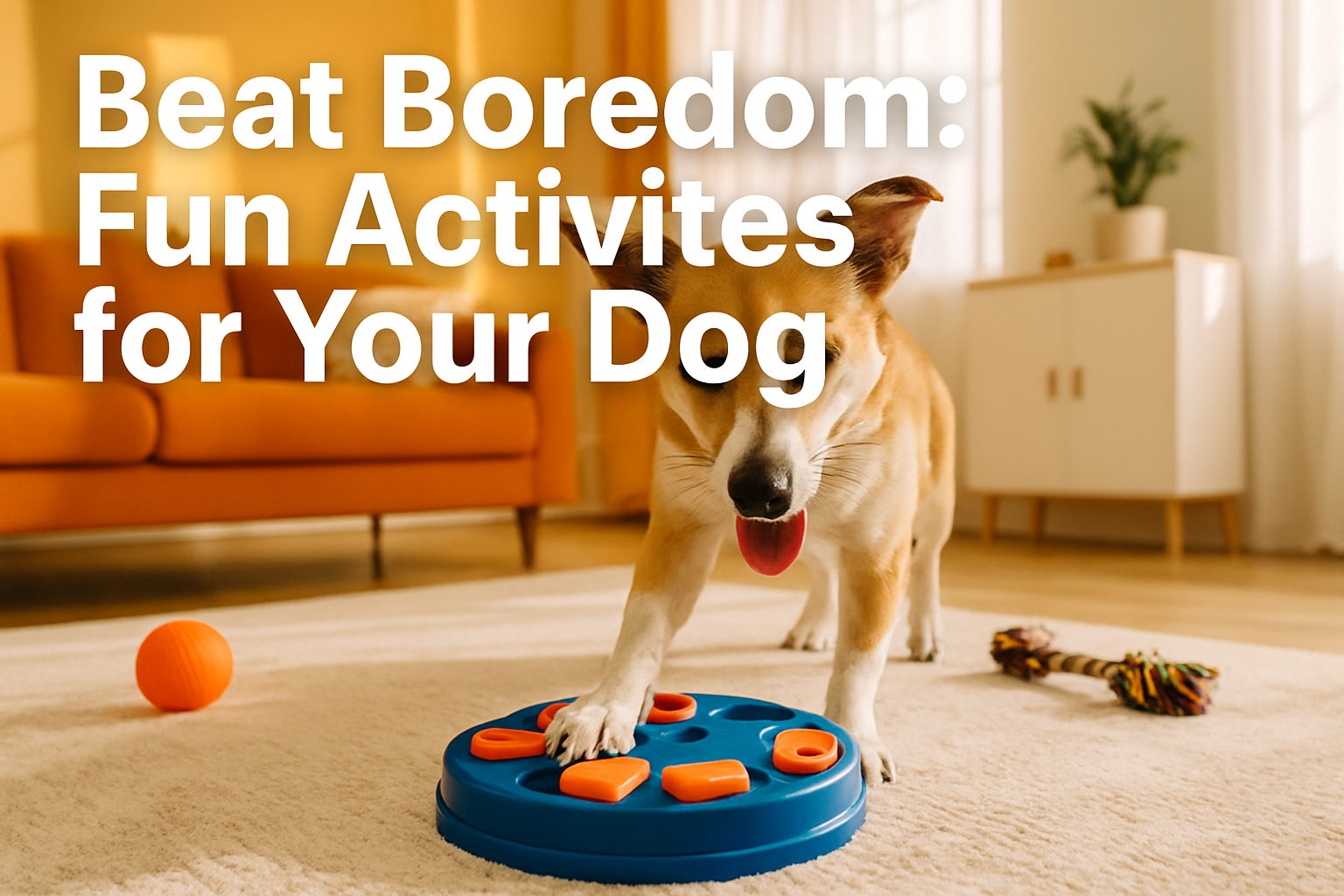
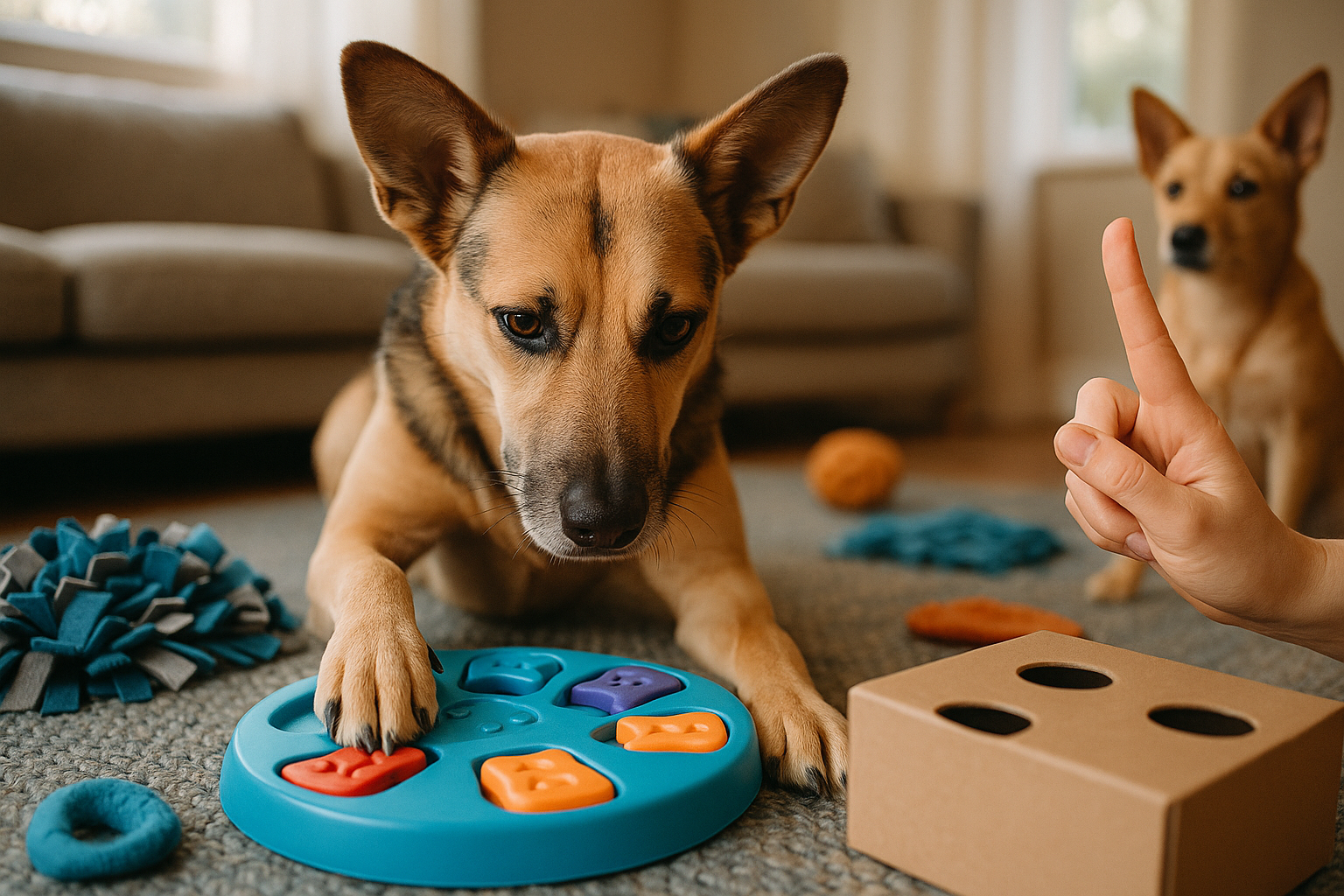
Food puzzle toys and snuffle mats transform mealtimes into mental workouts by hiding kibble or treats in layers, requiring problem-solving and foraging behaviors[5]. Popular options include:
- Kong toys: Fill with frozen peanut butter, yogurt, or wet food
- Puzzle feeders: Require sliding, lifting, or spinning mechanisms to access food
- Snuffle mats: Hide kibble in fabric strips that mimic grass
- Slow feeder bowls: Make dogs work around obstacles to eat
“Food puzzles tap into dogs’ natural foraging instincts, providing mental enrichment that can occupy them for 20-30 minutes instead of the 2 minutes it takes to gulp down a regular meal.”
DIY Busy Boxes
DIY busy boxes made from cardboard boxes filled with treats allow dogs to engage in natural ripping and foraging behaviors, providing enrichment at no cost[6]. Simply place treats inside crumpled paper, cardboard tubes, or small boxes nested within a larger box. Your dog gets to “destroy” something appropriate while working for rewards!
Trick Training Sessions
Trick training sessions of 5-15 minutes daily teaching behaviors like ‘spin,’ ‘targeting,’ or ‘hide and seek’ effectively tire dogs’ brains and provide mental stimulation[7]. Unlike basic obedience, tricks are fun, low-pressure, and infinitely expandable.
Easy Tricks to Start With:
- Spin: Lure your dog in a circle with a treat
- Shake/Paw: Reward when they naturally lift a paw
- Touch/Target: Teach them to touch their nose to your hand
- Roll Over: Break it down into smaller steps
- Find It: Hide treats and encourage searching
Advanced Tricks:
- Playing dead
- Weaving through legs
- Backing up on command
- Opening/closing doors
- Bringing specific toys by name
The beauty of trick training is that it builds confidence, strengthens your bond, and provides those crucial activities for bored dogs that challenge their intelligence.
Scent Work and Nose Games
Dogs experience the world primarily through their noses, possessing up to 300 million olfactory receptors compared to humans’ mere 6 million. Indoor scavenger hunts and hide-and-seek games provide nose stimulation and mental enrichment during bad weather or rest days by hiding toys or treats around the home[8].
Simple Nose Work Activities:
- Three-Cup Game: Hide a treat under one of three cups and let your dog find it
- Treat Trail: Create a trail of treats leading to a jackpot reward
- Room Search: Hide treats throughout a room and give a “find it” command
- Muffin Tin Game: Place treats in muffin tin cups and cover with tennis balls
- Towel Roll: Roll treats inside a towel for your dog to unroll
Formal Training Classes
Formal obedience, agility, and nose work classes provide regular guided mental and social stimulation along with positive reinforcement, beneficial even at low intensity[9]. These structured environments offer:
- Professional instruction and feedback
- Socialization with other dogs and people
- Novel challenges that change weekly
- Accountability and routine
- Sport-specific skills that can become lifelong hobbies
Social Activities for Bored Dogs: The Power of Canine Connections
Dogs are pack animals who thrive on social interaction. Playdates with dogs of similar temperament and enrollment in dog parks or daycare facilities provide both social and physical stimulation essential for mental enrichment[10].
Organizing Successful Playdates
Not all dogs play well together, so successful playdates require some planning:
Matching Considerations:
- Size: Similar-sized dogs play more safely together
- Play style: Match wrestlers with wrestlers, chasers with chasers
- Energy level: High-energy dogs overwhelm calm dogs
- Age: Puppies and seniors have different needs
Playdate Best Practices:
- Start in neutral territory
- Keep initial meetings short (15-20 minutes)
- Supervise all interactions
- Watch for signs of stress or overstimulation
- End on a positive note before the dogs get tired
Dog Parks and Daycare
Dog Parks offer off-leash exercise and socialization but require vigilance. Visit during less crowded times initially, ensure your dog has a solid recall, and always supervise interactions.
Doggy Daycare provides structured social time with staff supervision, ideal for dogs who are home alone during work hours. Quality daycare facilities offer:
- Temperament evaluations before enrollment
- Small playgroups matched by size and play style
- Trained staff who understand dog body language
- Rest periods to prevent overstimulation
- Additional enrichment activities
Creating the Perfect Enrichment Routine
The most effective approach combines multiple types of stimulation. A balanced enrichment routine combines 20-60 minutes of daily physical exercise, 15 minutes of puzzle or trick training 1-2 times daily, and social interaction several times weekly[11].
Sample Weekly Schedule
Monday:
- Morning: 30-minute trail walk
- Evening: 15-minute trick training session
Tuesday:
- Morning: Backyard fetch and tug-of-war
- Evening: Food puzzle for dinner
Wednesday:
- Morning: Dog park visit (45 minutes)
- Evening: Indoor scent work games
Thursday:
- Morning: Jogging or biking (30 minutes)
- Evening: New trick training
Friday:
- Morning: Novel environment exploration
- Evening: Playdate with dog friend
Weekend:
- Longer adventures (hiking, beach, agility class)
- DIY busy boxes and puzzle toys
- Social activities and group training
The Power of Toy Rotation
Here’s a simple trick that makes a huge difference: rotating toys weekly rather than keeping all toys available simultaneously maintains novelty and engagement, preventing habituation to existing entertainment[12].
How to Implement Toy Rotation:
- Divide toys into 3-4 groups
- Only make one group available each week
- Store other groups out of sight
- Rotate groups weekly
- Introduce new toys occasionally to refresh the rotation
When a toy reappears after a few weeks, it feels new again! This strategy works especially well with puzzle toys, squeaky toys, and interactive games.
Weather-Proof Indoor Activities for Bored Dogs
Rainy days, extreme heat, or cold weather shouldn’t mean bored dogs. Indoor activities for bored dogs can be just as enriching as outdoor adventures.
Indoor Exercise Options
- Stair sprints: Throw a toy up the stairs for retrieving (only for healthy adult dogs)
- Hallway fetch: Use soft toys in long hallways
- Indoor agility: Create obstacle courses with furniture and household items
- Treadmill training: Teach your dog to walk on a treadmill under supervision
- Hide and seek: Hide yourself or toys throughout the house
Calming Enrichment
Not all enrichment needs to be high-energy. Classical music or nature sounds provide background enrichment and ease stress in dogs, supported by shelter studies showing calming effects[13].
Calming Activities Include:
- Frozen Kong toys (licking is naturally calming)
- Gentle massage sessions
- Calm training exercises like “settle” or “place”
- Sniffing activities at a relaxed pace
- Chew toys designed for extended chewing
Brain Games That Don’t Require Space
🧠 Which Hand Game: Hide a treat in one closed fist and let your dog choose
🧠 Name Recognition: Teach your dog the names of different toys
🧠 Shell Game: The classic three-cup shuffle with treats
🧠 New Trick Training: Perfect for small spaces
🧠 Clicker Training: Shape new behaviors step by step
Age-Appropriate Activities for Bored Dogs
Different life stages require different approaches to enrichment.
Puppies (8 weeks – 1 year)
Focus: Socialization, basic training, gentle exercise
- Short, frequent play sessions (5-15 minutes)
- Puppy socialization classes
- Gentle exploration of new environments
- Simple puzzle toys are appropriate for developing teeth
- Basic obedience training using positive reinforcement
Caution: Avoid high-impact exercise that could damage developing joints
Adult Dogs (1-7 years)
Focus: Varied physical and mental challenges
- Full range of physical activities based on breed and health
- Advanced training and trick work
- Dog sports (agility, flyball, dock diving)
- Complex puzzle toys and food dispensers
- Regular social activities
Senior Dogs (7+ years)
Focus: Gentle exercise, mental stimulation, joint health
- Shorter, more frequent walks
- Swimming and water therapy
- Scent work and nose games (low-impact, high-reward)
- Gentle trick training
- Soft puzzle toys and slow feeders
- Massage and physical therapy exercises
Note: Always consult your veterinarian about appropriate activity levels for senior dogs with health conditions.
Breed-Specific Considerations
Different breeds were developed for different purposes, which significantly impacts their enrichment needs.
Herding Breeds (Border Collies, Australian Shepherds, Corgis):
- Need jobs and mental challenges
- Excel at agility, obedience, and trick training
- Require 60+ minutes of daily exercise
- Benefit from puzzle toys and problem-solving games
Sporting Breeds (Retrievers, Spaniards, Pointers):
- Love fetch, swimming, and retrieving games
- Need substantial daily exercise (45-60 minutes minimum)
- Enjoy nose work and scent training
- Thrive with interactive play with owners
Terriers (Jack Russells, Fox Terriers, Bull Terriers):
- High prey drive requires appropriate outlets
- Benefit from digging boxes and tug games
- Need firm, consistent training
- Enjoy earth dog trials and barn hunt activities
Working Breeds (Huskies, Malamutes, Great Pyrenees):
- Bred for endurance and strength
- Need jobs like pulling, carrying, or guarding
- Require extensive daily exercise
- Benefit from weight-pulling or carting activities
Toy Breeds (Chihuahuas, Pomeranians, Yorkshire Terriers):
- Still need mental and physical stimulation despite small size
- Enjoy indoor games and trick training
- Benefit from puzzle toys scaled to their size
- Need socialization and confidence-building activities
Common Mistakes to Avoid
Even with the best intentions, some approaches can backfire:
❌ Relying solely on physical exercise: A tired body doesn’t equal a tired mind
❌ Inconsistent routines: Dogs thrive on predictability; sporadic enrichment is less effective
❌ Overstimulation: Too much activity can create an adrenaline junkie who can’t settle
❌ Punishment for boredom behaviors: Address the cause (boredom), not the symptom
❌ Leaving all toys out constantly: This leads to habituation and decreased interest
❌ Skipping rest days: Dogs need recovery time just like humans
❌ Forcing unwanted social interactions: Not all dogs are social butterflies; respect individual preferences
Measuring Success: Signs Your Dog Is Properly Enriched
How do you know if your enrichment routine is working? Look for these positive indicators:
✅ Calm behavior when you’re home and relaxing
✅ Decreased destructive behaviors like chewing or digging
✅ Better sleep and appropriate rest periods
✅ Enthusiasm for activities and training sessions
✅ Improved focus during training
✅ Healthy appetite without obsessive food behavior
✅ Appropriate energy levels for age and breed
✅ Reduced anxiety and stress-related behaviors
Conclusion: Building a Happier, Healthier Dog Through Enrichment
A bored dog isn’t a bad dog—they’re simply an understimulated dog crying out for engagement. By implementing diverse activities for bored dogs that address physical exercise, mental stimulation, and social interaction, you’ll transform your restless companion into a content, well-adjusted family member.
The beauty of enrichment is that it doesn’t require expensive equipment or hours of time. Even 15 minutes of focused mental stimulation can dramatically improve your dog’s behavior and quality of life. The key is consistency, variety, and understanding your individual dog’s needs.
Your Action Plan: Start Today
This Week:
- Assess your current routine and identify gaps in physical, mental, or social enrichment
- Choose 2-3 new activities from this guide to try
- Implement toy rotation with your existing toys
- Schedule one novel environment exploration
This Month:
- Establish a consistent daily enrichment routine
- Try at least one formal class (obedience, agility, or nose work)
- Organize a playdate or visit a dog park
- Create DIY puzzle toys and busy boxes
- Teach your dog three new tricks
Long-Term:
- Continuously rotate and introduce new activities
- Adjust enrichment as your dog ages
- Join dog sports or activities that match your dog’s breed and personality
- Build a community of dog-owning friends for regular social opportunities
Remember, the time you invest in enriching your dog’s life pays dividends in better behavior, stronger bonds, and a genuinely happy companion. Your dog depends on you for every aspect of their life—make sure boredom isn’t part of it! 🐾