Frenchies look like velvet marshmallows with ears, but let’s be honest—they can act like tiny comedians with zero chill. The good news? You can raise a calm, obedient French Bulldog without turning into a drill sergeant.
You just need smart routines, simple rules, and a lot of consistency. Let’s make “easy” actually mean easy.
Understand the Frenchie Mindset
French Bulldogs love people, snacks, and naps—in that order. They learn fast, but they also get bored fast, so long lectures won’t work.
You need short sessions, clear rewards, and a vibe that says, “We’re having fun, but I’m in charge.” Key traits to remember:
- People-pleasers: They crave your attention. Use it as a reward.
- Stubborn streak: Keep training upbeat and brief.
- Sensitive souls: Harsh corrections shut them down.
Set Your “House Rules” Early
Decide what’s allowed on day one. Couch or no couch?
Bed or crate? Begging allowed? (Hard no.) Frenchies love consistency, so don’t teach “sometimes.” Teach “always.”
The Foundation: Calm Starts at Home

You can’t train calm outside if your house feels like a carnival. Build calm into daily routines and your Frenchie will match your energy. Daily calm habits:
- Structured feeding: Ask for a sit and 3 seconds of calm before the bowl goes down.
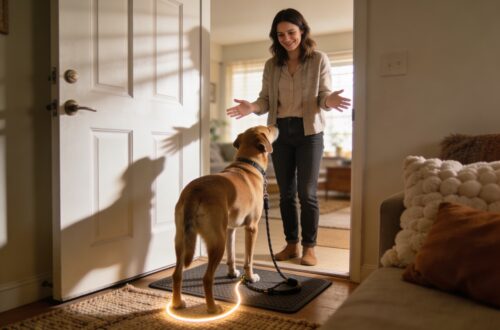
- Door manners: Door opens only when your Frenchie sits and looks at you.
- Place training: Teach “place” on a mat for chill time during meals or TV.
How to Teach “Place”
- Lure your Frenchie onto a mat.
- Mark “Yes!” and reward when all four paws hit the mat.
- Add duration: 5 seconds, 10, 20… build slowly.
- Release with “Okay!”—then party like it’s 1999.
Pro tip: Use a specific mat or bed so your dog understands the context.
The mat means “zen mode.”
Potty Training Without Tears
You want clean floors? Great. Your Frenchie wants clarity.
Set a schedule and stick to it. Simple schedule (adjust for age):
- First thing in the morning
- After meals
- After naps and play
- Before bed
Crate training helps a ton:
- Pick a size they can stand and turn in—no cavernous crates.
- Take them straight outside after crate time.
- Reward outside like you just won the lottery.
Common Potty Mistakes
- Too much freedom too soon: Gate rooms or use a playpen.
- Punishing accidents: Clean with enzyme cleaner and move on.
- Inconsistent timing: Routine creates results—boring, but true.
Teach the Core Commands (Fast and Fun)
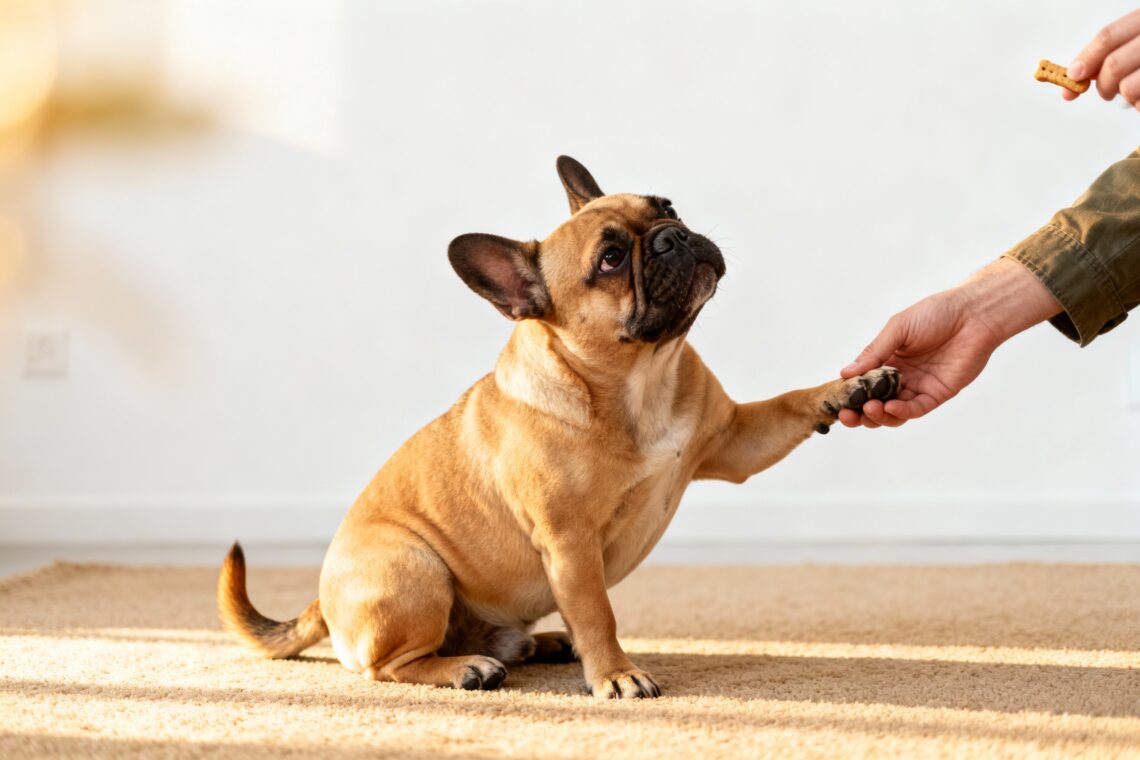
Keep sessions under 5 minutes, 2-3 times a day. Think “game,” not “class.” Use tiny treats or kibble and a cheerful voice. IMO, this is where Frenchies shine. Start with these:
- Name response: Say their name once.Mark and treat when they look at you. No nagging.
- Sit: Lure up and back. Add the word once they do it easily.
- Down: Lure straight to the floor.Reward calm, not bouncing.
- Come: Say “Come!” once, then back up and cheer. Reward like crazy when they arrive.
- Leave it: Present a treat in your fist. When they stop pestering, mark and reward from the other hand.
Focus: The Secret Sauce
Teach “Look” or “Watch” to lock in attention.
Hold a treat to your forehead, wait for eye contact, then mark and treat. Use it before crossing streets, greeting people, or when squirrels try to ruin your day.
Leash Manners Without the Tug-of-War
Frenchies don’t need marathon walks, but they do need quality. You’re aiming for loose-leash strolls, not sled-pulling. Tools that help:
- Front-clip harness: Easier turning, less pressure on the neck.
- 6-foot leash: Control without micromanaging.
Training game: “Red Light, Green Light”
- Leash tight?Stop. Say nothing. Plant your feet.
- Leash slack?Mark and move forward.
- They learn: pulling = no progress, slack = adventure.
Greeting People Calmly
Ask for a sit before anyone says hello. If they pop up, the greeting ends. You control access to the fun—your Frenchie figures this out fast.
Socialization: Calm Around the Chaos
Socialization means positive exposure, not a puppy rave.
You want your Frenchie comfortable around sounds, surfaces, people, and dogs. Make a checklist:
- Umbrellas, bikes, skateboards
- Vets, groomers, and elevators
- Different surfaces: grass, grates, wood floors
- Calm adult dogs and polite puppies
Do it right:
- Keep sessions short and upbeat.
- Pair new things with treats and praise.
- Leave if your dog looks overwhelmed. FYI, retreat is not defeat.
Calm Starts With Energy Management
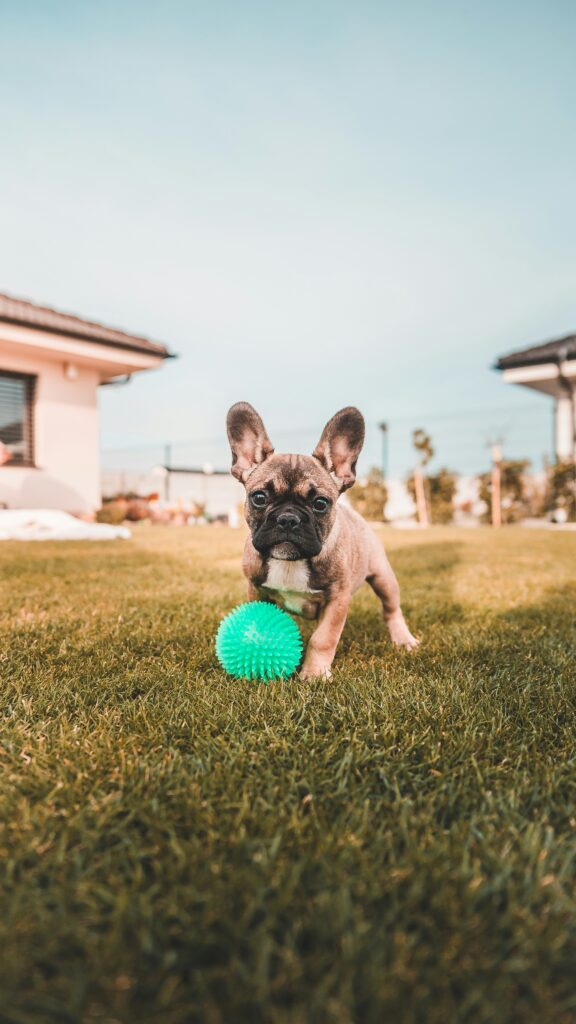
A tired Frenchie behaves better, but don’t overdo it—these dogs overheat easily. Mix brain work with gentle exercise. Balanced routine ideas:
- Two short walks instead of one long trek.
- Sniffari sessions: Slow walk, nose-led exploration.
- Puzzle feeders or snuffle mats: Mental work tires them out.
- Short play bursts with fetch or tug, then “Place” to reset.
Heat and Health Notes
Frenchies have flat faces, so you must watch heat and breathing.
Walk during cool hours, carry water, and skip high-intensity fetch in warm weather. If breathing sounds labored, stop. Like now.
Fixing Barking, Jumping, and Other Shenanigans
Behavior issues usually come from boredom, inconsistency, or unclear rules.
The fix? Replace chaos with structure and rewards for the behavior you want. Jumping:
- Ignore the launch. No eye contact, no hands.
- Reward a sit.Ask friends to do the same.
Barking at the door:
- Send to “Place” before you open the door.
- Reward quiet. Open the door only when calm.
Nipping during play:
- Yelp “Ouch!” and stop play for 10 seconds.
- Offer a toy. Reward gentle play.
Pulling like a tractor:
- Use the Red Light, Green Light game.
- Change direction and reward when they follow.
Make Rewards Work Harder
Food drives Frenchies, but don’t rely on treats forever.
Blend rewards to build reliability. Use a mix:
- Food: Tiny, soft pieces. Rotate flavors to keep interest.
- Toys: Quick tug or fetch as a jackpot.
- Life rewards: Door opens, leash on, greeting allowed—earned by calm.
Fade Treats, Keep Behavior

Switch to variable rewards once your Frenchie knows the cue. Reward every time at first, then every other time, then randomly.
Praise always—payment sometimes. IMO, this keeps reliability without turning you into a vending machine.
FAQs
How long should I train my Frenchie each day?
Aim for 2-3 short sessions of 3-5 minutes each, plus mini practice during daily life. Layer training into meals, door manners, and walks.
Short, frequent reps beat marathon sessions every time.
What treats work best for French Bulldogs?
Use soft, pea-sized treats or even their kibble for easy reps. For tougher situations, use higher-value goodies like chicken or cheese. Keep portions tiny—Frenchies gain weight if you blink too long.
How do I stop my Frenchie from barking at everything outside?
Teach “Look” and reward attention on you when triggers appear.
Close blinds, use white noise, and practice calm at the window with treats for quiet. Then gradually expose them to outside sounds during training sessions.
Is crate training cruel for a French Bulldog?
Not when used correctly. The crate becomes a safe, cozy den, not a punishment box.
Keep sessions short, feed meals in the crate, and release while calm—never when whining.
My Frenchie ignores me outside. Help?
Level up the rewards, shorten the distance to you, and reduce distractions at first. Practice in the yard, then the driveway, then a quiet street.
Use a long line for safety and success.
Can older Frenchies still learn new commands?
Absolutely. Adults often learn faster because they focus better. You might need tastier rewards and a bit more patience, but progress comes quickly with consistency.
Conclusion
Raising a calm, obedient Frenchie isn’t magic—it’s momentum.
Build clear routines, reward the behavior you love, and keep sessions short and fun. Do that, and your velvet marshmallow will chill on command, walk like a pro, and charm everyone—without the chaos. And if they act like a tiny diva sometimes?
Same. You’ve got this.