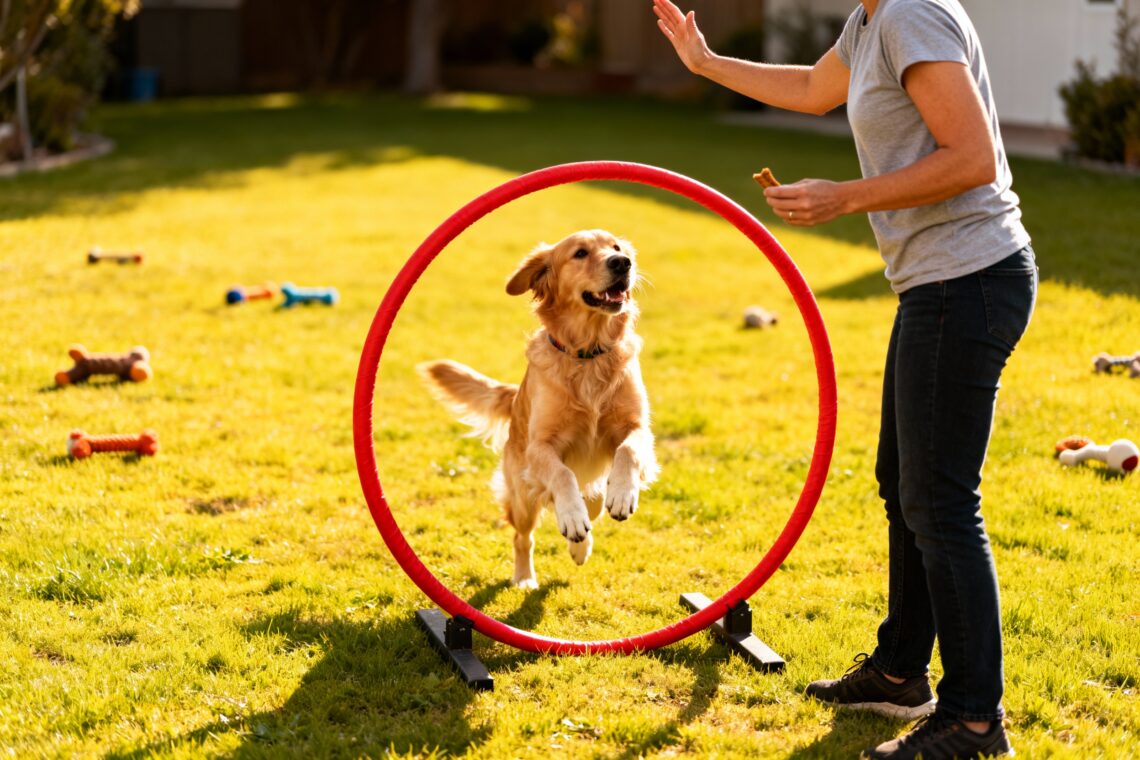
Your dog can learn hoop tricks faster than you think. You don’t need circus skills, fancy gear, or endless patience. You just need a hoop, some treats, and a game plan that makes your dog think, “Heck yes, let’s do this!” Ready to turn your living room into a mini agility show?
Let’s jump in—literally.
Start With the Right Hoop and Setup
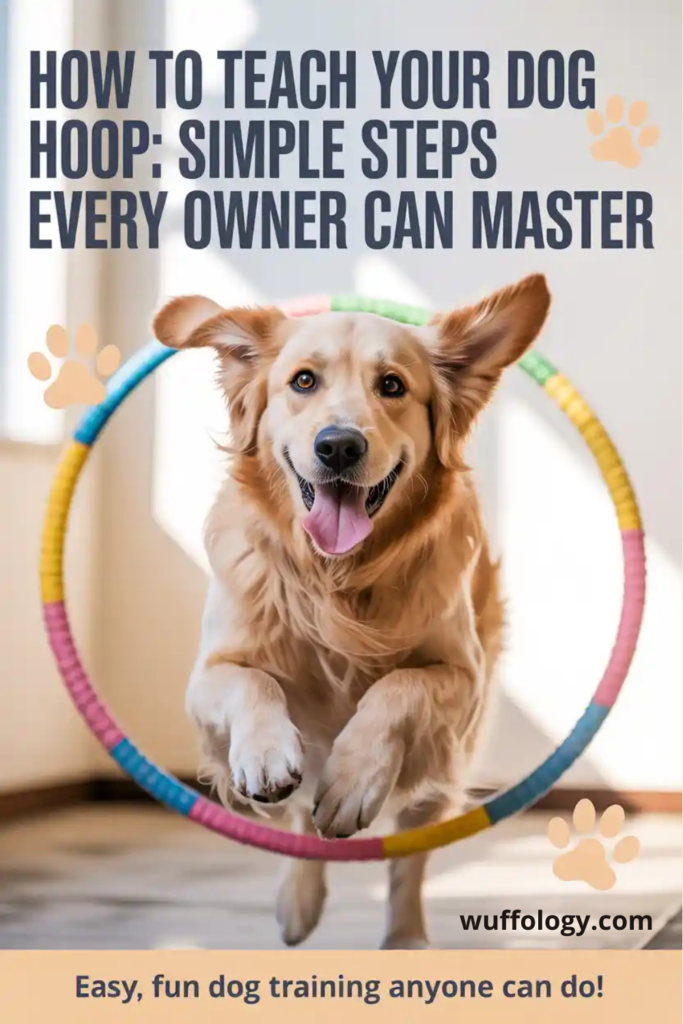
Keep it simple. You can use a kid’s hula hoop or a lightweight agility hoop. The size matters: bigger is easier and safer for beginners.
- Pick a hoop that’s at least 28–32 inches in diameter for medium dogs; larger for big dogs.
- Hold the hoop low at first—like touching the ground low.No hero jumps yet.
- Create a safe runway: 6–8 feet of clear space, non-slip flooring, and no furniture corners waiting to ruin the vibe.
Safety First (So You Don’t End Up at the Vet)
– Keep jump height at or below your dog’s elbow for beginners. – Warm up with a minute of walking and a few spins. – Avoid jumps for puppies with growing joints or seniors with mobility issues. Adjust to a “walk through” instead of a “jump.”
Teach the “Go Through” Before the “Jump”
We start with success. Your dog shouldn’t jump at all in step one—they just walk through the hoop.
Easy wins build confidence.
- Introduce the hoop. Hold it on the ground like a doorway. Toss a treat through. Let your dog walk through to get it.Say “Yes!” as they cross the threshold.
- Add a cue. As your dog walks through reliably, pair it with a calm cue like “Through” or “Hoop.” Keep your tone upbeat.
- Fade the lure. Move your treat hand out of the picture. Point with your empty hand; reward after they go through.
Common Sticking Point
If your dog avoids the hoop, make it bigger or tilt it so the opening looks wider. You can also prop one side on a book so it’s slightly angled—less intimidating.
Level Up: From “Through” to “Jump”
Once “through” happens on cue, you can lift the hoop a few inches.
Do not rush this. Fast results come from slow, smart steps.
- Raise the hoop 1–2 inches. Ask for “Hoop.” Mark and reward when they step or hop through. Keep it easy.
- Gradually increase height. Add an inch every few reps.Watch your dog’s confidence; if you get hesitation, lower it.
- Stand still. Avoid weird body movement that confuses your dog. Clear cue, consistent position.
Pro Tip: Reward Placement
– Toss the treat forward after the jump to keep momentum. – If your dog whips back for treats, place a small treat bowl 3–5 feet ahead and drop rewards there. Magic.
Add Flair: Circles, Spins, and Multiple Hoops
Want a trick show?
String together small wins.
- Circle through the hoop: Hold the hoop in your right hand and lure your dog in a circle before asking “Hoop.” It adds movement and looks flashy.
- Spin into the hoop: Cue “Spin,” then “Hoop.” Two cues in a row equals trick combo city.
- Double hoop line: Place two hoops 3–4 feet apart. Ask “Hoop!” then point to the second hoop immediately. Reward after the second jump.
Make It a Game
Try a “Hoop Relay”: 3–4 quick jumps with treats after the final hoop.
Keep sessions short and exciting. Quit while your dog still wants more—leave them wanting the encore.
Use Timing and Rewards Like a Pro
Your timing turns “meh” training into “wow.” Mark the moment your dog commits to the hoop, not three seconds later.
- Use a marker word or clicker. Say “Yes!” the second their front paws go through.
- Pay big for bravery. First time they jump higher? Jackpot: 3–4 treats rapid-fire.IMO, jackpots make progress stick.
- Switch to variable rewards. Once fluent, reward every 2–3 jumps to build persistence.
Fix The Most Common Problems Fast
Hoop training hiccups happen. Here’s how to patch them up quickly.
Problem: Dog runs around the hoop
– Lower the hoop back down. – Use a wall on one side so going around isn’t an option. – Guide with your hand. Reward small success.
Problem: Dog hesitates or looks stressed
– Shrink the task—lower height, widen the opening, or go back to “walk through.” – Use tastier treats (chicken > kibble, FYI). – Keep your voice fun.
Pressure kills enthusiasm.
Problem: Dog knocks the hoop
– Lower it. – Slow your cue delivery and give them a clearer runway. – Check if the hoop is wobbly—nobody wants to jump a moving target.
Problem: Overhyped dog crashes through
– Do a calm sit or nose-target before each attempt. – Short reps, longer breaks. – End with a chill behavior like “Down” to reset.
Build Reliability: Cues, Distance, and Distractions
Ready to show off? Make the behavior bulletproof.
- Change positions. Ask for “Hoop” while you’re seated, standing, or a step away.
- Add distance. Take one step back between reps. Work up to 5–10 feet.
- Distract lightly. Place a toy nearby.Reward for choosing the hoop over temptation. It’s a flex.
- Generalize locations. Practice in the yard, a different room, or at a friend’s house. Dogs don’t generalize well—help them out.
Put It on a Verbal Cue Only
Fade the hand signal.
Say “Hoop,” wait a beat, then give the hand point if needed. Gradually increase the delay until the verbal cue triggers the jump solo. Boom—real control.
Design a 10-Minute Training Session
Want fast results?
Structure matters.
- Minute 1–2: Warm-up with spins, touches, and a few “throughs.”
- Minute 3–6: Focused reps at an easy level (win streak).
- Minute 7–8: One notch harder (slightly higher hoop or two hoops).
- Minute 9: Fun combo (spin + hoop + treat bowl).
- Minute 10: Cool down and sniffs. End on a win.
FAQ
How old should my dog be to start hoop tricks?
You can start foundation work at any age, but keep jumps tiny for puppies and seniors. For medium/large breeds, wait until growth plates close (around 12–18 months) before real height.
Otherwise, make it a “walk through” and call it good.
What treats work best for speed?
Use soft, pea-sized, high-value treats like chicken, cheese, or commercial training treats. Dry kibble slows you down. Small and tasty equals rapid-fire rewards and faster learning, IMO.
My dog is scared of the hoop—what now?
Break it down.
Let the hoop lie flat on the floor and pay for any interaction: sniffing, stepping over, targeting. Gradually tilt it upright over sessions. Pair with yummy treats and a chill voice.
Fear melts with patience and snacks.
Can I use a verbal cue other than “Hoop”?
Absolutely. Pick anything you’ll remember and say consistently: “Through,” “Jump,” “Go.” Dogs speak pattern, not English. Consistency beats cleverness.
How high should the hoop go eventually?
Keep it modest.
A good rule: top of the hoop at or just below your dog’s shoulder height for healthy adults. You’re teaching a trick, not training for the Olympics.
What if I don’t have a hoop?
Use two chairs and a pool noodle, or a broom balanced on books to practice jump form. Just ensure it’s soft or will fall away if hit.
Safety first, creativity second, bragging rights third.
Conclusion
Hoop tricks look impressive, but they’re really a stack of tiny, easy wins. Start with “walk through,” raise slowly, and reward like a vending machine that loves your dog. Keep sessions short, make it a game, and celebrate those first hops like your dog just won gold.
Before you know it, you’ll have a hoop star—and maybe a new party trick to show off, FYI.