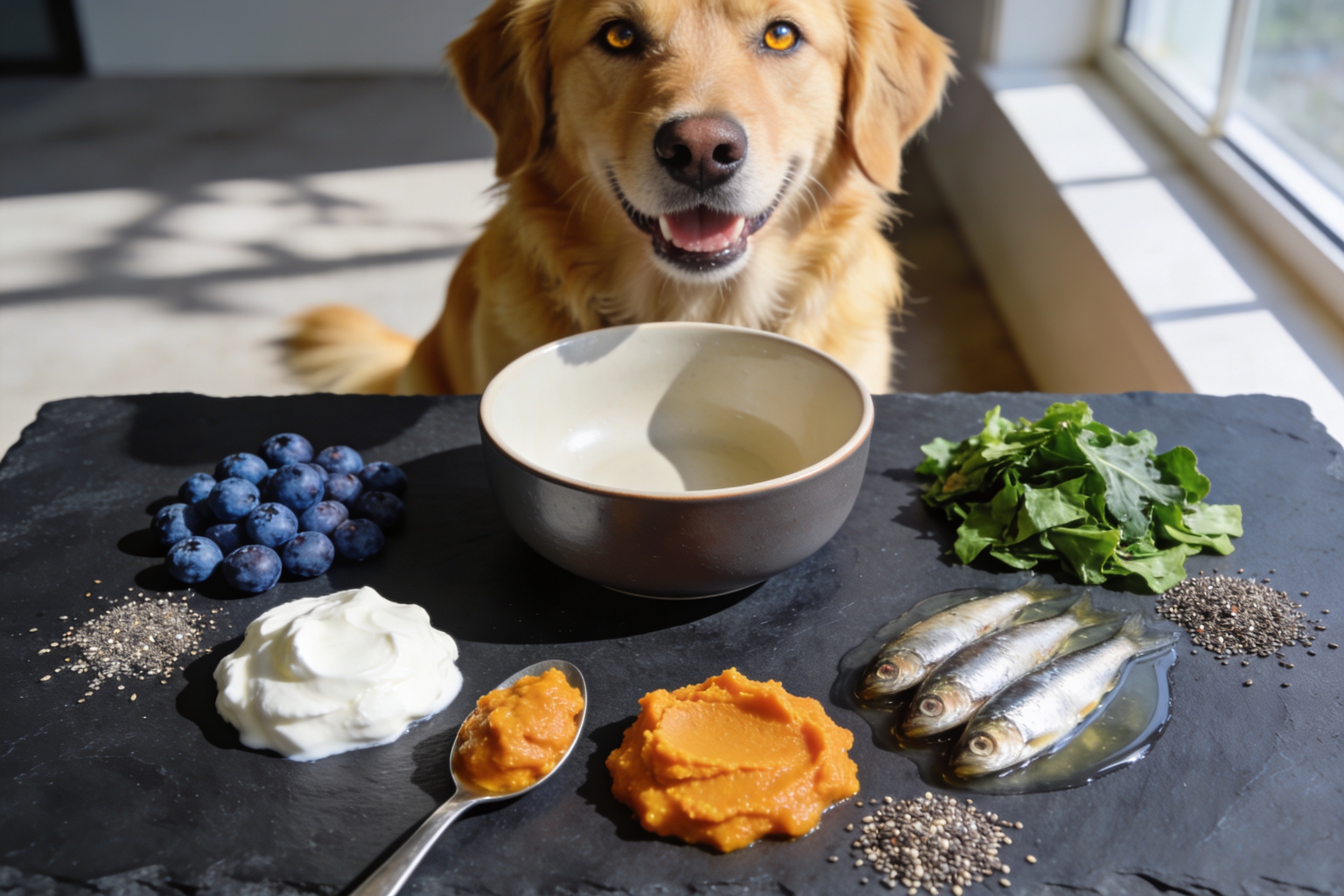
You want your dog to live longer, zoom harder, and smell less like a Frito? Food helps. Not just any kibble—simple, powerful whole foods you can add to their bowl today. Vets recommend many of these because they’re safe, nutrient-dense, and easy to use. Let’s dig into the doggy superfood list your pup will drool over.
What Makes a “Superfood” for Dogs?
Superfoods earn the title because they pack a lot of nutrition into small portions. Think antioxidants, omega-3s, high-quality protein, and gut-friendly fiber. Dogs don’t need fancy powders to thrive—just smart add-ins. Rule of thumb: Start small, introduce one food at a time, and watch for tummy drama. And if your dog has allergies or medical issues, run it by your vet first. FYI, “a little” means 1–2 teaspoons for small dogs, 1–2 tablespoons for big dogs unless otherwise noted.
Top Superfoods You Can Add Today
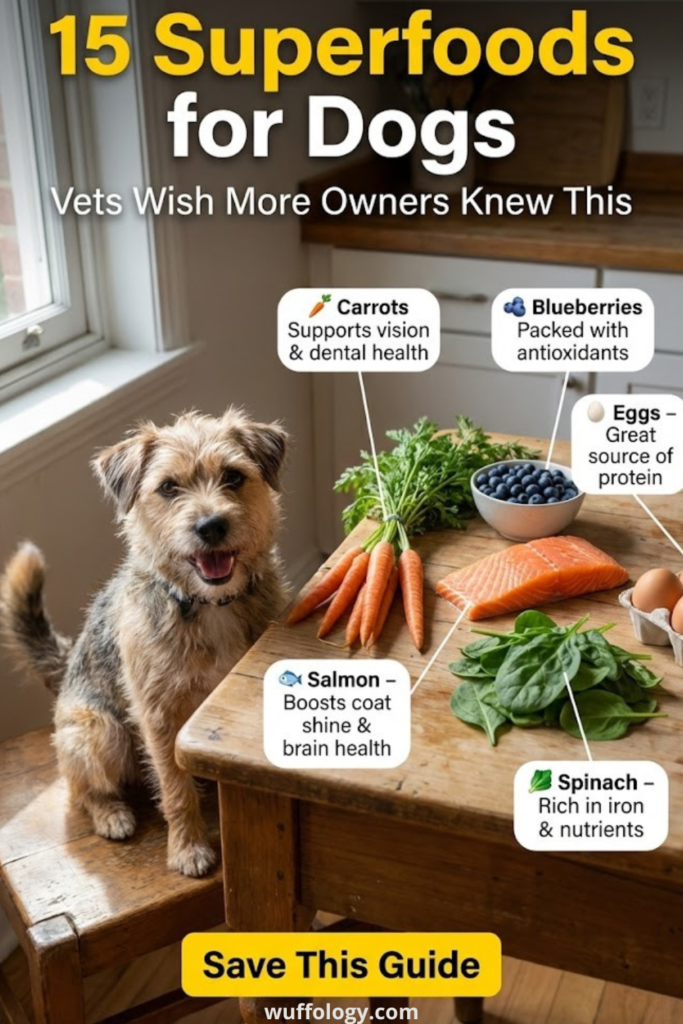
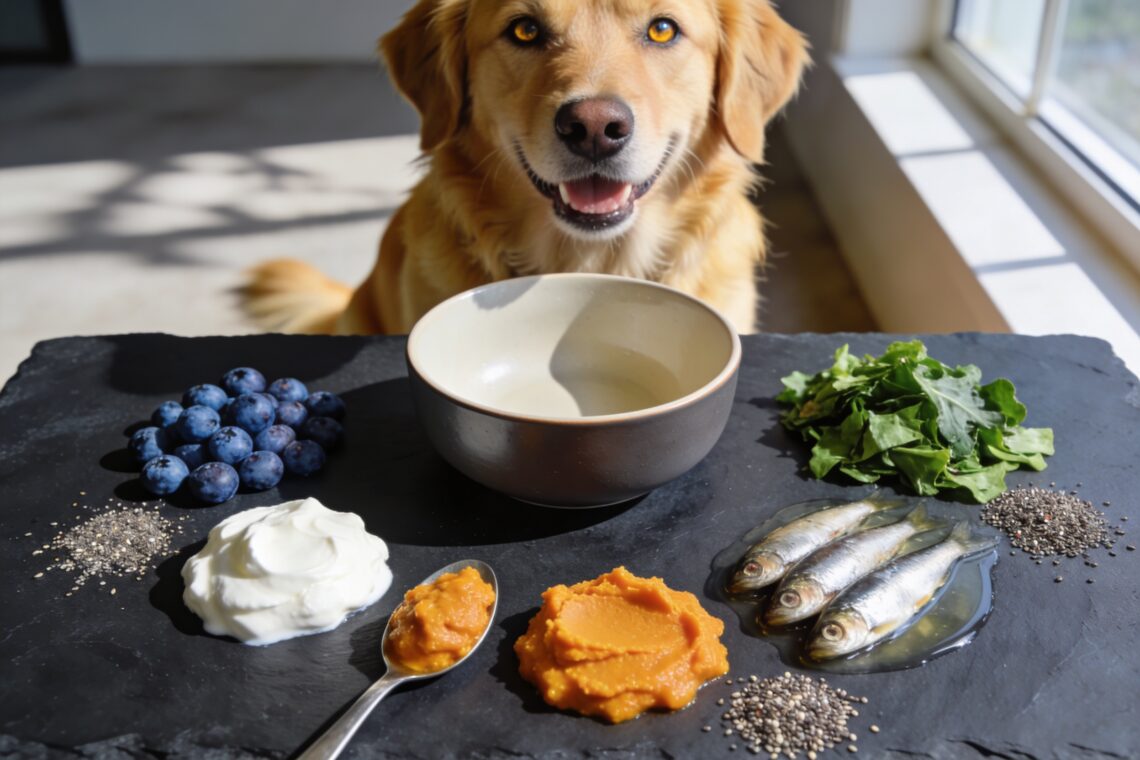
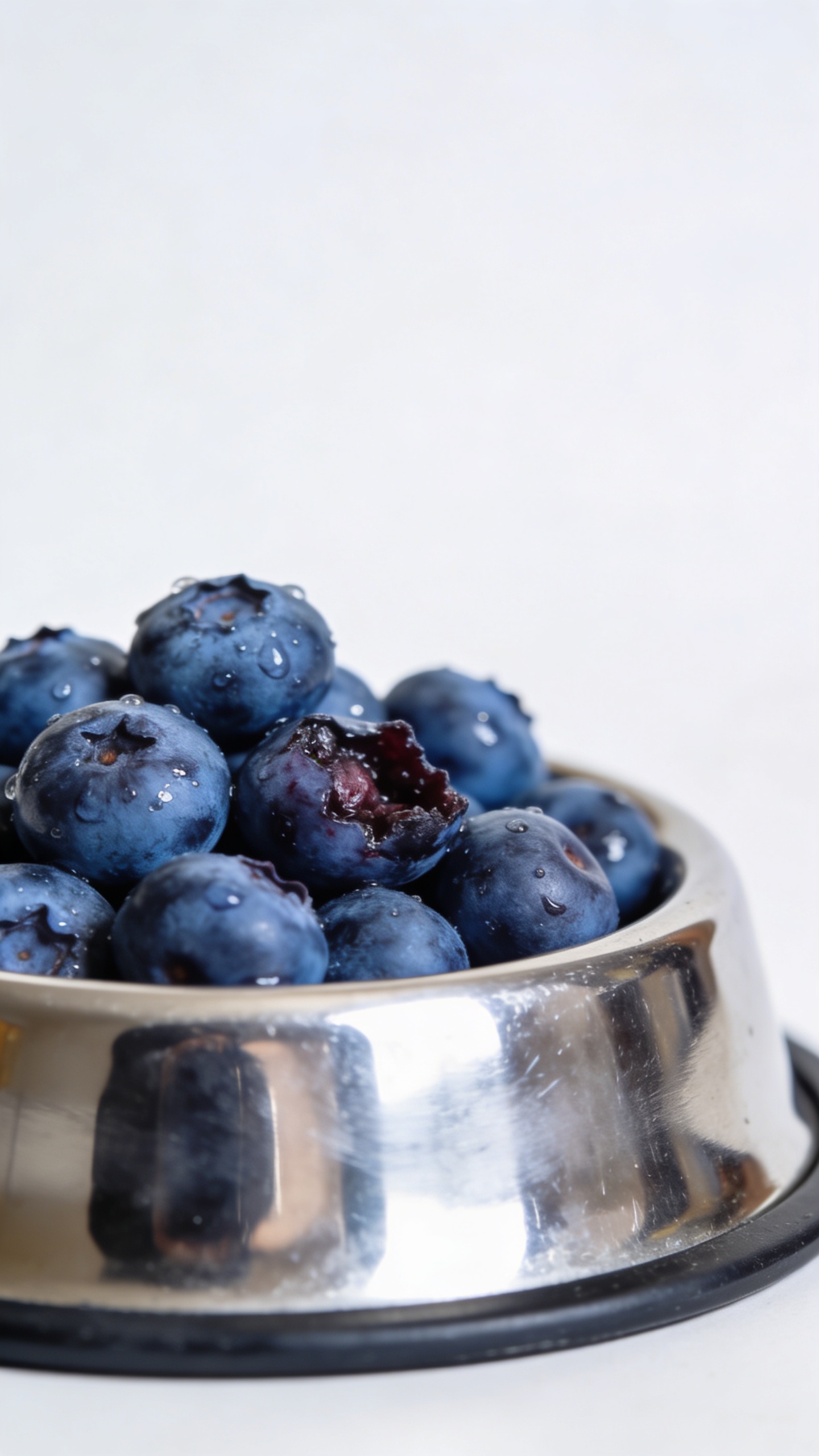
- Blueberries: Little antioxidant bombs. They support brain health, reduce inflammation, and taste like dog candy. Fresh or frozen both work.
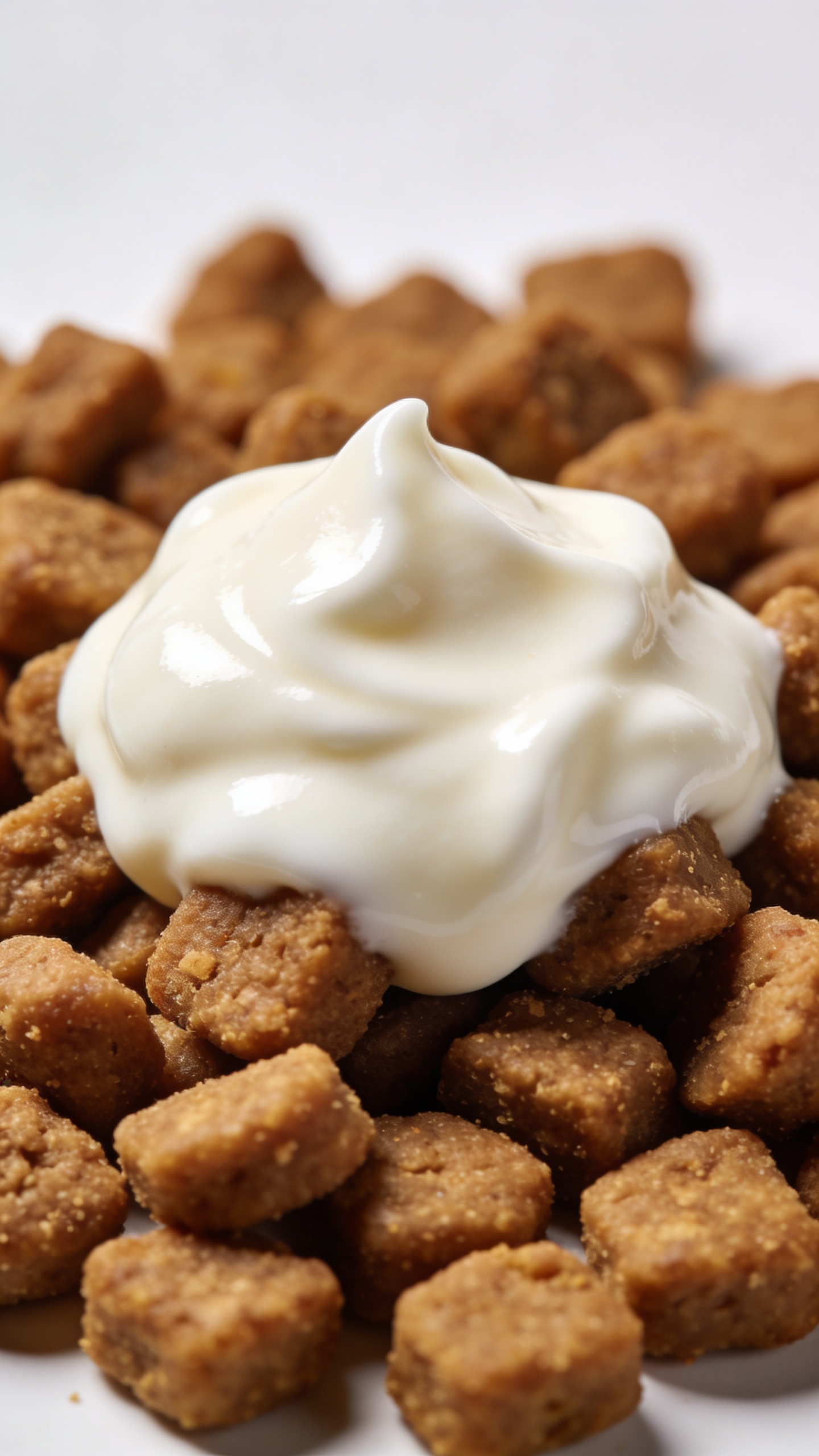
- Plain Greek yogurt: Protein plus probiotics for gut health. Pick unsweetened, no xylitol. If your dog gets gassy, try lactose-free or kefir.
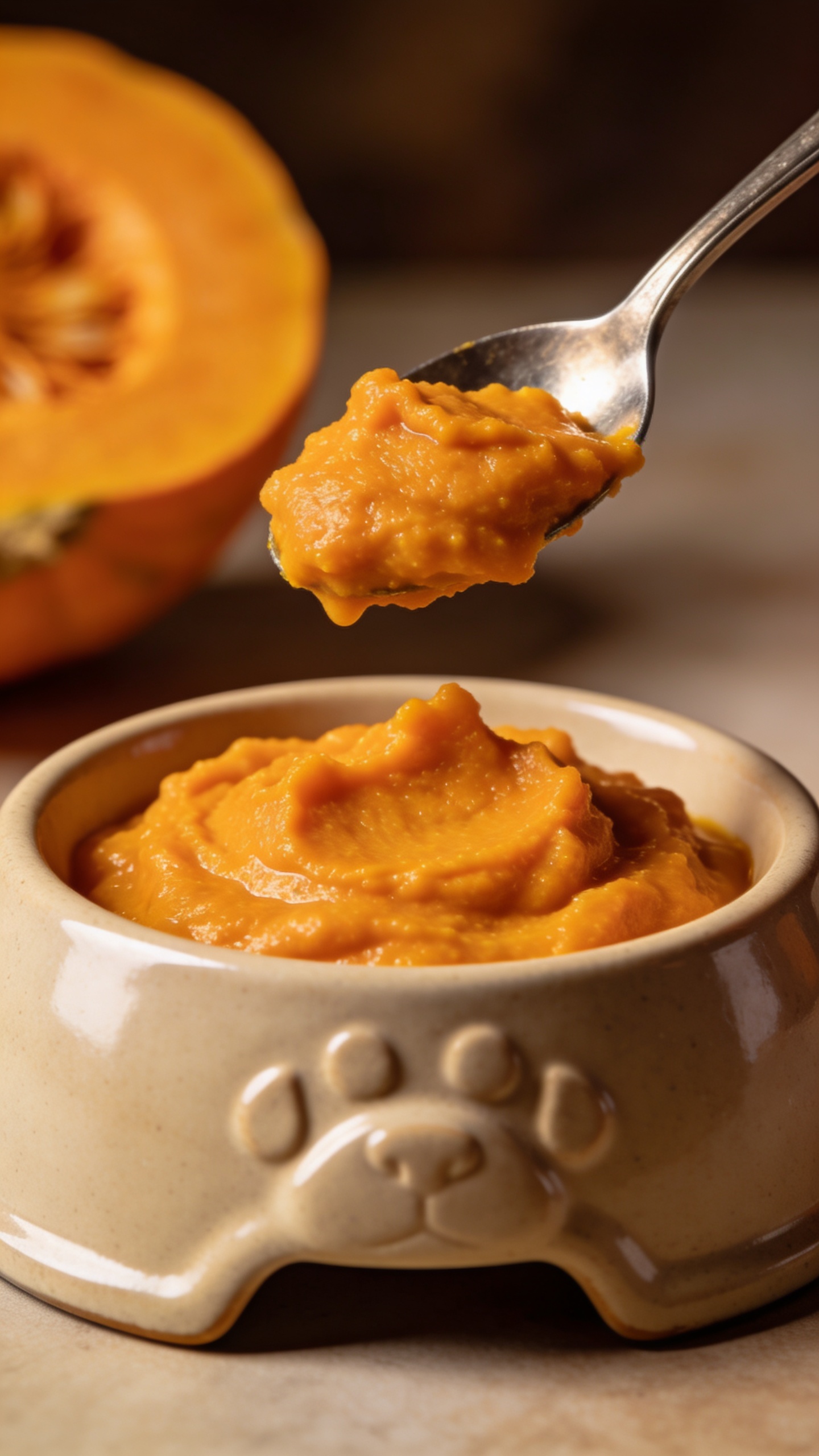
- Pumpkin (plain, canned): Fiber for firm poops and happy guts. Also rich in beta-carotene for skin and eye support.
- Sardines (in water, no salt): Clean omega-3s and complete protein. Great for skin, joints, and heart. One small sardine a few times a week works.
- Eggs: Nature’s multivitamin. Biotin, choline, and digestible protein. Cooked is safest to avoid rare salmonella risk.
- Sweet potatoes: Complex carbs with fiber and vitamins. Gentle on sensitive stomachs when baked or steamed.
- Bone broth (unsalted): Hydration and collagen for joints and gut lining. Make sure it’s onion- and garlic-free.
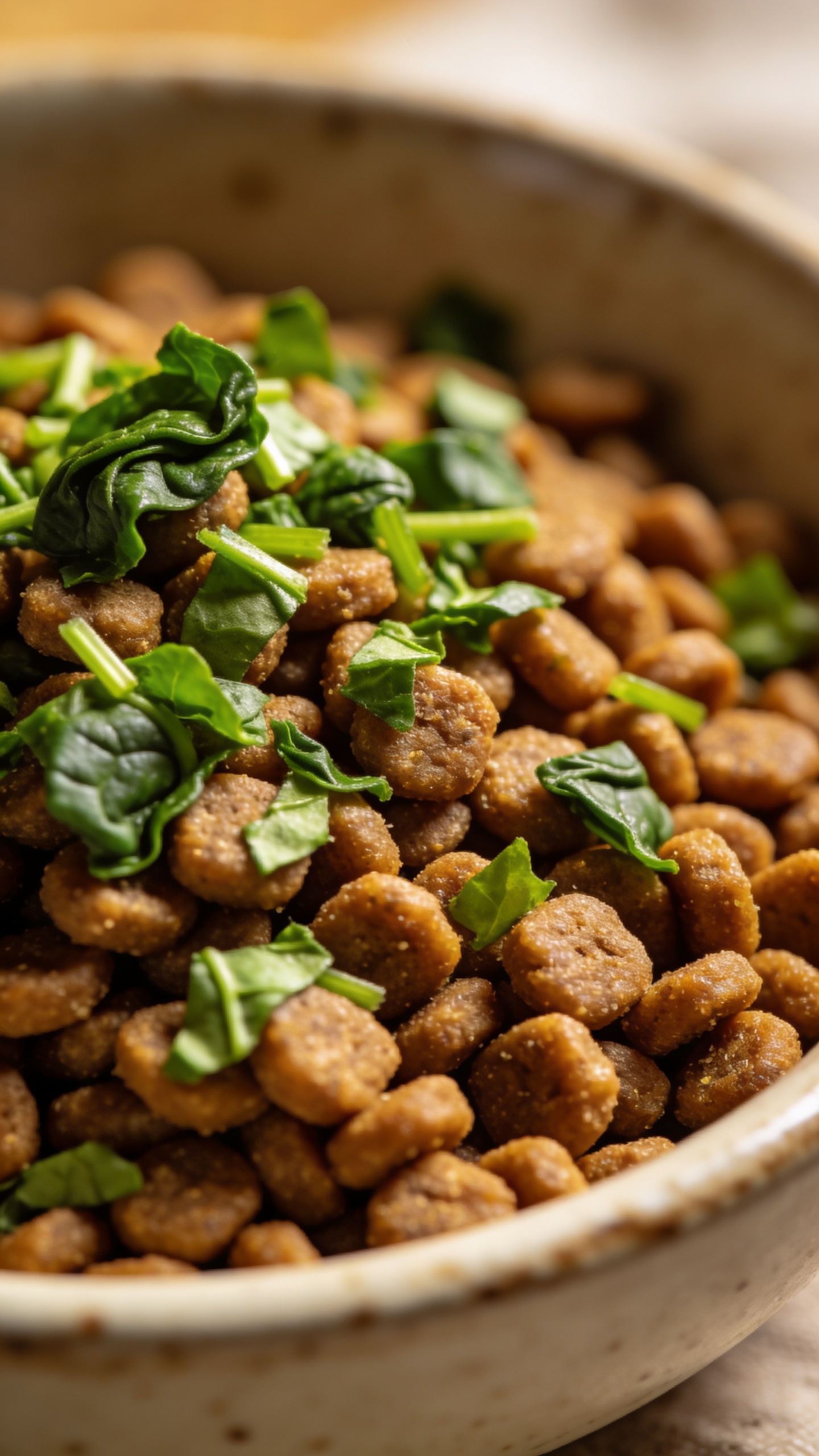
- Spinach: Iron, lutein, and antioxidants. Lightly steam and chop to help digestion. Small portions only.
- Broccoli florets: Sulforaphane supports detox pathways. Steam lightly and serve in small amounts to avoid gas.
- Turmeric (with black pepper): Anti-inflammatory golden spice. Mix a tiny pinch with a little oil and food. Don’t overdo it.
- Chia seeds: Fiber and plant-based omega-3s. Soak first in water to avoid a dry gut blob situation.
- Apples (no seeds): Crunchy fiber and vitamin C. Peel if your dog gets gassy, and always ditch the core.
- Green-lipped mussel powder: Joint support MVP with EPA, DHA, and GAGs. Many vets love it for arthritis.
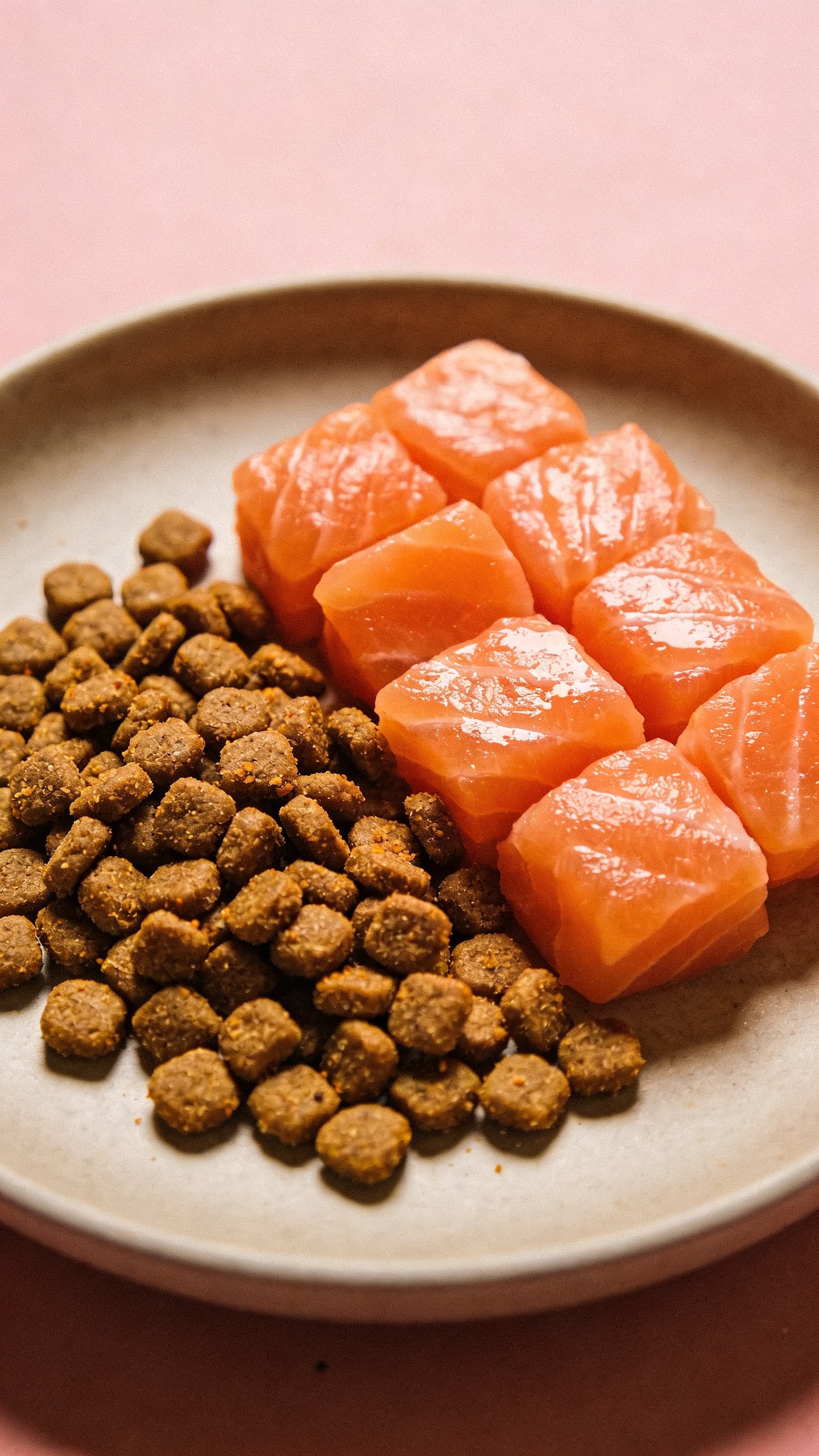
- Lean turkey or chicken: Simple, highly digestible protein. Boiled or baked, unseasoned. Perfect for picky eaters.
- Coconut oil: Medium-chain fats for energy and potential skin benefits. Start tiny to avoid loose stools.
How to Add Superfoods Without Upsetting the Belly
Nobody wants surprise carpet cleanup, right? Go slow and keep it boring at first.
Smart Portion Guide
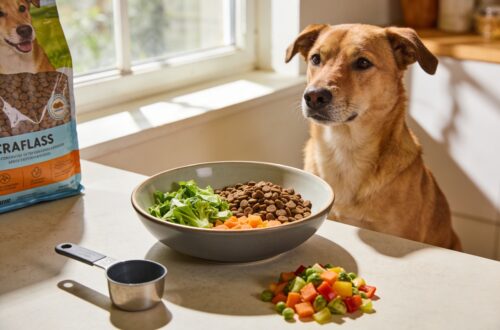
- Tiny dogs (under 15 lb): 1 tsp–1 tbsp add-in per meal
- Medium dogs (15–40 lb): 1–2 tbsp per meal
- Large dogs (40–80 lb): 2–3 tbsp per meal
- XL dogs (80+ lb): 3–4 tbsp per meal
Note: Seeds/spices like chia and turmeric should start at a pinch. With oils, begin with 1/4 tsp for small dogs, 1/2–1 tsp for big dogs.
Mixing Tips That Actually Work
- Blend blueberries or spinach into a small spoon of yogurt.
- Stir pumpkin into kibble to make a “sauce.”
- Top with crumbled sardine or diced boiled egg for instant gourmet vibes.
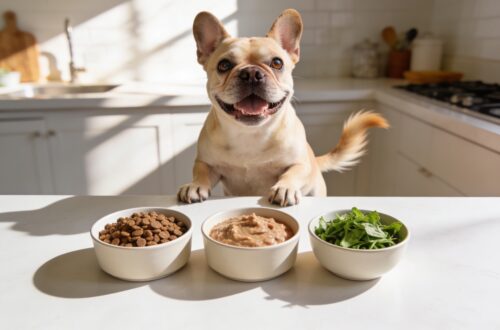
- Use bone broth to soften dry food—bonus hydration.
Deep Dives on the Heavy Hitters
1) Omega-3 Powerhouses: Sardines and Mussels
EPA and DHA tame inflammation, support brain health, and help itchy skin. Sardines offer a clean, low-mercury source. Green-lipped mussel brings extra joint-cushioning compounds. If your dog limps after fetch, this combo helps, IMO.
2) Gut Health Trio: Pumpkin, Yogurt, and Chia
Fiber feeds healthy gut bacteria and keeps stools civilized. Pumpkin adds soluble fiber. Yogurt brings live cultures. Chia gels up when soaked, soothing irritated tummies. Together? Chef’s kiss for digestion.
3) Antioxidant All-Stars: Blueberries and Spinach
Antioxidants fight oxidative stress, which accelerates aging. Blueberries support cognitive function (yes, dog brains love them), while spinach adds lutein for eyes. Small portions keep oxalates in check.
Sample 7-Day Superfood Sprinkle Plan
Want a roadmap? Here’s an easy rotation you can repeat. Adjust portions to your dog’s size.
- Day 1: Kibble + 1 tbsp pumpkin + sprinkle chia (pre-soaked)
- Day 2: Kibble + 1–2 sardines (water-packed) + a few blueberries
- Day 3: Wet food + 1 tbsp Greek yogurt + diced apple slices
- Day 4: Kibble + bone broth splash + steamed broccoli florets
- Day 5: Home-cooked topper: boiled chicken + sweet potato mash
- Day 6: Kibble + egg (scrambled, no butter) + spinach (lightly steamed)
- Day 7: Kibble + green-lipped mussel powder (per label) + tiny turmeric pinch with a drop of olive or coconut oil
Pro tip: Keep it simple. Your dog doesn’t need a charcuterie board—just consistency.
Superfoods to Use Carefully (or Skip)
Some “healthy” human foods don’t love dogs back.
- Garlic and onions: Toxic to red blood cells. Hard no.
- Grapes and raisins: Kidney failure risk. Another hard no.
- Avocado: Flesh is usually fine in tiny amounts, but fat can upset stomachs, and pits/skins are a hazard. Easier to skip.
- Nuts: Many are too fatty; macadamias are toxic. Pass.
- Artificial sweeteners (xylitol): Extremely toxic. Check yogurt and peanut butter labels.
How to Know If It’s Working
You’ll see changes in the mirror and the poop bag (the most honest feedback).
- Coat: Shinier, less dandruff = omega-3s doing their job.
- Joints: Easier stairs and smoother zoomies after mussel/turmeric add-ins.
- Poops: Formed, easy-to-pick-up logs after pumpkin and chia.
- Energy and focus: Blueberries and eggs help keep the brain and muscles happy.
FAQ
Can I give my dog raw eggs?
You can, but cooked is safer and still super nutritious. Raw eggs carry a small salmonella risk and raw egg whites contain avidin, which can bind biotin. Cooking solves both. Scramble with a splash of water, no butter or salt.
How often should I add these superfoods?
Aim for small amounts daily or a few times per week. Rotate them to cover different nutrients. Consistency beats giant “superfood Sundays” that wreck stomachs.
Are sardines better than salmon?
For dogs, sardines often win because they’re smaller, lower on the food chain, and lower in mercury. They’re also cheaper and perfectly portioned. Canned in water, no salt, is your best bet.
My dog has a sensitive stomach—where should I start?
Start with pumpkin, sweet potato, and bone broth. Add a teaspoon of plain Greek yogurt if dairy sits well. Introduce one new food every 3–4 days and watch for gas or soft stools.
Can puppies have these superfoods?
Yes, in tiny portions, but keep the main diet a complete, balanced puppy food. Superfoods are toppers, not replacements. When in doubt, ask your vet for puppy-specific amounts.
What about turmeric—does it really help?
It can help with inflammation, especially paired with a pinch of black pepper and a little fat for absorption. Keep doses tiny and avoid if your dog has bleeding disorders or takes certain meds. When used right, it’s a nice extra—not a miracle cure, IMO.
Conclusion
You don’t need a gourmet dog chef or a second mortgage to feed smarter. Add a few of these vet-loved superfoods, go slow, and watch your pup’s coat, poops, and pep improve. Small daily boosts beat big dramatic overhauls. Your dog will think you’re a culinary genius—and honestly, they’re not wrong.