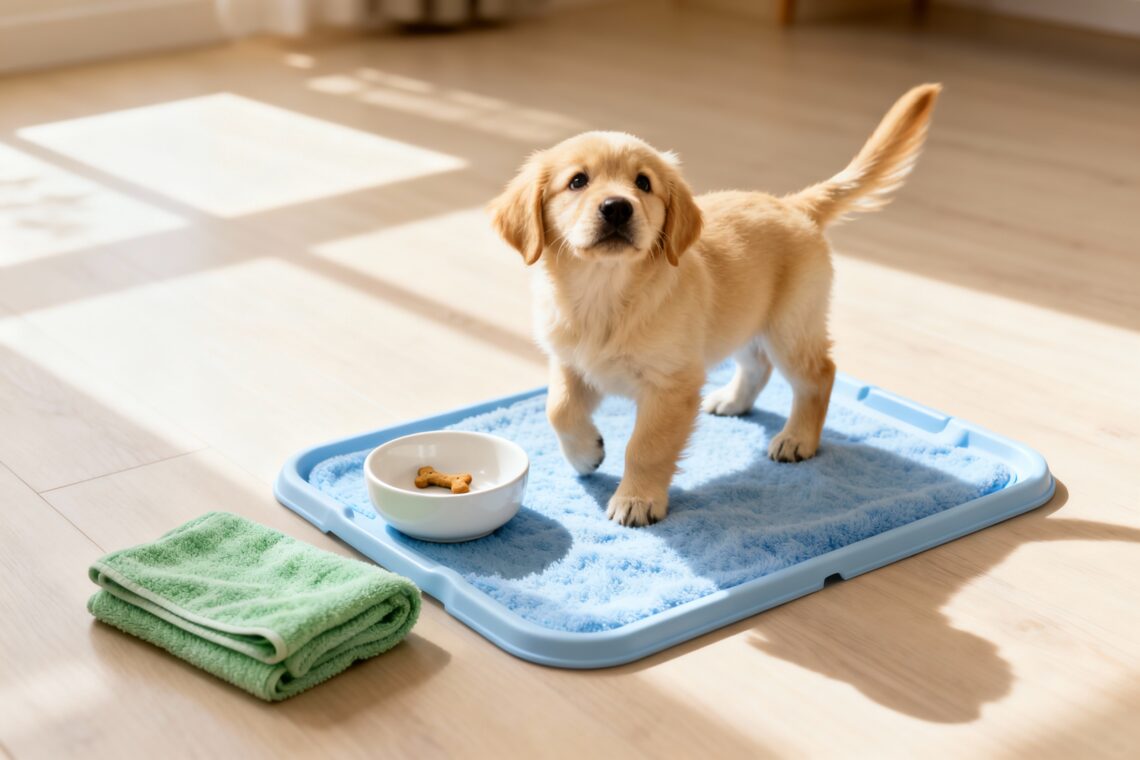
Potty training a puppy doesn’t need to feel like a never-ending game of “guess that puddle.” You can get fast, stress-free results with the right setup, a simple routine, and a tiny bit of patience. Your pup wants to get it right—your job is to show them exactly how. Ready to turn those accidents into victories?
Set Up Your Success Zone
Your home layout either helps you or sabotages you.
Let’s rig it for wins. Create a small, controlled space where your puppy hangs out: a crate, playpen, or a blocked-off room. Start here:
- Crate train with the right size crate—big enough to stand, turn, lie down; not big enough to host a house party.
- Use a playpen when you’re around but not laser-focused. Put toys, water, and a chew in there.
- Protect floors with washable rugs or pee pads temporarily (more on pads later).
Crate Training Basics
Make the crate a cozy den, not a jail cell.
Toss treats in, feed meals inside, and keep the door open at first. Short, calm crate sessions beat marathon ones. Puppies won’t naturally love crates without your help—think “spa vibes,” not “timeout.”
Build a No-Brainer Routine
Consistency wins.
You’ll feel repetitive. Good—you’re rewiring tiny dog brains. Take your puppy out:
- First thing in the morning and last thing at night
- After naps and after meals (10–15 minutes post-eating)
- After play sessions
- Every 1–2 hours for very young pups
Keep a simple log for a few days: time out, did they pee/poop, and where. Patterns appear fast.
IMO, this log saves your sanity more than coffee.
The 10-Minute Rule
Go to the potty spot, give them 5 minutes to pee. If nothing happens, bring them back inside and crate or supervise closely for 10 minutes. Then try again for 5 minutes.
Repeat once. No pressure, no scolding, just a predictable rhythm.
Choose a Potty Spot and a Cue
Pick a designated patch of grass or a specific area outside. Consistency helps your puppy connect the dots. Make it clear:
- Walk straight to the spot.No sniffari until business happens.
- Use a simple cue like “Go potty.” Say it once, not like a hype man on repeat.
- Stand still. You’re not doing laps; you’re waiting for nature.
The second your puppy finishes, praise like they solved world peace and hand over a tiny, high-value treat. Reward immediately, not back in the kitchen five minutes later.
Timing matters.
Supervision: Your Secret Weapon
Freedom comes with responsibility. Puppies don’t have that yet. You do. Use these tools:
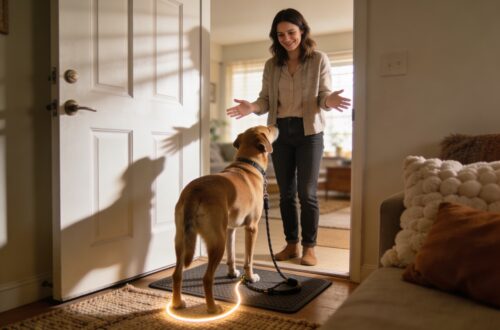
- Leash indoors to keep them near you during training.
- Tether systems to a sturdy piece of furniture if you’re in one spot.
- Baby gates to limit access to carpeted “crime scenes.”
Watch for the telltale signs: circling, sniffing intensely, wandering off, suddenly going quiet.
If you see it, scoop and go outside. No lecture. You’re Sherlock with a leash.
Accidents Will Happen (Don’t Make It Weird)
Catch them mid-stream?
Calmly say “outside,” pick up, and move to the spot. If they finish outside, still reward. Already found a puddle?
Clean it thoroughly with an enzymatic cleaner. No scolding after the fact. Dogs don’t do guilt; they do confused faces.
Big difference.
Food, Water, and Timing Hacks
Your schedule makes potty training easier—or much harder. Control what you can. Smart habits:
- Feed on a schedule (same times daily). Free-feeding creates chaos.
- Offer water regularly but pick up the bowl 2 hours before bedtime.
- Last potty break happens right before lights out.
Most puppies need to poop after meals and play.
If you time outings with that rhythm, you’ll think you’re a dog whisperer. You’re not (probably), but your timing looks good.
Pee Pads, Indoor Turf, and Apartment Life
Do you need pads? Maybe.
If you live in a high-rise or have a tiny puppy with tiny bladder capacity, pads can help. But they can slow outdoor training if you use them long-term. If you use pads:
- Place them in a consistent spot and fence off with a pen.
- Reward pad success just like outdoor success.
- Gradually move the pad toward the door, then outside, then remove.
IMO, indoor turf systems beat flimsy pads for consistency and smell control. Either way, pick a path and stick with it.
Nighttime Strategy
Young puppies often need one middle-of-the-night trip.
Set a quiet alarm, slip on shoes, go directly to the spot, minimal chatter, business only. Back to bed. This phase ends faster than you think.
Promise.
Positive Reinforcement: Paychecks for Potty
Behavior that gets rewarded gets repeated. Your job? Pay on time. Reward tiers:
- Pee outside: one tiny treat and praise.
- Poop outside: two tiny treats and a mini party.
- Accident-free day: a special chew or extra play session.
Avoid punishment.
It teaches puppies to hide accidents, not to hold it. We want confidence and clarity, not bathroom shame. FYI: Your dog doesn’t “get back at you.” They just have a full tank.
Troubleshooting: When Things Go Sideways
Sometimes you do everything “right” and still get surprises.
Let’s de-bug. Common issues and fixes:
- Puppy pees again inside right after coming in: They didn’t finish. Extend outdoor time by 2–3 minutes or walk slowly. Reward for double pees outside.
- Peeing submissively when greeting: Lower excitement.Greet calmly, crouch sideways, and ignore until they settle.
- Multiple accidents in a day: Tighten supervision, shrink space, increase outings. Reset the routine for 48 hours.
- Sudden regression: Check schedule changes, guests, or new cleaners. If it persists, see your vet to rule out a UTI or GI issue.
Realistic Timelines
Most puppies understand the basics in 2–4 weeks with consistent training.
Full reliability takes longer—often until 5–6 months. Small breeds can take a bit more time. That’s normal, not a fail.
Sample 1-Day Potty Plan
Steal this and tweak as needed.
- 6:30am: Outside immediately, reward.
- 6:45am: Breakfast.
- 7:00am: Outside again, reward.
- Play/supervise.Short crate break if you shower.
- 9:00am: Outside, reward.
- 12:00pm: Lunch (if your pup still eats midday). Outside 10–15 minutes later.
- 3:00pm: Outside, reward.
- 5:30pm: Dinner. Outside 10–15 minutes later.
- 7:30pm: Outside, reward.Light play. Calm evening.
- 9:30pm: Water up.
- 10:30pm: Final potty break. Bedtime.
- 2:30am: Optional quick night trip for young puppies.
FYI, you won’t keep this forever.
As your puppy holds it longer, stretch the gaps.
FAQ
How long can my puppy hold it?
A rough guide: months old + 1 equals hours they can hold it during the day (up to about 6–8 hours max for older pups). Nighttime often runs a bit longer. Always err on the generous side—comfort first.
What should I do if my puppy pees in the crate?
Clean thoroughly with an enzyme cleaner, reduce crate size, and increase potty breaks.
Remove overly fluffy bedding temporarily if it soaks and hides mess. Rule out medical issues if it happens more than once or twice.
Should I rub their nose in it?
Nope. That old myth only creates fear and confusion.
Redirect in the moment if you catch them, reward outside, and manage better next time. Clarity beats punishment every time.
Do belly bands or diapers help?
They can protect surfaces short-term, but they don’t teach potty habits. Use them only while you troubleshoot and supervise, not as a long-term solution.
My puppy only goes on walks, not in the yard.
What now?
Try a specific yard spot and keep it boring until they go. Use the same cue, stand still, and limit sniffing games until after success. Bring a used pee pad or a tissue dabbed with their urine to “seed” the area.
When do I call a vet or trainer?
If your puppy drinks excessively, strains, has frequent accidents after doing well, or shows stress around elimination, call your vet.
If routines feel chaotic or you need custom help, a positive-reinforcement trainer can dial it in fast, IMO.
Conclusion
Potty training gets easy when you control the environment, follow a predictable routine, and reward like a paycheck. Keep the vibe calm, the rules consistent, and the treats tiny. A few weeks from now, you’ll forget how many paper towels you used—your pup will just quietly trot to the door like a pro.
Fast, stress-free, and yes, totally doable.