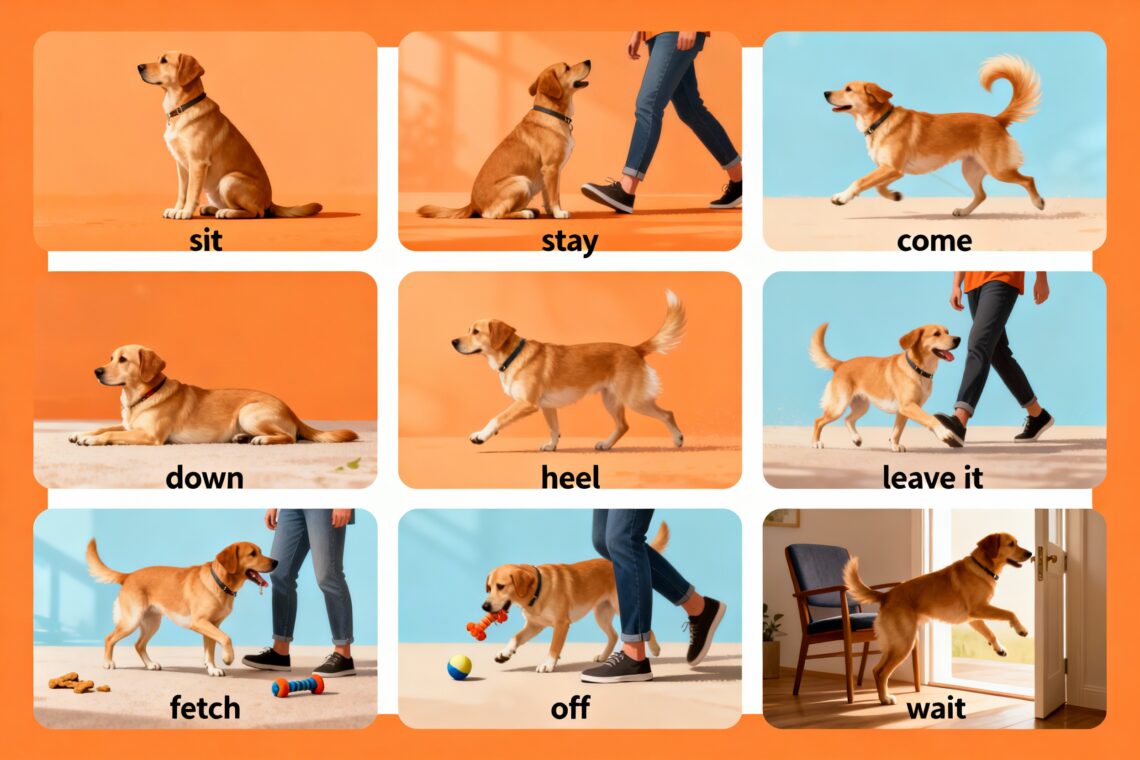
You got a cute tornado with paws, and you need manners fast. Good news: you don’t need a miracle, just a clear plan and the right words. The top dog commands don’t just teach tricks—they flip chaos into calm, snacking, nap-taking magic.
Give me a few minutes, and you’ll walk away with a game plan you can start today.
Why Commands Work (And Work Fast)
Commands give your dog a job. Jobs give your dog focus. Focus gives you peace.
When you pair clear cues with rewards, your dog learns what earns the good stuff—treats, toys, praise, and freedom. That’s behavior change 101.
The Core 10 Commands Every Dog Should Know
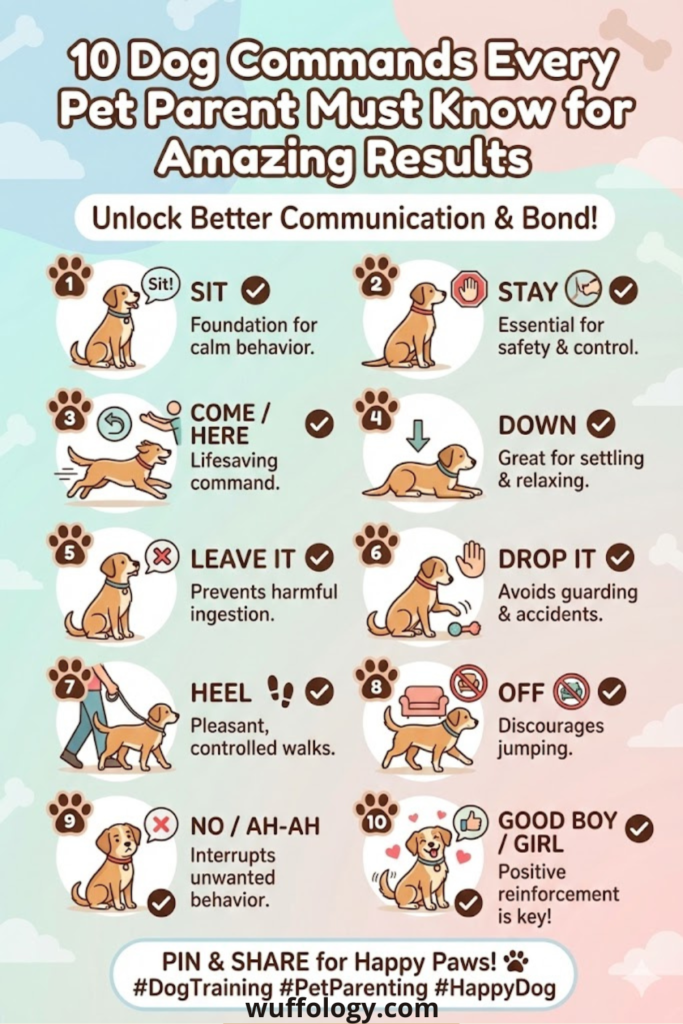
These ten build impulse control, safety, and calm—fast. Start with 5-minute sessions, 2-3 times a day, and keep things fun.
Spoiler: you’ll see changes in a week if you stay consistent.
- Name Recognition (“Name?”) — Say your dog’s name once. When they look at you, mark it (say “Yes!”) and reward. You build a strong “check-in” habit that powers every other command.
- Sit — The universal pause button.Lure up with a treat from nose to forehead; mark and reward the moment butt hits floor. Use before meals, doors, or greetings.
- Down — Calm on cue. Lure from sit to floor; reward when elbows touch ground.This lowers arousal fast and prevents pogo-sticking during guests and vet visits.
- Stay — You control release. Start with one second, one step back. Say “Stay,” then release with a happy “Free!” Reward like crazy at first.Build distance, duration, then distractions (in that order).
- Come — Lifesaver. Use a party voice. Reward like you just won the lottery.Never call to punish. Practice on a long line outside.
- Leave It — “Don’t touch that.” Hold a treat in a closed fist. When your dog backs off, mark and reward with a different treat.Level up to floor drops, then real-world stuff.
- Drop It — “Spit it out.” Trade up: say “Drop,” show a better reward, mark when they release, then give the better reward. Makes sock theft less dramatic.
- Heel/Loose Leash — No tug-of-war on walks. Reward when the leash stays slack and your dog walks near your hip.Stop when pulling starts; move when slack returns. Dogs learn “pulling = standstill, slack = go.”
- Place — Go to a mat/bed and chill. Point or cue “Place,” reward when all four paws land, then add a down and stay.Great for doorbells and dinner time.
- Wait — “Pause before we move.” Use at doors, cars, stairs, and food bowls. It builds impulse control without needing a full stay.
How To Teach Fast: The 3-Part Recipe
Keep it short. Dogs learn best in tight sprints, not marathons. Think mini-workouts.
- Step 1: Lure — Use a treat to guide the behavior.
- Step 2: Mark — Say “Yes!” the instant your dog does it right.
- Step 3: Reward — Deliver the treat or toy within two seconds.Speed matters.
Timing beats volume
One well-timed “Yes!” outperforms ten sloppy treats. If your dog looks confused, you’re likely late or your steps are too big. Shrink the task and try again.
Command Combos That Fix Real-Life Problems
Why teach commands in isolation when you can solve daily chaos?
Stack them.
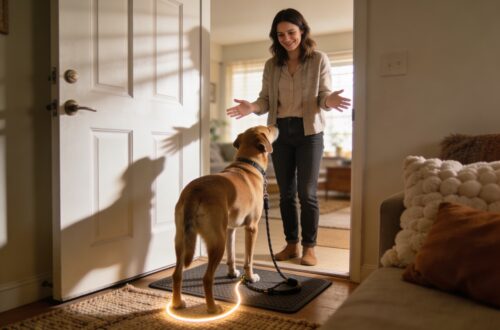
- Door Dashers — Sit + Wait + Place. Cue sit at the door, wait for the handle turn, release to “Place” when calm.
- Jumping Greeters — Sit + Stay. Humans ignore until the dog sits; reward only calm butts-on-floor.
- Counter Surfers — Leave It + Place.Block access with “Leave it,” then redirect to “Place” for a jackpot.
- Leash Maniacs — Name + Heel. Say their name before the squirrel appears, then reward tight heeling through the distraction.
Pro tip: Reinforce the boring
Your dog lying quietly deserves payment. If you only reward chaos, you’ll only get chaos.
Pay for calm.
Treats, Toys, and Praise: What Should You Use?
Pay your dog with what they love most in that moment. Food works fast, but not always best.
- Use food for new skills and distractions. Tiny, soft, and stinky works great.
- Use toys for high-drive dogs after a few good reps. Tug as a jackpot—then ask for “Drop it.”
- Use life rewards like sniff breaks, greeting friends, or hopping in the car.Real life pays huge.
Phase out treats without losing obedience
– Start variable rewards: pay every 2-3 reps, then randomly. – Keep praise consistent. – Still jackpot big wins or tough distractions. FYI: If behavior slips, you stopped paying too soon. Bring back the treats briefly.
Common Mistakes That Slow You Down
Let’s save you some frustration, IMO.
- Repeating cues — Say it once.Otherwise your dog learns “Sit-sit-sit-sit” is the cue.
- Mushy criteria — Reward the exact behavior. Butt barely down isn’t “Sit.”
- Training only at home — Dogs don’t generalize well. Practice in different rooms, then outside.
- Using the cue as a question — “Sit?” is not a cue.Say it confidently.
- Calling to punish — Never use “Come” to end the fun or for nail trims. Walk over and leash instead.
Advanced Add-Ons (When You’re On a Roll)
Once the basics click, spice it up. You’ll build reliability under real-world chaos.
- Distance — Ask for “Down” from five feet away.Then ten. Then across the yard.
- Duration — Hold a “Stay” for 30 seconds, then a minute. Reset if they break; don’t scold.
- Distraction — Add mild temptations: toys on the floor, people moving, open doors.Reward heavily.
- Different handlers — Have family and friends cue and reward. Dogs don’t assume everyone knows the rules.
Proofing checklist
– New places – New people – New dogs nearby – Different times of day – You holding groceries, coffee, or a leash in each hand (real life, right?)
FAQs
How long until I see results?
Most dogs improve in a week with daily 5-minute sessions. You’ll see faster sits and fewer jumps almost immediately.
Solid reliability around distractions takes a few weeks—think fitness training, not magic wand.
What if my dog ignores treats outside?
Bring higher-value food (chicken, cheese), train farther from distractions, and start on a long line. Pay bigger for harder reps. If your dog can’t take food, you’re too close to the action—create distance until their brain returns.
Should I use a clicker or just say “Yes”?
Either works.
Clickers stay super precise; your voice is always available. Pick one and stick with it. Consistency matters more than the tool.
Can older dogs learn these commands?
Absolutely.
Older dogs might need shorter sessions and softer treats, but they can learn quickly. In some ways, they focus better than puppies. Age is not a blocker; repetition is your friend.
My dog breaks “Stay” constantly.
Help?
You’re asking for too much, too soon. Cut duration in half, reduce distance, or remove distractions. Reward rapid success, then rebuild slowly.
Use a clear release word like “Free!” to end the stay.
Is punishment necessary?
Nope. Clear boundaries and rewards teach faster and safer. Remove rewards for unwanted behavior (e.g., stand still for pulling, no attention for jumping), then pay big for the right choices.
It’s fair and effective, IMO.
Conclusion
You don’t need perfect timing or pro-trainer vibes—you need clear cues, short sessions, and rewards your dog cares about. Nail these top 10 commands and you’ll get calmer walks, safer choices, and way fewer “Sorry about my dog!” apologies. Start today, keep it fun, and celebrate the tiny wins.
Your pup’s best behavior is just a few reps away.