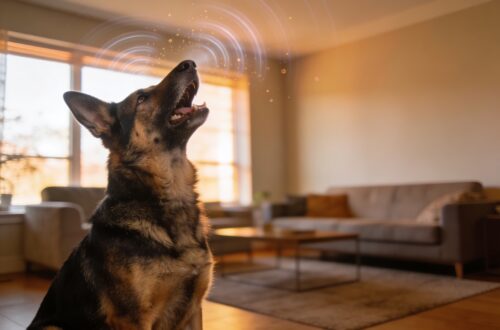

You’re finally settling in for a quiet evening when your dog throws their head back and lets out a haunting, melodramatic howl that sounds like they’re auditioning for a werewolf movie. If you’ve ever wondered why your perfectly happy pup suddenly channels their inner wolf, you’re not alone. The good news? Most howling triggers are totally fixable once you understand what’s going on.
The Separation Anxiety Symphony

Let’s start with the big one. When you leave the house and your dog launches into an operatic performance that rivals Pavarotti, they’re likely dealing with separation anxiety. Your neighbors have probably already informed you about this delightful behavior. Dogs are pack animals at heart, and when you disappear, some dogs genuinely panic. They’re not being dramatic (okay, they’re being a little dramatic), but they’re actually distressed. The howling is their way of calling you back to the pack. The fix is gradual desensitization. Start leaving for just 30 seconds at a time, then come back before they even start howling. Gradually increase the duration. Pair your departures with something amazing like a frozen Kong stuffed with peanut butter. You want them to think “Oh sweet, snack time!” instead of “MY HUMAN IS ABANDONING ME FOREVER.”
Signs It’s Separation Anxiety vs. Just Being Chatty
Your dog probably has separation anxiety if they:
- Only howl when you’re gone or getting ready to leave
- Follow you from room to room constantly
- Get anxious when you grab your keys or put on shoes
- Destroy things near doors or windows
- Have “accidents” despite being house-trained
Environmental Triggers (Yes, That Includes Sirens)

Ever notice how your dog howls every single time a fire truck passes? They’re not concerned about the emergency—they’re just responding to what sounds like another dog’s call. High-pitched sounds trigger an instinctive response that goes back thousands of years. Sirens, car alarms, musical instruments (especially harmonicas and violins), and even certain TV shows can set off the howl festival. Your dog literally can’t help it sometimes. It’s like when someone yawns and you automatically yawn too. The solution here is counterconditioning. When you hear a siren approaching, redirect your dog’s attention with a command they know well, like “sit” or “touch.” Reward them immediately for complying. Over time, they’ll learn that sirens mean treat time, not howl time.
They’re Bored Out of Their Furry Minds

Here’s an uncomfortable truth: a bored dog is a howling dog. If your pup isn’t getting enough mental stimulation or physical exercise, they’ll create their own entertainment. Howling is basically their version of doomscrolling when they’ve got nothing better to do. Think about it—how would you feel stuck in the house all day with no phone, no TV, and no hobbies? You’d probably start making weird noises too.
The Exercise Equation
Different breeds need different amounts of activity. A Border Collie needs way more action than a Bulldog. Most dogs need at least 30-60 minutes of real exercise daily, and I’m not talking about a leisurely stroll around the block where they just sniff every mailbox. Try these boredom-busters:
- Puzzle toys that dispense treats
- Hide-and-seek games with treats around the house
- Training sessions teaching new tricks
- Playdates with other dogs
- Nose work activities that engage their incredible sense of smell
Medical Issues You Shouldn’t Ignore

Sometimes howling isn’t behavioral—it’s medical. Dogs can’t exactly tap you on the shoulder and say “Hey, my hip really hurts,” so they communicate discomfort through vocalizations. Sudden onset howling, especially in older dogs, warrants a vet visit. Conditions like canine cognitive dysfunction (basically doggy dementia), arthritis, or even hearing loss can cause increased vocalization. Senior dogs might howl because they’re confused or disoriented. FYI, if your dog’s howling is accompanied by other symptoms like lethargy, appetite changes, or mobility issues, don’t wait. Get them checked out ASAP.
The Attention-Seeking Howler
Some dogs are just master manipulators who’ve figured out that howling gets them what they want. You know the type—they howl, you rush over to see what’s wrong, and suddenly they’re wagging their tail like “Great, you’re here! Let’s play!” You’ve accidentally trained them that howling equals attention. Whoops. The fix requires willpower on your part. You need to completely ignore attention-seeking howls. Don’t look at them, don’t talk to them, don’t acknowledge them whatsoever. The second they’re quiet, even for just a moment, reward them with attention and praise. It’ll get worse before it gets better (they’ll howl louder thinking you didn’t hear them), but stay strong. Consistency is everything here.
Breed-Specific Tendencies
Let’s be real—some dogs are just more vocal than others, and genetics play a huge role. Huskies, Malamutes, and Beagles are basically the opera singers of the dog world. They were bred to communicate over long distances, so howling is in their DNA. If you adopted one of these chatty breeds and expected silence, well, that’s kind of on you. But you can still teach them appropriate times to vocalize versus when to zip it.
Working With, Not Against, Their Nature
Instead of trying to eliminate all howling (which is pretty much impossible with some breeds), teach them a “quiet” command. Capture the behavior you want by rewarding silence, then add a verbal cue. You’re not stopping them from being themselves; you’re just teaching them volume control.
Alert Barking’s Cousin: Territorial Howling
When the mailman approaches or a squirrel dares to exist in your yard, some dogs howl to alert the household and warn off intruders. From their perspective, they’re doing you a solid by announcing potential threats. The problem is they can’t distinguish between actual threats and, you know, leaves blowing across the lawn. Everything becomes DEFCON 1. Managing this requires desensitization to common triggers and teaching a solid “quiet” command. You might also need to limit their view of the street if they’re window-watching all day getting themselves worked up.
Frequently Asked Questions
Is howling a sign my dog is unhappy?
Not necessarily. Context matters a ton here. Howling during play or in response to music doesn’t indicate unhappiness. But excessive howling paired with destructive behavior, pacing, or other stress signals definitely suggests something’s wrong. Look at the whole picture, not just the howling itself.
Can I train my dog to never howl?
Honestly? Probably not completely, and IMO you shouldn’t try to eliminate it entirely. Howling is natural dog communication. What you can do is reduce unnecessary howling and teach them when it’s appropriate. Think management and moderation rather than total elimination.
Why does my dog howl at certain songs but not others?
Dogs respond to specific pitches and tones that resemble canine vocalizations. Certain musical notes trigger that instinctive response. It’s not that they have terrible taste in music (though maybe they do)—it’s purely about the frequencies involved.
My dog only started howling recently. Should I worry?
Any sudden behavior change deserves attention. Rule out medical issues first with a vet visit, especially if your dog is older. Once you’ve got the all-clear health-wise, look for environmental changes—new neighbors, construction noise, changes in your schedule, or even new pets in the area.
Do certain times of day trigger more howling?
Absolutely. Many dogs howl more at dawn and dusk, which aligns with when wolves are most active. If you live near other dogs, you might notice a neighborhood howl-along during these times. It’s like a canine conference call nobody asked for.
Will getting another dog stop the howling?
Maybe, but it might also give you two howling dogs instead of one. If the howling stems from loneliness, a companion might help. But if it’s attention-seeking or response to environmental triggers, you’ll just have double the volume. Don’t get a second dog solely to fix a behavior problem.
Wrapping It Up
Most howling problems boil down to communication gaps between you and your dog. They’re trying to tell you something—whether it’s “I’m lonely,” “I’m bored,” “I hurt,” or “THERE’S A SQUIRREL AND IT’S AN EMERGENCY.” The key is identifying the cause and addressing it directly rather than just trying to silence the symptom. Start with the fixes outlined above this week, and give your dog time to adjust. Behavior modification isn’t instant, but you should see improvement within a few weeks if you’re consistent. And hey, if all else fails and you’ve got a drama queen on your hands who just loves the sound of their own voice? Noise-canceling headphones exist for a reason. Sometimes you’ve just gotta embrace the chaos.