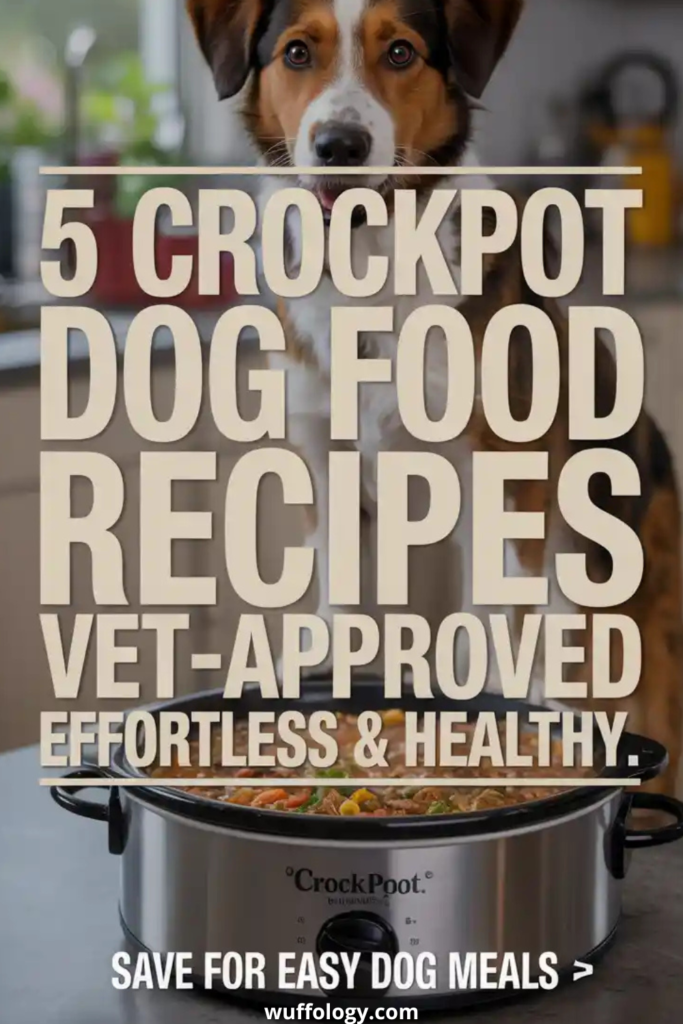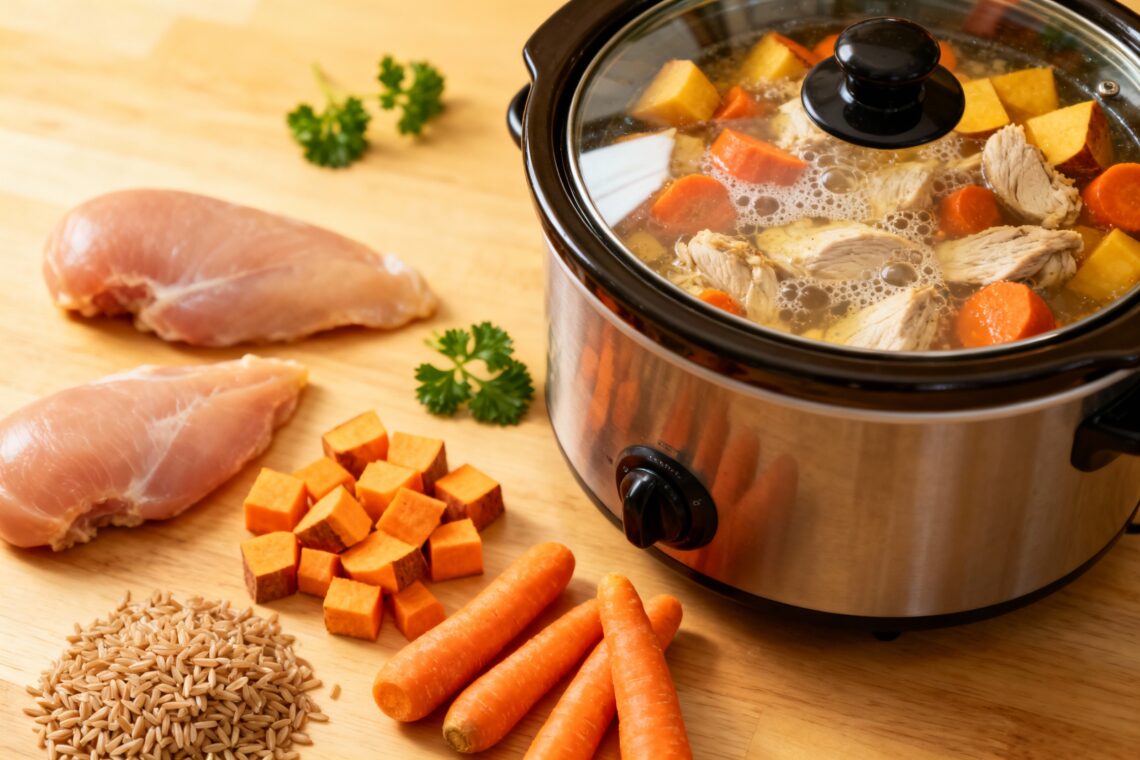
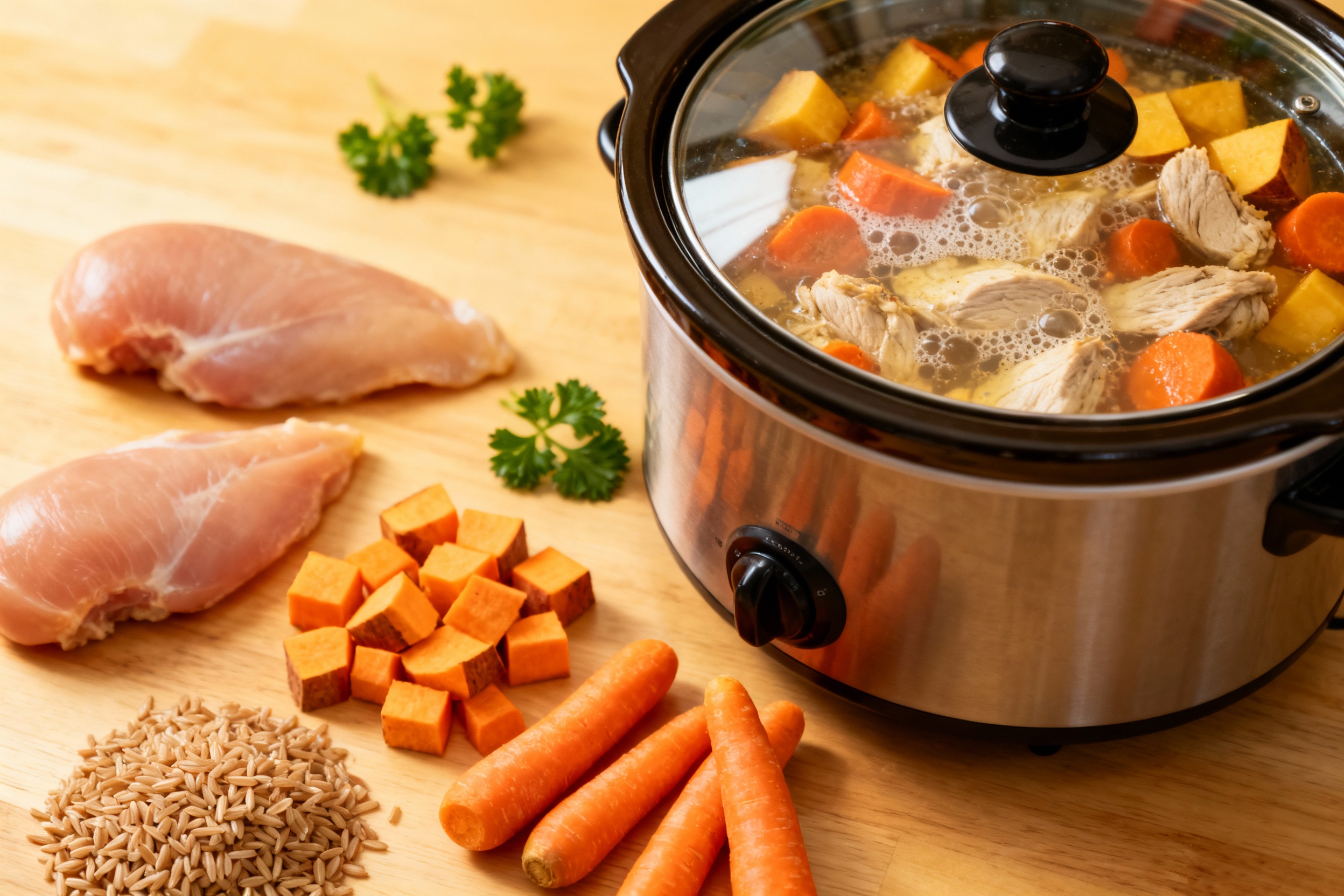
You want easy, healthy meals for your dog without turning your kitchen into a lab? Grab a crockpot and let it do the heavy lifting. These slow-cooker recipes keep things simple, budget-friendly, and downright tasty for your pup. Plus, they’re vet-approved in principle: whole-food ingredients, complete nutrition add-ons, and sensible portions. Ready to make your dog stare at you like you hung the moon?
Why Crockpot Dog Food Works (And When It Doesn’t)
Slow cooking breaks down proteins and veggies so dogs digest them easily. It also keeps flavors rich, which means picky eaters actually show up for dinner. You control the ingredients, and you can batch cook like a pro. But a quick reality check:
- Balance matters: Home-cooked meals need complete nutrition. Use a vet-approved vitamin/mineral supplement for homemade dog food or work with your vet to tailor one.
- Watch fat and seasoning: Skip onions, garlic, excess oils, salt, and spices. Dogs don’t need your chili powder flex.
- Portions count: Even wholesome food can overfeed. Measure and adjust based on your dog’s weight and activity.
What You’ll Need (Besides a Hungry Dog)
Basic tools
- A 6–7 quart crockpot
- Measuring cups and a food scale
- Storage containers or freezer bags
- Stirring spoon and patience (well, some)
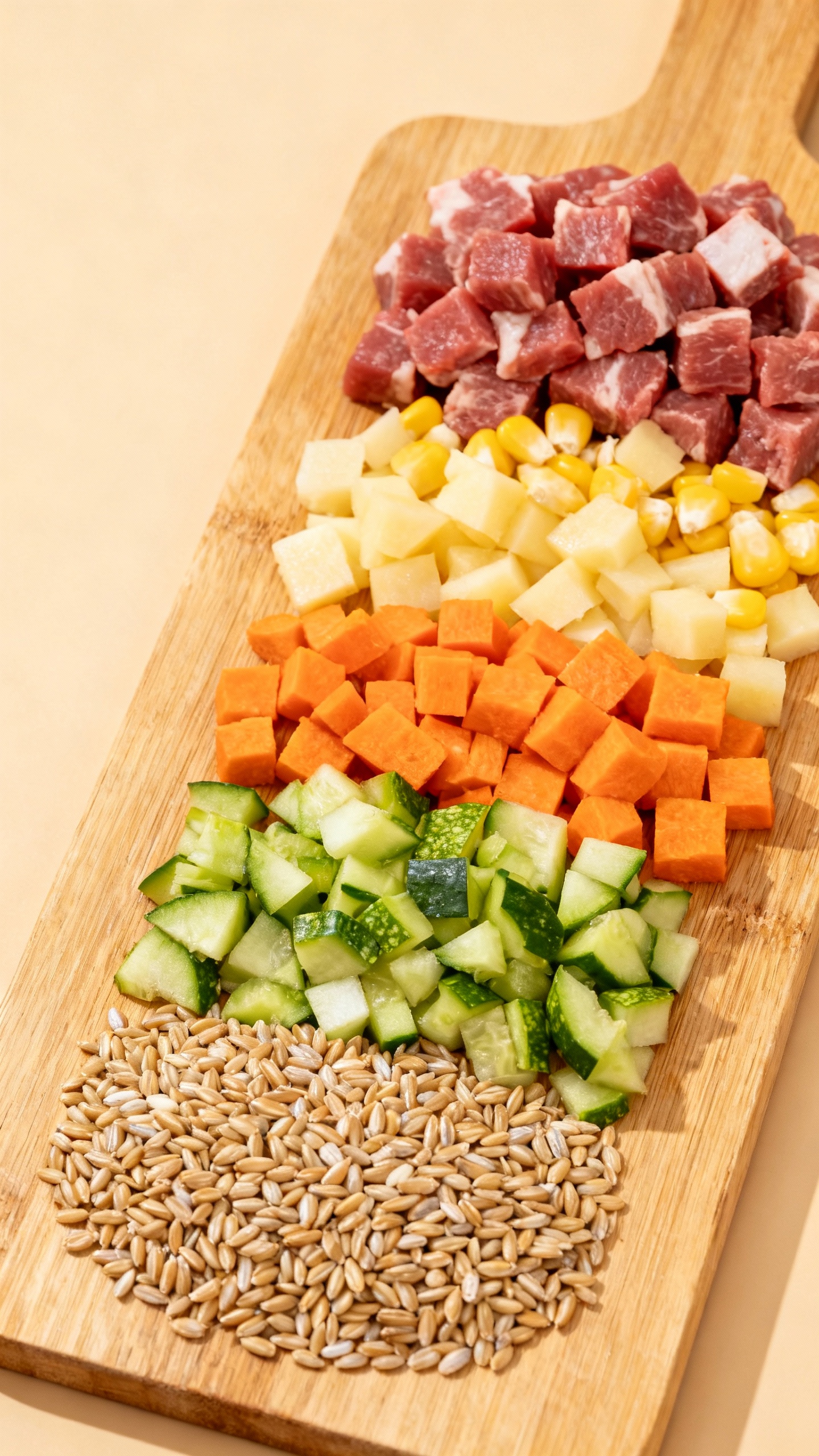
Core ingredients to keep on hand
- Proteins: Lean ground turkey, beef (90%+), chicken thighs, pork loin, salmon
- Carbs: Brown rice, quinoa, sweet potatoes, oats
- Veggies: Carrots, green beans, peas, pumpkin, spinach, zucchini
- Fats: Salmon oil or flaxseed oil (added after cooking)
- Supplements: A vet-formulated dog multivitamin/mineral designed for homemade diets; optional joint support like glucosamine if your vet recommends it
Recipe 1: Turkey, Rice, and Veggie Comfort Bowl
Great for: Most adult dogs, including sensitive stomachs Texture: Soft, mixed bowl
Ingredients
- 2 lbs lean ground turkey
- 1 cup uncooked brown rice (rinsed)
- 1 1/2 cups chopped carrots
- 1 cup green beans (fresh or frozen)
- 1/2 cup peas
- 4 cups low-sodium water or unsalted broth
- Optional: 1/2 cup pumpkin puree (plain)
- After cooking: fish oil per label, and your vet-approved vitamin/mineral
Instructions
- Add turkey, rice, carrots, green beans, peas, and liquid to the crockpot. Break up the turkey lightly.
- Cook on low 5–6 hours or high 3–4 hours until rice and veggies soften and turkey cooks through.
- Stir in pumpkin if using. Cool completely.
- Add supplements and oil to individual portions right before serving.
Portion tip: Start around 2–3% of body weight daily, split into two meals. Adjust based on your vet’s guidance. FYI, smaller, active dogs often need more per pound than couch potato giants.
Recipe 2: Chicken, Sweet Potato, and Quinoa Power-Up
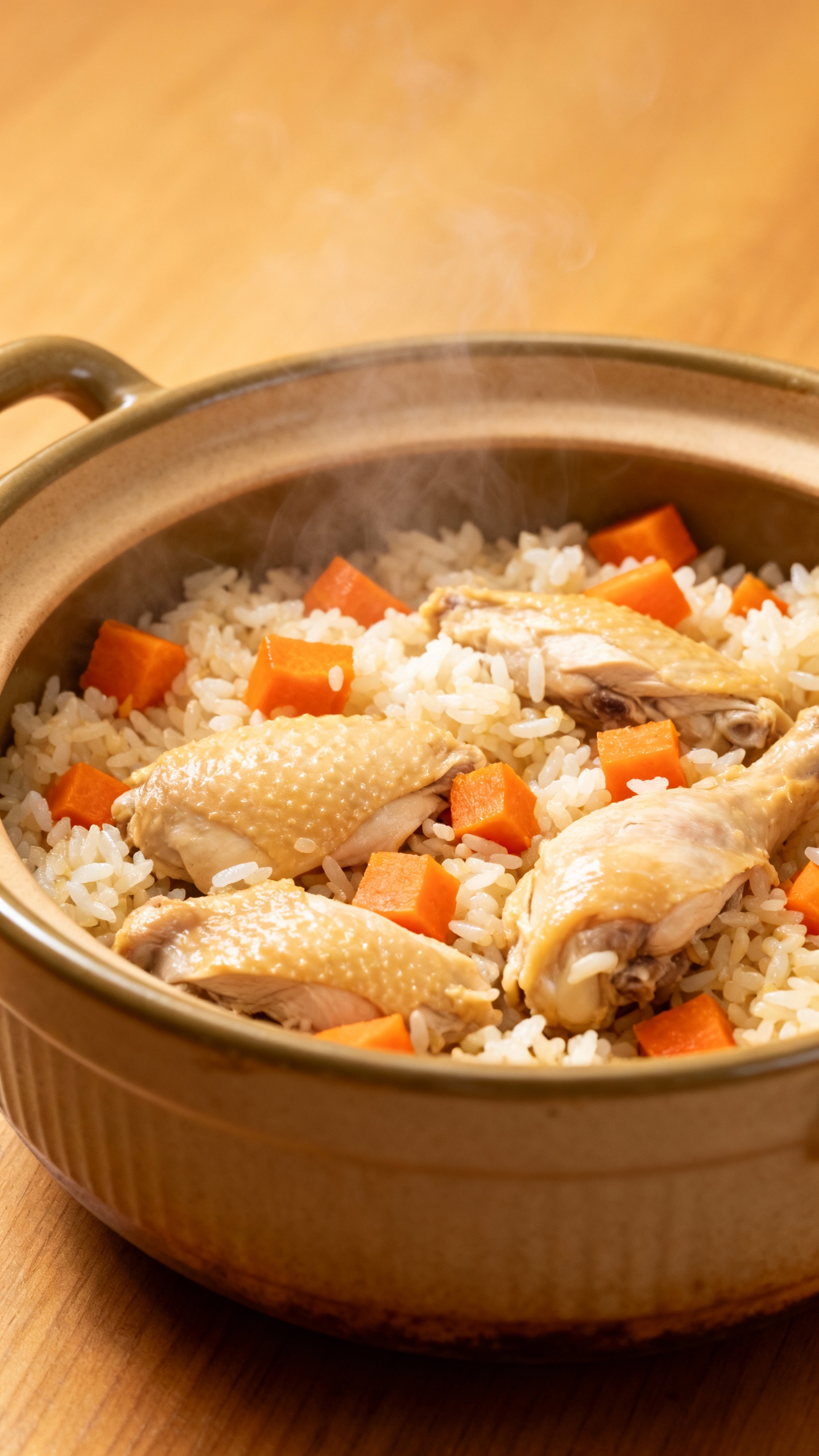
Great for: Active dogs needing steady energy Texture: Hearty, slightly textured
Ingredients
- 2 lbs boneless, skinless chicken thighs (trim fat, cube)
- 1 cup quinoa (rinsed very well)
- 2 medium sweet potatoes (peeled, diced)
- 1 cup chopped zucchini
- 1/2 cup spinach (stir in at the end)
- 4–5 cups water
- After cooking: canine multivitamin/mineral + a drizzle of salmon oil
Instructions
- Add chicken, quinoa, sweet potatoes, zucchini, and water.
- Cook on low 6 hours or high 3–4 hours.
- Stir in spinach for the last 5–10 minutes.
- Cool, portion, and add supplements at serving.
Why it works: Quinoa and sweet potatoes bring complex carbs and fiber. Chicken thighs keep it tasty without drying out. Your dog will act like you just opened a rotisserie shop.
Recipe 3: Beef, Barley, and Garden Mix
Great for: Dogs who need variety or more iron Texture: Beefy stew vibes
Ingredients
- 2 lbs lean ground beef (90%+)
- 3/4 cup pearl barley
- 1 cup chopped carrots
- 1 cup green beans
- 1/2 cup peas
- 4–5 cups water
- After cooking: vet-approved vitamin/mineral + flaxseed oil
Instructions
- Add everything except supplements and oil to the crockpot.
- Cook on low 6–7 hours or high 3–4 hours until barley softens.
- Cool completely. Portion and add supplements at feeding.
Note: Beef runs higher in fat. If your dog needs to slim down or has pancreatitis history, choose turkey or chicken instead and talk to your vet. IMO, moderation with beef keeps things interesting without turning meal time into a cheat day.
Recipe 4: Pork, Apple, and Oats Breakfast Bowl
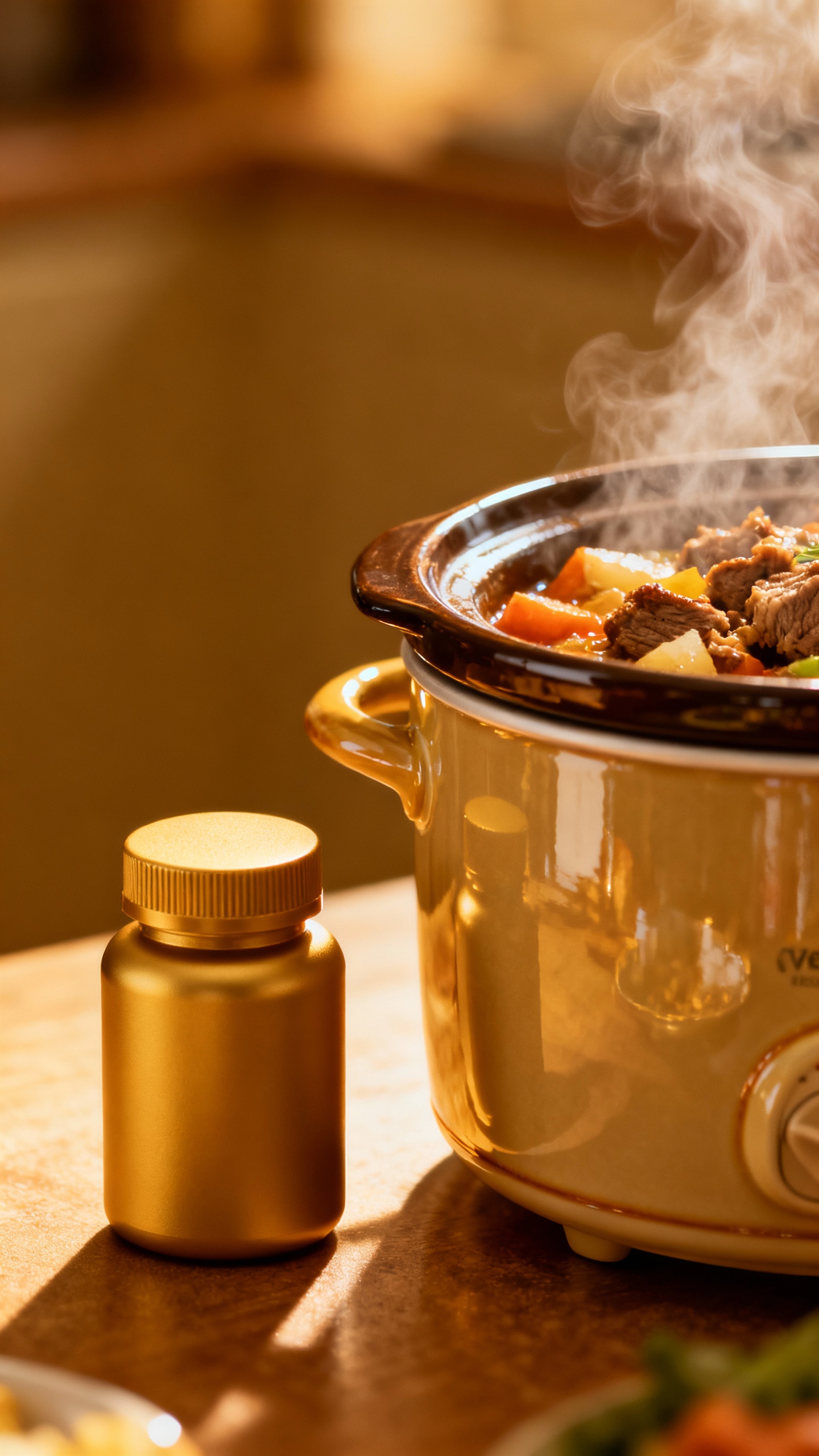
Great for: Dogs who like a milder breakfast or seniors who prefer softer textures Texture: Soft, mashable
Ingredients
- 2 lbs pork loin (lean, cubed small)
- 1 cup old-fashioned oats
- 1 cup diced apple (peeled, cored)
- 1/2 cup carrots, finely chopped
- 1/2 cup pumpkin puree
- 4 cups water
- After cooking: canine multivitamin/mineral + fish oil
Instructions
- Add pork, oats, apple, carrots, pumpkin, and water.
- Cook on low 5–6 hours or high 3–4 hours until oats and pork soften.
- Cool, portion, and add supplements at serving.
Heads up: Apples add sweetness without sugar overload, but avoid seeds and core. Also, oats soak liquid fast—add a splash of warm water when reheating if it looks thick.
Recipe 5: Salmon, Rice, and Greens Skin-Boost Bowl
Great for: Skin and coat support, picky eaters Texture: Flaky, moist
Ingredients
- 2 lbs salmon fillet, skinless and boneless
- 1 cup white rice (rinsed)
- 1 cup chopped zucchini
- 1/2 cup peas
- 1/2 cup spinach
- 4 cups water
- After cooking: canine multivitamin/mineral (you likely can skip extra fish oil here)
Instructions
- Add rice, zucchini, peas, spinach, and water. Lay salmon on top.
- Cook on low 3–4 hours or until salmon flakes easily and rice cooks.
- Break salmon into small pieces and remove any sneaky bones.
- Cool and portion. Add supplements per serving.
Tip: White rice digests easily, so this bowl works for sensitive tummies—just keep portions modest.
How to Keep It Balanced Every Time
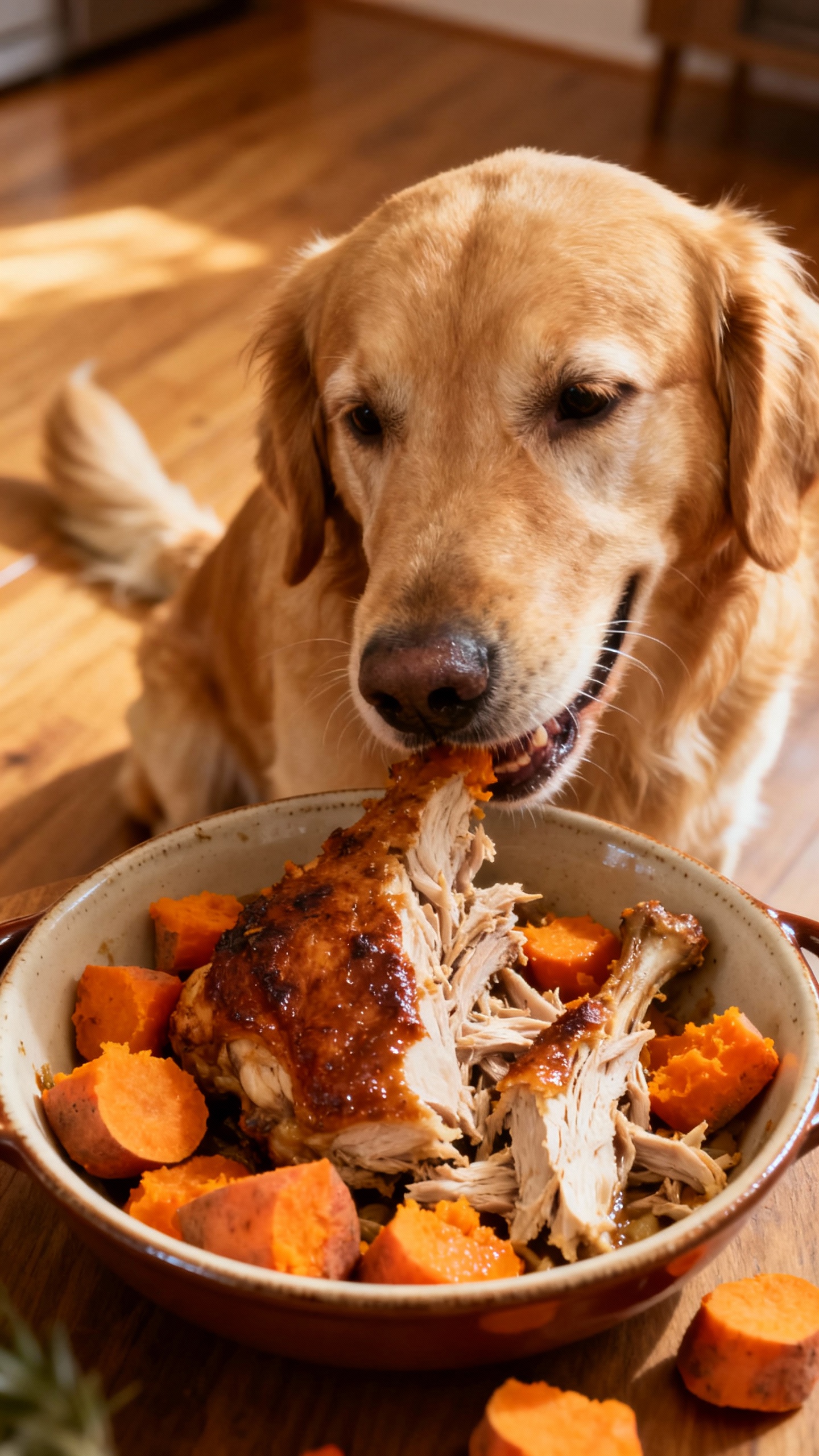
Add the right supplements
You absolutely need a complete canine vitamin/mineral designed for homemade diets. It fills gaps like calcium, iodine, copper, zinc, vitamin D, and E. Follow the label dosing for your dog’s weight, or ask your vet to confirm amounts.
Use smart fat sources
- Fish oil: Great for omega-3s—EPA/DHA support skin, joints, and heart.
- Don’t overdo oils: Add per label or vet advice. Too much fat can upset stomachs.
Safe add-ins
- Blueberries, sliced banana, or a spoon of plain yogurt as a topper
- Chopped parsley for fresh breath (tiny amounts)
Avoid: Onions, garlic, grapes, raisins, xylitol, chives, nutmeg, alcohol, caffeine, salty broths, heavy spices.
Batching, Storage, and Serving Without Guesswork
- Batch size: Most recipes yield about 8–10 cups. Freeze in 1–2 cup portions.
- Fridge: 3–4 days. Freezer: Up to 2–3 months.
- Reheat: Warm gently, don’t serve hot. Add water if it thickens.
- Transition slowly: Mix with current food over 5–7 days to avoid stomach drama.
- Portions: As a starting point, feed 2–3% of body weight daily. Monitor body condition and energy, then tweak.
FAQ
Do I really need a supplement if I’m using whole foods?
Yes. Whole foods rock, but they rarely hit all micronutrient targets for dogs, especially calcium, vitamin D, iodine, and trace minerals. A vet-formulated supplement keeps meals complete and safe long-term.
Can I feed these recipes to puppies?
Only with a veterinarian’s guidance. Puppies need different calcium-to-phosphorus ratios and higher energy density. If you want homemade for puppies, use a recipe specifically formulated for growth and get your vet’s sign-off.
What if my dog has allergies?
Pick a single-protein recipe (like turkey or salmon) and keep the ingredient list short. Introduce one new food at a time. If your dog reacts, stop and call your vet. For true elimination diets, follow a veterinary plan—don’t improvise.
How do I know how much to feed?
Start with body weight x 2–3% per day, split into two meals. Track body condition over 2–3 weeks. If ribs vanish under a layer of fluff, reduce portions. If you can see every rib like xylophone keys, increase portions. Your vet can calculate precise caloric needs if you want exact numbers.
Can I swap ingredients?
Generally yes—swap lean proteins, use different safe veggies, or switch rice for oats or quinoa. Keep fat moderate, avoid toxic foods, and maintain total volume. If you change a lot, confirm with your vet and keep the supplement consistent.
My dog has pancreatitis history. Are these safe?
Use extra-lean proteins (turkey breast, skinless chicken), avoid beef and pork, and skip added oils unless your vet approves. Keep fat low and portions smaller. Always check with your veterinarian first—better safe than sorry.
Conclusion
Crockpot dog food keeps things simple, fresh, and delicious while you live your life. Choose a recipe, add a complete supplement, portion smartly, and watch your dog turn into your most enthusiastic taste tester. If you tweak ingredients or your pup has special needs, loop in your vet. Now go dust off that slow cooker—you’ve got a very good dog to feed. IMO, they’ve earned it.