Crate training a Dachshund puppy doesn’t need to feel like a wrestling match with a furry sausage. Done right, it becomes your secret weapon for faster potty training, peaceful nights, and a puppy who actually loves their little den. You don’t need fancy gear or mystical dog-whispering powers—just structure, consistency, and treats.
Ready to build a tiny palace your doxie will adore?
Why Crate Training Rocks for Dachshunds
Dachshunds love dens. Their ancestors hunted in burrows, so a cozy crate feels safe and familiar. That’s a win for you and your couch. Crates help with:
- Potty training: Dogs don’t like to soil their sleeping space.
- Preventing mischief: No chewing wires or sampling your shoes while you shower.
- Calm routines: A predictable spot lowers anxiety and overstimulation.
- Travel and vet visits: A crate-trained doxie handles crates anywhere with less stress.
IMO, a crate is like seatbelts for puppies—non-negotiable and lifesaving.
Pick the Right Crate (Size Matters a Lot)
Dachshunds have long backs and short legs, so the crate needs to support that unique build.
Too big or too small messes up training and comfort. Here’s the sweet spot:
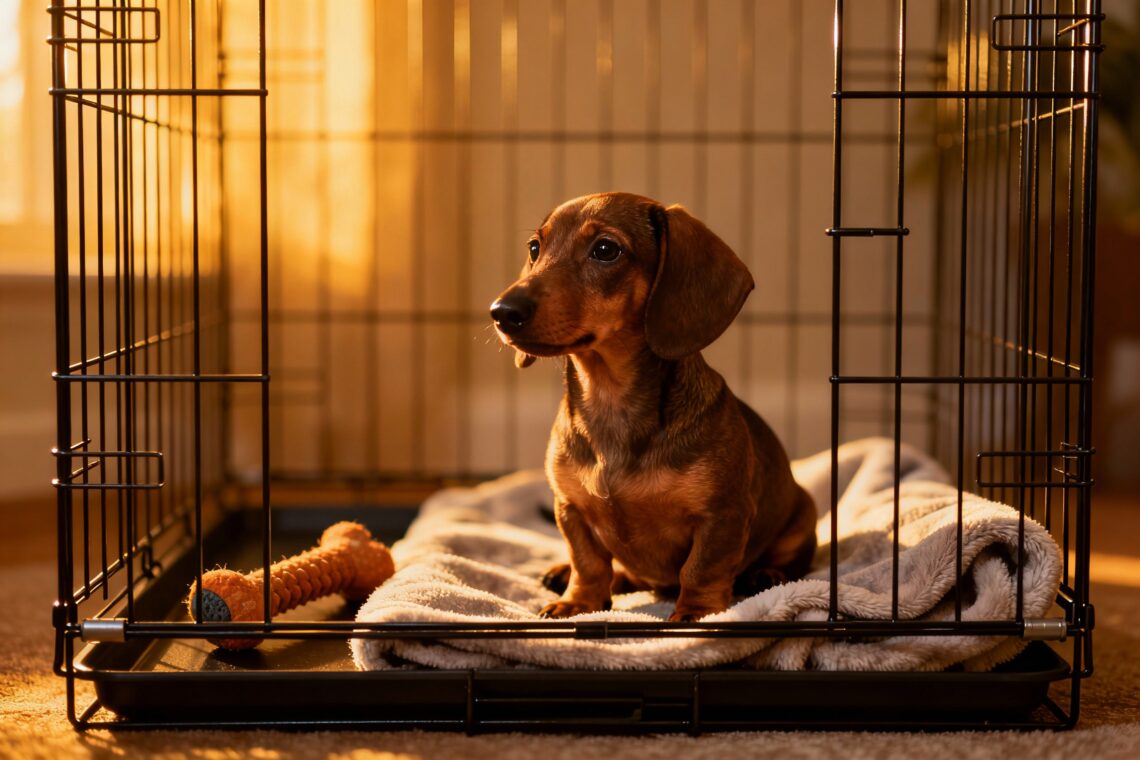
- Just big enough for your pup to stand up, turn around, and lie down comfortably.
- Use a divider panel if you buy a crate your puppy will grow into.
- Choose a wire crate for ventilation and visibility or a plastic crate for cozier den vibes. Both work.
- Add a flat, supportive mat—nothing too fluffy for chewers.
Crate Placement 101
Put the crate somewhere your puppy can hang with the family but still rest—like the living room corner or bedroom. Avoid direct sunlight, drafts, or high-traffic drama zones.
Nighttime in your bedroom helps with whining and bonding.
Make the Crate a Happy Place (Not Puppy Jail)
We want “Ooo my den!” vibes, not “Prison of despair.” Association is everything. Start with:
- Feeding meals in the crate with the door open.
- Tossing treats inside randomly during the day.
- Short sessions of 1–3 minutes with the door closed while you sit nearby.
- A special crate-only chew (bully stick, frozen stuffed Kong).
If your Dachshund whines, you probably moved too fast. Open the door when they’re calm, not mid-yodel. Reward the quiet, not the drama.
Pro Tip: Name the Crate
Use a cue like “Den” or “Home.” Say the word, toss a treat into the crate, let them go in, then praise like they just solved world peace.
Repeat often.
Build a Short, Consistent Schedule
Consistency beats intensity. You don’t need marathon sessions—you need a rhythm your pup can trust. Daily rhythm for an 8–12 week pup (sample):
- Wake, potty outside immediately.
- Breakfast in the crate, then potty.
- Play/training (10–15 min), then crate rest (30–60 min).
- Repeat: potty, play, crate, nap. All day.
- Dinner in the crate, potty, calm evening, short crate nap.
- Last potty trip, then crate for the night.
Potty timing rule of thumb: Puppies can hold it about their age in months plus one hour, max (e.g., 3-month-old = 4 hours).
At night, you’ll still need 1–2 potty breaks early on. FYI, Dachshunds can be stubborn with potty training—stick to the plan.
What Goes in the Crate?
- Flat mat or towel (washable)
- One safe chew or stuffed toy
- No water bowl overnight (spills galore). Offer water regularly between crate time.
Teach Calm Entry and Exit
If your pup blasts out like a rocket every time, you teach hype.
We want chill. Try this:
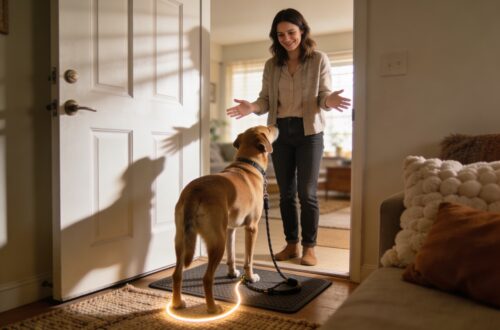
- Ask for a sit before you open the crate.
- Crack the door. If the puppy lunges, close it gently. Wait.
- Open again when they’re calm.Release with a cue like “Okay!”
This takes patience, but it pays off. Calm in, calm out.
Alone-Time Training
Your Dachshund might glue themselves to you. To prevent clinginess:
- Start with short absences (3–5 minutes), then increase to 10, 20, 40 minutes.
- Leave a stuffed Kong.Turn on a fan or white noise.
- Exit without big goodbyes. Keep returns low-key too.
Handle Whining the Smart Way
Whining happens. Your job: decipher whether it’s potty, panic, or “I’d like attention, plz.” Check this quick flow:
- Was it a sudden, urgent whine and you’re near potty time? Take them out.
- Is it low-level “complaining”? Wait for 3 seconds of quiet, then let out.Reward calm.
- Is your puppy escalating to panic? End the session and go back a step in training.
Never scold for whining. You’ll just create anxiety or stealth whining (yes, that’s a thing).
Common Mistakes to Avoid
- Using the crate as punishment—it ruins trust fast.
- Too much freedom too soon—accidents happen, habits form.
- Crating with a full bladder—always potty first.
- Over-crating—young pups need frequent breaks and play.
Progression: How Fast Should You Move?
Each pup differs, but here’s a general map:
- Week 1–2: Meals in crate, naps with door closed, you nearby.
- Week 3–4: Short alone-time, up to 1–2 hours during the day with a potty break scheduled.
- Month 2–3: Overnight sleep in crate, maybe one potty break. Calm entry/exit solid.
- Month 3+: Crating during errands.Less whining, more napping.
Move slower if your Dachshund struggles. Fast progress happens when you don’t rush.
Potty Training With the Crate: The Tag Team
Crate training alone won’t fix potty issues. It supports a routine you must stick to like glue. Non-negotiables:
- Take your pup outside after naps, after meals, after play, and every 1–2 hours.
- Go to the same spot.Use a cue like “Go potty.” Quietly wait.
- Party-level praise and treats the moment they finish. Yes, outside. Yes, your neighbors will stare.
- Accident?Clean with enzyme cleaner. No scolding—catch them next time.
Night Routine Hacks
- Cut off water 1–2 hours before bedtime.
- Pre-bed potty and a calm chew in the crate.
- If they wake you, take them out on leash, no play, then back to bed.
FAQ
How long can I crate my Dachshund puppy during the day?
Short stretches. Aim for 1–2 hours max during the day with potty and play breaks in between.
At night, they can go longer, but expect a potty break or two early on.
My puppy screams in the crate—do I ignore it?
Not blindly. If it’s close to potty time, take them out calmly and back in. If it’s protest whining, wait for a few seconds of quiet before letting them out.
If it escalates to panic, you moved too fast—shorten sessions and add more positive associations.
Should I cover the crate?
Maybe. Some Dachshunds relax with a light cover on three sides to reduce visual stimuli. Others prefer to see the room.
Try both. Ensure airflow and no chewing on the cover.
Can I use pee pads with crate training?
You can, but IMO it slows outdoor training. Dachshunds sometimes love indoor “options.” If you must, place pads far from the crate and transition outdoors ASAP.
When can I stop using the crate?
When your dog proves they don’t chew, potty indoors, or get into trouble—often after 12–18 months.
Many owners keep the crate forever as a safe nap spot. Your call.
What if my Dachshund has separation anxiety?
Work with a trainer if you see panic symptoms (howling, drooling, escape attempts). Start with super short absences, pair with food puzzles, and train calm exits/entries.
Crate training helps, but it isn’t a cure by itself.
Conclusion
Crate training your Dachshund puppy boils down to smart setup, tiny steps, and relentless consistency. Keep the crate positive, keep sessions short, and celebrate every calm nap like a small miracle—because it is. FYI, your future self will thank you when your doxie snoozes happily instead of redecorating your house with tooth marks.
You’ve got this.