Last updated: August 24, 2026
Quick Answer: Grooming an aggressive dog safely starts with understanding that most aggression during grooming is fear-based, not dominance-based. The key is to slow down, use desensitization techniques, pair every tool with high-value treats, and end sessions before your dog reaches their stress limit. Done consistently, this approach can genuinely reduce aggression over time.
Key Takeaways
- Most dogs that act aggressive during grooming are actually scared, not mean – fear and aggression look almost identical in the moment.
- Short, positive micro-sessions work far better than forcing a full groom in one sitting.
- Lick mats and continuous treat delivery are among the most effective tools most owners never use.
- Know your dog’s stress signals early – catching them before they escalate prevents bites.
- Always rule out pain first. A vet check before labeling your dog “aggressive” can change everything.
- Quiet tools, low table height, and slow movements reduce defensive reactions significantly.
- Muzzles are a safety tool, not a punishment – use them correctly and pair them with rewards.
- If your dog has a serious bite history, a professional or veterinary behaviorist should be involved.
- Grooming an aggressive dog at home is possible for mild to moderate cases with the right prep.
- Consistency builds trust over weeks, not days – patience is the real trick here.
What Does It Mean When a Dog Is Aggressive During Grooming?
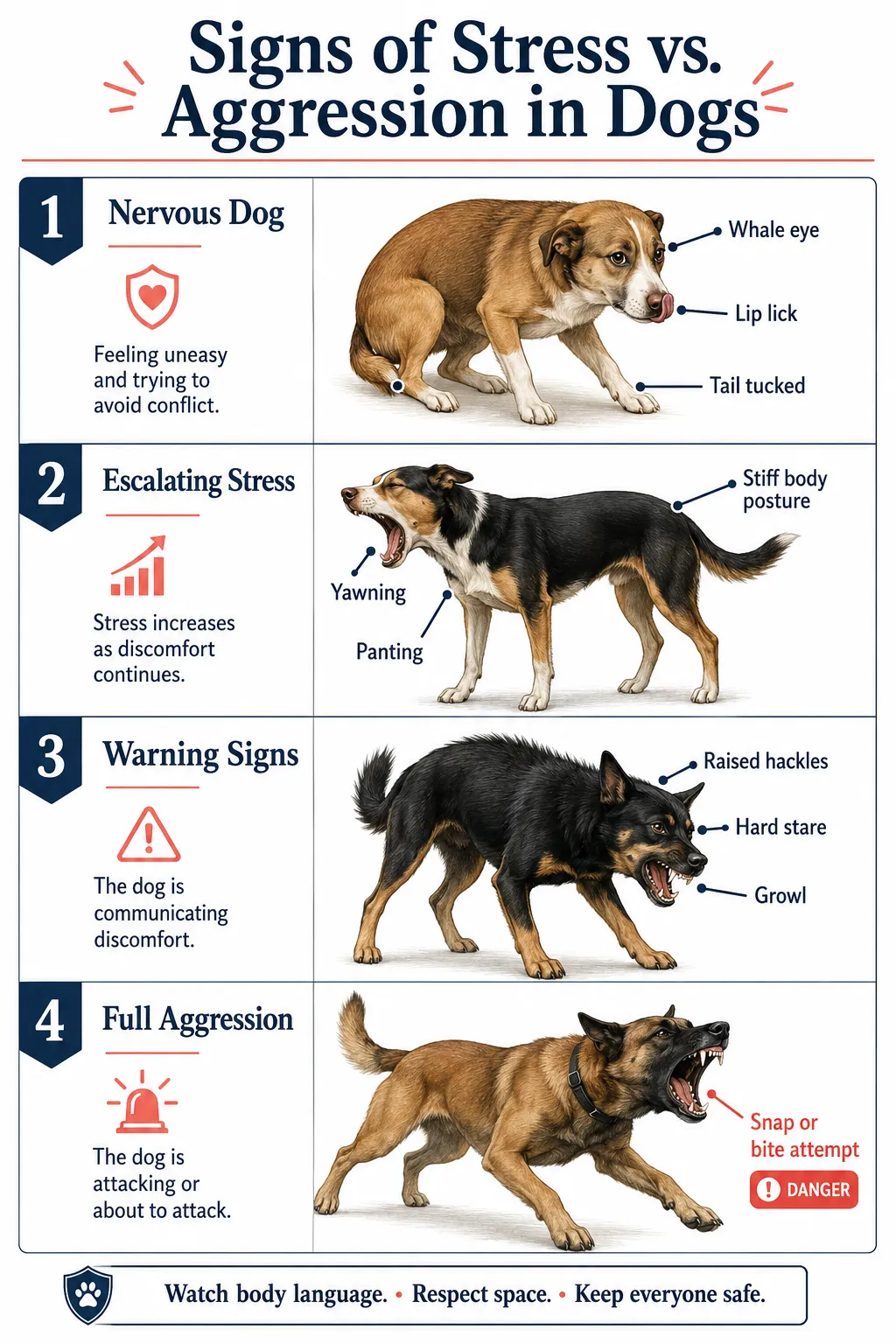
Aggression during grooming almost always means your dog is frightened, not dominant or “bad.” Dogs communicate discomfort through a ladder of signals – from lip licks and yawns all the way up to growling and snapping – and grooming often triggers these because it involves restraint, unfamiliar tools, and handling of sensitive body parts.
Think of it this way: your dog can’t say “that hurts” or “I’m scared.” Growling and snapping are their version of “please stop.” When we push through those signals, we teach dogs that warning signs don’t work, which can lead to biting without warning later.
According to Fear Free grooming guidance on anxious dogs, what looks like aggression is usually a dog who has run out of other ways to communicate distress.
How Is Grooming an Aggressive Dog Different From a Normal Dog?
With a typical dog, you can move through a groom at a steady pace. With a reactive or aggressive dog, the entire approach changes – you work slower, you watch for stress signals constantly, and you treat every tool as something that needs to be introduced gradually before it ever touches the coat.
Key differences include:
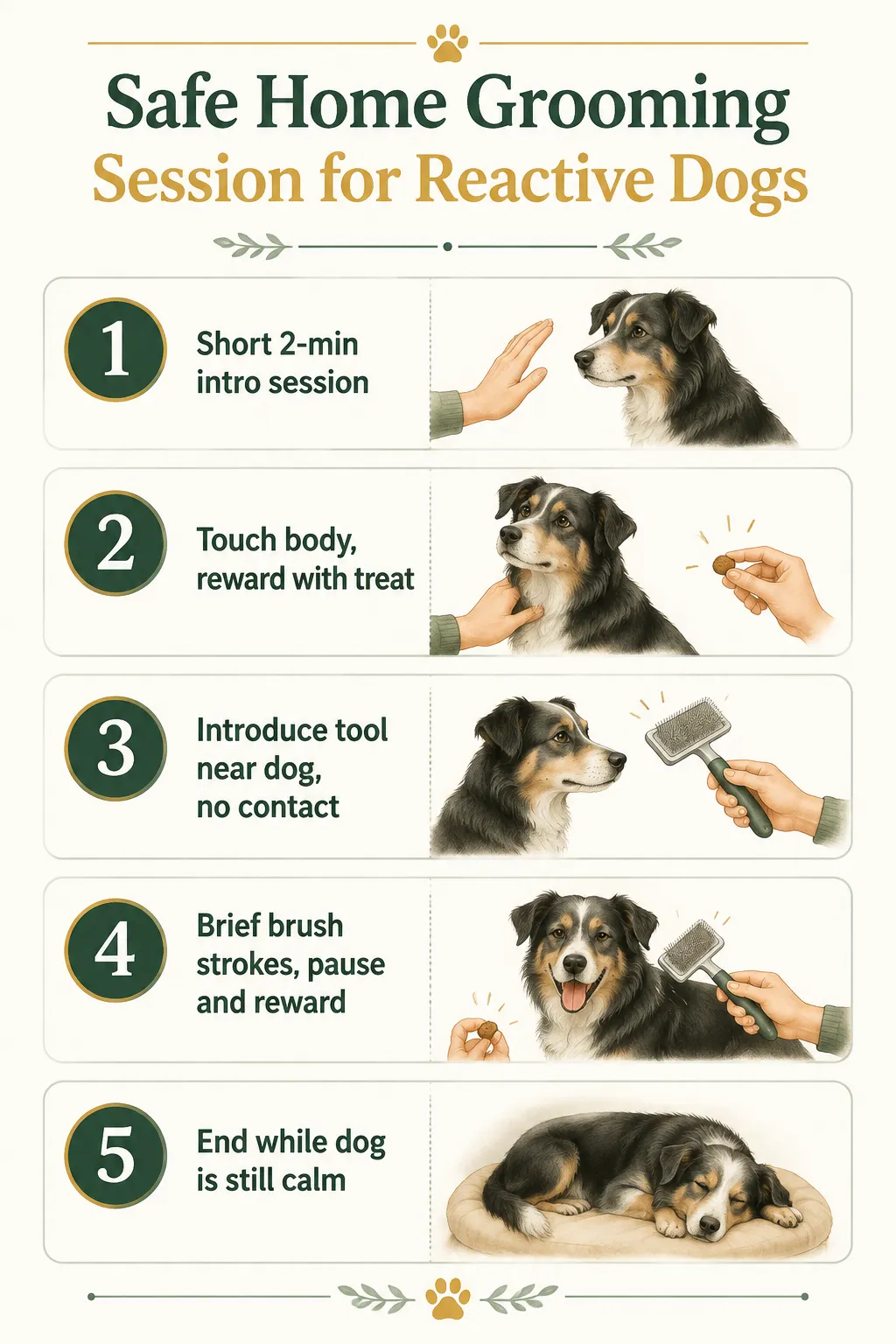
- Session length – Shorter, sometimes just 2-5 minutes at first.
- Treat use – Continuous, not occasional.
- Tool introduction – Tools are desensitized before they’re used, not picked up and applied immediately.
- Stopping point – You stop when the dog is still calm, not when the job is done.
- Environment – Quieter, less stimulating, ideally one-on-one.
The AKC’s National Core Professional Dog Grooming Educational Standards explicitly support groomers refusing service when safety cannot be maintained – a reminder that finishing the haircut never overrides bite-risk considerations.
Why Is My Dog Aggressive When I Try to Bathe or Brush Them?
The most common reasons dogs react aggressively to grooming include:
- Past painful experiences – A nick from clippers, a mat pulled too hard, or soap in the eyes can create lasting negative associations.
- Lack of early exposure – Dogs not introduced to grooming as puppies often find it overwhelming as adults.
- Pain or medical issues – Arthritis, ear infections, or skin conditions can make touch genuinely painful. Always rule this out first with a vet.
- Sensitive body parts – Paws, ears, face, and tail base are commonly reactive areas.
- Restraint fear – Many dogs panic when they feel held down or unable to escape.
It’s worth checking our guide on 10 early signs of pain in dogs before assuming your dog’s reaction is purely behavioral. Pain is a very common and overlooked trigger.
What Are Signs My Dog Is Getting Too Stressed During Grooming?
Catching stress early is the single most important skill for grooming an aggressive dog safely. By the time a dog snaps, they’ve usually been sending signals for several minutes that went unnoticed.
Early stress signals to watch for:
- Lip licking or tongue flicking
- Yawning (when not tired)
- Turning their head away
- Blinking repeatedly
- Whale eye (showing the whites of their eyes)
Escalating signals:
- Panting when not hot
- Trembling or stiff body
- Tail tucked tight
- Ears pinned back flat
Danger zone signals – stop immediately:
- Growling or low rumbling
- Hard, fixed stare
- Raised hackles
- Snapping or lunging
For a deeper look at what these signals mean, our article on 12 stressed dog signs most owners miss covers many of these in detail.
How Do I Know If My Dog Is Aggressive or Just Nervous During Grooming?
A nervous dog and an aggressive dog can look almost the same – but the distinction matters for how you respond. A nervous dog is trying to escape or avoid. An aggressive dog has moved past avoidance and is actively warning or defending.
Nervous dog signs: Hiding, trembling, trying to jump off the table, whining, pawing at you.
Aggressive dog signs: Growling, snapping, hard staring, lunging, biting without warning.
The honest answer is that most “aggressive” dogs started as nervous dogs whose early signals were ignored. The Rover guide to grooming aggressive dogs notes that understanding this distinction helps owners choose the right response – comfort and desensitization for nervous dogs, and safety protocols plus professional help for truly aggressive ones.
Can You Groom an Aggressive Dog at Home or Should You Go to a Professional?
For mild to moderate cases – a dog that growls but hasn’t bitten, or one that’s anxious but manageable – home grooming with the right techniques is absolutely possible. For dogs with a bite history or severe aggression, professional help is strongly recommended.
Groom at home if:
- Your dog growls or snaps but has not broken skin.
- You can identify their specific triggers.
- They calm down with treats and slow handling.
Go to a professional if:
- Your dog has bitten someone during grooming before.
- They escalate quickly with no warning signs.
- You feel unsafe during the process.
Look for a groomer who uses Fear Free methods or one-on-one studio settings. Reactive dog grooming specialists now create written safety plans that identify each dog’s specific triggers before the appointment even begins – that’s the kind of groomer worth finding.
How Much Does It Cost to Groom an Aggressive Dog?
Grooming an aggressive dog typically costs more than a standard groom because it requires extra time, specialized handling, and sometimes a one-on-one environment. Prices vary widely by location, dog size, and coat condition.
As a general estimate:
- Standard groom: $50-$90 for a medium dog.
- Reactive or difficult dog surcharge: An additional $20-$50 on top of the base price is common.
- Specialist Fear Free or mobile groomer: Often $100-$200+ per session.
- Sedation-assisted grooming (vet-supervised): Can range from $150-$400+ depending on the clinic and medications used.
These are estimates based on industry norms as of 2026 – actual pricing varies by region and groomer. Always ask upfront about any additional fees for handling difficult dogs.
What’s the Safest Way to Groom a Dog That Bites or Snaps?
Safety first, always. Here’s a practical framework for grooming an aggressive dog that bites or snaps:
Before you start:
- Do a vet check to rule out pain.
- Identify which body parts trigger the reaction.
- Have high-value treats ready (small, soft, smelly).
During the session:
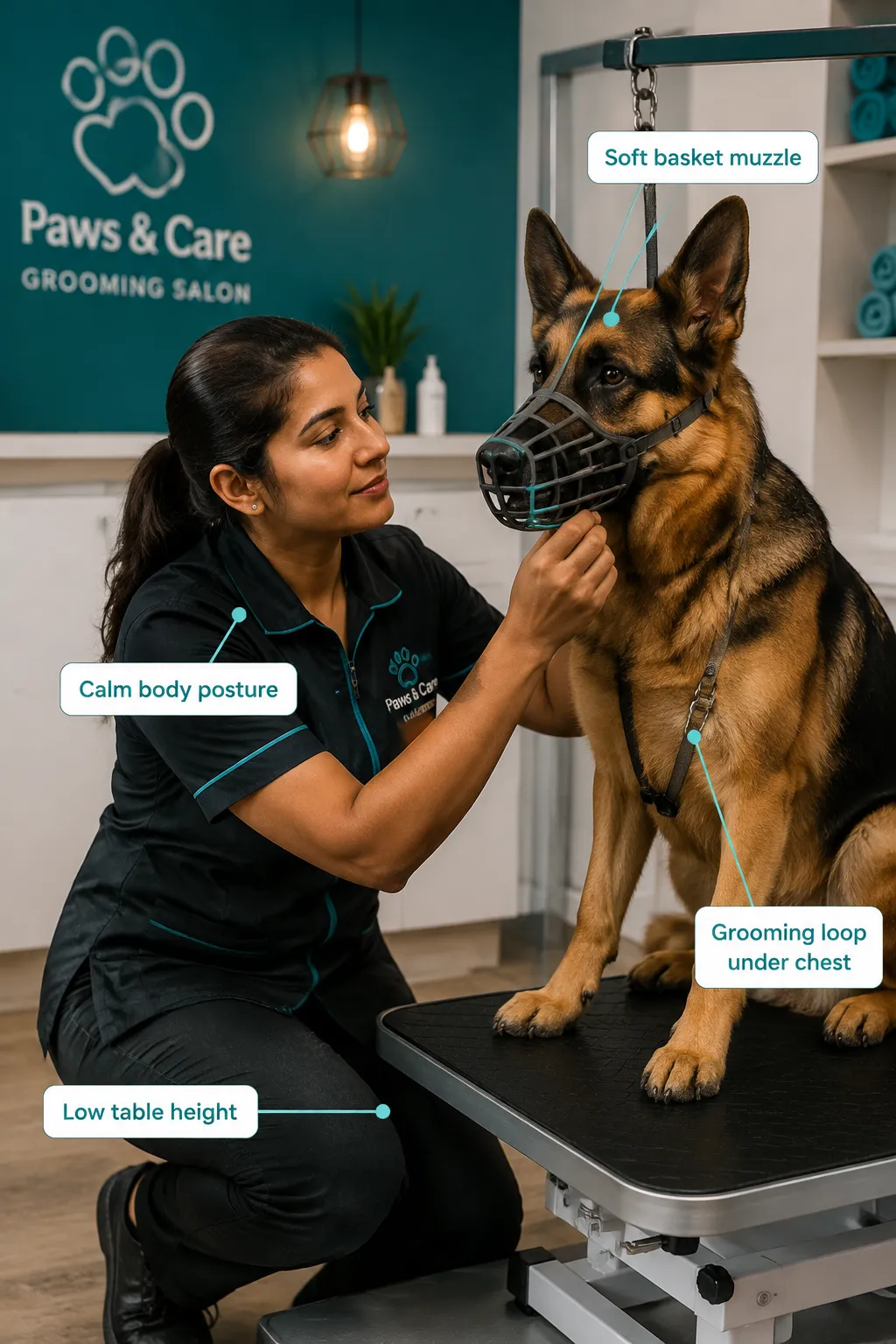
- Use a properly fitted soft basket muzzle if there’s any bite risk. Pair it with treats so the dog learns the muzzle predicts good things.
- Keep sessions under 5 minutes at first.
- Use slow, predictable movements. No sudden reaches.
- Work from least sensitive to most sensitive areas.
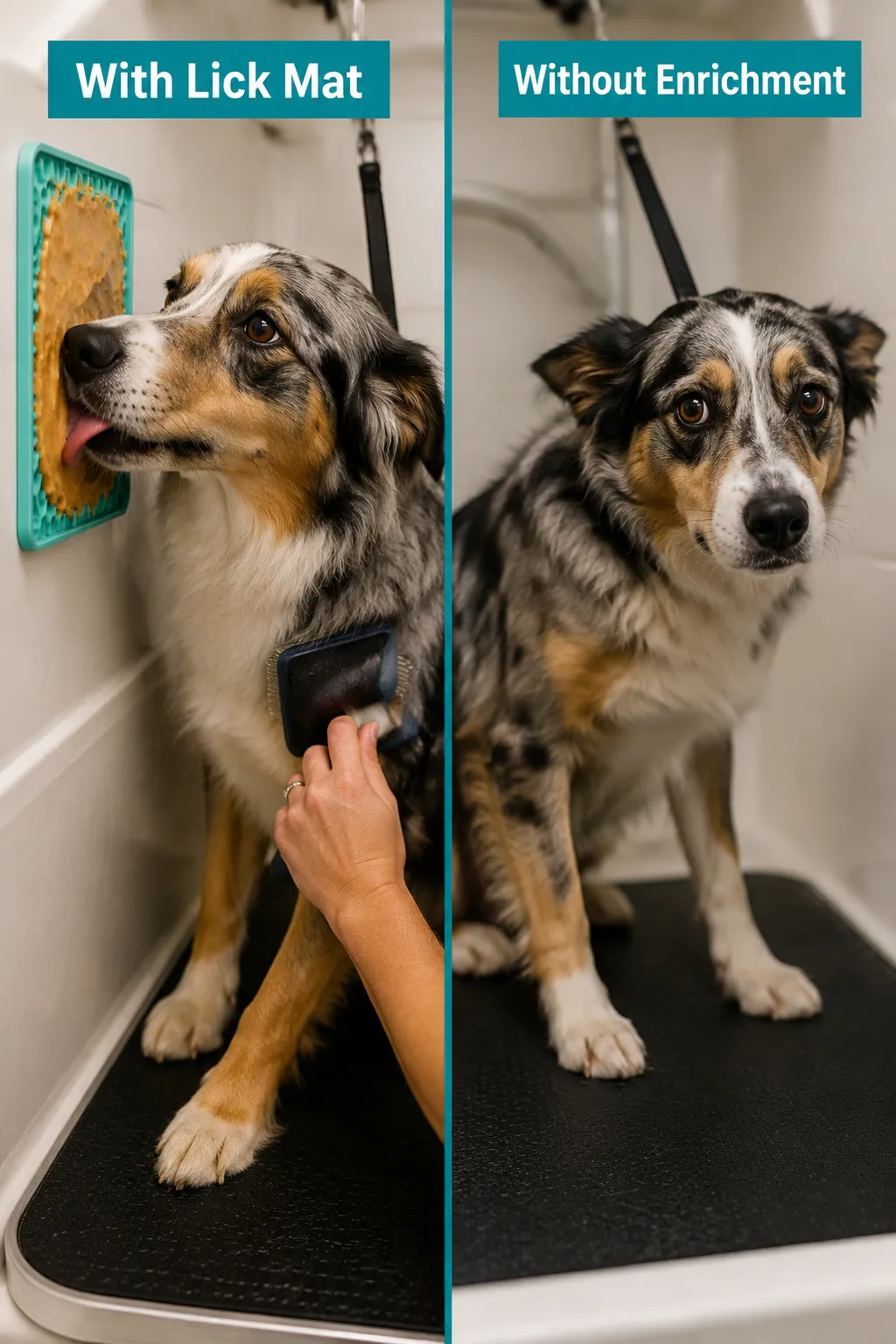
- Use a lick mat smeared with soft food on the tub wall to keep them occupied during baths.
Tool tips from safety-focused grooming guidance:
- Start with quietest tools first – hands before brushes, brushes before clippers.
- Use silicone grooming gloves to keep distance and reduce pressure.
- Never use high-velocity dryers without a gradual introduction – they’re one of the top fear triggers.
Stop immediately if:
- Your dog vomits, trembles uncontrollably, or loses balance.
- They escalate to biting through the muzzle.
- You feel unsafe at any point.
10 Stress-Reducing Tricks for Grooming an Aggressive Dog
These are the techniques most owners never try – but they make a real difference.
1. Use a lick mat during every session.
Smear it with peanut butter, cream cheese, or wet food and stick it to the tub wall. It keeps your dog’s mouth busy and builds a positive association with grooming.
2. Desensitize tools before using them.
Leave the brush near the food bowl for 2-3 days. Pick it up, let your dog sniff it, reward 10-15 times per day. Then introduce it to the coat. This pre-introduction protocol is one of the most underused tricks in home grooming.
3. Keep sessions extremely short.
Two minutes of calm beats ten minutes of struggle every time. End while your dog is still relaxed – this builds a history of positive grooming experiences.
4. Groom at your dog’s natural position.
Don’t force them into postures they resist. If they prefer standing, start there.
5. Keep table height low.
Looming over a dog increases defensive aggression. Get down to their level whenever possible.
6. Turn the dryer down or off.
Introduce dryer sound from across the room, then gradually closer over several sessions. Never blast a reactive dog with a high-velocity dryer without this prep.
7. Touch before tools.
Spend several days doing gentle hand stroking of the areas you’ll groom – paws, ears, face – while your dog enjoys treats. Track which areas are most sensitive and give them extra desensitization time.
8. Use calming massage points.
Gentle, rhythmic pressure on certain areas can lower arousal before and during grooming. Our guide on healing massage points for dogs covers exactly where and how to do this.
9. Pair the muzzle with treats.
A muzzle introduced positively becomes a safety tool your dog accepts calmly. Never force it on – spend a few days rewarding your dog for putting their nose in voluntarily.
10. Build a predictable grooming routine.
Dogs feel safer when they know what’s coming. A consistent routine – same time, same place, same order – reduces anxiety over weeks. Our daily dog routine guide for busy owners has a practical framework you can adapt.
Should I Sedate My Dog Before Grooming If They’re Aggressive?
Sedation is a legitimate option for severely aggressive dogs, but it should be a last resort, not a first step. It requires veterinary supervision and isn’t appropriate for every dog or every groom.
When sedation might be considered:
- The dog has a serious bite history and grooming is medically necessary (severe matting, infected skin).
- Behavioral modification has been tried and hasn’t worked.
- The dog’s stress response is so severe it poses a medical risk.
What to know:
- Sedation must be administered by a vet, not a groomer.
- Some dogs are not good candidates due to health conditions.
- It doesn’t address the underlying fear – behavioral work is still needed long-term.
Talk to your vet and consider a referral to a veterinary behaviorist before going this route. According to guidance from We Love Doodles on difficult dog grooming, ruling out pain and trying desensitization first often resolves the issue without sedation.
When Should You Not Attempt to Groom an Aggressive Dog Yourself?
Some situations genuinely call for professional or veterinary intervention. Don’t attempt home grooming if:
- Your dog has broken skin during a previous grooming attempt.
- They escalate to biting with no warning signals.
- You feel anxious or unsafe – dogs read our stress and it makes them worse.
- Your dog has a known medical condition that makes handling painful.
- The coat is severely matted to the skin – this requires professional dematting tools and skill.
In these cases, find a groomer trained in Fear Free or low-stress handling, or ask your vet for a referral to a veterinary behaviorist. Trying to push through a dangerous situation at home can set back months of progress in a single session.
Can Grooming an Aggressive Dog Make Them Less Aggressive Over Time?
Yes – with the right approach, grooming can actually reduce a dog’s reactivity over time. This is called counterconditioning and desensitization, and it works by gradually changing what grooming predicts for your dog (from “scary thing” to “treats and calm handling”).
It takes weeks to months of consistent work, not days. But owners who stick with short, positive sessions consistently report that their dogs become noticeably calmer during grooming over time.
This pairs well with broader calm-training work. Our article on the Calm Dog Method offers a solid foundation for teaching your dog to settle, which carries over directly into grooming sessions.
Best Tools and Products for Grooming Anxious or Aggressive Dogs
Choosing the right tools reduces pain, noise, and surprise – three of the biggest aggression triggers.
| Tool | Why It Helps |
|---|---|
| Silicone grooming gloves | Gentle, quiet, keeps your hands close to the dog’s body |
| Soft basket muzzle | Safety without restricting breathing; can be paired with treats |
| Lick mat | Redirects attention, builds positive association |
| Quiet cordless clippers | Less vibration and noise than corded models |
| Detangling spray | Reduces pulling on mats, less pain |
| Rubber-tipped slicker brush | Less sharp than metal, gentler on sensitive skin |
| Tearless shampoo | Prevents eye irritation that can trigger head-shaking and snapping |
Avoid clipper blades with widely spaced teeth near skin folds, and never drag a brush repeatedly over bony areas – both can cause the kind of pain that turns a nervous dog into a reactive one.
What Mistakes Do People Make When Grooming Difficult Dogs?
The most common mistakes come down to rushing and misreading signals.
- Pushing through growls – This teaches dogs their warnings don’t work, which leads to biting without warning.
- Doing too much in one session – Exhausting a dog’s tolerance early means the rest of the groom is a fight.
- Using loud tools without introduction – Clippers and dryers introduced without desensitization are major fear triggers.
- Restraining too hard – The more you hold a scared dog down, the more they panic.
- Skipping treats – Expecting a dog to “just tolerate” grooming without positive reinforcement misses the point entirely.
- Not checking for pain first – Grooming a dog with an ear infection or arthritis and wondering why they snap is a very common and very fixable mistake.
For more on how stress builds in dogs and what to do about it, our stress signals in dogs guide is a practical read.
FAQ
Q: My dog only growls at the groomer, not at home. Why?
A: Groomers handle dogs differently than owners – more restraint, unfamiliar smells, and strange equipment. Your dog may be fine with gentle home handling but overwhelmed in a salon setting. A Fear Free or mobile groomer can help bridge that gap.
Q: Is it safe to use a muzzle on a dog during grooming?
A: Yes, when fitted correctly and introduced positively. A soft basket muzzle allows panting and treat-taking while preventing bites. Never leave a muzzled dog unattended.
Q: How do I groom my dog’s face if they snap at me?
A: Start with gentle hand-touching of the muzzle area while feeding treats for several days before introducing any tools near the face. Use blunt-tipped scissors and work in very short bursts.
Q: Can I use calming supplements before grooming?
A: Some dogs respond well to vet-recommended calming supplements or pheromone sprays. Always check with your vet before giving anything new, especially if your dog has health conditions.
Q: How often should I groom an aggressive dog?
A: More frequent, shorter sessions are better than infrequent long ones. Regular handling keeps the coat manageable and builds familiarity, which reduces anxiety over time.
Q: My dog is fine with brushing but aggressive during nail trims. Is that normal?
A: Very common. Nail trims involve paw handling and an unfamiliar sensation. Desensitize paw touching separately, then introduce the clippers gradually with treat pairing before attempting a trim.
Q: Should I scold my dog for growling during grooming?
A: No. Growling is communication. Punishing it removes your dog’s warning system and increases the chance they’ll bite without warning next time. Instead, stop what triggered the growl and go back a step.
Q: What if my dog is aggressive only in certain positions?
A: Work in the position they’re comfortable with first. Gradually introduce other positions over multiple sessions, always pairing the new position with treats.
Q: How long does it take to desensitize a dog to grooming tools?
A: For mild anxiety, 2-4 weeks of daily micro-sessions can make a significant difference. For severe cases, it may take several months of consistent work.
Q: Can any breed be desensitized to grooming?
A: Yes, though some breeds have stronger reactivity tendencies. The process is the same – it just may take longer for more reactive individuals.
Conclusion
Grooming an aggressive dog is genuinely challenging, but it’s rarely hopeless. The core shift is treating aggression as a fear response rather than a behavior problem – and responding with patience, positive reinforcement, and the right tools instead of force.
Your next steps:
- Book a vet check to rule out pain before your next grooming attempt.
- Start a 5-day desensitization plan – just 2-3 minutes per day of gentle touch and treats on sensitive areas.
- Get a lick mat and use it every single session.
- Learn your dog’s early stress signals so you can stop before they escalate.
- If your dog has a bite history, find a Fear Free certified groomer or a veterinary behaviorist.
Small, consistent steps build the trust that makes grooming easier – for both of you. Start with just one trick from this list this week and watch how your dog responds.