
Last updated: August 24, 2026
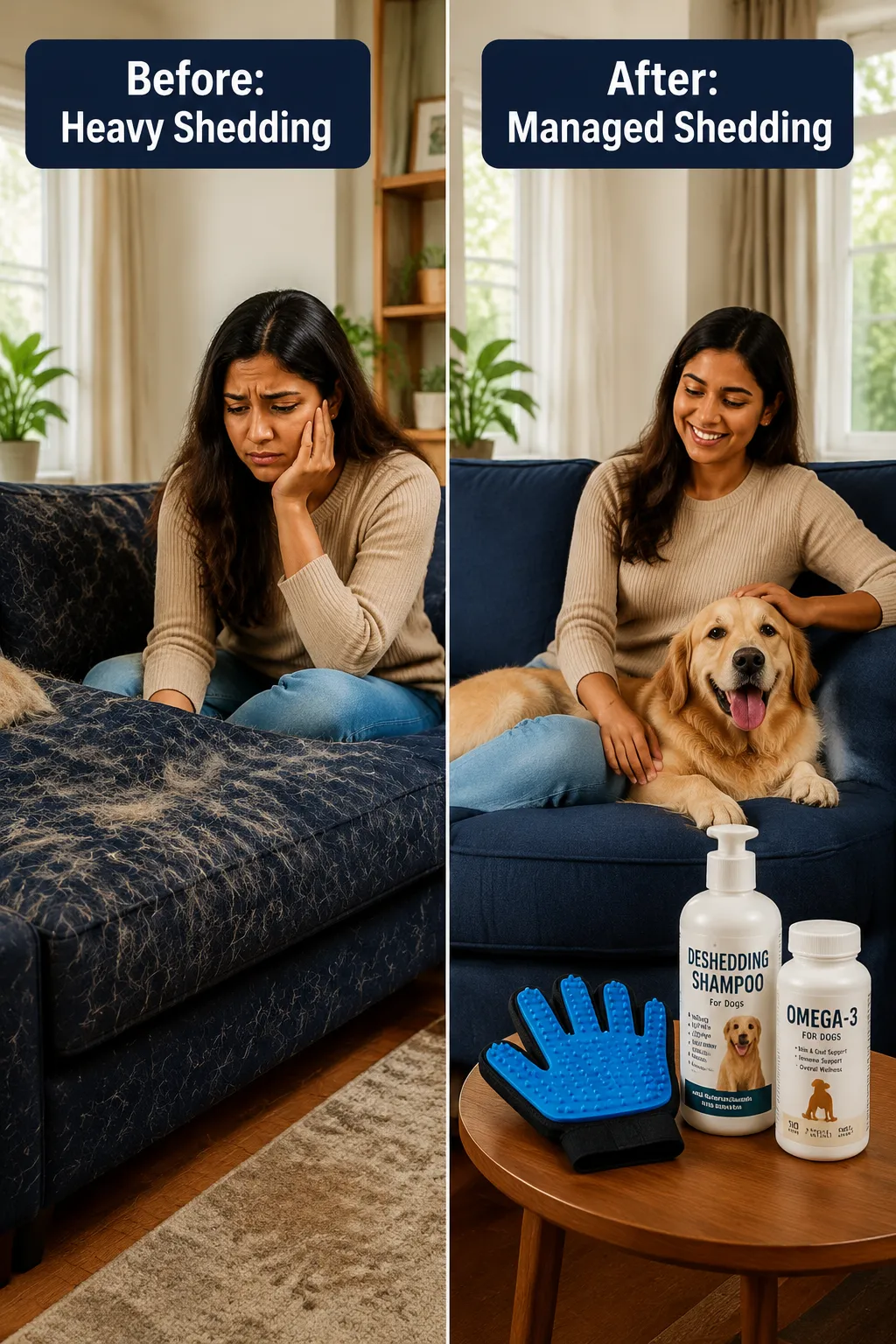
Quick Answer: You can’t stop a dog from shedding entirely – but you can cut it down dramatically. The most effective fixes are brushing 3-5 times per week with the right tool, bathing every 4-6 weeks with a deshedding shampoo, and adding omega-3 supplements to your dog’s diet. Most owners see a noticeable difference within 2-4 weeks of staying consistent.
Key Takeaways 🐾
- Brushing is the single biggest lever – most dogs need 3-4 sessions per week minimum
- Matching the brush to your dog’s coat type matters as much as how often you brush
- Diet quality directly affects how much your dog sheds – omega-3s make a real difference
- Bathing too often (more than every 3 weeks) can actually make shedding worse
- Sudden or patchy hair loss is not normal shedding – it needs a vet visit
- Spring and fall are peak shedding seasons for most double-coated breeds
- Supplements can reduce shedding by an estimated 20-30% when used consistently
- Stress is an underrated cause of excessive shedding – it’s worth addressing
- Professional grooming costs roughly $50-$100 per session and is worth it during heavy shedding
- You cannot “stop” shedding – the goal is managing it to a healthy, tolerable level
What Causes Excessive Dog Shedding?
Shedding is a normal biological process, but some dogs shed far more than others – and sometimes the cause is something fixable. According to veterinary guidance on excessive dog shedding, the most common triggers include poor nutrition, allergies, parasites, hormonal imbalances like hypothyroidism or Cushing’s disease, and plain old seasonal coat changes.
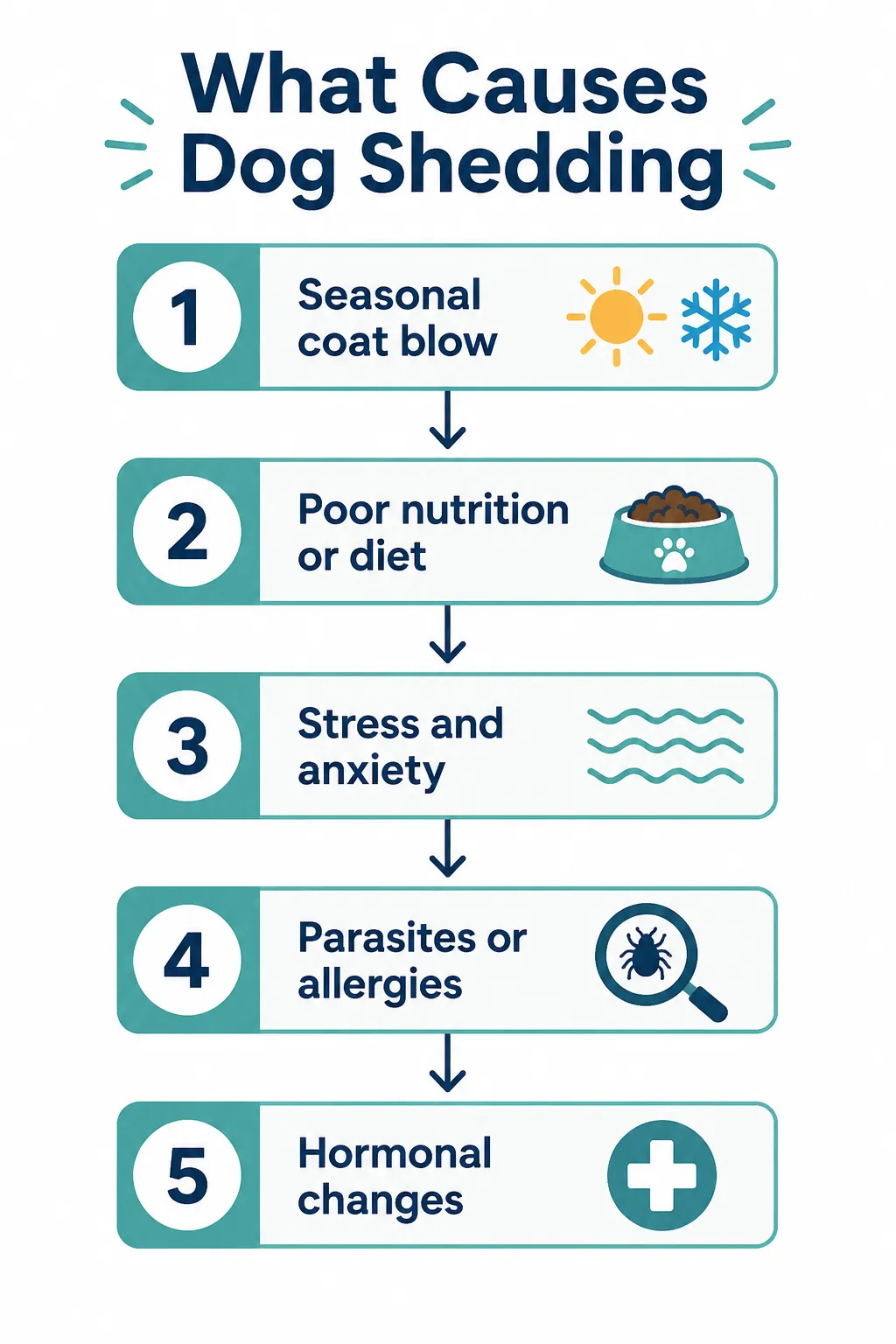
Here’s a quick breakdown of the main causes:
- Seasonal shedding – Double-coated breeds “blow” their coat in spring and fall
- Poor diet – Low-quality food lacking omega-3s and protein weakens hair follicles
- Parasites – Fleas and mites cause chronic itch and hair loss even in mostly indoor dogs
- Allergies – Environmental or food allergies inflame the skin and loosen hair
- Hormonal issues – Thyroid problems and adrenal disorders cause diffuse hair thinning
- Stress – Anxiety and inconsistent routines genuinely affect coat health
- Over-bathing – Stripping natural oils leads to dry, brittle fur that breaks off
Common mistake: Many owners assume all shedding is seasonal and skip the vet. If your dog is losing hair in patches, scratching constantly, or shedding more than usual outside of spring and fall, that’s a signal to get checked out – not just brush more.
Is My Dog Shedding Too Much, or Is This Normal?
Most shedding is completely normal, but there are clear signs that something more is going on. Normal shedding means loose hair distributed evenly across the coat, no bald spots, and healthy-looking skin underneath.
Signs of normal shedding:
- Even, all-over hair loss
- Coat still looks full and healthy
- Skin looks clean and pink
- No excessive itching or chewing
- Follows a seasonal pattern
Red flags that need a vet visit:
- Bald patches or visible skin through thinning fur
- Persistent scratching, licking, or chewing at skin
- Flaky, oily, or odorous skin
- Shedding that spikes suddenly outside of seasonal patterns
- Weight changes, lethargy, or increased thirst alongside hair loss
Research on why dogs shed excessively confirms that sudden, patchy, or extreme hair loss is frequently a sign of an underlying medical issue rather than simple seasonal shedding. Don’t waste time on grooming fixes if a health problem is the real cause.
When Do Dogs Shed the Most During the Year?
Dogs shed the most in spring and fall. Spring shedding happens as dogs lose their thick winter undercoat. Fall shedding occurs as the summer coat makes way for a denser winter coat.
For most double-coated breeds – think Huskies, German Shepherds, and Golden Retrievers – these “coat blows” can last 2-4 weeks and feel relentless. Single-coated breeds shed more evenly year-round with smaller seasonal spikes.
Indoor dogs exposed to artificial lighting and climate control may shed more consistently throughout the year because their bodies don’t get the same seasonal light cues.
Peak shedding months (general guide):
| Season | Typical Shedding Level | What’s Happening |
|---|---|---|
| Spring (Mar-May) | Very heavy | Winter undercoat releasing |
| Summer | Moderate | Maintenance shedding |
| Fall (Sep-Nov) | Heavy | Summer coat transitioning |
| Winter | Light to moderate | New coat growing in |
How Often Should I Brush My Dog to Stop Shedding?
Brushing is the most effective single thing you can do to manage how to stop my dog from shedding so much – and most owners don’t do it nearly enough. Veterinary guidance from Texas A&M recommends brushing most dogs at least 3-4 times per week, with daily sessions during peak shedding seasons.
Brushing frequency by coat type:
- Double-coated breeds (Husky, Shepherd, Retriever) – 3-5 times per week, daily during coat blows
- Moderate shedders (Corgi, Beagle, Lab) – 2-3 times per week
- Light shedders (Poodle, Shih Tzu, Maltese) – 1-2 times per week
Match the tool to the coat:
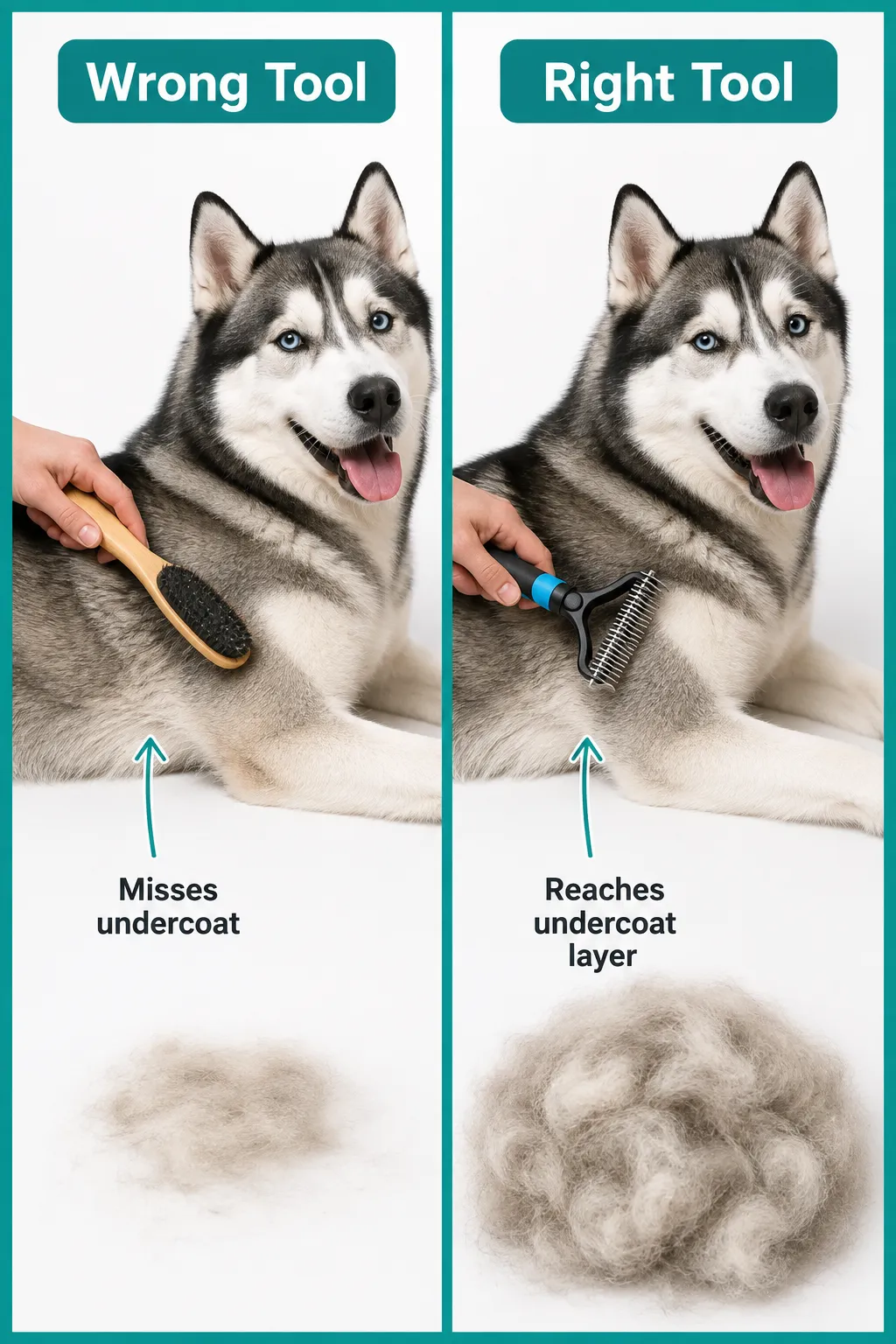
- Undercoat rake – Double-coated breeds; reaches the dense undercoat layer
- Slicker brush – Medium-length coats; removes loose hair and light tangles
- Bristle brush – Short, smooth coats; distributes oils and removes surface hair
- Rubber curry mitt – Short coats; great for sensitive dogs who dislike brushes
Always brush in the direction of hair growth, from head to tail. During heavy shedding, grooming guides recommend starting with a gentle stroke against the grain to lift loose hairs, then smoothing with the grain to finish.
💡 Pro tip: Short daily sessions (10-15 minutes) beat long weekly marathons. Regular brushing prevents mats and removes shed hair before it lands on your couch.
Do Deshedding Tools Actually Work?
Yes – deshedding tools genuinely work, but only when matched to the right coat type. A standard bristle brush on a Husky barely touches the undercoat. An undercoat rake or deshedding tool like a Furminator-style comb reaches the dense underlayer where most loose hair hides.
A grooming guide on how to stop dog shedding recommends a two-step approach: a brief 2-minute pre-brush to detangle, followed by 8-10 minutes with a deshedding tool or low-suction grooming vacuum, focusing on the chest, belly, thighs, and tail base where undercoat is thickest.
Grooming vacuum attachments are increasingly popular for heavy shedders. They pull out large volumes of loose undercoat in one session. Introduce them slowly on the lowest suction setting – some dogs need a few sessions to get comfortable.
Choose a deshedding tool if:
- Your dog has a thick double coat
- You’re brushing regularly but still finding hair everywhere
- Your dog tolerates grooming well
Stick to a standard brush if:
- Your dog has a short, single-layer coat
- Your dog is anxious about grooming tools
For more on managing dog behavior during grooming and training, check out this 14-day dog training plan that covers building positive associations with handling.
Best Dog Food to Reduce Shedding
Diet is one of the most underrated answers to how to stop my dog from shedding so much. A high-quality, balanced diet rich in omega-3 and omega-6 fatty acids strengthens hair follicles and improves coat condition from the inside out.
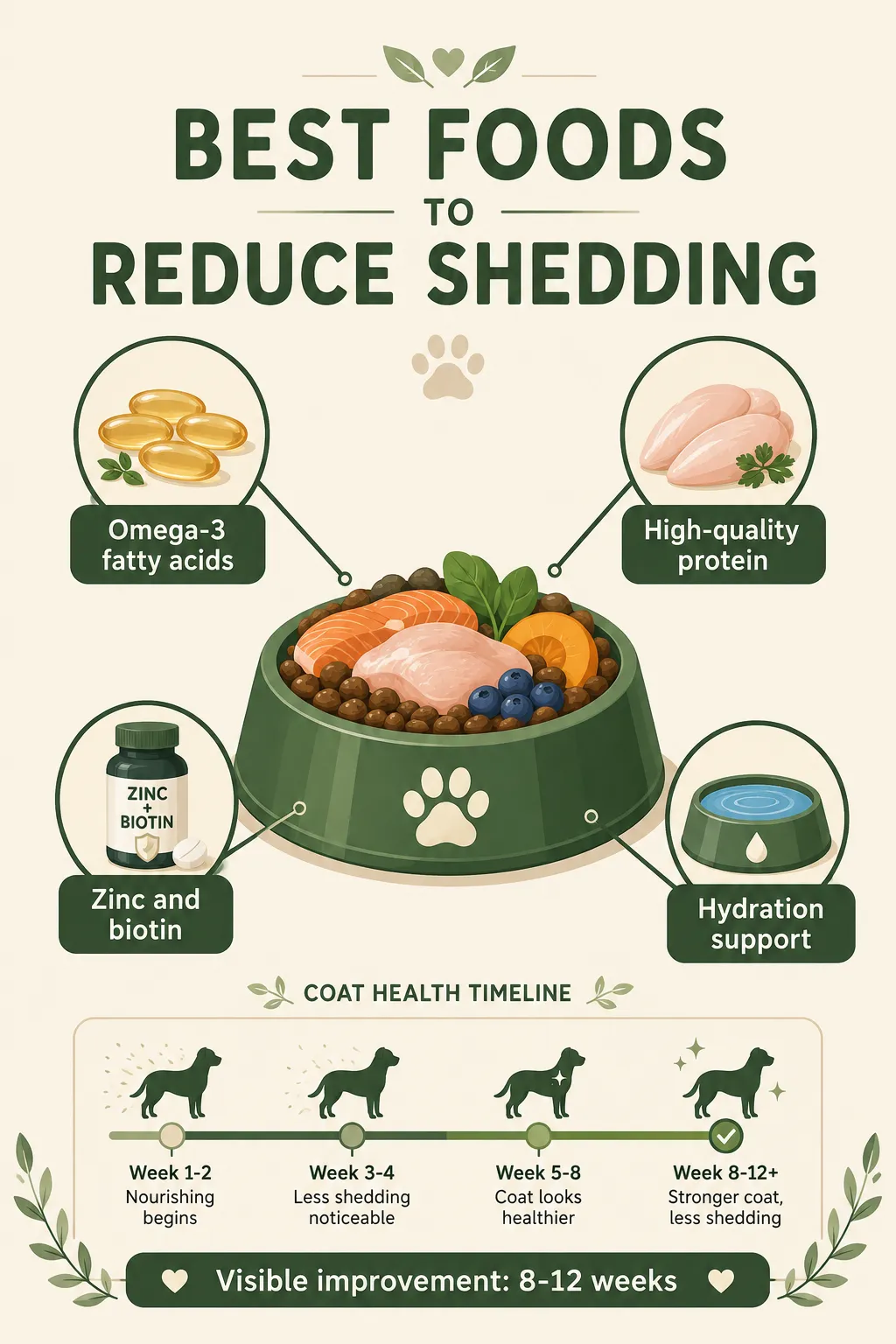
What to look for in a shedding-reducing diet:
- High-quality animal protein as the first ingredient (chicken, salmon, beef)
- Omega-3 fatty acids – found in fish-based foods and fish oil supplements
- Zinc and biotin – support skin barrier and hair growth
- No fillers – corn syrup, artificial dyes, and low-quality grains don’t support coat health
If you’re curious about making your dog’s food at home, our homemade dog food recipes for sensitive stomachs include several coat-friendly options. You can also explore superfoods for dogs that vets recommend for natural coat-boosting ingredients.
Can I Give My Dog Supplements for Shedding?
Yes – omega-3 supplements are the most evidence-supported option. One dog shedding season survival guide estimates that omega-3 supplementation can reduce shedding by roughly 20-30% by strengthening hair follicles when used consistently.
A typical starting dose is around 20-40 mg of combined EPA + DHA per kilogram of body weight daily – but always confirm the dose with your vet before starting. Expect to wait 8-12 weeks before seeing visible coat improvements.
Popular supplement options:
- Fish oil capsules – Most bioavailable source of EPA and DHA
- Flaxseed oil – Plant-based omega-3, good for dogs with fish allergies
- Salmon oil – Palatable and easy to add to food
- Coconut oil – Supports skin moisture; less evidence for shedding specifically
A practical low-cost option: about 1 teaspoon of olive oil or flaxseed oil per 10 pounds of body weight added to food (vet approval first). It’s not a magic fix, but it supports the skin barrier and hair growth over time.
⚠️ Edge case: If your dog already eats a high-quality fish-based food, additional fish oil may not add much. Supplements matter most when the base diet is lacking.
Does Bathing Your Dog Help With Shedding?
Yes – but only when done correctly and at the right frequency. A proper deshedding bath loosens and removes dead undercoat that brushing alone can’t fully reach.
Chewy’s guide to reducing dog hair shedding recommends bathing most pet dogs roughly once a month, shifting to every 2-4 weeks during peak spring and fall shedding seasons.
The right bathing protocol:
- Pre-brush the dry coat to remove surface tangles
- Bathe with a pH-balanced deshedding or hypoallergenic dog shampoo
- Rinse thoroughly – leftover shampoo irritates skin
- Blow-dry on low or cool setting to push out loose undercoat
- Brush again once fully dry to catch remaining loose hair
What not to do:
- Don’t bathe more than every 3 weeks – it strips natural oils and worsens shedding
- Never use human shampoo – the pH is wrong for dog skin
- Don’t skip the post-bath brush – it’s where a lot of the shed hair actually comes out
Can Stress Cause Dogs to Shed More?
Yes – stress is a genuine and often overlooked cause of increased shedding. Anxiety from loud environments, inconsistent routines, separation, or lack of mental stimulation can affect coat health and trigger extra hair loss.
If your dog sheds more during vet visits, car rides, or thunderstorms, that’s acute stress shedding – totally normal and temporary. Chronic stress shedding is different: it’s persistent, tied to ongoing anxiety, and often comes with other behavioral signs like pacing, excessive licking, or destructive behavior.
Ways to reduce stress-related shedding:
- Maintain a consistent daily routine
- Provide regular exercise and mental enrichment (check out these brain games for dogs that reduce boredom)
- Use positive reinforcement training to build confidence
- Address separation anxiety early
Does Neutering or Spaying Affect Dog Shedding?
Yes, it can. Hormonal changes after spaying or neutering sometimes affect coat texture and shedding patterns. Some dogs develop a softer, fluffier “spay coat” that mats more easily and may appear to shed more.
This is more common in double-coated breeds. The coat change is usually permanent but manageable with regular brushing and grooming. It’s not a reason to avoid the procedure – just something to be aware of so you can adjust your grooming routine afterward.
What Breeds Shed the Least?
If you’re asking how to stop my dog from shedding so much and the answer is “get a different dog,” low-shedding breeds are worth knowing about. Poodles, Bichon Frises, Maltese, Schnauzers, and Portuguese Water Dogs are consistently low shedders.
For larger dogs, our guide to large hypoallergenic dog breeds that don’t shed like you’d expect covers the best options for families who want a big dog without the fur everywhere.
No dog is completely non-shedding – but some breeds shed so minimally it’s barely noticeable.
How Much Does Professional Grooming Cost for Shedding?
Professional grooming for a deshedding treatment typically costs $50-$100 per session, depending on dog size, coat type, and your location. Some groomers offer “deshedding packages” that include a deshedding shampoo, high-velocity blow-dry, and thorough brush-out.
For heavy shedders during coat blow season, one professional session can remove an impressive amount of loose undercoat – sometimes more than weeks of home brushing.
When professional grooming is worth it:
- During peak spring or fall shedding when you’re overwhelmed
- If your dog has matting that needs professional attention
- If your dog is anxious about grooming tools at home
- For double-coated breeds that need a high-velocity dryer treatment
What’s the Difference Between Normal Shedding and Hair Loss?
Normal shedding means the coat is cycling through naturally – hair comes out evenly, the coat stays full, and the skin looks healthy. Hair loss (alopecia) means the coat is thinning, bald spots are appearing, or the skin looks irritated, flaky, or discolored.
The key distinction: normal shedding leaves the coat looking full even as hair falls out. Actual hair loss leaves visible gaps, thinning patches, or exposed skin.
If you notice paw licking alongside coat changes, check out our home remedies to stop your dog from licking its paws – it’s often connected to the same underlying allergy or skin issue driving excess shedding.
Best Vacuum for Dog Hair and Shedding
A good vacuum makes managing shedding at home dramatically easier. Look for these features:
- Strong suction with a motorized brush roll for carpet
- HEPA filter to trap dander (important for allergy sufferers)
- Pet-specific attachments for furniture and upholstery
- Easy-empty canister – you’ll be emptying it often
Robot vacuums are a practical addition for homes with multiple dogs or heavy shedders. They won’t replace a full vacuum, but running one daily keeps loose hair from building up between deep cleans.
Remember: Vacuuming more doesn’t reduce how much your dog sheds – it just manages the hair that’s already fallen. Combine it with the grooming fixes above for real results.
FAQ
Q: Can I completely stop my dog from shedding?
No. Shedding is a normal biological process. The goal is to reduce it to a manageable level through brushing, diet, bathing, and supplements – not to eliminate it entirely.
Q: How long does it take to see results from omega-3 supplements?
Most dogs show visible coat improvement after 8-12 weeks of consistent omega-3 supplementation. Don’t expect overnight results.
Q: Is it okay to shave a double-coated dog to reduce shedding?
No. Shaving a double-coated breed can permanently damage the coat and actually worsen shedding long-term. It also removes the dog’s natural insulation. Stick to brushing and deshedding tools instead.
Q: My dog sheds more after baths – is that normal?
Yes, bathing loosens dead hair, so you’ll see more shedding right after a bath. This is a good thing – it means the loose undercoat is coming out during the bath rather than on your furniture.
Q: What’s the best brush for a German Shepherd or Husky?
An undercoat rake or deshedding comb (like a Furminator) is the most effective choice for double-coated breeds. Pair it with a slicker brush for surface finishing.
Q: Can food allergies cause excessive shedding?
Yes. Food allergies inflame the skin and disrupt the hair growth cycle. If your dog sheds excessively and also has digestive issues or itchy skin, a food allergy trial with your vet is worth considering.
Q: How do I know if my dog’s shedding is a medical problem?
Watch for bald patches, visible skin through thinning fur, persistent scratching, skin odor, weight changes, or lethargy alongside increased shedding. Any of these warrant a vet visit.
Q: Does brushing outside help keep hair off furniture?
Yes – brushing outdoors removes loose hair before it falls inside. It’s one of the simplest environmental fixes.
Q: Can puppies shed as much as adult dogs?
Puppies go through a coat change between 6-12 months as their adult coat grows in. This transition period can involve heavy shedding even in breeds that are normally light shedders.
Q: Is there a deshedding shampoo that actually works?
Yes – shampoos with ingredients like omega fatty acids, oatmeal, and aloe vera help loosen dead undercoat and soothe skin. They work best when paired with a thorough brush-out after the bath.
Conclusion
Figuring out how to stop my dog from shedding so much doesn’t require expensive gadgets or complicated routines. The 9 fixes in this guide – consistent brushing with the right tool, proper bathing frequency, omega-3 supplementation, quality diet, stress reduction, parasite prevention, professional grooming when needed, smart home management, and knowing when to call the vet – cover every angle.
Your action plan for this week:
- Check your current brush – does it match your dog’s coat type? Swap it if not.
- Start brushing 3-4 times this week for 10-15 minutes per session.
- Add a fish oil supplement to your dog’s food (confirm the dose with your vet).
- Schedule a bath with a deshedding shampoo if it’s been more than 4-6 weeks.
- Look at your dog’s skin – if anything looks off, book a vet check.
Consistency is everything. Two weeks of daily brushing and the right diet will make a bigger difference than any single product. Stick with it, and you’ll spend a lot less time with a lint roller. 🐕
For a deeper dive into managing your dog’s coat year-round, visit our dedicated guide on how to reduce dog shedding with even more breed-specific tips.