Last updated: October 7, 2026
Quick Answer: Puppies start teething around 3-4 months old, and the peak chewing phase runs until about 6-7 months when adult teeth fully erupt. The most effective puppy teething hacks combine cold or frozen chew items for pain relief, purposeful toy redirection, and consistent short time-outs when biting gets out of hand. Most puppies calm down noticeably once their 42 adult teeth are in place.
Key Takeaways
- Puppies begin losing baby teeth around 3-4 months; the process wraps up by 6-8 months
- Frozen toys and cold treats are among the fastest, safest ways to soothe sore gums
- Hard chews like antlers, bones, and hooves can fracture fragile puppy teeth – skip them
- Redirecting biting to a toy immediately (and rewarding it) is more effective than punishment
- Rotating toys keeps puppies interested and reduces boredom chewing
- Puppy-proofing your home during the 4-7 month window protects your belongings
- Ice cubes are generally safe in small amounts, but check with your vet first
- Teething discomfort is temporary – chewing intensity should drop after adult teeth erupt
- Building a daily mouth-care routine now makes dental care easier for life
- Destructive chewing that continues past 8 months may signal boredom or anxiety, not teething
What Age Do Puppies Start Teething – and How Long Does It Last?
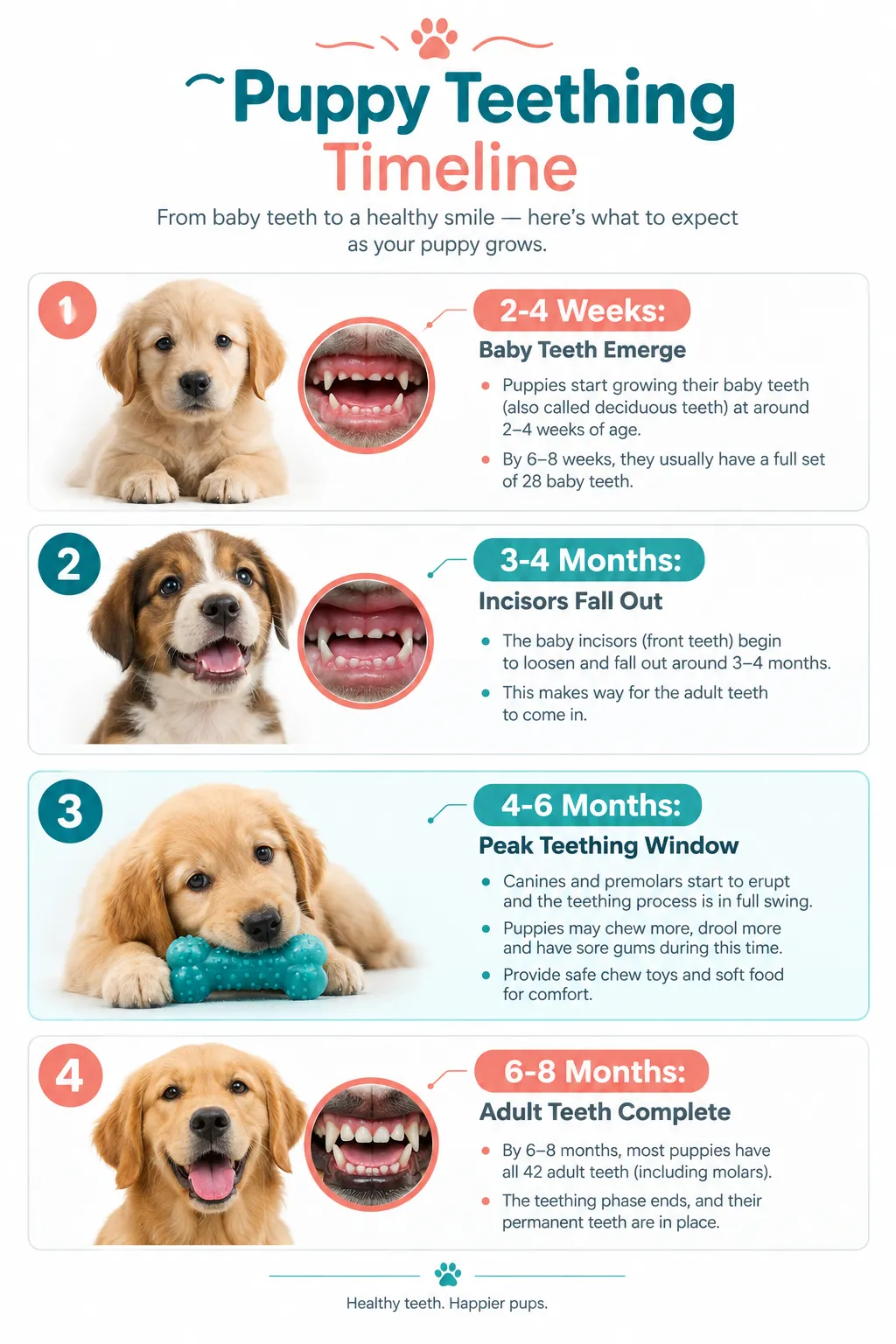
Puppies start teething around 3-4 months of age, when their 28 baby teeth begin falling out to make room for 42 adult teeth. According to VCA Animal Hospitals’ guide on puppy teeth and teething, the full teething process typically wraps up by 6-8 months.
That’s roughly a 3-5 month window of peak chewing. Here’s a quick breakdown:
| Stage | Age | What’s Happening |
|---|---|---|
| Baby teeth emerge | 2-4 weeks | First tiny teeth appear |
| Incisors start falling out | 3-4 months | Teething begins in earnest |
| Peak teething window | 4-6 months | Most intense chewing phase |
| Adult teeth complete | 6-8 months | All 42 adult teeth in place |
The good news? This phase ends. The not-so-good news? It can feel like forever when your puppy is treating your baseboards like a chew toy.
Puppy Teething Hacks That Actually Work – 10 You Need to Try
These are the hacks that make the biggest difference. Most cost nothing or very little, and they work because they address the root cause: sore, itchy gums that need pressure and relief.
Hack 1 – Freeze a Wet Washcloth
Dampen a clean washcloth, twist it loosely, and freeze it for a couple of hours. Let your puppy chew on it under supervision. The cold numbs sore gums fast, and the texture satisfies that urge to gnaw.
This is probably the cheapest puppy teething hack on this list. Just replace it once it thaws.
Hack 2 – Rotate Toys to Keep Things Fresh
Puppies lose interest in the same toy quickly. Keep a rotation of 4-6 teething toys and swap them out every day or two. What felt boring yesterday feels brand new today.
Purpose-made puppy teething toys come in rubber, rope, and nylon varieties – each offering a different texture that targets different parts of the mouth.
Hack 3 – Stuff and Freeze a Kong
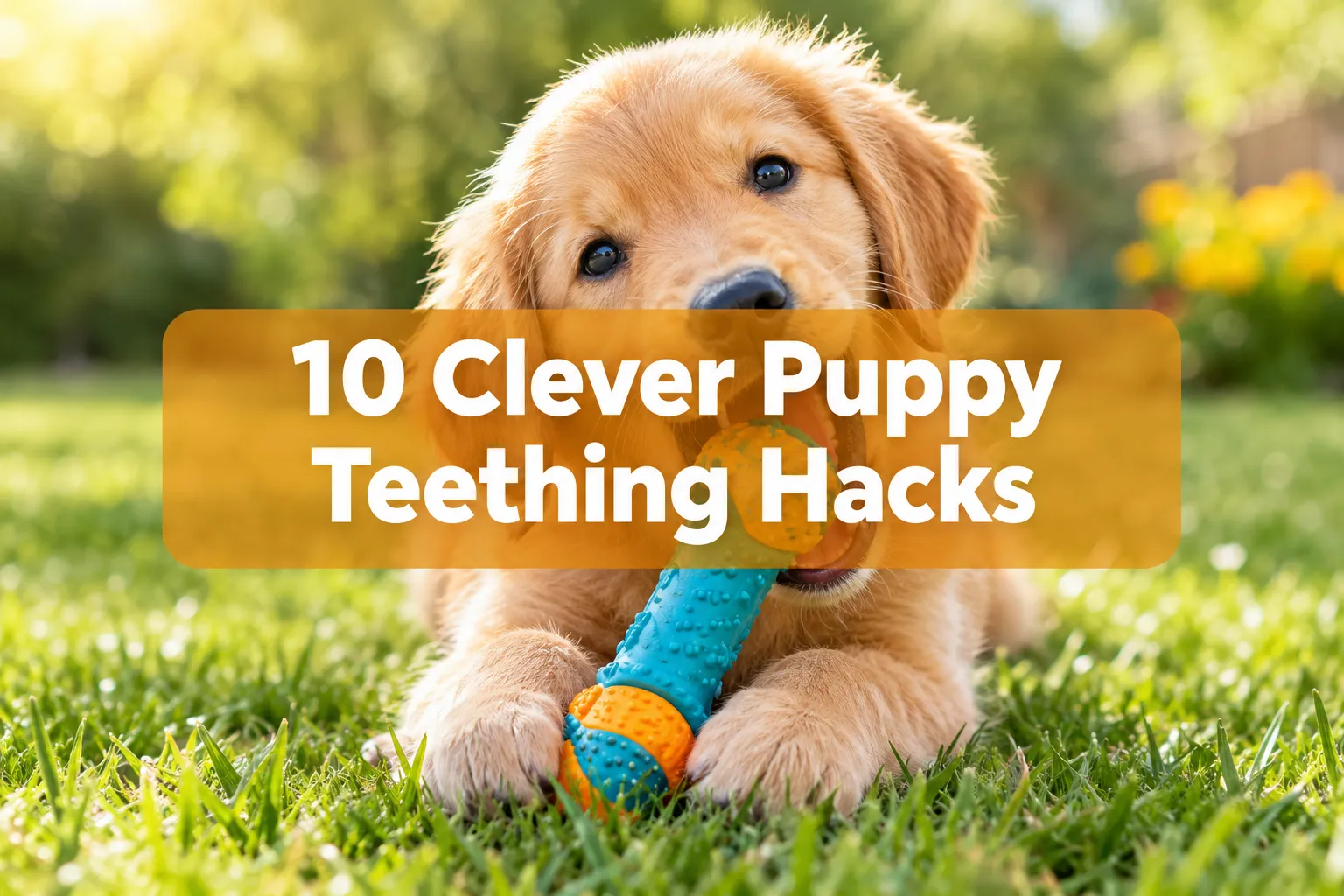
Fill a Kong or similar rubber toy with wet food, softened kibble, or plain pumpkin puree, then freeze it overnight. Your puppy gets food enrichment AND cold gum relief in one go. This is a double-win hack.
It also keeps a bored puppy busy for 20-30 minutes, which gives you a break.
Hack 4 – Redirect Biting Immediately
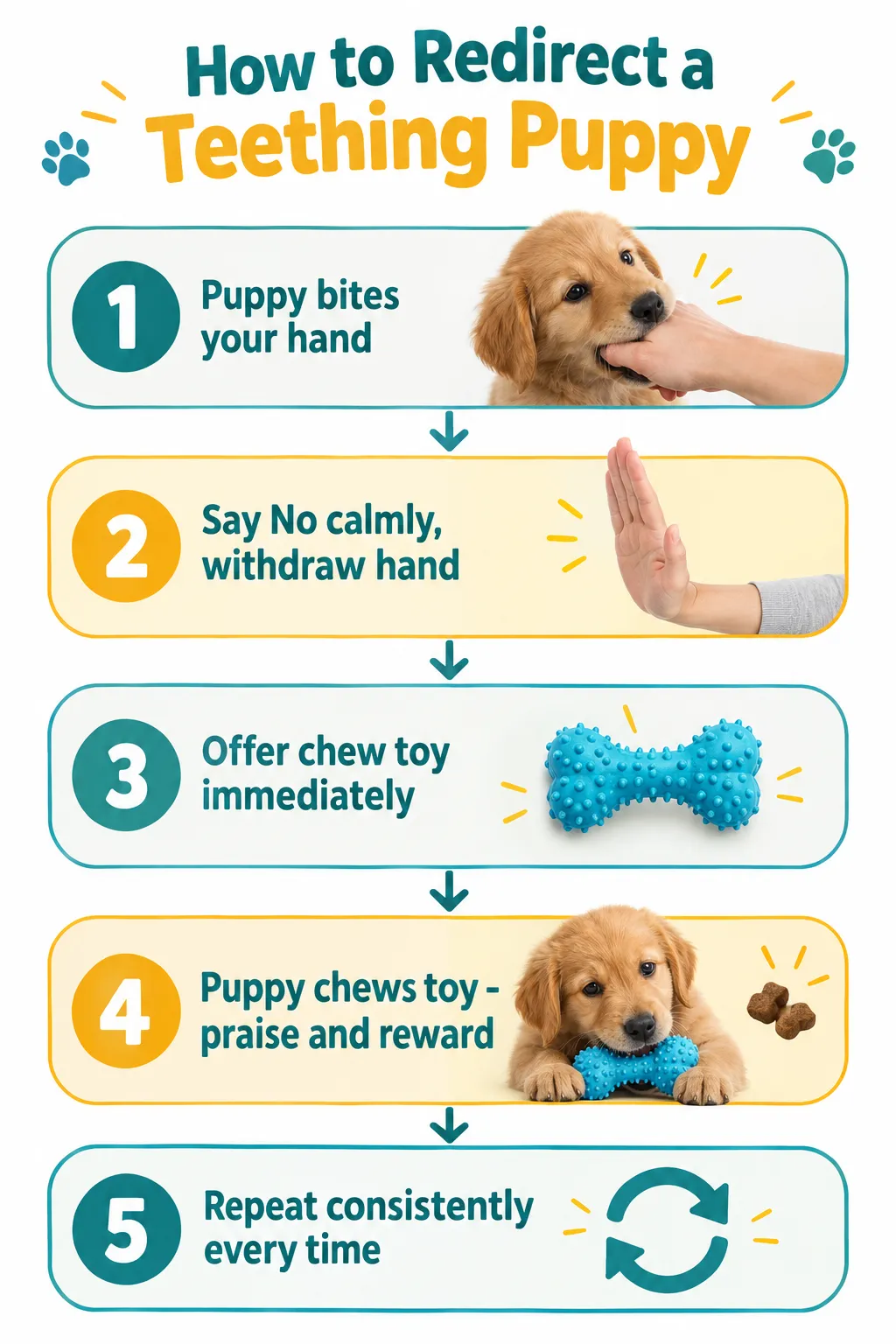
The moment your puppy bites your hand or ankle, calmly say “no,” withdraw your hand, and immediately offer a chew toy. When they take it, praise them. Repeat every single time.
This works because puppies learn through repetition. Consistency is the whole game here. For more detail on this, check out our guide on how to stop puppy biting fingers.
Hack 5 – Use Short Time-Outs for Persistent Biting
If redirection isn’t working in the moment, a brief time-out (30-60 seconds in a calm, safe space) signals that biting ends the fun. Don’t make it punitive – just boring.
This pairs well with our guide on how to stop dogs from chewing everything for puppies who are chewing more than just during play.
Hack 6 – Puppy-Proof During the Peak Window
Between 4-7 months, your puppy’s drive to chew is at its highest. Use this window to limit access to rooms with tempting items – cables, shoes, furniture legs. Baby gates and closed doors are your best friends right now.
Our 11 puppy-proofing house ideas covers this in detail, including some hazards most owners miss.
Hack 7 – Try a Cold Carrot
A chilled or lightly frozen carrot is a vet-friendly natural teething option. It’s firm enough to satisfy chewing, cold enough to soothe gums, and safe for most puppies in moderation. Always supervise and remove any large broken pieces.
Hack 8 – Use Ice Cubes as Emergency Relief
Small ice cubes can work as quick gum relief in a pinch. Most puppies enjoy batting them around and chewing them. That said, check with your vet first, especially for very small breeds, since very cold items can occasionally cause stomach upset.
Hack 9 – Build a Daily Mouth Routine Early
Gently touching your puppy’s mouth and gums daily does two things: it helps you spot any retained baby teeth or swollen areas, and it gets your puppy comfortable with mouth handling for life. This makes vet visits and future tooth brushing much easier.
Our guide on how to clean dog teeth without brushing has some great starter options for young puppies.
Hack 10 – Set Realistic Expectations
Chewing is completely normal puppy behavior. The goal isn’t to stop chewing – it’s to redirect it to appropriate items. According to the AKC’s guide on puppy teething and nipping, intensity should naturally decrease once adult teeth are fully in. If it doesn’t, that’s worth addressing separately.
Best Toys for Teething Puppies – and What to Avoid
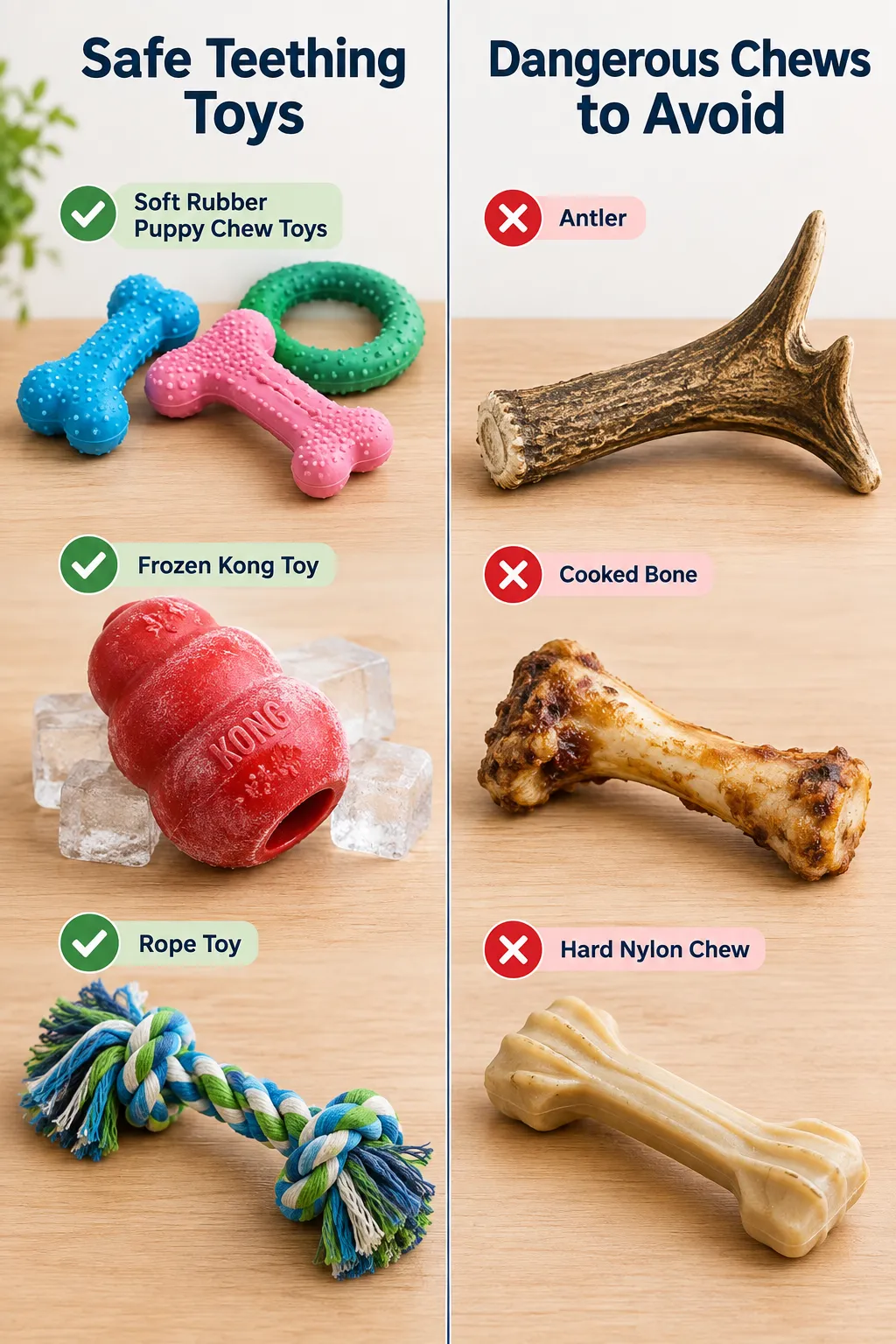
The best teething toys for puppies are soft-to-medium rubber chew toys, rope toys, and frozen stuffable toys. These provide the right amount of resistance without risking tooth fractures.
Safe options:
- Soft rubber chew toys (like Kong Puppy or Nylabone Puppy)
- Rope toys (supervised only – remove if fraying)
- Frozen wet washcloths
- Stuffed and frozen rubber toys
- Cold carrots or apple slices (vet-approved)
Avoid these:
- Antlers, hooves, and cooked bones – they’re too hard and can fracture baby teeth
- Very hard nylon chews marketed for adult dogs
- Rawhide – poses a choking and blockage risk for puppies
- Any toy small enough to swallow whole
Quick rule: If you press your thumbnail into the toy and it doesn’t leave a small dent, it’s probably too hard for a teething puppy.
The ASPCA’s guidance on destructive chewing also recommends avoiding items that resemble household objects – old shoes, socks – because puppies can’t tell the difference between “old shoe I’m allowed to chew” and “new shoe I’m not.”
How to Stop a Puppy From Biting During Teething
The most effective way to stop a teething puppy from biting people is immediate, consistent redirection paired with positive reinforcement. Punishment-based approaches tend to increase anxiety and can make biting worse.
Here’s the step-by-step:
- Puppy bites your hand – say “ouch” or “no” calmly, don’t pull away sharply (that triggers prey drive)
- Withdraw your hand – remove the “fun” immediately
- Offer a chew toy – put it right in front of their nose
- Puppy chews toy – immediately praise and reward
- Repeat every time – consistency is everything
If your puppy is biting hard and frequently, also check out our full guide on how to stop puppy biting fingers for more in-depth training strategies.
Puppy Teething Pain Relief – What Actually Helps
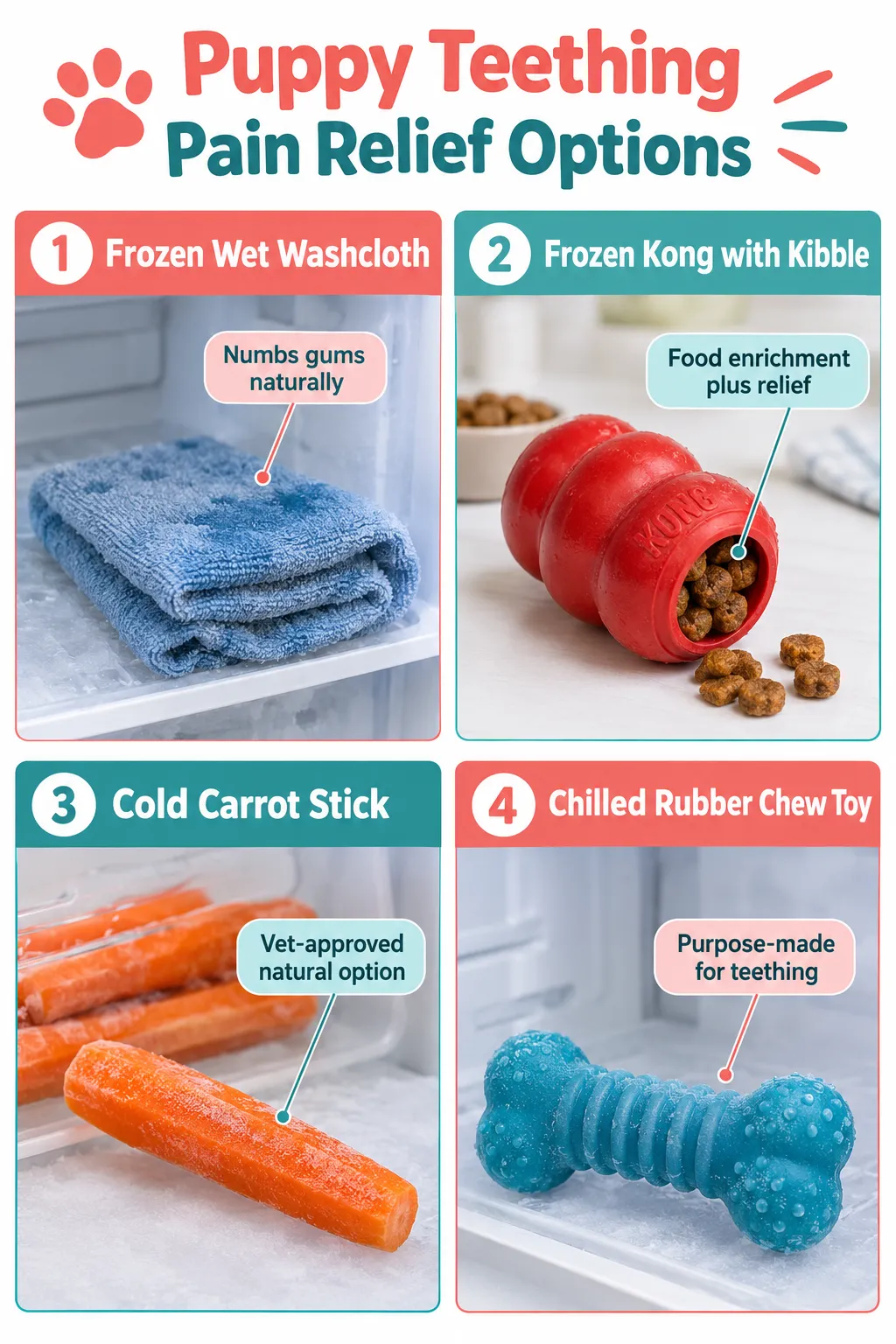
The most reliable puppy teething pain relief options are cold and frozen items that numb sore gums. There are no over-the-counter teething gels approved for puppies, and human teething products (like Orajel) can be toxic to dogs.
What works:
- Frozen rubber chew toys
- Frozen wet washcloths
- Cold carrots (supervised)
- Small ice cubes (with vet approval)
- Chilled Kong stuffed with soft food
What to skip:
- Human teething gels – can contain xylitol or benzocaine, both dangerous for dogs
- Aspirin or ibuprofen – toxic to puppies
- Alcohol-based products of any kind
According to PetMD’s puppy teething guide, keeping teething toys in the freezer so they’re always ready is one of the simplest and most effective strategies owners can use.
Is My Puppy Teething or Just Being Destructive?
Teething puppies chew because their gums hurt and they’re seeking pressure relief. Destructive chewing from boredom or anxiety looks similar but has different triggers.
Signs it’s teething:
- Age 3-7 months
- You find small teeth around the house
- Chewing is focused on firm objects that provide counter-pressure
- Gums look slightly red or swollen
- Drooling more than usual
Signs it might be something else:
- Puppy is over 8 months and chewing is intensifying, not decreasing
- Chewing happens mainly when left alone (possible separation anxiety)
- Destruction is paired with other stress signals like pacing or whining
If your puppy seems distressed beyond normal teething, our article on 9 hidden signs your puppy feels unsafe may help you identify what’s really going on.
The Humane Society’s fact sheet on puppy teething notes that some chewing behavior is always normal in dogs – the goal is management and redirection, not elimination.
Conclusion
Puppy teething is genuinely tough for a few months, but it’s also temporary. The best approach combines physical relief (cold toys, frozen treats), consistent redirection (always swap biting for a toy), and smart home management (puppy-proofing during the 4-7 month peak window).
Your action plan starting today:
- Freeze a wet washcloth and a stuffed Kong tonight
- Set up a toy rotation of at least 4-6 items
- Puppy-proof one room at a time, starting with the most hazardous
- Practice the redirect-and-reward method every single time biting happens
- Start a daily mouth-touching routine to build comfort for future dental care
Stick with these puppy teething hacks consistently and you’ll get through this phase with your furniture – and your sanity – mostly intact. 🐾
FAQ
At what age do puppies stop teething?
Most puppies finish teething by 6-8 months, once all 42 adult teeth have fully erupted. Chewing intensity typically drops noticeably after this point.
Can I give my puppy ice cubes for teething?
Yes, small ice cubes are generally safe and can help soothe sore gums. Check with your vet first for very small breeds, as very cold items can occasionally cause stomach upset.
What’s the best frozen teething toy for puppies?
A rubber Kong stuffed with wet food or softened kibble and frozen overnight is one of the best options. It combines food enrichment with cold gum relief.
Why is my puppy chewing everything at 5 months?
Five months is peak teething territory. Adult teeth are actively pushing through, which causes significant gum discomfort. This is normal and should ease by 6-7 months.
Are antlers safe for teething puppies?
No. Antlers are too hard for puppy teeth and can cause fractures. Stick to soft-to-medium rubber toys designed specifically for puppies.
How do I stop my puppy from biting my ankles?
Immediately stop moving, say “no” calmly, then redirect to a chew toy. Moving away quickly triggers prey drive and makes it worse. Consistency over several weeks is what creates lasting change.
Can teething cause a puppy to lose appetite?
Temporarily, yes. Sore gums can make dry kibble uncomfortable. Try softening kibble with warm water during peak teething weeks.
Is it normal for puppies to swallow their baby teeth?
Yes, it’s common and generally harmless. Puppies often swallow the tiny teeth as they fall out during eating or chewing.
What human foods are safe as teething relief?
Cold carrot sticks and small pieces of chilled apple (no seeds) are popular vet-friendly options. Avoid anything with xylitol, grapes, or onions.
How many teeth does a puppy have vs an adult dog?
Puppies have 28 baby teeth. Adult dogs have 42 permanent teeth. The extra teeth are mostly premolars and molars that don’t have baby tooth predecessors.
Should I see a vet during teething?
A routine check around 4-6 months is a good idea. Vets can spot retained baby teeth (where the adult tooth comes in before the baby tooth falls out), which may need removal.
Does teething cause diarrhea in puppies?
Not directly, but puppies chewing on dirty objects or swallowing large pieces can cause digestive upset. If diarrhea persists more than 24 hours, contact your vet.