Last updated: September 7, 2026
Quick Answer: The signs your puppy feels unsafe are often subtle – things like lip licking, yawning, pinned-back ears, and refusing food can all point to fear or anxiety. Most owners miss these early signals because they look like “quirky” behavior. Catching them early gives you the best chance to help your dog feel secure before stress escalates.
Key Takeaways
- Over 84% of dogs show subtle anxiety signals that owners often mistake for normal behavior
- Signs your puppy feels unsafe include body language cues like tail tucking, crouching, and “whale eye”
- Vocal signs such as whining, growling, and high-pitched barking are your dog trying to tell you something is wrong
- Refusing food or treats is one of the most overlooked signs of stress in dogs
- Displacement behaviors (random yawning, sniffing, scratching) are calming signals, not quirks
- A fearful puppy is different from a shy one – trauma needs specific, patient help
- Most rescue puppies need 2 to 12 weeks to adjust to a new home
- Early intervention with positive reinforcement can prevent anxiety from becoming a long-term problem
How to Tell If Your Dog Is Happy vs. Stressed
A happy dog has a relaxed body, soft eyes, a loose wagging tail, and engages willingly with people and play. A stressed or unsafe dog shows the opposite – a tense body, avoidance, and withdrawal. Knowing the difference is the first step to keeping your pet healthy and secure.
Signs your dog feels happy and safe:
- Relaxed body language with a loose, wiggly posture
- Tail wagging in a wide, sweeping motion
- Soft, blinking eyes with no tension around the forehead
- Willingness to eat food and accept treats
- Restful, consistent sleep without startling awake
- Playful behavior and interest in toys
Signs your dog is stressed or unhappy:
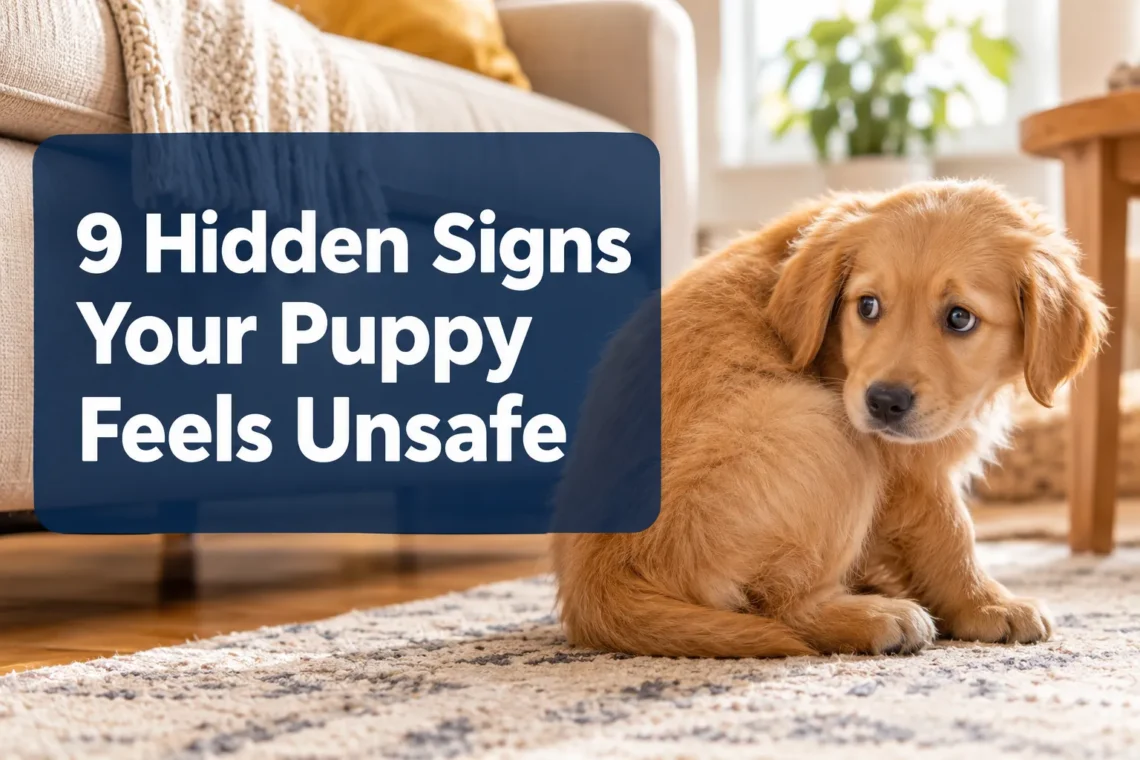
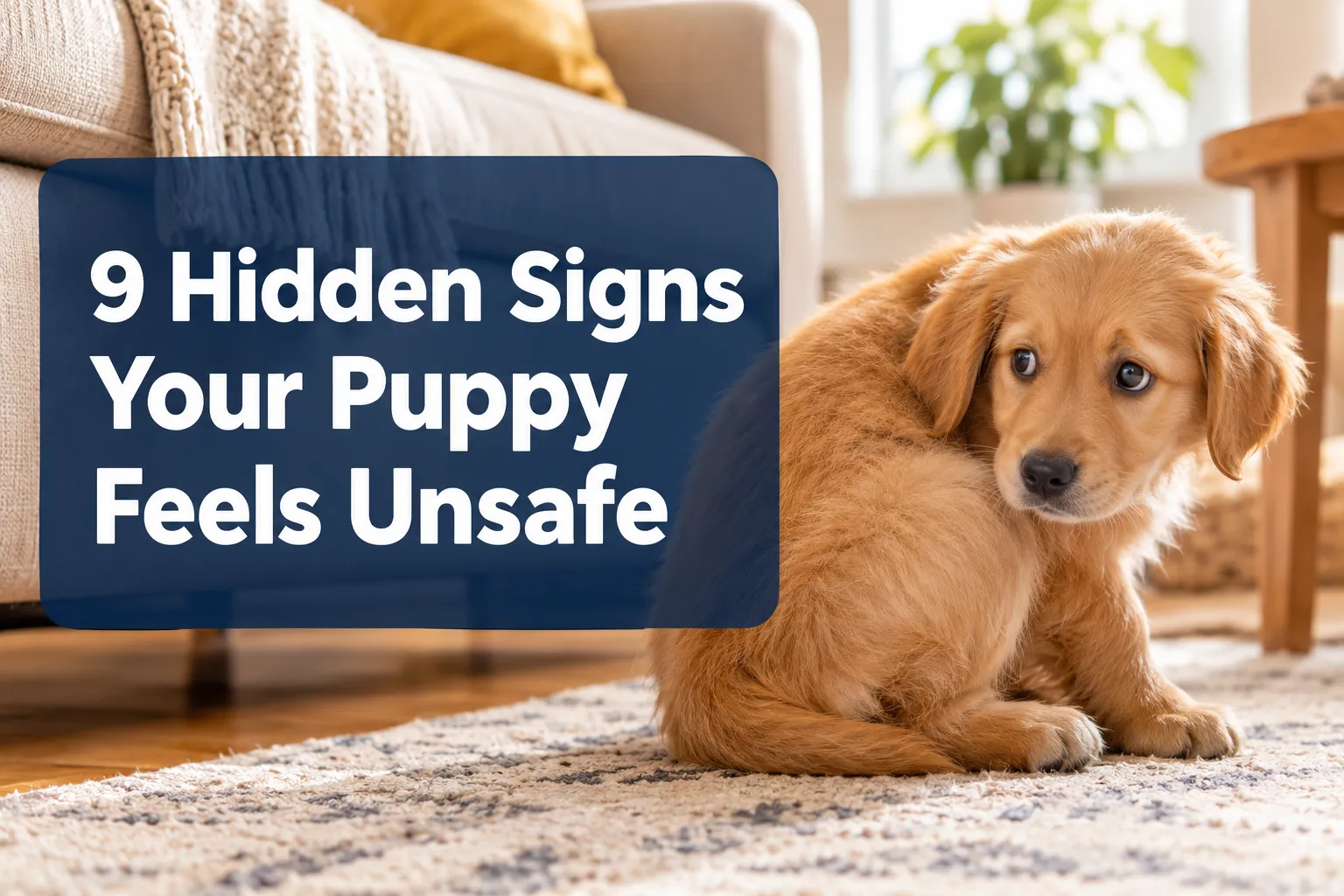
- Stiff, low body posture or crouching
- Tail tucked between the legs
- Ears pinned flat back against the head
- Avoiding eye contact or turning the body away
- Refusing food even when hungry
- Excessive panting or drooling indoors in cool conditions
If your dog is showing several of these unhappy signs at once, something is off. Check out our guide to 12 stressed dog signs most owners miss for a deeper look at stress signals in adult dogs too.
Signs Your Puppy Feels Unsafe: The 9 Hidden Signals
Most owners know the obvious signs – a dog that growls or cowers. But the signs your puppy feels unsafe are often far more subtle, and they show up in dog body language long before your pet reaches a breaking point.
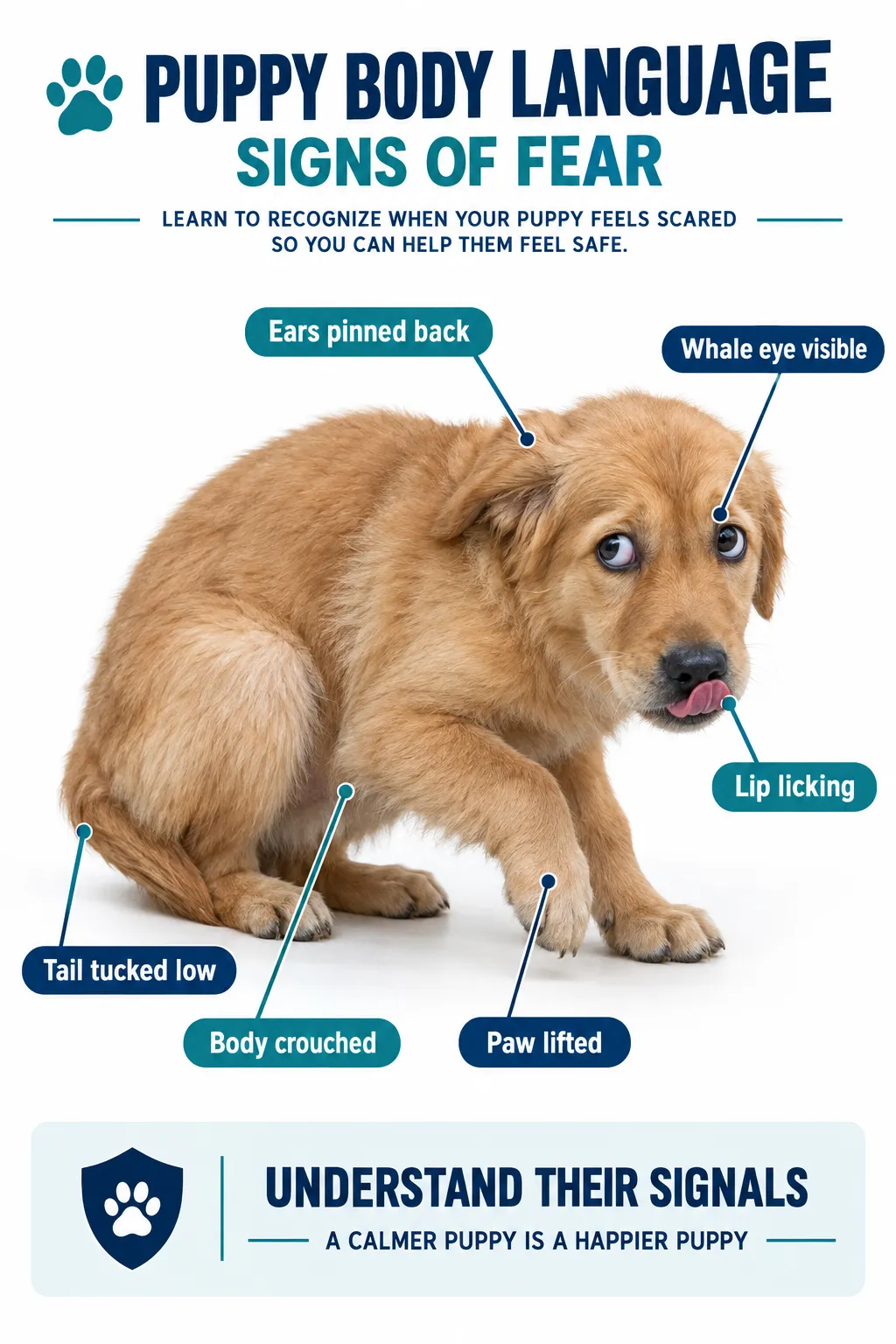
Here are the 9 hidden signals to watch for:
1. Lip Licking and Yawning Out of Context
When a puppy licks its lips or yawns and there’s no food around and it isn’t tired, that’s a calming signal. According to the AKC, these micro-behaviors are a dog’s way of trying to de-escalate a stressful situation. It’s your dog trying to tell you it’s uncomfortable.
2. Ears Pinned Back
Ears that are flattened against the skull – not just relaxed but actively pressed back – are a strong sign of fear. The PDSA notes that ear position is one of the first body language cues to change when a dog feels threatened. Puppy dog ears back all the time is not something to brush off.
3. “Whale Eye” and Dilated Pupils
Whale eye is when you can see the whites of a dog’s eyes in a crescent shape. Combined with dilated pupils, this tells you the dog is in a heightened state of alert. VCA Hospitals confirms that eye changes like these are reliable early indicators of anxiety in dogs.
4. Tail Tucked Low or Between the Legs
A tail that curls under the belly is a classic fear posture. However, even a tail held very low – not fully tucked – can signal unease. This is one of the most common signs of stress dogs show, and it’s easy to miss in breeds with naturally low tail carriage.
5. Refusing Food, Treats, or Play
This is a big one. A dog that doesn’t trust its environment will often refuse food, even high-value treats. Camp Bow Wow’s stress guide lists food refusal as a key hidden sign of anxiety. If your puppy suddenly doesn’t want its favorite treat, something is wrong.
6. Displacement Behaviors (The One Most Owners Miss!)
This is the sign that catches almost everyone off guard. Displacement behaviors are random, out-of-context actions – sudden scratching, sniffing the ground, shaking off as if wet, or grooming themselves mid-interaction. These aren’t quirks. Dogs Trust explains that these behaviors are stress responses, not personality traits. Your dog is showing signs of stress through behavior that looks totally normal on the surface.
7. Pacing, Circling, or Restlessness
A puppy that can’t settle – pacing back and forth, circling, or constantly moving – is a stressed dog. This is the body’s stress response keeping the dog in a state of readiness. It can look like high energy, but it’s actually anxiety. If you notice this alongside signs your dog is lonely, the two issues may be connected.
8. Panting, Drooling, or Sweaty Paw Prints in Cool Conditions
Panting in a cool room with no exercise is a stress signal. So is excessive drooling or leaving wet paw prints on a cool floor. PetMD’s dog anxiety guide confirms that physical symptoms like these are common signs of anxiety in dogs, not just reactions to heat.
9. Freezing or Becoming Stiff
When a dog freezes completely – stops moving, holds its breath, goes rigid – it’s in a fear response. This is the body’s “play dead” survival instinct. It’s also a warning sign that can precede a bite if the trigger doesn’t go away. Never force interaction with a dog that is frozen.
Vocal Signs Your Dog Is Uncomfortable
Vocal signs are often the clearest way a dog tries to communicate distress, but the specific sounds matter. Whining, high-pitched barking, howling when left alone, and growling are all vocal signs your dog is uncomfortable or scared.
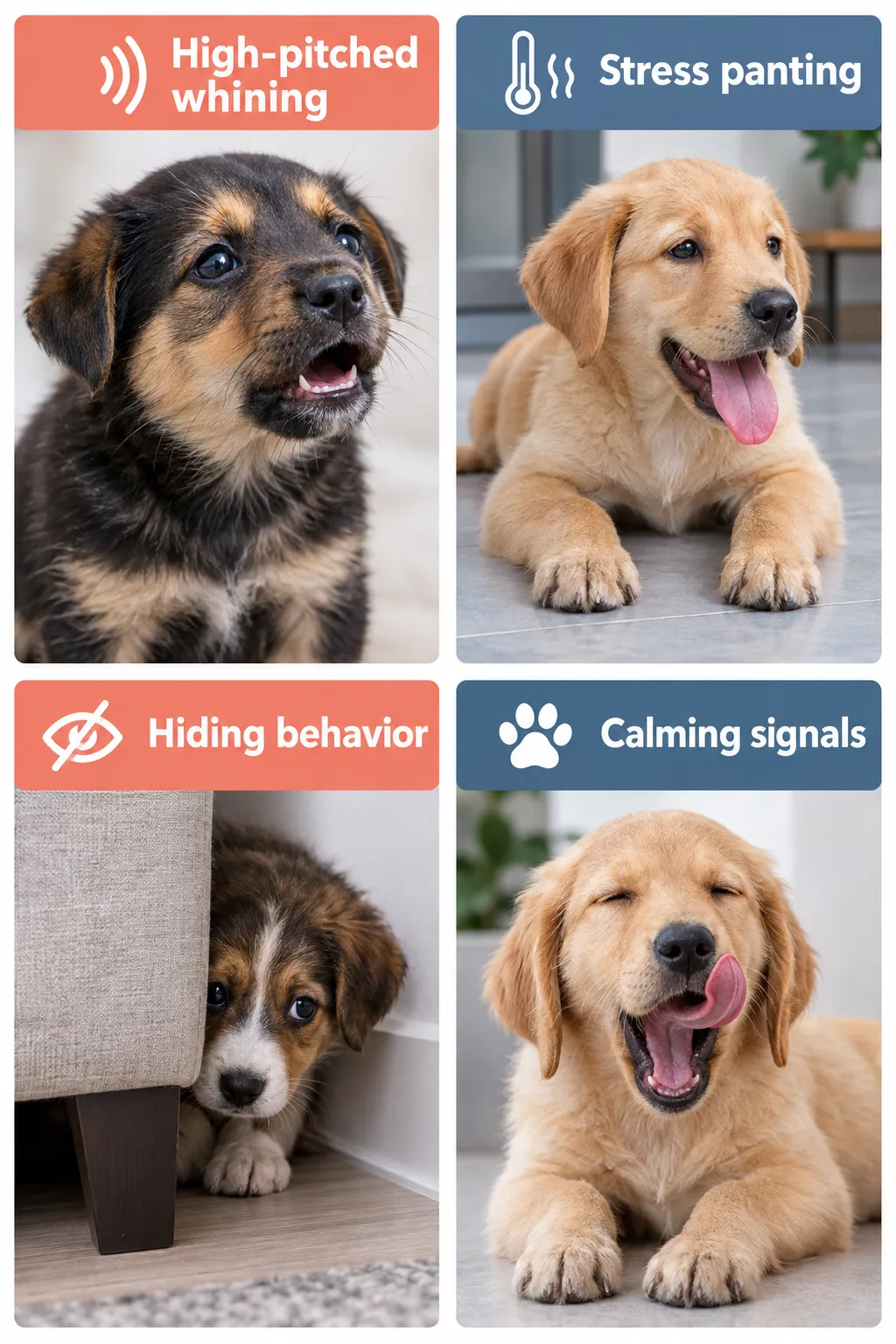
- Whining – often the first vocal sign, signals anxiety or a need for help
- High-pitched barking – different from play barking; sharper and more urgent
- Growling – a warning, not aggression; your dog is asking for space
- Howling – common in separation anxiety; the dog is calling out because it doesn’t feel safe alone
💡 Important: Never punish growling. Growling is communication. A dog that learns it can’t growl may skip straight to biting because it has no safe way to signal distress.
Signs of aggression in dogs – like growling, snapping, or lunging – are almost always rooted in fear. A dog showing signs of aggression is usually a dog that feels unsafe and has run out of other options to communicate that.
Dog Body Language Cues to Watch For: Fear Postures Explained
Dog body language is the primary way your pet communicates how it feels. A scared puppy will show fear through body language before it ever makes a sound, so learning to read these cues is essential.
Key fear postures in puppies:
| Body Part | Relaxed Signal | Fear Signal |
|---|---|---|
| Ears | Neutral or forward | Pinned flat back |
| Eyes | Soft, blinking | Wide, whale eye, dilated |
| Tail | Loose wag or neutral | Tucked under belly |
| Body | Upright, loose | Low crouch, leaning away |
| Mouth | Relaxed, slightly open | Tight, lip licking, panting |
| Paws | Flat on ground | One paw lifted |
A paw lift – where the dog raises one front paw slightly – is a particularly subtle sign. It signals uncertainty and is one of the early signs stress dogs show through body language before escalating to more obvious fear.
Also watch for: the dog turning its body away from something, avoiding eye contact, or trying to get away from a situation. These are all forms of dog body language that say “I don’t feel safe here.”
Why Your Puppy Might Be Hiding All the Time
A puppy that hides under furniture, behind appliances, or in corners is telling you it doesn’t feel safe in its environment. Hiding is a coping mechanism – the dog is trying to get away from something overwhelming.
Common reasons a puppy hides include:
- Loud noises (thunder, fireworks, appliances)
- Unfamiliar people or other pets in the home
- Overstimulation from too much activity
- A new home environment it hasn’t adjusted to yet
- Pain or illness (always rule this out first)
If your puppy is hiding and also showing early signs of pain, a vet visit should be your first step. Pain and fear can look very similar in dogs.
Puppy Trembling and Shaking: What Does It Mean?
Trembling or shaking in a puppy that isn’t cold or wet is almost always a stress response. According to CareCredit’s pet health resource, shaking is one of the physical signs dogs show when their stress response is activated. It’s the body preparing for fight or flight.
Triggers that commonly cause trembling include:
- Vet visits and grooming appointments
- Car rides
- Meeting strangers or unfamiliar dogs
- Separation from the owner
- Sudden loud sounds
If your puppy is showing signs of stress like trembling regularly, it’s worth speaking to your vet about whether your dog might have an anxiety disorder.
Can Puppies Have Anxiety Disorders?
Yes, puppies can develop anxiety disorders, and it’s more common than most people realize. Research cited by the USDAA shows that anxiety tends to progress from mild signals to more obvious fear if the underlying triggers are not addressed. A puppy that feels unsafe repeatedly can develop lasting fearfulness.
Types of anxiety seen in puppies include:
- Separation anxiety – distress when left alone
- Social anxiety – fear of people or other dogs
- Noise phobia – extreme reactions to sounds
- Generalized anxiety – a baseline state of stress with no single clear trigger
The good news: early intervention works. A puppy that gets help while still young has a much better chance of becoming a confident, happy adult dog.
Shy Puppy vs. Traumatized Puppy: What’s the Difference?
A shy puppy is cautious and slow to warm up, but it does warm up with time and gentle exposure. A traumatized puppy may show signs of fear that don’t improve with normal socialization – or may get worse. Knowing the difference helps you get the right kind of help.
Shy puppy signs:
- Hesitant but curious
- Warms up after a few minutes
- Accepts treats and play once comfortable
- No extreme fear responses
Traumatized puppy signs:
- Persistent hiding or freezing
- Doesn’t improve with gentle handling over weeks
- Extreme reactions to ordinary triggers
- May show signs of aggression rooted in fear
If you’re not sure which category your dog falls into, a certified veterinary behaviorist can help you assess and create a plan. This is especially important for rescue dogs. Check out The First Week with New Puppy Survival Guide for practical tips on helping any new puppy settle in safely.
How to Help a Stressed Dog Feel Safe
Helping a stressed dog starts with removing or reducing the trigger, then building positive associations with the things that scare it. Pure Majesty Pet’s anxiety guide recommends a calm, consistent routine as the foundation for helping a fearful dog feel secure.
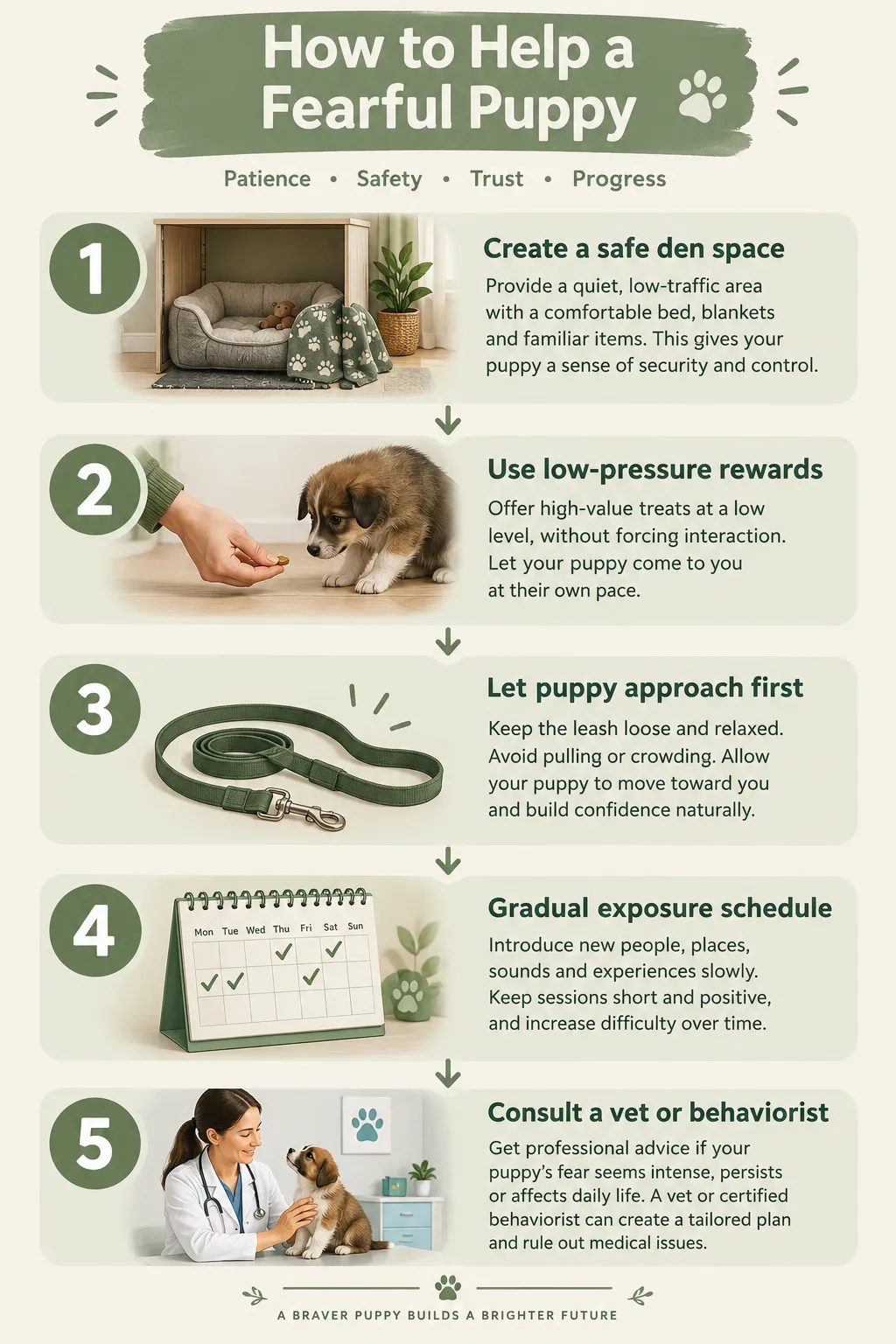
Steps to help a stressed dog:
- Create a safe den space – a crate or quiet corner with a soft bed where the dog can retreat. Never force your dog out of this space.
- Lower the pressure – get down to the dog’s level, avoid direct eye contact initially, and let the dog come to you.
- Use food as a trust builder – offer small, high-value treats at a distance and let the dog approach. Food is one of the most powerful tools for building trust.
- Keep a consistent routine – dogs feel safe when they know what to expect. Regular feeding, walks, and sleep times reduce anxiety.
- Gradual exposure – introduce scary things slowly and at a distance, always pairing them with something positive.
- Consult a vet or behaviorist – if signs of stress don’t improve within a few weeks, get professional help amp advice from a qualified expert.
Also consider whether your dog is getting enough mental and physical stimulation. Sometimes a dog that seems stressed is actually under-stimulated. Our guide on puppy exercise ideas has 15 fun ways to tire out a puppy safely.
How Long Does It Take for a Rescue Puppy to Adjust?
Most rescue puppies need between 2 and 12 weeks to fully settle into a new home, though some dogs take longer. The first 3 days are often the hardest – the dog is overwhelmed and may show the strongest signs of stress. By week 3, most dogs begin to relax. By week 12, most have found their baseline.
This is sometimes called the “3-3-3 rule”:
- 3 days – overwhelmed, may not eat or sleep well
- 3 weeks – starting to learn the routine, less hiding
- 3 months – beginning to feel truly at home
Be patient. Don’t rush socialization. Let the dog set the pace, and reward every small step of bravery.
When Should You Be Worried About Puppy Anxiety?
You should contact a vet when your puppy’s fear signs are severe, getting worse over time, or interfering with basic functions like eating, sleeping, or toileting. The Katz Nest’s mental health guide for dogs notes that anxiety that doesn’t respond to basic environmental changes may need medical support alongside behavioral work.
Red flags that need vet attention:
- Self-harming behaviors (chewing paws, excessive licking until raw)
- Inability to eat or sleep for more than 24 hours
- Aggression that escalates rapidly
- Panic attacks with uncontrolled shaking and inability to settle
- Complete shutdown – the dog stops responding to everything
How to Socialize a Scared Puppy Safely
Socialization for a scared puppy looks different from standard puppy socialization. Instead of flooding the dog with new experiences, you use a technique called “threshold training” – keeping the dog just below the point where it starts to show stress signals.
Safe socialization steps for a fearful puppy:
- Start at a distance from the scary thing (person, dog, sound)
- Reward calm behavior with food and calm praise
- Slowly decrease the distance over multiple sessions – never in one go
- Watch the dog’s body language at all times; if it shows stress signals, back up
- End every session before the dog gets overwhelmed – always finish on a win
Never force a scared puppy into a situation it’s trying to avoid. Forcing interaction breaks trust and makes fear worse. Instead, let the dog choose to engage, and reward that choice generously.
Relaxed Body Language and Restful Sleep: Signs Your Dog Feels Safe
A dog that feels safe shows it through its whole body. Relaxed body language includes a loose, wiggly posture, soft eyes, and a tail that wags freely. Restful, consistent sleep – especially sleeping on the back with paws in the air – is one of the clearest signs your dog feels safe and trusts its environment.
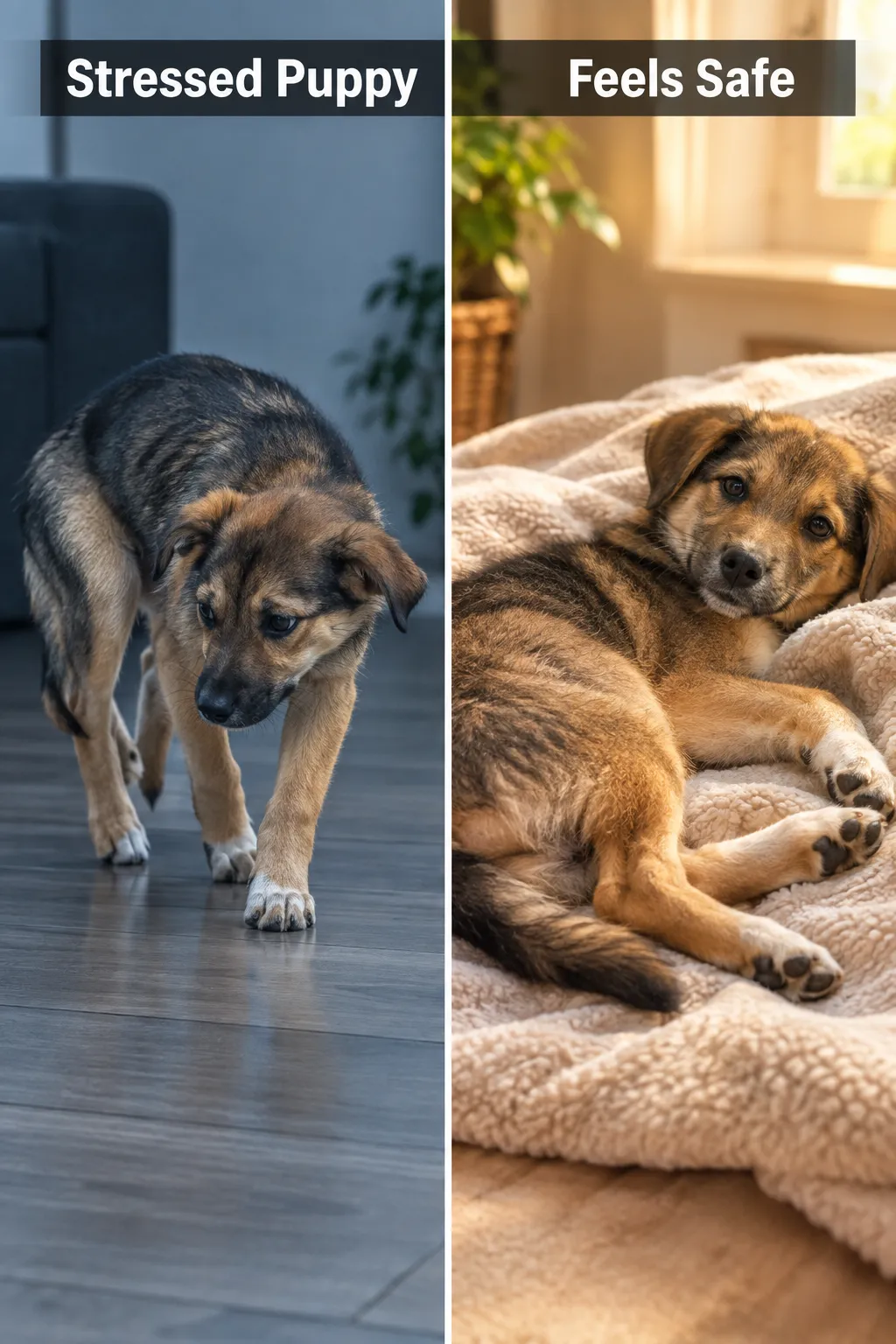
Signs your dog trusts you and feels secure:
- Sleeps deeply and doesn’t startle easily
- Rolls onto its back (a very vulnerable position – a dog only does this when it feels safe)
- Makes eye contact with a soft, relaxed gaze
- Leans against you or chooses to be near you
- Brings you toys or engages in play
- Eats and drinks normally without hesitation
If your dog is showing these signs, you’re doing something right. Keep building that trust with consistent, positive interactions. You can also explore 17 ways to show your dog you love them for more ideas to strengthen your bond.
Frequently Asked Questions
What are red flag behaviors in puppies?
Red flag behaviors in puppies include persistent hiding, freezing when touched, growling or snapping at people, refusing all food, self-harming behaviors like excessive licking or chewing, and complete shutdown where the puppy stops responding. These signs suggest the puppy doesn’t feel safe and may need professional behavioral or veterinary support beyond basic socialization.
What are 10 signs that my dog is unhappy?
A dog that is unhappy may show these signs: tail tucked low, ears pinned back, refusing food or treats, excessive panting indoors, hiding or withdrawing, avoiding eye contact, pacing or restlessness, sleeping more than usual, loss of interest in play, and showing signs of aggression like growling or snapping. Any combination of these signals means your dog is stressed and needs help.
At what age do puppies act the worst?
Puppies often act the most challenging between 6 and 18 months, during adolescence. This is when fear periods also peak – typically around 8 to 11 weeks and again at 6 to 14 months. During these windows, puppies may suddenly become fearful of things they previously accepted. Consistent, positive training and a safe environment help dogs get through these phases without lasting anxiety.
What are the common symptoms of an unwell puppy?
Common symptoms of an unwell puppy include lethargy, loss of appetite, vomiting, diarrhea, coughing, sneezing, discharge from the eyes or nose, trembling, hiding, and changes in bathroom habits. Some of these overlap with anxiety symptoms, so if your puppy is showing signs of stress alongside physical symptoms, a vet visit is essential to rule out illness before assuming the cause is behavioral.
Conclusion
Spotting the signs your puppy feels unsafe early makes a real difference. Most of the signals – lip licking, displacement behaviors, food refusal, subtle body language shifts – are easy to miss if you don’t know what to look for. But now you do.
Your action steps:
- Watch your dog’s body language daily, especially during new situations
- Create a safe, consistent home environment with a designated retreat space
- Use food and patience to build trust – never force interaction
- Socialize slowly and always below the stress threshold
- If signs of stress persist or worsen, talk to your vet
Every dog deserves to feel safe. With a little knowledge and a lot of patience, you can help your puppy build the confidence it needs to become a happy, secure adult dog. 🐾