
Last updated: September 7, 2026
Quick Answer: Most healthy adult dogs need a bath every 3 to 6 weeks, though the right frequency depends on coat type, lifestyle, and health. Bathing too often strips your dog’s natural skin oils and causes dryness and irritation. Bathing too rarely lets dirt, bacteria, and odor build up on your pup’s coat.
Key Takeaways 🐾
- Most dogs do best with a bath every 3 to 6 weeks, but some breeds need more or less frequent bathing
- Coat type is the biggest factor – long-coated and double-coated dogs have different needs than short-haired breeds
- Over-bathing causes dry, flaky skin, increased itching, and a dull coat
- Under-bathing leads to odor, matting, and potential skin infections
- Puppies and senior dogs need gentler, less frequent baths than adult dogs
- Always use a dog-specific shampoo – human products disrupt your dog’s skin pH
- Regular grooming at home between baths keeps your pup looking and feeling great
How Often Should You Bathe Your Dog – The Real Answer
Most dogs benefit from a bath every 3 to 6 weeks. However, there is no single number that fits every dog, because coat type, activity level, and health all play a role in how often you should bathe your dog.
A good starting point for most pet owners is once a month. From there, you adjust based on how your dog smells, how dirty their fur gets, and whether they have any skin conditions. According to this comprehensive dog bathing guide, most healthy adult dogs fall into the 4 to 6 week range, with active outdoor dogs often needing baths closer to every 3 weeks.
The key is watching your dog’s skin and coat, not the calendar.
How Often Should You Bathe Your Dog by Breed and Coat Type
Different breeds have different needs, and coat type is the most reliable guide for setting a bathing schedule. Veterinary guidance on bathing frequency confirms that coat structure directly affects how often dogs need baths.
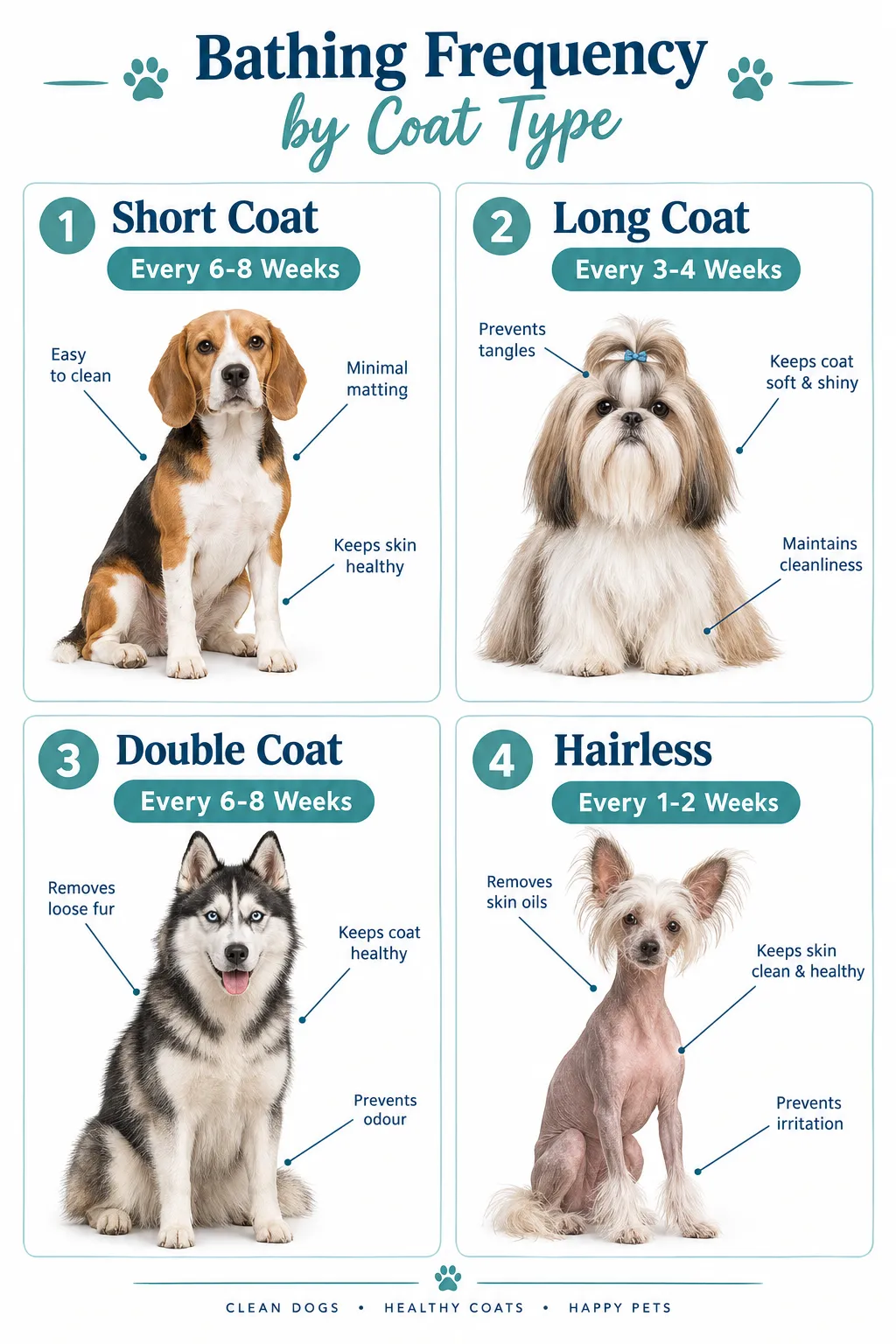
Here is a quick breakdown by coat type:
| Coat Type | Example Breeds | Bathing Frequency |
|---|---|---|
| Short, smooth | Beagle, Pitbull, Boxer | Every 6-8 weeks |
| Long, silky | Shih Tzu, Maltese, Yorkie | Every 3-4 weeks |
| Double coat | Husky, Golden Retriever | Every 6-8 weeks |
| Curly/wavy | Poodle, Labradoodle | Every 3-4 weeks |
| Hairless | Chinese Crested | Every 1-2 weeks |
| Wire coat | Terriers | Every 6-8 weeks |
Double-coated dogs like Huskies are a special case. Their dense undercoat traps dirt and moisture, so bathing too often can damage the coat’s natural insulation. Learn more about caring for these dogs in our guide to things every Husky owner should know.
If you have a Shih Tzu, their long flowing coat picks up dirt fast and needs baths every 3 to 4 weeks at most. The same applies to Maltese dogs – check out Maltese dog care truths every new owner should know for breed-specific grooming tips.
Short-haired dogs like Pitbulls and Beagles can go 6 to 8 weeks between baths without issue, as long as they are not rolling in mud every day.
What Happens If You Bathe Your Dog Too Often – 7 Signs You’re Doing It Wrong
Over-bathing is one of the most common pet care mistakes, and it causes real harm to your dog’s skin and coat. Research on the effects of over-bathing dogs shows that stripping the natural oils from dog skin leads to a cascade of problems.
Here are the 7 signs you are bathing your dog too often:
- Dry, flaky skin or dandruff – the most obvious sign that natural oils are depleted
- Increased scratching or itching, especially right after a bath
- Dull, brittle, or lifeless coat that has lost its natural shine
- Excessive shedding linked to dry, irritated skin
- Redness or hot spots developing on the skin
- Your dog smells worse faster after each bath, because the skin overproduces oil to compensate
- Frequent ear infections, since over-bathing can push water into the ear canal
If you notice any of these signs, stretch the time between baths and switch to a gentler, moisturizing shampoo. You may also want to read about early signs of pain in dogs to rule out other skin-related discomfort.
How to Bathe Your Dog – Step by Step
Bathing a dog correctly takes about 20 to 30 minutes and is straightforward once you have a routine. The goal is to clean the coat and skin without causing stress or stripping protective oils.
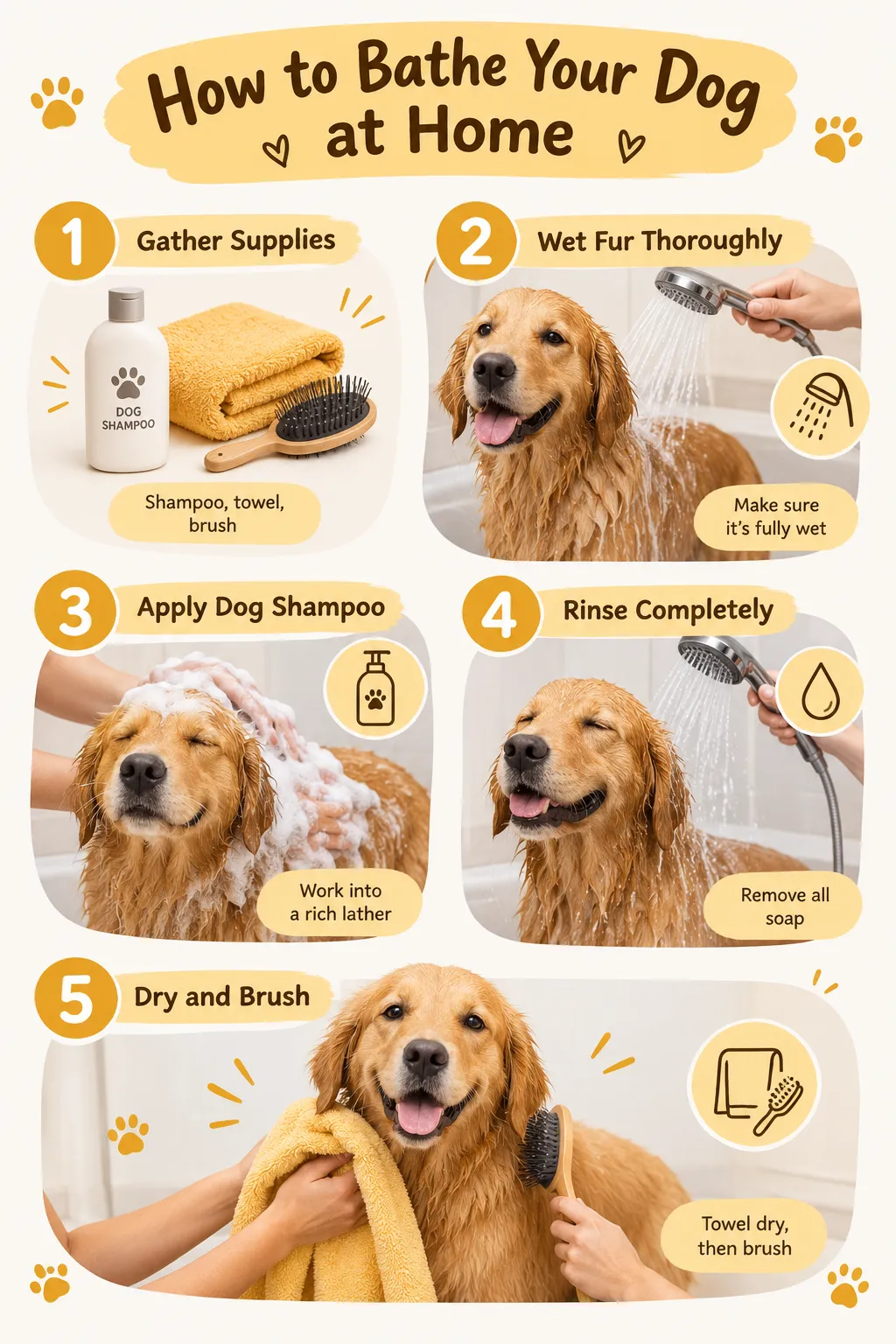
Gather your supplies first:
- Dog-specific shampoo (never human shampoo)
- Warm water source – tub, sink, or outdoor hose in warm weather
- A non-slip mat for the tub
- Towels and optionally a dog-safe blow dryer
- A brush for post-bath grooming
Step-by-step bathing process:
- Brush your dog before the bath to remove loose fur and tangles
- Wet the coat thoroughly with warm (not hot) water, working from neck to tail
- Apply dog shampoo and lather gently, massaging into the skin
- Avoid the eyes, ears, and mouth – use a damp cloth for the face
- Rinse completely – leftover shampoo residue causes itching
- Towel dry, then brush again once the coat is damp-dry
For dogs that hate water, go slow. Use treats, keep sessions short, and never force them. Check out our tips on how to keep your dog calm around visitors for general desensitization ideas that apply to bath time too.
Can You Bathe Your Dog Too Much – Signs of Overbathing and Skin Problems
Yes, you absolutely can bathe a dog too much, and it causes measurable skin damage. According to pet care health sources, bathing more than once a week consistently strips the natural oils that protect dog skin, leading to chronic dryness, irritation, and increased vulnerability to bacterial infections.
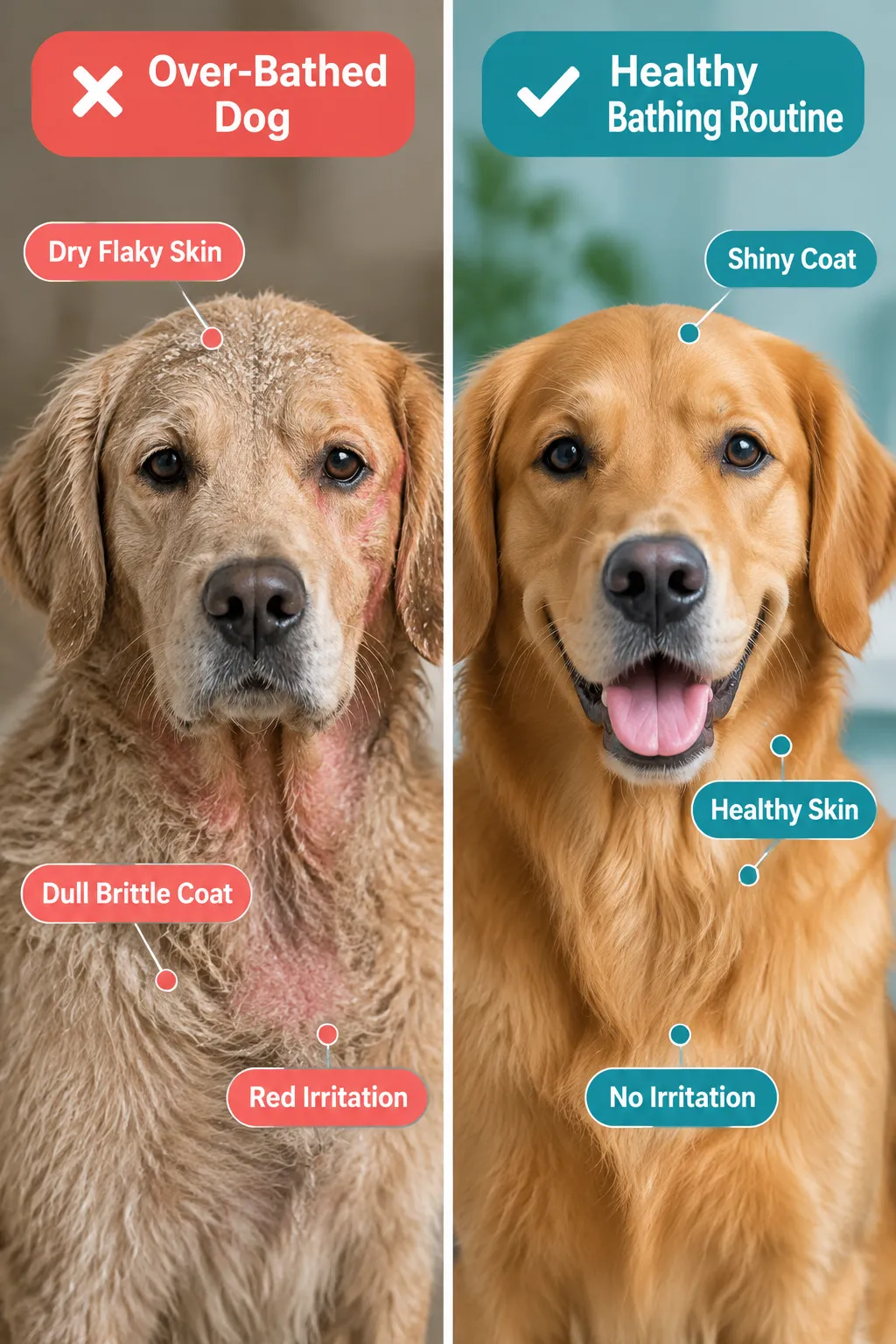
Dogs produce sebum, a natural oil that coats the fur and skin. This oil acts as a barrier against environmental irritants, allergens, and moisture loss. When you bathe a dog too often, you remove this oil faster than the skin can replace it.
Dogs with allergies are especially at risk. If your dog has skin allergies, work with your vet to find the right bathing schedule – it may be more frequent (medicated baths every 1 to 2 weeks) or less frequent depending on the allergy type.
A dog’s skin pH is also different from human skin. Human shampoo, even gentle baby shampoo, disrupts this balance. Always use a shampoo made specifically for dogs.
How Often Should Puppies and Senior Dogs Be Bathed
Puppies under 8 weeks old should not be bathed at all – they cannot regulate body temperature well enough. After 8 weeks, you can introduce gentle baths every 4 to 6 weeks to help your pup get used to the process.
For senior dogs, less is often more. Older dogs have thinner, more sensitive skin that dries out faster. Aim for baths every 6 to 8 weeks unless your vet recommends otherwise. If your senior dog has signs of arthritis, standing in a tub can be uncomfortable – use a non-slip mat and consider a handheld shower head for easier rinsing.
Puppies and bath time tips:
- Use a puppy-specific gentle shampoo
- Keep the first few baths short – 5 to 10 minutes max
- Use warm (not hot) water and stay calm to build positive associations
- Reward your pup with treats immediately after
How Often Should You Brush Your Dog – Brushing Between Baths
Brushing is just as important as bathing, and it reduces how often you need to bathe your dog. Regular brushing removes loose fur, distributes natural skin oils, and prevents matting that traps dirt and bacteria.
Brushing frequency by coat type:
- Short coats: once a week
- Medium coats: 2 to 3 times a week
- Long coats: daily or every other day
- Double coats: 3 to 4 times a week, daily during shedding season
Brushing also gives you a chance to check your dog’s skin for any redness, bumps, or parasites. This is part of good care amp healthy living for your pet. Our full guide to dog grooming tips at home covers everything you need to know about brushing technique and tools.
When Should You Take Your Dog to a Professional Groomer
Professional grooming is worth it for breeds with complex coat types, dogs that resist home bathing, or when you need services like nail trimming, ear cleaning, or breed-specific cuts. Most dogs benefit from a professional grooming session every 6 to 8 weeks, which often lines up with their bathing schedule.
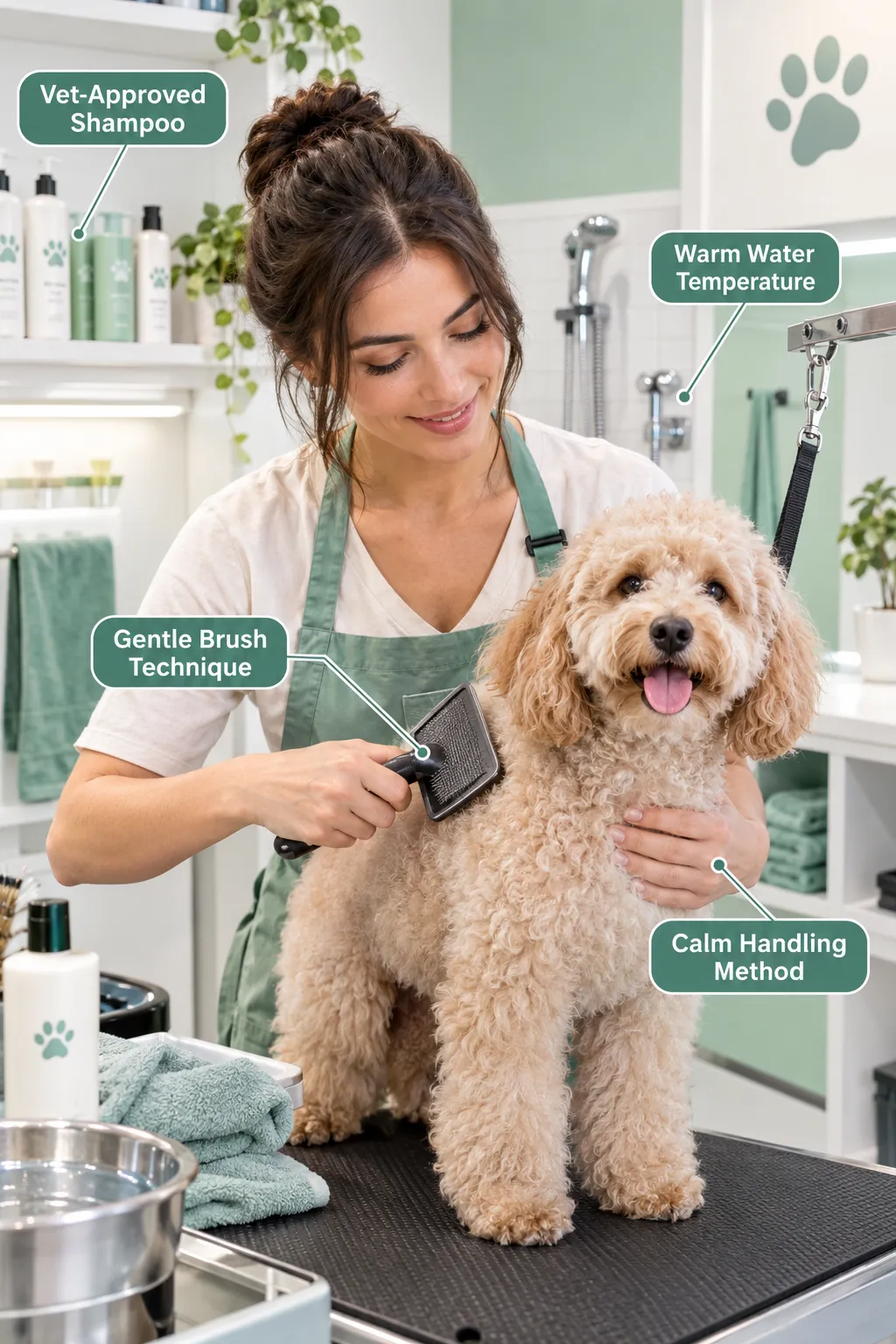
Signs it is time to book a grooming appointment:
- Your dog’s coat is matted or tangled beyond what brushing can fix
- Nails are clicking loudly on the floor
- Ears smell or look dirty
- You are struggling to bathe your dog safely at home
- Your dog’s breed requires a specific haircut (Poodle, Shih Tzu, etc.)
When you contact a groomer, ask about the products they use. A good groomer will use dog-safe shampoo and conditioner appropriate for your dog’s coat type. New patients are always welcome at reputable grooming salons – do not hesitate to ask questions about their process before booking your pet’s first appointment.
Do Dogs Clean Themselves Like Cats Do
Dogs do not clean themselves the way cats do. Cats spend a significant portion of their day grooming, using their tongue to remove dirt and distribute oils. Dogs lick themselves occasionally, but this does not replace bathing. Without regular baths, dogs accumulate dirt, dead skin cells, bacteria, and odor in their fur and on their skin.
That said, some dogs stay cleaner than others naturally. An indoor dog with a short coat that rarely goes outside may need baths less often than an outdoor dog that loves to dig. Your dog’s lifestyle matters just as much as their coat type when deciding how often to bathe them.
FAQ – People Also Ask
What is the 7 7 7 rule for dogs?
The 7 7 7 rule is a socialization guideline for puppies, not a bathing rule. It suggests exposing a puppy to 7 different surfaces, 7 different locations, and 7 different people by 7 weeks of age to build confidence and reduce fear. It has nothing to do with how often you bathe a dog, but it does highlight how early experiences shape a dog’s comfort with grooming and handling.
Is it okay to bathe your dog once a month?
Yes, bathing your dog once a month is perfectly fine for most healthy adult dogs and is one of the most commonly recommended schedules by vets. It keeps the coat clean without over-stripping natural skin oils. Some dogs with oily coats or active outdoor lifestyles may need baths every 2 to 3 weeks, while others can go 6 to 8 weeks between baths.
What is overbathing a dog?
Overbathing a dog means bathing them more frequently than their skin and coat can handle, typically more than once a week for most dogs. It strips the natural oils from dog skin, causing dryness, flakiness, itching, a dull coat, and sometimes redness or hot spots. Dogs with sensitive skin or certain breeds are especially vulnerable to the effects of overbathing.
How do you know if your dog needs a bath?
Your dog probably needs a bath if they have a noticeable odor, visibly dirty or greasy fur, are scratching more than usual due to dirt buildup, or have rolled in something unpleasant. You can also do a quick smell test by sniffing the base of their coat near the neck. If they smell musty, earthy, or just “doggy,” it is time for a bath.
Conclusion – Build a Bathing Routine That Works for Your Dog
Getting the bathing frequency right is one of the simplest ways to support your dog’s long-term health and comfort. Most dogs do best with a bath every 3 to 6 weeks, with brushing in between to keep the coat clean and healthy.
Your action steps:
- Identify your dog’s coat type and set a baseline bathing schedule
- Watch for the 7 signs of overbathing – dry skin, itching, dull coat, and more
- Switch to a dog-specific shampoo if you have not already
- Add regular brushing between baths to reduce dirt buildup
- Book a professional grooming appointment if your dog’s coat needs more than home care
Every dog is different. Pay attention to your pup’s skin and coat, adjust the schedule as seasons change, and always contact your vet if you notice persistent skin issues. Good bathing habits are a small investment that pays off in a happier, healthier dog for years to come.