Last updated: November 4, 2026
Nearly 1 in 4 women in the US live alone at some point in their adult lives, and a growing number of them are choosing a four-legged roommate over a security system. A well-matched guard dog does something an alarm can’t: it bonds with you, reads your mood, and stands between you and a stranger at the door without being asked twice.
This guide breaks down the best guard dogs for women based on temperament, trainability, size, and real-world fit for solo living, apartments, and families. I’ll also cover training, costs, and the questions women ask most before bringing one of these breeds home.
Quick Answer
The best guard dogs for women in 2026 include the German Shepherd, Doberman Pinscher, Rottweiler, Belgian Malinois, and Boxer, each prized for loyalty, trainability, and natural protective instinct. Smaller women or first-time owners often do better with a Boxer or a well-socialized Rottweiler than a high-drive Malinois, which needs an experienced handler. Size matters less than training consistency and the bond you build day to day.
Key Takeaways
- German Shepherds, Dobermans, and Rottweilers top most “best guard dog” lists for women thanks to loyalty and trainability (PetsRadar).
- Guard dogs and attack dogs are not the same thing. Guard dogs deter and alert. Attack dogs are trained for controlled aggression, which most pet owners never need.
- A trained protection dog can cost between $10,000 and $60,000 depending on training level, while an untrained puppy of the same breed may run $1,000 to $3,000.
- Medium breeds like Boxers and smaller female dogs of larger breeds are often easier for women to physically handle on leash.
- Training matters more than breed label. Any dog without structure and socialization can become unpredictable.
- Apartment dwellers should consider lower-energy, quieter guard breeds rather than high-drive working lines.
- No special license is required to own most guard dog breeds in the US, though some cities regulate specific breeds.
What’s the Difference Between a Guard Dog and an Attack Dog?
A guard dog is trained to alert, deter, and protect its family through presence and barking, while an attack dog is specifically trained to bite on command under controlled conditions. Most women looking for home protection want the former, not the latter.
Guard dogs like the German Shepherd or Rottweiler rely on size, bark, and alertness to scare off intruders before anything physical happens. Attack-trained dogs are typically reserved for police, military, or professional protection work and require ongoing specialized handling. For a home or apartment, a loyal, well-socialized guard breed is almost always the safer and more practical choice (Purina).
Decision rule: choose a guard dog if you want deterrence and companionship; only consider professional attack training if you have a specific, documented security need and ongoing access to a certified trainer.
Can I Train a Guard Dog Myself as a Woman?
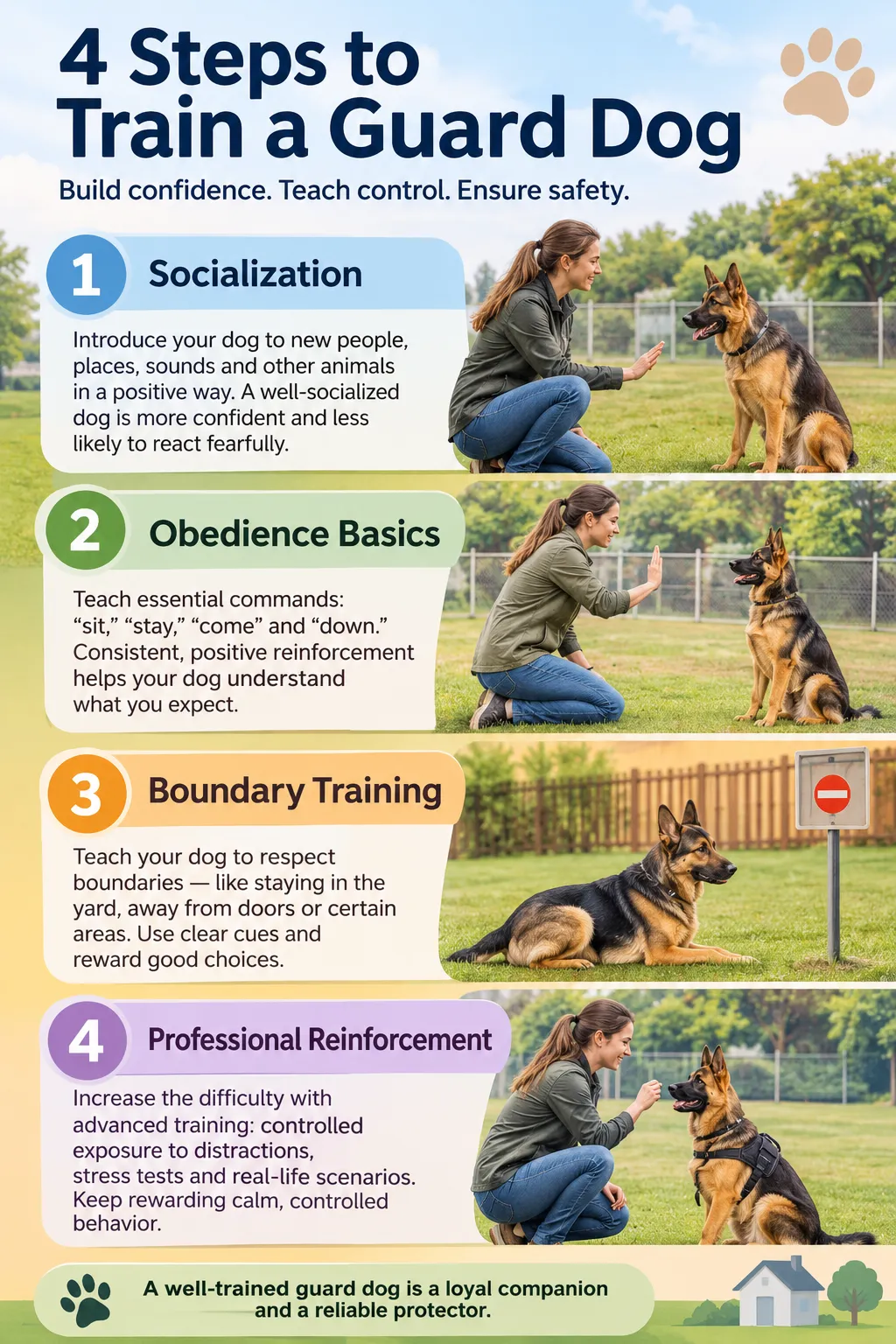
Yes, most women can successfully train a guard dog breed at home using consistent obedience work, socialization, and boundary-setting, without needing professional attack training. Basic guard instincts are often natural in breeds like the Rottweiler and German Shepherd; what you’re really training is manners and control.
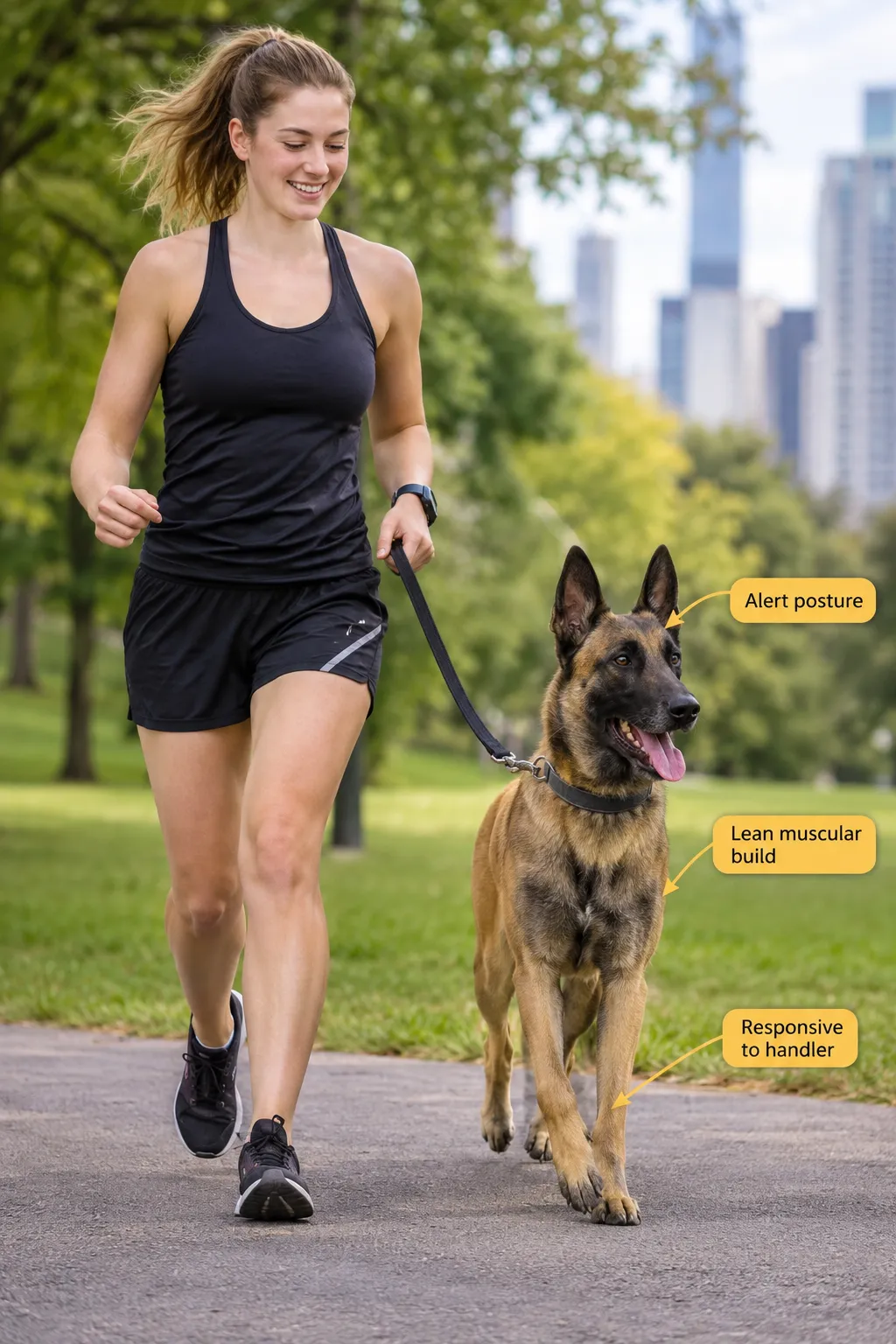
Professional trainers consistently point out that temperament work matters more than breed reputation (SpotPet). A dog that’s confident but not confident enough to ignore commands is the goal.
Steps that work well for first-time trainers:
- Start obedience basics (sit, stay, recall) at 8-10 weeks.
- Socialize with strangers, kids, and other dogs weekly for the first year.
- Teach a reliable “place” command so the dog settles on cue (this place command guide is a solid starting point).
- Add boundary and alert training once obedience is rock solid.
- Bring in a professional trainer for advanced work if the breed is high-drive (Malinois, working-line GSD).
Common mistake: skipping socialization because the dog “seems protective enough already.” Under-socialized guard breeds are more likely to react unpredictably, not less.
Best Guard Dogs for Apartments and Small Spaces
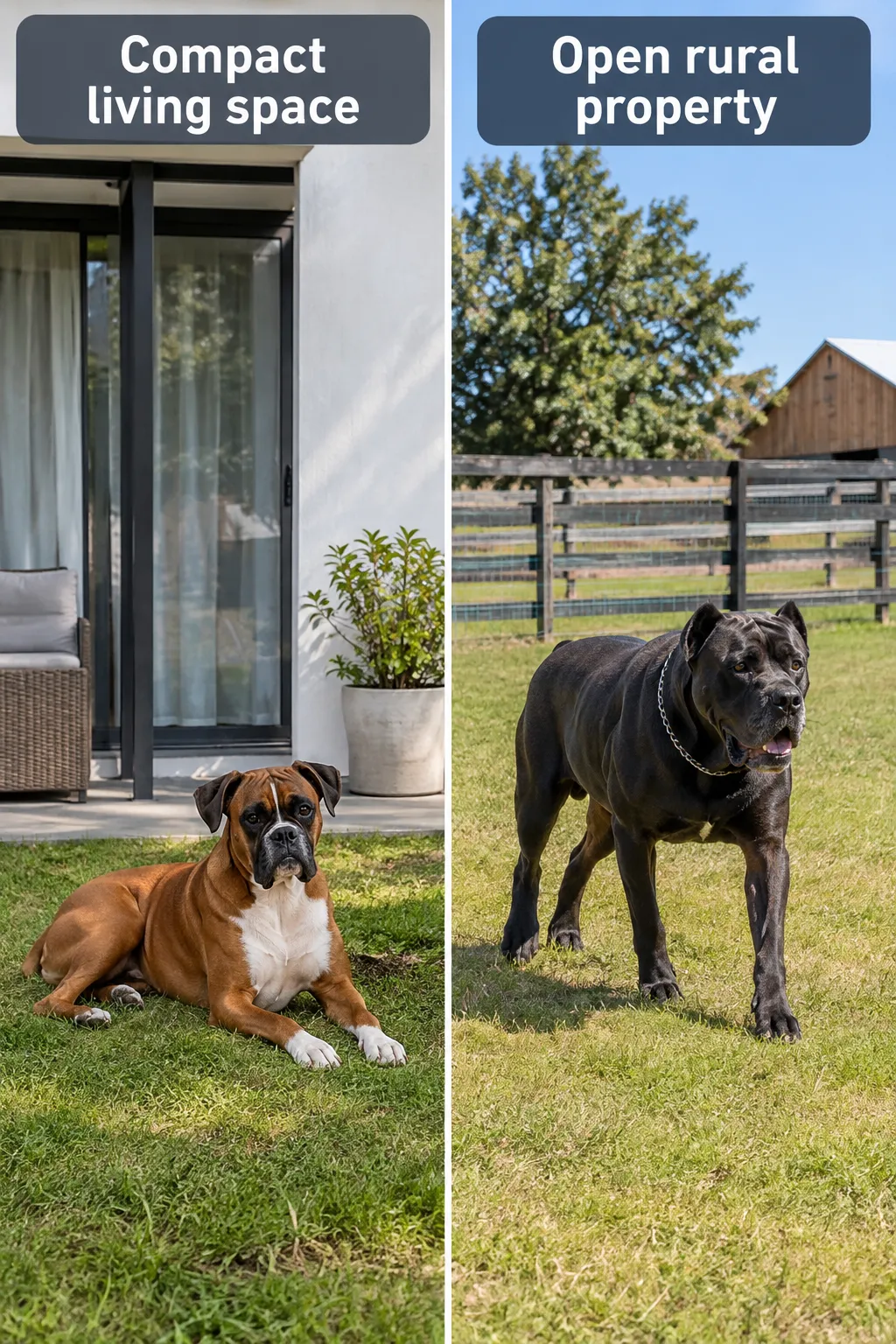
Boxers, smaller female German Shepherds, and well-exercised Doberman Pinschers tend to adapt best to apartment living among guard breeds. The key factors are noise tolerance, energy management, and how the dog handles tight quarters with neighbors nearby.
Large working breeds like the Cane Corso or Belgian Malinois can live in apartments, but only with serious daily exercise, which many renters underestimate. If you’re short on space, a medium-sized guard dog that’s content with two solid walks a day is a better fit than a breed built for acreage.
Decision rule: choose a medium guard breed if you live in under 1,000 square feet and can commit to 60+ minutes of daily exercise; choose a large breed only if you have consistent outdoor access.
How Much Does a Guard Dog Cost?
A guard dog puppy from a reputable breeder typically costs $1,000 to $3,000, while a fully trained personal protection dog can run $10,000 to $60,000 depending on the trainer and certification level. Ongoing costs like food, vet care, and insurance add several hundred dollars a month on top.
Many women skip professional protection training entirely and instead invest in solid obedience classes, which usually cost $150 to $500 for a multi-week course. That’s often enough for a naturally protective breed like the Rottweiler or German Shepherd to become a reliable home guardian without the five-figure price tag.
Guard Dog Breeds That Don’t Shed a Lot
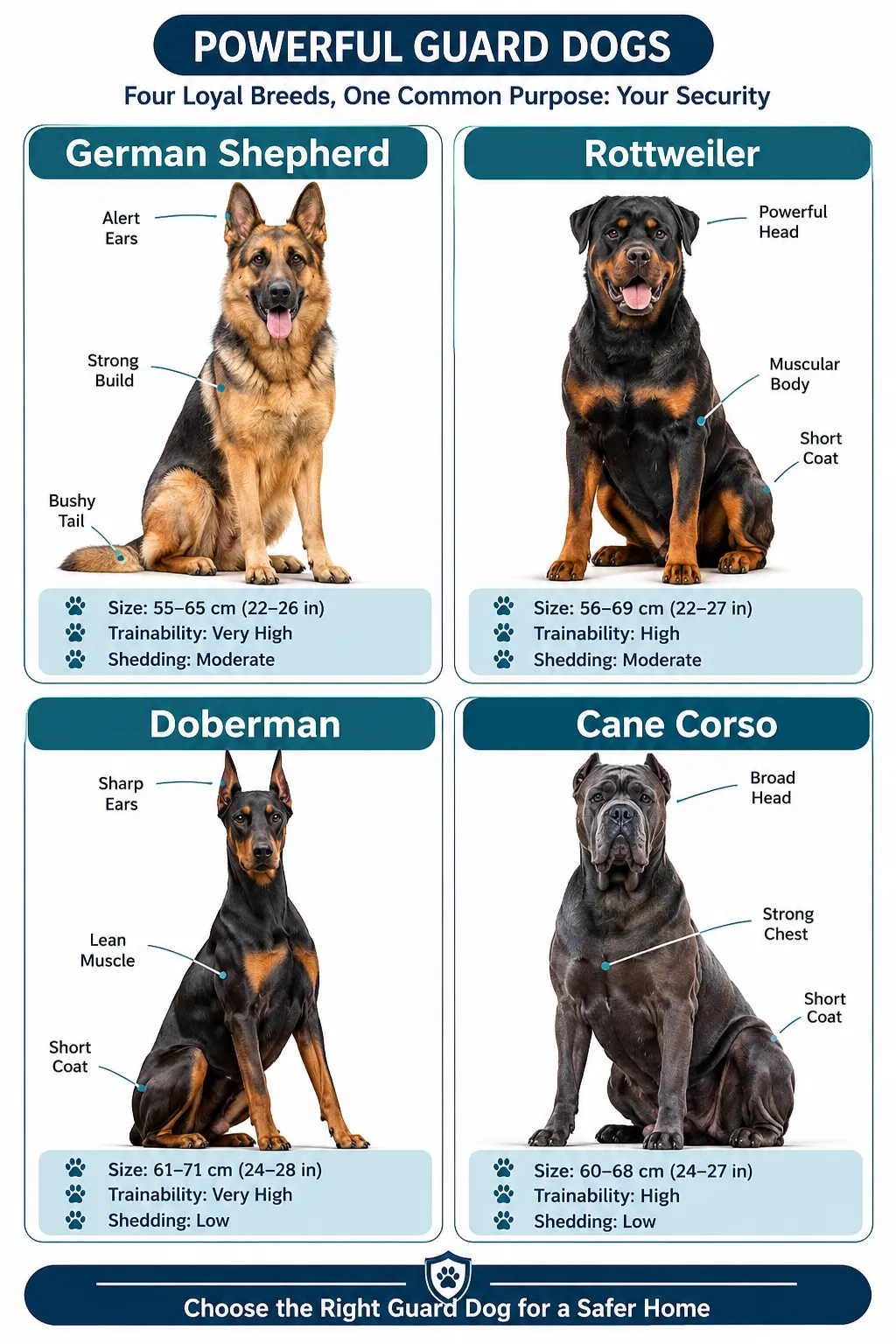
Among guard breeds, the Doberman Pinscher and Boxer shed the least thanks to their short, single-layer coats, making them easier to maintain for women who don’t want fur everywhere. German Shepherds and Rottweilers shed noticeably more and need weekly brushing.
If shedding is a dealbreaker, the Doberman is often the top pick on “best guard dogs” lists for low-maintenance grooming (FindOutAboutDogs). For readers comparing low-shed large dogs more broadly, this guide to hypoallergenic large breeds is worth a look, though true guard breeds rarely qualify as hypoallergenic.
Are Guard Dogs Good for First-Time Dog Owners?
Some guard breeds work well for first-time owners, but others don’t. Boxers and Rottweilers are generally considered manageable for beginners who commit to training, while the Belgian Malinois and working-line German Shepherd are better suited to experienced handlers.
High-drive breeds need structured daily mental and physical work; without it, they can become destructive or anxious. A first-time owner who wants a guard dog should look at breeds known for biddability and a moderate energy curve rather than the most intense protection lines.
Choose a Boxer or Rottweiler if this is your first dog. Choose a Malinois or working GSD only if you’ve owned a high-energy breed before or plan to work with a trainer from day one.
Can Women Physically Handle Large Guard Dog Breeds?
Yes, most women can safely handle large guard dog breeds with proper leash training and equipment, regardless of the dog’s size. Strength matters less than technique, timing, and consistent commands taught early.
A 90-pound Rottweiler that’s never learned loose-leash walking will overpower almost anyone. The same dog trained with a front-clip harness and solid recall is manageable by most adults. Tools like a well-fitted harness and early leash manners training level the playing field far more than raw upper-body strength does.
Guard Dogs That Are Good With Kids and Families
German Shepherds, Boxers, and Rottweinhandlers (when well-socialized) are frequently cited among the best guard dogs for families with children, combining protective instinct with patience and affection. Early socialization with kids is the deciding factor, not breed alone.
These breeds have strong bonding instincts and tend to form a kind of informal “watch duty” over children in the household (ModernVetGA). For households adding a second dog to the mix, this guide on getting two dogs to get along can help smooth the transition.
Best Guard Dogs for Single Women Living Alone
For single women living alone, the German Shepherd, Doberman Pinscher, and Rottweiler consistently rank highest for combining personal protection with steady companionship. These breeds bond tightly with one primary handler, which many solo owners find reassuring.
Dedicated safety guides for single women emphasize that the strongest deterrent isn’t necessarily the biggest dog, but the one most attuned to its owner’s routines and reactions (World Animal Foundation). A dog that notices when something’s off, before you consciously do, is worth more than raw size.
How Aggressive Should a Guard Dog Be?
A guard dog should be alert and confident, not aggressive by default. The goal is a dog that barks and postures to deter a threat, then settles once the situation resolves, not one that escalates unpredictably.
Excessive aggression is actually a liability, since it increases the risk of the dog reacting to delivery workers, guests, or kids’ friends. Reputable breeders and trainers select for stable temperament over raw bite drive for this exact reason (PetsCare).
Easiest Guard Dog Breeds to Train
The Rottweiler, Boxer, and German Shepherd are widely considered the easiest guard breeds to train because of their high biddability and eagerness to please their handler. Harder breeds, like the Belgian Malinois, are intelligent but need an experienced hand to channel that drive productively.
For step-by-step foundational cues, a resource like this guide to top commands for dogs covers the basics that every guard breed needs before any protection work begins.
Do You Need Special Licenses for Guard Dogs?
In most US states, no special license is required to own a guard dog breed as a pet, though some cities have breed-specific legislation affecting Rottweilers, Pit Bulls, or similar breeds. Formal protection-trained dogs used for commercial security work may require separate permitting depending on local law.
Check your city and county ordinances before bringing home a large guard breed, since insurance companies sometimes ask about breed on homeowner or renter policies too.
Medium-Sized Guard Dogs vs Large Breeds: Which Is Better?
Medium-sized guard dogs like the Boxer are often a better fit for women managing space, cost, and physical handling, while large breeds like the Cane Corso or Rottweiler offer more raw deterrence through size alone. Neither is objectively “better”; it depends on your living situation.
| Factor | Medium Breeds (Boxer) | Large Breeds (Rottweiler, Cane Corso) |
|---|---|---|
| Space needed | Apartment-friendly | Needs yard or regular outdoor access |
| Handling | Easier for most adults | Requires leash training discipline |
| Deterrence factor | Moderate | High, size alone intimidates |
| Food/vet costs | Lower | Higher |
Guard Dogs for People Who Work Long Hours
Breeds with moderate independence, like the Rottweiler and Boxer, tend to tolerate longer alone-time better than high-drive breeds like the Malinois, which can develop anxiety or destructive habits without enough engagement. No guard breed should be left alone for more than 6-8 hours regularly without a plan.
If your schedule is unpredictable, consider doggy daycare a few days a week or puzzle toys that keep a smart breed occupied. Readers juggling a bored or understimulated dog might find this guide to activities for bored dogs useful regardless of breed.
Choosing Between These Top Guard Breeds
Here’s a quick rundown of the ten breeds that consistently appear on best guard dog lists for women, drawn from current breed guides (Upper Paw Side, The Happy Puppers):
- German Shepherd – versatile, trainable, strong family bond
- Doberman Pinscher – fast, low-shedding, fiercely loyal
- Rottweiler – calm confidence, great with structured training
- Belgian Malinois – high drive, best for experienced handlers
- Boxer – playful, patient with kids, easier for beginners
- Cane Corso – massive deterrent presence, needs space
- Bullmastiff – quiet, low-energy, naturally watchful
- Akita – fiercely loyal one-person bond, independent streak
- Giant Schnauzer – smart, low-shed, needs mental stimulation
- Staffordshire Bull Terrier – compact, affectionate, surprisingly protective
For a deeper breakdown of protective breeds generally, this guide to 10 protective dog breeds pairs well with the list above.
Conclusion
The best guard dogs for women aren’t defined by size or bite force alone. They’re defined by trust, training, and fit with your actual day-to-day life. A German Shepherd or Rottweiler might be the obvious pick, but a Boxer or well-trained Doberman can offer the same peace of mind with less physical demand.
Start with an honest look at your space, schedule, and experience level. Then invest in obedience training early, whether that’s DIY work at home or a few months with a professional. The right guard dog for you is the one you can train consistently and trust completely, not just the biggest name on the list.
FAQ
What are the top 5 guard dog breeds?
The top 5 guard dog breeds most often cited are the German Shepherd, Doberman Pinscher, Rottweiler, Belgian Malinois, and Cane Corso. Each combines strong protective instinct with trainability, though the Malinois and Cane Corso need more experienced handling than the others on this list.
How much does a trained guard dog cost?
A professionally trained guard dog typically costs between $10,000 and $60,000, depending on the trainer, certification, and training level. Untrained puppies of the same breeds usually cost $1,000 to $3,000, with basic obedience classes adding another $150 to $500.
What is the no. 1 lazy dog?
The Basset Hound is widely considered one of the laziest dog breeds, known for low energy and a preference for napping over activity. It’s not typically listed among guard dog breeds, since its temperament leans toward relaxed companionship rather than alertness or protection.
Does a male or female dog make a better guard dog?
Neither sex is definitively better for guard work; temperament, training, and individual personality matter far more than gender. Some owners find female dogs slightly easier to handle physically due to smaller average size, while males may show more territorial behavior if not neutered and trained consistently.