

Last updated: October 21, 2026
Quick Answer
Havanese dogs are generally healthy small dogs, but they can develop knee and hip issues, eye problems, thyroid and systemic health changes, liver and congenital issues, and airway or heart concerns. Instead of worrying about every possible disease on a long list, watch for five practical signs: changes in gait, vision trouble, lethargy or coat changes, digestive oddities, and persistent coughing. Catching these early with regular vet checkups makes a real difference in outcome and cost.
Key Takeaways
- Havanese dogs typically live 12 to 15 years when health issues are caught early and managed well.
- Patella luxation and hip dysplasia are among the most common havanese health concerns in the breed.
- Eye conditions like cataracts and retinal problems can affect vision and quality of life.
- Liver shunts, though less common, show up as digestive issues or neurologic oddness in puppies.
- Thyroid problems often cause weight gain, coat changes, and low energy in adult dogs.
- Health testing through programs like OFA and CHIC helps reduce inherited disease in havanese puppies.
- Pet insurance can offset costs for dental, orthopedic, or chronic treatments later in life.
- Dental health, grooming, and nutrition all play a role in long-term havanese health.
Havanese dogs rank near the top of small-breed popularity lists for good reason: they’re affectionate, adaptable, and don’t shed heavily, according to PDSA’s breed profile. But what kind of health problems do Havanese dogs have, really? This guide skips the scary laundry list and focuses on five practical warning signs every owner should watch for, plus the actual data behind the breed’s health record.
What Are the Most Common Health Problems in Havanese Dogs
The most common havanese health issues involve joints, eyes, thyroid function, liver development, and airway or heart function. These problems don’t appear in every dog, but they show up often enough that breed clubs track them closely.
Patella luxation (slipping kneecaps) and hip dysplasia are frequently reported in small dogs, including Havanese, according to the Havanese Club of America. Eye conditions such as cataracts and retinal dysplasia also appear in breed health surveys from the National Havanese Fanciers. Chondrodysplasia, a form of dwarfism affecting bone growth, has been documented in genetic studies of the breed, as noted in research published in the Journal of Heredity.
Deafness and sensory decline can also develop with age, often starting subtly before owners notice.
How Do I Know If My Havanese Is Sick or Has Health Issues
You’ll usually notice subtle behavior changes before anything dramatic happens. A dog that slows down on stairs, squints in bright light, or skips meals is telling you something.
Here are the five signs worth watching, every single time you interact with your dog:
- Gait, jumping, or stair changes – hints at knee, hip, or spine trouble.
- Night vision trouble or bumping into things – may point to cataracts, distichiasis, or retinal issues.
- Lethargy, weight shifts, coat changes – often linked to thyroid or systemic health problems.
- Digestive oddness or poor growth in puppies – can signal liver shunts or congenital issues.
- Persistent coughing or noisy breathing – may indicate airway collapse or early heart disease.
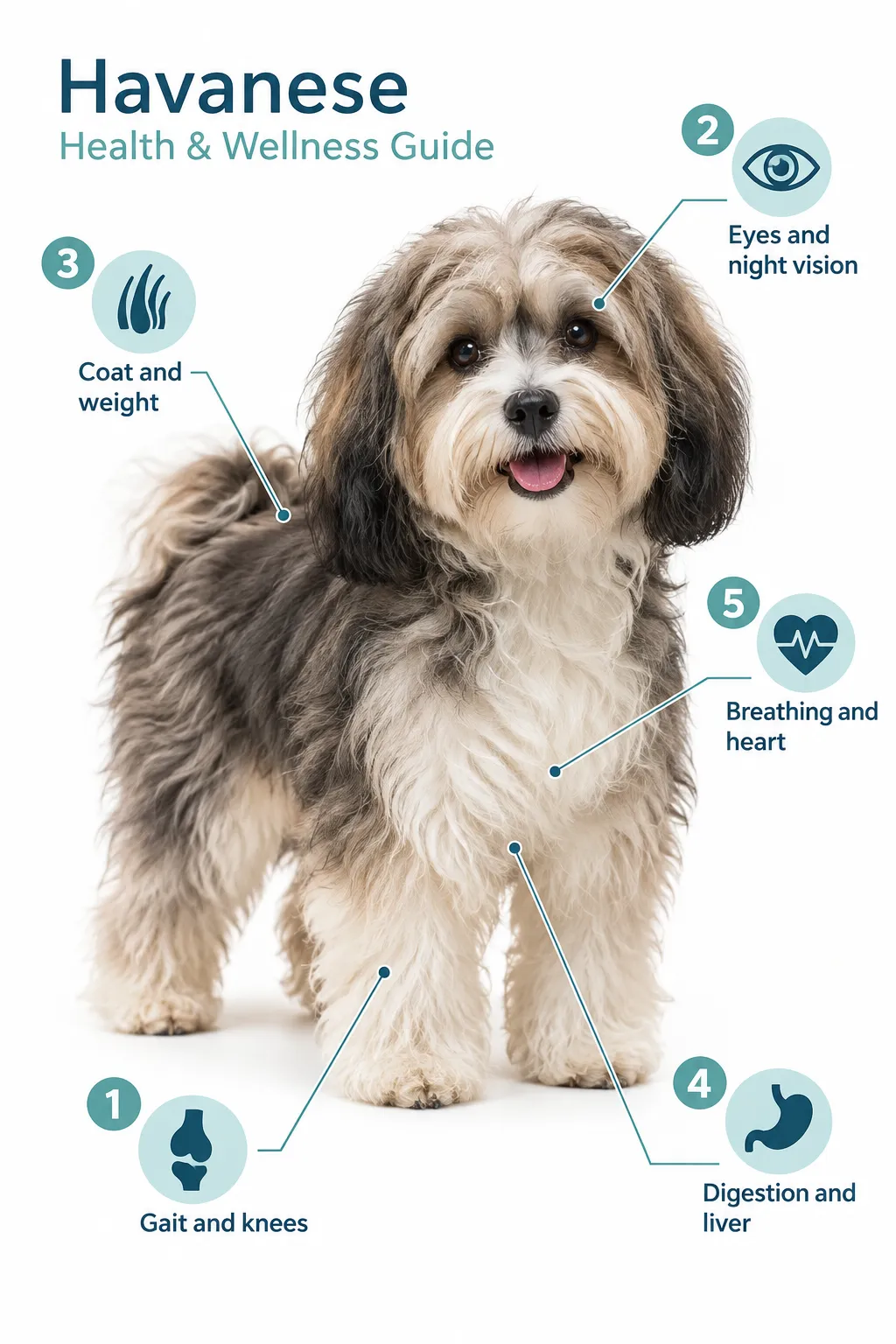
A common mistake owners make is dismissing a cough as “just allergies” for weeks before mentioning it at a vet visit. If a sign lasts more than a few days, book an appointment.
Are Havanese Dogs Prone to Eye Problems and Patella Issues
Yes. Eye disease and patella luxation are two of the most frequently cited havanese health concerns across veterinary sources. These issues can appear gradually, so annual eye exams and orthopedic checks matter.
Cataracts, distichiasis (extra eyelashes irritating the cornea), and retinal dysplasia all show up in breed-specific health data from WebMD’s Havanese profile. Patella luxation, where the kneecap slides out of its groove, ranges from mild to severe and sometimes needs surgery. The Havanese Breed Society recommends regular orthopedic screening as part of routine care, not just when limping starts.
What’s the Average Lifespan of a Healthy Havanese
A healthy Havanese typically lives 12 to 15 years, making the breed one of the longer-lived small dogs. Genetics, weight management, dental health, and early treatment of issues all influence how close a dog gets to that upper range.

Dogs that stay lean, get regular dental cleanings, and receive prompt care for emerging issues tend to live longer and more comfortably. The Spruce Pets breed profile notes this lifespan range is consistent with other toy and small-breed dogs.
How Much Does It Cost to Treat Havanese Health Conditions
Treatment costs vary widely depending on the condition, ranging from a few hundred dollars for medications and dental cleanings to several thousand for orthopedic surgery or specialist eye care. Ongoing conditions like thyroid disease or allergies mean recurring costs for medications and supplements.
Dental treatments, antibiotics, allergy relief, and ear or eye treatments are among the more routine expenses havanese owners face. Gastrointestinal flare-ups, heart or blood pressure medications, and behavior-related treatments for anxiety can add up over a dog’s lifetime. Budgeting for these early, rather than reacting, helps avoid financial surprises.
Can You Prevent or Reduce Health Problems in Havanese Dogs
You can’t eliminate every risk, but you can meaningfully reduce the odds through health testing, weight control, dental care, and routine vet visits. Prevention is less about one big fix and more about consistent small habits every week.
- Keep up with annual checkups, not just when something looks wrong.
- Maintain a healthy weight through portion-controlled food and regular activity.
- Brush teeth or use dental chews to support dental health and reduce plaque buildup.
- Ask breeders for proof of health testing before bringing home a puppy.
- Stay current on grooming to catch skin issues early, since a matted coat can hide problems.
For coat care specifically, see our guide on Havanese grooming secrets to keep that fluffy coat healthy.
Are Havanese Healthier or Sicker Than Other Small Dog Breeds
Havanese dogs are generally considered healthier than many toy breeds, partly because of a relatively diverse gene pool and active breed-club health programs. They’re not immune to issues, but they tend to avoid some of the more severe congenital problems seen in other small dogs.
Compared to breeds with flatter faces or more extreme body types, Havanese dogs face fewer structural breathing problems. Still, every breed has its own risk profile, and comparing notes with other small-dog owners (like those researching a Maltese’s pros and cons) helps set realistic expectations.

At What Age Do Havanese Dogs Start Developing Health Issues
Most structural and genetic issues, like patella luxation or liver shunts, show up before age 2, while thyroid and dental health problems tend to appear in middle age, around 5 to 8 years. Eye conditions like cataracts often develop later, from 7 years onward.
This means screening shouldn’t stop after puppyhood. It’s a lifelong process that shifts focus as the dog ages.
What Are Early Warning Signs I Should Watch for in My Havanese
Early warning signs include subtle limping, squinting, dull coat, reduced appetite, or a cough that lingers more than a few days. These signs are easy to miss because Havanese dogs are naturally playful and tend to mask discomfort.
If you notice your dog hesitating before jumping onto furniture it used to leap onto freely, that’s worth mentioning at the next vet visit, even if it seems minor.
How Often Should My Havanese Go to the Vet for Checkups
Adult Havanese dogs should see a vet at least once a year, while puppies and senior dogs benefit from checkups every six months. Dental exams, weight checks, and eye screenings should be part of every visit, not an afterthought.
Regular visits are also the best time to update vaccinations, discuss supplements, and review any new behavior changes you’ve noticed at home.
Is Pet Insurance Worth It If I Get a Havanese
Pet insurance is generally worth considering for Havanese owners, since orthopedic surgery, chronic thyroid medication, or eye treatments can cost well into the thousands over a dog’s lifetime. Premiums are often lower for small breeds, making early enrollment a reasonable hedge.
Look for a plan that covers hereditary conditions, since several havanese health issues are genetic in origin.
What Should I Ask a Breeder About Health Testing When Getting a Havanese Puppy
Ask breeders for proof of hip, eye, and cardiac clearances, plus any genetic panel results for the puppy’s parents. Reputable breeders should willingly share documentation, not just verbal assurances.
Why Health Testing Matters
Health testing identifies carriers of inherited conditions before they’re bred, reducing the chance of passing on serious issues to puppies. This matters more in small, closed gene-pool breeds like the Havanese.
The Role of OFA and the CHIC Program
The Orthopedic Foundation for Animals (OFA) and the Canine Health Information Center (CHIC) maintain health databases that track test results across generations. Breeders who register results through these programs are being transparent about what’s actually in their lines.
Required Health Tests for Havanese
Hip evaluation, patella exams, eye certification (CAER), and cardiac screening are commonly required tests, based on guidance from the Havanese Breed Society’s KC health standard.
Mandatory Tests
Some breed clubs treat hip and eye testing as mandatory before breeding, while cardiac and thyroid panels are strongly recommended but vary by organization.
Do All Havanese Dogs Get Health Problems or Can Some Stay Healthy
No, not every Havanese develops health problems. Many live their entire 12 to 15 year lifespan with only minor, manageable issues, especially when they come from health-tested lines and receive consistent preventive care.
Genetics, weight, and preventive habits all shift the odds in a dog’s favor.
What Health Conditions Run in Havanese Family Lines
Patella luxation, certain eye conditions, and chondrodysplasia-related skeletal issues tend to cluster in specific family lines, based on genetic research referenced by the National Havanese Fanciers. This is why breeder transparency about parent and grandparent health history matters so much.

Shop Health Supplements, Food, and Grooming Supplies for Your Havanese
Every Havanese benefits from a shop stocked with the right health products, supplements, dental chews, and grooming supplies. A good shop should deliver every few weeks, with wet food, treats, toys, and ear or eye treatments covering most routine care needs. Many shops also deliver every weeks on a subscription basis, so supplies for dental health, joint supplements, and skin and coat support arrive automatically. Free shipping on metro orders is common for food and supplement bundles, which helps keep costs predictable.
For nutrition specifically, our breed-focused list of superfoods vets wish every owner knew about pairs well with any Havanese feeding plan, and our vet-approved dog health checklist is a solid starting point for new owners building a care routine.
Havanese Nutritional Guidance
Good nutrition for Havanese dogs means age-appropriate food, portion control, and occasional supplements for joint or skin support. Puppies need higher-calorie formulas, while seniors often do better on joint-support diets.
Avoid overfeeding treats, since small dogs gain weight quickly relative to their size, which stresses joints already prone to patella issues.
Grooming a Havanese
Grooming is not optional for Havanese dogs; their long double coat mats quickly without regular brushing, every few days at minimum. Grooming also doubles as a health check, letting you spot skin issues, lumps, or ear problems early.
See our full breakdown of Havanese grooming secrets for a healthy coat for step-by-step brushing and bathing tips.
Training a Havanese
Havanese dogs are intelligent and eager to please, which makes training relatively straightforward with consistency. Short, positive sessions every day work better than long, infrequent ones.
Training also supports mental health and reduces anxiety-driven behavior issues common in small, people-oriented breeds.
Havanese Behavioural Issues
Separation anxiety is the most common behavioral issue in Havanese dogs, since the breed bonds tightly with its family and dislikes being left alone for long periods. Barking and clinginess often stem from the same root cause.
Addressing anxiety early with gradual alone-time training prevents it from becoming a chronic stress issue that affects overall health.
Conclusion
So, what kind of health problems do Havanese dogs have? Mostly manageable ones, if you catch them early. Joint issues, eye conditions, thyroid changes, liver concerns, and airway or heart symptoms are the main categories to watch, but the five-sign approach, gait, vision, energy and coat, digestion, and breathing, gives you a practical way to monitor your dog without obsessing over every possible diagnosis.
Your next steps: schedule a vet checkup if it’s been more than a year, ask your breeder for health testing documentation if you’re considering a new puppy, and build a simple weekly routine for grooming, dental care, and food quality. Havanese dogs, cared for well, tend to reward that effort with over a decade of companionship.