

Last updated: October 5, 2026
Quick Answer: French Bulldogs snore, overheat, cling to their owners, and refuse to swim because of their flat-faced anatomy, selective breeding history, and strong social instincts. These “weird habits” are almost always rooted in biology or health – not personality quirks. Understanding the real French Bulldog facts behind each behavior helps you care for your Frenchie better and catch health problems early.
Key Takeaways
- French Bulldogs are brachycephalic – their flat skulls cause snoring, breathing trouble, and overheating by design
- A 2025 study of 452 Danish Frenchie owners found allergies in 36.7%, breathing problems in 29.6%, and spinal disease in 19% of dogs
- Frenchies cannot swim safely – their heavy front end and short snout make drowning a real risk
- They’re one of the best apartment dogs available, but they need air conditioning in warm weather
- French Bulldogs typically live 10 years or less, and early “laziness” can signal real health decline
- Potty training can take up to 10 months – this is normal for the breed, not a training failure
- They’re friendly and rarely aggressive, but their loyalty can push them into genuinely dangerous situations
- Frenchies cost more than almost any other breed to buy and to keep healthy
Why Do French Bulldogs Snore So Much?
French Bulldogs snore because their skull shape physically compresses their airway. It’s not a sleeping position issue – it’s anatomy.
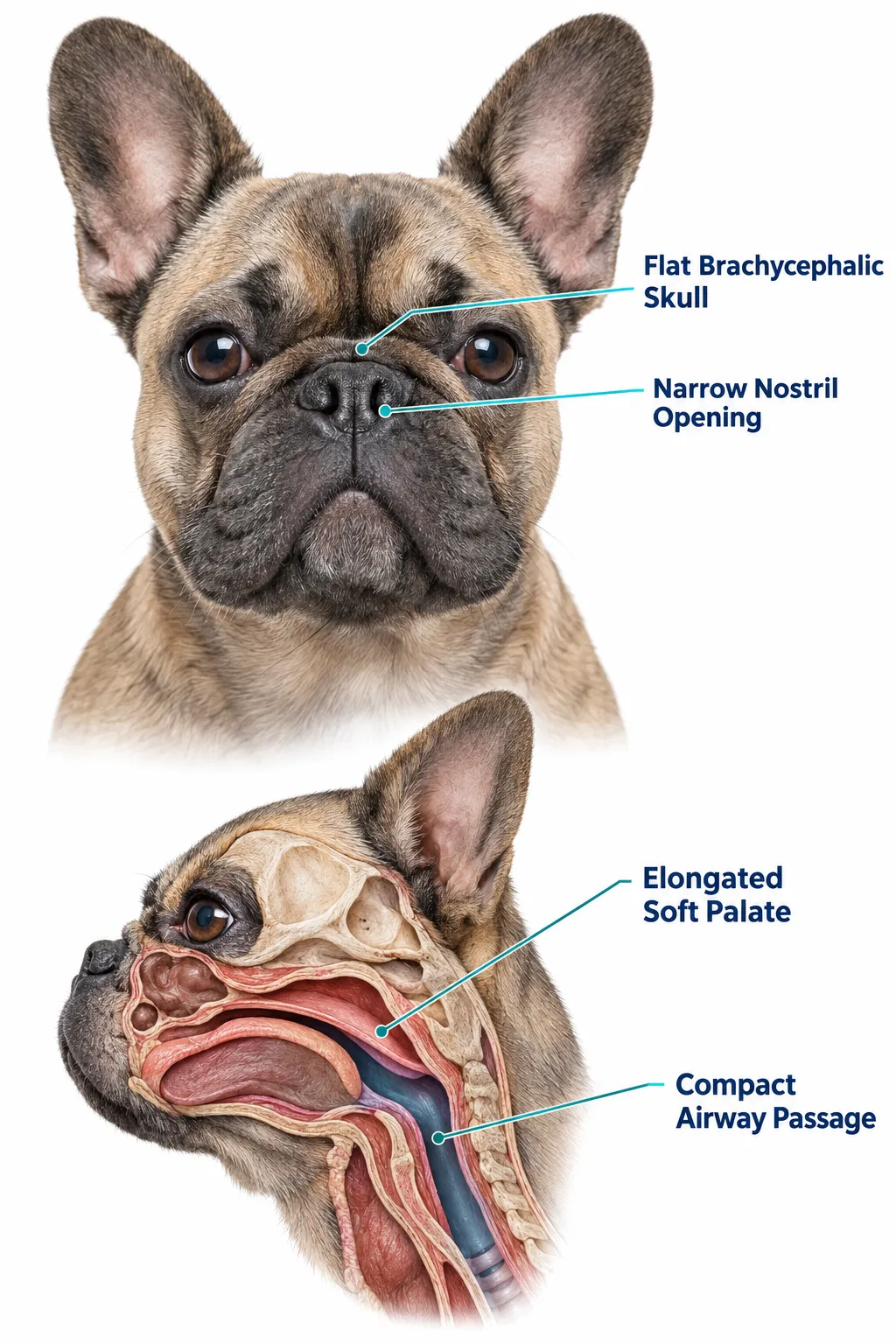
The breed is brachycephalic, meaning their skull is shortened front-to-back. This creates a chain reaction: narrow nostrils, an elongated soft palate, and a narrowed trachea all squeeze the same amount of air through a much smaller passage. A 2025 CT-scan study of 45 French Bulldogs without diagnosed airway disease found nasal septum deviation in 69% of dogs and abnormal turbinate growth in over 60% – even in dogs that seemed perfectly healthy.
So when your Frenchie snores like a freight train, that’s baseline for the breed. But louder-than-usual snoring, blue-tinged gums, or gasping after mild activity are signs to call your vet. Those point toward Brachycephalic Obstructive Airway Syndrome (BOAS), which is treatable with surgery if caught early.
Common mistake: Many owners normalize snoring completely and miss the point where it crosses into a medical problem. If your dog struggles to breathe after a short walk, that’s not quirky – that’s a health issue.
Why Do French Bulldogs Have Breathing Problems?
Frenchie breathing problems come directly from selective breeding for an extremely flat face. The skull shape compresses every structure involved in breathing.
The specific issues include:
- Stenotic nares – nostrils too narrow to breathe through easily
- Elongated soft palate – floppy tissue that partially blocks the throat
- Hypoplastic trachea – a windpipe that’s too small for the dog’s body
- Aberrant turbinates – extra bony tissue growing into the nasal passage
According to animal welfare data, French Bulldogs have an increased risk of at least 20 different health conditions compared to other dogs, with BOAS being one of the most serious. Brachycephalic dogs are also up to 40% more likely to die younger than other breeds.
This is why your Frenchie sounds like they’re always slightly congested, even on a cool day doing nothing at all.
Why Do French Bulldogs Overheat Easily?
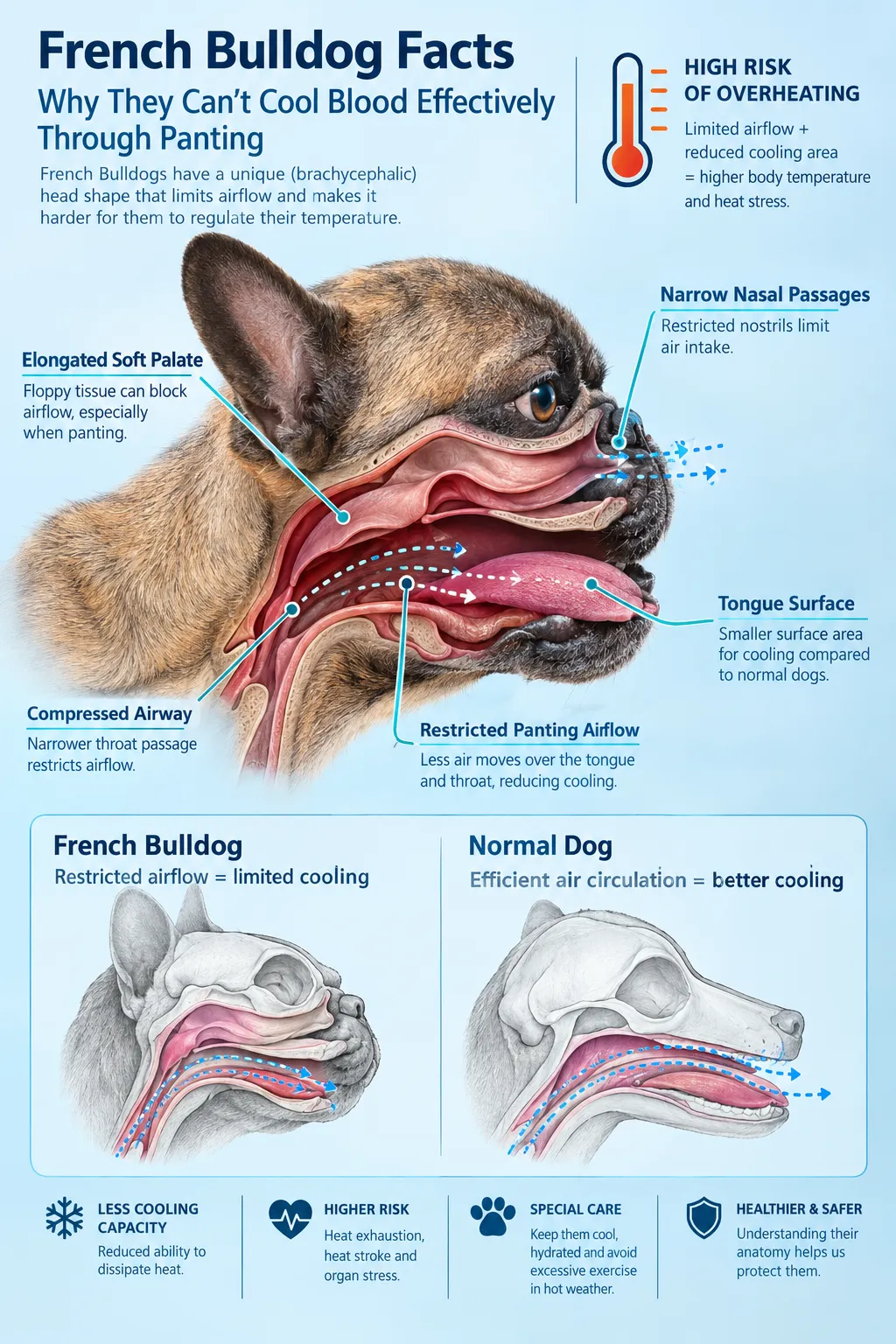
French Bulldogs overheat because they can’t pant efficiently. Panting is a dog’s primary cooling system, and a compressed airway makes it much less effective.
A healthy dog moves air rapidly over the tongue and throat to cool blood near the surface. A Frenchie’s narrow passages restrict that airflow significantly. Add a short coat that traps heat close to the body and a stocky build that generates more heat per step, and you have a dog that can go from fine to dangerously overheated in minutes.
Coverage of a 2026 Florida house fire rescue noted that Frenchies’ brachycephalic conformation directly explains their “laziness” in hot weather – they’re not being dramatic, they’re protecting themselves.
Practical rules for Frenchie owners:
- Never leave a Frenchie in a car, even with windows cracked
- Avoid outdoor exercise when temperatures exceed 75°F (24°C)
- Keep walks short during summer – early morning or evening only
- Always have fresh cool water available indoors
What Makes French Bulldogs Different from Other Bulldogs?
French Bulldogs are smaller, lighter, and more energetic than English Bulldogs, with a very different ear shape and temperament.
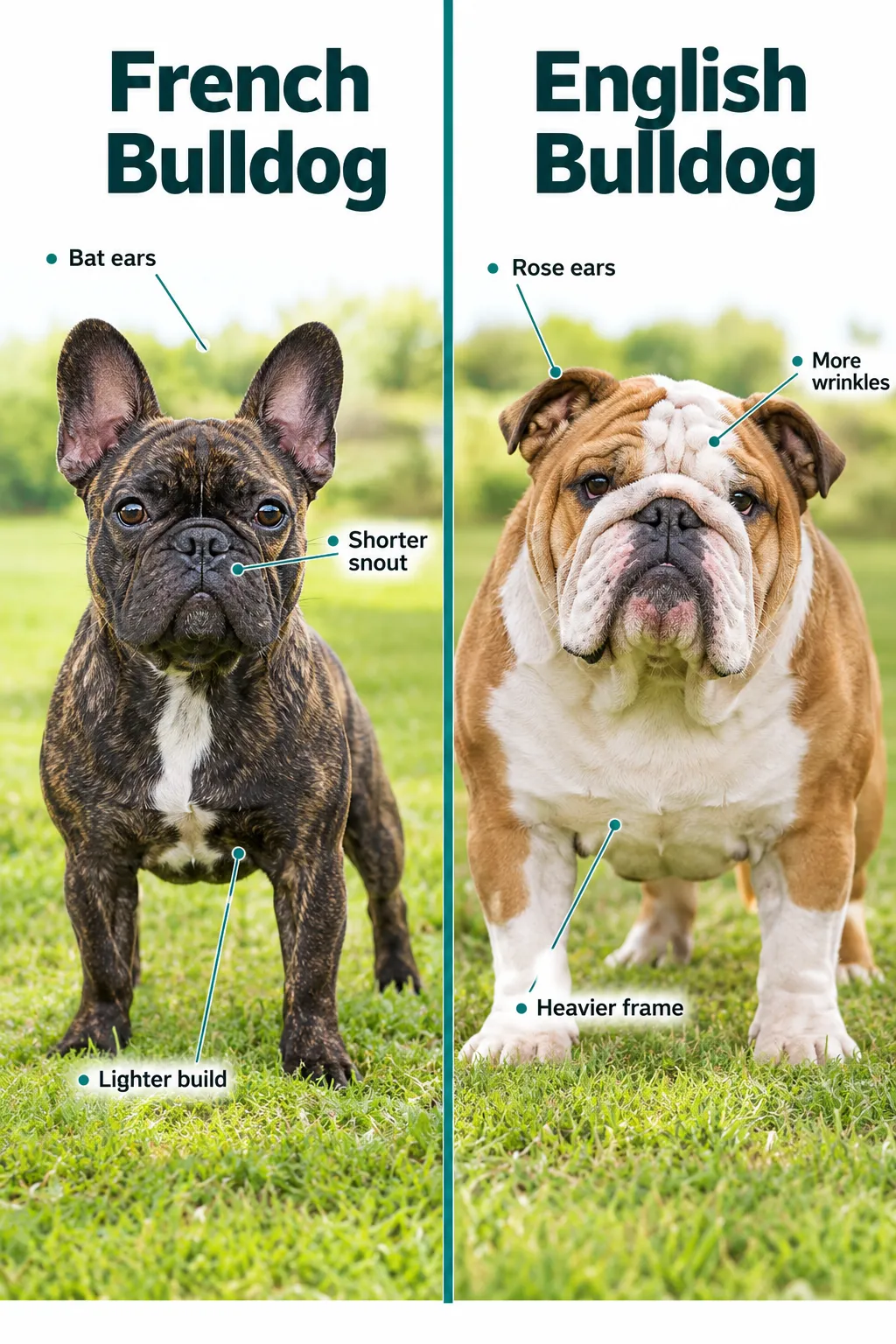
Here’s a quick comparison of the key French Bulldog facts versus English Bulldog traits:
| Trait | French Bulldog | English Bulldog |
|---|---|---|
| Weight | Under 28 lbs | 40-50 lbs |
| Ears | Upright bat ears | Small rose ears |
| Energy level | Moderate, playful | Low, very calm |
| Origin | France/England crossbreed | England |
| Apartment suitability | Excellent | Good |
The bat ears are the most obvious visual difference. French Bulldogs were developed partly from English Bulldogs crossed with ratters in 19th-century Paris, which gave them their lighter frame and more alert, upright ears.
Are French Bulldogs Good for First-Time Dog Owners?
Yes – with one big caveat. French Bulldogs are affectionate, low-exercise, and easy to manage in small spaces, which makes them genuinely good for first-time owners. The caveat is cost and health complexity.
Frenchies need owners who are prepared for:
- Vet bills that are higher than average breeds
- Potty training that can take up to 10 months
- Skin fold cleaning, ear cleaning, and allergy management (check out our French Bulldog Allergies Survival Guide for practical help)
- Watching for signs of IVDD – our guide on early signs of IVDD in French Bulldogs covers what most owners miss
If you have the budget and the patience for health management, a Frenchie is one of the most rewarding first dogs you can own. If you’re looking for a low-maintenance dog, this isn’t the breed.
What Health Issues Do French Bulldogs Have?
French Bulldogs have a wide range of health problems linked directly to their body shape and breeding history.
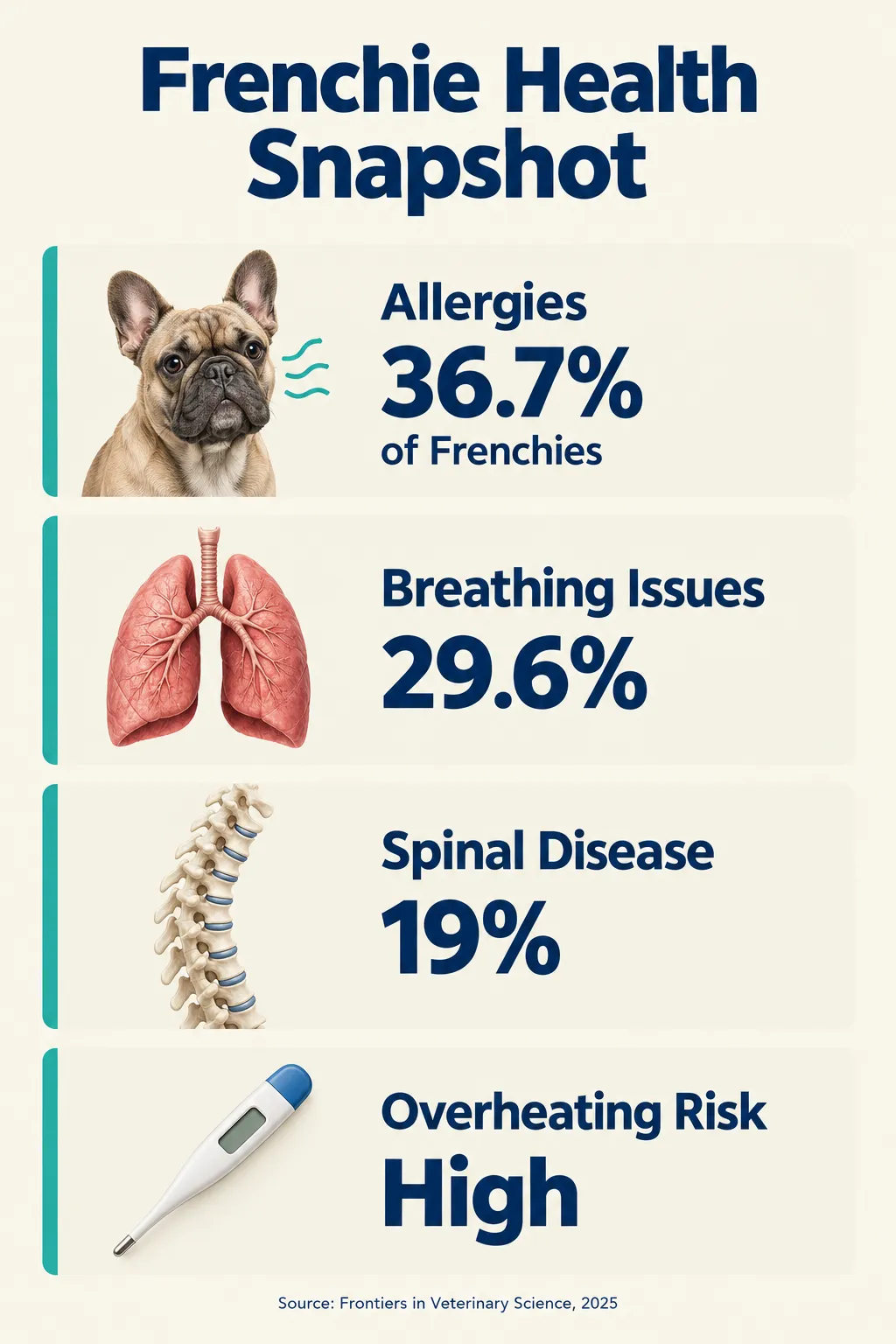
The 2025 Frontiers in Veterinary Science study of 452 Frenchie owners found:
- Allergies – 36.7% of dogs affected
- Breathing problems – 29.6%
- Spinal cord disease – 19%
Beyond those top three, common issues include:
- Eye problems (cherry eye, corneal ulcers)
- Skin fold dermatitis
- Hip dysplasia
- Ear infections
- Intervertebral disc disease (IVDD)
More than half of owners in that study felt Frenchies are less healthy than other breeds – yet 64% believed their own dog was healthier than average. That gap explains why so many “quirks” like constant scratching or reluctance to jump get normalized instead of treated.
How Long Do French Bulldogs Live, and Why Is Their Lifespan So Short?
French Bulldogs typically live 10 years or less. That’s shorter than many other small breeds, which often reach 12-15 years.
Animal welfare research links the shortened lifespan directly to the extreme body shape bred into them. BOAS strains the heart and lungs over years. Spinal problems can cause sudden paralysis. Allergies and skin conditions create chronic inflammation that wears the body down.
The result is that Frenchies often show “old dog” behaviors – exercise intolerance, reluctance to climb stairs, sudden back pain – earlier than owners expect. These aren’t personality traits. They’re early signs of age-related decline that can start as young as 5-6 years in some dogs.
Edge case: A paralyzed Frenchie profiled by Forbes in September 2026 now uses a custom wheelchair and remains social and joyful – showing that even significant health challenges don’t have to end quality of life with the right support.
Can French Bulldogs Swim Safely?
No – French Bulldogs cannot swim safely without a life jacket. This is one of the most important French Bulldog facts for new owners to know.
Their body shape works against them in water: heavy front end, short legs, and a flat face that sits very close to the waterline. Even calm, shallow water is dangerous because they tire quickly and can’t keep their nose above the surface.
If your Frenchie is near water:
- Always use a properly fitted canine life jacket
- Never leave them unsupervised near pools, lakes, or even deep bathtubs
- Keep swim sessions very short – even with a life jacket, they fatigue fast
Are French Bulldogs Aggressive or Friendly?
French Bulldogs are among the friendliest, most people-oriented dogs in any breed group. Aggression toward humans or other dogs is not a typical trait.
What they are is intensely loyal – sometimes to a fault. In a widely reported September 2026 incident, a French Bulldog named Cassie placed herself between a black bear and her owners during an attack in Trinity County, California, ultimately dying from her injuries. Multiple news outlets covered her story as a testament to the breed’s fierce attachment to their families.
That loyalty shows up daily as “velcro dog” behavior – following you from room to room, demanding physical contact, and showing real distress when left alone too long. It’s not clinginess for no reason. It’s a breed that was literally designed to be a human companion.
What Should I Feed My French Bulldog?
French Bulldogs do best on high-quality protein-based diets with limited fillers, and many need food formulated for sensitive stomachs or allergy management.
Given that nearly 37% of Frenchies develop allergies, food choices matter a lot. Common triggers include chicken, wheat, corn, and soy. If your dog scratches constantly or has recurring ear infections, a food trial with a novel protein (like duck or venison) is often the first step vets recommend.
Practical feeding tips:
- Feed from a raised bowl to reduce air swallowing and gas (Frenchies are champion gas producers)
- Avoid foods on our list of 15 everyday foods that can kill your dog
- Check our vet-approved Frenchie safe foods guide for a curated list
- Measure portions carefully – Frenchies gain weight easily, and extra weight makes breathing harder
Are French Bulldogs Good Apartment Dogs?
Yes – French Bulldogs are arguably the best apartment dog breed available. They’re quiet (aside from snoring), low-exercise, and genuinely content in small spaces.
They don’t need a yard. A short walk twice a day plus indoor play is enough for most adult Frenchies. They don’t bark excessively, which matters in apartment buildings. And their size – under 28 lbs – makes them easy to manage in elevators and tight spaces.
The one apartment-specific requirement is climate control. A Frenchie in a hot apartment without air conditioning is a Frenchie in danger. If you live somewhere with warm summers and no AC, this breed is a poor fit regardless of apartment size.
If you’re setting up your apartment routine, our apartment potty training method is specifically designed for dogs in smaller spaces.
How Much Does a French Bulldog Cost?
French Bulldogs are expensive to buy and expensive to own. Purchase prices from reputable breeders typically range from $2,000 to $5,000 or more in the US, with rare color variants sometimes priced higher.
The ongoing costs are where many owners get surprised:
- Most Frenchies require C-sections to give birth (natural delivery is dangerous due to their large heads and narrow hips), which drives up breeder costs
- Allergy management, BOAS surgery, and IVDD treatment can each run into thousands of dollars
- Pet insurance is strongly recommended – budget for a comprehensive policy from puppyhood
Choose a Frenchie if: You want a low-exercise, apartment-friendly companion and have the budget for above-average vet care.
Skip a Frenchie if: You want a low-maintenance, low-cost dog or live somewhere without reliable air conditioning.
FAQ
Why does my French Bulldog follow me everywhere?
Frenchies are bred specifically as human companions. Following you from room to room is normal bonding behavior, not anxiety – unless it’s paired with destructive behavior or vocalizing when you leave.
Why does my French Bulldog fart so much?
Their flat face causes them to swallow more air while eating and breathing. That air has to go somewhere. Raised food bowls and slow-feeder dishes help reduce it.
Can French Bulldogs be left alone all day?
Not ideally. Frenchies bond intensely with their people and can develop separation anxiety. Up to 4-5 hours is manageable for most adult Frenchies with proper training, but longer stretches regularly will cause stress.
Why does my Frenchie refuse to exercise in summer?
Because they’re protecting themselves. Heat is genuinely dangerous for brachycephalic dogs. Respect their reluctance – it’s self-preservation, not laziness.
Why is potty training my French Bulldog taking so long?
It’s normal. Some Frenchies need up to 10 months before house training is fully reliable. Puberty around 6 months can also cause regression. Consistency and a clear routine are more important than speed.
Do French Bulldogs get along with other dogs?
Generally yes. Frenchies are social and usually friendly with other dogs. Early socialization makes a big difference, as with any breed.
Are French Bulldogs smart?
They’re clever but stubborn. They understand commands well but may choose not to follow them. Short, reward-based training sessions work much better than repetitive drills.
Why does my French Bulldog sleep so much?
Partly because breathing takes more effort for them than for other dogs, which is genuinely tiring. Partly because they’re a low-energy breed by design. If sleep increases suddenly or your dog seems lethargic rather than relaxed, check with your vet.
Why does my Frenchie snort when excited?
The narrow airway vibrates when airflow increases during excitement. It’s the same mechanism as snoring, just triggered by emotion rather than sleep. It’s normal but worth monitoring if it becomes labored.
What’s the biggest health mistake French Bulldog owners make?
Normalizing symptoms. Scratching, snoring, exercise intolerance, and reluctance to jump are so common in the breed that owners often assume they’re personality traits. Many are early signs of treatable conditions.
Conclusion
French Bulldog facts aren’t just trivia – they’re the key to understanding why your dog does everything they do. The snoring, the overheating, the clinginess, the gas, the swimming avoidance – it all connects back to anatomy, breeding history, and a deep-wired need for human connection.
Your action steps:
- Schedule a vet check focused on airways if your Frenchie snores loudly or struggles after mild exercise
- Get pet insurance now – before any conditions are diagnosed and become pre-existing exclusions
- Review your Frenchie’s diet using our vet-approved Frenchie safe foods guide if they scratch constantly
- Read up on IVDD warning signs – our guide on early signs of IVDD in French Bulldogs could genuinely save your dog from paralysis
- Keep training sessions short and positive – stubborn doesn’t mean untrainable
Frenchies give everything they have to their families – sometimes literally, as Cassie’s story showed us. They deserve owners who understand their biology well enough to give them the best possible life in return.