Last updated: July 31, 2026
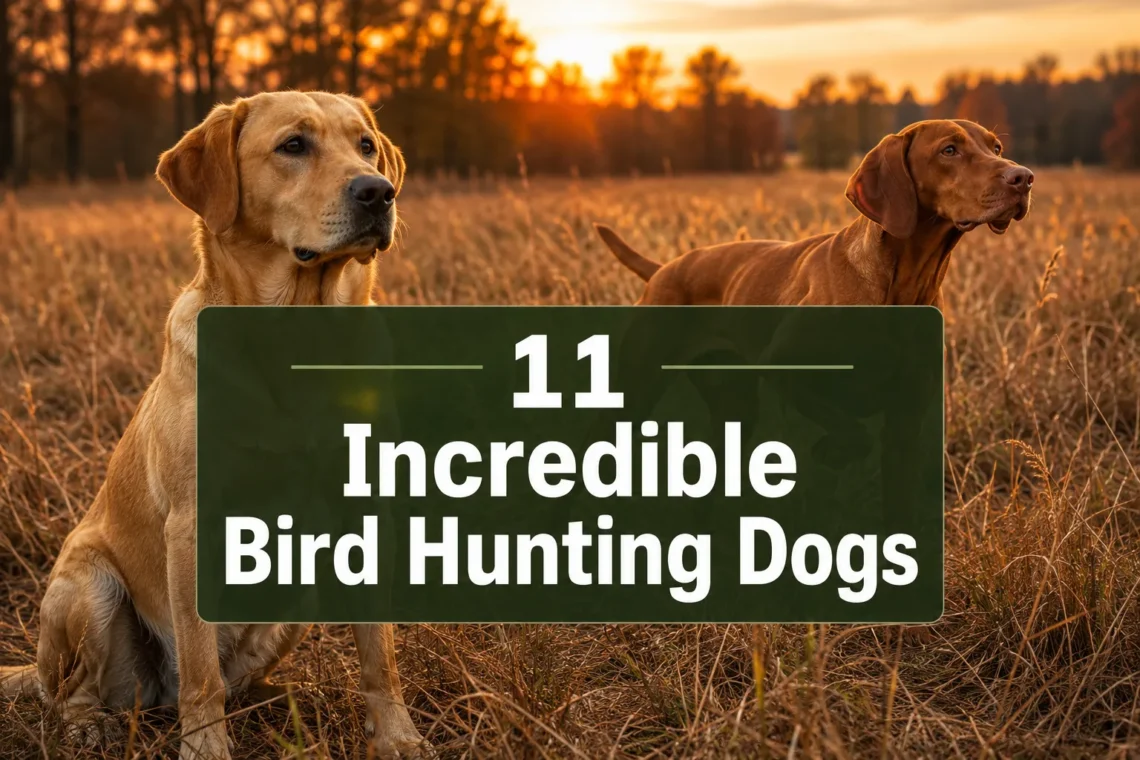
Quick Answer: The best bird hunting dogs combine a sharp nose, natural instinct, trainability, and stamina in the field. Breeds like the Labrador Retriever, German Shorthaired Pointer, and English Springer Spaniel consistently top the list because they balance hunting performance with family-friendly temperament. The right breed for you depends on your hunting style, property size, and how much training time you can commit.
Key Takeaways 🐾
- Bird hunting dogs fall into three main types: pointers, flushers, and retrievers – each with a different job in the field.
- Labrador Retrievers, German Shorthaired Pointers, and Brittany Spaniels are top picks for beginners.
- A well-bred hunting dog puppy typically costs between $500 and $2,500+, depending on bloodlines and breeder reputation.
- Most bird dogs need consistent training starting at 8 weeks old to reach their full potential.
- Several bird hunting breeds – like the Boykin Spaniel and Cocker Spaniel – are excellent family pets too.
- Water-capable breeds like the Labrador and Chesapeake Bay Retriever excel in waterfowl hunting.
- Low-shedding options do exist, including the Wirehaired Pointing Griffon and Pudelpointer.
- Size matters less than nose, drive, and trainability when choosing a bird dog.
What Makes a Good Bird Hunting Dog?
A good bird hunting dog has three non-negotiable traits: a strong nose, natural prey drive, and the ability to work closely with a human handler. Without all three, even the most beautiful dog will underperform in the field.
Here’s what separates a great bird dog from an average one:
- Nose: The ability to scent birds at a distance, even in wind or water
- Trainability: Willingness to take direction and hold steady under pressure
- Stamina: The physical ability to work long hours across rough terrain
- Soft mouth: Retrievers especially need to carry birds without damaging them
- Temperament: A calm, focused dog that doesn’t spook birds prematurely
“A dog with natural instinct and a willing attitude will always outwork a dog with fancy bloodlines and poor training.” – common wisdom among experienced bird hunters
Breed matters, but individual temperament and early training matter just as much.
The 11 Best Bird Hunting Dogs in 2026
These breeds have proven themselves across generations of hunters. Each one has a specific strength – so read carefully before you pick.
1. 🐕 Labrador Retriever
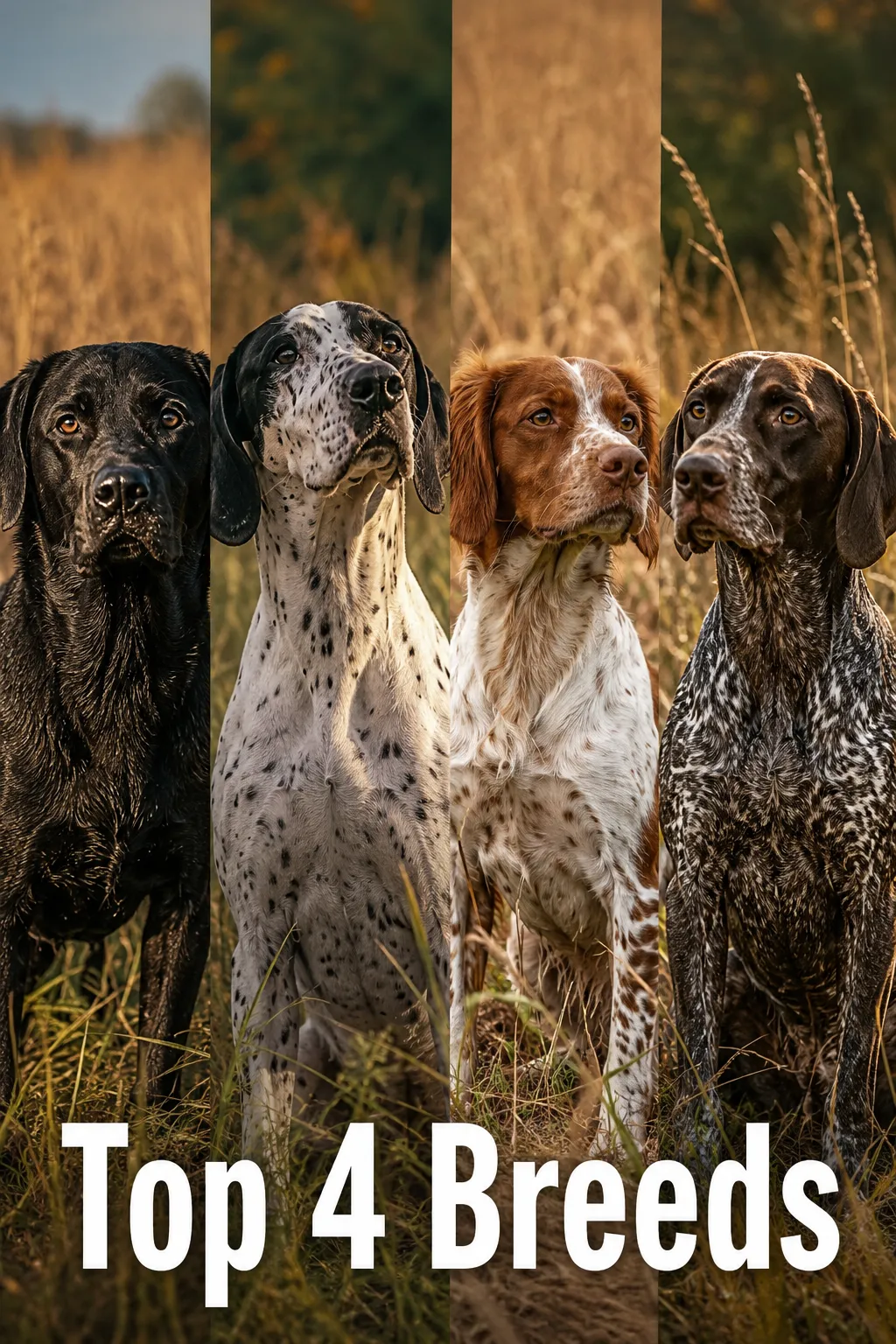
The Lab is the most popular bird hunting dog in North America for good reason. Labs are natural retrievers, love water, and are easy to train. They work equally well for waterfowl and upland birds.
- Best for: Waterfowl, pheasant, dove
- Temperament: Friendly, eager to please, high energy
- Size: 55-80 lbs
2. German Shorthaired Pointer (GSP)
The GSP is a true all-around hunting dog. It points, flushes, and retrieves on land and water. Many hunters call it the best single breed for versatility.
- Best for: Quail, pheasant, grouse, waterfowl
- Temperament: Athletic, intelligent, intense
- Size: 45-70 lbs
3. English Springer Spaniel
Springers are flushing dogs built for thick cover. They push birds into the air with enthusiasm and retrieve with a gentle mouth. They’re also one of the most popular family dogs.
- Best for: Pheasant, woodcock, grouse
- Temperament: Energetic, affectionate, responsive
- Size: 40-50 lbs
4. Brittany Spaniel
Don’t let the “Spaniel” name fool you – the Brittany actually points like a pointer. It’s compact, fast, and works well in close range, making it ideal for hunters on smaller properties.
- Best for: Quail, woodcock, grouse
- Temperament: Eager, gentle, very trainable
- Size: 30-40 lbs
5. English Pointer
The classic bird dog. English Pointers have been hunting upland birds for centuries. Their signature frozen point is one of the most iconic sights in hunting.
- Best for: Quail, pheasant, grouse
- Temperament: High drive, independent, athletic
- Size: 45-75 lbs
6. Boykin Spaniel
South Carolina’s state dog is a compact flushing and retrieving dog that was bred specifically for hunting in small boats and tight swamp terrain. It’s also one of the friendliest family dogs on this list.
- Best for: Dove, duck, turkey
- Temperament: Cheerful, eager, gentle
- Size: 25-40 lbs
7. Chesapeake Bay Retriever (Chessie)
If you hunt cold-water ducks in rough conditions, the Chessie is built for it. Its oily, wavy coat repels icy water better than almost any other breed.
- Best for: Waterfowl, especially in cold climates
- Temperament: Loyal, tenacious, independent
- Size: 55-80 lbs
8. Vizsla
The Vizsla is a Hungarian pointing breed that’s gaining serious popularity in the U.S. It’s lean, fast, and incredibly affectionate – often called a “velcro dog” because it stays close to its handler.
- Best for: Quail, pheasant, grouse
- Temperament: Gentle, sensitive, high energy
- Size: 44-60 lbs
9. Wirehaired Pointing Griffon
This rough-coated breed is a slow-working but thorough hunter. It was bred to work in dense brush and wetlands, and its wiry coat protects it from thorns and cold water.
- Best for: Pheasant, grouse, woodcock
- Temperament: Devoted, methodical, trainable
- Size: 50-70 lbs
10. Cocker Spaniel
The American Cocker Spaniel is smaller than most hunting dogs, but it’s a capable flusher for small game birds. It’s also one of the best options for hunters who want a dual-purpose family pet.
- Best for: Woodcock, quail
- Temperament: Sweet, gentle, adaptable
- Size: 20-30 lbs
11. Pudelpointer
A cross between a Poodle and an English Pointer, the Pudelpointer is a rare but exceptional versatile hunting dog. It points, flushes, and retrieves on land and water – and sheds very little.
- Best for: Pheasant, duck, grouse
- Temperament: Calm, intelligent, eager
- Size: 44-66 lbs
What’s the Difference Between Pointing and Flushing Dogs?
Pointing dogs freeze in place when they scent a bird, giving the hunter time to approach and prepare. Flushing dogs push the bird into the air immediately so the hunter can shoot. Both styles work – your choice depends on how you hunt.
| Style | What They Do | Best For |
|---|---|---|
| Pointer | Freezes on scent, holds until hunter arrives | Open fields, quail, pheasant |
| Flusher | Pushes bird into flight immediately | Dense cover, pheasant, woodcock |
| Retriever | Marks and fetches downed birds | Waterfowl, dove |
Some versatile breeds – like the GSP and Vizsla – can do all three jobs reasonably well.
Best Bird Hunting Dog Breeds for Beginners
The best bird hunting dogs for beginners are the Labrador Retriever, Brittany Spaniel, and English Springer Spaniel. These breeds are forgiving of training mistakes, eager to please, and don’t require the advanced handling skills that some pointer breeds demand.
Choose a Lab if you want a dog that retrieves waterfowl and is easy to live with at home.
Choose a Brittany if you hunt upland birds on smaller properties and want a compact, gentle dog.
Choose a Springer if you hunt thick cover and want a dog that doubles as a family companion.
Avoid starting with high-drive breeds like the English Pointer or Chesapeake Bay Retriever if you’re new to hunting dogs. They’re excellent in experienced hands, but they can be challenging to manage without prior experience.
Do Bird Hunting Dogs Need Special Training?
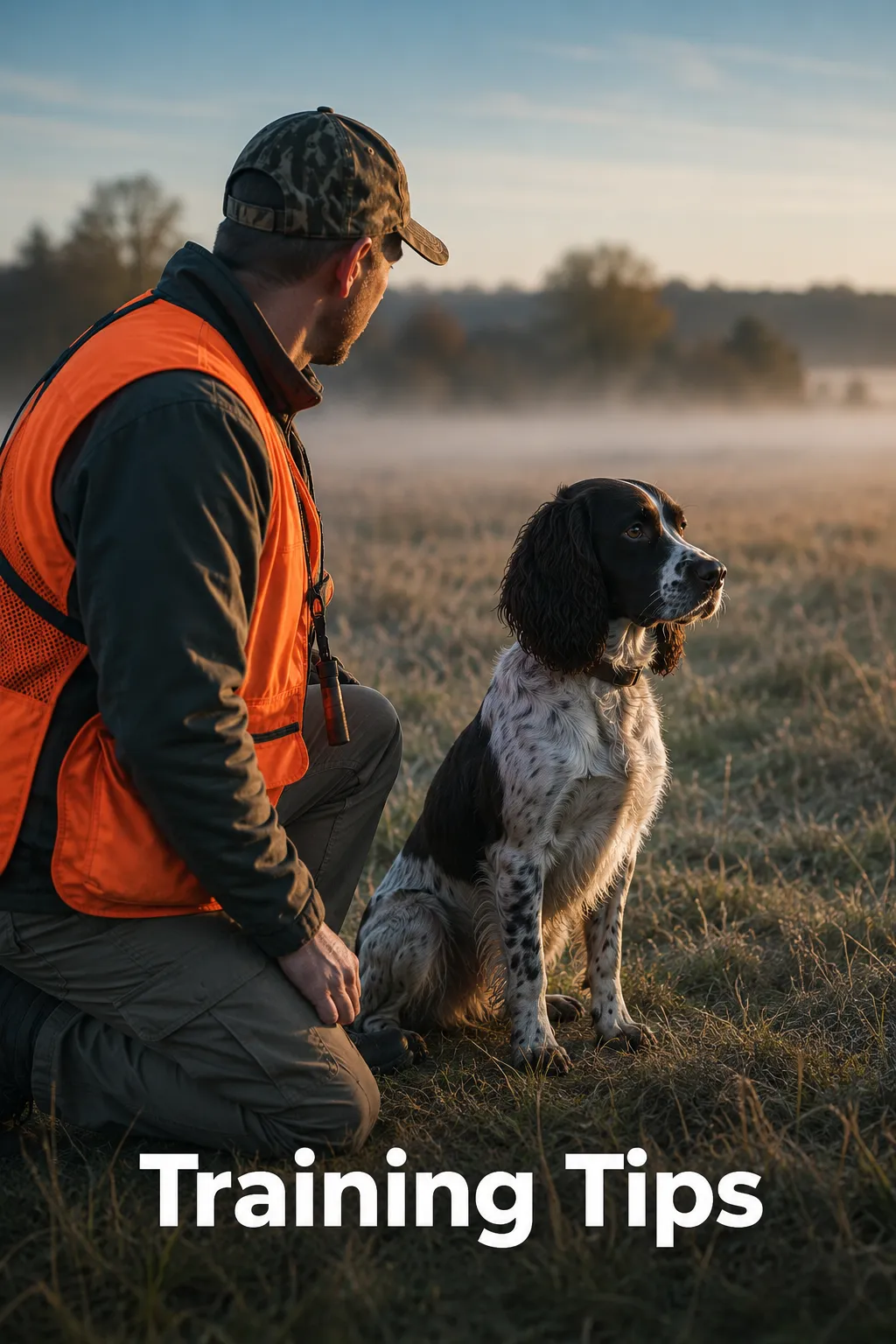
Yes – bird hunting dogs need consistent, structured training that starts early and builds specific field skills over time. Basic obedience is just the beginning.
A proper bird dog training program covers:
- Basic obedience (sit, stay, come, heel) – start at 8 weeks
- Introduction to birds – use pigeon wings or live birds at 10-12 weeks
- Steadiness training – teaching the dog to hold a point or sit before retrieving
- Gun introduction – gradual exposure to gunfire to prevent gun shyness
- Field work – hunting in real terrain with increasing difficulty
Most hunters start serious field training around 6 months of age. A professional trainer can help if you’re stuck – expect to pay $500 to $1,500 per month for a professional board-and-train program.
If you want to train your dog yourself, check out this 14-day dog training plan that actually works as a solid foundation before moving into field-specific work.
Common mistake: Introducing gunfire too early or too loudly. Gun shyness is one of the most common and most preventable training problems in bird dogs.
How Much Does a Bird Hunting Dog Cost?
A well-bred bird hunting dog puppy from a reputable breeder typically costs between $800 and $2,500. Dogs from proven field trial bloodlines can run $3,000 or more.
Here’s a rough breakdown:
- Pet-quality hunting breed puppy: $500 – $900
- Field-bred puppy from proven parents: $1,000 – $2,500
- Started dog (6-18 months, basic training done): $2,000 – $5,000
- Finished hunting dog (fully trained): $5,000 – $15,000+
Ongoing costs include food, vet care, hunting licenses, training equipment, and kenneling. Budget at least $1,200 to $2,000 per year in basic upkeep.
Feeding a high-energy hunting dog well is important. See what dogs can and cannot eat to make sure you’re fueling your dog correctly during hunting season.
Bird Hunting Dogs vs Other Hunting Dogs
Bird hunting dogs are purpose-bred for feathered game – they use air scent, work above the ground, and are trained to handle birds gently. Other hunting dogs like hounds or terriers use ground scent and are built for tracking or flushing mammals.
Key differences:
- Bird dogs use air scent and work in open fields or light cover
- Hounds (Beagles, Bloodhounds) use ground scent and track mammals
- Terriers (Jack Russells, Rat Terriers) are built for burrowing and flushing small game
- Curs and Feists are used for squirrel and raccoon hunting in the South
A Labrador can technically retrieve both birds and small game, but specialized bird dogs will almost always outperform a general hunting dog when it comes to upland birds or waterfowl.
What Size Bird Hunting Dog Is Best?
There’s no single “best” size – it depends on your terrain, target birds, and how you hunt. Medium-sized dogs (30-60 lbs) tend to be the most versatile.
- Small dogs (under 35 lbs): Boykin Spaniel, Cocker Spaniel, Brittany – great for small properties, boats, and dense cover
- Medium dogs (35-65 lbs): Vizsla, GSP, English Springer – the sweet spot for most hunters
- Large dogs (65+ lbs): Labrador, Chesapeake Bay Retriever – best for cold water and heavy cover
Smaller dogs tire less quickly in heat and are easier to transport. Larger dogs push through heavy brush more effectively and handle cold water better.
Bird Hunting Dogs That Work in Water
The best bird hunting dogs for water work are the Labrador Retriever, Chesapeake Bay Retriever, and Boykin Spaniel. These breeds have water-resistant coats, strong swimming ability, and natural drive to retrieve from water.
The Wirehaired Pointing Griffon and Pudelpointer also handle water well, despite being primarily upland dogs.
What to look for in a water-capable hunting dog:
- Dense, water-resistant double coat
- Webbed feet (Labs, Chessies, and Boykins all have this)
- Natural desire to enter water without hesitation
- Physical stamina for cold-water retrieves
If you hunt in cold climates, the Chesapeake Bay Retriever is the gold standard. Its oily coat insulates better than any other breed in icy water conditions.
Are Bird Hunting Dogs Good Family Pets?
Many bird hunting dogs make excellent family pets – especially flushing breeds like the English Springer Spaniel, Boykin Spaniel, and Cocker Spaniel. They’re affectionate, gentle with children, and adapt well to home life.
Pointing breeds like the Vizsla and Brittany are also very family-friendly. The Vizsla in particular is known for being deeply bonded to its people.
Breeds that do well as dual-purpose family/hunting dogs:
- Labrador Retriever ✅
- English Springer Spaniel ✅
- Boykin Spaniel ✅
- Brittany Spaniel ✅
- Vizsla ✅
Breeds that need more experienced handling at home:
- Chesapeake Bay Retriever (can be stubborn and dominant)
- English Pointer (very high energy, needs a lot of space)
If you want a big, gentle family dog that can also hunt, read about big dogs that are total gentle giants for more breed ideas.

Bird Hunting Dog Breeds for Small Properties
The best bird hunting dogs for small properties are compact, close-working breeds that don’t need to range far to find birds. The Brittany Spaniel, Boykin Spaniel, and Cocker Spaniel are all excellent choices.
These dogs naturally work within 20-40 yards of the hunter, which is perfect for smaller fields or wooded lots.
Top picks for small properties:
- Brittany Spaniel – works close, easy to control
- Boykin Spaniel – compact, great for boats and tight terrain
- Cocker Spaniel – small, gentle, great for woodcock
- English Springer Spaniel – can be trained to work close
Avoid wide-ranging breeds like the English Pointer or GSP on small properties unless you’re prepared to do significant range-control training.
How to Choose the Right Bird Hunting Dog for Me
The right bird hunting dog depends on four things: what birds you hunt, where you hunt, how much time you have to train, and whether the dog will live in your home.
Use this simple decision guide:
- Hunt waterfowl in cold climates? – Chesapeake Bay Retriever or Labrador
- Hunt upland birds in open fields? – German Shorthaired Pointer or English Pointer
- Hunt in thick cover or small properties? – Brittany or English Springer Spaniel
- Want a family dog that also hunts? – Labrador, Boykin Spaniel, or Vizsla
- New to hunting dogs? – Start with a Labrador or Brittany
- Want low shedding? – Wirehaired Pointing Griffon or Pudelpointer
Don’t rush the decision. Spend time with adult dogs of the breeds you’re considering before buying a puppy. A hunting dog is a 10-15 year commitment.
For training fundamentals once you’ve chosen your dog, these top dog commands are a great place to start.
Common Mistakes When Training Bird Hunting Dogs
The most common training mistakes with bird hunting dogs involve moving too fast, skipping foundational obedience, or creating negative associations with birds or gunfire.
Top mistakes to avoid:
- Skipping basic obedience – Field work fails without a solid “sit,” “stay,” and “come”
- Introducing guns too early – Always build up gradually to avoid gun shyness
- Over-correcting in the field – Harsh corrections during bird work kill drive
- Not enough bird exposure – Dogs need regular contact with actual birds to develop instinct
- Inconsistent commands – Use the same word every time, every person in the household
- Training too long – Keep sessions under 15-20 minutes for young dogs
One of the most underrated mistakes is failing to use positive reinforcement consistently. Brain games for dogs can also help keep your hunting dog mentally sharp between seasons.
Bird Hunting Dogs With Low Shedding
Most bird hunting dogs shed moderately to heavily. However, a few breeds shed significantly less and are worth considering if shedding is a concern.
Lower-shedding bird hunting breeds:
- Wirehaired Pointing Griffon – wiry coat, minimal shedding
- Pudelpointer – low-shed, easy to maintain
- Wirehaired Vizsla – slightly less shedding than the smooth-coated version
- Boykin Spaniel – moderate shedding, manageable with regular brushing
Heavy shedders to be aware of:
- Labrador Retriever (sheds year-round, heavily in spring/fall)
- Chesapeake Bay Retriever (dense double coat, seasonal shedding)
- German Shorthaired Pointer (moderate but consistent shedding)
If shedding is a dealbreaker, the Wirehaired Pointing Griffon is your best bet. It’s a capable hunter and one of the lowest-shedding sporting dogs available. For more on large low-shed breeds, check out large hypoallergenic dog breeds that don’t shed like you’d expect.
Bird Hunting Dogs That Don’t Need a Lot of Exercise
Honestly, there’s no bird hunting dog that thrives on low exercise – these breeds were built to run for hours. But some are more adaptable to moderate activity levels than others.
More adaptable (moderate exercise okay):
- Cocker Spaniel – content with 30-45 minutes of daily activity
- Boykin Spaniel – energetic but manageable in a home setting
- Brittany Spaniel – can adapt if well-exercised daily
High-exercise breeds (not suitable for low-activity homes):
- English Pointer – needs 2+ hours of vigorous exercise daily
- Vizsla – known to become destructive without adequate exercise
- German Shorthaired Pointer – very high energy, needs space to run
If you’re leaning toward a lower-energy lifestyle, a Cocker Spaniel or Boykin Spaniel is your most realistic option. Just know that even these dogs need daily walks and mental stimulation to stay happy.
Keeping your dog mentally engaged is just as important as physical exercise. Relaxing massages for dogs are also a great way to bond with a high-energy hunting dog after a long day in the field.
Frequently Asked Questions About Bird Hunting Dogs
Q: What is the best all-around bird hunting dog?
A: The German Shorthaired Pointer is widely considered the best all-around bird hunting dog. It points, flushes, and retrieves on land and water, making it useful for nearly every type of upland and waterfowl hunting.
Q: Can a bird hunting dog be an indoor pet?
A: Yes. Many bird hunting breeds – especially Labs, Springers, and Boykin Spaniels – adapt well to indoor living as long as they get enough daily exercise and mental stimulation.
Q: At what age should I start training a bird hunting dog?
A: Basic obedience training can start at 8 weeks. Formal field training typically begins around 6 months of age when the dog has the physical and mental maturity to handle it.
Q: How long does it take to fully train a bird hunting dog?
A: Most dogs take 1 to 2 years of consistent training before they’re reliable in the field. Some versatile breeds take longer to fully develop their pointing instinct.
Q: Are female or male bird dogs better hunters?
A: Both sexes perform equally well as hunters. Females are sometimes considered easier to train due to slightly calmer temperament, but this varies widely by individual dog.
Q: What’s the best bird dog for duck hunting?
A: The Labrador Retriever and Chesapeake Bay Retriever are the top choices for duck hunting, especially in cold or rough water conditions.
Q: Do bird hunting dogs get along with other dogs?
A: Most bird hunting breeds are sociable with other dogs, especially when socialized early. Retrievers and spaniels tend to be especially dog-friendly.
Q: Can I hunt multiple bird species with one dog?
A: Yes. Versatile breeds like the GSP, Vizsla, and Wirehaired Pointing Griffon are designed to hunt multiple species. Specialized breeds (like the Chessie for waterfowl) are better if you focus on one type of hunting.
Q: What’s the lifespan of a bird hunting dog?
A: Most bird hunting breeds live 10 to 14 years. Labs and Springers average around 10-12 years, while Vizslas and Brittanys often reach 12-14 years with good care.
Q: Is a Labrador or a GSP better for a first-time hunting dog owner?
A: A Labrador is generally better for first-time owners. Labs are more forgiving of training mistakes and have a calmer off-season temperament. GSPs are excellent dogs but benefit from an owner with some prior experience.
Conclusion: Finding Your Perfect Bird Hunting Dog
Bird hunting dogs are some of the most capable, loyal, and rewarding dogs you can own – whether you’re a serious hunter or just someone who loves an active, working breed.
Here’s a quick recap of your best next steps:
- Identify your hunting style – waterfowl, upland birds, or both
- Match the breed to your property and lifestyle – small property? Go Brittany or Boykin. Cold water? Go Lab or Chessie.
- Prioritize trainability if you’re a beginner – Labs and Brittanys are the most forgiving
- Budget realistically – factor in purchase price, training, food, and vet care
- Start training early and stay consistent – the field work builds on a foundation of solid basic obedience
The right bird hunting dog will become your best hunting partner and one of the most loyal companions you’ve ever had. Take your time, do your research, and choose a breed that fits your real life – not just your ideal hunting season.
For more tips on raising a well-trained, happy dog, explore 10 dog parent hacks smart owners use to raise happier pups.