Last updated: October 24, 2026
A properly trained Belgian Malinois can clear a six-foot fence and close twenty feet of distance in under three seconds. That’s the kind of raw capability we’re talking about when we discuss guard dogs, and it’s exactly why picking the wrong breed for your home can backfire badly.
Guard dogs aren’t just big, scary-looking animals. They’re a specific category of dog bred and trained to protect property, livestock, or family members from real threats. Choosing the right one means matching breed instincts, size, and trainability to your actual household, not just picking the toughest-looking option at the shelter.
Quick Answer
The best guard dogs for most families include the German Shepherd, Boxer, Rottweiler, Doberman Pinscher, and Great Pyrenees, each offering a different balance of protection, trainability, and temperament. For first-time owners, breeds like the Boxer and Australian Shepherd are more forgiving than high-drive working dogs such as the Belgian Malinois or Cane Corso.
Key Takeaways
- A true guard dog actively confronts threats, while a watchdog only alerts you with barking.
- German Shepherd, Rottweiler, and Doberman Pinscher rank among the most reliable protection dogs when properly trained (Dogs-Portal, 2026).
- The Belgian Malinois is widely considered one of the most protective breeds alive, but it’s best left to experienced handlers (Petscare, 2026).
- Livestock guardian breeds like the Great Pyrenees and Anatolian Shepherd Dog protect both animals and people against predators and intruders (AKC, 2026).
- Boxers and Australian Shepherds make gentler, family-friendly guard dogs for less experienced owners.
- Training costs vary widely, and basic obedience plus protection conditioning takes months, not weeks.
- Many guard dog breeds, including Rottweilers and Cane Corsos, trace their guarding instincts back centuries to working and military roles.
What’s the difference between a guard dog and a watchdog
A guard dog is trained to physically intervene against a threat, while a watchdog simply barks to alert the household. This distinction matters a lot when picking a breed for your home.
Watchdogs, like many spaniel and hound breeds, have sharp senses and loud barks but little interest in confrontation. Guard dogs, on the other hand, have both the size and the trained instinct to hold ground or act. A German Shepherd or Rottweiler can do both jobs: alert first, protect second.
Decision rule: if you just want advance warning, a vocal small dog works fine. If you need an animal that will stand between your family and danger, you need an actual guard breed with real training behind it.
Best guard dog breeds for apartments and small properties
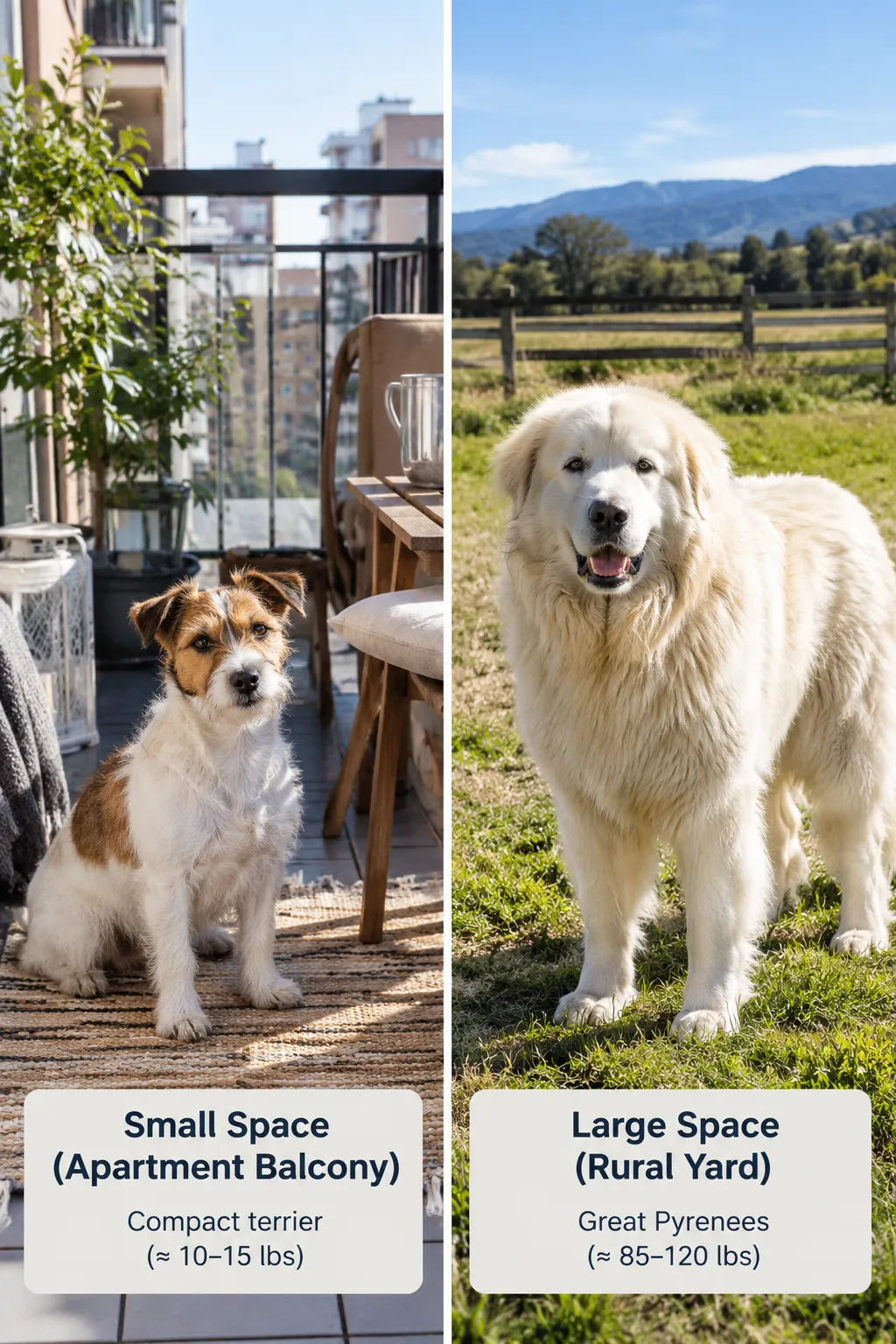
For apartment living, smaller and medium guard breeds like the Boxer, Bullmastiff on the quieter end, or even a well-trained terrier mix work better than giant livestock guardian dogs. Space matters more than most people assume.
Large livestock guardian dog breeds such as the Anatolian Shepherd Dog or Great Pyrenees need acreage to patrol and tend to bark at anything moving past a window, which isn’t ideal for close neighbors. A German Shepherd or Boxer, by contrast, adapts reasonably well to apartment life with enough daily exercise.
Edge case: if your building has a strict barking policy, skip breeds known for vocal alerting (hounds, some herding dogs) and lean toward calmer, lower-bark guardians.
How much does it cost to train a guard dog
Basic obedience training for a guard dog typically runs several hundred to a few thousand dollars, while specialized protection training through a program like canine protection international can cost significantly more depending on the dog’s age and the trainer’s credentials.
Costs vary by region, trainer experience, and whether you want personal protection, home guarding, or both. Group obedience classes are the cheapest route. One-on-one protection training with a certified trainer costs more but produces a far more reliable, controlled dog.
- Group obedience classes: budget-friendly, good foundation
- Private obedience training: moderate cost, faster results
- Full personal protection training: highest cost, best for serious security needs
Common mistake: skipping foundational obedience and jumping straight to “attack training.” A dog without solid basic commands is unpredictable, not protective.
Are guard dogs good with kids and families
Yes, many guard dog breeds are excellent with children when raised with proper socialization and supervision, though temperament varies a lot by breed and individual dog. The German Shepherd, Boxer, and Rottweiler are frequently cited as good family protectors (Dogs-Portal, 2026).
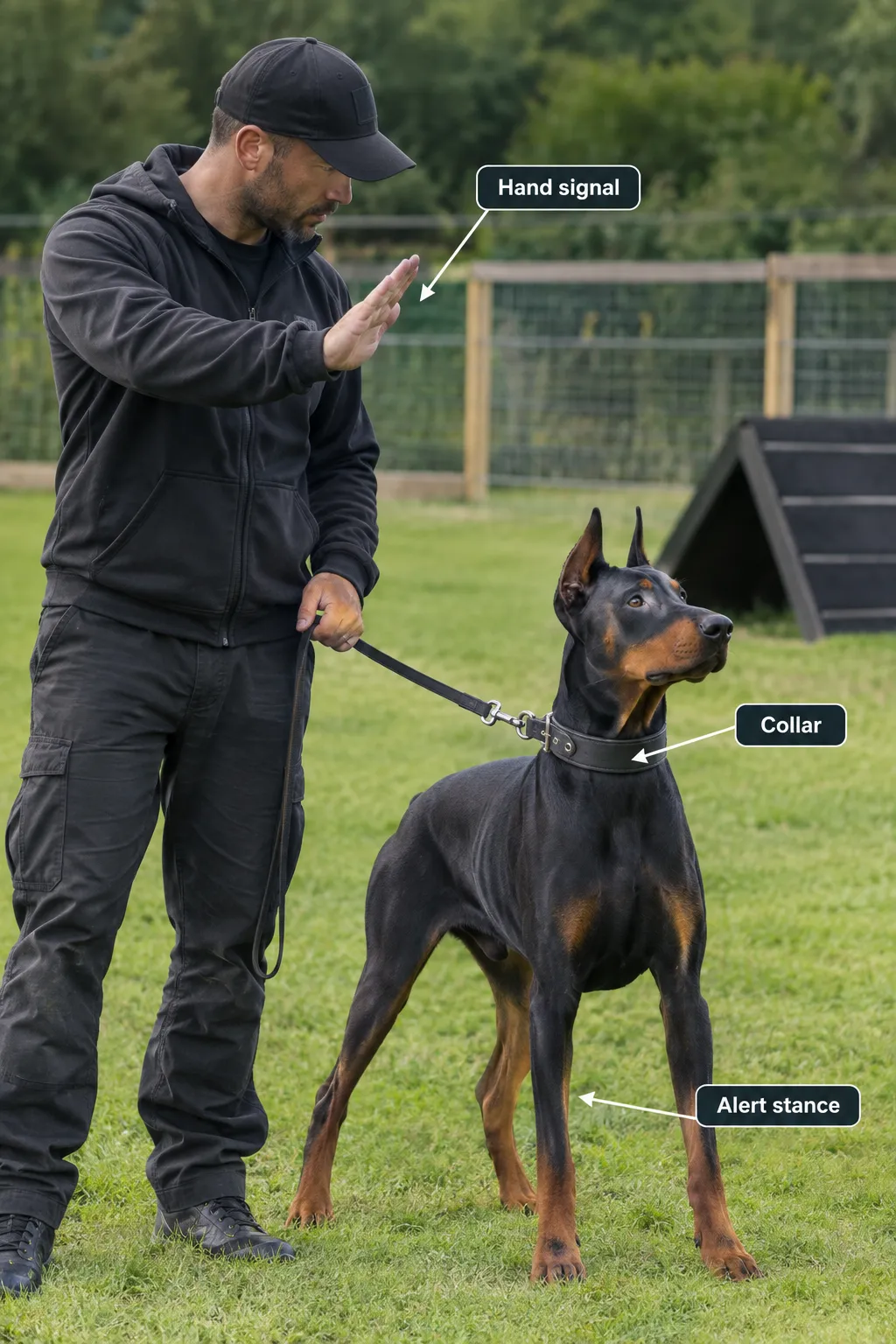
A well-balanced guard dog should be calm and affectionate at home, switching into protective mode only when it senses a real threat, not every time the doorbell rings. That balance comes from training, not instinct alone.
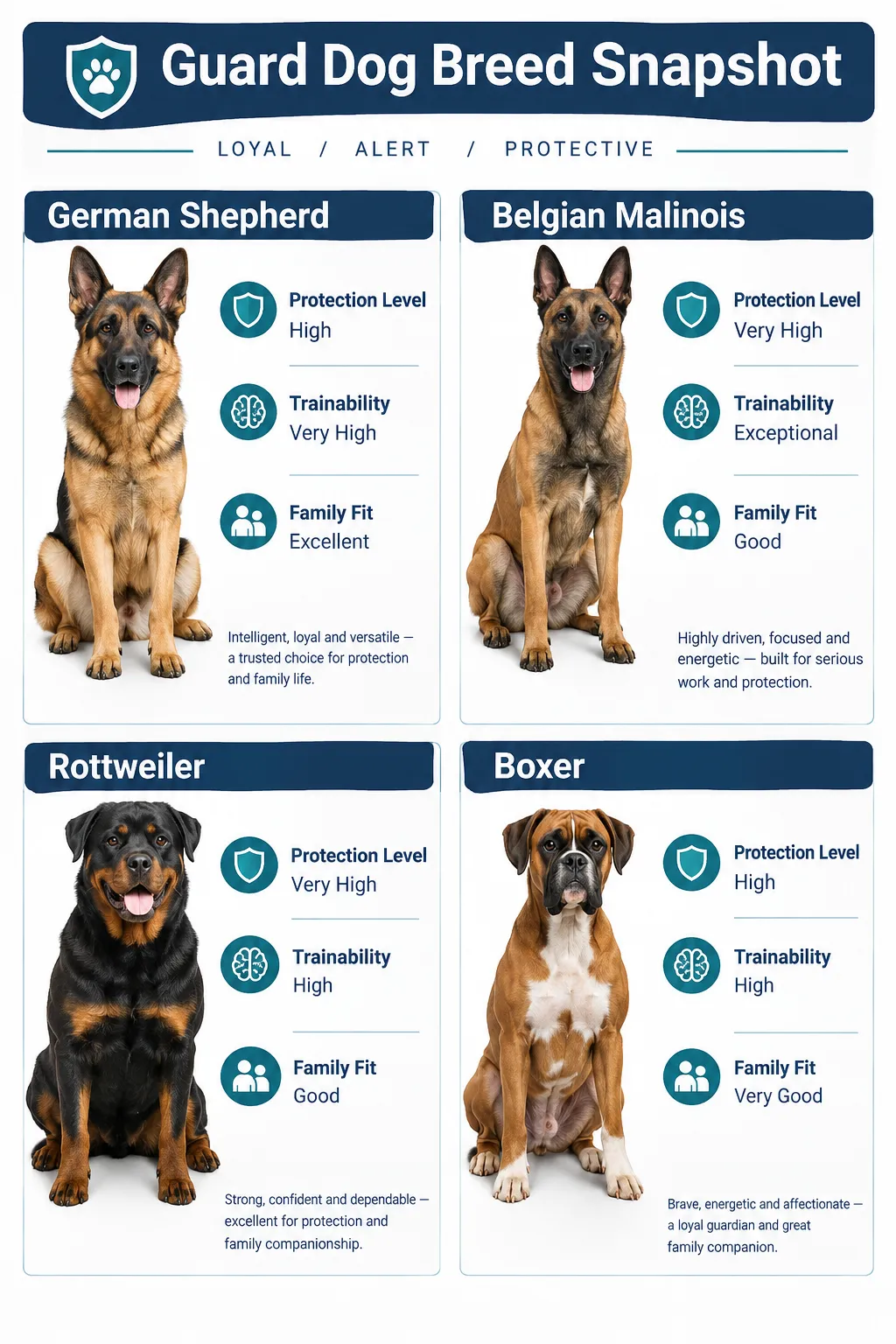
- Rate protection as “excellent” and trainability as “high”: German Shepherd, Doberman Pinscher
- Rate protection as “good” with easier handling: Boxer, Labrador Retriever
- Rate protection as “exceptional” but needing experienced handlers: Belgian Malinois
If you have young kids, I’d personally lean toward a Boxer or German Shepherd over a Cane Corso or Malinois. The drive level on those working dogs is a lot for a typical household to manage.
Which guard dog breeds are easiest to train
German Shepherds, Doberman Pinschers, and Belgian Malinois rank among the easiest guard breeds to train because of their high intelligence and eagerness to work with handlers (Dogs-Portal, 2026).
Trainability isn’t the same as “easy to own,” though. A Malinois learns fast but needs hours of daily mental and physical work. A Rottweiler trains at a more moderate pace but settles into family life more easily once trained.
For owners new to working breeds, the Boxer and Australian Shepherd offer high trainability without the intensity of a full working-line guard dog.
Can you train an adult dog to be a guard dog
Yes, adult dogs can absolutely be trained for guarding and protection work, though it generally takes longer and requires more patience than starting with a puppy. Age isn’t the deciding factor; temperament and prior socialization are.
A rescue German Shepherd or Rottweiler with a stable temperament can still learn solid obedience and alert behaviors well into adulthood. The key is working with a trainer who assesses the dog’s existing behavior first.
Quick example: I’ve seen three-year-old shelter Shepherds become reliable family guardians within four to six months of consistent training. It’s not instant, but it’s realistic.
Guard dog breeds that don’t shed much
Low-shedding guard dog options are limited, but breeds like the Giant Schnauzer and some Bouvier des Flandres lines shed far less than German Shepherds or Rottweilers. If allergies are a concern in your home, this narrows your choices considerably.
Most classic protection breeds, including the German Shepherd Dog and American hound lines, shed heavily year-round. If low maintenance grooming matters, the Giant Schnauzer offers serious protective instinct with a wiry, lower-shedding coat. Readers managing other household shedding issues might also enjoy our guide to large hypoallergenic dog breeds that don’t shed.
What size guard dog should I get for a small property
For a small property or yard, medium-sized guard breeds like the Boxer or Australian Shepherd strike a better balance than giant livestock guardian dogs that need open land to patrol effectively.
Smaller properties don’t need a 100-pound Anatolian Shepherd Dog. A Boxer or mixed-breed guard dog in the 50 to 70-pound range can still deter intruders and alert the household while being far easier to manage in a fenced suburban yard.
Are guard dogs aggressive all the time or just when threatened
No, a properly trained guard dog is not aggressive all the time. It should be calm, controlled, and friendly around its family, reserving protective or defensive behavior for genuine threats (World Animal Foundation, 2026).
Constant aggression is actually a training failure, not a sign of good guarding instinct. A dog that growls at every guest or mail carrier is poorly socialized, not “extra protective.” The goal of real protection training is control: the dog reads the situation and responds appropriately.
Guard dog vs home security system: which is better
Neither fully replaces the other; a guard dog offers physical deterrence and companionship, while a security system offers remote monitoring and evidence. Many security-conscious households use both together.
A guard dog can physically stop an intruder and provide daily companionship, something no camera does. But a security system records evidence, works while you’re on vacation without a pet sitter, and doesn’t need feeding or exercise. For maximum coverage, pair a trained guard dog with basic security hardware.
Guard dogs for first-time owners
First-time guard dog owners generally do best with Boxers, Australian Shepherds, or well-socialized German Shepherds rather than ultra-high-drive working breeds like the Belgian Malinois or Cane Corso (Dogster, 2026).
High-drive protection breeds demand daily structured work and experienced handling. Mismatches between inexperienced owners and intense working dogs are a major cause of behavior problems later in life (World Animal Foundation, 2026).
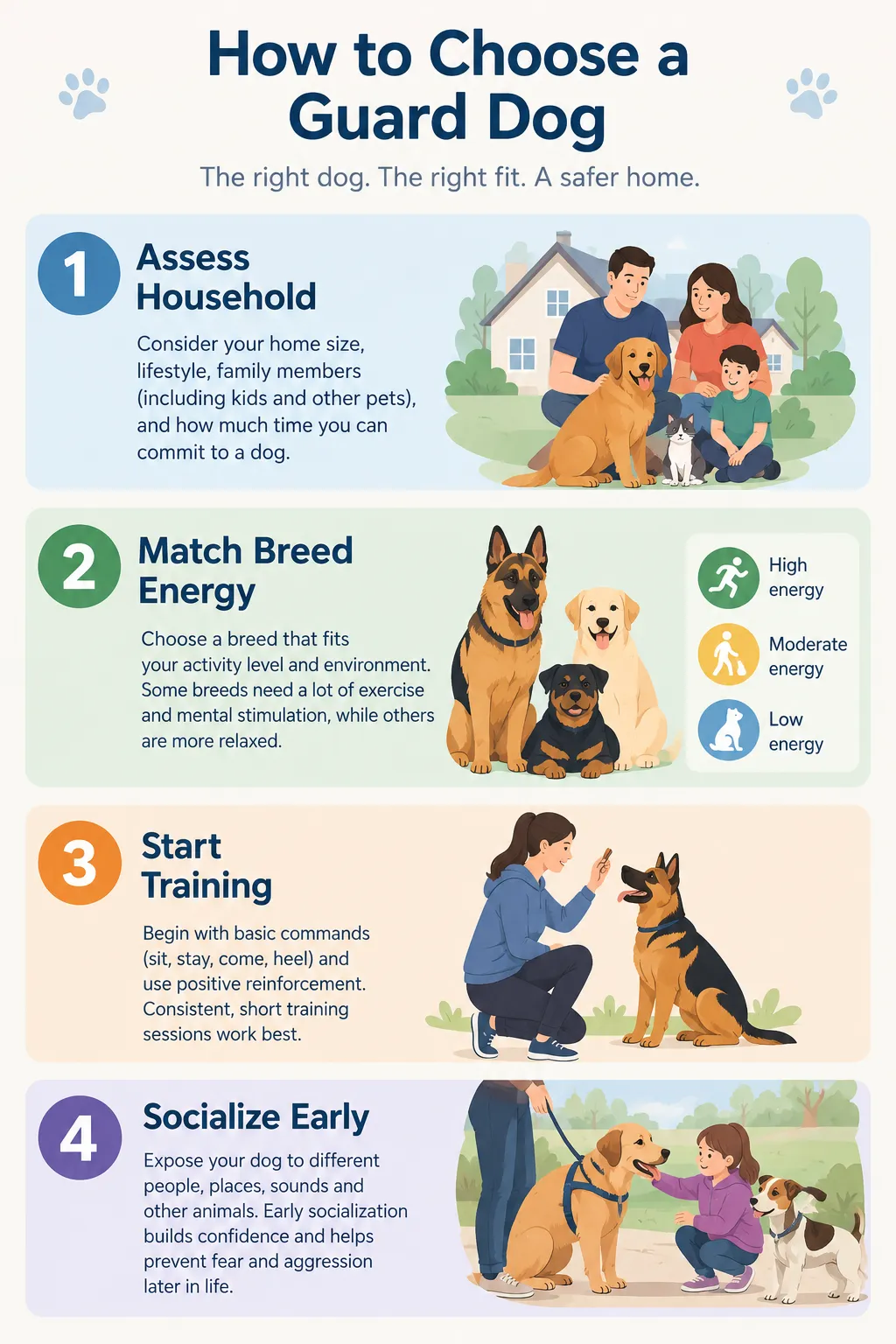
If this is your first guard dog, start with obedience basics early, similar to teaching any new dog a reliable place command for calm, controlled behavior at home.
How to know if a guard dog breed is right for me
A guard dog breed is right for you if your lifestyle, space, and experience level match that breed’s energy and training needs. This is the single biggest factor in long-term success, more than appearance or reputation.
Ask yourself:
- Do I have time for daily training and exercise?
- Do I have experience handling powerful working breeds?
- Do I have children or other pets at home?
- Do I live in a city apartment or on rural land?
- Do I need deterrence only, or full personal protection?
Decision rule: choose a German Shepherd or Boxer if you want balanced protection and family life. Choose a Belgian Malinois or Cane Corso only if you have real working-dog experience and daily structured time to invest.
Cheapest guard dog breed to own and maintain
Mixed-breed guard dogs and moderate-energy breeds like the Boxer tend to be cheaper to maintain than giant livestock guardian dogs or high-drive working breeds that need specialized training and large amounts of food.
Giant breeds eat more, need bigger spaces, and often require costlier vet care due to size-related joint issues. A mid-sized, moderately active guard dog keeps food, grooming, and training costs lower across its life.
What mistakes do people make when choosing a guard dog
The most common mistake is picking a breed based on intimidating looks rather than matching its actual energy level, trainability, and space needs to the household. This mismatch causes most behavior problems in guard dogs (World Animal Foundation, 2026).
Other frequent mistakes:
- Skipping socialization, leading to a dog that’s reactive instead of discerning
- Choosing a Malinois or Cane Corso without working-dog experience
- Assuming any large breed is automatically a good guard dog
- Neglecting ongoing training after the puppy stage
- Ignoring breed-specific legality or local guard dogs act regulations in some regions
Please remember: a dog’s protective instinct, whether it’s a German Shepherd Dog, a livestock guardian dog like the Anatolian Shepherd Dog, or a mixed-breed rescue, only becomes reliable protection through consistent training and clear household rules.
10 Protective Guard Dog Breeds Worth Knowing
Across multiple current breed guides, these ten consistently top the list for guard dogs and personal protection:
- German Shepherd – versatile, high trainability, excellent protection
- Belgian Malinois – exceptional protection, very high drive, best for experienced handlers
- Rottweiler – calm deterrent, moderate trainability, strong guard instinct
- Doberman Pinscher – fast, intelligent, personal-protection leaning
- Cane Corso – powerful ancient Roman guardian breed, needs experienced owners
- Bullmastiff – originally bred as “Gamekeeper’s Night Dogs” to quietly stop poachers
- Giant Schnauzer – low-shedding, strong working guardian
- Akita – loyal, territorial, strong household guardian
- Great Pyrenees – livestock guardian dog, calm with family, alert against predators
- Boxer – family-friendly watchdog and protector, easier for first-time owners
Related breeds worth researching further include the Anatolian Shepherd Dog, Australian Shepherd, Bergamasco Sheepdog, Beauceron, Boerboel, Bouvier des Flandres, Briard, and Appenzeller Sennenhund, each covered in broader protection breed guides. You can also see compare breed charts across major kennel resources for size, coat type, and barking level before deciding.
Frequently Asked Questions
Which is the most protective dog?
The Belgian Malinois is widely regarded as the most protective dog breed, thanks to its intense loyalty, athleticism, and intelligence. It’s commonly used in military and police work, but it requires experienced handling and isn’t ideal for casual, first-time pet ownership.
What are the 10 best guard dogs?
Top guard dogs generally include the German Shepherd, Belgian Malinois, Rottweiler, Doberman Pinscher, Cane Corso, Bullmastiff, Giant Schnauzer, Akita, Great Pyrenees, and Boxer. Each offers a different balance of protection strength, trainability, and family suitability depending on your household.
Can a guard dog be friendly?
Yes, a well-trained guard dog can be very friendly and affectionate with its family while still protecting the home. Proper socialization teaches the dog to distinguish between normal visitors and genuine threats, so friendliness and protection aren’t mutually exclusive.
What are the top 20 protective dogs?
Beyond the top 10, additional protective breeds include the Anatolian Shepherd Dog, Boerboel, Beauceron, Bouvier des Flandres, Briard, Australian Shepherd, Labrador Retriever, Rhodesian Ridgeback, Bergamasco Sheepdog, and Appenzeller Sennenhund, each offering unique guarding strengths across different household and property types.
Conclusion
Choosing a guard dog isn’t about picking the scariest-looking breed in the yard. It’s about honestly matching a breed’s protection style, energy, and trainability to your real life: your space, your family, and your experience level.
If you’re new to guard dogs, start with a German Shepherd, Boxer, or Australian Shepherd rather than a high-drive working breed. Invest early in obedience training, keep socialization consistent, and treat protection work as a long-term commitment rather than a one-time class.
Whatever breed you choose, from a classic German Shepherd to a quieter Giant Schnauzer, the real protection comes from training, structure, and a strong bond between dog and family, not size or appearance alone.