Last updated: September 12, 2026
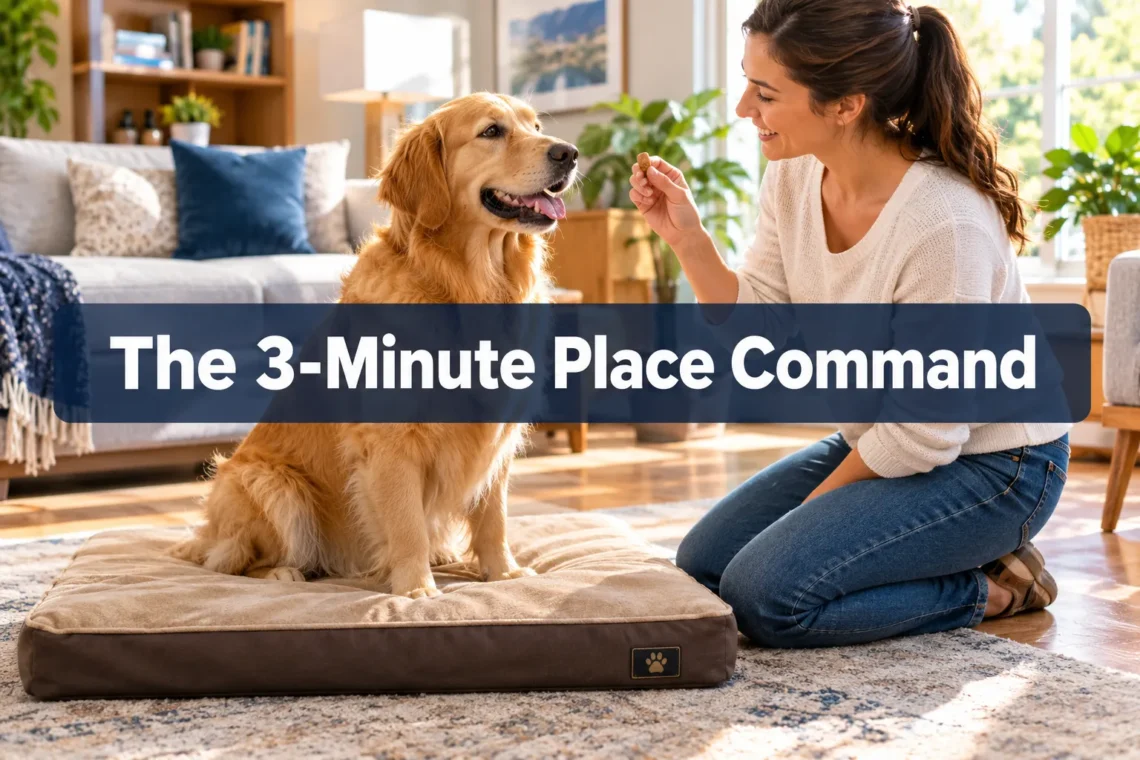
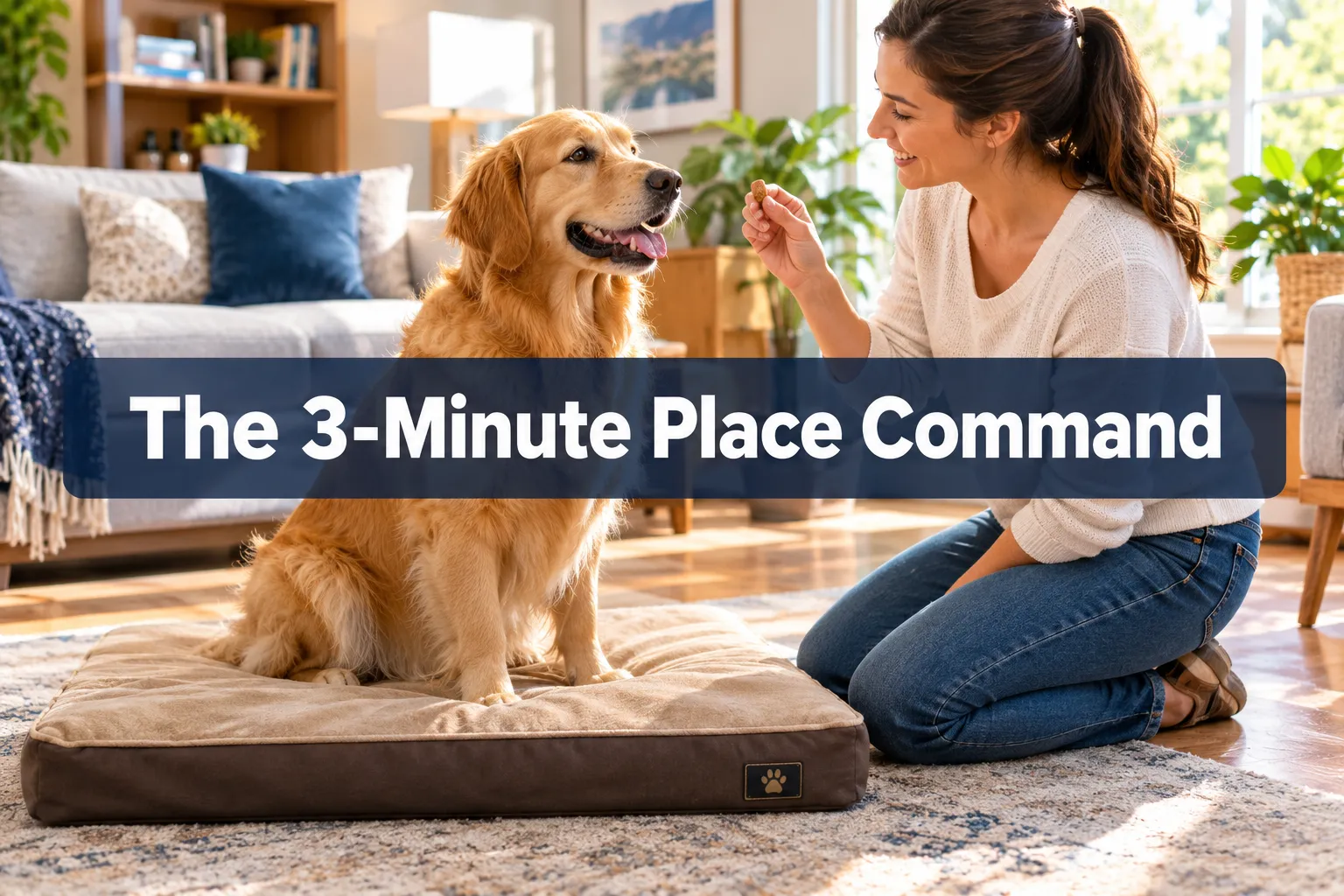
Quick Answer: The place command for dogs teaches your dog to go to a specific spot – like a mat or bed – and stay there until you release them. You start with short 3-minute sessions, luring your dog onto the mat, marking the behavior, and rewarding. Most dogs get the basics in just a few days, and the skill works anywhere you bring the mat.
Key Takeaways
- The place command for dogs means all four paws on a designated spot, with the dog staying until released
- Use a raised cot or firm mat so your dog has a clear physical boundary
- Start with 3-minute sessions and build duration, distance, and distraction gradually
- A formal release cue like “OK” or “free” is required – the dog doesn’t leave on their own
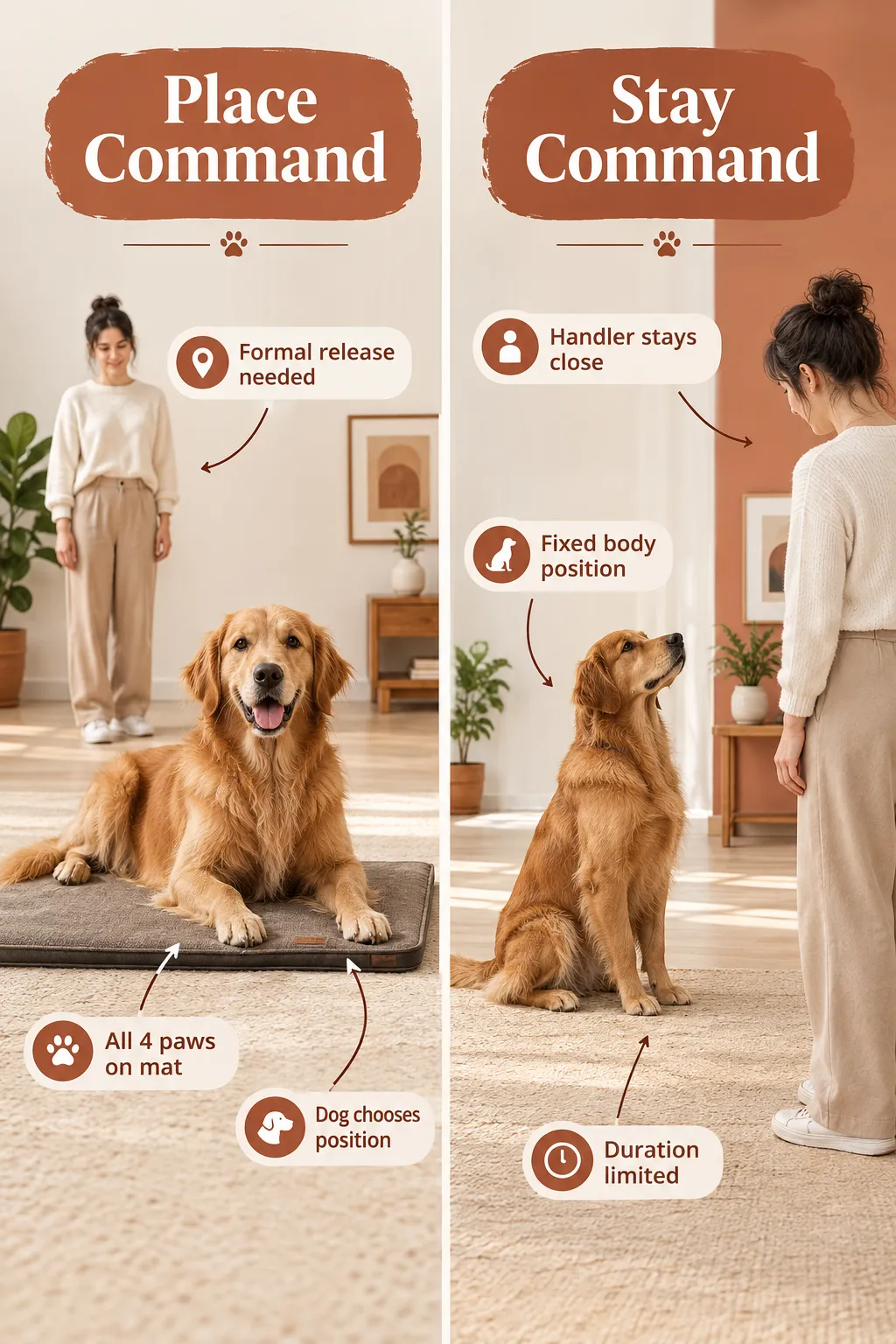
- The place command is different from “stay” – the dog can sit, lie down, or stand on the mat
- It works for anxious dogs, reactive dogs, puppies, and adult dogs alike
- Proofing the cue in different locations is what makes it truly portable
- This is one of the most practical, command valuable dog training tools you can teach
What Is the Place Command for Dogs and Why Is It Important?
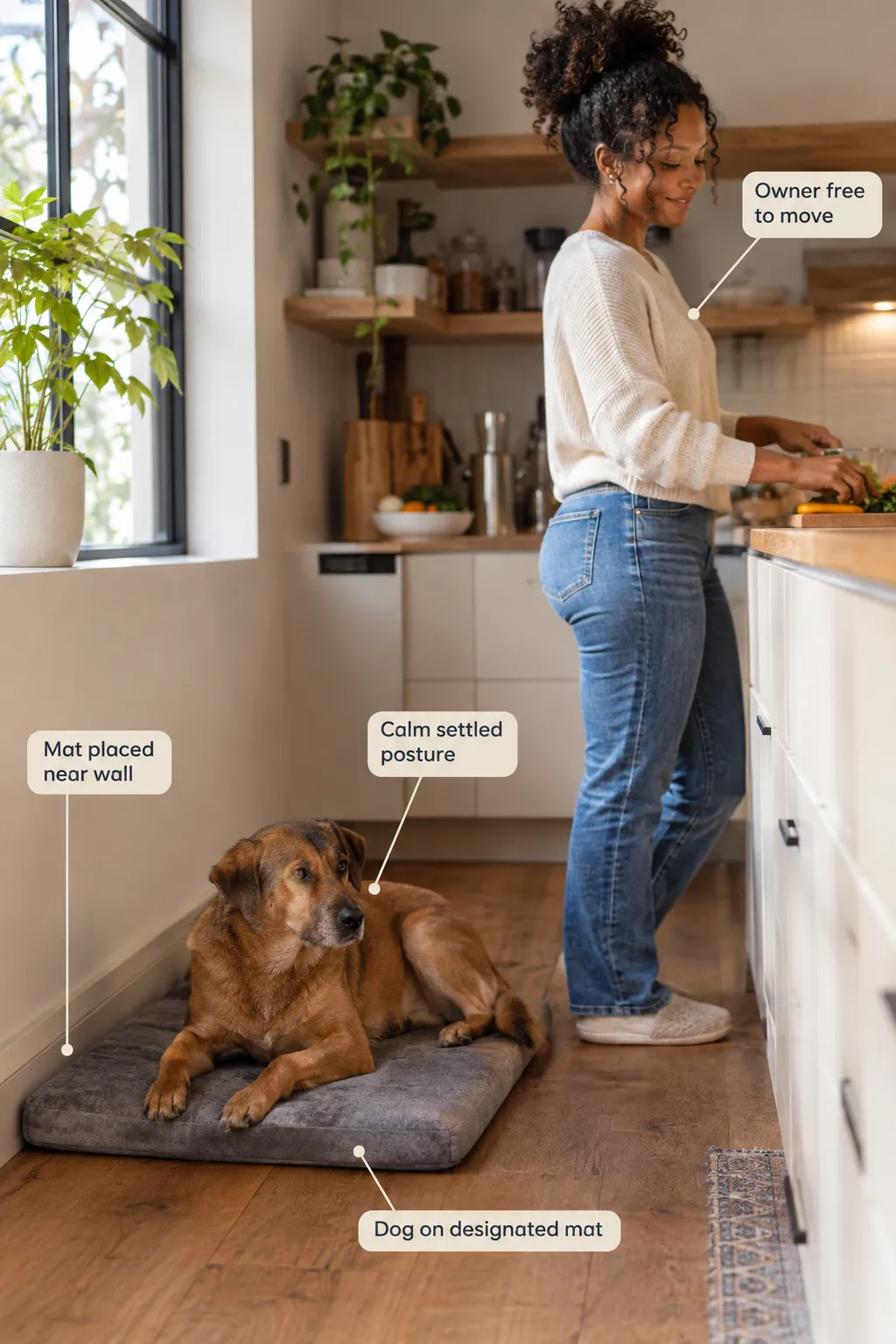
The place command for dogs is a cue that tells your dog to go to a specific spot and remain there until you give a release word. According to training experts at Long Haul Trekkers, this command valuable dog training skill gives your dog a clear job to do instead of getting into trouble. It’s one of the most useful behaviors you can teach because it works in real life – when guests arrive, when you’re cooking, or when your dog needs to settle down.
Place training is a simple and effective way to have a calm and compliant dog in almost any situation. Unlike a basic sit or down, the place command lets your dog choose their own comfortable position on the mat as long as all four paws stay on it.
The place command valuable aspect that sets it apart: it builds impulse control, reduces anxiety, and gives your dog a sense of security. Research from dog training professionals at Woofz notes that dogs who learn “go to your place” show measurably calmer behavior during high-stress household moments like visitors arriving or mealtimes.
What Place Training Is – and What It Is Not
Place training is not a punishment or a time-out. It’s a dog training tool that gives your dog a safe, predictable spot they can go to and feel settled. Think of it as your dog’s personal zone – a bed, mat, or raised cot that signals “this is where I chill.”
What place training IS:
- A positive, reward-based behavior
- A way for your dog to practice self-control
- A portable skill your dog can use anywhere
- A foundation for calm greetings and impulse control
What place training is NOT:
- A crate or confinement
- A punishment for bad behavior
- A replacement for exercise or mental stimulation
- A permanent “stay there forever” command
Training dog simply explained by coaches at Coach Your Dog: the place cue is about giving your dog a clear, rewarding option when they’d otherwise be underfoot or anxious.
How to Teach a Dog the Place Command Step by Step
You can teach dog place in just a few short sessions. The method follows a simple progression: lure, mark, reward, then fade the lure. Here’s the full protocol from How Do I Train My Dog:
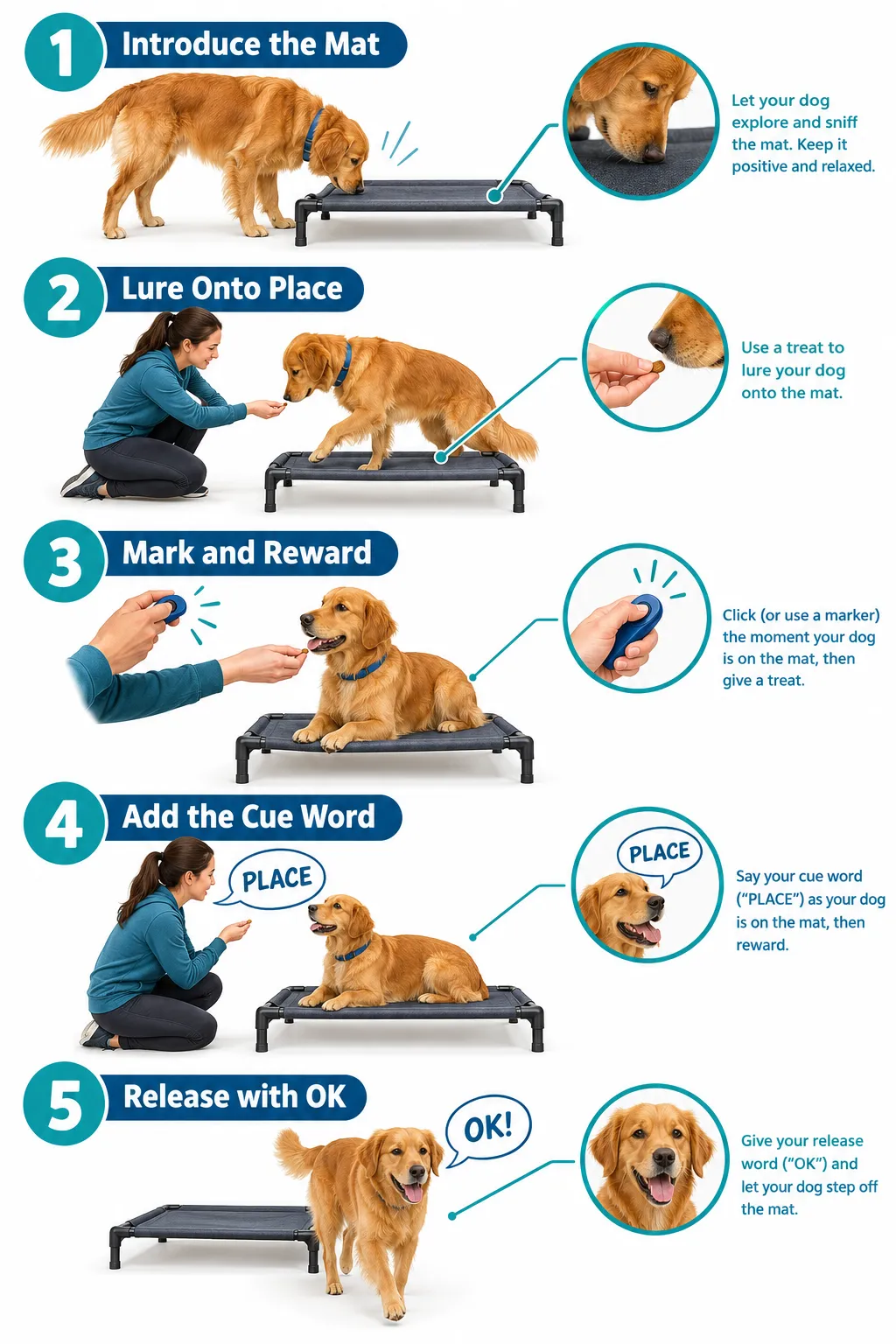
Step 1 – Introduce the mat or cot
Place the mat on the floor and let your dog sniff it. Don’t rsquo rush this. Let curiosity do the work.
Step 2 – Lure your dog onto the place
Use a treat to guide all four paws onto the mat. The moment all four paws are on, mark with “yes!” or a clicker.
Step 3 – Reward on the mat
Give the treat while your dog is still on the mat. Don rsquo let them jump off before getting the reward.
Step 4 – Add the cue
Once your dog is hopping onto the mat reliably, add the word “place” right before they step on. Now you have a place command your dog understands.
Step 5 – Ask for a down
After your dog is on the mat, ask for a sit lie down position to encourage settling. A place sit is fine early on, but a down helps build longer duration.
Step 6 – Add the release cue
Use “OK” or “free” to let your dog know they can get back off. This is critical – dogs understand that the behavior ends only when you say so.
Step 7 – Build duration slowly
Start with just 10-15 seconds. Eventually work up to several minutes. Use the 3-minute rule as your early goal – if your dog can hold place for 3 minutes, you have a real foundation to build on.
💡 Pro tip from robin macfarlane, a well-known dog trainer: “The place command is one of the first things I teach in every puppy preschool class because it sets the tone for all future training.”
Check out our guide on how to teach your dog to lay down to reinforce the down position that makes place training so effective.
Place Command vs. Stay Command – What’s the Difference?
The place command and the stay command are related but not the same thing. Place tells your dog WHERE to go and stay there; stay tells your dog to freeze in whatever position they’re currently in. With place, your dog can shift between a sit, lie down, or stand – as long as all four paws stay on the mat.
| Feature | Place Command | Stay Command |
|---|---|---|
| Dog’s position | Flexible (sit, down, stand) | Fixed |
| Location | Specific mat or spot | Wherever dog is |
| Release needed | Yes – formal cue | Yes |
| Duration building | Yes | Yes |
| Portable | Yes – mat travels with you | No |
Dog training experts at Your Dog Advisor note that place is actually easier for many dogs to hold for longer periods because they can shift and get comfortable, whereas stay demands a rigid position.
Best Mat or Bed for Teaching the Place Command to Dogs
The best mat for place training is a raised cot or a firm, flat mat with clear edges. The physical boundary matters because it helps dogs understand exactly where “place” begins and ends. A fluffy blanket or soft pillow doesn’t work as well because the edges are unclear.
Top options:
- Raised dog cots (like the K9 Ballistics or Kuranda) – clear edges, easy to clean, durable
- Firm rubber-backed mats – portable, easy to roll up and bring anywhere
- Orthopedic dog beds with defined sides – good for older dogs who need joint support
The mat should be big enough for your dog to lie down comfortably but not so large it loses its “designated spot” feel. For a gun dog or working breed, a raised cot is especially practical because it handles outdoor use too. Gun dog gear enthusiasts often use cots in the field for this exact reason.
For more on keeping your dog calm and settled, see our guide on the calm dog method.
Place Command Training for Anxious or Reactive Dogs
For anxious or reactive dogs, the place command is especially valuable because it gives them a predictable safe zone. Instead of reacting to a trigger, your dog learns to go back to their mat – a place where good things happen. According to Rescued Dogs 101, over 70% of reactive dog cases benefit from a solid place cue as part of a broader behavior management plan.
Start with the mat in a quiet, low-distraction area. Build a strong positive association before adding any stress. For dogs with separation anxiety, the place mat near you – not away from you – can actually reduce clingy behavior over time by teaching the dog that being on their mat is safe and rewarding.
If your dog shows signs of stress during training, check out 12 stressed dog signs most owners miss to make sure you’re reading their signals correctly.
How Long Does It Take to Train a Dog to Do the Place Command?
Most dogs get the basic place command within 3-7 days of consistent short sessions. Full proofing – where your dog holds place with distractions, at a distance, and in new locations – typically takes 3-6 weeks. Training guides from K9 Coach recommend sessions of just 3-5 minutes, repeated 2-3 times per day for fastest results.
A puppy may pick up the initial behavior in just 2-3 sessions. An adult dog who has never done structured training may take a bit longer, but the process is the same. The key is consistency, not length of sessions.
Proofing the Place Cue – How to Generalize to Different Locations
Proofing means teaching your dog that “place” means the same thing everywhere, not just in your living room. This is what makes the place cue truly portable and powerful.
Proofing steps:
- Add duration – Gradually increase how long your dog stays on the mat before you release them
- Add distance – Back away from the mat after your dog is on it, then return to reward
- Add distractions – Introduce sounds, movement, and people while your dog holds place
- Change locations – Bring the mat to different rooms, then outside, then new environments
Ontario Dog Trainer’s 2025 guide on teaching the place command recommends a “3 D’s” approach – duration, distance, and distraction – added one at a time, never all together.
Don’t rsquo rush proofing. If your dog breaks the place command, it means you moved too fast. Back up a step and rebuild.
Place Command for Puppies vs. Adult Dogs
Both puppies and adult dogs can learn the place command, but the approach differs slightly. A puppy has a shorter attention span, so sessions should be even shorter – 1-2 minutes max. Adult dogs can handle slightly longer sessions but may have ingrained habits that need work first.
For a puppy, start place training as early as 8 weeks. Early place training builds a foundation for all future obedience. A puppy who learns to go to their mat young will carry that skill into adulthood.
For adult dogs, the lure-mark-reward method works just as well. The main difference is that an adult dog may need more repetitions to break old patterns of jumping, pacing, or seeking attention.
See our 4-month-old dog training daily routine for a practical schedule that fits place training into your puppy’s day.
Is the Place Command Good for Jumping or Greeting Guests?
Yes – the place command is one of the best tools for managing door greetings. Instead of jumping on guests, your dog learns to go to their mat when the doorbell rings. This works because you’re giving the dog something to DO instead of just telling them to stop.
How to use place for greetings:
- Practice “place” before guests arrive so the dog is already settled
- Eventually, teach your dog to go to place automatically when the doorbell rings
- Ask guests to greet the dog only when they’re calm on the mat
- Use the release cue to let your dog say hello once they’re calm
Pup Command’s full guide on place training highlights this as one of the top real-life uses for the behavior. It’s also covered in our article on 7 game-changing tips to keep your dog calm around visitors.
Place Command for Multiple Dogs in the Same House
Teaching the place command to multiple dogs in the same house is very doable – you just need separate mats and a bit of patience. Start by training each dog individually so they each understand the cue on their own. Then, once both dogs understand, practice with both dogs present.
Tips for multi-dog households:
- Give each dog their own mat in a separate spot
- Use each dog’s name before the cue: “Rex, place” and “Bella, place”
- Reward each dog on their own mat to avoid competition
- Eventually, both dogs can hold place simultaneously – great for mealtimes and guest arrivals
Common Mistakes People Make When Teaching the Place Command
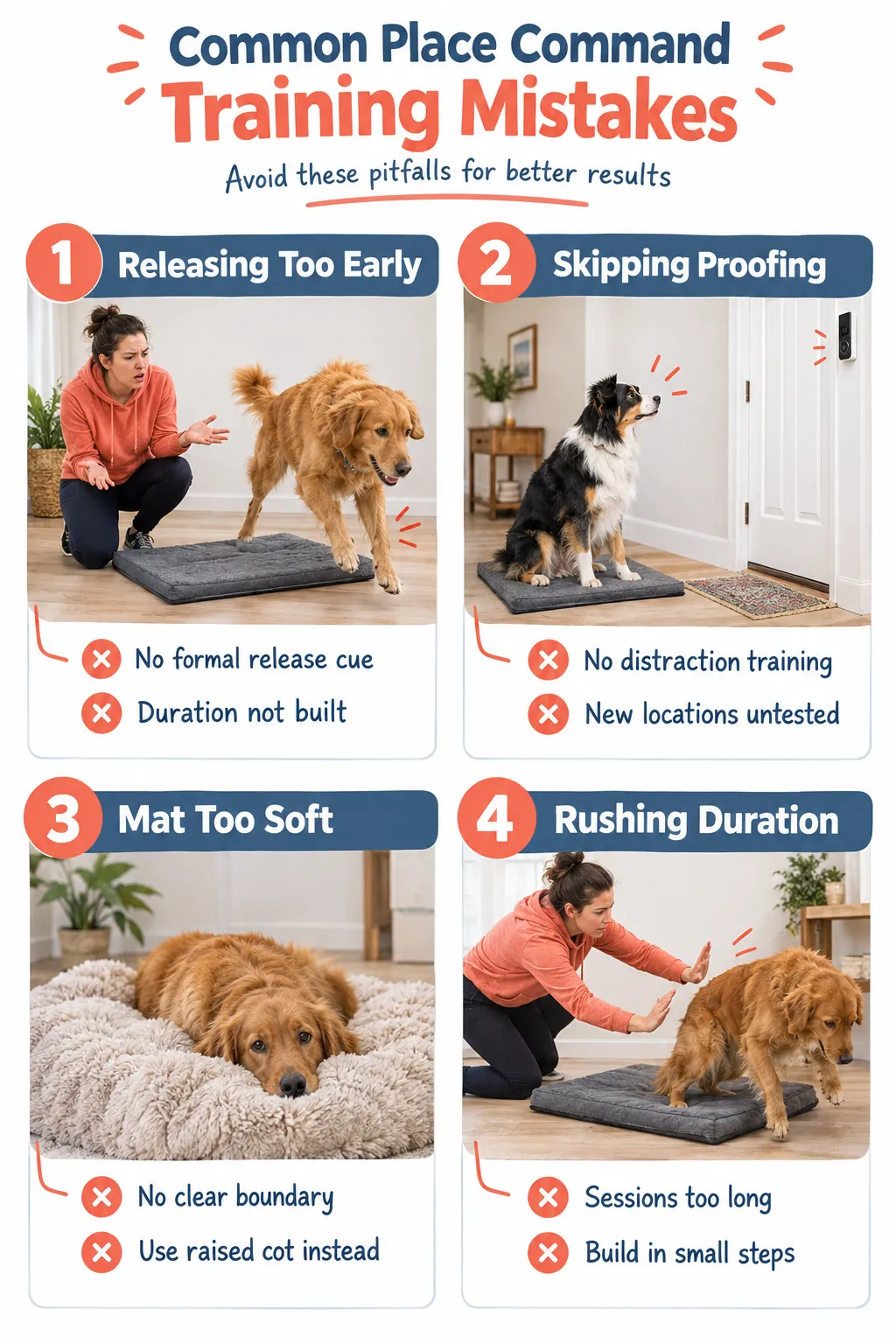
The most common mistake is releasing the dog too early – before they’ve really learned that “place” means stay until told otherwise. Other frequent errors include using a mat with unclear edges, adding distractions too soon, and skipping the formal release cue.
Mistakes to avoid:
- No release cue – Your dog needs to know when it’s over. Always use “OK” or “free”
- Mat too soft – Use a firm mat or raised cot with clear physical boundaries
- Sessions too long – Keep early sessions to 3 minutes or less
- Skipping proofing – If you only practice at home, your dog won’t generalize the behavior
- Punishing mistakes – If your dog leaves the mat, calmly guide them back. Don rsquo scold
Highland Canine’s training resource on the place command also warns against repeating the cue multiple times – say “place” once, then help your dog succeed.
Additional Dog Training Tips to Build on Place Training
Once your dog has a solid place command, you can use it as a building block for other skills. Pairing place with a quiet command, for example, helps dogs who bark when guests arrive. Combining place with a down stay builds the kind of deep settle that makes your dog a joy to have around.
Here are some next steps worth exploring:
- How to teach your dog the quiet command – pairs perfectly with place for door greetings
- Top 10 dog commands to transform your pup’s behavior fast – see where place fits in the bigger picture
- How to teach your dog boundaries without yelling – reinforce calm behavior throughout your home
Training videos can also be a great supplement. Watching a trainer like robin macfarlane work through place command robin demonstrations in real time helps you see the timing and technique up close. nbsp nbsp Many trainers now offer digital back issues and online courses where you can subscribe now already to get full access. If you’re already subscriber sign up for a training platform, start online account access to look for training videos on proofing and duration.
About Best Friends Animal Society and the Place Command
Best Friends Animal Society is working to end the killing of dogs and cats in U.S. shelters in part by getting more pets out of shelters and into loving homes. The society promotes positive training methods – including the place command – as a way to make dogs more adoptable and easier to live with. The page friends animal society resources include training guides, digital back issues of their magazine, and community programs.
The friends animal society approach aligns with what trainers like jenny nguyen-wheatley and robin macfarlane advocate: training that builds trust, not fear. The society’s gun dog gear and animal welfare resources are available through their digital magazine and community programs. All Rights Reserved content from Best Friends is available through their website and partner programs.
When dogs understand basic commands like place, they’re far more likely to stay in their homes – which is why the society places such emphasis on training as part of adoption support. Dogs understand their world better when they have clear, consistent guidance.
FAQ
What is the 3-3-3 rule for dogs?
The 3-3-3 rule describes the adjustment period for a newly adopted dog: 3 days to decompress, 3 weeks to learn the household routine, and 3 months to feel fully at home. It’s a guideline used by shelters and rescues to help new owners set realistic expectations. During this period, starting place training early can help a new dog feel settled and secure faster.
What are the 10 basic dog commands?
The 10 basic dog commands most trainers recommend are: sit, stay, down, come, heel, leave it, drop it, place, off, and no. These form the foundation of a well-mannered dog. The place command is increasingly included in this list because of its real-life value for managing behavior at home and in public settings.
What is the hardest command to teach your dog?
The hardest command to teach most dogs is a reliable recall – the “come” command – especially under high distraction. It requires the most proofing and the strongest reward history to work consistently. The place command, by contrast, is considered one of the easier advanced behaviors to teach because the mat gives the dog a clear physical target to aim for.
What is the 7 7 7 rule for dogs?
The 7-7-7 rule is a socialization guideline for puppies: by 7 weeks, expose them to 7 different surfaces; by 7 months, expose them to 7 different environments. Some trainers extend this to include 7 different types of people and 7 different sounds. It’s designed to build a confident, well-adjusted dog. Starting place training during this socialization window helps puppies learn to settle in new environments early.
Conclusion
The place command for dogs is one of the most practical skills you can teach – and it doesn’t take months to see results. Start with a firm mat, short 3-minute sessions, and a clear release cue. Build duration before distance, and distance before distraction. Eventually, your dog will go to their place anywhere you bring that mat.
Your next steps:
- Get a firm mat or raised cot and put it in a low-distraction spot
- Run two 3-minute training sessions today using the lure-mark-reward method
- Add the verbal cue “place” once your dog is hopping on reliably
- Practice daily and introduce distractions only after your dog is solid at home
- Bring the mat to a new room or location once your dog holds place for 3 minutes consistently
The place command is a gift to both you and your dog. Your dog gets a clear, rewarding job to do. You get a calm, settled animal who knows exactly what’s expected. That’s a win for everyone in the house.