Last updated: October 29, 2026
Quick Answer
Dog training without treats works by replacing food with rewards your dog already loves: praise, play, toys, sniff time, or access to something fun like the backyard. I built a reliable recall this way by turning “come” into the gateway to good things in everyday life, not just a trick for cookies. It takes patience, consistency, and knowing exactly what motivates your individual dog.
Key Takeaways
- Treat-less training relies on real-life rewards: praise, play, toys, affection, and access to favorite activities.
- The Premack Principle says a low-probability behavior (like recall) can be reinforced by a high-probability one (like off-leash running).
- Recall training without treats usually starts indoors with zero distractions, then builds distance and distraction gradually.
- Dogs that aren’t food motivated often respond well to toys, tug, or sniffing as alternative rewards.
- Short sessions of 10 to 30 minutes a day, done consistently, beat long, irregular sessions.
- Punishment-based recall methods can damage trust and reduce a dog’s willingness to come back.
- Rescue dogs and older dogs may need extra patience and trust-building before any reward system works.
- There is no single “hardest” command, but loose-leash walking and reliable recall off-leash are frequently reported as the toughest.
How does dog training without treats actually work
Dog training without treats works the same way treat-based training does: you reward the behavior you want so the dog repeats it. The difference is the reward isn’t food, it’s whatever the dog finds genuinely reinforcing, whether that’s praise, a toy, or a chance to run free.
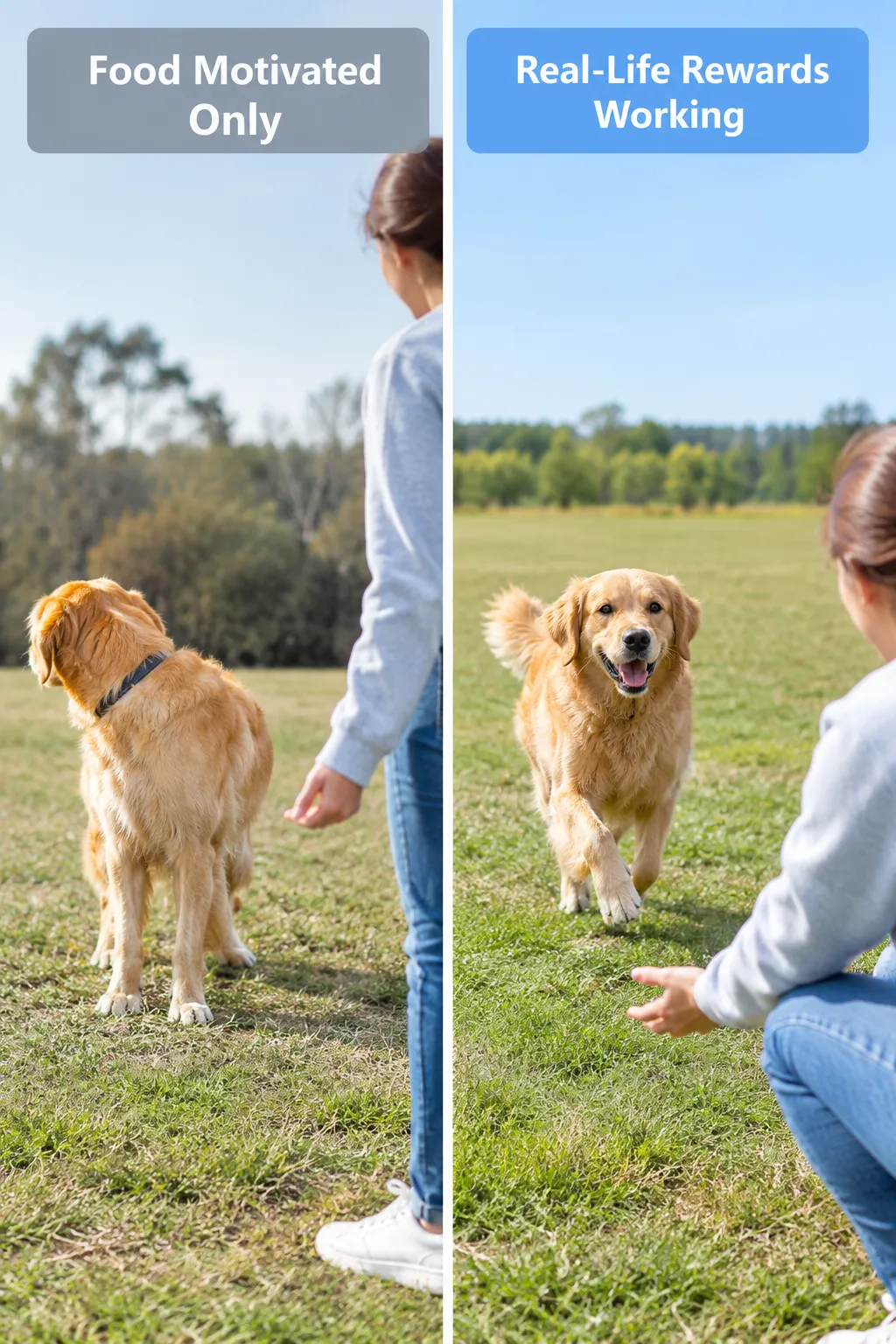
Recent coverage of this training style points out something simple but important: the dog decides what counts as a reward, not the trainer. Some dogs light up for verbal praise or petting more than any treat, while others only care about tennis balls or a good game of tug.
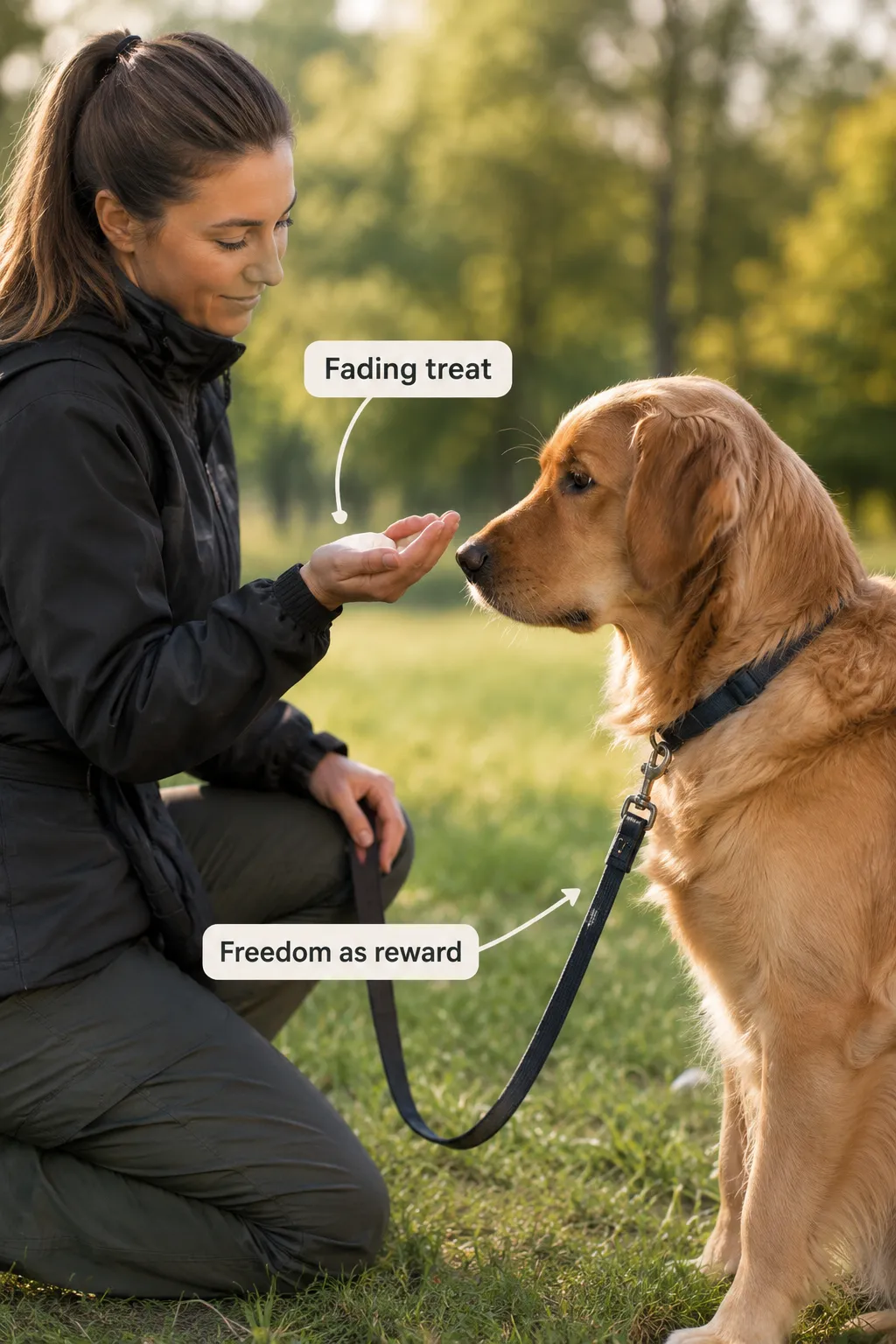
This is where the idea of “real-life rewards” comes in. Instead of pulling out a treat pouch, you use the Premack Principle: ask for a behavior the dog doesn’t love as much (sit, wait, come), then immediately let them do something they love more, like greeting a friend at the door or sniffing the grass. Over time, the dog learns that listening unlocks fun, not food.
Decision rule: if your dog already loves a specific activity, like fetch, use that activity as the “cash” that pays for good behaviour, rather than inventing new motivators.
Is training without treats as effective as using treats
Yes, training without treats can be just as effective as food-based training, as long as the reward is something the dog genuinely wants and it’s delivered right after the behaviour. Effectiveness depends on the reward’s value to the dog, not whether it’s edible.
Most of the current guidance on this topic comes from trainer experience, vet opinion, and owner reports rather than controlled studies, so there isn’t hard data comparing success rates of treat versus non-treat methods side by side. What experts agree on is that timing and consistency matter more than the type of reward. Veterinary sources note that food doesn’t need to show up every single time as long as good behaviour gets acknowledged immediately, consistently, with something positive.
A common mistake here is assuming non-food training is “softer” or less reliable. In my experience, a dog that’s wild about a squeaky ball will work just as hard, sometimes harder, for that ball than for a piece of chicken.
What rewards can I use instead of treats for dogs
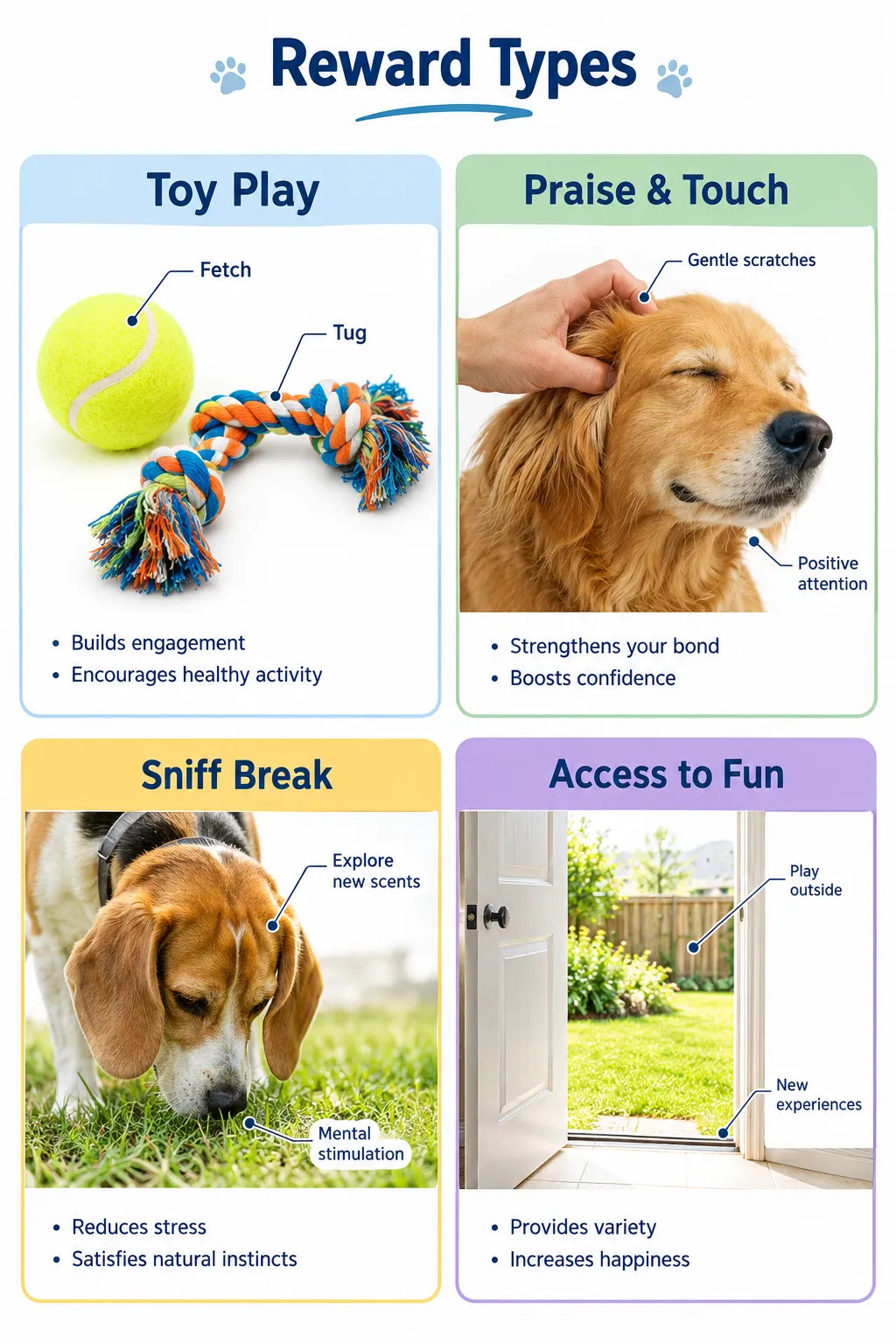
Good non-treat rewards include praise, physical affection, toys, play, sniffing time, and access to favorite activities like car rides or off-leash runs. The best reward is whatever your specific dog finds exciting, which varies a lot from one dog to another.
Here’s a practical list drawn from current training advice:
- Verbal praise – an upbeat “yes!” or “good dog!” the second the behaviour happens
- Physical affection – petting, scratches, or a quick cuddle
- Toys and play – tug, fetch, a favorite squeaky toy reserved only for training
- Sniff breaks – letting a scent-driven dog explore a patch of grass
- Access to fun – opening the door to the yard, starting a walk, or greeting another dog
- Life rewards – mealtime, car rides, or couch time earned by listening first
Dogster’s guide on non-food-motivated dogs suggests matching the reward type to your dog’s natural preferences: tug for play-driven dogs, massage for touch-motivated dogs, quiet affection for more sensitive ones.
If you’re still experimenting with homemade rewards and want a treat on standby for tricky moments, recipes like no-bake treats with simple ingredients can work as an occasional “jackpot,” even inside a mostly treat-free training plan.
How do I transition my dog from treats to other rewards
Transition gradually by moving from rewarding every single repetition to rewarding occasionally, while slowly increasing praise, play, or affection in their place. Abruptly cutting out treats tends to weaken a behaviour rather than strengthen it.
Guidance on phasing out treats recommends an intermittent schedule: reward every time at first, then every other time, then randomly, while substituting a toy, cuddle, or happy “let’s go!” in the gaps. Canine Journal and other trainers suggest keeping a small amount of food as an occasional jackpot for especially tough distractions, rather than banning it completely.
Common mistake: stopping treats cold turkey right when a behaviour is still shaky. Wait until the dog performs reliably with treats before fading them out.
Can you teach reliable recall without treats
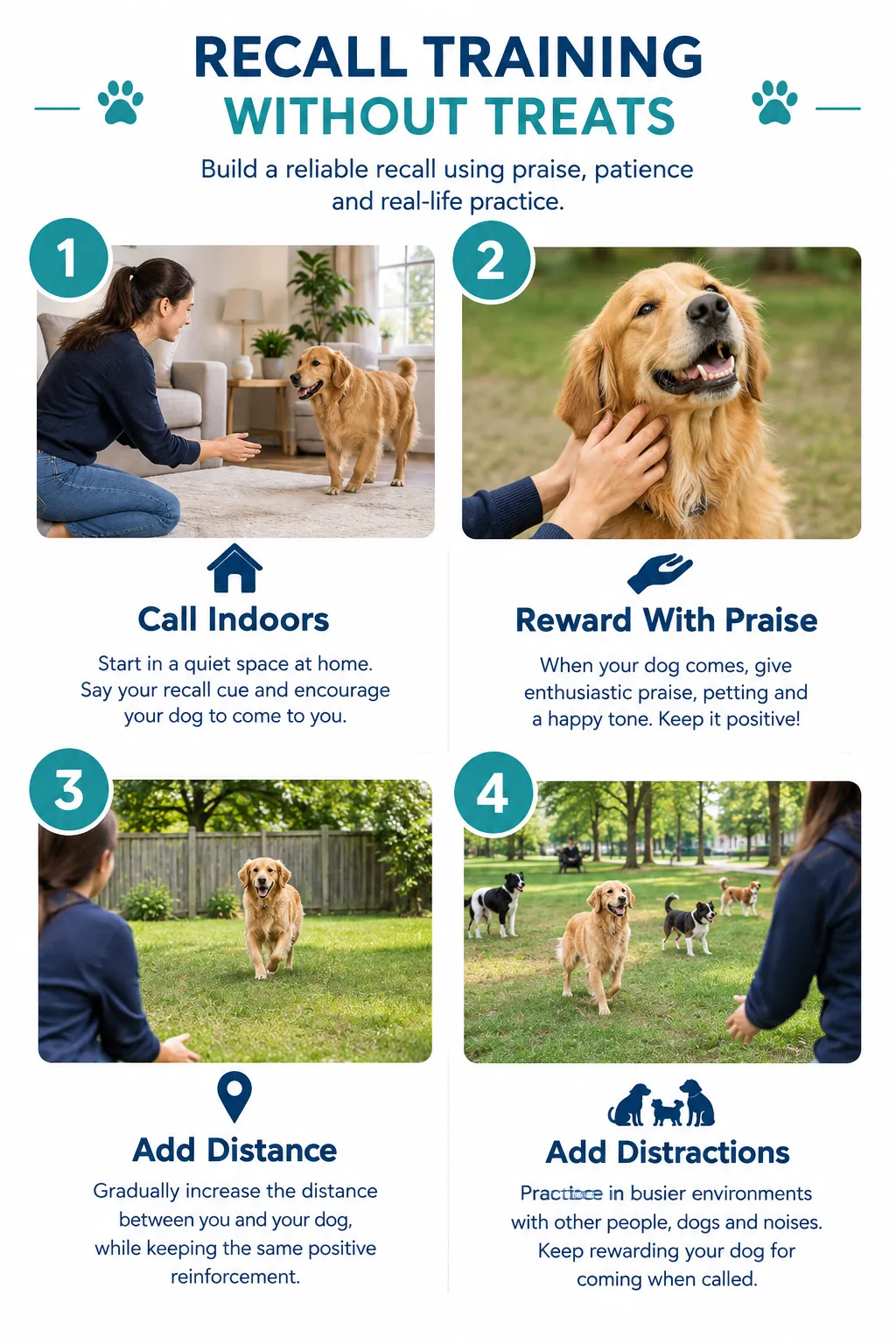
Yes, reliable recall can absolutely be built without treats by pairing the “come” cue with consistently good outcomes, like praise, play, or freedom to keep exploring. This is exactly how I trained my own dog’s recall.
I started indoors, in a boring hallway with zero distractions. I’d call once, and the moment my dog turned toward me, I’d get excited, crouch down, and offer enthusiastic praise and a quick scratch behind the ears. Dogster’s recall guide recommends this exact approach: start with minimal distractions, call once, then flood the dog with affection the instant they arrive.
From there, I slowly added distance, then distractions, then moved outside. The key rule I followed: recall always had to predict something good, whether that was a game of tug, a belly rub, or simply being allowed to keep sniffing. If I called my dog only to end playtime or clip nails, I made sure to balance that with far more recalls that led to fun. This matches advice from vets who warn that unbalanced negative recalls erode reliability over time.
If your dog struggles with the leash side of things too, pairing recall work with structured leash training for pullers tends to speed up overall off-leash reliability.
What if my dog isn’t motivated by toys or praise
Some dogs truly aren’t excited by toys or verbal praise, and that’s normal, not a training failure. In that case, look for smaller, quieter motivators like quiet affection, specific textures, or environmental rewards such as being let outside or sniffing a favorite spot.
Dogster’s non-food-motivated dog guide suggests breaking goals into tiny steps and keeping sessions brief when a dog seems unmotivated by anything obvious. Try a “special toy” that only appears during training sessions so it retains novelty. Some dogs respond best to a calm, slow approach rather than big, excited praise, especially nervous or sensitive dogs.
Edge case: older or anxious dogs sometimes find big praise overwhelming. A quiet “good dog” and a gentle touch can work better than enthusiastic cheering.
Is non-treat training good for dogs with food allergies
Yes, treat-free training is a solid option for dogs with food allergies or sensitivities, since it removes the risk of reactions from unfamiliar ingredients entirely. Using praise, toys, and play as rewards sidesteps the issue completely.
This matters for owners managing specific diets, since even “healthy” treats can trigger issues in sensitive dogs. For dogs that do tolerate a few treats, recipes using limited, known ingredients like pumpkin-based treats or simple three-ingredient options are gentler alternatives, but for dogs with real allergy concerns, full treat-free training avoids the guesswork altogether.
What are common mistakes when training dogs without treats
The biggest mistakes are inconsistent rewards, waiting too long to reward the behaviour, and assuming praise alone will work for every dog. Timing and relevance of the reward matter more than whether it’s food.
Other frequent errors:
- Rewarding too late – the dog won’t connect the praise or play to the right action
- Using low-value rewards – mild praise won’t beat a squirrel in the yard
- Punishing recall failures – this teaches the dog that coming back is risky, which positive training organizations consistently warn against
- Giving up too early – some dogs need weeks of consistent reps before recall sticks
How long does it take to train a dog without treats
Most dogs show noticeable progress with treat-free recall and obedience training within two to six weeks of consistent, short daily sessions, though full reliability around heavy distractions can take several months. Age, breed, and prior experience all affect the timeline.
Vet-approved guidance recommends sessions of about 10 to 30 minutes a day, done consistently, rather than occasional long sessions. A structured 14-day training plan can help build the daily habit, even if full reliability takes longer than two weeks.
Can you train puppies without any treats
Yes, puppies can be trained without treats, though many trainers still use small amounts of food early on simply because puppies are highly food-driven at that age. Praise, play, and gentle physical affection work well alongside or instead of treats.
Puppy owners often find the first few weeks the hardest simply because attention spans are short and distractions are everywhere. If recall is your main goal, teaching a puppy to come without yelling or chasing lays the foundation that carries into adult treat-free training later.
What are the best non-food rewards for dog training
The best non-food rewards are the ones your individual dog is naturally drawn to, commonly toys, play, physical affection, sniffing time, and access to enjoyable activities. There’s no universal “best” reward across all dogs.
A quick reference:
| Dog type | Best non-food reward |
|---|---|
| Play-driven dogs | Tug, fetch, favorite squeaky toy |
| Scent-driven dogs | Sniff breaks, “go sniff” release |
| Touch-motivated dogs | Petting, massage, cuddles |
| Social dogs | Greeting other dogs or people |
| Active dogs | Off-leash running, car rides |
When should I stop using treats in dog training
You don’t need to stop treats entirely, but most trainers suggest shifting from treats as the main reward to treats as an occasional bonus once a behaviour is solid and reliable. This usually happens after weeks of consistent practice.
Whole Dog Journal’s approach suggests treats are useful heavily during initial learning, then real-life rewards take over for maintenance. This blended strategy is common in 2026 training advice and isn’t seen as a rejection of treats, just a smarter long-term balance.
How do you train rescue or older dogs without treats
Rescue and older dogs often need trust-building before any reward, food or otherwise, becomes meaningful. Start slow, use calm praise and gentle affection, and let the dog set the pace before introducing structured recall or obedience work.
Many rescue dogs arrive with unknown histories, so patience matters more than technique at first. Short, low-pressure sessions focused on building a bond tend to work better than jumping straight into formal recall drills.
FAQ
What month is hardest with a puppy?
Many owners find the 2 to 4 month range hardest, when teething, fear periods, and high energy collide with limited impulse control. House training accidents and nipping tend to peak here, which makes consistent, patient routines especially important during this window.
What are the 3-3-3 rules for dogs?
The 3-3-3 rule is a general guideline for newly adopted dogs: 3 days to decompress, 3 weeks to start learning routine and trust, and 3 months to feel fully settled into the home. It’s a rough timeline, not a strict rule, and some dogs need longer.
How to teach a stubborn dog to walk on a leash?
Stay consistent, stop moving the moment the leash goes tight, and only continue walking once there’s slack again. Reward calm walking with praise or a favorite toy instead of yanking the leash, and keep sessions short so the dog doesn’t get frustrated or shut down.
What is the hardest command to teach a dog?
Reliable off-leash recall around heavy distractions is widely considered the hardest command, since it competes directly with instincts like chasing or exploring. Loose-leash walking is a close second for many owners, since it requires constant impulse control from the dog.
Conclusion
Dog training without treats isn’t a lesser version of “real” training, it’s just a different currency. Praise, play, sniff time, and real-life freedoms can build a recall just as reliable as any treat pouch, as long as the reward is genuinely something your dog wants and it shows up right after the behaviour.
Start small: pick one reward your dog already loves, practice indoors with zero distractions, and slowly build distance and distraction from there. Be patient with rescue dogs, stubborn breeds, or puppies still figuring out the world. And if you ever get stuck, revisiting basic obedience commands or clicker-based training can help bridge the gap while you find what truly motivates your dog.