Last updated: October 22, 2026
Quick Answer
The fastest way to help a new puppy settle in is to slow everything down. Keep the first 72 hours boring on purpose: one quiet arrival, one small puppy zone, a predictable potty schedule, and a crate near your bed. Skip the welcome party, limit visitors, and let the puppy approach new people, pets, and rooms on their own terms.
Key Takeaways
- Learning how to make your new puppy feel at home starts before pickup day: have the crate, food, and quiet zone ready first.
- Most puppies start to relax within 3 to 7 days, but full adjustment can take several weeks.
- Restrict your puppy to one small area at first instead of the whole house.
- Introduce other pets gradually, starting with scent and visual barriers, not face-to-face meetings.
- Skip a welcome party. Fewer visitors and calm voices help puppies decompress faster.
- Take your puppy out every 1 to 2 hours, plus after meals, naps, and play.
- Book a vet visit within the first few days to a week, even if nothing seems wrong.
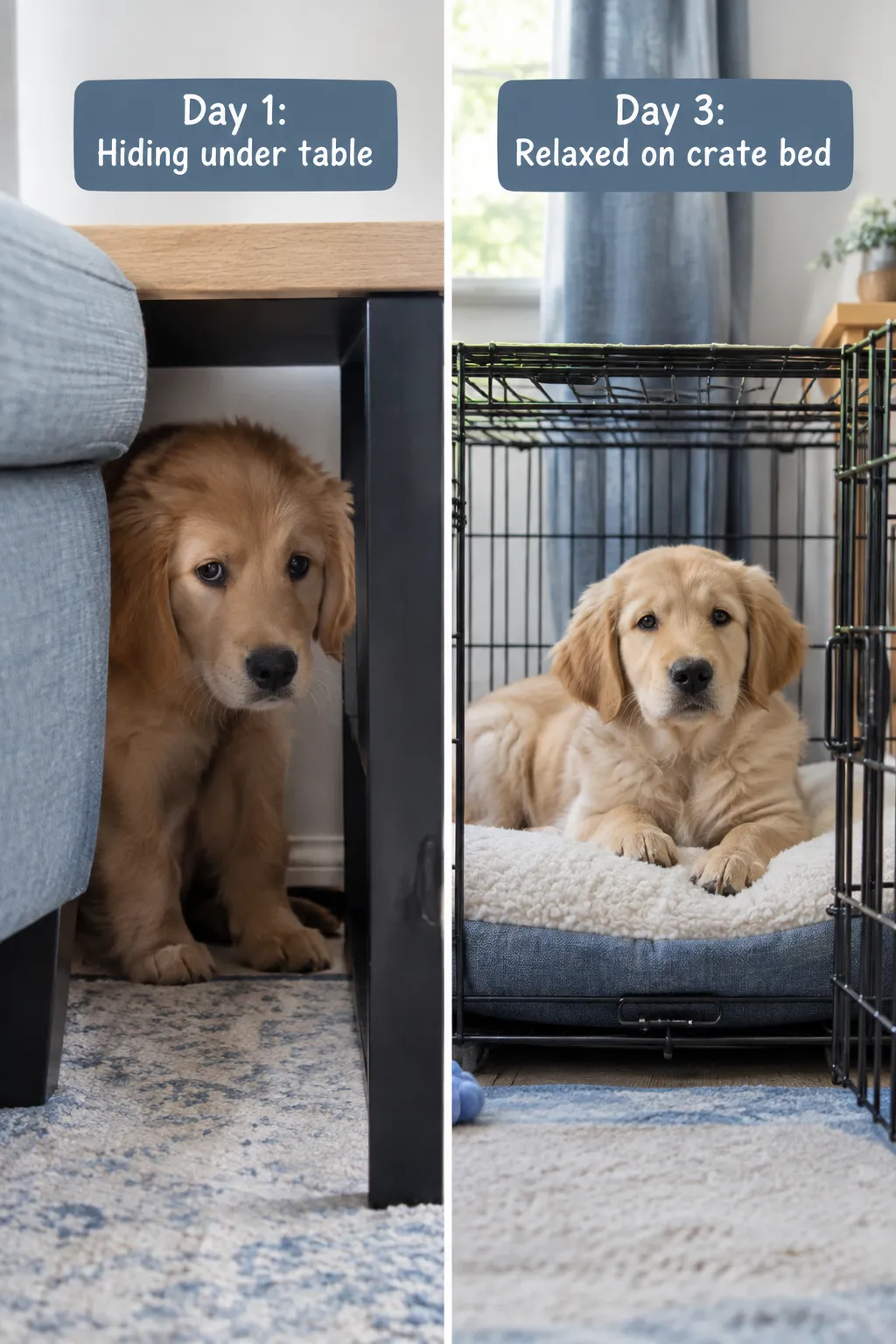
- A scared, hiding puppy for a day or two is normal. Hiding for a week straight is not.
A new puppy only gets one first impression of your home, and I’ve watched owners accidentally blow it by throwing a party the puppy never asked for. Dogs don’t process “surprise, everyone’s here to meet you” the way kids at a birthday do. They process it as noise, hands, and unfamiliar smells all at once.
Figuring out how to make your new puppy feel at home really comes down to one idea: less is more for the first three days. Quiet beats exciting. Predictable beats fun. I learned this the hard way with my second rescue puppy, who spent her first evening hiding behind the couch while my well-meaning neighbors tried to coax her out with treats. She needed silence, not snacks.
What supplies do I need to have ready before bringing my puppy home
Have the crate, food, leash, and a designated quiet space set up before your puppy ever walks through the door. Scrambling for supplies after arrival adds stress for both of you.
Before pickup day, gather:
- A properly sized crate or pen
- The same food brand your puppy was already eating
- A secure harness or collar with ID tag
- Baby gates to block off rooms
- Non-splintering chew toys
- Puppy pads or an outdoor potty spot mapped out
The 2026 PetSafe checklist stresses that a prepared environment, not a last-minute scramble, is what actually reduces anxiety and prevents injuries in the first few days, according to this new puppy checklist from PetSafe. You can also check our own new puppy checklist with must-have supplies and common mistakes for a deeper rundown, and our puppy proofing ideas for hidden household dangers before letting your pup explore.
Mistake to avoid: buying a brand new food flavor “to spoil them.” Stomach upset on day one makes everything harder.
How long does it actually take a puppy to adjust to a new home
Most puppies begin to relax within 3 to 7 days, but complete adjustment often takes several weeks, especially for sensitive or rehomed dogs. There’s no single magic hour when a puppy “clicks.”
Here’s a rough pattern I’ve seen repeat across different breeds:
| Timeframe | Typical behavior |
|---|---|
| Day 1 | Cautious, may hide or stay quiet |
| Day 2 to 3 | Starts exploring the puppy zone |
| Day 4 to 7 | Eating and sleeping on a rhythm |
| Week 2 to 4 | Comfortable with full house and routines |
This pacing lines up with guidance noted in the PetWorks new puppy adjustment overview, which also warns that sensitive puppies simply need more time, not more stimulation.
Decision rule: if your puppy isn’t eating or interacting at all by day 5, that’s worth a vet check, not just more patience.
Should I limit my puppy to one room or let them explore the whole house
Limit your puppy to one small, cozy area at first instead of the entire house. A contained space helps a young dog feel secure rather than lost in unfamiliar territory.
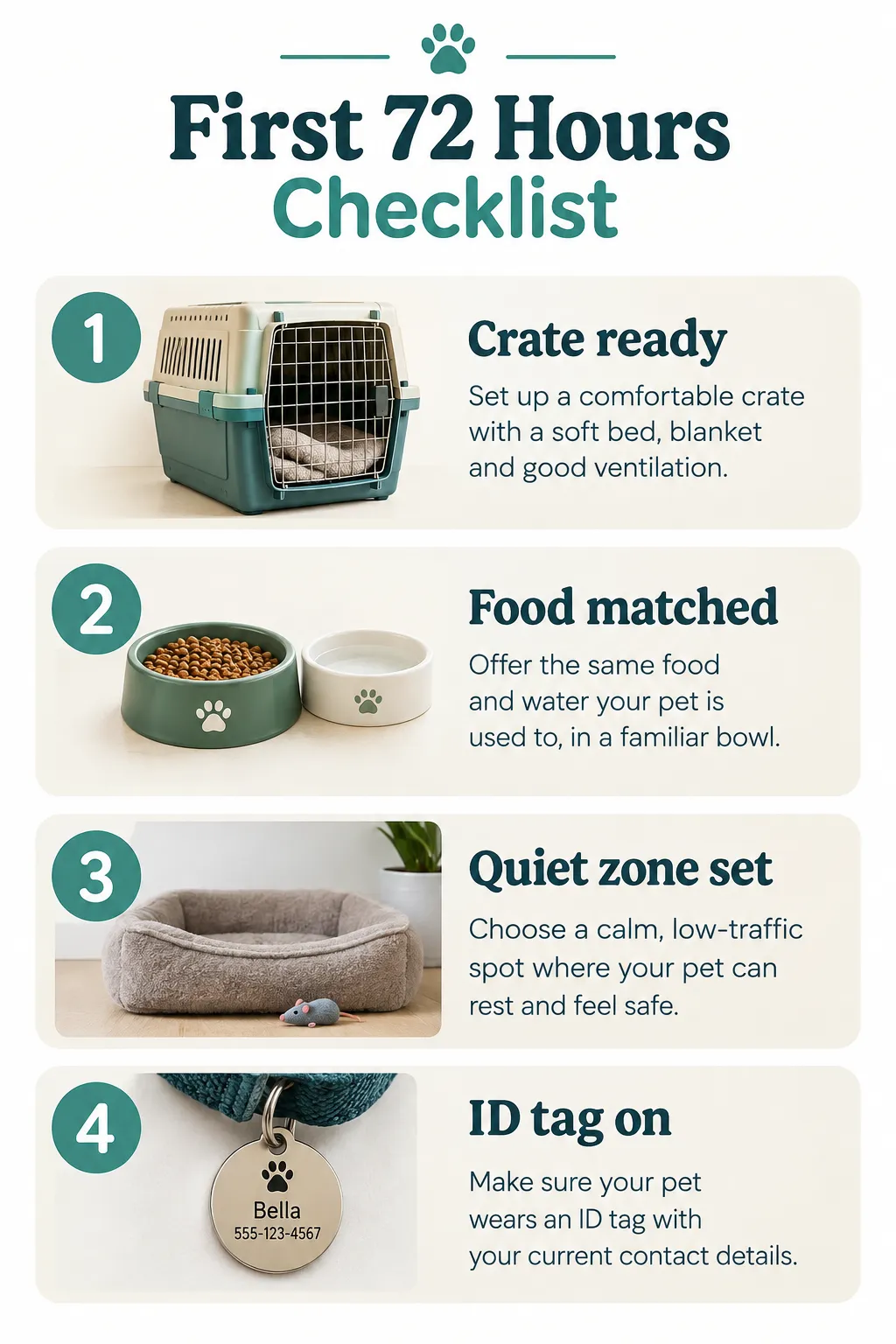
Set up this “puppy zone” with:
- Their crate or bed
- Water and food bowls
- A few safe chew toys
- Easy-clean flooring near the potty door
The 2025-2026 PetWorks guide on the first 72 hours recommends exactly this single small-area setup rather than free roam of the whole house. You can expand room access gradually over the following week, once your puppy is eating, sleeping, and eliminating normally. For a full day-by-day approach, our first week with new puppy survival guide walks through the expansion timeline.
What’s the best way to introduce my new puppy to other pets
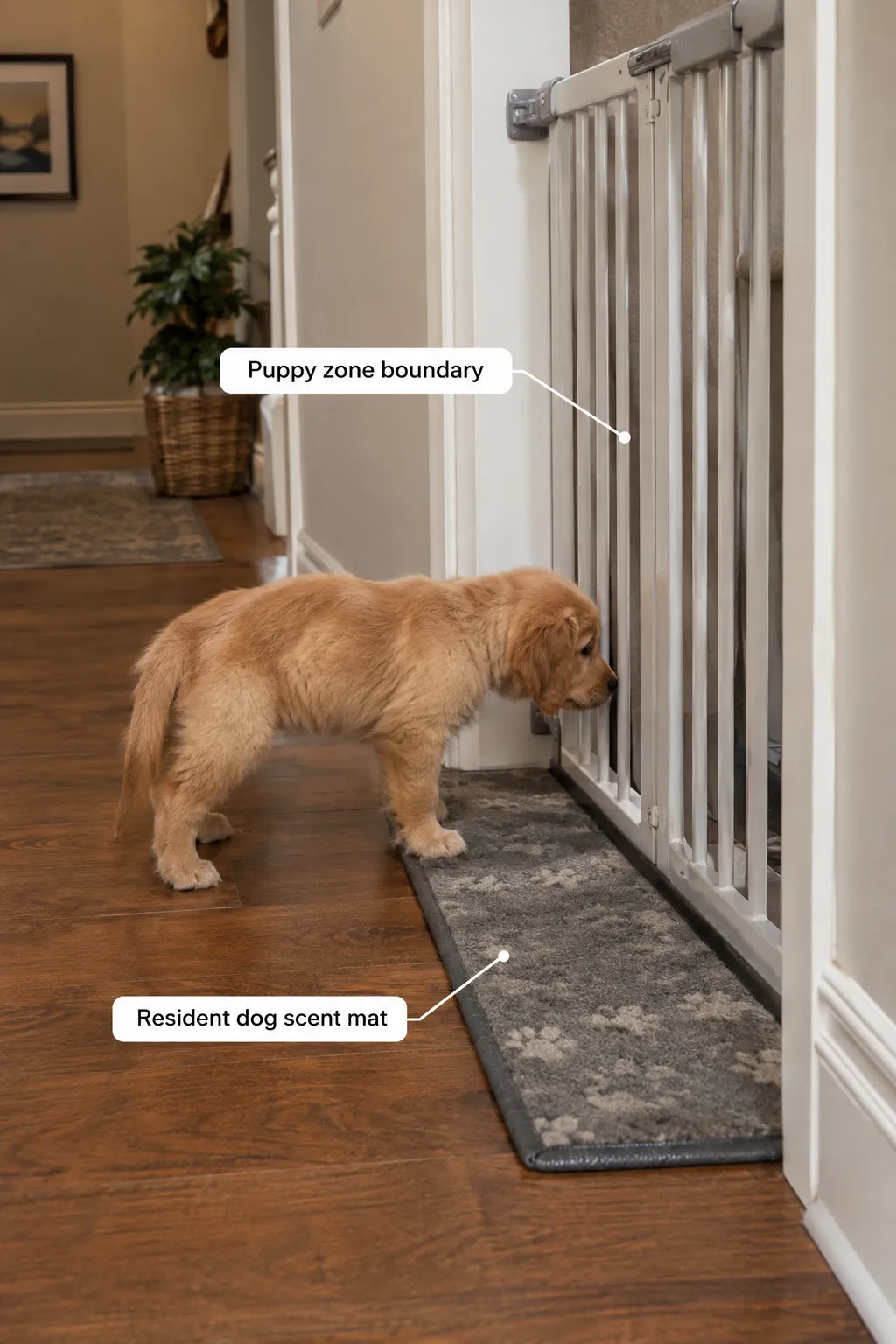
Introduce resident pets gradually, starting with scent and sound before any face-to-face meeting. Jumping straight to a nose-to-nose greeting is one of the most common mistakes new owners make.
A safer sequence looks like this:
- Let the resident dog sniff a blanket or towel the puppy has used
- Use a baby gate for the first visual contact
- Try a short, supervised, leashed meeting in a neutral space
- Remove high-value toys and bones before any direct interaction
This scent-first, barrier-based approach is recommended in current Adopt-a-Pet guidance on introducing a puppy to a dog, and similar neutral-territory walking advice appears in Purina’s puppy introduction guide. The Spruce Pets guide on introducing dogs and puppies also recommends initial meetings through a fence or barrier so both dogs can sniff without direct contact.
Edge case: if your resident dog is older or has never lived with a puppy, plan for several short sessions over days, not one long introduction.
Why is my new puppy not eating and how concerned should I be
A new puppy skipping one or two meals in the first 24 to 48 hours is usually just stress, not illness. Appetite often returns once the puppy feels safer.
Still, keep an eye on these signs:
- Not eating for more than 48 hours
- No interest in water either
- Vomiting, diarrhea, or lethargy alongside appetite loss
If any of those appear, call your vet rather than waiting it out. Otherwise, keep meals calm, use the same food they already know, and avoid hovering over the bowl.
Common mistake: switching foods on day one “to upgrade” their diet. Hold off on any food change for at least a week or two, and transition slowly when you do switch, mixing the new food in gradually rather than swapping it all at once.
Can I take my new puppy to the vet in the first week home
Yes, and you generally should. Most experts recommend a first vet visit within a few days to about a week of bringing a puppy home.
A veterinarian quoted in Chewy’s updated vet-visit guidance recommends scheduling the first appointment within two days, especially if there are signs like coughing, vomiting, diarrhea, or missing vaccine records, according to Chewy’s guide on what to expect at a puppy’s first vet visit. This timeline is echoed by Centers for Disease Control and Prevention recommendations cited in the PetSafe new puppy checklist, which stress reviewing vaccines and deworming status early.
Choose an urgent visit if: your puppy seems ill, lethargic, or you have no vaccination records at all.
Is it okay to change puppy food right away or should I wait
Wait. Keep your puppy on the same food they were already eating for at least the first week, even if you plan to switch brands eventually.
Sudden diet changes on top of a new environment often cause loose stools or vomiting, which only adds more stress to an already overwhelming few days. When you’re ready to transition, do it slowly over 7 to 10 days, mixing a little more new food in each day. If you want fresh meal ideas for later, check our fresh puppy food recipes once your pup is settled.
Common mistakes people make when bringing home a new puppy
The biggest mistake is treating day one like a celebration instead of a decompression period. Puppies don’t need a party, they need quiet and predictability.
Other frequent mistakes:
- Inviting the whole family and neighbors over on day one
- Letting kids chase or constantly pick up the puppy
- Free-roaming the entire house immediately
- Skipping the vet visit because “they seem fine”
- Never leaving the puppy alone, or leaving them alone all day
Current guidance from a 2026 protocol warns specifically against both extremes, noting that never leaving a dog alone, or leaving them alone the entire day, can both create behavioral problems later.
Should my puppy sleep in my bed the first night or in a crate
Crate, not your bed, is the better choice for the first night. Keep that crate right next to your bed so your puppy still feels close to you.
Updated crate guidance recommends keeping the crate beside your bed for the first week or two, with a familiar blanket or towel from the puppy’s previous home for comfort, according to Purina’s guidance on introducing a new puppy. This setup gives security without starting a bed-sharing habit that’s hard to undo later. If crate whining becomes an issue, our calm dog method for teaching settle has gentle techniques that work well for puppies too.
How often should a new puppy go outside in the first few days
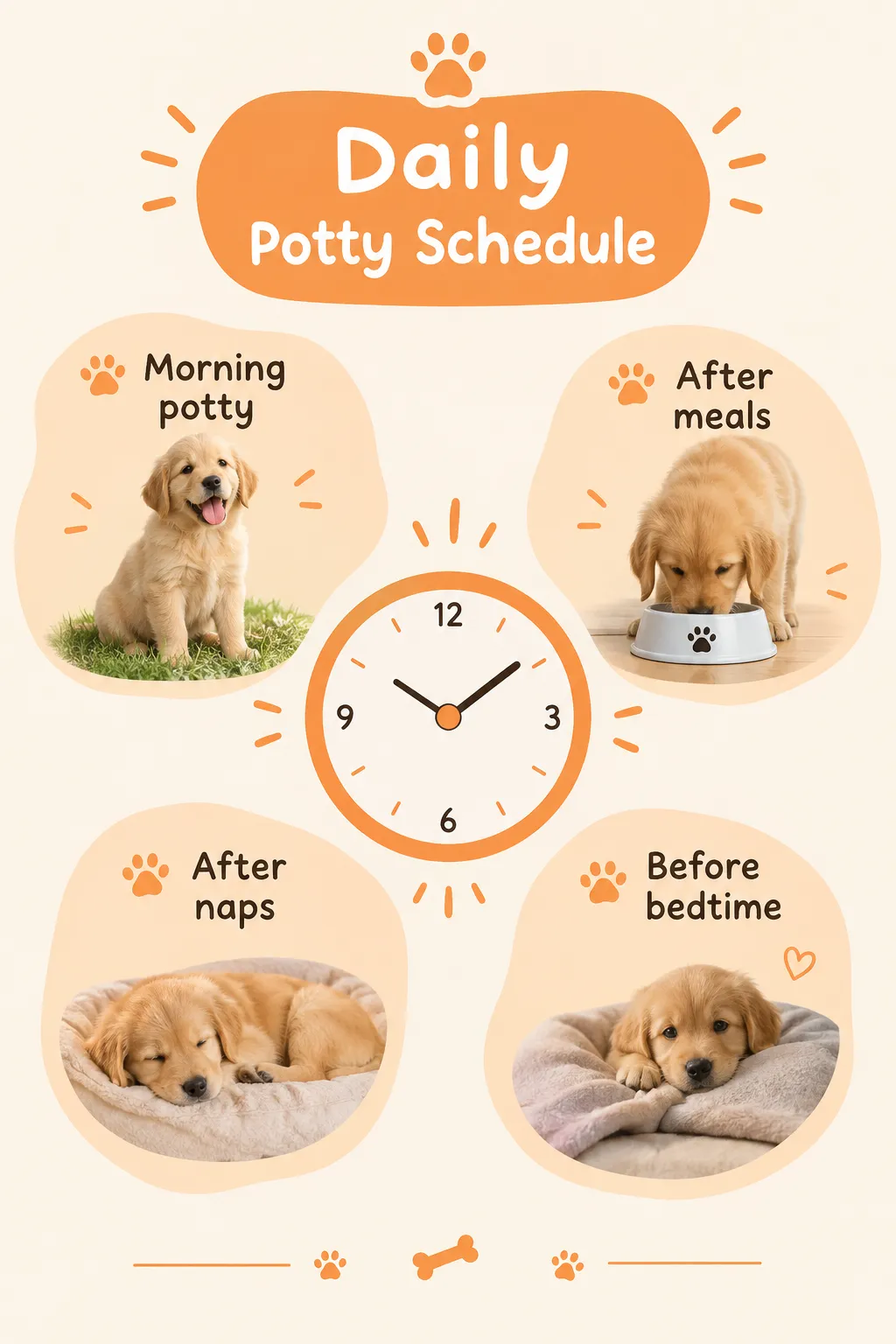
Take a new puppy out roughly every 1 to 2 hours, plus immediately after meals, naps, and play sessions. Young bladders simply can’t hold it much longer than that.
A reliable pattern to follow:
- First thing in the morning
- Right after any nap
- Within minutes of eating
- After active play
- Last thing before bed
This frequency matches typical bladder capacity for young puppies, per the PetWorks 72-hour adjustment guide. For accident reduction specifically, our puppy potty training tips for stubborn puppies pairs well with this schedule.
What if my puppy is really scared and hiding all the time
A scared puppy hiding for the first day or two is normal and usually resolves on its own with quiet and patience. Constant hiding beyond that window is worth paying closer attention to.
Give a frightened puppy:
- Space, not coaxing or forced handling
- A low, calm voice instead of excited talking
- Time alone in the crate with the door open
- Removal from loud rooms if visitors are over
The Ontario SPCA’s updated 2026 guidance recommends removing a puppy from the room entirely if they show cowering, yawning, lip-licking, or frantic behavior, to prevent them from becoming more overwhelmed. If you want to understand subtler stress signals, our articles on hidden signs your puppy feels unsafe and stressed dog signs most owners miss go deeper into reading body language.
Do I need to start training immediately or wait a few days
Hold off on formal training drills for the first 72 hours and focus on routine instead. Basic structure like consistent potty breaks and feeding times counts as training too.
Once your puppy settles into eating, sleeping, and potty routines, usually by day 4 or 5, you can start light, short training sessions. Our guide on teaching a dog to come when called without yelling or chasing is a gentle place to start.
Common mistake: jumping straight into obedience commands or heavy grooming sessions before the puppy trusts the household at all.
Crate training before or after bringing puppy home, which is better
Set up and introduce the crate before bringing your puppy home, not after. A crate that’s already familiar-smelling and positioned in a quiet spot helps on arrival day itself.
Place the crate:
- Near your bedroom for nighttime security
- Away from loud appliances or foot traffic
- With a soft blanket, ideally one with a familiar scent
Introducing the crate concept cold, on day one, tends to create more resistance than starting with the door open and letting the puppy wander in on their own.
How to tell if my puppy is overwhelmed versus just being normal
A puppy who’s simply cautious will still eat, drink, and potty, even if quietly. An overwhelmed puppy shows signs like constant trembling, refusal to eat for days, or nonstop hiding.
| Normal adjustment | Signs of overwhelm |
|---|---|
| Quiet, cautious exploring | Won’t come out at all |
| Eating a little less | Refusing food for 48+ hours |
| Sleeping a lot | Trembling constantly |
| Startles at loud noise | Frantic pacing or panting |
If you’re seeing the overwhelm column, scale everything back further: fewer people, less noise, more crate time with the door open.
Frequently asked questions
How soon can I have friends meet my new puppy?
Wait at least a few days, and keep early visits to one or two calm people at a time.
Is it normal for a puppy to cry the first night?
Yes, especially the first night or two. Keeping the crate near your bed usually helps more than moving them to your bed.
Should I wake my puppy up to potty at night?
Young puppies may need one nighttime bathroom trip, but avoid waking a soundly sleeping puppy unnecessarily.
Can I bathe my new puppy right away?
It’s usually fine to wait a few days unless they’re visibly dirty or have an odor concern. Let them settle first.
How do I know if my puppy is sick versus just stressed?
Vomiting, diarrhea, lethargy, or refusing water are signs to call the vet. Quiet or cautious behavior alone is usually just stress.
What if my resident cat is hissing at the new puppy?
That’s normal early reaction. Keep sessions short, use barriers, and don’t force proximity.
Do I need to start socializing my puppy with strangers immediately?
No. Give the first 72 hours as quiet decompression before building up social exposure gradually.
Conclusion
Figuring out how to make your new puppy feel at home isn’t about doing more, it’s about doing less, on purpose. A quiet arrival, one small zone, a predictable potty schedule, and a crate near your bed will do more in 72 hours than any welcome party ever could.
Start simple: set up the puppy zone before pickup day, skip the big introduction party, and book that vet visit within the week. The rest of the bonding, training, and exploring can come once your puppy actually feels safe enough to enjoy it.