Last updated: August 28, 2026
Quick Answer: Puppies explore the world with their mouths, which makes everyday household items far more dangerous than most new owners expect. The best puppy proofing house ideas go beyond obvious hazards like stairs and pools – they cover things like purses, blind cords, coins, and even certain houseplants. Start by getting down to puppy eye level in every room, then secure, remove, or block anything a curious nose and set of teeth could reach.
Key Takeaways
- Puppies can be poisoned by xylitol (found in gum, peanut butter, and baked goods), grapes, raisins, and common cleaning products.
- Electrical cords, phone chargers, and loose outlets are among the top injury risks for young dogs.
- Purses and gym bags are “mobile danger zones” – they often contain medications, gum, and small items that can cause obstructions.
- Blind and curtain cords are a strangulation risk that most owners overlook completely.
- Toxic indoor plants include peace lilies, pothos, and sago palms – all common in home decor.
- Baby gates, cabinet latches, and cord organizers are inexpensive and highly effective.
- Puppy proofing is not just for anxious owners – it genuinely prevents vet emergencies.
- Apartment dwellers need to focus on vertical space and shared hallways, not just floor-level hazards.
- Most puppies need active supervision and proofing for at least the first 12-18 months.
- A room-by-room walkthrough at puppy eye level is the single most effective proofing method.
Can Puppies Get Hurt From Common Household Things?
Yes, and more often than most owners realize. According to household hazard data from the AVMA, thousands of pets are injured or poisoned each year by items their owners never considered dangerous.
Puppies are especially vulnerable because they chew everything, have smaller body mass (so even tiny amounts of a toxin can be harmful), and have no concept of danger. A paperclip on the floor is a toy to them. A bottle of ibuprofen left on a low shelf is an interesting smell.
The good news? Most of these risks are easy to fix once you know about them.
What Household Items Are Toxic to Puppies
Several common household items are toxic to puppies, including sweeteners, medications, certain foods, and cleaning products. Many of these are kept in low cabinets or bags that a puppy can easily access.
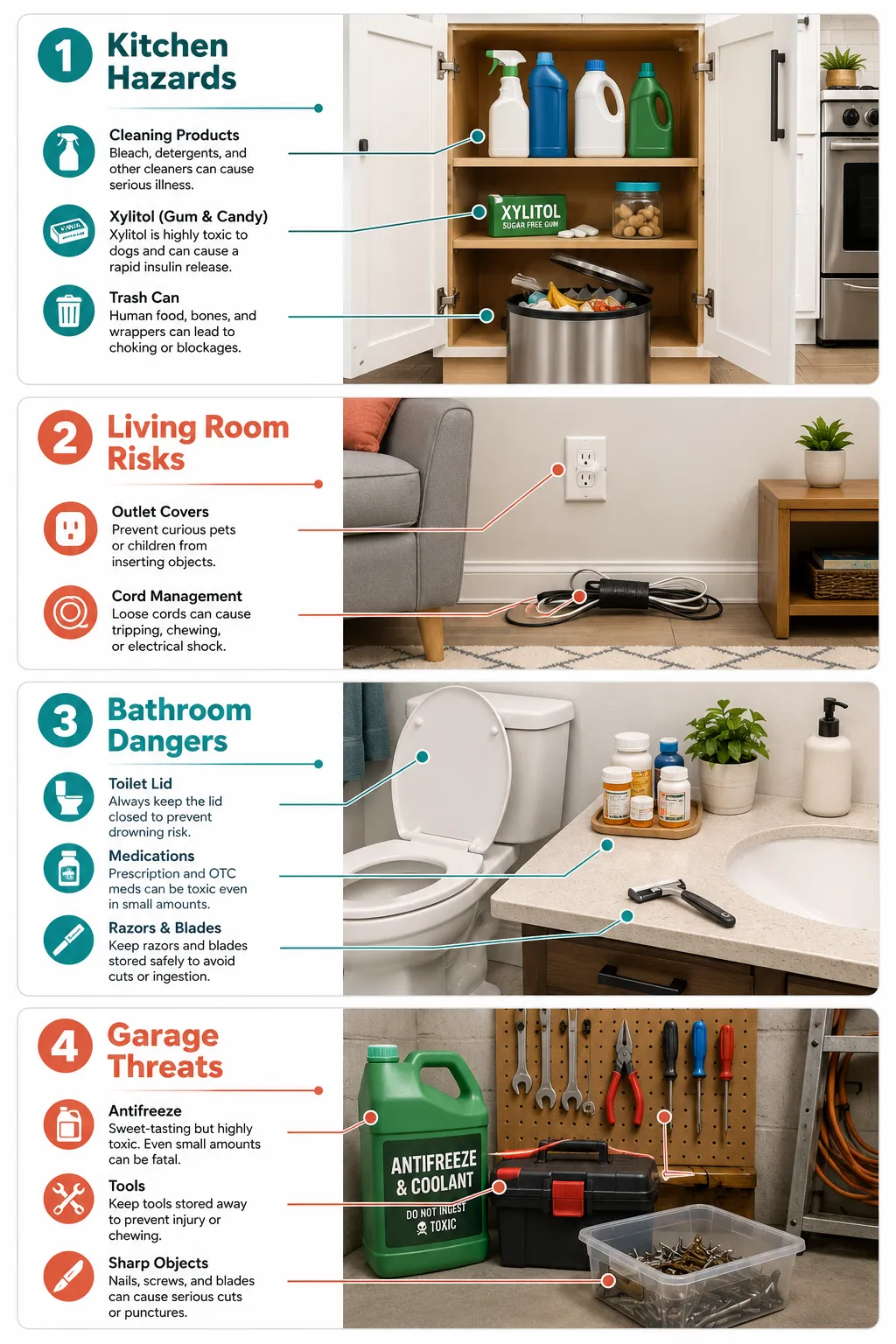
Here are the most dangerous ones to watch for:
Foods and sweeteners:
- Xylitol (in sugar-free gum, some peanut butters, baked goods) – causes rapid blood sugar drop and liver failure
- Grapes and raisins – can cause kidney failure even in small amounts
- Onions, garlic, and chives – damage red blood cells
- Chocolate and caffeine – toxic to the nervous system
- Raw yeast dough – expands in the stomach and produces alcohol
Medications:
- Ibuprofen, acetaminophen, and antidepressants are among the most common causes of pet poisoning
- Even one or two pills can be fatal for a small puppy
Cleaning products:
- Bleach, drain cleaners, and dishwasher pods are highly caustic
- Many “natural” cleaners still contain essential oils that are toxic to dogs
The sneaky one most people miss: Purses, gym bags, and backpacks. These often contain gum, medications, lip balm with xylitol, and small batteries – all within easy reach of a puppy on the floor.
Quick rule: If you wouldn’t leave it accessible to a toddler, don’t leave it accessible to your puppy.
How to Puppy Proof a House Room by Room
Room-by-room puppy proofing is the most thorough approach. Start at the front door and work through each space at puppy eye level – literally get on your hands and knees.
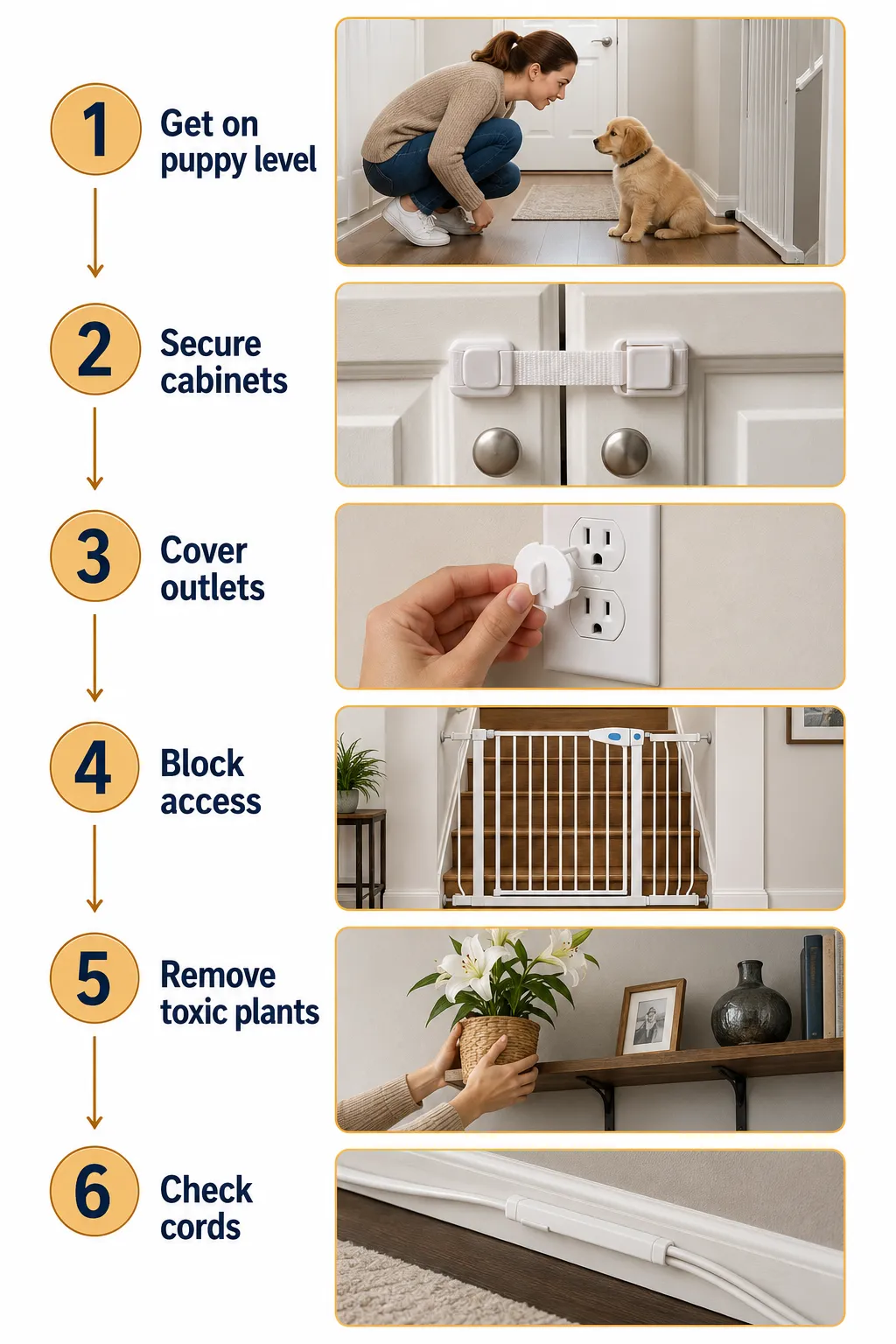
Kitchen:
- Install child-proof latches on lower cabinets (cleaning products, trash, food storage)
- Use a lidded trash can or store it inside a cabinet
- Keep counters clear of grapes, onions, and baked goods
- Secure the oven door if you have a curious breed
Living room:
- Bundle and clip all electrical cords to baseboards
- Replace looped blind cords with cordless versions or wind them up high
- Anchor tall bookshelves and floor lamps to the wall
- Remove or relocate toxic houseplants
Bathroom:
- Keep the toilet lid closed (drowning risk for tiny breeds)
- Store all medications, razors, and toiletries in a closed cabinet
- Never leave cotton swabs or hair ties on the floor
Bedroom:
- Check under the bed for coins, jewelry, and small items
- Keep laundry hampers closed or elevated
- Store shoes in a closed closet (shoe soles can contain harmful chemicals)
Garage:
- Antifreeze is extremely toxic and has a sweet taste dogs love
- Store all chemicals on high shelves or in locked cabinets
- Keep tools and sharp objects out of reach
For more on setting up your home before your new pup arrives, check out The First Week with New Puppy Survival Guide.
How to Keep Puppies Safe From Electrical Cords and Outlets
Electrical cords are one of the top physical injury risks for puppies. Chewing a live cord can cause burns, electrocution, or even cardiac arrest. Hidden household hazards like cords and outlets are easy to overlook because adults step over them without thinking.
What to do:
- Use cord organizers or split-loom tubing to bundle cords and attach them to baseboards.
- Spray exposed cords with a bitter apple spray – puppies hate the taste.
- Use outlet covers on any unused electrical outlets at floor level.
- Unplug phone chargers when not in use – they’re a favorite chew target.
- Route cords behind furniture wherever possible.
Choose cord covers if your puppy is a heavy chewer (Labs, Goldens, Beagles). Choose bitter spray if you have a lighter chewer who just investigates. Use both if you have any doubt.
What Plants Are Poisonous to Puppies Indoors
Many popular houseplants are toxic to puppies, and some can cause serious organ damage. The ASPCA and veterinary sources list dozens of common plants as dangerous.
Most dangerous indoor plants for puppies:
| Plant | Toxicity Level | Main Risk |
|---|---|---|
| Sago Palm | Severe | Liver failure |
| Peace Lily | Moderate-High | Kidney damage |
| Pothos | Moderate | Oral irritation, vomiting |
| Dieffenbachia | Moderate | Mouth/throat swelling |
| Aloe Vera | Moderate | Digestive upset |
| Philodendron | Moderate | Oral irritation |
What to do: Move all toxic plants to shelves above 5 feet, hang them, or replace them with pet-safe options like spider plants, Boston ferns, or orchids.
Best Puppy Proofing Products and Gates
The right products make puppy proofing house ideas much easier to execute. You don’t need to spend a lot – most effective tools cost under $30.
Top products to consider:
- Baby gates – use pressure-mounted gates for doorways, hardware-mounted for the top of stairs
- Cabinet safety latches – magnetic versions are easiest for adults to use
- Outlet covers – sliding plate covers are harder for paws to remove than plug-in caps
- Cord organizers – split-loom tubing or cable raceways
- Bitter apple spray – deters chewing on furniture and cords
- Lidded trash cans – step-open or locking lids work best
- Playpen/exercise pen – gives your puppy a safe zone when you can’t supervise
Choose a hardware-mounted gate if you’re blocking a staircase. Pressure-mounted gates can be pushed out by a determined medium or large breed.
For small-space setups, 13 dog corner ideas for small spaces has some creative solutions that work well in apartments too.
Puppy Proofing Checklist for New Dog Owners
A checklist is the fastest way to make sure you haven’t missed anything. Veterinary sources recommend going through each room before the puppy comes home, then repeating the check after the first week – because puppies find things you missed.
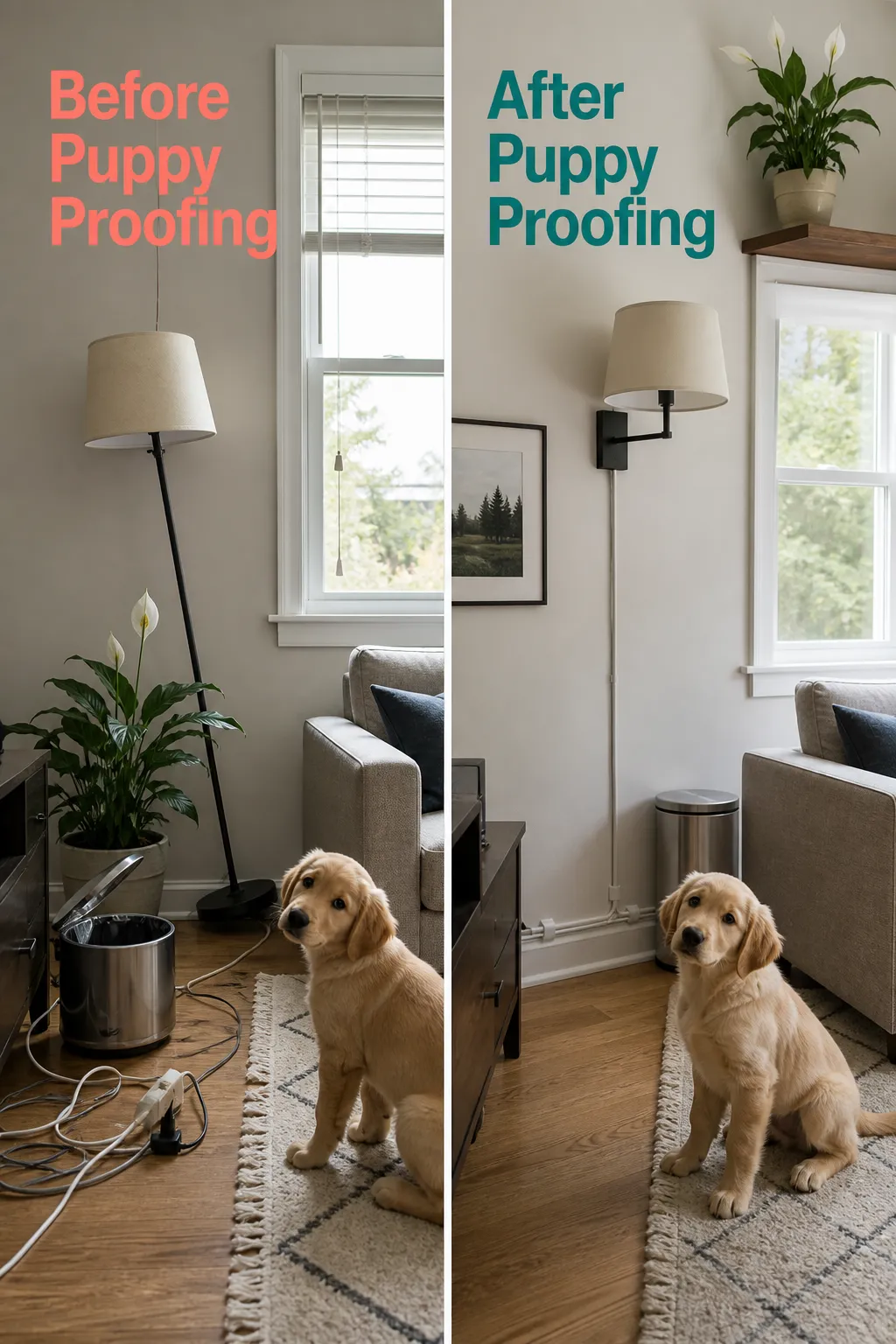
Room-by-room checklist:
- All toxic foods stored in closed, high, or latched cabinets
- Trash cans have lids or are inside cabinets
- Cleaning products secured with latches
- Electrical cords bundled and covered
- Outlets covered
- Toxic plants moved or replaced
- Blind and curtain cords wound up or replaced with cordless
- Medications stored in closed medicine cabinet
- Small items (coins, jewelry, batteries) off the floor
- Baby gate installed at stairs and restricted rooms
- Purses and bags hung up or stored out of reach
- Antifreeze and garage chemicals locked away
- Toilet lid kept closed
- Laundry hamper has a lid
Also check out the new puppy checklist for must-have supplies to make sure you have everything you need for day one.
Puppy Proofing Mistakes New Owners Make
The most common puppy proofing mistake is only checking at adult eye level. Most owners scan a room standing up and miss everything below knee height – which is exactly where a puppy lives.
Other frequent mistakes:
- Forgetting bags and purses – these are left on the floor constantly and contain multiple hazards
- Assuming the puppy won’t reach something – puppies grow fast and jump higher than expected
- Only proofing once – puppies develop new skills (jumping, opening doors) as they grow
- Skipping the garage – antifreeze, motor oil, and sharp tools are extremely dangerous
- Overlooking laundry – dryer sheets and detergent pods are highly toxic; hidden hazards like these send many dogs to the emergency vet
- Not securing the toilet – small breeds can fall in; all breeds can drink cleaning chemicals left in the bowl
Edge case: If you have guests over, re-check the floor after they leave. Visitors drop things – gum wrappers, pill cases, hair ties – without realizing it.
Puppy Proofing for Apartments vs Houses
Apartment puppy proofing focuses on vertical space, shared areas, and smaller square footage. House puppy proofing covers more ground but follows the same core principles.
Apartments:
- Balconies need mesh or barriers – gaps in railings are a fall risk
- Shared hallways mean other residents may leave food or hazards near your door
- Less storage space means bags and shoes are more often on the floor
- Elevator buttons and lobby floors can carry chemicals from cleaning products
Houses:
- Garages and basements add significant hazard zones
- Yards need to be checked for toxic plants, fertilizers, and pesticides
- Multiple floors mean stair gates are essential
- Fencing gaps need to be checked for escape routes
Both setups benefit from a dedicated safe zone – a gated area or playpen where your puppy can be left unsupervised briefly without risk.
How to Puppy Proof Without Making Your House Look Ugly
Good news: most modern puppy proofing products are designed to blend in. You don’t have to turn your home into a padded cell.
Practical tips:
- Choose wood-finish or white baby gates that match your trim
- Use fabric cord covers that blend with your baseboard color
- Swap looped blinds for sleek cordless roller shades (a genuine upgrade)
- Use decorative baskets with lids instead of open hampers
- Place plants on floating shelves or plant stands – this looks intentional and stylish
- A well-placed exercise pen in a corner can double as a cozy puppy nook with a blanket and toys
The key is to make the safe version the default. Once you’ve replaced looped blinds and added latches, you barely notice them.
Puppy Proofing on a Budget
Effective puppy proofing house ideas don’t require expensive products. Most of the work is free – it’s about moving, storing, and reorganizing what you already have.
Free or low-cost actions:
- Move toxic plants to high shelves (free)
- Store purses and bags on hooks (free)
- Wind up blind cords and secure them high (free)
- Keep toilet lids closed (free)
- Unplug chargers when not in use (free)
Low-cost purchases (under $30 total for basics):
- Outlet covers – typically under $10 for a pack
- Cabinet latches – around $10-15 for a multi-pack
- Bitter apple spray – around $10-15
- Cord organizer clips – under $10
Hidden hazards after puppy proofing your home are often the free fixes people skipped – so start there before buying anything.
How Long Do You Need to Puppy Proof Your House
Most puppies need a fully proofed environment for at least 12 to 18 months. Some high-energy or curious breeds – like Beagles, Huskies, or Labrador Retrievers – may need restrictions in place until age 2 or beyond.
General timeline:
- 0-6 months: Maximum proofing – puppies chew everything and have no impulse control
- 6-12 months: Maintain proofing but begin training boundaries alongside it
- 12-18 months: Most dogs settle, but high-value hazards (medications, toxic foods) should stay secured permanently
Proofing is not a phase you “finish.” The toxic food rules and medication storage are permanent habits worth keeping for your dog’s entire life.
If you’re working on training alongside proofing, 15 puppy potty training tips that actually work is a great companion resource.
Is Puppy Proofing Necessary or Just for Anxious Owners
Puppy proofing is genuinely necessary – not a sign of being overprotective. Veterinary data consistently shows that accidental ingestion of household toxins is one of the leading reasons puppies end up in emergency vet clinics.
The cost of one emergency vet visit far exceeds the cost of a few cabinet latches and a baby gate. Beyond the financial argument, the emotional toll of a preventable accident is significant.
That said, puppy proofing doesn’t mean your home needs to be sterile or joyless. It means removing the genuinely dangerous stuff and giving your puppy a safe space to explore and grow.
Puppy Proofing for Different Breeds and Sizes
Breed and size affect which hazards matter most. A Chihuahua puppy and a Great Dane puppy have very different risk profiles.
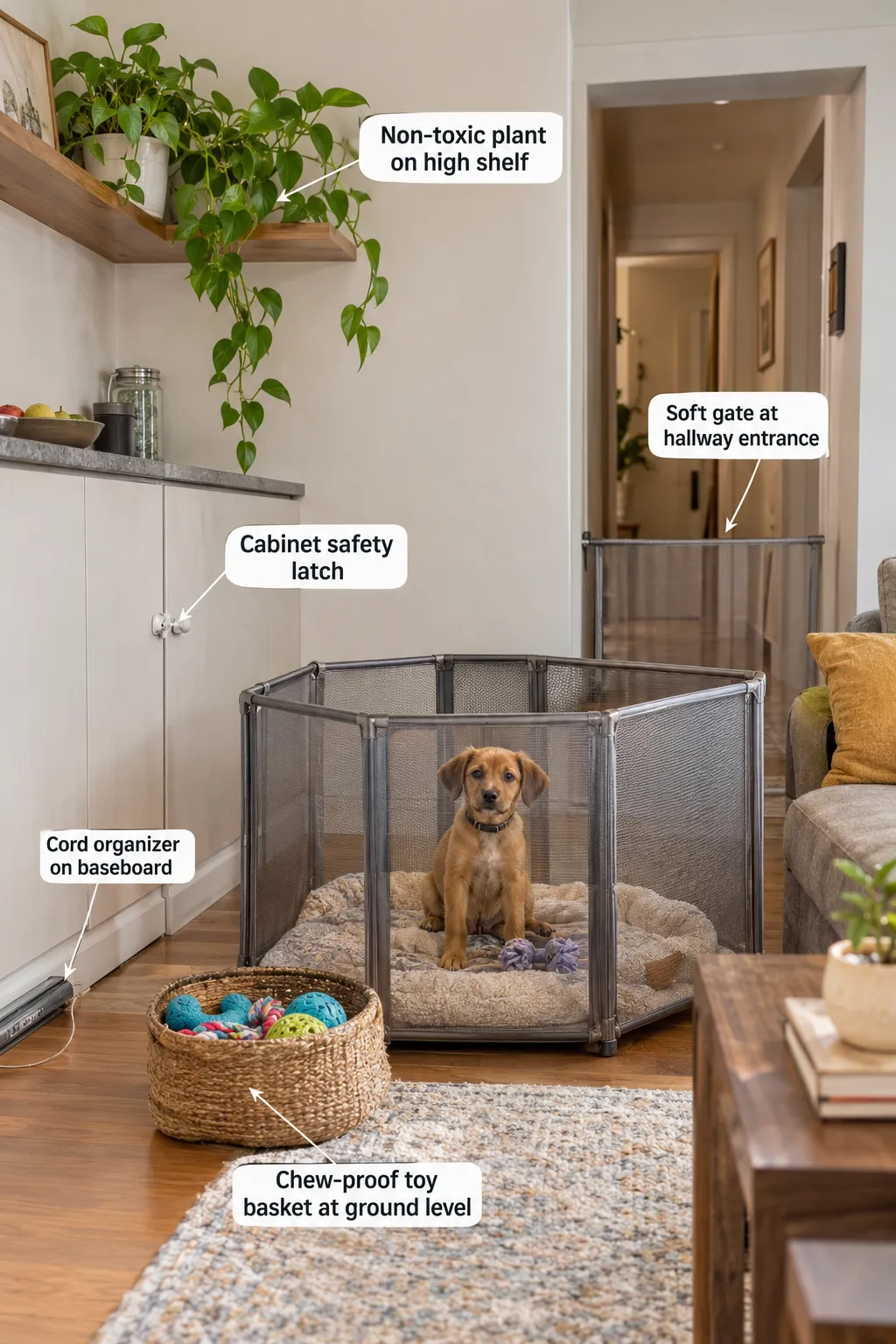
Small breeds (Chihuahuas, Maltese, Toy Poodles):
- Toilet drowning risk is real – always keep the lid down
- Even tiny amounts of toxins can be fatal due to low body weight
- Gaps under furniture and appliances are accessible – check behind the fridge and stove
- See also: how to potty train a Maltese puppy
Medium breeds (Beagles, Cocker Spaniels, Border Collies):
- Strong chewers – cord protection is a priority
- Nose-level counters become accessible as they grow
- Trash cans need to be sturdy and lidded
Large breeds (Labs, German Shepherds, Huskies):
- Can knock over unstable furniture and floor lamps
- Counter-surfing starts early – keep counters completely clear
- Need hardware-mounted gates, not pressure-mounted
- Check out Siberian Husky puppy training tips for breed-specific guidance
Choose your proofing priority based on breed traits: scent hounds need extra food security, chewers need cord and furniture protection, and climbers need vertical barriers.
Conclusion
Puppy proofing your house isn’t about fear – it’s about giving your new dog the best possible start. The 11 puppy proofing house ideas covered here go beyond the obvious. Blind cords, purses, xylitol in your pantry, and antifreeze in the garage are the things that catch new owners off guard.
Your action steps starting today:
- Get on your hands and knees in each room and look at the space from puppy height.
- Move all medications, cleaning products, and toxic foods to high or latched locations.
- Bundle and cover all electrical cords.
- Replace looped blind cords with cordless options.
- Install a baby gate at stairs and any off-limits rooms.
- Hang up all bags and purses.
- Run through the checklist above before your puppy comes home – then again after the first week.
A safe home is a happy home. And a happy home means more time playing and less time at the emergency vet. 🐾
FAQ
Q: What is the most dangerous household item for puppies?
Xylitol (found in sugar-free gum, some peanut butters, and baked goods) is among the most dangerous because it causes rapid blood sugar crashes and liver failure – even in small amounts. Medications like ibuprofen are a close second.
Q: At what age can I stop puppy proofing?
Most puppies can be given more freedom around 12-18 months, once they’ve completed basic training and shown impulse control. However, toxic food storage and medication security should remain permanent habits.
Q: Are baby gates enough to puppy proof a house?
Gates are one tool, not a complete solution. They control access but don’t address toxins, cords, or small objects in the rooms your puppy does have access to. Use them alongside cabinet latches, cord covers, and plant relocation.
Q: Can puppies chew through electrical cords?
Yes. Puppies can and do chew through live electrical cords, which can cause burns, electrocution, or cardiac arrest. Use cord covers, bitter spray, and keep cords routed behind furniture.
Q: What indoor plants are safe for puppies?
Pet-safe options include spider plants, Boston ferns, orchids, areca palms, and calathea. Always verify with the ASPCA’s toxic plant database before bringing any new plant home.
Q: Is antifreeze really that dangerous for puppies?
Yes – antifreeze (ethylene glycol) is extremely toxic and has a sweet taste that attracts dogs. Even a small amount can cause fatal kidney failure. Store it in a locked cabinet and clean up any spills immediately.
Q: How do I puppy proof on a very tight budget?
Start with free actions: move toxic plants up high, hang bags, close toilet lids, unplug chargers, and move medications to high shelves. Then add outlet covers and cabinet latches – you can proof most of a home for under $30.
Q: Should I puppy proof the yard too?
Yes. Check for toxic plants (azaleas, oleander, foxglove), fertilizers, pesticides, and standing water. Inspect fencing for gaps your puppy could squeeze through or dig under.
Q: Do I need to puppy proof if I’m always home with my puppy?
Even supervised puppies get into things in seconds. Proofing reduces the risk during the inevitable moments you look away. It’s not a substitute for supervision – it’s a backup layer.
Q: What’s the fastest way to puppy proof before bringing a puppy home?
Do a 20-minute floor-level walkthrough of each room. Remove or secure anything at nose and mouth height. Install one gate at the stairs. Lock up medications and cleaning products. That covers the highest-risk items immediately.