Last updated: August 28, 2026
Quick Answer: Knowing how to remove tartar from dogs’ teeth starts with one hard truth – once tartar hardens, only a professional vet cleaning can fully remove it. But daily brushing, VOHC-approved dental chews, water additives, and the right diet can stop plaque from turning into tartar in the first place. This guide covers every method that actually works, and a few that don’t.
Key Takeaways
- Tartar is hardened plaque – once it forms, you cannot safely scrape it off at home without risking tooth fractures or gum injuries.
- Daily brushing with dog-safe enzymatic toothpaste is the single most effective home prevention method, according to AAHA dental care guidelines.
- VOHC-sealed dental chews have real clinical evidence behind them – not all chews are equal.
- Water additives can measurably reduce plaque and calculus scores in as little as 30 days.
- Professional cleaning under anesthesia remains the gold standard for removing existing tartar.
- Anesthesia is safer than most owners think – with proper pre-screening, risks are well-managed.
- Small and toy breeds are at higher risk for dental disease and may need more frequent cleanings.
- Diet matters early – what a puppy eats can influence tartar risk later in life.
- Bad breath is often the first sign of tartar buildup, not just a “dog thing.”
- Never use human toothpaste, metal scrapers, baking soda, lemon, or vinegar on your dog’s teeth.
What Is Tartar on Dogs’ Teeth and How Is It Different From Plaque?
Plaque is a soft, sticky film of bacteria that forms on teeth within hours of eating. Tartar (also called calculus) is what happens when plaque is not removed and minerals from saliva cause it to harden into a crusty yellow, brown, or even black deposit.
The key difference: plaque can be brushed away at home, tartar cannot.
Once tartar mineralizes onto the tooth surface, it bonds tightly to enamel. Brushing won’t touch it. This is why understanding the difference between plaque and calculus is so important for dog owners – the window for home prevention closes fast.
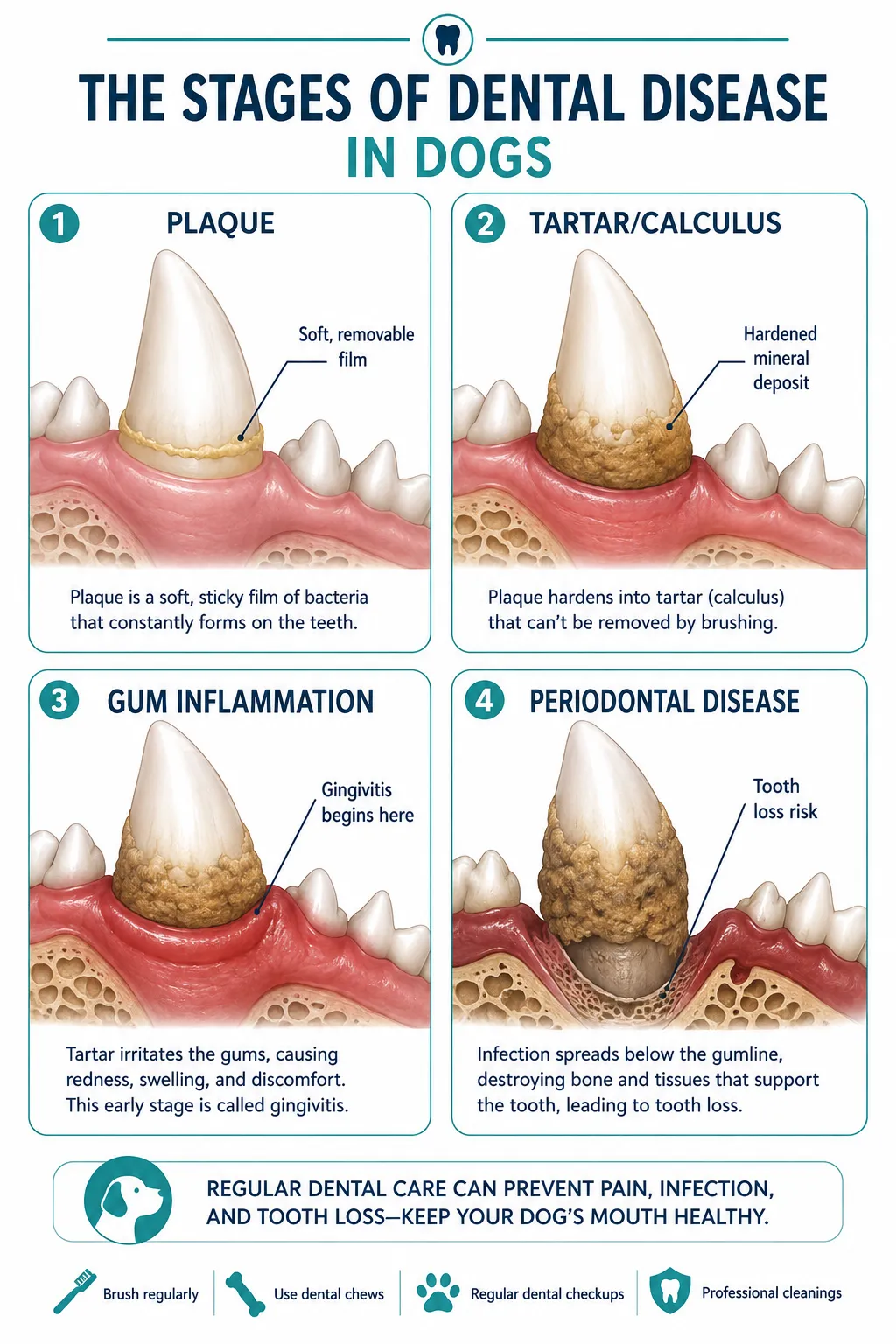
Tartar typically appears first along the gumline, especially on the upper back molars and canines. It creates a rough surface that traps even more bacteria, which is how the cycle of dental disease gets started.
Signs Your Dog Has Tartar and Needs Dental Care
The most common sign is bad breath – and not just mild doggy breath, but a noticeably foul, persistent odor. Other signs include:
- Yellow or brown crust visible along the gumline
- Red, swollen, or bleeding gums
- Pawing at the mouth
- Difficulty chewing or dropping food
- Drooling more than usual
- Loose teeth in older dogs
“Bad breath in dogs is not normal – it’s usually the first signal that tartar and bacteria are building up below the gumline.”
If you’re seeing any of these signs, it’s time to book a vet dental exam. Don’t wait for the next routine visit.
Can You Remove Tartar From Dog Teeth at Home?
No – you cannot safely remove hardened tartar from your dog’s teeth at home. This is one of the most important things to understand about how to remove tartar from dogs’ teeth.
According to veterinary guidance, attempting to scrape tartar off with metal dental tools, pliers, or any sharp instrument risks tooth fractures, gum lacerations, and serious pain for your dog. It can also destroy your dog’s trust in you during any future dental care.
What you should never use at home:
- Human toothpaste (contains fluoride, which is toxic to dogs)
- Metal dental scalers or scrapers
- Baking soda (upsets stomach, doesn’t remove tartar)
- Lemon juice or vinegar (erodes enamel)
- Pliers or any gripping tool
What you can do at home is prevent new tartar from forming – and that’s where the six methods below come in.
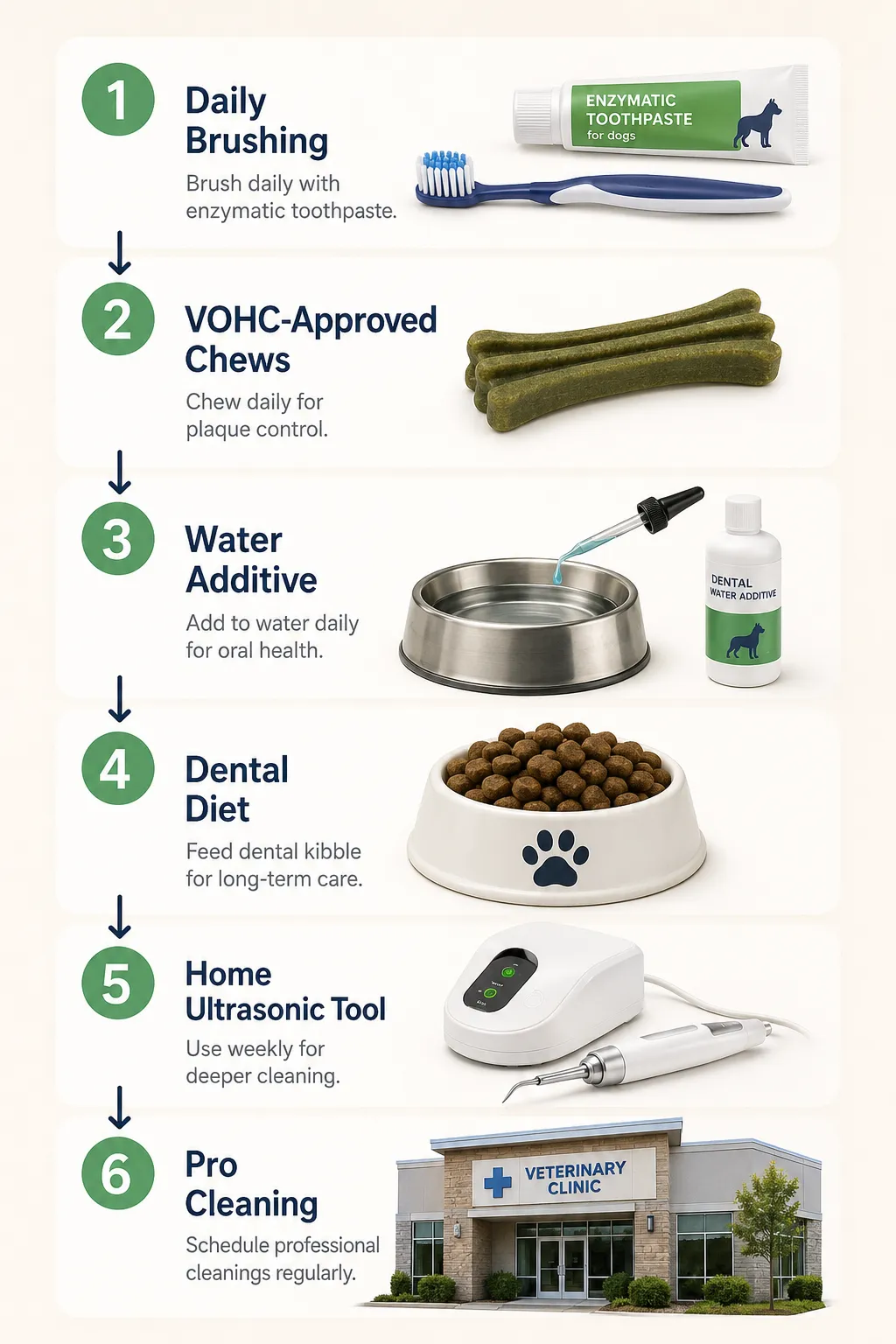
How to Remove Tartar From Dogs’ Teeth: The 6 Methods That Work
These are the approaches backed by real evidence. Some prevent tartar, one removes it. Used together, they make a measurable difference.
1. Daily Brushing With Enzymatic Toothpaste
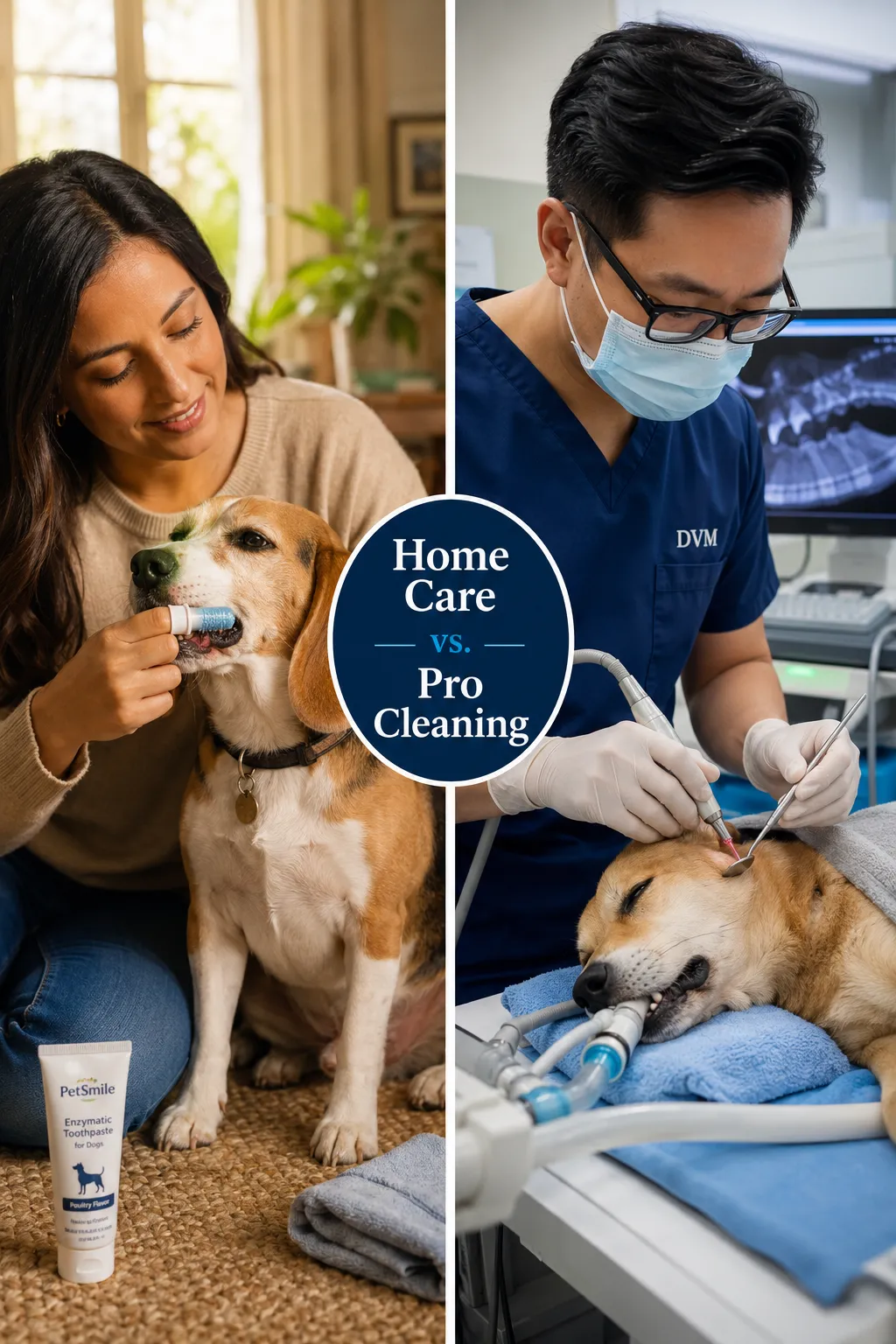
Brushing is the most effective single home method for tartar prevention. AAHA’s dental care guidelines are clear that brushing removes soft plaque before it can mineralize – but it does not remove tartar that’s already formed.
Use a soft-bristle dog toothbrush or finger brush. Enzymatic toothpaste is preferred because the enzymes help break down plaque chemically, even in areas the brush doesn’t fully reach.
Tips for brushing success:
- Start slowly – let your dog lick the toothpaste first
- Aim for the outer surfaces of the back teeth where tartar builds fastest
- Even 30 seconds of brushing daily beats a full session once a week
- Check out these 5 easy hacks for brushing your dog’s teeth if your dog resists
2. VOHC-Approved Dental Chews
Not all dental chews are equal. Look for the Veterinary Oral Health Council (VOHC) Seal of Acceptance – this means the product has been tested and shown to measurably reduce plaque or tartar.
AAHA notes that dental chews with this seal can keep tartar buildup to a minimum and support gum health when used daily. Research on dental chews in dogs has shown reductions in plaque, calculus, and bad breath.
One notable example: Yummy Combs, which earned the VOHC seal and in early 2026 published data showing more than 26% reduction in hardened tartar and over 45% improvement in breath freshness after 60 days of daily use.
Choose X if: Your dog won’t tolerate brushing – a daily VOHC chew is your next best option.
3. Dental Water Additives
Add a vet-recommended dental water additive to your dog’s bowl daily. Products like Aquadent have controlled trial data showing significant reductions in both plaque and calculus scores after 30 days of use, according to published veterinary research.
These additives typically contain enzymes or antibacterial agents that slow bacterial growth in the mouth. Most dogs don’t notice them in their water.
Common mistake: Owners switch water additives every few weeks before giving them time to work. Stick with one product for at least 30 days to see results.
4. Dental Diets
Certain dry kibble formulas are designed with larger, fiber-dense kibbles that scrub the tooth surface as the dog chews. AAHA recommends dental diets as part of a complete oral health strategy.
A 2025 Finnish study found that dogs fed a non-processed meat-based diet during puppyhood and adolescence had a significantly lower risk of developing dental calculus later in life, highlighting early diet as a real risk factor worth addressing.
5. At-Home Ultrasonic Devices (With Caveats)
Ultrasonic tartar removal devices marketed for home use can remove moderate surface tartar when used consistently – typically three times per week for 3-5 minutes per session over two to three weeks.
However, these devices only address surface deposits. Tartar below the gumline and any signs of periodontal disease still require professional veterinary treatment. Think of these as a supplement to brushing, not a replacement for professional care.
6. Professional Veterinary Cleaning Under Anesthesia
This is the only method that actually removes existing tartar – especially below the gumline where damage really happens. AAHA describes professional scaling as including scaling above and below the gumline, polishing, and irrigation as part of stage-1 periodontal treatment.
No other method on this list removes subgingival (below gumline) tartar. If your dog already has visible brown buildup, a professional cleaning is not optional – it’s necessary.
Is Anesthesia Safe for Dogs During Teeth Cleaning?
Yes – modern anesthesia for veterinary dental procedures is very safe when proper protocols are followed. Pre-anesthetic blood tests, ECG monitoring, and experienced veterinary teams are now standard practice.
The risk of skipping a cleaning because of anesthesia concerns is almost always greater than the risk of the procedure itself. Untreated tartar leads to periodontal disease, which has been linked to systemic health issues including heart and kidney problems.
“Anesthesia-free” dental cleanings (awake scraping) are not recommended by AAHA because they cannot safely clean below the gumline – which is where the real damage occurs.
How Much Does Professional Dog Teeth Cleaning Cost?
Professional dog dental cleanings in the US typically range from around $300 to $700 for a standard procedure, with costs rising if extractions are needed. Prices vary by region, clinic, and the dog’s overall dental health.
Some pet insurance plans cover dental cleanings – worth checking before your dog’s next appointment. Preventive home care (brushing, chews, water additives) is the most cost-effective way to reduce how often professional cleanings are needed.
How Often Should Dogs Get Their Teeth Cleaned Professionally?
Most dogs benefit from a professional cleaning once a year. Some small breeds or dogs with existing dental disease may need cleanings every six months.
Your vet will assess your dog’s individual risk at each exam. Factors that increase frequency include:
- Small or toy breed (more crowded teeth)
- History of periodontal disease
- Minimal home dental care
- Certain medical conditions
What Breeds Are Most Prone to Tartar and Dental Disease?
Small and toy breeds are disproportionately affected by dental disease because their teeth are crowded into a smaller jaw, making it harder for natural chewing to clean tooth surfaces.
High-risk breeds include:
- Yorkshire Terriers – see 15 facts about Yorkies and their big personality
- Maltese and Havanese
- Shih Tzus
- Pomeranians
- Dachshunds
Brachycephalic (flat-faced) breeds like Pugs and Bulldogs also face higher risk due to tooth misalignment. If you own one of these breeds, start dental care early and plan for more frequent vet checkups.
Can Diet Help Prevent Tartar Buildup in Dogs?
Yes – diet plays a real role, especially early in life. Research published in 2025 found that dogs fed non-processed meat-based diets during puppyhood had significantly lower rates of dental calculus as adults.
Practical diet tips for tartar prevention:
- Choose VOHC-accepted dental kibble if your dog tolerates dry food
- Avoid sticky, soft treats that cling to teeth
- Raw vegetables like carrots can provide mild mechanical cleaning
- Check out the best vegetables for dogs for safe snack options
Also, what you feed matters for overall health – explore 15 superfoods for dogs that vets recommend for ideas on nutrient-dense options.
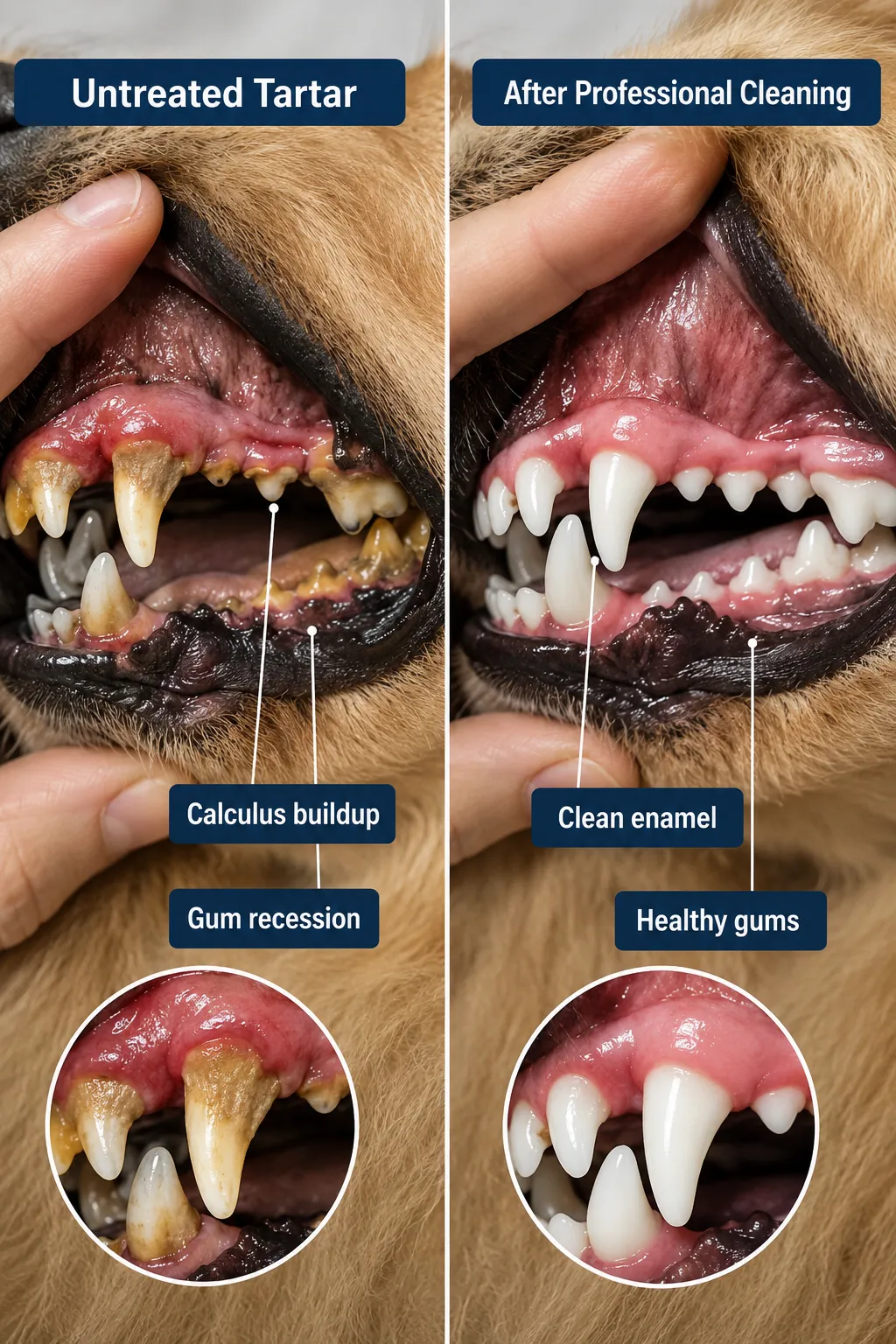
What Happens If You Don’t Remove Tartar From Dogs’ Teeth?
Untreated tartar is not just a cosmetic issue. It leads to a progression of increasingly serious problems:
- Gingivitis – gum inflammation, reversible with treatment
- Periodontal disease – irreversible damage to the bone and tissue supporting teeth
- Tooth loss – especially in small breeds
- Systemic infection – bacteria from the mouth can enter the bloodstream
Epidemiological data on dental calculus in dogs confirms how common and serious this progression is in clinical populations. Tartar is not something to monitor and wait on.
Home Care vs. Professional Cleaning: Which Do You Actually Need?
You need both – they serve different purposes.
| Method | Removes Existing Tartar? | Prevents New Tartar? | Frequency |
|---|---|---|---|
| Daily brushing | No | Yes – best method | Daily |
| VOHC dental chews | Mild surface only | Yes | Daily |
| Water additives | No | Yes | Daily |
| Dental diet | No | Yes – moderate | Every meal |
| At-home ultrasonic | Surface only | Partial | 3x/week |
| Professional cleaning | Yes – complete | Resets the clock | 1-2x/year |
FAQ: How to Remove Tartar From Dogs’ Teeth
Q: Can I use a human toothbrush on my dog?
A soft-bristle human toothbrush can work in a pinch, but finger brushes or dog-specific toothbrushes are easier to maneuver around a dog’s mouth. Never use human toothpaste – it contains fluoride, which is toxic to dogs.
Q: My dog hates having his teeth brushed. What should I do?
Start with just letting your dog lick enzymatic toothpaste off your finger. Gradually introduce the brush over one to two weeks. Even partial brushing of the back teeth is better than none. A VOHC dental chew daily is your backup if brushing stays impossible.
Q: How long does it take for plaque to turn into tartar?
Plaque can begin mineralizing into tartar in as little as 24-72 hours without removal. This is why daily brushing matters so much – the window is short.
Q: Are raw bones good for cleaning dog teeth?
Raw bones can provide some mechanical scrubbing, but they also carry risks including tooth fractures, choking, and bacterial contamination. Check out whether dogs can safely eat bones before adding them to your dog’s routine.
Q: Can bad breath mean something other than tartar?
Yes. Bad breath can also come from gastrointestinal issues, kidney disease, diabetes, or a foreign object stuck in the mouth. If breath is very sweet or fruity, or if your dog has other symptoms, see a vet promptly rather than assuming it’s dental.
Q: Do water additives actually work or are they a gimmick?
They work – but modestly. Published trial data shows significant reductions in plaque and calculus scores after 30 days of consistent use. They’re not a replacement for brushing, but they’re a useful addition.
Q: Is anesthesia-free dental cleaning a safe alternative?
No. Anesthesia-free cleaning (scraping an awake dog’s visible tooth surfaces) cannot safely reach below the gumline, which is where periodontal disease develops. AAHA does not recommend it as a substitute for proper dental scaling.
Q: At what age should I start dental care for my puppy?
Start as early as possible – ideally from 8 weeks old. Getting puppies used to having their mouths touched early makes lifelong dental care much easier. Early diet choices also matter, as research shows that diet during puppyhood influences calculus risk in adult dogs.
Conclusion
Learning how to remove tartar from dogs’ teeth comes down to this: prevention is in your hands, removal is in your vet’s. The six methods above – daily brushing, VOHC chews, water additives, dental diets, home ultrasonic tools, and professional cleanings – each play a specific role. None of them alone is enough, but together they form a routine that genuinely protects your dog’s mouth and overall health.
Your next steps:
- Check your dog’s teeth today – look for yellow or brown buildup along the gumline.
- Pick up a dog-safe enzymatic toothpaste and start a daily brushing routine this week.
- Add a VOHC-accepted dental chew to your dog’s daily routine.
- Book a vet dental exam if you see visible tartar, red gums, or smell persistent bad breath.
- Ask your vet about the right professional cleaning schedule for your dog’s breed and age.
Your dog can’t brush their own teeth – but with a little consistency, you can give them a healthier mouth and a longer, more comfortable life.