

Last updated: September 21, 2026
Quick Answer: Yes, dogs can get lice – but only from other dogs, not from humans or cats. Dog lice are species-specific parasites, meaning they cannot survive on humans and human lice cannot live on dogs. If your child has head lice, your dog is not the source, and your dog cannot catch them from your child.
Key Takeaways
- ✅ Dogs can get lice, but only species-specific dog lice – not human or cat lice
- ✅ There are three lice species that affect dogs: Linognathus setosus, Trichodectes canis, and Heterodoxus spiniger
- ✅ Dog lice spread through direct dog-to-dog contact, shared grooming tools, bedding, or collars
- ✅ Humans cannot catch lice from dogs – a dog louse that wanders onto a person will die within hours
- ✅ Dog lice are less common than fleas or ticks in well-cared-for pets
- ✅ Signs include intense itching, dull coat, hair loss, and visible nits attached to fur
- ✅ Treatment involves vet-prescribed topical insecticides and treating all contact dogs
- ✅ Regular parasite prevention is the best way to stop lice before they start
- ✅ Dogs in shelters, kennels, or poor living conditions face the highest risk
- ✅ Always confirm a lice diagnosis with your vet before starting treatment
What Type of Lice Do Dogs Get?
Dogs can be infested by three distinct lice species, and none of them are the same as human lice. According to the Merck Veterinary Manual’s guide on lice in dogs, those three species are Linognathus setosus (a sucking louse), Trichodectes canis (a chewing louse), and Heterodoxus spiniger (another chewing louse found mainly in tropical regions).
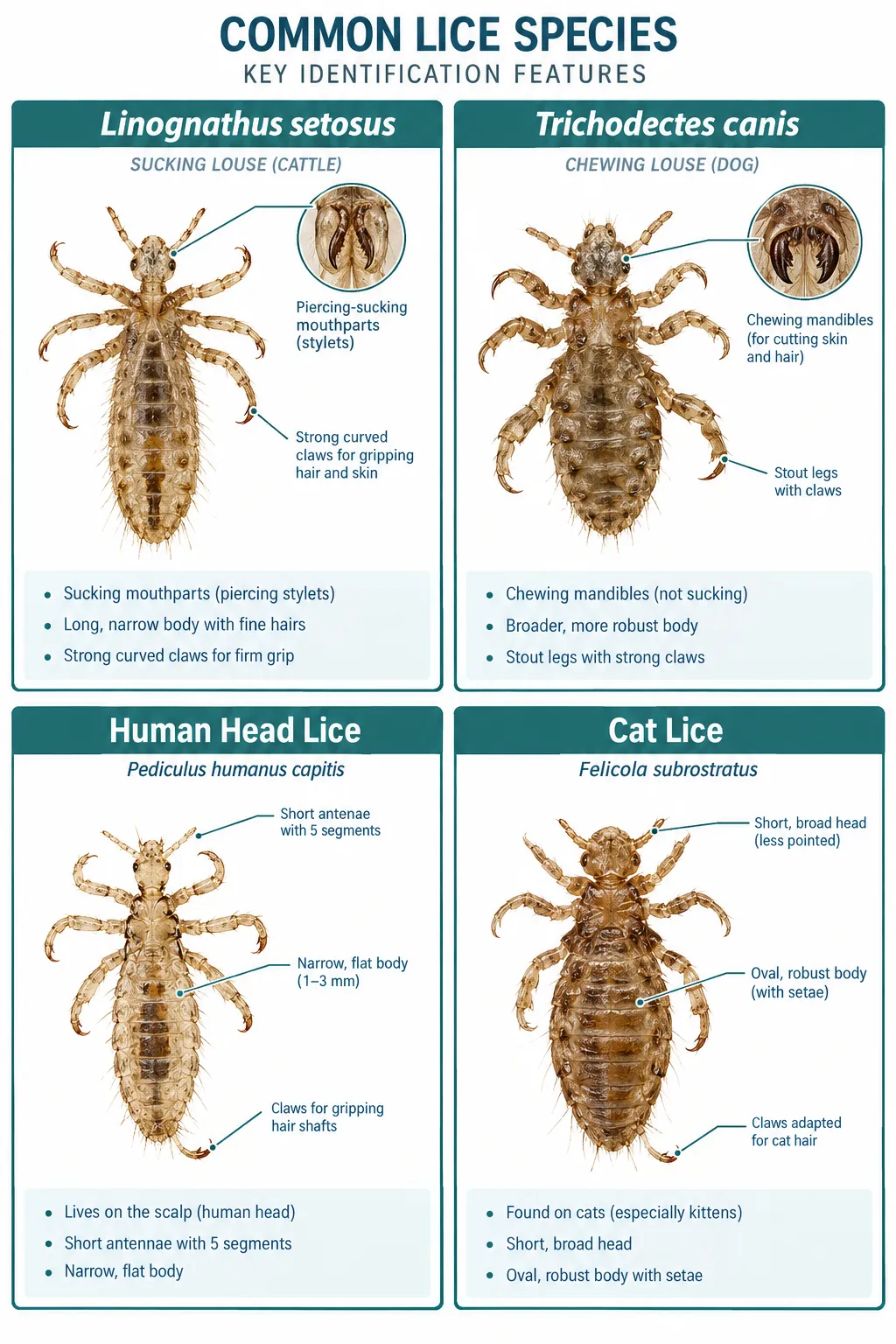
Here’s the key difference between the two types:
- Sucking lice (Linognathus setosus) pierce the skin and feed on blood. Heavy infestations can cause anemia, especially in puppies or small dogs.
- Chewing lice (Trichodectes canis and Heterodoxus spiniger) feed on skin debris, hair, and secretions rather than blood.
Trichodectes canis is also a known intermediate host for the tapeworm Dipylidium caninum, so a lice infestation can sometimes lead to a secondary tapeworm problem if your dog grooms itself and swallows an infected louse.
Quick note: If your dog is scratching intensely, lice are just one possibility. Check out our article on why dogs get hot spots to rule out other skin conditions too.
Can Dogs Get Lice From Humans – or Give Lice to Humans?
No. Dog lice cannot infest humans, and human lice cannot infest dogs. This is one of the most common worries dog owners have, and the answer is clear.
Lice are host-specific. That means each louse species evolved to live, feed, and reproduce on one particular host. Veterinary and parent-facing sources from Taconic Veterinary Center confirm that children with head lice did not get them from their dog, and dogs cannot catch lice from children.
If a dog louse accidentally crawls onto a human, it may wander around briefly but it will not feed or reproduce and typically dies within hours to a couple of days. The risk of a human “infestation” from dog lice is essentially zero.
Bottom line:
- Your child’s head lice? Not from the dog.
- Your dog’s lice? Not going to spread to you or your kids.
- No need to treat your dog when a family member has head lice – unless your vet confirms a separate canine infestation.
How Do Dogs Catch Lice From Other Dogs?
Dogs catch lice almost entirely through direct contact with an infested dog. Unlike fleas, lice cannot jump or fly – they crawl slowly from one host to another.
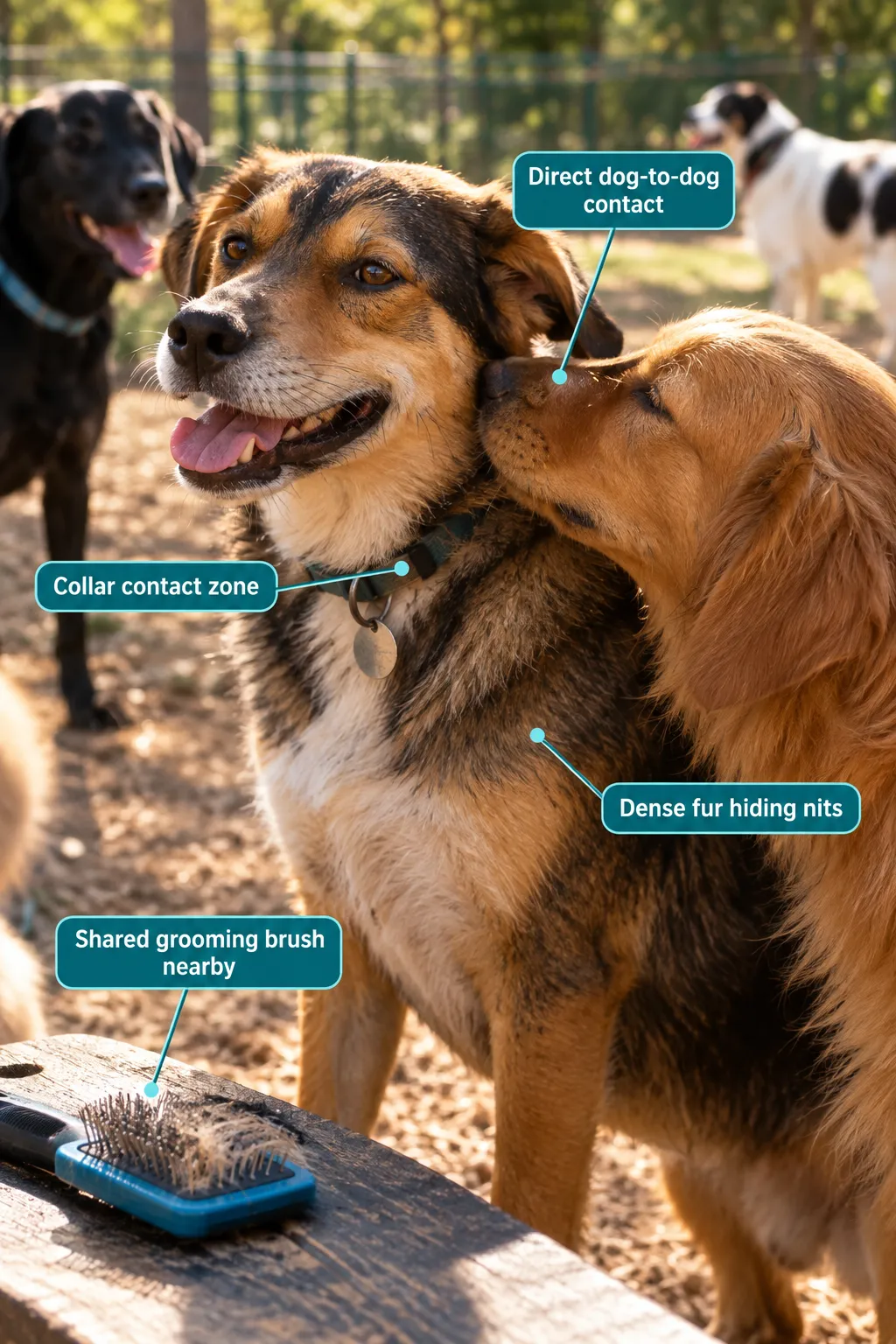
According to the AKC’s expert health guidance on lice in dogs, common transmission routes include:
- Direct dog-to-dog contact – playing, grooming each other, or sleeping together
- Shared grooming tools – brushes, combs, or clippers used on multiple dogs
- Shared bedding or collars – lice can survive briefly off a host on these surfaces
- Kennels, shelters, and dog parks – anywhere dogs are in close proximity
Lice are less mobile than fleas, so the main risk is sustained close contact. A brief sniff at the dog park is much lower risk than a dog sleeping in the same bed as an infested dog for days.
Higher-risk situations include:
- Dogs in overcrowded shelters or boarding kennels
- Poorly nourished or immunocompromised dogs
- Puppies and elderly dogs with weaker immune responses
- Dogs with long, dense coats where lice can hide more easily
Signs and Symptoms of Lice in Dogs
The most obvious sign of lice in dogs is intense, persistent itching – especially around the ears, neck, shoulders, and groin. But itching alone doesn’t confirm lice.
PetMD’s comprehensive dog lice guide lists the key clinical signs to watch for:
- Intense scratching or biting at the skin
- Rough, dull, or matted coat
- Patchy hair loss (alopecia), especially in heavily infested areas
- Restlessness or irritability due to discomfort
- Visible insects – slow-moving, flat, pale insects in the fur
- Nits (lice eggs) – tiny white or yellowish oval eggs attached firmly to individual hair shafts
- Anemia in severe infestations (pale gums, lethargy, weakness) – mainly from sucking lice
How to tell nits from dandruff: Nits are glued to the hair shaft and don’t flick off easily. Dandruff flakes move freely. If you part the fur and see tiny white specks that stay put, that’s a red flag.
Since these symptoms overlap with other conditions, always get a vet confirmation before treating. You might also want to read about early signs of pain in dogs to understand when discomfort becomes something more serious.
Dog Lice vs. Fleas – What’s the Difference?
Dog lice and fleas are both parasites that cause itching, but they behave very differently and require different approaches to treat.
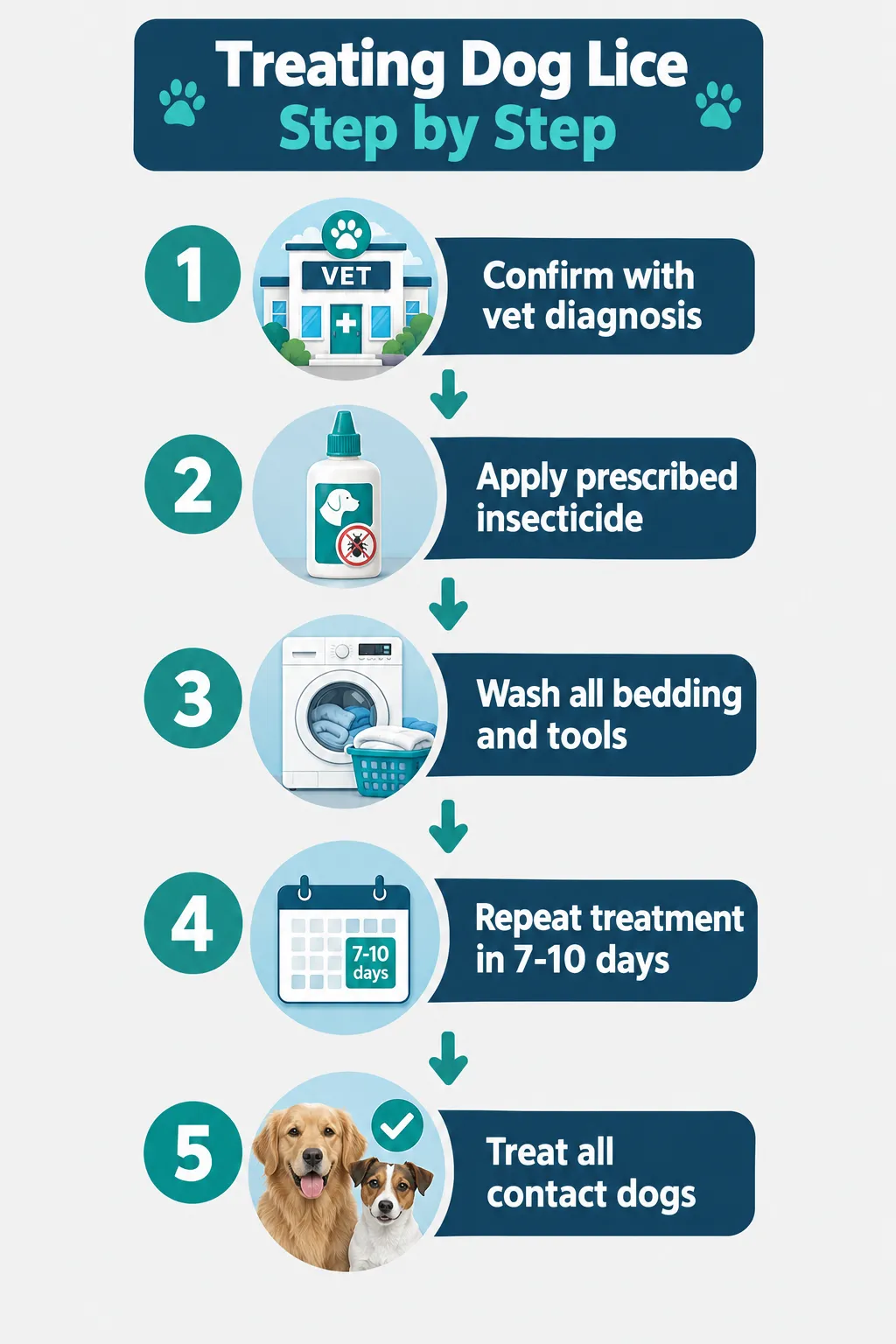
| Feature | Dog Lice | Fleas |
|---|---|---|
| Movement | Slow crawl | Jumps rapidly |
| Visible to naked eye | Yes, pale and flat | Yes, dark brown |
| Eggs (nits/eggs) | Glued to hair shaft | Dropped in environment |
| Spread to humans | No | Can bite humans temporarily |
| Survive off host | Hours to a few days | Weeks to months |
| Common in healthy pets | Rare | Very common |
If you’re dealing with fleas rather than lice, our detailed guide on how to get rid of fleas on dogs walks you through the full process.
Can Cat Lice Spread to Dogs – and Is Dog Lice Contagious to Other Pets?
Cat lice cannot infest dogs, and dog lice cannot infest cats. Each species has its own lice, and cross-species transmission between common household pets is not expected.
Cats have their own louse species (Felicola subrostratus), which is just as host-specific as dog lice. So if your cat and dog both seem itchy, they each need to be evaluated separately – one did not give lice to the other.
What about other pets?
- Rabbits, guinea pigs, and birds all have their own species-specific lice
- Cross-infestation between dogs and these animals does not happen
- If multiple pets in a household are itchy, the cause is likely something environmental (like fleas) rather than shared lice
Do All Dogs Get Lice or Just Certain Breeds?
Any dog can get lice, but some are at higher risk than others. Breed alone doesn’t determine risk – lifestyle and living conditions matter far more.
Elanco’s parasite education resource notes that dogs facing overcrowded housing, poor sanitation, illness, malnourishment, stress, or advanced age are significantly more vulnerable. Shelters and rescue environments see more lice cases than well-maintained home pets.
Higher-risk dogs include:
- Rescue dogs or shelter dogs with unknown parasite history
- Dogs with long, dense coats (harder to spot and treat)
- Puppies and senior dogs with less robust immune systems
- Dogs that are malnourished or have chronic illness
- Dogs that share grooming tools or bedding with infested animals
Healthy, well-groomed dogs on regular parasite prevention are at low risk, regardless of breed.
How to Treat Dog Lice at Home – and When to See a Vet
You should not attempt to treat dog lice without a vet diagnosis first. Many over-the-counter products are ineffective against lice, and some are unsafe for certain dog sizes or breeds.
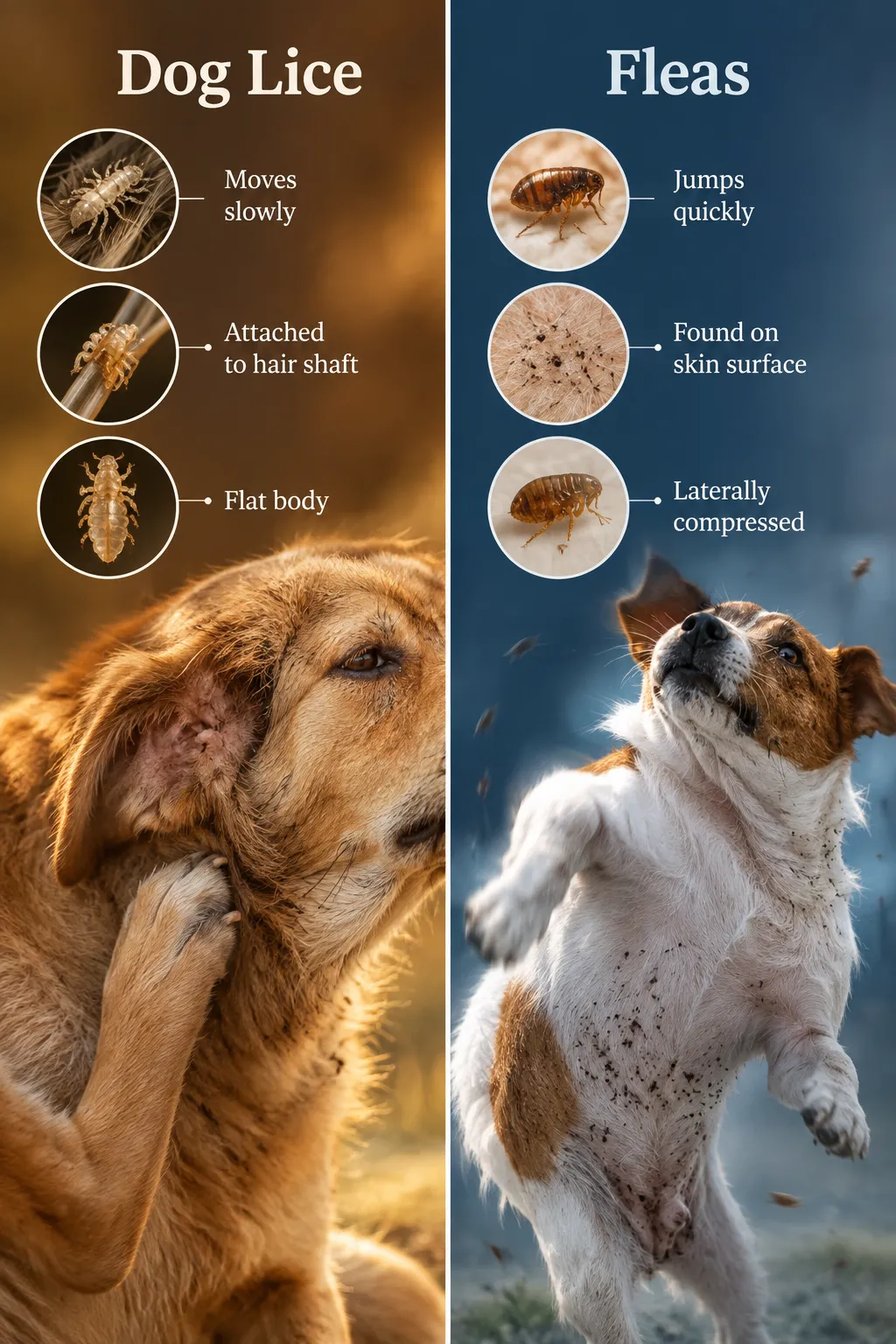
What your vet will likely recommend:
- Confirm the diagnosis – your vet will examine the coat under magnification
- Prescribe a topical insecticide – common options include fipronil, imidacloprid, or selamectin
- Repeat treatment – lice eggs (nits) are resistant to most treatments, so a second application 7-10 days later is standard
- Treat all in-contact dogs – any dog that shared space, bedding, or grooming tools needs treatment too
- Wash or replace bedding – hot-wash all bedding, collars, and soft toys; disinfect or replace brushes and combs
The PDSA’s guidance on lice in dogs also notes that many modern flea and tick preventives offer some protection against lice as well – another reason regular parasite prevention pays off.
When to go to the vet immediately:
- Your dog shows signs of anemia (pale gums, extreme lethargy)
- A puppy or elderly dog is heavily infested
- Symptoms don’t improve after two rounds of treatment
- You’re unsure whether it’s lice, fleas, mange, or another condition
If you’re curious about other home-remedy approaches for dog health issues, see our guide on homemade antibiotics for dogs and gentle remedies – though always check with your vet before trying anything at home.
How Long Does It Take to Get Rid of Dog Lice?
With proper treatment, most dog lice infestations resolve within 3 to 4 weeks. The timeline depends on how thorough the treatment is and whether all contact dogs are treated at the same time.
A single treatment rarely eliminates lice completely because eggs (nits) are resistant to most insecticides. The standard approach is two treatments spaced 7-10 days apart to catch newly hatched lice before they can reproduce.
Factors that affect how quickly lice clear:
- How severe the infestation is at the start
- Whether all contact dogs are treated simultaneously
- Whether bedding and grooming tools are properly cleaned
- The specific product used and whether it’s appropriate for lice
How to Prevent Lice in Dogs
Prevention is straightforward and mostly overlaps with good general parasite control. According to PetMD, keeping dogs on regular parasite preventives, maintaining clean bedding and living areas, and not sharing grooming tools between dogs are the most effective steps.
Practical prevention checklist:
- ✅ Keep your dog on a vet-recommended monthly parasite preventive
- ✅ Don’t share brushes, combs, or clippers between dogs without disinfecting
- ✅ Wash bedding regularly, especially after your dog visits a kennel or shelter
- ✅ Check new dogs (rescues, fosters) for lice before introducing them to resident pets
- ✅ Maintain your dog’s overall health – well-nourished, healthy dogs are less vulnerable
- ✅ Ask kennels and groomers about their parasite control protocols
Good nutrition plays a role in keeping your dog’s immune system strong. If you’re thinking about diet, our article on what you can add to your dog’s dry food has practical ideas.
FAQ
Can dogs get lice from humans?
No. Human lice (Pediculus humanus capitis) are species-specific and cannot survive on dogs. Dog lice cannot infest humans either. The two species are biologically incompatible hosts.
What do dog lice look like?
Dog lice are tiny (1-2mm), flat, pale or yellowish insects. They move slowly through the fur. Their eggs (nits) are white or yellowish oval specks glued tightly to individual hair shafts.
Can I use a human lice shampoo on my dog?
No. Human lice treatments are formulated for human scalps and may contain ingredients that are toxic to dogs. Always use a vet-prescribed product.
Are dog lice contagious to cats?
No. Dog lice are species-specific and cannot infest cats. Cats have their own louse species that does not transfer to dogs.
How do I know if my dog has lice or dandruff?
Nits are glued to the hair shaft and won’t brush off. Dandruff flakes move freely. If the white specks stay firmly attached when you try to flick them away, suspect nits and see your vet.
Can puppies get lice?
Yes, and it’s more dangerous for them. Puppies can develop anemia from a heavy sucking louse infestation. If you suspect lice in a puppy, see a vet promptly.
Do dog lice jump like fleas?
No. Lice crawl slowly and cannot jump or fly. This is why they spread mainly through direct contact rather than jumping from dog to dog across a distance.
Is it safe to cuddle my dog if it has lice?
The risk to humans is negligible – dog lice cannot infest humans. However, you should start treatment promptly to relieve your dog’s discomfort and prevent spread to other dogs.
Can a dog get lice from a dog park?
It’s possible but less likely than at a kennel or shelter where dogs are in prolonged close contact. Brief interactions carry lower risk than extended contact or shared equipment.
Will dog lice go away on their own?
No. Lice infestations do not resolve without treatment. Without intervention, the infestation will grow and cause increasing discomfort, and can lead to anemia in severe cases.
Conclusion
So, can dogs get lice? Absolutely – but the picture is simpler than most people fear. Dog lice stay on dogs, human lice stay on humans, and cat lice stay on cats. There’s no cross-species firewall to worry about between your family members and your pet.
The practical takeaways are clear:
- If your dog is scratching intensely, part the fur and look for slow-moving insects or nits stuck to hair shafts – then call your vet.
- If your child has head lice, don’t panic about your dog – they’re not the source and they can’t catch it.
- Keep your dog on regular parasite prevention, maintain clean bedding, and don’t share grooming tools between dogs.
- If you do find lice, treat all contact dogs at the same time and repeat treatment after 7-10 days to catch newly hatched lice.
Lice are far less common in healthy, well-cared-for dogs than fleas or ticks. With good routine care and a watchful eye, most dog owners will never deal with them at all.