Last updated: November 9, 2026
A dog in a 700-square-foot apartment can live just as happily as a dog with a backyard, but only if the daily structure makes up for the missing space. That’s the real secret behind a good dog care routine: consistency does the work that square footage can’t.
Quick Answer
The best dog care routine for apartment living includes three to four short walks a day, two fixed feeding times, 20 to 30 minutes of daily enrichment, and a predictable bedtime. Dogs in apartments need more structure than dogs with yards because they can’t let themselves out or burn energy on their own schedule.
Key Takeaways
- Most adult dogs need 30 to 60 minutes of total exercise daily, split across multiple walks (Dogster).
- Three to four shorter, sniff-focused walks work better in cities than one long walk.
- Puppies need potty breaks every 1 to 3 hours depending on age.
- Barking in apartments is usually boredom, not aggression, and responds to routine and enrichment.
- Small and medium breeds with lower exercise needs tend to adapt best to apartment life.
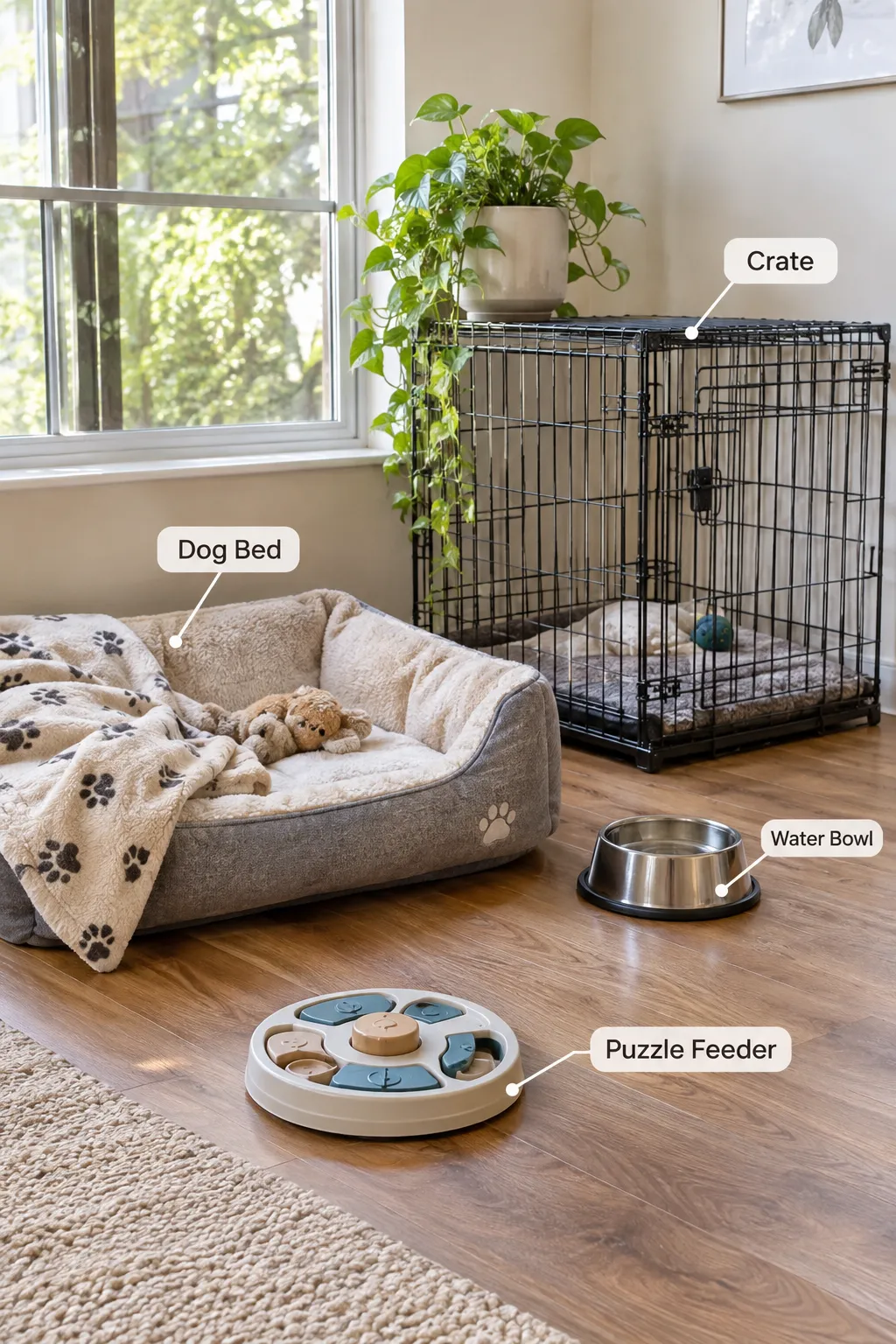
- A dog crate, a comfortable dog bed, and puzzle feeders are the core equipment for small-space living.
- First-time apartment owners most often fail at exercise consistency, not training itself.
How Much Time Do I Need for Dog Care Each Day
Plan for 2 to 3 hours of active dog care time per day, spread across walks, feeding, play, and grooming touch-ups. That number sounds like a lot, but it’s broken into small chunks, not one long block.
A typical day includes:
- 45 to 90 minutes of total walk time
- 20 to 30 minutes of active play or training
- 10 to 15 minutes for feeding and water refreshes
- 10 minutes for brushing or paw wiping after a walk
This adds up fast, but most of it overlaps with normal life, like walking the dog on your own commute or feeding during breakfast. Busy owners can lean on a daily dog routine for busy owners to fit this into a tight schedule.
What’s the Best Daily Schedule for Apartment Dogs
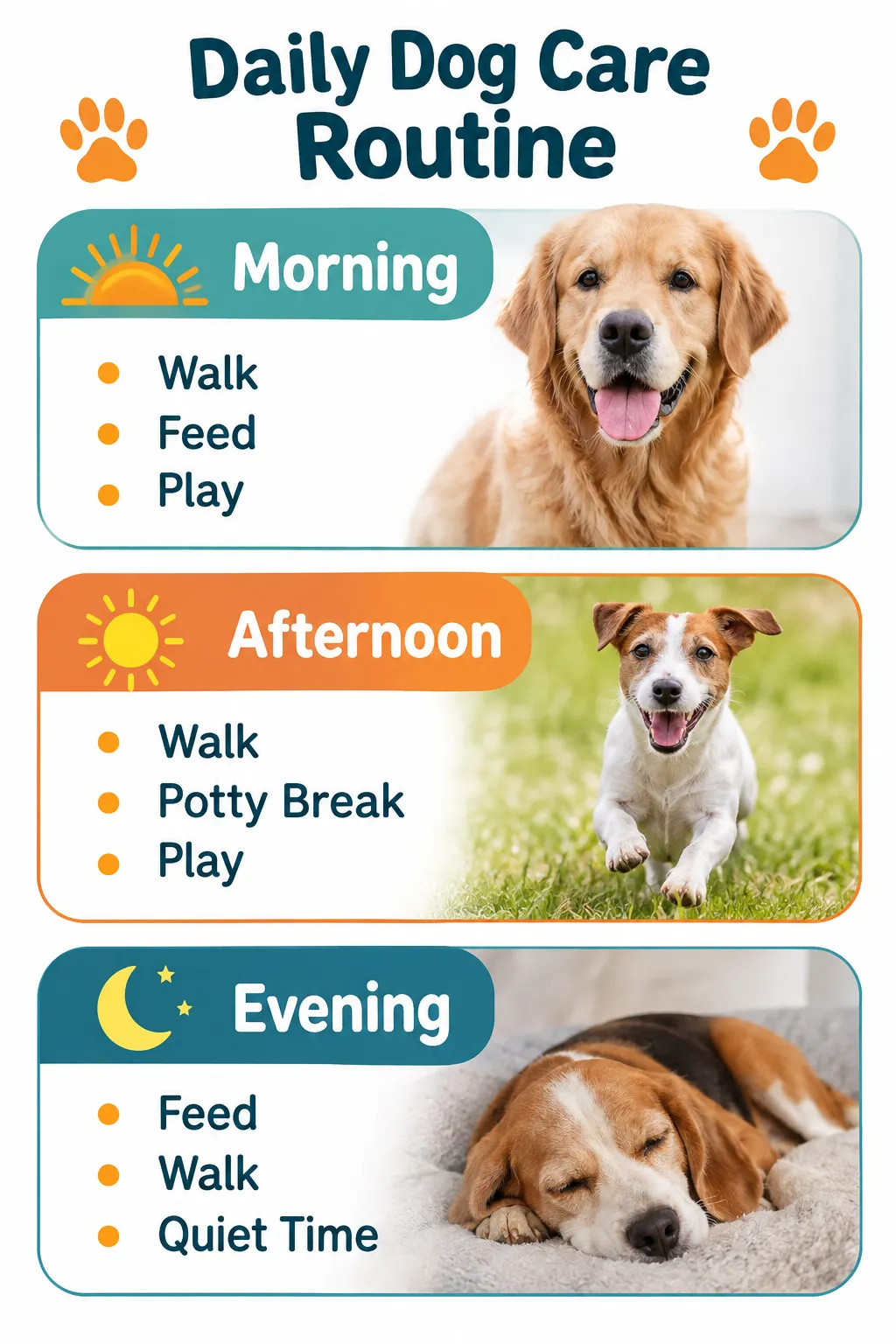
The best daily schedule for an apartment dog follows a consistent morning, afternoon, and evening pattern built around walks, meals, and rest. Dogs thrive on routine because predictability lowers anxiety, especially in small, shared-wall living spaces (Max Bone).
Your dog’s morning routine
Start the day with a bathroom walk within 15 minutes of waking, followed by breakfast and a short sniff walk. This sets the tone for the rest of the day and prevents accidents indoors.
A sample morning:
- Potty walk, 10 minutes
- Breakfast and fresh water
- Sniff walk or short play, 15 to 20 minutes
- Quiet time in the dog bed or crate before you leave
Your dog’s afternoon routine
Midday is for a mental break, not necessarily a full walk, if someone can swing by or you work from home. A puzzle feeder, a frozen treat, or a short training session covers this window well.
If no one is home, a dog walker or midday visit around the 4 to 6 hour mark helps prevent long stretches without a bathroom break.
Your dog’s evening routine
Evening should include the longest walk of the day, dinner, and a wind-down period before bed. Many apartment dogs do best with a 20 to 30 minute evening walk that includes sniffing time, not just fast pace laps around the block.
End the night with a final short potty walk around 30 to 60 minutes before lights out.
How Often Should I Walk My Dog in the City
City dogs generally do better with three to four shorter walks a day instead of one or two long ones. Frequent short walks match a dog’s natural need to go to the bathroom often and give repeated chances to sniff and explore, which is mentally tiring in a good way (Busy Pet Parent).
A simple city walk pattern:
- Morning: 10 to 15 minute potty and sniff walk
- Midday: 15 to 20 minute walk or yard time, if possible
- Evening: 20 to 30 minute main walk
- Night: short 5 to 10 minute final potty walk
Choose a sturdy harness for city walking, since leash pressure around traffic and crowds matters more than in open spaces (Busy Pet Parent).
Why Does My Dog Bark So Much in My Apartment
Excessive barking in apartments is most often caused by boredom, separation anxiety, or reacting to hallway noise, not pure aggression. Dogs with shared walls hear more foot traffic, elevators, and neighbor sounds than dogs in houses, which can trigger alert barking.
Common fixes include:
- Adding background noise like a fan or white noise machine
- Blocking window sightlines to the street if that’s the trigger
- Increasing daily exercise and enrichment so the dog is calmer at rest
- Practicing short alone-time sessions to build tolerance
If barking is tied to specific sounds, calming audio can help. Some owners use a relaxing dog sounds routine during the day to soften reactions to building noise.
What Dog Breeds Are Good for Apartment Living
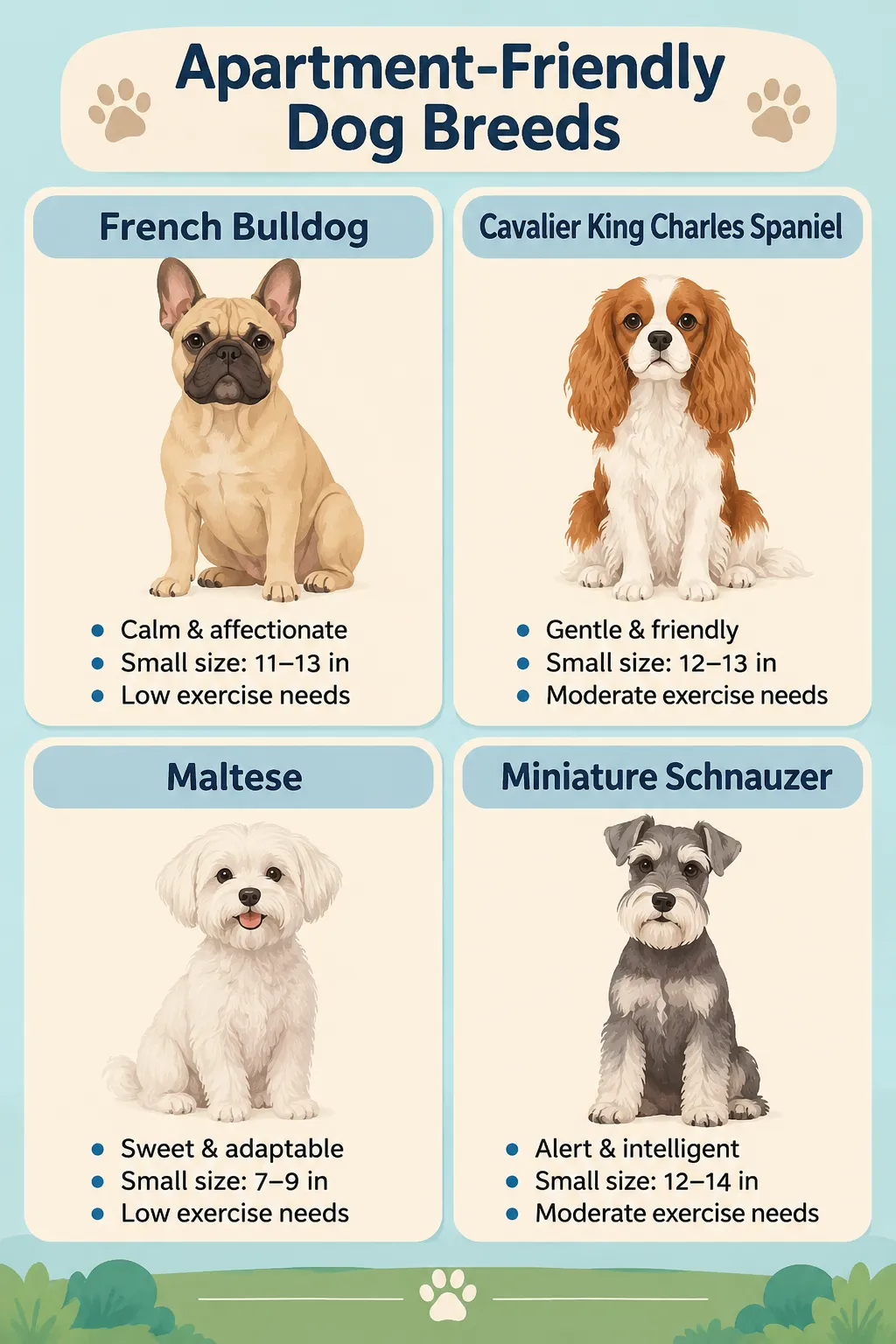
Breeds with lower exercise needs and quieter temperaments tend to adapt best to apartment living, though size matters less than energy level. French Bulldogs, Cavalier King Charles Spaniels, and Basset Hounds are commonly recommended for small spaces (Dogster).
If you’re considering a smaller breed, this list of cute small dogs for apartment living covers ten options worth researching. High-energy working breeds like Border Collies can live in apartments too, but they need significantly more daily exercise to stay calm indoors.
Can I Leave My Dog Alone All Day While I Work
Adult dogs can generally handle 6 to 8 hours alone if they’ve had exercise before you leave and have a safe space to rest. Puppies and senior dogs need much shorter stretches, closer to 2 to 4 hours.
Tips for leaving dogs home:
- Tire the dog out with a walk before you leave
- Leave a puzzle feeder or frozen treat to occupy the first hour
- Use a crate or a dog-proofed room if the dog isn’t fully trustworthy loose
- Arrange a midday walker for dogs under a year old
This pairs well with a structured apartment potty training method so accidents don’t pile up during long work days.
How Do I Keep My Dog Entertained in a Small Space
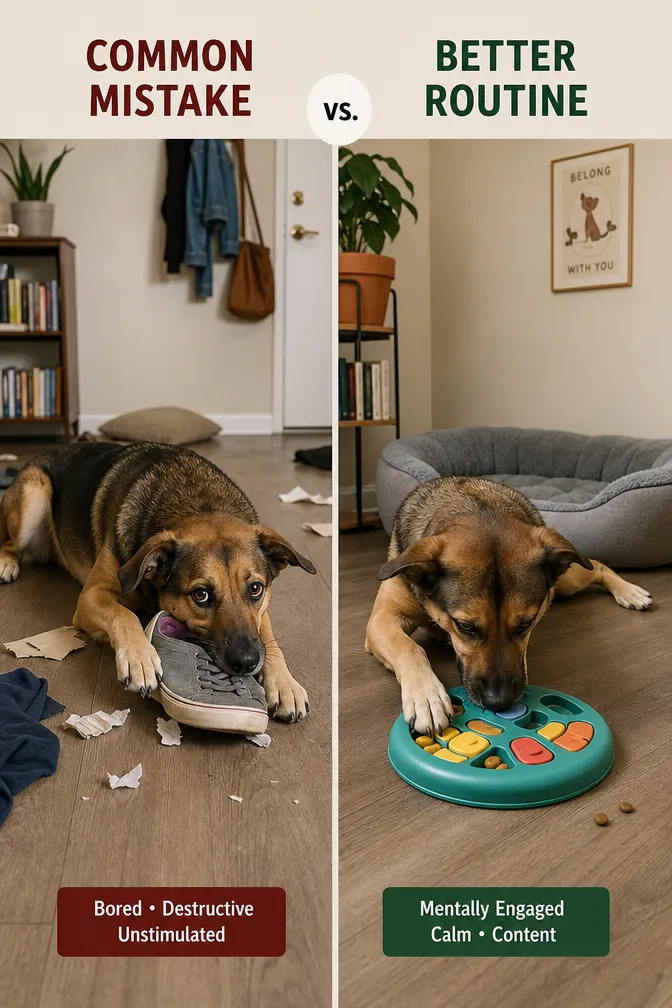
Mental enrichment matters as much as physical space when it comes to keeping a dog entertained in an apartment. Puzzle feeders, scent games, and short training sessions tire a dog’s brain in ways that substitute for a yard (Busy Pet Parent).
Good indoor enrichment options:
- Snuffle mats or scatter feeding
- Frozen stuffed toys
- Teaching new commands for 5 to 10 minutes a day using top commands for dogs training
- Hide-and-seek games with treats around the apartment
- Trick training with a hoop or similar prop, which also works well for small spaces, as shown in this simple hoop trick guide
What’s the Cheapest Way to Care for a Dog in an Apartment
The cheapest apartment dog care routine relies on free and low-cost activities: walks, home-cooked meal additions, DIY treats, and simple training instead of expensive classes or gadgets. Walking is free, and most enrichment tools cost less than $15.
Budget-friendly ideas:
- Make treats at home instead of buying premium bags, such as these no-bake dog treats
- Add safe home-cooked ingredients to meals using guidance from what to cook for my dog daily
- Reuse household items like muffin tins or towels for DIY puzzle feeders
- Skip daycare in favor of neighbor walk-trades when possible
Is Puppy Care Different From Adult Dog Routines
Yes, puppy routines require far more frequent potty breaks, shorter activity bursts, and more naps than adult dog routines. A young puppy may need to go outside every 1 to 2 hours, while most adult dogs can hold it for 4 to 6 hours comfortably.
Puppy day sample:
- Potty break every 1 to 2 hours while awake
- 3 to 4 small meals a day
- Short 5 to 10 minute play sessions, since long walks aren’t recommended until growth plates close
- Multiple naps throughout the day
Breed-specific puppy guides, like this one on Golden Retriever puppy care or Basset Hound puppy care, can help fine-tune the schedule further.
Do Apartment Dogs Need Special Training
Apartment dogs benefit from extra training in quiet command, crate comfort, and polite greetings, since close-quarters living means more exposure to neighbors, hallways, and shared elevators. This isn’t about a different training method, but about prioritizing certain skills sooner.
Priority skills for apartment dogs:
- “Quiet” or “settle” commands
- Calm elevator and hallway behavior
- Crate training for noise control and safety
- Loose-leash walking in tight spaces
How Often Should I Groom My Dog at Home
Most dogs need brushing two to three times a week, with daily paw wiping after walks in city environments. Regular grooming at home reduces shedding buildup in small apartments, where fur accumulates faster in limited square footage.
Breed-specific routines matter here. Long-haired breeds need more frequent care, as outlined in guides like long hair dachshund care tips or the 15-minute Maltese grooming routine. Wiping paws after every walk also keeps apartment floors and dog beds cleaner.
What Mistakes Do First-Time Apartment Dog Owners Make
The most common mistake is underestimating exercise needs and assuming a small living space means a dog needs less activity. Dogs need mental and physical outlets regardless of home size, and skipping this leads to barking, chewing, and anxiety.
Other frequent mistakes:
- Inconsistent walk timing, which confuses potty training
- No designated rest space, leaving the dog without a predictable dog bed spot
- Skipping crate training, then struggling with destructive behavior later
- Assuming toy breeds need no training discipline
Can Senior Dogs Adapt to Apartment Life
Yes, senior dogs often adapt very well to apartments because they typically need less exercise and are content with shorter, gentler walks. The key adjustments involve joint support, slower pace, and easier access to rest areas.
Senior-specific routine notes:
- Shorter, more frequent walks instead of long ones
- Orthopedic dog beds for joint comfort
- More frequent vet check-ins, as covered in how to care for senior dogs
- Non-slip flooring or rugs on hardwood floors
What Health Issues Should I Watch for in Indoor Dogs
Indoor apartment dogs are more prone to weight gain, joint stiffness from less space to move, and stress-related digestive issues if routine is inconsistent. Weight gain specifically ties back to reduced natural movement compared to dogs with yard access (Hello Bello).
Watch for:
- Sudden weight changes
- Excessive licking or chewing from stress
- Limping or stiffness after rest, more common with less daily movement
- Household toxin exposure, since apartments often store cleaning products within reach; check this pet toxin list for common hazards
Feeding portion accuracy also matters more indoors, since dogs burn fewer calories without yard access. Use a feeding guide like how much food should I feed my dog daily to avoid creeping weight gain.
FAQ
What is the best routine for a dog?
The best routine includes consistent wake and sleep times, two to three meals, three to four walks, and daily mental enrichment. Dogs do best when these events happen at roughly the same time each day, since predictability reduces anxiety and supports easier house training.
Can I leave my 9 week old puppy home alone?
A 9-week-old puppy should not be left alone for more than 1 to 2 hours at a time. At this age, puppies have very small bladders and need frequent potty breaks, short naps, and close supervision to prevent accidents and anxiety.
What are the 3-3-3 rules for dogs?
The 3-3-3 rule describes a newly adopted dog’s adjustment period: 3 days to decompress and feel overwhelmed, 3 weeks to start learning routine and settling in, and 3 months to feel fully comfortable and bonded in a new home.
Which dog breeds have low separation anxiety?
Breeds often noted for lower separation anxiety include Basenjis, Greyhounds, French Bulldogs, and Basset Hounds, though individual temperament varies more than breed alone. Early crate training and gradual alone-time practice matter more than breed selection for most dogs.
Conclusion
A strong dog care routine turns a small apartment into a perfectly workable home for a dog. The formula isn’t complicated: frequent short walks, predictable meals, daily enrichment, and a comfortable rest space like a dog bed or crate.
Start small. Pick one part of your current routine, maybe the morning walk timing or the evening wind-down, and make it consistent for two weeks. Dogs notice patterns fast, and most behavior issues in apartments improve once the schedule becomes reliable.
If you’re still building your plan, check our dog care category for more breed-specific and routine-focused guides.