Last updated: November 13, 2026
Quick Answer
Winter nose, also called snow nose, happens when a dog’s black nose fades to pink, brown, or tan during colder months with shorter daylight. Vets believe it’s linked to a drop in an enzyme called tyrosinase, which slows melanin production when temperatures fall and sunlight decreases. It’s almost always cosmetic, not painful, and many dogs’ noses darken again once spring arrives.
A lot of owners panic the first time they notice it. I get it. One day your dog has a jet-black nose, and a few weeks later it looks like someone dusted it with chalk. So let’s talk about why do dogs get winter nose, what it actually means for your pup’s health, and when it’s worth a vet visit.
Key Takeaways
- Winter nose is a seasonal pigment change, not a disease, caused by reduced tyrosinase activity in colder, darker months.
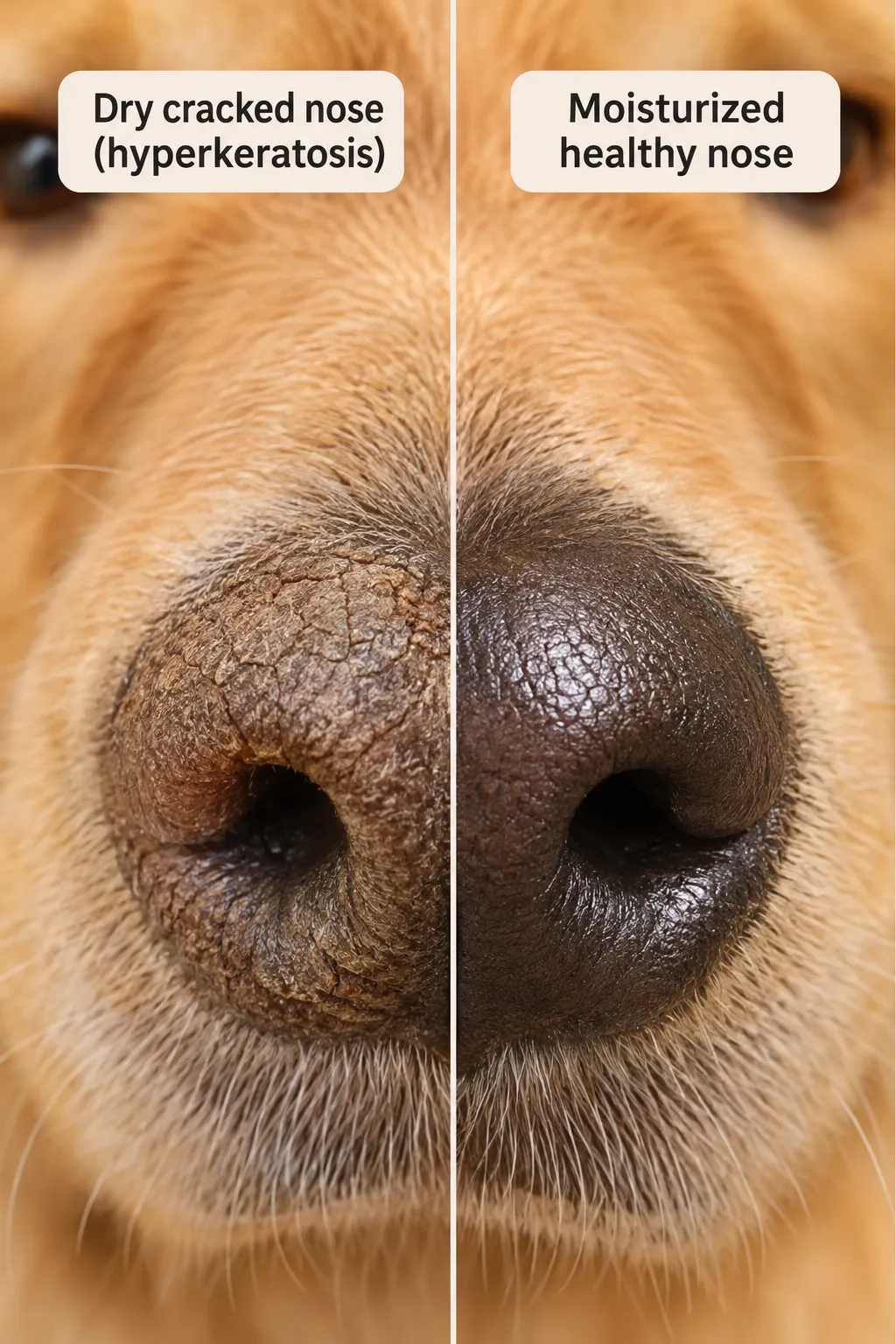
- It’s different from a dry, crusty nose, which is more about skin texture than color.
- Labradors, Golden Retrievers, Siberian Huskies, and other light-coated or northern breeds seem more prone to it.
- The color shift can last the whole winter and often reverses by summer, though some dogs keep a permanently lighter nose.
- You can’t fully prevent it since it’s tied to genetics and season, but you can support nose health with moisturizers and sun protection.
- It’s harmless unless you also see sores, bleeding, swelling, or texture changes, which point to something else.
- Winter nose can technically show up outside winter in dogs kept indoors under artificial light with little sun exposure.
What is winter nose in dogs
Winter nose is a temporary lightening of a dog’s nose pigment that shows up in colder months. The nose goes from solid black (or dark brown) to a mottled pink, tan, or light brown, usually staying smooth and healthy underneath.
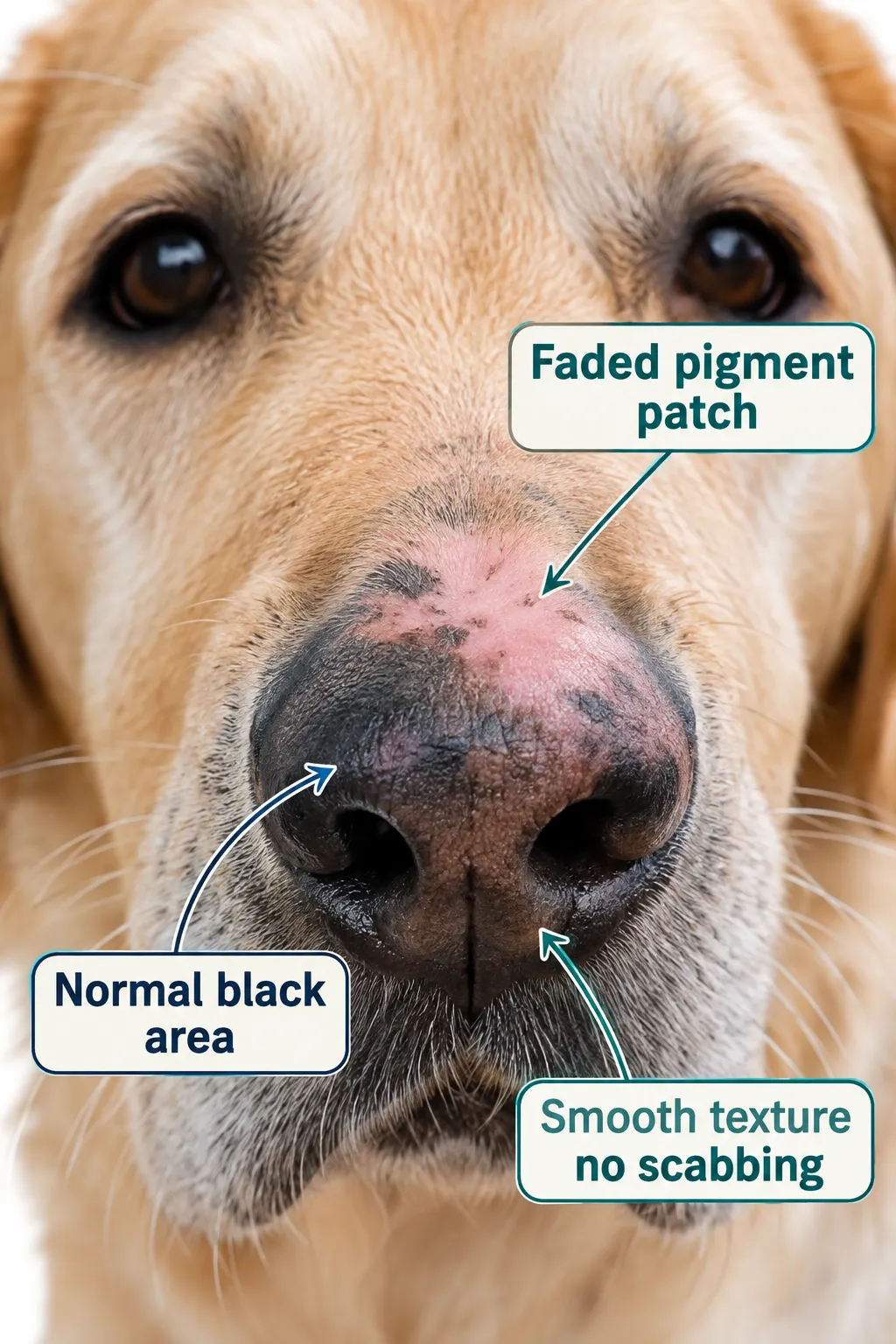
Vets at PetMD describe it as a benign, cosmetic condition that affects the nasal planum, the leathery part of a dog’s nose. It’s not an infection, allergy, or autoimmune problem. The nose tissue stays normal, it just loses some of its dark color.
Most dogs with winter nose act completely normal. They eat, sniff, and play like nothing happened. That’s actually one of the biggest clues that you’re dealing with winter nose and not something more serious.
Why does my dog’s nose turn pink in winter
A dog’s nose turns pink in winter because melanin production slows down when sunlight and warmth decrease. Less melanin means less dark pigment, so the nose looks lighter in patches or all over.
The leading theory, supported by Hill’s Pet Nutrition, is that the enzyme tyrosinase, which helps the body make melanin, becomes less active in cold temperatures. Since melanin is what gives the nose its black or dark brown color, lower tyrosinase activity means lighter pigment.
Shorter days also play a role. Less sunlight seems to affect pigment production the same way it affects a suntan fading in winter, just reversed in cause and effect.
Is winter nose harmful to dogs
No, winter nose is not harmful on its own. It’s a pigment change, not a wound, infection, or sign of pain, according to Hill’s Pet and PetMD.
The nose tissue stays soft, smooth, and intact. There’s no crusting, bleeding, or swelling tied to winter nose specifically.
Decision rule: if the nose looks pink or faded but still feels smooth and your dog shows no discomfort, it’s likely just winter nose. If you see sores, crusting, or the dog pawing at its face, that’s a different issue worth checking.
Which dog breeds are prone to winter nose
Labradors, Golden Retrievers, Siberian Huskies, Bernese Mountain Dogs, and other breeds with lighter coats or northern heritage seem to get winter nose more often. Great Pet Care notes this pattern shows up across many retrievers and sled-type breeds.
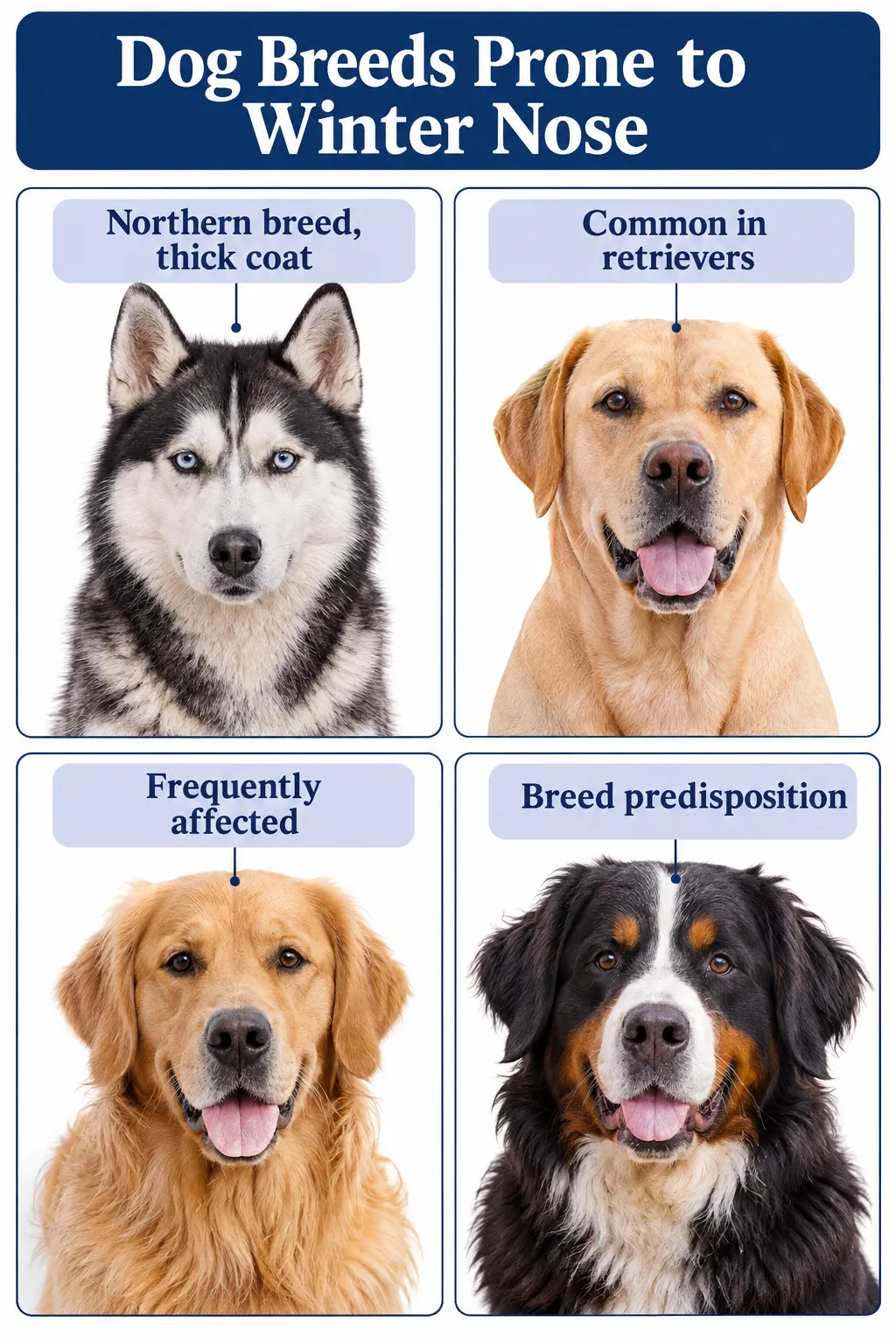
Genetics matter here. Some dogs simply carry a predisposition toward seasonal pigment shifts, similar to how some humans freckle more than others.
If you have a husky, don’t be surprised if winter nose becomes a yearly pattern. It’s common enough in that breed that most husky owners stop worrying about it after the first season.
How long does winter nose last
Winter nose usually lasts through the cold months and starts fading back to the original dark color as days get longer and warmer, often by late spring or early summer. Some dogs take the whole season to fully repigment.
A few dogs never go back to 100% black and keep a permanently lighter patch. This isn’t dangerous, it’s just how their pigment settled.
Example: A Labrador owner might notice the nose lightening in November, staying pink through January and February, then slowly darkening again by April. That timeline tracks with what Betterpet describes as the typical seasonal pattern.
Can you prevent winter nose in dogs
You can’t fully prevent winter nose because it’s driven by genetics and seasonal light changes, both outside your control. What you can do is support overall nose health and limit extra stress on the skin.
Things that may help reduce severity:
- Limiting long exposure to extreme cold and wind
- Using dog-safe nose balm to prevent dryness on top of pigment change
- Keeping walks shorter in bitter weather
If your dog spends a lot of time outside in winter, a good winter coat or gear setup can at least protect the rest of the body, even though it won’t stop nose pigment changes. Pairing that with proper winter walking gear helps manage overall cold exposure.
Best home remedies for dog winter nose
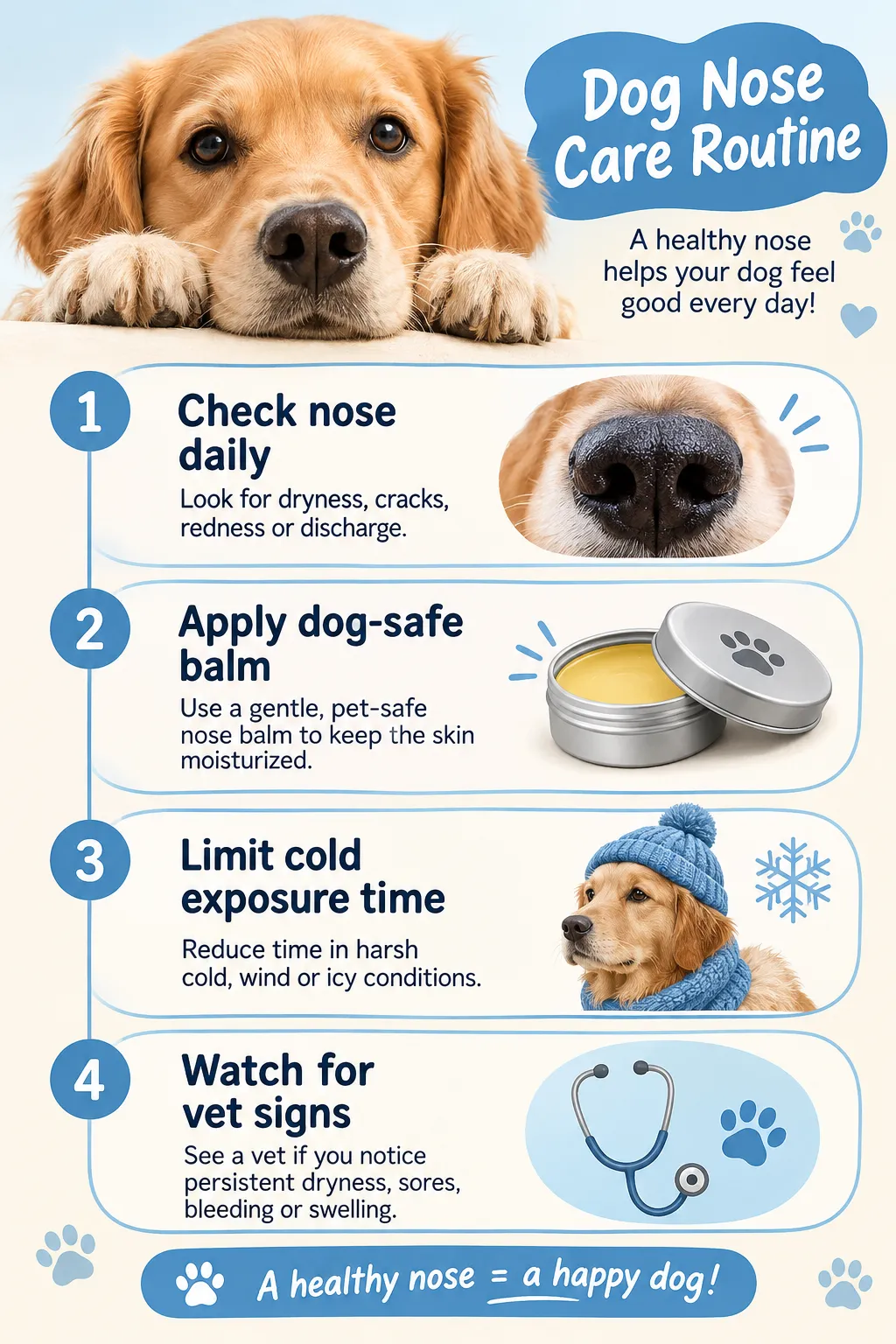
The best home care for winter nose focuses on keeping the nose moisturized and protected, not on trying to reverse the color change itself. There’s no proven remedy that restores pigment faster, according to PetPlace.
Simple steps that genuinely help:
- Apply a dog-safe balm made for noses or paws if the texture feels dry.
- Avoid human lip balm or petroleum products not labeled for pets.
- Limit time outside in harsh wind or extreme cold.
- Watch for cracking and treat dryness before it worsens.
Common mistake: owners sometimes try sunscreen or human skincare products on the nose. Skip that. Stick to products made specifically for dogs, and check with your vet if you’re unsure what’s safe.
Should I worry if my dog has winter nose
You shouldn’t worry if the only change is color, with a smooth, healthy-feeling nose and a dog that’s acting normal. Worry kicks in when other symptoms show up alongside the color shift.
Red flags that mean it’s not just winter nose:
- Crusting, scabbing, or open sores
- Bleeding or discharge
- Swelling around the nose
- Dog pawing at its face or seeming uncomfortable
- Weight loss or lethargy alongside the nose change
Great Pet Care points out that these additional symptoms suggest something beyond simple seasonal pigment loss, like an autoimmune condition or infection.
Is winter nose the same as snow nose
Yes, winter nose and snow nose are the same condition, just different names for it. Vets and pet sites use both terms interchangeably to describe seasonal pigment loss on a dog’s nose.
You might also see it called “snow nose syndrome” in older veterinary writing. All three terms point to the same benign, cold-weather pigment shift.
When should I take my dog to the vet for winter nose
Take your dog to the vet if the nose shows crusting, cracking, bleeding, swelling, or if the color change comes with other symptoms like appetite loss or skin sores elsewhere. A plain color shift with a smooth texture usually doesn’t need a vet visit.
Preventive Vet recommends getting a vet to rule out conditions like discoid lupus erythematosus or pemphigus, both of which can also change nose color but come with inflammation, sores, or ulcers.
Edge case: if your dog’s nose pigment loss happens suddenly, is accompanied by ulceration, or your dog seems unusually uncomfortable touching its face, don’t wait out the season to see if it’s “just winter nose.” Book a vet visit.
Does winter nose go away on its own
Yes, in most dogs, winter nose fades back to the original dark color on its own as the seasons change and daylight increases. No treatment is needed to reverse it.
Some dogs regain full pigment every single year without fail. Others keep a slightly lighter patch permanently, which Betterpet notes is still considered a normal variation, not a health concern.
Can winter nose happen in summer
Winter nose can occasionally show up outside the winter months, though it’s less common. Dogs kept mostly indoors with limited natural sunlight exposure may show similar pigment fading year-round, since the trigger seems tied more to light exposure than the calendar date.
This is one reason some vets prefer the broader term “snow nose” over strictly “winter nose,” since the underlying light-and-temperature mechanism isn’t locked to a specific season for every dog.
Winter nose vs other dog skin conditions
Winter nose is a pigment-only change with normal texture, while other nose conditions involve texture changes, sores, or inflammation. Telling them apart matters because the treatment paths are completely different.
| Condition | Main sign | Needs vet? |
|---|---|---|
| Winter nose | Pink/tan patches, smooth texture | Usually no |
| Dry nose (hyperkeratosis) | Thick, crusty, rough texture | Sometimes, if cracking badly |
| Nasal depigmentation (disease-related) | Sores, ulcers, swelling with color loss | Yes |
This comparison lines up with guidance from PetsVetCheck, which separates simple seasonal depigmentation from disease-driven nasal changes that need medical treatment.
What’s the actual cause of winter nose discoloration
The actual cause is reduced activity of tyrosinase, an enzyme that drives melanin production, which seems to slow down with colder temperatures and reduced sunlight. Less melanin production directly means less dark pigment in the nose tissue.
AKC and Hill’s Pet both point to this enzyme-based mechanism as the current leading explanation, though researchers note it’s still considered a working theory rather than a fully proven mechanism, since not every dog with reduced sun exposure develops winter nose.
This is also separate from dryness-driven nose issues. Dry, cracked noses relate to skin hydration and environmental exposure, covered well by Betterpet’s dry nose guide, while winter nose is purely about pigment. A dog can have one, both, or neither.
FAQ
Does winter nose hurt my dog?
No, winter nose doesn’t cause pain. It’s a color change in the pigment layer, not a wound or irritation.
Will my dog’s nose go back to black?
In most cases yes, though some dogs keep a slightly lighter patch permanently. Both outcomes are considered normal.
Can puppies get winter nose?
Yes, puppies can show the same seasonal pigment shift as adult dogs, especially in predisposed breeds.
Is winter nose contagious between dogs?
No, it’s not contagious. It’s tied to individual genetics and environmental light exposure, not an infectious process.
Should I use sunscreen on my dog’s nose for winter nose?
There’s no evidence sunscreen prevents or reverses winter nose. Focus on dog-safe moisturizing balm instead if dryness is a separate issue.
Can diet affect winter nose?
There’s no solid evidence linking diet to winter nose specifically, since it’s primarily driven by temperature and light, not nutrition.
Is winter nose more common in older dogs?
It can appear at any age, though breed and genetics matter more than age alone.
Does indoor heating stop winter nose?
No, indoor heating doesn’t change nose pigment since the trigger is more about light exposure and ambient cold than indoor warmth.
Conclusion
So, why do dogs get winter nose? It comes down to a seasonal dip in melanin production, likely tied to lower tyrosinase activity when sunlight and warmth drop off. For most dogs, it’s a cosmetic quirk, not a medical problem.
Keep an eye on texture, not just color. A smooth pink nose is probably just winter nose. A crusty, sore, or swollen one deserves a vet visit.
If your dog’s nose changes color this winter, moisturize if it feels dry, skip the panic, and watch for other symptoms. Most dogs get their dark nose back by summer, and even if yours doesn’t, a lighter nose is still a healthy one.