Last updated: September 28, 2026
Quick Answer
Most signs of heart problems in dogs start quiet: a little more panting, a slightly slower walk, a soft cough at 2 a.m. These early clues get blamed on age, weather, or a rough day, but they often show up months before a dog looks visibly sick. Catching them early gives your vet more treatment options and your dog more good years.
Key Takeaways
- Early heart disease in dogs is often silent on the outside, even while it progresses inside the heart.
- A rising resting or sleeping breathing rate is one of the earliest, most measurable warning signs.
- A soft, persistent cough at night can point to left-sided heart failure, not just a “tickle in the throat.”
- Reduced stamina on walks is easy to write off as normal aging, but it’s a common early red flag.
- Fainting or collapse after exercise can mean the heart isn’t pumping enough blood, or there’s an abnormal rhythm.
- A newly found heart murmur during a routine vet visit can appear years before any obvious symptoms.
- Small dog breeds like Cavalier King Charles Spaniels and Chihuahuas face higher risk for valve disease.
- Large breeds like Dobermans and Great Danes are more prone to a different disease called dilated cardiomyopathy.
- Heart disease can’t usually be reversed, but it can often be managed for months or years with the right treatment.
What are the early warning signs of heart disease in dogs?
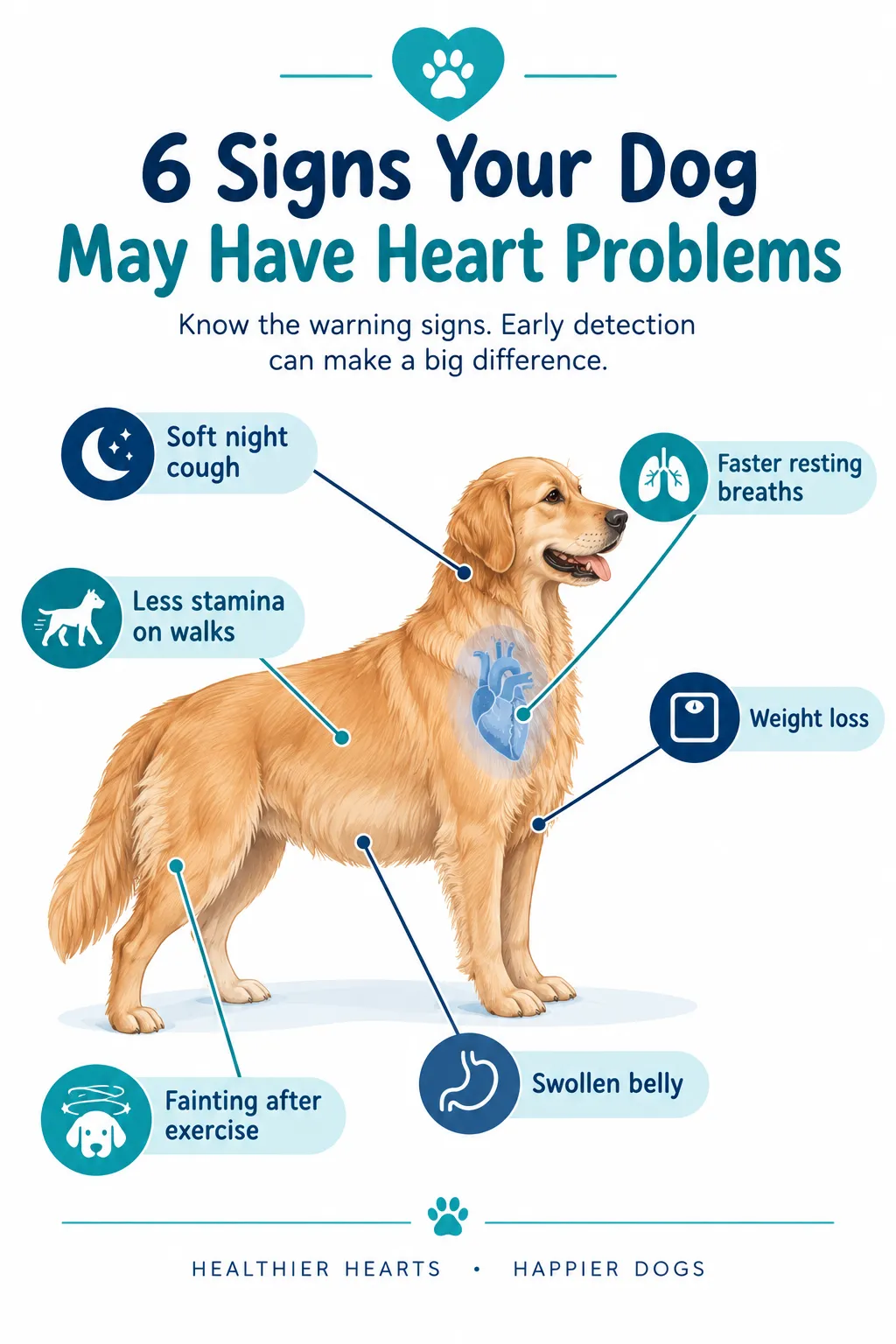
The earliest signs of heart problems in dogs are almost always subtle. Think slightly faster breathing at rest, a little less enthusiasm on walks, or an occasional soft cough. None of these scream “emergency,” which is exactly why owners miss them.
Veterinary cardiologists describe early heart disease as largely silent externally, meaning the dog can look and act mostly normal while changes are already happening inside the heart, according to research published on PMC.
Here are the nine signs most owners brush off:
- Faster breathing while sleeping or resting
- A soft cough that shows up at night or after lying down
- Less stamina on walks or play sessions
- Fainting or brief collapse after exercise
- Unexplained weight loss or muscle loss over weeks
- A gradually bigger belly that isn’t just extra weight
- Trouble getting comfortable or lying flat to sleep
- Heavier panting or breathlessness with mild activity
- A new heart murmur found during a routine checkup
A murmur is often the very first clue, sometimes showing up a year or more before any of the other signs appear, according to the American Kennel Club. If your vet mentions a murmur at a routine visit, don’t ignore it just because your dog “seems fine.”
How do I know if my dog has a heart problem, and can dogs have heart attacks?
You can’t diagnose a heart problem at home, but a pattern of small changes over 2 to 4 weeks is your best clue to call the vet. And no, dogs almost never have heart attacks the way humans do. Their heart disease usually builds slowly through valve wear or muscle weakening.
Heart attacks in humans come from blocked coronary arteries. Dogs rarely get that kind of blockage. Instead, canine heart disease tends to develop through two more common paths, according to Tufts University’s cardiology program:
- Valve disease (common in small breeds), where a valve leaks and makes the heart work harder over time
- Dilated cardiomyopathy (common in large breeds), where the heart muscle stretches and weakens
Decision rule: if your dog shows two or more of the nine signs above for more than a couple of weeks, book a vet visit rather than waiting to “see if it gets better.” Heart disease rarely resolves on its own.
What’s the difference between normal dog panting and heart problems?
Normal panting cools your dog down after exercise, excitement, or heat, and it stops within 10 to 20 minutes of rest. Panting from heart problems shows up at rest, doesn’t ease with cooling down, and often comes with a faster resting breathing rate even during sleep.
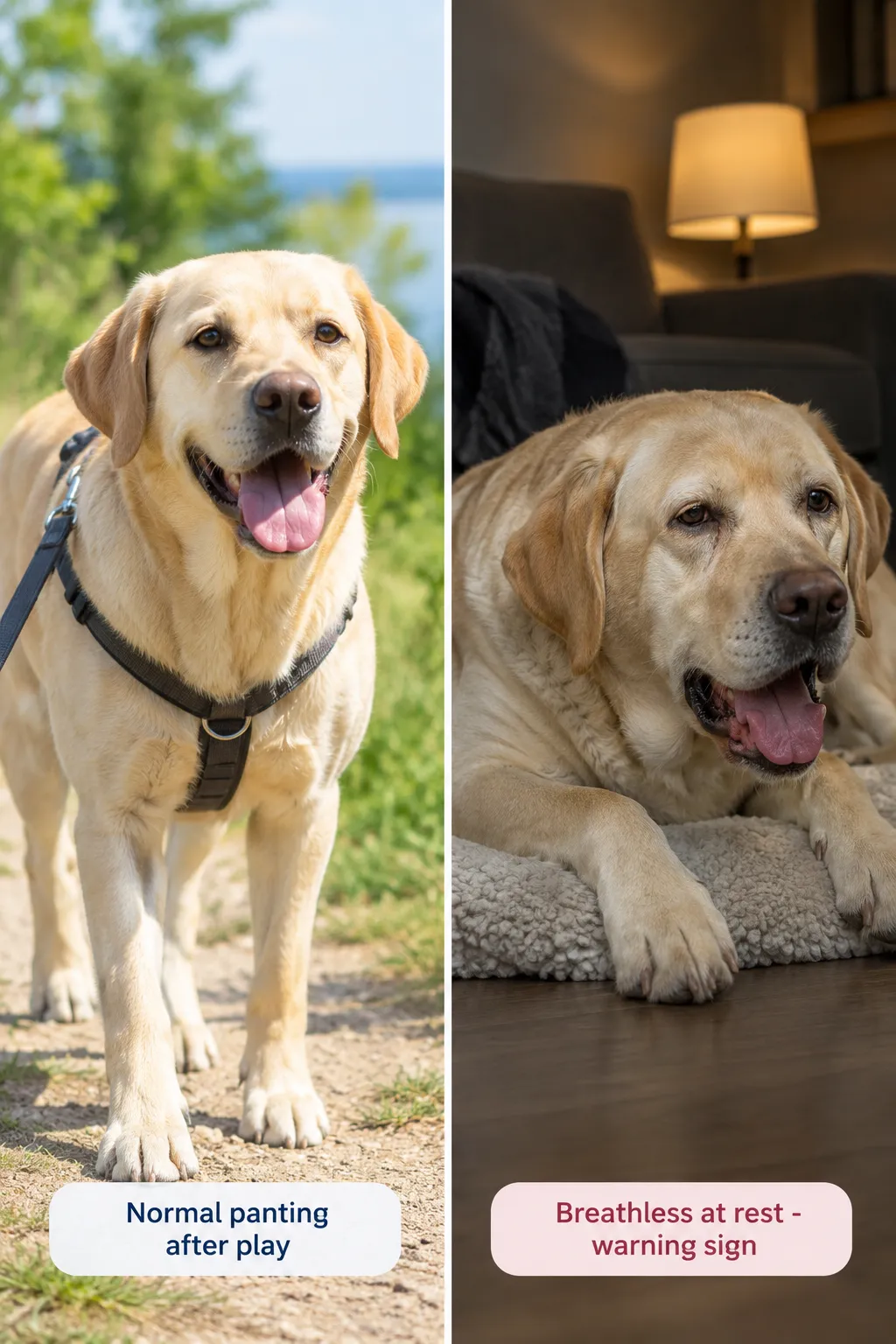
| Feature | Normal panting | Heart-related breathlessness |
|---|---|---|
| When it happens | After exercise, heat, excitement | At rest or during sleep |
| How long it lasts | Fades within 20 minutes | Persists or worsens |
| Body position | Relaxed | Elbows out, neck stretched |
| Sleeping breath rate | Slow and even | Noticeably faster than usual |
Common mistake: owners assume heavy breathing is just “getting older” or a hot day. If your dog pants hard on a cool day while sitting still, that’s worth mentioning to your vet. This is different from the stress-related panting and body language changes covered in our stressed dog signs guide, so it helps to rule out anxiety first.
Why is my dog coughing at night, and what does it mean?
A soft, dry cough that shows up at night or right after lying down can be an early sign of left-sided heart failure. Fluid starts to build around the lungs, and lying flat makes the cough worse, according to the Merck Veterinary Manual.
This kind of cough is usually:
- Soft and repetitive, not harsh or honking
- Worse at night or after resting
- Sometimes paired with restlessness or trouble settling down
Not every nighttime cough means heart trouble. Kennel cough and other respiratory infections can look similar, so it’s worth comparing symptoms against our guide on whether dogs can catch colds before assuming the worst. Edge case: if the cough only happens after drinking water or during excitement, it may be tracheal irritation, not heart-related.
Is lethargy and weakness always a sign of heart issues, and which breeds are most at risk?
No, lethargy and weakness are not always heart-related, but combined with fainting after exercise, they’re a strong signal worth checking. Fainting episodes usually mean the heart isn’t pumping enough blood to the brain, or there’s an abnormal heart rhythm, per PetMD.
Lethargy alone can also point to other conditions, so it’s worth reading our breakdown of early pain signs in dogs or kidney problem symptoms to compare notes.
Breed risk varies a lot:
| Breed group | Common heart condition | Typical age of concern |
|---|---|---|
| Cavalier King Charles Spaniel, Chihuahua, Poodle | Mitral valve disease | Middle-aged to senior |
| Doberman, Great Dane, Boxer | Dilated cardiomyopathy | Middle-aged |
| Boxer, Bulldog breeds | Congenital defects | Puppy to young adult |
Senior dogs of any breed carry higher overall risk, which is one more reason routine wellness visits matter as pets age, as outlined in our senior dog care guide.
What tests do vets use to check for dog heart disease, and how much does it cost?
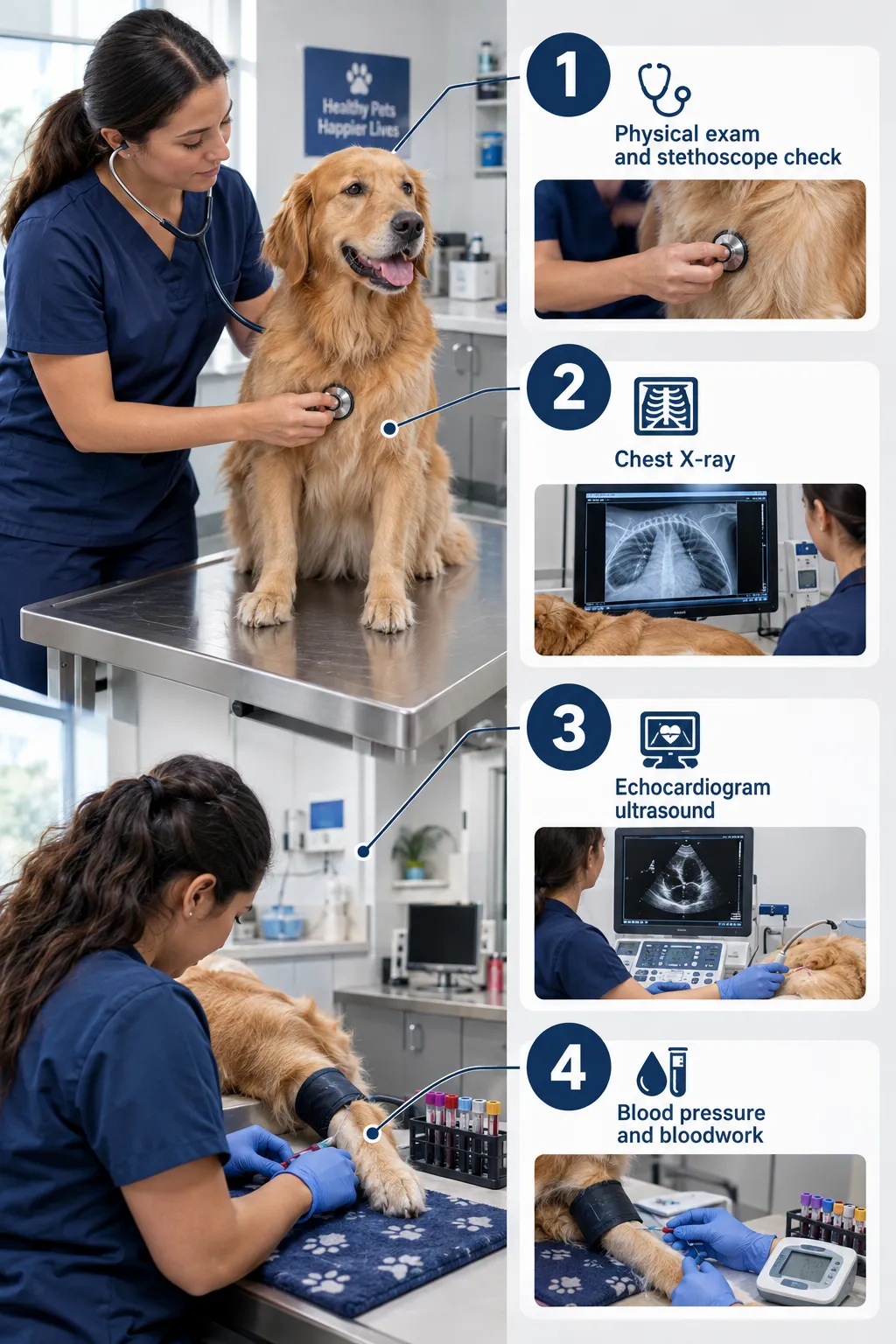
Vets typically start with a physical exam and stethoscope check, then move to chest X-rays, an echocardiogram (heart ultrasound), and sometimes an ECG or blood pressure reading. Full diagnostic workups commonly range from a few hundred dollars for basic screening to over a thousand dollars for a full cardiology workup with a specialist, though exact pricing varies widely by clinic and region.
A typical workup includes:
- Physical exam – listening for murmurs, arrhythmias, or lung sounds
- Chest X-ray – checks heart size and looks for fluid in the lungs
- Echocardiogram – ultrasound imaging of heart chambers and valves
- ECG – measures electrical rhythm if an arrhythmia is suspected
- Blood pressure and bloodwork – rules out other contributing conditions
The American College of Veterinary Internal Medicine now recommends staging dogs by disease severity before symptoms even start, which is part of a broader 2026 push toward earlier detection and home monitoring.
Can young dogs get heart problems, or is it only older dogs?
Young dogs can get heart problems too, mostly from congenital defects present at birth rather than the wear-and-tear disease seen in older dogs. Breeds like Boxers and Bulldogs are more prone to these birth defects, which is why puppy wellness exams always include a heart listen.
A heart murmur and actual heart disease are not the same thing. A murmur is just an unusual sound the vet hears, caused by turbulent blood flow. It can be:
- Innocent – common in puppies and often fades by 6 months old
- A warning sign – linked to valve disease or a structural defect that needs monitoring
According to Merck’s veterinary resources, most murmurs in adult dogs, especially small breeds over age 5, deserve a follow-up echocardiogram rather than a “wait and see” approach.
Can heart problems in dogs be treated, and what should I do next?
Heart disease in dogs usually can’t be reversed, but it’s often very manageable with medication, diet changes, and monitoring, sometimes for years after diagnosis. Dogs with well-managed congestive heart failure commonly live a year or more past diagnosis, and some live much longer depending on the stage caught, according to AKC’s guide to congestive heart failure.
Treatment usually involves:
- Diuretics to clear fluid buildup
- Medications that ease the heart’s workload
- Sodium-controlled diets in later stages
- Regular rechecks and imaging to track progression
Here’s what to do if you’re worried right now:
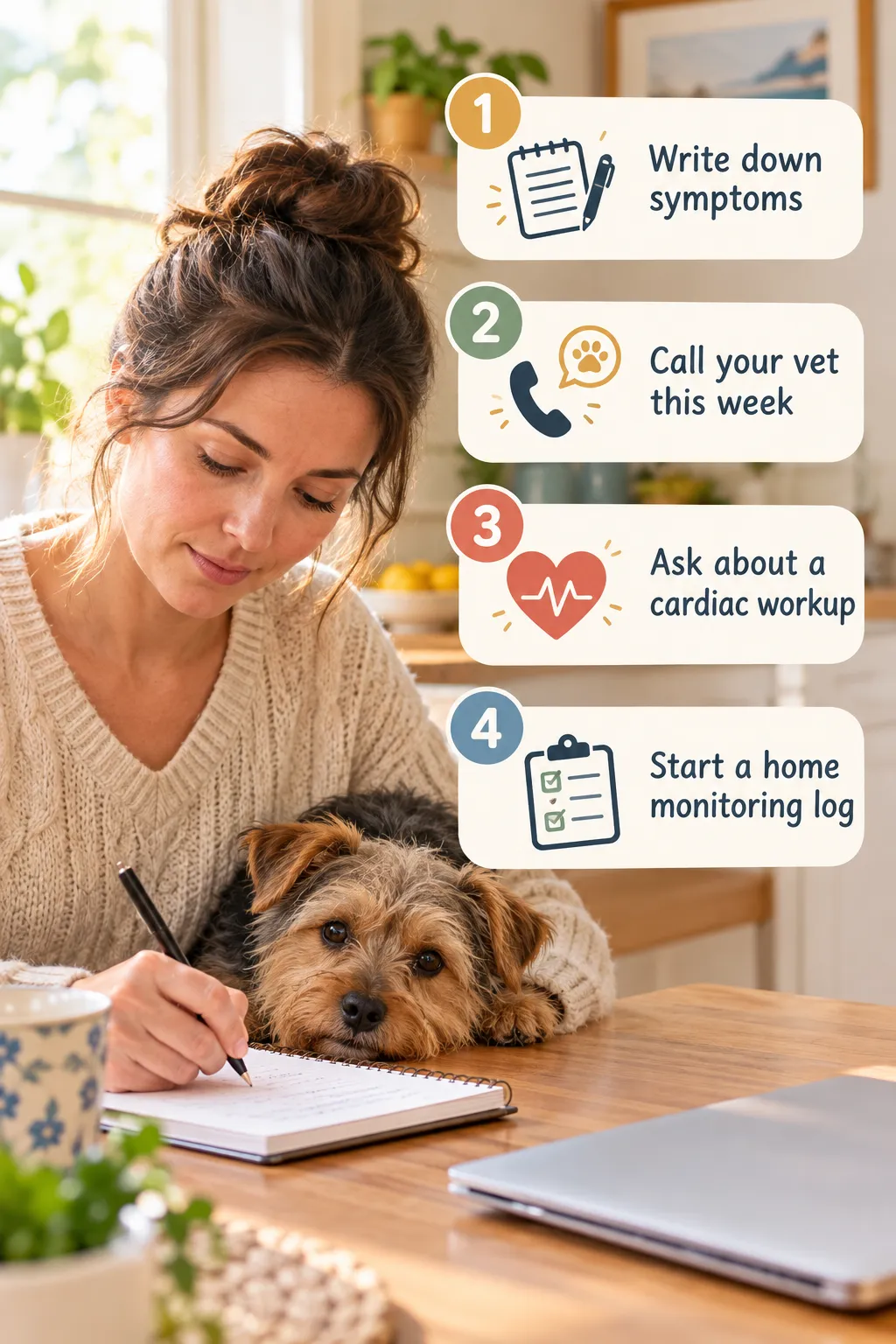
- Write down what you’re seeing – cough frequency, breathing rate at rest, energy changes
- Call your vet this week, not “eventually”
- Ask specifically about a cardiac workup, since general bloodwork can miss early heart disease
- Start counting resting breaths per minute at home as a simple ongoing check, per VCA Hospitals
Choose urgent care if: your dog collapses, has blue-tinged gums, or struggles to breathe even at rest. That’s an emergency, not a “call in the morning” situation, according to Merck’s overview of heart failure in dogs and cats.
FAQ
What is the very first sign of heart disease in dogs?
A new heart murmur found during a routine vet exam is usually the earliest sign, often showing up before any visible symptoms.
Can stress or hot weather cause the same symptoms as heart disease?
Yes, anxiety and heat can cause panting and restlessness that look similar, so ruling those out first with your vet matters before assuming heart disease.
Do all dogs with a heart murmur develop heart failure?
No. Some murmurs stay mild for years. Regular monitoring helps your vet catch progression early if it happens.
Is a dog cough at night always a heart problem?
No. Nighttime coughing can also come from kennel cough, allergies, or tracheal irritation, so a vet exam is needed to confirm the cause.
How fast does canine heart disease usually progress?
It varies widely by cause and breed, but many dogs stay stable for months to years with proper management once diagnosed.
Can diet help manage heart disease in dogs?
Yes, sodium-controlled diets are commonly used in later stages of heart failure, alongside prescribed medication, under vet guidance.
Should I be worried about a swollen belly in my senior dog?
Possibly. Gradual abdominal swelling can signal fluid buildup from right-sided heart failure, not just weight gain, so it’s worth mentioning to your vet.
Conclusion
Heart problems in dogs rarely announce themselves loudly. They show up as a slightly slower walk, a few extra breaths per minute, or a soft cough you almost don’t notice.
That’s the whole point of this list. Catching these quiet signs early gives your vet more room to slow things down and gives your dog more comfortable years.
If any of these nine signs sound familiar, don’t wait for a dramatic symptom to show up. Book a vet visit, mention what you’ve noticed, and ask about a basic cardiac screening. It’s a small step that can make a real difference.