Last updated: August 25, 2026
Quick Answer: Yes, dogs can get colds – but not from you. Dogs develop their own respiratory infections caused by dog-specific viruses and bacteria, not the human rhinovirus. Symptoms look a lot like a human cold: runny nose, coughing, and low energy. Most cases are mild and resolve in 1 to 3 weeks, but some can turn serious fast.
Key Takeaways
- Dogs cannot catch the common cold from humans, but they do get their own respiratory illnesses
- The main culprits are kennel cough (CIRDC), canine parainfluenza, canine adenovirus type 2, and canine influenza
- The 7 warning signs most owners miss: nasal discharge, watery eyes, sneezing, mild cough, lethargy, reduced appetite, and low-grade fever
- Dog colds are highly contagious between dogs – especially in kennels, dog parks, and grooming facilities
- Puppies, senior dogs, and immunocompromised dogs face the highest risk of serious complications
- Most healthy adult dogs recover at home with rest, fluids, and monitoring
- Vaccines exist for kennel cough and canine flu – ask your vet if your dog is up to date
Can Dogs Get Colds the Same Way Humans Do?
Dogs absolutely get colds, but the biology is different from ours. According to PetMD, dogs cannot catch human colds because the viruses that make us sick are species-specific. The human rhinovirus simply does not replicate well in a dog’s body.
What dogs do get is a cluster of respiratory infections caused by dog-specific pathogens. These include:
- Bordetella bronchiseptica – the main bacterial cause of kennel cough
- Canine parainfluenza virus – very common, spreads easily between dogs
- Canine adenovirus type 2 – contributes to upper respiratory symptoms
- Canine respiratory coronavirus – not related to COVID-19
- Canine influenza virus (H3N2 and H3N8) – a true flu, more serious than a typical cold
The term “dog cold” is informal. Vets often call the broader condition Canine Infectious Respiratory Disease Complex (CIRDC). It covers any combination of the above pathogens working together.
What Are the 7 Warning Signs of a Cold in Dogs?
These are the symptoms most owners either dismiss or confuse with something else entirely. Knowing them early makes a real difference.
1. Nasal discharge – Clear, watery mucus at first. If it turns yellow or green, that signals a secondary bacterial infection.
2. Watery or goopy eyes – Often mistaken for allergies or normal eye boogers. Check our guide on why dogs get eye boogers and when it signals something serious for more context.
3. Sneezing – Occasional sneezing is normal. Frequent, repeated sneezing paired with discharge is not.
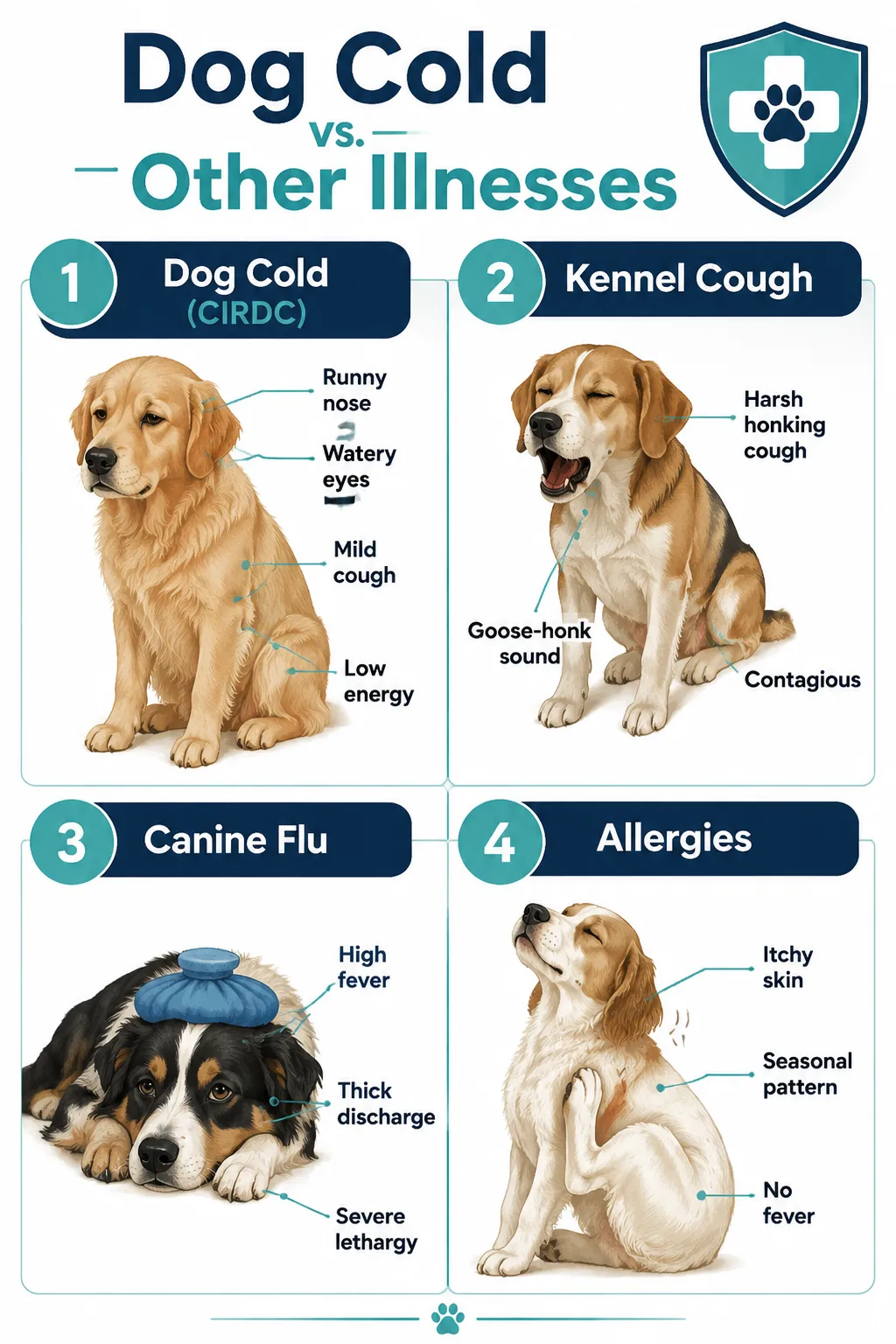
4. Mild cough – This one trips up a lot of owners. A soft, wet cough is more typical of a cold. A harsh, honking cough points more toward kennel cough specifically.
5. Lethargy – Your usually energetic dog just wants to lie around. This is often the first sign owners notice.
6. Reduced appetite – A sick dog may skip meals or eat less than usual. If it lasts more than 48 hours, pay attention.
7. Low-grade fever – Normal dog temperature is 101 to 102.5°F (38.3 to 39.2°C). Anything above 103°F warrants monitoring. Above 104°F is a vet visit.
Common mistake: Many owners assume their dog is just tired or “off” for a day. If three or more of these signs appear together, it’s likely a respiratory illness, not just a mood.
Can Dogs Catch Colds From Humans, or Vice Versa?
Dogs cannot catch colds from humans, and humans cannot catch dog colds from dogs – at least not through the typical cold viruses. Research and veterinary consensus confirm that human cold viruses are not transmissible to dogs in any meaningful way.
That said, there is a concept called reverse zoonosis – where humans theoretically pass certain pathogens to animals. For common cold viruses, this is not a documented concern. You do not need to avoid your dog when you have a cold.
What IS worth knowing: if your dog is sick, keep them away from other dogs. Dog-to-dog transmission is the real risk here.
Is Kennel Cough the Same as a Dog Cold?
Kennel cough is the most common form of what most people call a “dog cold,” but they are not exactly the same thing. Kennel cough, officially called infectious tracheobronchitis, is caused by a combination of pathogens – most notably Bordetella bronchiseptica and canine parainfluenza virus.
The signature sign of kennel cough is a loud, honking or hacking cough – often described as sounding like a goose. It can be so forceful it looks like the dog is about to vomit.
A general dog cold may have a softer cough or no cough at all. Kennel cough is also extremely contagious and spreads rapidly in places where dogs gather.
How contagious is a dog cold to other dogs?
Very. Dog respiratory illnesses spread through airborne droplets, direct contact, and shared surfaces like water bowls and toys. A single infected dog at a boarding facility or dog park can expose dozens of others within hours.
If your dog has been recently boarded, groomed, or visited a dog park and then develops symptoms, respiratory infection is the top suspect.
What Causes Colds in Dogs and How Do They Spread?
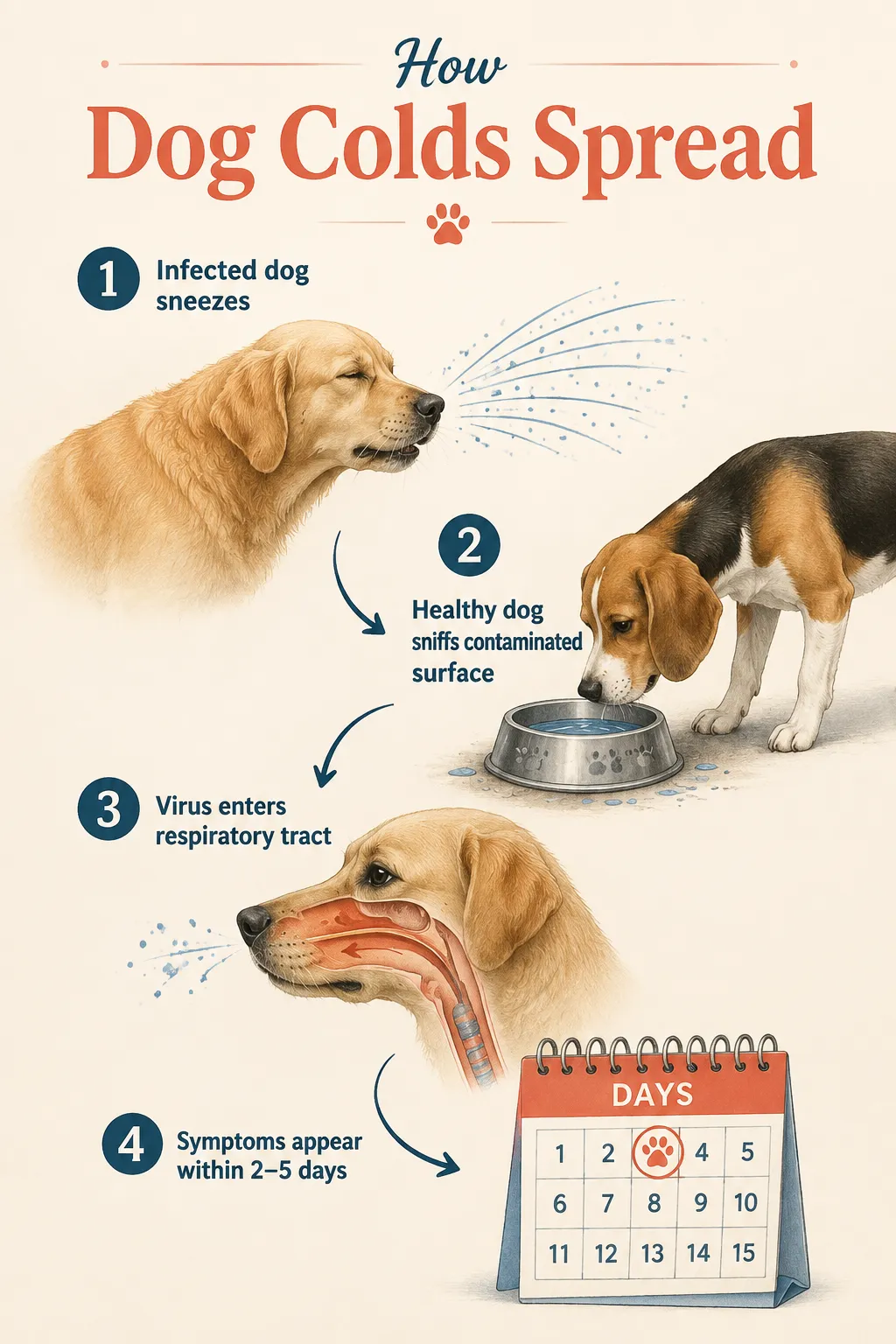
Dog colds are caused by viral and bacterial pathogens that target the upper respiratory tract. The infection spreads three main ways:
- Airborne droplets – An infected dog sneezes or coughs near another dog
- Direct contact – Nose-to-nose greetings, shared toys, or licking
- Contaminated surfaces – Water bowls, kennel floors, and grooming equipment
High-risk environments include:
- Dog kennels and boarding facilities
- Dog parks
- Grooming salons
- Veterinary waiting rooms
- Dog training classes
Symptoms typically appear 2 to 5 days after exposure. This incubation period is why your dog might seem fine when you pick them up from boarding, then get sick a few days later.
Dog Cold vs. Allergies – How to Tell the Difference
This is one of the most common points of confusion for dog owners. Both conditions can cause sneezing, runny nose, and watery eyes.
| Feature | Dog Cold | Allergies |
|---|---|---|
| Nasal discharge | Clear to yellow/green | Usually clear and watery |
| Fever | Possible | No |
| Lethargy | Common | Rare |
| Itchy skin or paws | Uncommon | Very common |
| Seasonal pattern | No clear pattern | Often seasonal |
| Contagious to other dogs | Yes | No |
| Cough | Often present | Rare unless asthma-like |
Choose “cold” if: your dog recently had contact with other dogs AND has a cough or fever.
Choose “allergies” if: symptoms are seasonal, your dog is itchy, and there is no fever or lethargy.
Is My Dog’s Cough a Cold or Something More Serious?
A mild, occasional cough during a cold is usually not an emergency. But some coughs signal something far more serious.
Watch for these red flags:
- Coughing up blood or pink-tinged mucus
- Breathing difficulty or open-mouth breathing at rest
- Blue or pale gums – this is an emergency
- Cough that gets worse after 7 to 10 days instead of better
- Cough combined with significant weight loss
Conditions that can mimic a dog cold but are much more serious include:
- Canine distemper – viral, affects multiple organ systems
- Pneumonia – can follow a mild cold if untreated
- Heart disease – can cause a chronic cough
- Parvovirus – extremely dangerous, especially in puppies
If your dog’s cough is paired with any of the above signs, do not wait. Call your vet.
Can Dogs Get the Flu Instead of a Cold?
Yes – and canine flu is more serious than a typical dog cold. Canine influenza is caused by specific influenza A strains, H3N2 and H3N8, and can cause high fever, thick nasal discharge, and severe lethargy.
The key differences:
- Canine flu tends to cause higher fevers (above 104°F)
- Discharge is thicker and may turn purulent faster
- Recovery time is longer – up to 3 weeks in some cases
- Complications like pneumonia are more common with flu than a standard cold
Canine flu is also highly contagious. Outbreaks have occurred across the U.S., particularly in shelters and boarding facilities. A vaccine is available and recommended for dogs with regular social exposure.
How Long Does a Dog Cold Last?
Most dog colds resolve within 1 to 3 weeks in otherwise healthy adult dogs. Mild cases often clear up in 7 to 10 days with rest and supportive care.
Timeline breakdown:
- Days 1 to 3: Symptoms appear – sneezing, mild discharge, low energy
- Days 4 to 7: Peak symptoms – cough develops, appetite may drop
- Days 8 to 14: Gradual improvement in most dogs
- Days 14 to 21: Full recovery for most healthy adult dogs
Who takes longer to recover:
- Puppies under 6 months
- Senior dogs over 8 years
- Dogs with existing health conditions
- Brachycephalic breeds (bulldogs, pugs, French bulldogs) – their compressed airways make respiratory illness harder to clear
When to Take Your Dog to the Vet for a Cold
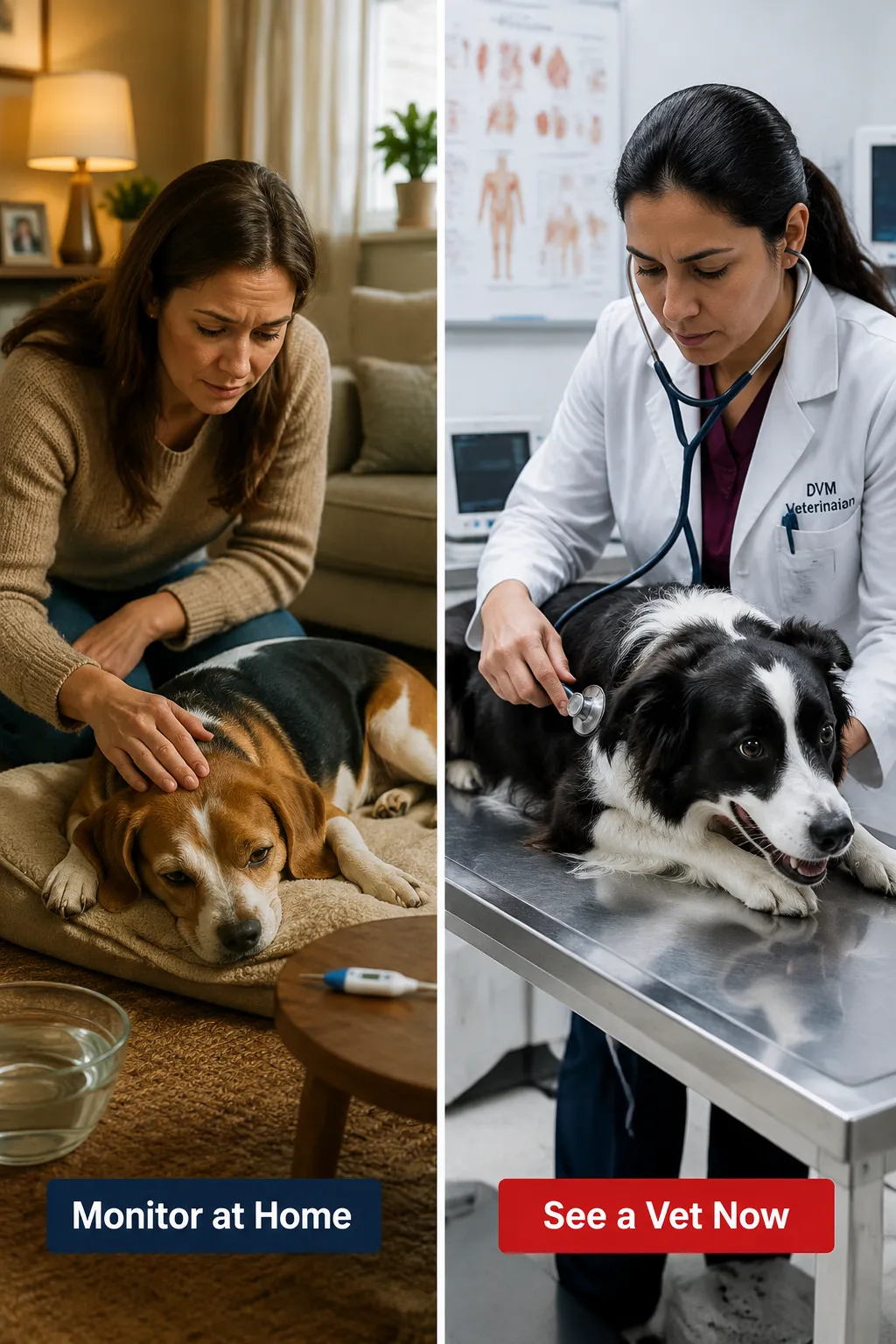
Most mild dog colds can be monitored at home. But certain signs mean it’s time to call your vet.
Go to the vet if:
- Symptoms do not improve after 7 to 10 days
- Your dog stops eating or drinking for more than 24 to 48 hours
- Fever exceeds 104°F
- Breathing becomes labored or noisy
- Nasal discharge turns thick, yellow, or green
- Your dog is a puppy, senior, or has a known health condition
- Symptoms suddenly worsen after initial improvement
Also worth noting: in late 2023, the MSPCA and other veterinary organizations issued updates on an unidentified respiratory illness in dogs that was causing more severe symptoms than typical kennel cough. If your dog develops an unusually severe or prolonged respiratory illness, mention this to your vet.
What Should I Give My Dog for a Cold, and Do Dogs Need Antibiotics?
For mild cases, supportive home care is usually enough. Do not give your dog human cold medications – products like DayQuil, ibuprofen, or decongestants can be toxic to dogs.
Safe home care steps:
- Make sure your dog drinks enough water – dehydration is a real risk. See our guide on hidden signs of dehydration in dogs to know what to watch for.
- Keep them warm and rested – limit outdoor exercise during recovery
- Use a humidifier near their resting area to ease congestion
- Offer warm, easy-to-eat food if appetite is low – check out homemade dog food recipes for small senior dogs for gentle meal ideas
- Gently wipe nasal discharge with a soft, damp cloth
Do dogs need antibiotics for a cold?
Not always. Most dog colds are viral, and antibiotics do not work on viruses. Antibiotics are only prescribed when a secondary bacterial infection is confirmed or strongly suspected – for example, when discharge turns thick and yellow-green, or when pneumonia develops.
Never give your dog leftover antibiotics without vet guidance. Incorrect use can cause harm and contribute to antibiotic resistance.
How to Help a Dog Feel Better When Sick
Beyond the basics, a few extra steps can make your dog more comfortable during recovery.
- Elevate their food and water bowls slightly – this reduces strain on a sore throat
- Keep them away from other pets to prevent spreading the illness
- Monitor their breathing at rest – count breaths per minute (normal is 15 to 30 for a resting dog)
- Track symptoms daily – a simple notes app works fine. Note fever readings, appetite, and cough frequency
- Avoid cold or damp environments – a warm, dry indoor space speeds recovery
Knowing your dog’s normal behavior is key. If you want to get better at reading your dog’s signals, our guide on 10 early signs of pain in dogs every owner should recognize is a great starting point.
Can You Prevent Colds in Dogs?
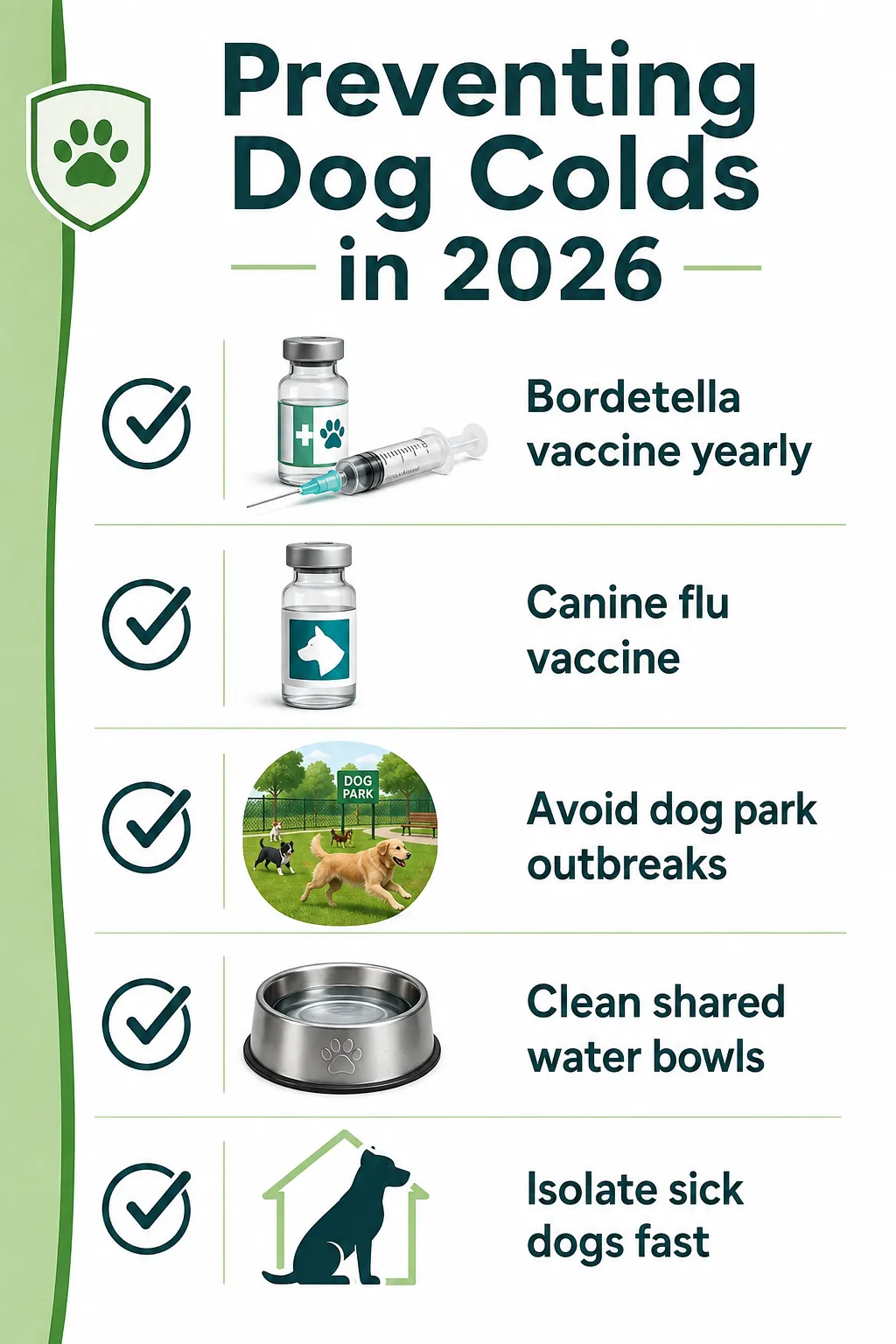
Prevention is genuinely possible with the right steps. Vaccination is the most effective tool – the Bordetella (kennel cough) vaccine and the canine influenza vaccine both significantly reduce the risk and severity of respiratory illness.
Prevention checklist:
- ✅ Keep Bordetella vaccination current (typically annual or every 6 months for high-exposure dogs)
- ✅ Ask your vet about canine flu vaccine, especially if your dog boards or visits dog parks
- ✅ Avoid dog parks or boarding during known local outbreaks
- ✅ Clean shared water bowls and toys regularly
- ✅ Isolate any new dog in your household for 1 to 2 weeks before introducing them to resident pets
- ✅ Support your dog’s immune system with good nutrition – our list of 15 superfoods for dogs that vets recommend has practical ideas
Frequently Asked Questions
Can my dog give me a cold?
No. Dog respiratory pathogens like Bordetella and canine parainfluenza do not infect humans under normal circumstances. You cannot catch a cold from your dog.
Can I catch anything from a dog that is sick?
In extremely rare cases, Bordetella bronchiseptica can affect immunocompromised humans. This is not a concern for healthy adults. If you are immunocompromised, ask your doctor.
Can puppies get colds?
Yes, and they are at higher risk for serious complications. Puppies have immature immune systems. Any respiratory symptoms in a puppy under 12 weeks should be evaluated by a vet promptly.
How do I know if my dog has a fever?
Use a rectal thermometer for the most accurate reading. Normal is 101 to 102.5°F. Ear thermometers designed for dogs are less accurate but easier to use. A warm, dry nose alone does not reliably indicate fever.
Should I keep my sick dog away from my other dogs?
Yes. Isolate a sick dog as soon as symptoms appear. Dog respiratory illnesses spread quickly through direct contact and shared spaces.
Is it safe to board my dog if they have a cold?
No. Most boarding facilities require dogs to be symptom-free and up to date on vaccines. Boarding a sick dog risks infecting every other dog in the facility.
Can dogs get colds in summer?
Yes. Dog colds are not seasonal the way human colds tend to be. They can occur any time of year, especially after exposure to other dogs.
What is the “mystery dog illness” I heard about?
In late 2023, veterinary organizations reported an unusual respiratory illness in dogs that was more severe and longer-lasting than typical kennel cough. The cause was investigated and linked to a novel bacterial pathogen. If your dog develops a severe or prolonged respiratory illness, mention this history to your vet.
How soon after exposure will my dog show symptoms?
Most dogs show symptoms within 2 to 5 days of exposure. Some may take up to 14 days, which is why post-boarding illness can seem to come out of nowhere.
Can a dog cold turn into pneumonia?
Yes, in some cases – especially in puppies, senior dogs, or those with weakened immune systems. Pneumonia is a serious secondary complication. Signs include labored breathing, high fever, and a wet, productive cough.
Conclusion
So, can dogs get colds? Absolutely – and now you know exactly what to look for. The 7 warning signs (nasal discharge, watery eyes, sneezing, coughing, lethargy, reduced appetite, and low-grade fever) are easy to miss or misread, but catching them early gives your dog the best shot at a smooth recovery.
Your action steps:
- Check your dog’s vaccination status – call your vet today if Bordetella or canine flu vaccines are overdue
- Bookmark the “go to the vet” checklist above so you know exactly when home care is not enough
- Isolate any dog showing symptoms from other pets immediately
- Skip the human cold medicine – rest, warmth, and hydration are the safest home treatments
- Monitor for 7 to 10 days – if symptoms are not improving, that is your cue to call the vet
Most dog colds are manageable and short-lived. But “just a cold” can turn serious in vulnerable dogs. Staying informed is the best thing you can do for your pup.