Last updated: September 20, 2026
Quick Answer: Yes, you can clean dog teeth without brushing – and it actually works. The most effective non-brushing options are VOHC-accepted dental chews, dental diets, water additives, and dental sprays. Used together daily, these methods genuinely reduce plaque and tartar, though they work best as a combined routine rather than a single fix.
Key Takeaways
- 🦷 VOHC-accepted products are the gold standard – look for the Veterinary Oral Health Council seal on any dental chew, diet, or additive you buy.
- 🐾 Dental chews are the most proven non-brushing method, working through mechanical abrasion as your dog chews.
- 💧 Water additives work chemically, not mechanically – they help but can’t replace chewing or brushing alone.
- 🍖 Dental diets (special kibble) provide continuous, passive plaque control at every meal.
- 📅 Daily consistency matters more than any single product – one dental chew per day beats occasional use of anything.
- ⚠️ Size matters – always match chew size to your dog’s weight and jaw to avoid choking or tooth fractures.
- 🏥 Professional cleanings are still necessary once a year, even with a great at-home routine.
- 🚨 Bad breath, bleeding gums, or loose teeth are red flags that need a vet visit, not just more chews.
Can You Really Clean Dog Teeth Without Brushing?
Yes – you can meaningfully reduce plaque and tartar without ever picking up a toothbrush. It won’t match the results of daily brushing, but the right combination of products comes close, and it’s far better than doing nothing.
According to peer-reviewed research on water additives and dental health, dogs using a pomegranate-based water additive for 30 days after a professional cleaning had significantly lower plaque and calculus scores than untreated dogs. That’s real, measurable improvement – no brushing required.
The key is using multiple methods together. A dental chew alone helps. A dental diet alone helps. But combine both with a water additive, and you’ve built a daily routine that covers mechanical and chemical cleaning from multiple angles.
What Are the Best Alternatives to Brushing Dog Teeth?
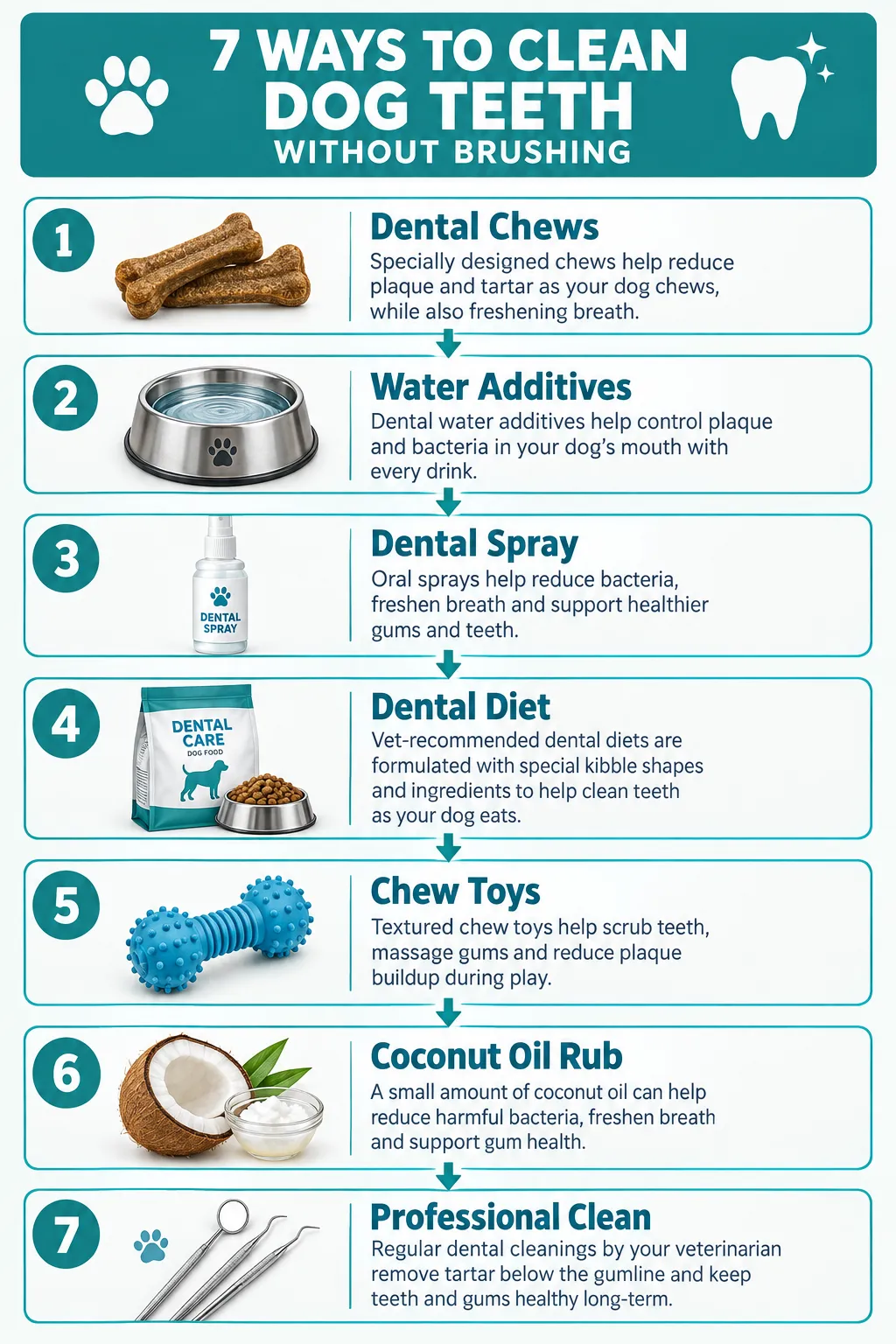
The best alternatives combine mechanical action (something that physically scrapes the tooth) with chemical action (ingredients that slow bacterial growth). Here are the 7 tricks that actually work:
1. VOHC-Accepted Dental Chews
These are the single most effective brushing alternative. Chewing creates friction against the tooth surface, scraping away plaque before it hardens into tartar. Top-ranked dental chews for dogs consistently include Greenies Original, OraVet, Virbac C.E.T., Whimzees, and Purina DentaLife – all VOHC-accepted.
2. Dental Diets (Special Kibble)
Certain kibble textures and formulations are designed to clean teeth at every meal. Hill’s Science Plan and Royal Canin both offer VOHC-accepted dental diets, according to the August 2026 VOHC accepted products list for dogs.
3. Water Additives
Add a measured amount to your dog’s water bowl daily. They work chemically to slow bacterial growth and reduce plaque. Easy to use, but they must be paired with mechanical options.
4. Dental Sprays
Spritzed directly onto the teeth and gums, dental sprays deliver antibacterial ingredients right to the source. Great for dogs who resist anything near their mouth.
5. Enzymatic Chews
A step up from standard chews, these combine mechanical scraping with enzymes that break down bacteria. Virbac C.E.T. Enzymatic Chews and VeggieDent variants are frequently recommended by vets for heavy plaque formers.
6. Dental Chew Toys
Rubber chew toys with ridged surfaces create friction against teeth during play. Not as targeted as dental treats, but useful as part of a broader routine.
7. Coconut Oil Rubbing
Rubbing a small amount of coconut oil on your dog’s teeth and gums may help slow bacterial growth due to its antimicrobial properties. Evidence is limited, but it’s safe and easy for dogs who tolerate gentle mouth handling.
If you’d like to try brushing but your dog resists, our guide on how to brush your dog’s teeth with 5 easy hacks can help you ease into it gradually.
Best Dental Chews for Dogs That Actually Work
The best dental chews for dogs carry the VOHC Seal of Acceptance, meaning they passed controlled clinical trials showing real plaque and/or tartar reduction.
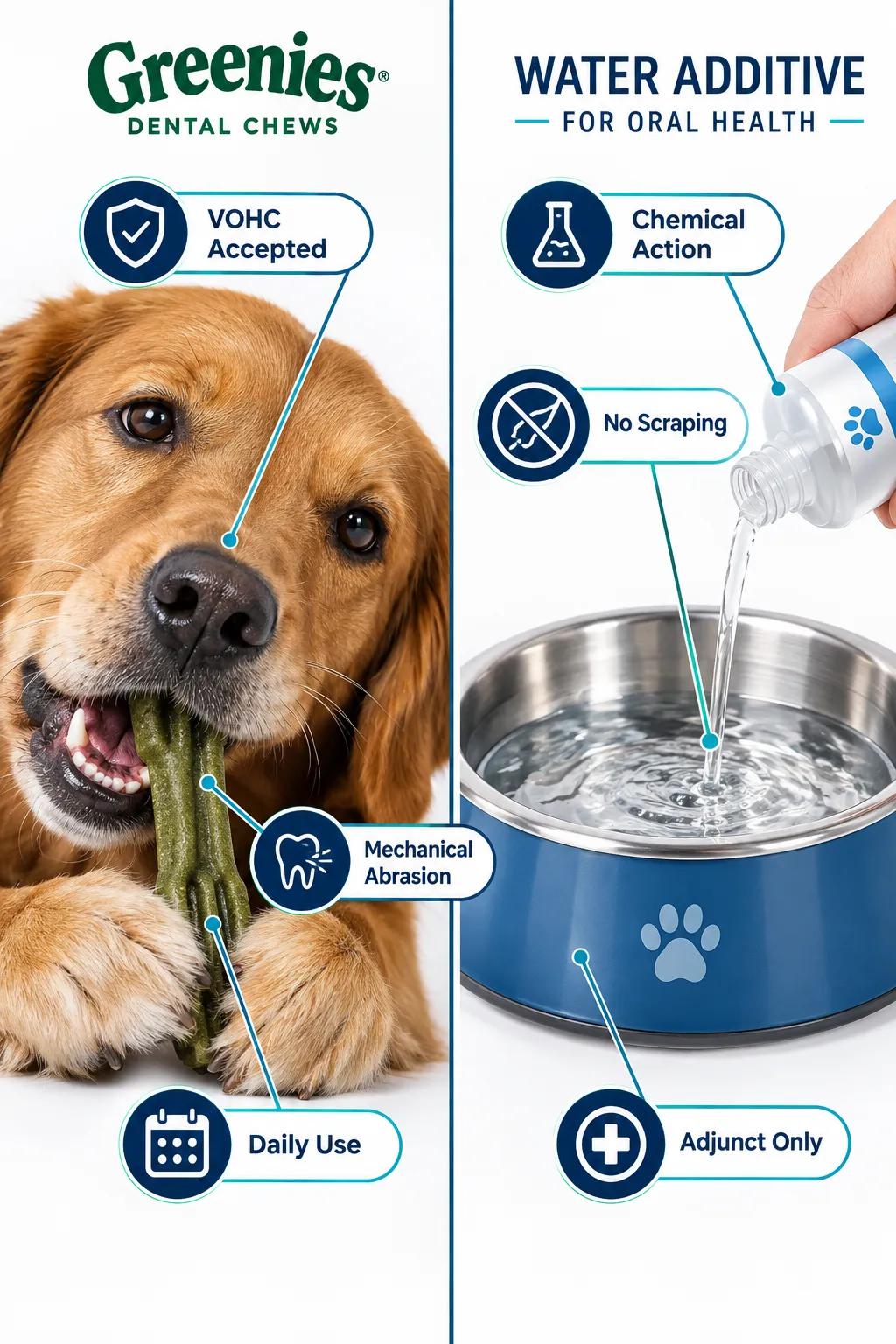
Here’s a quick comparison of the top options:
| Chew | VOHC Accepted | Best For |
|---|---|---|
| Greenies Original | ✅ Plaque + Tartar | Most dogs, all sizes |
| OraVet Dental Hygiene Chews | ✅ Plaque + Tartar | Dogs needing surface protection |
| Virbac C.E.T. Enzymatic | ✅ Plaque | Heavy plaque formers |
| Whimzees | ✅ Plaque + Tartar | Dogs with sensitivities |
| Purina DentaLife | ✅ Plaque + Tartar | Budget-conscious owners |
Greenies is the most consistently top-ranked option in vet-reviewed dental chew guides for 2026, available in sizes from small to giant breeds. Purina DentaLife is the budget-friendly pick, with similar clinical backing at a lower daily cost.
Choose Greenies if your dog has no allergies and you want the most widely tested option. Choose Virbac C.E.T. if your dog builds plaque quickly or has a history of dental disease.
Common mistake: Buying a chew sized for a smaller dog to “make it last longer.” Undersized chews are a choking hazard and can cause tooth fractures. Always match the chew to your dog’s weight range.
Do Dental Treats Really Clean Dog Teeth?
Yes – but only if they carry the VOHC seal. Many treats are marketed as “dental” but have no clinical evidence behind them.
The VOHC (Veterinary Oral Health Council) seal means the product passed controlled trials. Without it, you’re relying on marketing claims. The VOHC accepted products list updated August 2026 is organized into dental diets, rawhide chews, edible chew treats, and water additives – it’s the most reliable place to check.
Dental treats work through mechanical abrasion – the chewing motion scrapes the tooth surface. Some also include enzymes or active ingredients that inhibit bacterial adhesion, making them even more effective.
Bottom line: A VOHC-accepted treat given daily does genuinely reduce plaque and tartar. A generic “dental” treat with no seal may do very little.
Are Water Additives for Dog Teeth Safe?
Water additives are safe for most dogs and can meaningfully reduce plaque when used consistently. The key word is “adjunct” – they work best alongside mechanical cleaning, not instead of it.
A clinical study on a pomegranate-containing water additive found that dogs using it for 30 days showed significantly lower plaque, calculus, and gingival inflammation scores compared to untreated dogs. That’s solid evidence they do something real.
However, water additives act chemically – they don’t scrape the tooth surface. They can’t remove existing tartar. Think of them as a daily maintenance layer on top of your chew routine.
Safety note: Always choose products labeled safe for dogs and follow dosing instructions. Some human mouthwash ingredients (like xylitol) are toxic to dogs – never use human products in a dog’s water bowl. Check out our article on 15 everyday foods that can kill your dog for a broader look at what to keep away from your pup.
How Often Should I Clean My Dog’s Teeth?
Daily is the goal – for both brushing and non-brushing methods. Plaque starts forming within 24 hours of a cleaning, and it hardens into tartar within 3-5 days.
For a practical no-brush routine, aim for:
- Daily – one VOHC-accepted dental chew
- Daily – water additive in the water bowl
- Every meal – dental diet kibble (if appropriate for your dog)
- As needed – dental spray after meals or treats
- Annually – professional dental cleaning with your vet
Even if you miss a day here and there, consistency over weeks and months is what moves the needle. One chew a day beats seven chews on Sunday.
Signs My Dog Has Dental Problems
Dental disease is the most common health condition in adult dogs, according to veterinary sources. Catching it early makes a huge difference.
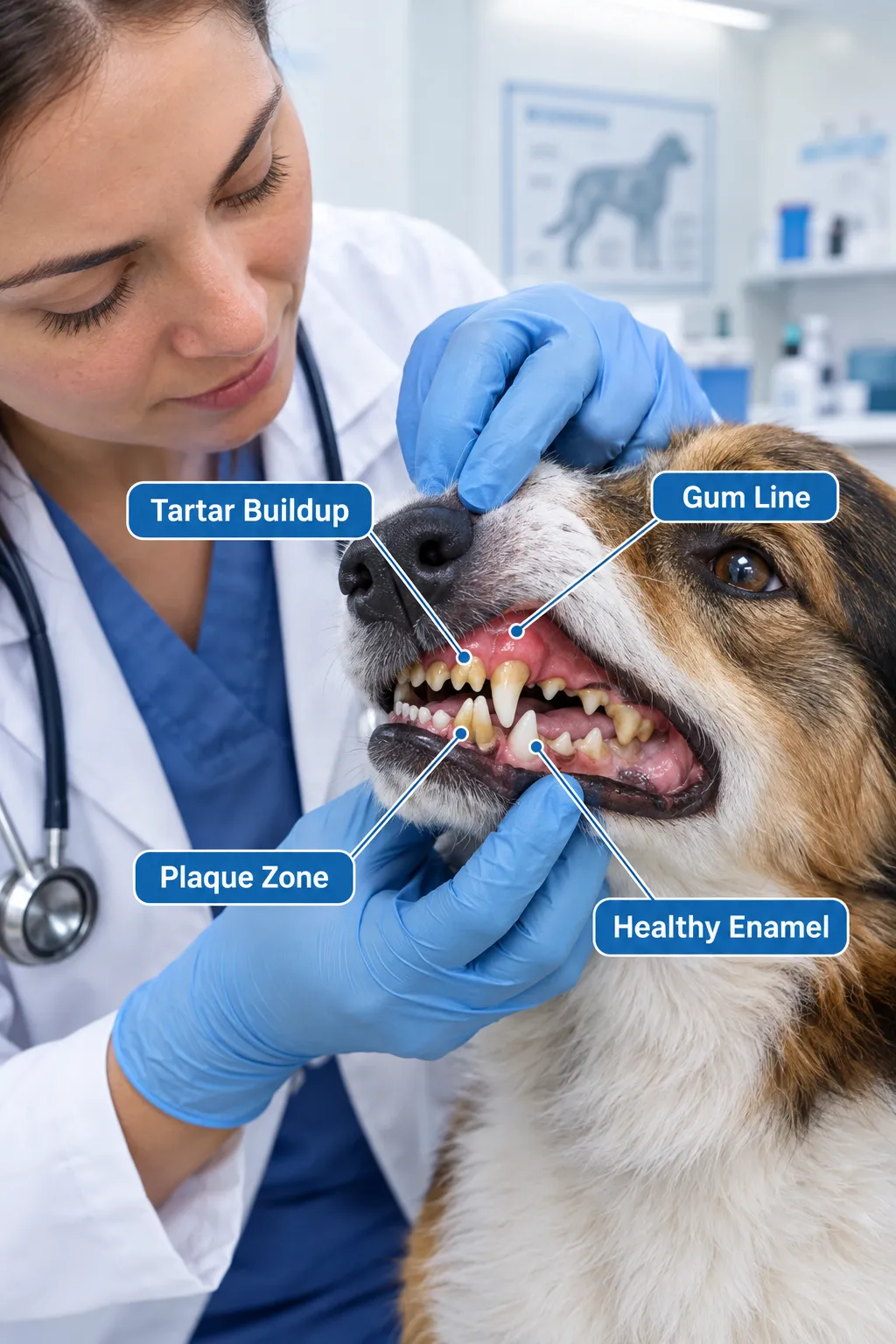
Watch for these warning signs:
- 🦷 Bad breath that smells rotten or unusually strong
- 🔴 Red, swollen, or bleeding gums
- 💛 Yellow or brown buildup along the gum line
- 😬 Difficulty chewing or dropping food
- 😮 Pawing at the mouth or face
- 🥺 Loose or missing teeth
- 💧 Excessive drooling
If you notice any of these, a vet visit is the right next step – not just more dental chews. Visible tartar, bleeding gums, or loose teeth mean professional care is urgently needed. You can also read more about how to remove tartar from dog teeth for additional context on what buildup looks like and when it needs professional attention.
What Happens If You Don’t Clean Dog Teeth?
Skipping dental care entirely leads to a predictable chain of problems. Plaque builds up, hardens into tartar, inflames the gums (gingivitis), and eventually causes periodontal disease – infection that damages the bone and tissue holding teeth in place.
Periodontal disease is painful, can lead to tooth loss, and has been linked to systemic health issues affecting the heart, kidneys, and liver in dogs.
The good news: even an imperfect routine is dramatically better than nothing. A daily dental chew and water additive won’t match brushing, but they will meaningfully slow the progression of dental disease.
Can Diet Help Clean Dog Teeth Naturally?
Yes – certain dental diets are formulated to clean teeth at every meal through kibble texture and specific ingredients that limit plaque adhesion.
Hill’s Science Plan Vet Essentials Multi-Benefit + Dental and Royal Canin dental diets are both on the VOHC accepted products list for dogs with claims for plaque and tartar reduction. These are complete diets, not supplements – you simply feed them as your dog’s regular food.
Dental diets work best for dogs who:
- Resist all forms of dental treats or chews
- Have owners who struggle with any dental routine
- Are already on a vet-recommended diet plan
Note: Soft or wet food doesn’t provide the same mechanical cleaning effect as dental kibble. If your dog eats primarily wet food, lean harder on dental chews and water additives. For ideas on balanced home-cooked meals, see our homemade dog food recipes for sensitive stomachs.
What’s the Easiest Way to Keep Dog Teeth Clean Without Brushing?
The easiest sustainable routine for most dog owners is: one VOHC-accepted dental chew per day, water additive in the bowl, and an annual vet cleaning.
That’s it. Three steps, two of which take under 30 seconds.
Expert vet-reviewed roundups in 2026 consistently recommend this combined approach as the most realistic way to maintain oral health in dogs whose owners can’t or won’t brush. It won’t replicate daily brushing, but it produces measurable improvements in plaque and tartar scores compared to doing nothing.
If you want to level up: Add a dental spray after meals and switch to a VOHC-accepted dental diet. That four-part routine covers mechanical, chemical, and dietary angles simultaneously.
How Much Does Professional Dog Teeth Cleaning Cost?
Professional dental cleaning under anesthesia typically costs between $300 and $700 at a general practice vet in the US (estimate based on commonly reported ranges; costs vary by location, dog size, and whether extractions are needed). Specialist or emergency dental work costs more.
It’s still necessary even with a great at-home routine. Home care slows tartar buildup, but it can’t remove existing calculus below the gum line – only a professional ultrasonic cleaning can do that.
Most vets recommend annual cleanings for adult dogs. Some dogs with rapid plaque buildup or existing dental disease may need them every 6 months.
FAQ
Q: Can I use human toothpaste on my dog if I do decide to brush?
No. Human toothpaste contains xylitol and fluoride, both of which are toxic to dogs. Always use toothpaste formulated specifically for dogs.
Q: Are raw bones safe for cleaning dog teeth?
Raw bones can help scrape plaque, but they carry risks including bacterial contamination, tooth fractures, and choking. Most vets recommend VOHC-accepted chews over raw bones for safety.
Q: How long does it take for dental chews to show results?
Most studies measure results over 28-30 days of daily use. You may notice fresher breath within a week or two, but significant plaque and tartar reduction takes consistent daily use over several weeks.
Q: My dog swallows dental chews whole – is that okay?
No. If your dog swallows chews without chewing, the mechanical cleaning benefit is lost and there’s a choking or blockage risk. Try a larger size or a different texture that encourages chewing.
Q: Do dental sprays work as well as dental chews?
No – dental sprays work chemically and don’t provide the mechanical scraping that chews do. They’re a useful add-on but not a replacement for chews or brushing.
Q: Can puppies use dental chews?
Most dental chews are recommended for dogs 6 months and older, after adult teeth have come in. Check the packaging for age guidance and always supervise puppies with any chew.
Q: Is coconut oil safe for dog teeth?
Yes, coconut oil is safe for dogs in small amounts and may have mild antimicrobial benefits. However, there’s limited clinical evidence for its dental effectiveness compared to VOHC-accepted products.
Q: What’s the VOHC seal and why does it matter?
The VOHC (Veterinary Oral Health Council) seal means a product passed controlled clinical trials showing it reduces plaque and/or tartar. It’s the most reliable way to tell if a dental product actually works.
Q: Can small dogs use the same dental chews as large dogs?
No – always match chew size to your dog’s weight. Undersized chews are a choking hazard; oversized chews can cause jaw strain. Most brands offer size-specific options.
Q: How do I know if my dog’s dental routine is working?
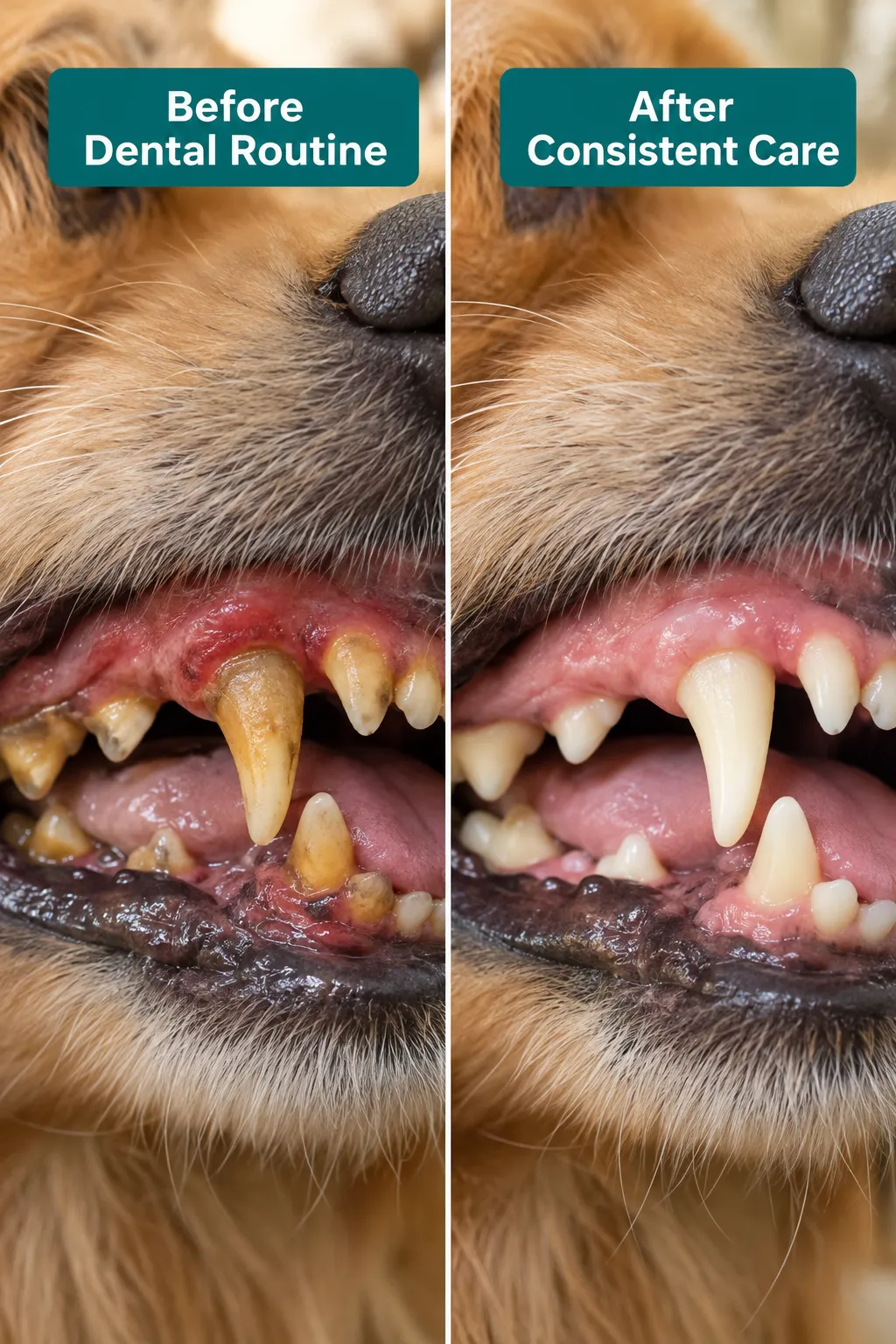
Signs it’s working include fresher breath, less visible yellow buildup at the gum line, and healthy pink (not red) gums. Your vet can confirm progress at annual checkups.
Conclusion
Learning how to clean dog teeth without brushing doesn’t have to be complicated. The combination of a daily VOHC-accepted dental chew, a water additive, and – if possible – a dental diet gives you a routine that genuinely moves the needle on plaque and tartar.
Your action plan starting today:
- Check the VOHC accepted products list and pick one dental chew sized for your dog.
- Add a VOHC-accepted water additive to your dog’s bowl.
- Book an annual dental checkup with your vet if you haven’t had one this year.
- Watch for warning signs – bad breath, red gums, or visible tartar mean it’s time for a professional cleaning.
None of these steps require your dog to sit still for a toothbrush. Start with just the daily chew, build the habit, and add layers from there. Your dog’s long-term health is worth those 30 seconds a day.