
Last updated: August 19, 2026
Quick Answer: When your dog has a seizure, stay calm, keep them safe from nearby hazards, never put your hands near their mouth, and time the episode carefully. Most seizures in dogs last under two minutes and are not immediately life-threatening – but knowing exactly what to do for dog seizures can make a real difference in your pet’s outcome. Call your veterinarian right away for any first-time seizure, one lasting longer than five minutes, or multiple seizures within a short period.
Key Takeaways
- 🐾 Never restrain your dog or put anything in their mouth during a seizure – this is the most dangerous mistake pet owners make.
- ⏱️ Time every seizure – duration is one of the most critical pieces of information your veterinarian needs.
- 📹 Record video if it is safe to do so – footage helps with diagnosis and can save time during a veterinary visit.
- 🚨 A seizure lasting longer than five minutes is a red-alert emergency requiring immediate veterinary care.
- 🧠 Abnormal electrical activity in the brain causes seizures – the underlying cause determines the right treatment.
- 💊 Long-term medication like phenobarbital or potassium bromide helps most dogs with epilepsy live full lives.
- 🏥 Emergency pet hospital services are available 24/7 for severe or repeated seizures.
- 📋 Keeping a seizure log is one of the most useful things you can do for your dog’s ongoing health care.
What Does a Seizure Actually Look Like in Dogs?
Seizures come in all shapes and sizes, and not every episode looks like the dramatic full-body convulsions most people picture. A seizure is caused by abnormal electrical activity in the brain, disrupting normal nerve signals and triggering involuntary physical responses.
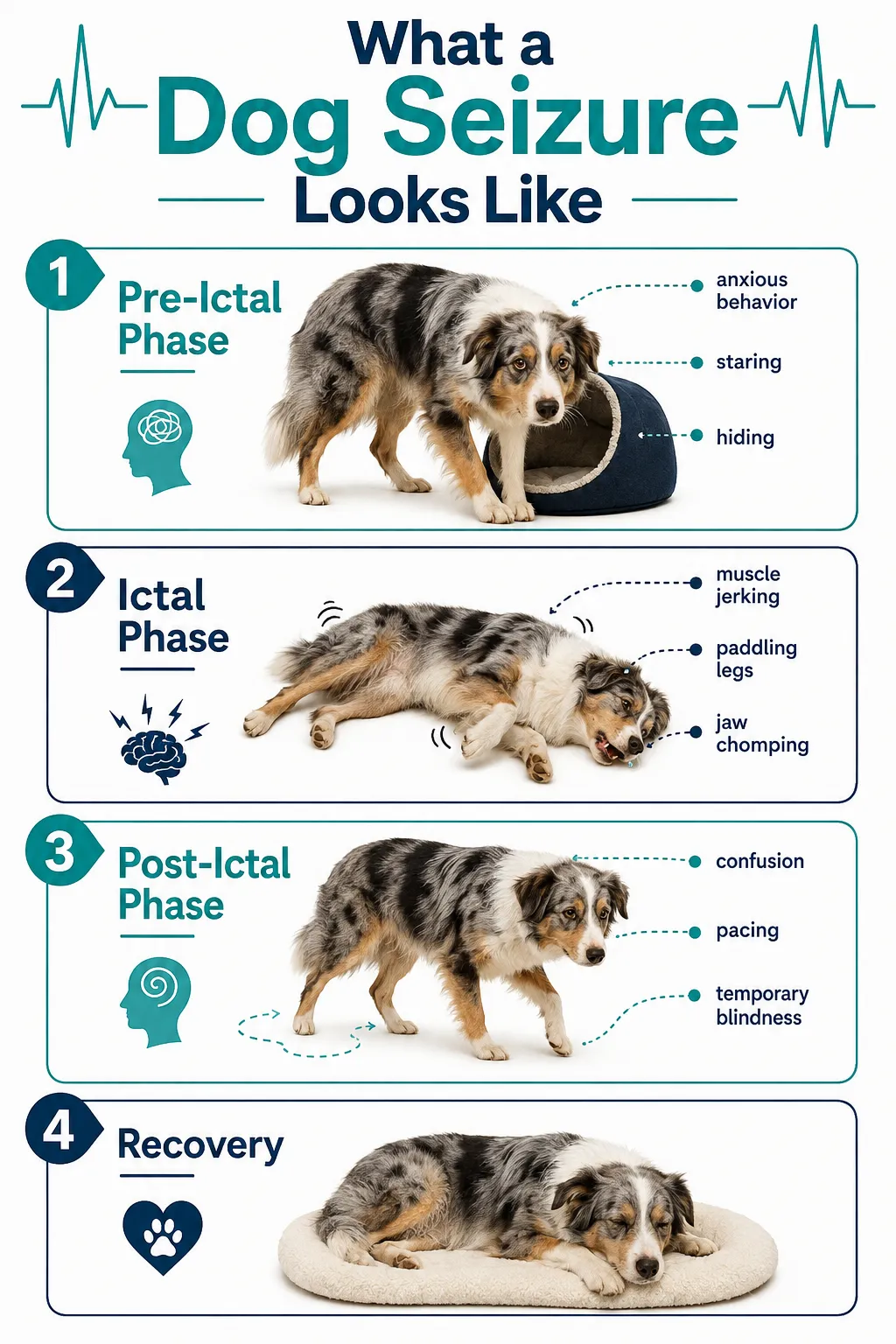
Generalized (grand mal) seizures are the most common type. Signs include:
- Sudden collapse or falling to one side
- Muscle stiffening, then rhythmic jerking
- Paddling of the legs, like swimming in air
- Jaw chomping or drooling
- Loss of bladder or bowel control
- Unconsciousness during the episode
A focal seizure (also called a partial seizure) affects only one part of the brain and may look much subtler. Your dog might twitch one leg, blink repeatedly, turn their head to one side, or show sudden behavioral changes like snapping at invisible flies. Focal seizures can sometimes progress into a full generalized seizure.
Most seizures happen in three stages:
- Pre-ictal phase – Your dog may seem anxious, restless, clingy, or confused before the seizure begins.
- Ictal phase – The active seizure itself, which typically lasts 30 seconds to two minutes.
- Post-ictal phase – After the seizure ends, dogs often seem disoriented, temporarily blind, wobbly, or unusually hungry or thirsty. This can last minutes to hours.
Knowing these stages helps you recognize when seizures happen and describe them accurately to your veterinarian.
What Causes Seizures in Dogs and Cats?
Seizures in dogs have many possible causes, ranging from genetic conditions to toxic exposures. Idiopathic epilepsy – meaning epilepsy with no identifiable structural cause – is the most common diagnosis in dogs between one and five years old.
Common causes include:
| Category | Examples |
|---|---|
| Idiopathic epilepsy | Genetic, breed-related |
| Brain conditions | Tumors, inflammation, MRI-confirmed lesions |
| Infections | Distemper, meningitis |
| Metabolic issues | Low blood sugar, liver disease, kidney failure |
| Toxins | Xylitol, certain pesticides, some plants |
| Trauma | Head injury |
Low blood sugar (hypoglycemia) is a particularly important metabolic cause, especially in small breeds and puppies. Certain everyday substances can also cause seizures – for a full list of dangerous items, see 15 everyday foods that can kill your dog.
Cats can also develop seizures, though the causes and treatment approaches differ somewhat from dogs. In both species, a proper veterinary workup is essential to find the root cause.
Breeds more prone to seizures include Border Collies, Belgian Tervurens, Labrador Retrievers, Golden Retrievers, Beagles, and German Shepherds. Idiopathic epilepsy has a strong genetic component in these breeds.
Can stress or diet trigger seizures? Yes. Stress, sleep disruption, hormonal changes, and certain dietary deficiencies can lower a dog’s seizure threshold. While stress alone rarely cause seizures in a healthy dog, it can increase seizure frequency in dogs with known epilepsy.
7 Critical Things to Know About What to Do for Dog Seizures
Knowing what to do for dog seizures before one happens can keep both you and your pet safer. These seven steps form the core of seizure first aid at home.
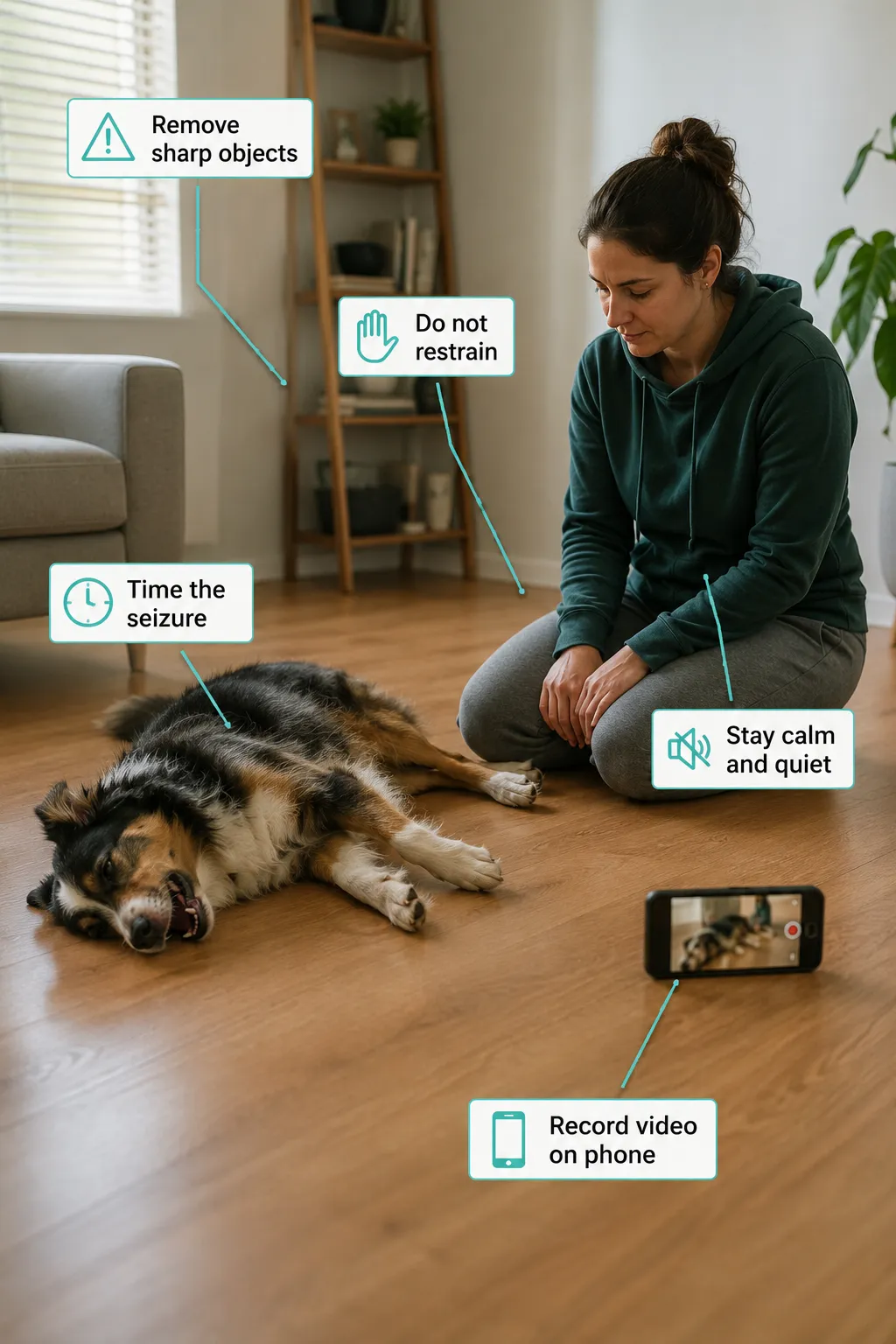
Step 1: Stay Calm and Stay With Your Dog
Your dog cannot hear reassurance during the ictal phase, but your calm presence matters after. Panicking can make the post-ictal phase more stressful for your pet.
Step 2: Time the Seizure Immediately
Start timing the moment you notice the seizure begin. The time seizure duration is the single most important piece of data for your veterinarian. A seizure lasts longer than five minutes is a medical emergency.
Step 3: Remove Hazards Around Your Dog
Gently slide furniture away, remove sharp objects, and place a folded blanket or pillow near – not under – their head. Do not try to move your dog unless they are in immediate danger, like near stairs or a pool.
Step 4: Never Put Your Hand in Your Dog’s Mouth
This is the most critical mistake to avoid. Dogs do not swallow their tongues during a seizure – that is a myth. Putting your hand near a seizing dog’s mouth can cause a serious bite injury. Never restrain the dog or insert anything into their mouth during an active episode.
Step 5: Reduce All Stimulation
Dim the lights if you can, keep other pets and children away, and speak quietly. A dark, quiet environment can help reduce the intensity and duration of some seizures. This is especially important for dogs with known epilepsy.
Step 6: Record Video If It Is Safe
Use your phone to record the seizure if you can do so without getting close enough to be injured. Video is incredibly useful for your veterinarian – it helps them identify the seizure type and guide treatment decisions. Keeping a log of each episode, including date, duration, and behavior before and after, is one of the best things you can do for canine health management.
Step 7: Monitor and Do Not Offer Food or Water Right Away
After the seizure ends, keep your dog in a quiet, safe space. Do not offer food water immediately – your dog may still be disoriented and could choke. Wait until they are fully alert and coordinated before letting them eat or drink. Also keep them away from stairs during recovery.
When Is a Seizure a True Emergency?
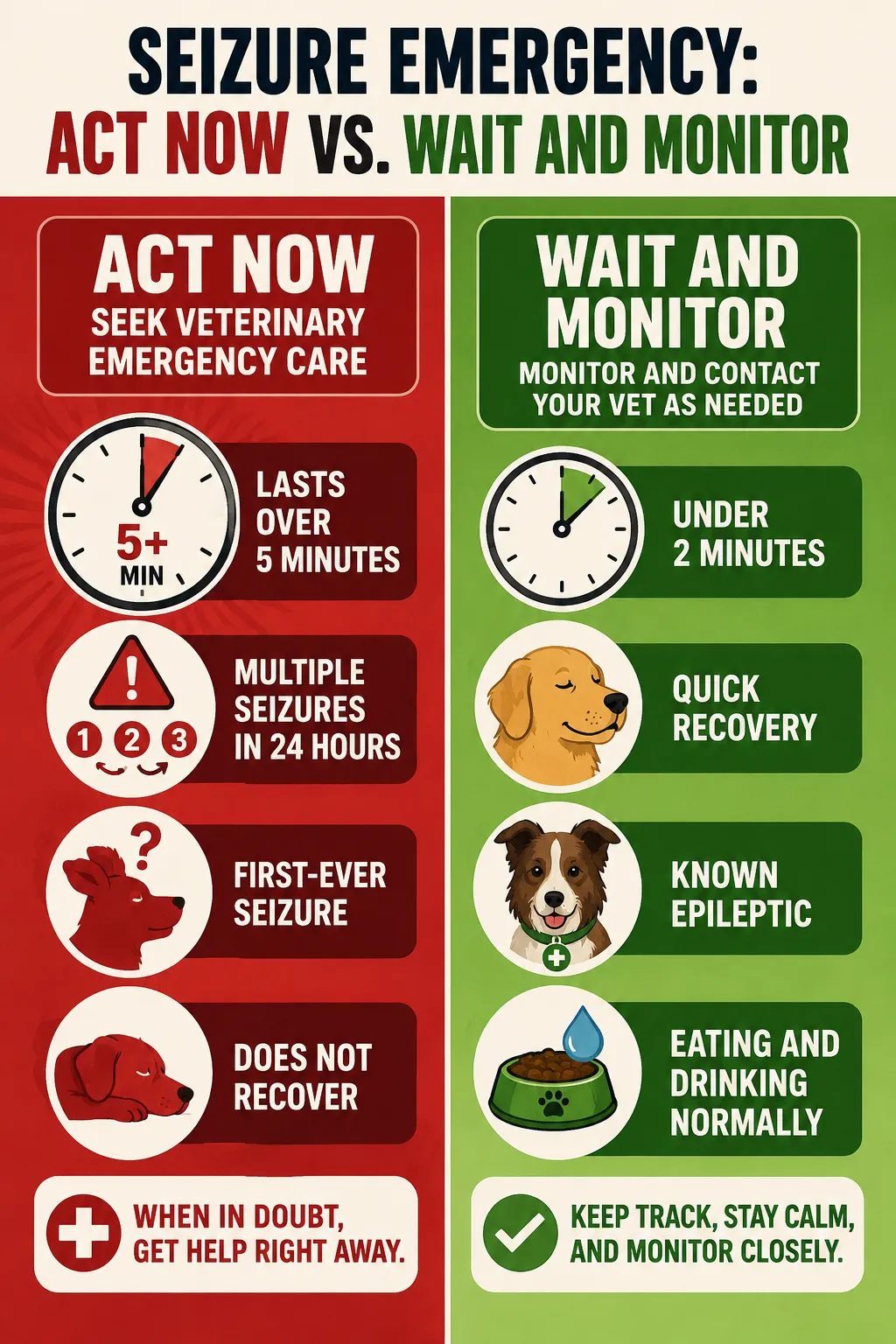
A seizure becomes a red-alert emergency in specific situations that require you to call emergency veterinary services immediately. Status epilepticus – a seizure lasting longer than five minutes, or multiple seizures within a short period without full recovery – is life-threatening and can cause permanent brain damage.
Call emergency pet hospital services right away if:
- The seizure lasts longer than five minutes (seizures lasting five minutes or more require IV medication)
- Your dog has multiple seizures within 24 hours
- It is your dog’s first-ever seizure
- Your dog does not return to normal within 30 minutes after the seizure ends
- Your dog is very young, very old, or has another health condition
- You suspect a toxin or poison may cause seizures
If you are in the Glendora area, you can contact 626 702-2436 to reach emergency pet hospital Glendora services, or visit the Garden State Veterinary Specialists emergency care page for guidance. The emergency pet hospital at 500 Glendora Ave, Glendora 91740 (glendora ave glendora) offers 24-hour care. You can also click visit site map pin options on their site to find directions.
Is my dog in pain during a seizure? Dogs are not conscious of pain during the ictal phase – they are not aware of what is happening. The post-ictal phase can cause confusion and distress, but the seizure itself is not a painful experience in the way we might imagine.
What Happens After the Seizure Ends?
The post-ictal phase is often the most confusing part for pet owners. After the active seizure ends, your dog may seem like a different animal for minutes to hours – and that is completely normal.
Common post-ictal signs include:
- Disorientation or confusion
- Temporary blindness or bumping into walls
- Excessive thirst or hunger
- Pacing or restlessness
- Unusual clinginess or hiding
Keep your dog in a quiet, safe room. Do not leave them alone near stairs, pools, or other hazards. If they seem extremely distressed or the confusion lasts more than an hour, contact your veterinarian.
Once your dog is stable, write down everything you remember: the time seizure started, how long it lasted, what it looked like, and how they behaved before and after. This record is invaluable at your next veterinary visit.
What Happens During a Seizure Workup at an Emergency Pet Hospital?
When you visit an emergency pet hospital or veterinary clinic after a seizure, the team will work quickly to identify the cause. The workup typically includes blood and urine tests to check for metabolic causes like low blood sugar, liver disease, or toxins.
If those come back normal, your veterinarian may recommend an MRI of the brain to look for structural causes like tumors or inflammation. A cerebrospinal fluid tap may also be performed. These diagnostics help distinguish idiopathic epilepsy from other causes.
At clinics like the Veazie Veterinary Clinic and state veterinary specialists, the diagnostic process follows established veterinary neurology protocols. Your dog’s full health history, breed, age, and seizure pattern all factor into the workup.
How much does treatment cost? Basic blood work may range from $150 to $400. An MRI can cost $1,500 to $3,000 or more depending on the facility and region. Long-term medication like phenobarbital is relatively affordable, often $20 to $60 per month, but requires regular monitoring blood tests. Costs vary widely by location and the complexity of your dog’s case.
What Does Long-Term Seizure Management Look Like?
Long-term management for dogs with epilepsy focuses on reducing seizure frequency and protecting quality of life. Most dogs with idiopathic epilepsy can be managed successfully with medication, and many live normal, happy lives.
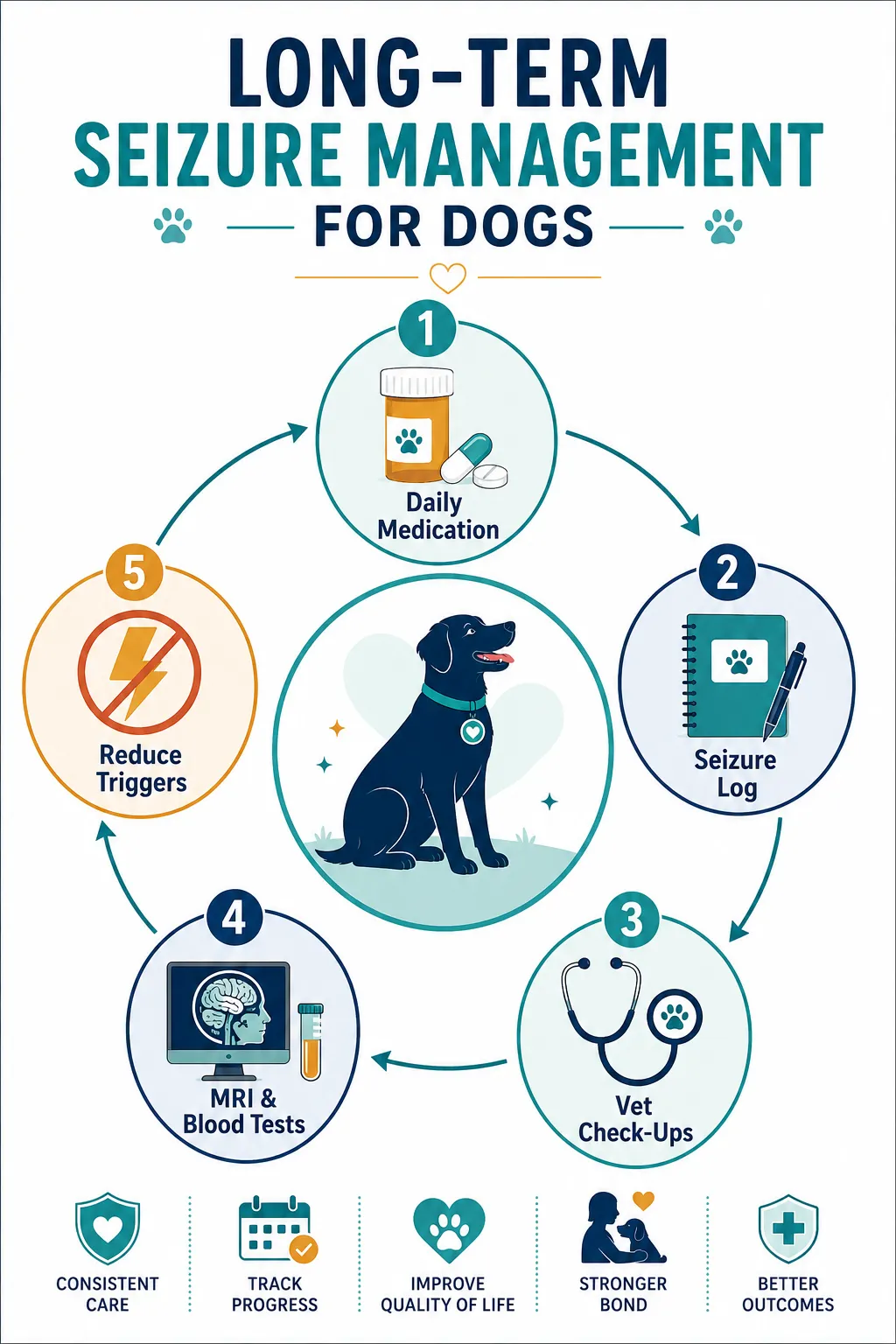
Common medications your veterinarian may prescribe:
- Phenobarbital – the most widely used anticonvulsant for dogs
- Potassium bromide – often used alongside phenobarbital
- Levetiracetam (Keppra) – a newer option with fewer side effects
- Zonisamide – used in dogs that do not respond to other medications
Anticonvulsant medications for dogs require regular blood monitoring to check drug levels and organ health. Never adjust your dog’s medication dose without veterinary guidance.
Other therapies your veterinarian may recommend:
- Dietary changes (some research supports ketogenic-type diets)
- Vagus nerve stimulation (emerging in veterinary medicine)
- Rescue medications like diazepam for home use during prolonged seizures
Keeping a seizure log is one of the most effective tools in long-term management. Record date, time, duration, type, and any possible triggers. Many pet owners now use apps or share logs via Facebook groups for epileptic dog owners to compare notes and stay connected with their care team.
Supporting your dog’s overall immune health also matters. Check out 9 ways to boost your dog’s immune system naturally for ideas that complement veterinary care.
How Can You Be Prepared Before a Seizure Happens?
Being prepared before seizures happen is one of the most powerful things a pet owner can do. Talk to your veterinarian about a seizure action plan, especially if your dog has been diagnosed with epilepsy.
Your home seizure kit should include:
- Your veterinarian’s contact number and the nearest emergency pet hospital number
- A notebook or app for logging seizure activity
- A phone with video capability, charged and accessible
- Any prescribed rescue medication (like rectal diazepam) with clear instructions
- A soft blanket or mat to place near your dog
If your dog has a known seizure disorder, make sure everyone in your household knows what to do for dog seizures – including babysitters, dog walkers, and anyone else who spends time with your pet. Post a simple seizure first aid reminder on your fridge.
Reducing known triggers also helps. Keeping a consistent routine, managing stress, and avoiding foods that may affect brain chemistry are all part of proactive care. If you are concerned about your dog’s overall stress levels, 12 stressed dog signs most owners miss is a helpful read.
You are not alone in this. Many dog owners navigate seizure disorders every day with the right veterinary support and a good care plan. Connecting with your veterinary team, joining a support community, and staying informed are all steps that genuinely help.
Frequently Asked Questions
What can trigger a seizure in a dog?
Common triggers include low blood sugar, toxic substances (like xylitol or certain pesticides), brain tumors, infections, head trauma, and genetic epilepsy. In dogs with known epilepsy, stress, irregular sleep, hormonal changes, and missed medication doses can also trigger episodes. Identifying and reducing triggers is a key part of long-term seizure management for any pet.
At what point do you put down a dog with seizures?
This is one of the most difficult decisions a pet owner faces. Euthanasia may be considered when seizures are so frequent or severe that medication cannot control them, when the dog’s quality of life is severely impacted between episodes, or when the underlying cause (like an aggressive brain tumor) cannot be treated. Always discuss this with your veterinarian – many dogs with epilepsy live well for years with proper care.
Can dog seizures go away on their own?
Some dogs have a single isolated seizure and never have another one. However, most dogs who have multiple seizures within a short period or have an identifiable seizure disorder will require ongoing veterinary management. Seizures caused by a temporary metabolic issue (like low blood sugar) may resolve once the underlying cause is treated. Never assume seizures will stop without a veterinary evaluation.
How to calm a dog down from a seizure?
During the active seizure, do not try to calm or restrain your dog – focus on keeping the environment safe and quiet. After the seizure ends, speak softly, dim the lights, and sit near (not on top of) your dog without forcing contact. Do not offer food water until your dog is fully alert. Gentle, calm presence is the best help you can offer during recovery.
Conclusion
Watching your dog have a seizure is one of the most frightening experiences a pet owner can go through. But knowing what to do for dog seizures – and what not to do – puts you in a much stronger position to protect your pet.
Here are your key next steps:
- Save your veterinarian’s number and the nearest emergency pet hospital contact in your phone right now.
- Start a seizure log – even a simple notes app entry with date, duration, and description is enough to start.
- Talk to your vet at your next visit about a seizure action plan, even if your dog has never had one.
- Share this guide with anyone who cares for your dog so they know what to do in an emergency.
- Follow up on your dog’s overall health – conditions like stress, poor diet, or immune issues can all influence seizure risk.
For more on keeping your dog healthy from the inside out, explore the secret behind 15 superfoods for dogs that vets wish every owner knew and 9 ways to boost your dog’s immune system naturally.
Your dog is lucky to have an owner who cares enough to be prepared. That preparation is one of the greatest acts of love you can offer.