Last updated: September 10, 2026
Quick Answer: The signs of kennel cough in dogs often look like allergies, a simple cold, or even vomiting – which is exactly why so many dog owners miss it. The most telling sign is a harsh, honking cough that sounds like something is stuck in your dog’s throat. Knowing the difference can help you get your dog the right care faster and stop the spread to other dogs.
Key Takeaways
- Kennel cough is a highly contagious respiratory infection caused by multiple pathogens, most commonly Bordetella bronchiseptica and canine parainfluenza virus
- The classic honking cough is often mistaken for choking, reverse sneezing, or a stuck object
- Gagging and white foam are frequently confused with vomiting or nausea
- Nasal discharge and sneezing are misread as seasonal allergies or a dog cold
- Dogs can appear healthy and still be contagious – this is one of the biggest mistakes owners make
- Puppies, senior dogs, and immunocompromised dogs face higher risk of complications like pneumonia
- Most healthy adult dogs recover kennel cough in 1-3 weeks with supportive care
- The kennel cough vaccine (Bordetella vaccine) reduces severity but does not guarantee full protection
- Contact with other dogs at boarding facilities, dog parks, and groomers is the most common route of transmission
- Book an appointment with your vet if symptoms last more than 10 days or your dog seems to worsen
What Is Kennel Cough in Dogs?
Kennel cough – technically called Canine Infectious Respiratory Disease Complex (CIRDC) – is a contagious respiratory infection that inflames a dog’s trachea and bronchi. It is caused by a mix of bacterial and viral pathogens, with Bordetella bronchiseptica and canine parainfluenza virus being the most common culprits.
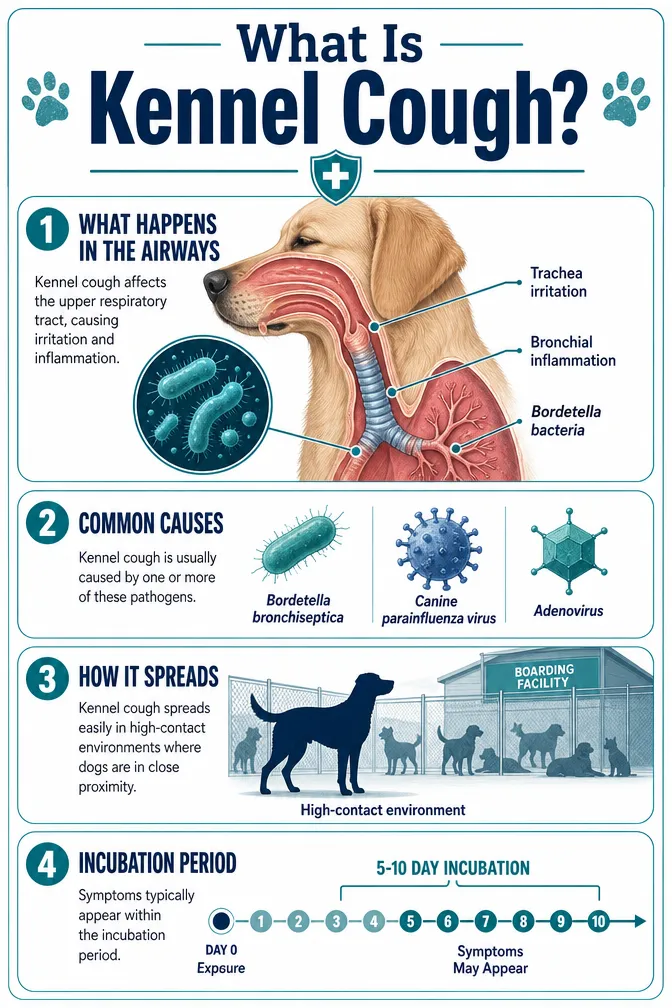
The name “kennel cough” comes from how quickly the disease spreads in places where dogs are in close contact – boarding kennels, dog parks, shelters, and grooming salons. According to veterinary respiratory disease experts at the Merck Veterinary Manual, the condition is one of the most common infectious respiratory diseases seen in dogs worldwide.
What most people don’t realize is that kennel cough is now understood as part of a broader disease spectrum. The LA Times reported on Canine Respiratory Disease Complex (CIRDC) as a growing concern, with outbreaks sometimes labeled “mysterious dog respiratory disease” – yet many of those cases start with the same kennel cough signs owners routinely dismiss.
How dogs catch kennel cough:
- Direct contact with an infected dog’s nose or mouth
- Breathing in airborne droplets from coughing or sneezing
- Touching contaminated surfaces like water bowls, leashes, or kennel walls
- Visiting high-contact environments such as dog parks or boarding facilities
The incubation period is typically 3-10 days, which means your dog can be infected for almost a week before you notice any symptoms.
9 Signs of Kennel Cough Dogs Show (and What They’re Mistaken For)
These are the signs of kennel cough that most dog owners misread – often until the infection has already spread to other dogs or gotten worse.
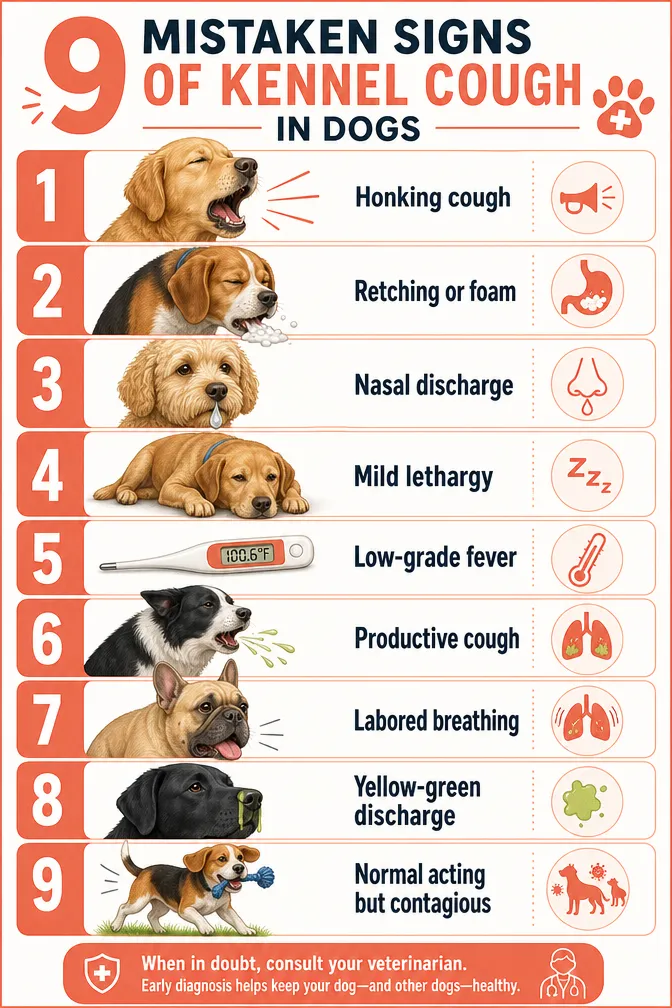
1. The Honking Cough
The most recognizable sign is a harsh, dry, honking cough that sounds almost like a goose honk or like your dog has something caught in their throat. Many owners rush to check for a foreign object, or assume their dog is reverse sneezing. This honking cough is the hallmark of kennel cough and should prompt a vet call.
2. Gagging and Retching
After a coughing fit, many dogs will gag or retch. Some bring up small amounts of white foam. This is almost always mistaken for vomiting, nausea, or eating grass. The key difference: it follows a coughing episode, not a meal.
3. Runny Nose and Nasal Discharge
A clear or slightly cloudy nasal discharge is common in the early stages. Dog owners often chalk this up to allergies or a seasonal cold. As the infection progresses, nasal discharge can turn thick, yellow, or green, which signals a secondary bacterial infection that needs veterinary attention.
4. Sneezing
Sneezing alongside coughing is another sign that gets written off as allergies. If your dog is sneezing AND has a cough, especially after contact with other dogs, kennel cough is a more likely cause than pollen.
5. Mild Lethargy
Some dogs become slightly less energetic or less interested in play. Owners often blame the heat, aging, or minor stomach upset. Mild lethargy combined with coughing is a red flag for kennel cough, especially in puppies and senior dogs.
6. Low-Grade Fever
A mild fever often goes completely unnoticed because dogs don’t always act dramatically unwell. Many owners blame warm weather or post-exercise heat. A dog’s normal temperature is 101-102.5°F – anything above 103°F warrants a vet appointment.
7. Decreased Appetite
A dog that’s coughing frequently may eat less simply because swallowing is uncomfortable. This gets mistaken for picky eating or minor GI upset. If it lasts more than 24-48 hours alongside coughing, it’s worth a vet call.
8. Labored or Fast Breathing
In more serious cases, dogs may breathe faster than normal or seem to work harder to breathe. This is often misread as over-exertion, anxiety, or heatstroke. Fast or labored breathing in a coughing dog can signal the infection is moving toward pneumonia – this is a same-day emergency care situation.
9. “Normal-Acting” Dogs That Are Still Contagious
This is the most dangerous sign of all. Some dogs with kennel cough continue to eat, play, and act fairly normal – especially in the early stages. Owners assume a dog that seems fine isn’t sick or contagious. Research confirms that dogs can shed the Bordetella pathogen before obvious symptoms appear, making contact with other dogs risky even when your pet seems healthy.
If you’re also noticing your dog showing unusual behavior alongside these symptoms, our guide on 12 stressed dog signs most owners miss can help you tell the difference between illness and anxiety.
Kennel Cough vs. Regular Cough – and Kennel Cough vs. Allergies
Kennel cough produces a very specific dry, honking cough that is different from the wet, productive cough of pneumonia or the soft, occasional cough of allergies. Knowing the difference helps you act faster.
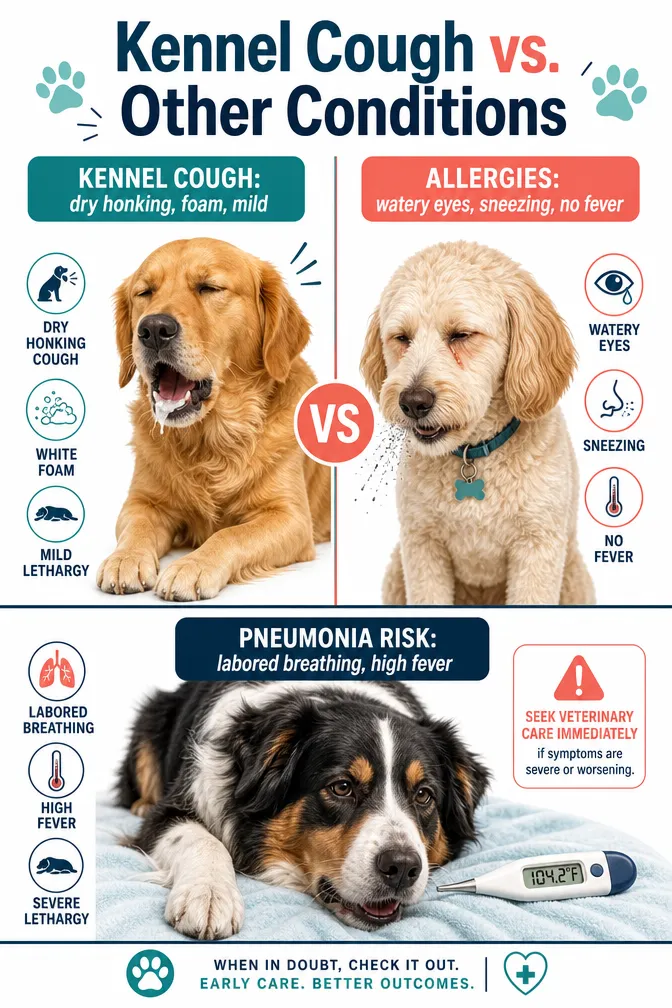
| Condition | Cough Type | Other Signs | Fever? |
|---|---|---|---|
| Kennel Cough | Dry, honking, harsh | Nasal discharge, gagging, foam | Mild possible |
| Allergies | Soft, occasional | Watery eyes, itching, sneezing | No |
| Pneumonia | Wet, productive | Labored breathing, lethargy | Yes, high |
| Heart Disease | Soft, chronic, at night | Exercise intolerance, swollen belly | No |
Choose vet care urgently if: your dog has labored breathing, a high fever, blue-tinged gums, or refuses to eat for more than 48 hours. These signs suggest the cough has become something more serious than standard kennel cough.
Kennel cough vs. allergies is a common mix-up. Allergies rarely cause a honking cough, and they usually come with itchy skin or watery eyes. Kennel cough rarely causes itching. If your dog was recently at a boarding facility or dog park, kennel cough is the more likely culprit. You might also find our article on can dogs get colds – 7 warning signs helpful for sorting out similar symptoms.
How Veterinarians Diagnose Kennel Cough
A veterinarian can often diagnose kennel cough based on symptoms and your dog’s recent contact history alone. However, for persistent or severe cases, additional testing is available.
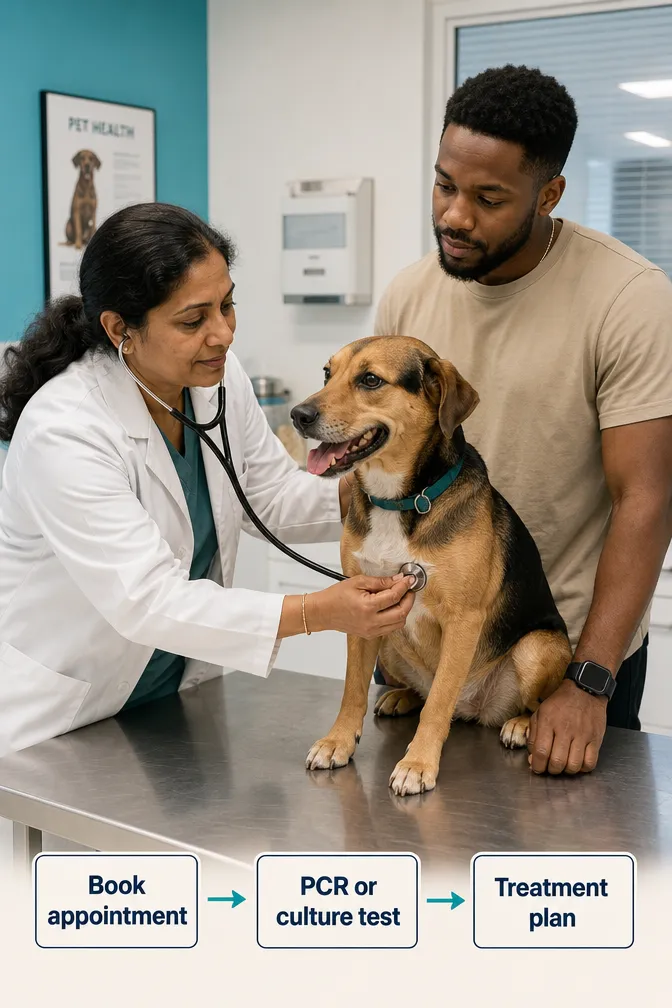
A vet will typically start with a physical exam – pressing gently on the trachea to check for sensitivity (this is sometimes called the “tracheal pinch” or tracheal palpation). Dogs with kennel cough usually cough immediately when the trachea is touched.
For cases that don’t respond to initial treatment, or when a veterinarian needs to identify the specific pathogen, PCR testing can detect Bordetella, canine parainfluenza virus, and other respiratory pathogens with high accuracy. Culture and sensitivity testing may also be used to guide antibiotic selection.
Ohio State University’s veterinary infectious disease fact sheet notes that CIRDC involves multiple possible pathogens, which is why PCR panels that test for several agents at once are increasingly recommended over single-pathogen tests.
What to tell your vet:
- When the cough started and how often it happens
- Any recent contact with other dogs (boarding, grooming, dog park)
- Whether your dog has had the kennel cough vaccine
- Any other symptoms such as nasal discharge, lethargy, or fever
Book an appointment promptly – early diagnosis helps prevent complications and stops the spread to other dogs in your household or neighborhood.
Treatment of Kennel Cough in Dogs
Most dogs with mild kennel cough recover on their own within 1-3 weeks with supportive care at home. However, puppies, senior dogs, and dogs with underlying health conditions often need veterinary treatment to avoid serious complications.
Supportive Care at Home
- Rest and reduced exercise – avoid anything that triggers coughing fits
- Keep your dog away from other dogs to prevent spread
- Use a harness instead of a collar to reduce tracheal pressure
- A humidifier in the room can help soothe irritated airways
- Make sure your dog stays well hydrated; if you’re concerned about dehydration, check our guide on 5 hidden signs of dehydration in dogs
- Honey (1 teaspoon for medium dogs, up to 3x daily) is a common home remedy that may help coat the throat – though always check with your vet first
Medications
For moderate to severe cases, a veterinarian may prescribe:
- Antibiotics (such as doxycycline) to treat or prevent secondary bacterial infection
- Cough suppressants to reduce the frequency of coughing fits and help your dog rest
- Anti-inflammatory medications to reduce airway inflammation
- Bronchodilators in cases where breathing is affected
According to PetMD’s kennel cough treatment guide, cough suppressants are not always recommended because coughing helps clear the airways – your vet will decide based on your dog’s specific situation.
Can kennel cough turn into pneumonia? Yes. If left untreated or if your dog is immunocompromised, the infection can progress to bacterial pneumonia – a serious condition requiring emergency care and hospitalization. Puppies and senior dogs are at highest risk. Signs of pneumonia include labored breathing, high fever, and extreme lethargy.
How to Protect Your Dog Against Kennel Cough
The kennel cough vaccine – most commonly the Bordetella vaccine – is the primary prevention tool, but it does not guarantee complete protection. Here’s what every dog owner should know.
The kennel cough vaccine is available as an injectable, intranasal, or oral formula. Most boarding kennels and dog hospitals require it before allowing dogs to stay. The vaccine is typically given annually, though high-risk dogs (those frequently in contact with other dogs) may benefit from a booster every 6 months.
Does the vaccine always work? Not always. Because kennel cough is caused by multiple pathogens, the vaccine protects against the most common ones – particularly Bordetella – but vaccinated dogs can still get kennel cough from other strains. Veteris notes that the vaccine significantly reduces the severity of illness even when it doesn’t fully prevent infection.
Other prevention steps:
- Avoid dog parks and boarding facilities during known outbreaks
- Disinfect water bowls, toys, and bedding regularly
- Keep sick dogs isolated from healthy dogs for at least 2 weeks
- Wash your hands after contact with any dog showing respiratory symptoms
- Book a first exam for any new dog or puppy before introducing them to other dogs
Keeping your dog’s overall health strong also matters. A well-rested, well-nourished dog with a healthy immune system will recover kennel cough faster. Our daily dog routine for busy owners has practical tips for keeping your pet healthy year-round.
How Long Does Kennel Cough Last, and Can It Go Away on Its Own?
Most cases of kennel cough in otherwise healthy adult dogs resolve within 1-3 weeks without medication. Mild cases with no fever and normal energy levels can often be managed with supportive care at home.
However, the timeline changes for at-risk dogs:
- Puppies and senior dogs – may take 3-6 weeks and often need antibiotic treatment
- Dogs with underlying disease – risk of complications is higher; always consult a vet
- Severe cases – can progress to pneumonia, requiring hospitalization
PetCare AI’s kennel cough guide notes that while many dogs recover kennel cough without treatment, monitoring symptoms closely is essential – especially watching for signs that the cough is worsening rather than improving after day 5-7.
When to worry about kennel cough:
- Coughing lasts more than 10-14 days with no improvement
- Your dog develops a high fever (above 103°F)
- Breathing becomes labored or rapid
- Your dog stops eating or drinking
- Gums appear pale, blue, or gray
If you notice any of these signs, this is beyond standard kennel cough – call your veterinary hospital immediately or seek emergency care.
Is Kennel Cough Contagious to Humans or Cats?
Kennel cough is primarily a canine disease, but there are some nuances worth knowing. For most healthy people, kennel cough is not a significant risk – but it is not entirely zero.
Bordetella bronchiseptica can, in rare cases, cause respiratory illness in people with severely compromised immune systems. Research published via the National Institutes of Health notes that immunocompromised individuals should take extra precautions around infected dogs.
Can cats get kennel cough? Yes. Cats can contract Bordetella bronchiseptica, though it is less common than in dogs. If you have cats in the home and one of your dogs has kennel cough, keep them separated. Signs in cats include sneezing, nasal discharge, and mild respiratory symptoms.
How long is kennel cough contagious? A dog with kennel cough is typically contagious from the time of infection through approximately 2 weeks after symptoms resolve. Some dogs, particularly those infected with Bordetella, can shed the bacteria for up to 3 months even after appearing healthy.
FAQ – Kennel Cough in Dogs
What is the pinch test for kennel cough?
The pinch test – also called tracheal palpation – involves a veterinarian gently squeezing the trachea (windpipe) with two fingers. Dogs with kennel cough almost always cough immediately in response to this light pressure because their trachea is inflamed and sensitive. It is a quick, non-invasive diagnostic step that helps a vet confirm a kennel cough diagnosis during a physical exam.
What can be mistaken as kennel cough?
Several conditions can mimic kennel cough, including canine influenza, canine distemper, collapsing trachea, heart disease, and even a foreign object stuck in the throat. Allergies and reverse sneezing are also commonly confused with kennel cough. A vet can distinguish between these through physical examination, history of contact with other dogs, and diagnostic tests like PCR if needed.
Will kennel cough go away on its own?
In most healthy adult dogs, yes – kennel cough will resolve on its own within 1-3 weeks with rest and supportive care. However, puppies, senior dogs, and dogs with health conditions often need veterinary treatment to recover safely. If your dog’s cough is not improving after 10-14 days, or if symptoms worsen, book an appointment with your vet rather than waiting it out.
What do I give my dog for kennel cough?
For mild cases, supportive care works well: rest, reduced exercise, a humidifier, and keeping your dog hydrated. A small amount of honey may help soothe the throat. For moderate to severe cases, a vet may prescribe antibiotics, cough suppressants, or anti-inflammatory medications. Never give your dog human cough medicine – many contain xylitol or other ingredients that are toxic to dogs. Always check with your veterinarian before starting any treatment.
Conclusion
The signs of kennel cough are sneaky. A honking cough gets blamed on a stuck object. Gagging gets chalked up to an upset stomach. Nasal discharge looks like allergies. And a dog that’s still playing and eating seems fine – even when they’re actively contagious to every other dog they meet.
Knowing these 9 signs of kennel cough can genuinely make a difference for your dog and for the dogs around them. Here’s what to do next:
- If your dog has a honking cough after recent contact with other dogs, call your vet and keep your dog away from other pets
- Book an appointment if symptoms don’t improve within 7-10 days, or immediately if breathing is labored
- Check your dog’s vaccination status – the Bordetella vaccine is widely available and reduces severity significantly
- Disinfect shared items like bowls, toys, and bedding if your dog has been around other dogs recently
- Watch for warning signs of pneumonia – high fever, labored breathing, and extreme lethargy are emergency care situations
For more on recognizing when your dog is unwell, our guide on 10 early signs of pain in dogs every owner should recognize is a great next read. And if you want to give your sick dog some natural comfort while they recover, see what to give a sick dog naturally for safe home remedies.
Your dog can’t tell you when something’s wrong – but now you know what to look for.