Last updated: October 17, 2026
Quick Answer: Reverse sneezing in dogs is a sudden, harmless reflex caused by irritation in the nasopharynx – the area behind the nose and above the palate. Your dog makes a loud honking or snorting sound while rapidly inhaling with their mouth closed. Most episodes last only a few seconds and resolve on their own without any treatment.
Key Takeaways
- Reverse sneezing is medically called paroxysmal respiration and is triggered by nasopharyngeal irritation
- The honking, goose-like sound is the most recognizable sign – dogs typically stand still with neck extended and nostrils flared
- Six main causes include allergens, excitement, nasal mites, infections, anatomical factors, and foreign irritants
- Flat-faced (brachycephalic) breeds like Bulldogs and Pugs are more prone to episodes
- Most cases are completely harmless and self-resolving within seconds to a minute
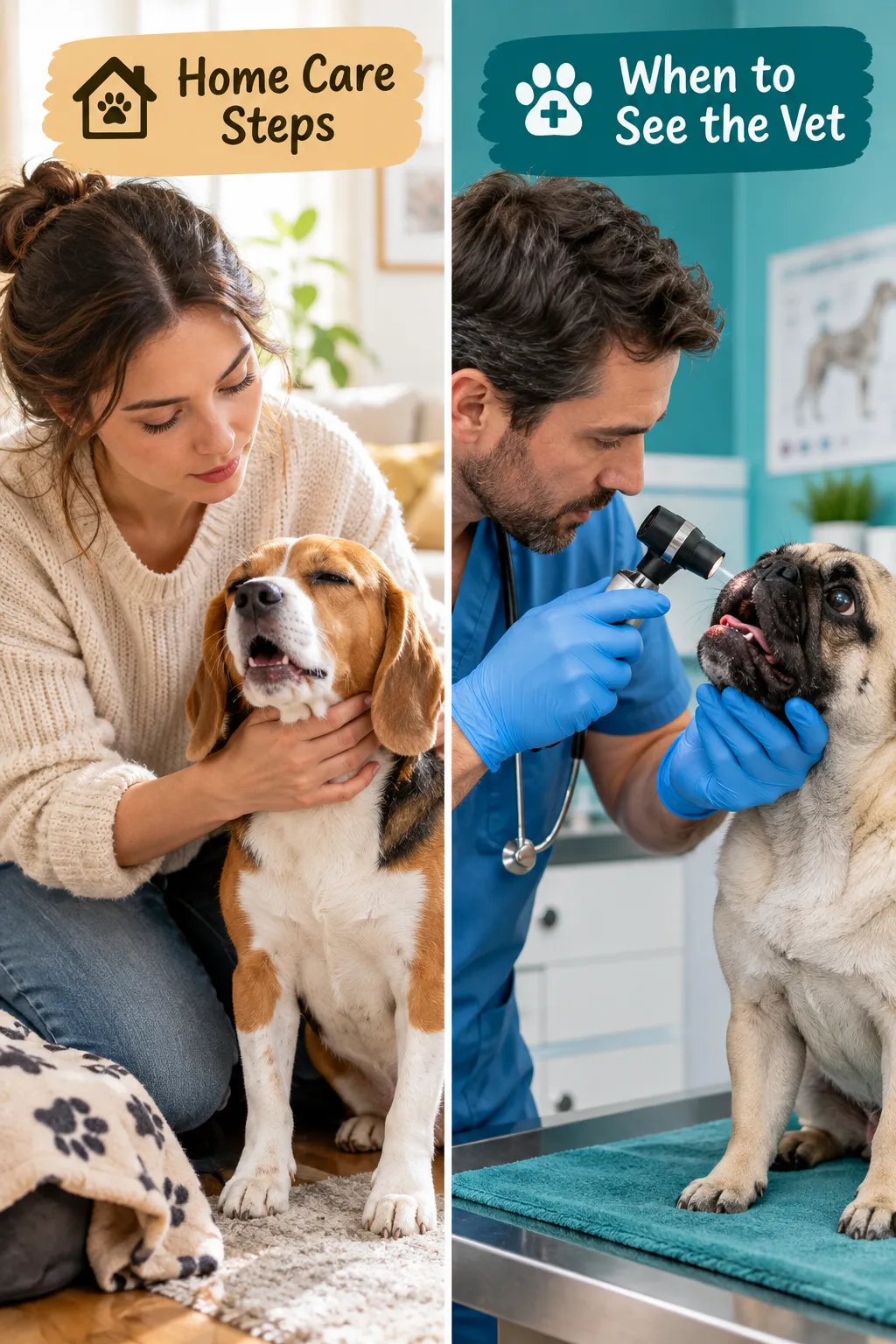
- You can gently help end an episode by massaging the throat, briefly covering the nostrils, or blowing softly on the dog’s face
- Call your vet if episodes are frequent, accompanied by nasal discharge, nosebleeds, or if your dog ever appears to faint or go blue around the gums
What Is Reverse Sneezing in Dogs?
Reverse sneezing in dogs is a reflex where the dog rapidly inhales air through the nose in a series of loud, forceful snorts. Unlike a regular sneeze (which pushes air out), this reflex pulls air in – hence the name “reverse” sneeze.
According to Cornell University’s Riney Canine Health Center, the reflex is triggered by irritation in the nasopharynx. During an episode, the glottis (the opening to the windpipe) temporarily closes, which is why your dog may look like they’re struggling to breathe – even though they’re not in danger.
The sound is often described as a honking, snorting, or goose-like noise. It can be alarming if you’ve never heard it before.
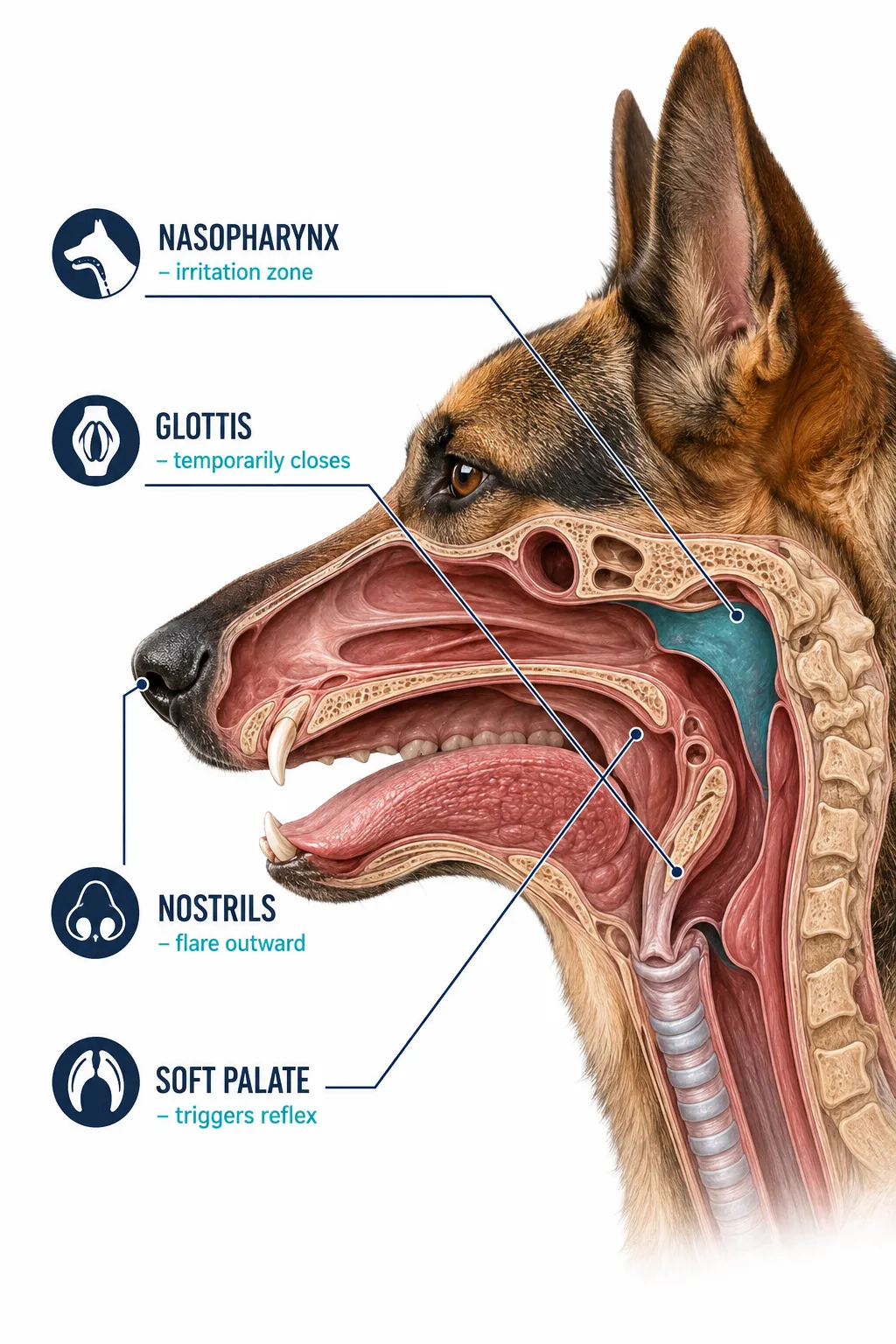
What it looks like during an episode:
- Dog stands still and stiffens slightly
- Head and neck extend forward
- Nostrils flare wide
- Mouth stays closed
- Loud, rapid inhalations repeat for several seconds
- Dog returns to normal behavior almost immediately after
Most owners who witness it for the first time think their dog is choking or having a seizure. It’s neither.
Is Reverse Sneezing Normal in Dogs, and Is It Dangerous?
Reverse sneezing is normal and, in most cases, completely harmless. VCA Animal Hospitals confirm that episodes typically have no lasting ill effects and dogs recover within minutes without any intervention.
The reflex itself is simply the body’s way of clearing an irritant from the upper airway. Think of it as the dog equivalent of a human clearing their throat aggressively.
That said, frequency matters. Occasional honking episodes are nothing to worry about. If your dog is reverse sneezing multiple times a day or in long clusters, that’s worth a conversation with your vet.
6 Surprising Causes of Reverse Sneezing in Dogs
Reverse sneezing in dogs can be triggered by a surprisingly wide range of things. Here are the six main categories that veterinarians identify most often.
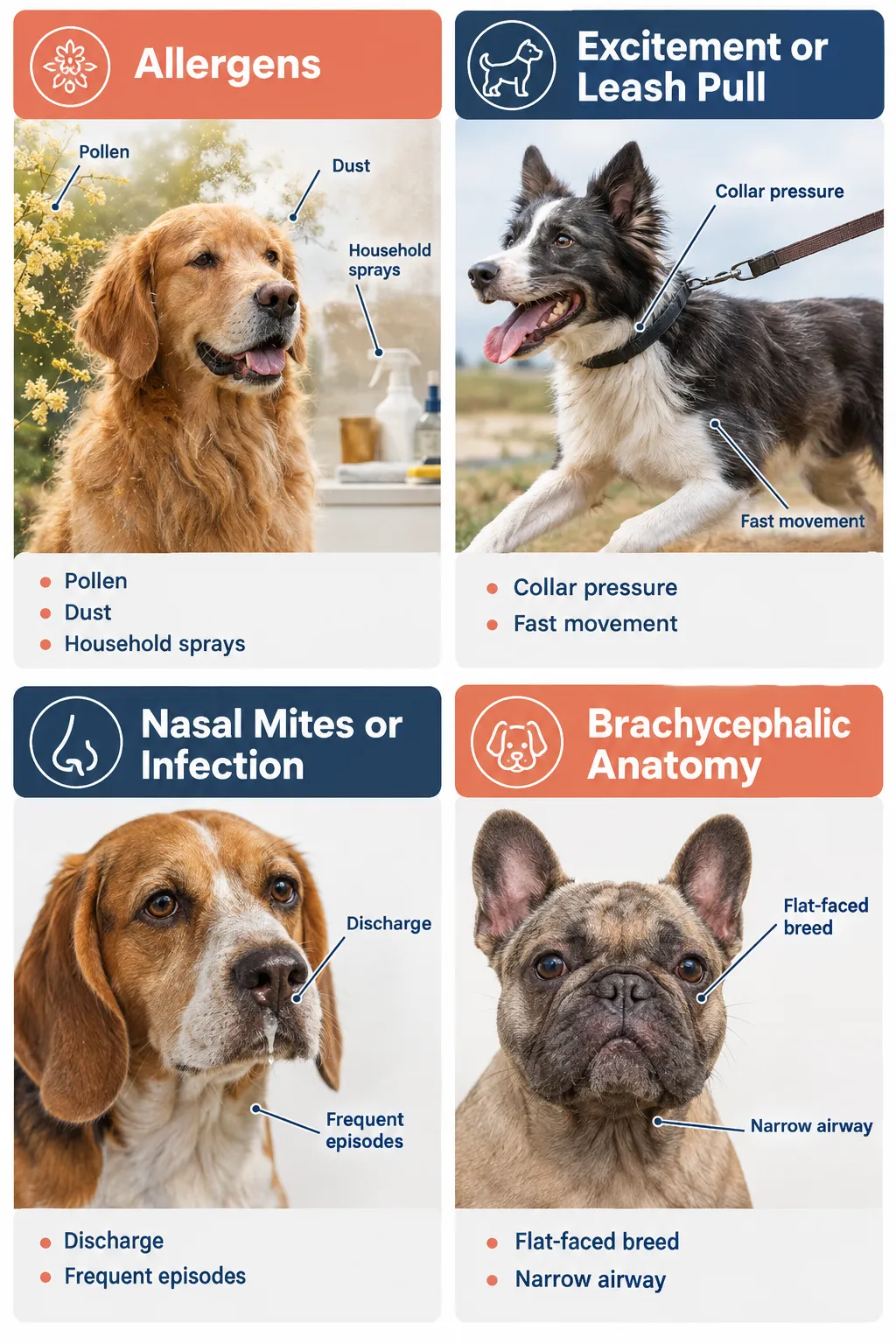
1. Allergens and Environmental Irritants
This is one of the most common triggers. Dust, pollen, mold spores, perfume, air fresheners, cleaning sprays, and even scented candles can irritate the nasopharynx and set off an episode.
If your dog reverse sneezes more in spring or after you clean the house, allergens are likely the culprit. According to the Royal Kennel Club’s guidance on dog sneezing, household sprays are a frequently overlooked trigger.
If you also notice your dog scratching more than usual, check out why dogs scratch all the time – allergies often affect both the skin and the airway at the same time.
2. Excitement or Physical Activity
Dogs can reverse sneeze during or right after an exciting event – greeting you at the door, playing, or being walked on a leash. The sudden rush of activity and rapid breathing can irritate the soft palate or nasopharynx.
Leash pressure from a collar pulling on the throat is a specific physical trigger worth noting. Switching to a harness can sometimes reduce episodes in dogs that pull.
3. Nasal Mites
Nasal mites (Pneumonyssoides caninum) are tiny parasites that live inside a dog’s nasal passages. They’re more common than most owners realize, and they cause intense irritation that leads to frequent reverse sneezing episodes.
WebMD’s veterinary guidance on reverse sneezing lists nasal mites as a key cause – especially in dogs that spend time outdoors or interact with other dogs. A vet can diagnose and treat this with antiparasitic medication.
4. Infections and Post-Nasal Drip
Upper respiratory infections, sinusitis, and post-nasal drip can all irritate the nasopharynx enough to trigger the reflex. If reverse sneezing comes with nasal discharge, sneezing, or lethargy, an infection may be involved.
If you’re wondering whether your dog might have a respiratory illness, our article on whether dogs can get colds covers the warning signs in detail.
5. Anatomical Factors (Brachycephalic Breeds)
Dogs with flat faces and compressed airways – Bulldogs, Pugs, Boxers, Shih Tzus, and Boston Terriers – are structurally more prone to reverse sneezing. Their elongated soft palates and narrower nasal passages make nasopharyngeal irritation more likely.
This is a breed-specific tendency rather than a disease, but it does mean flat-faced dogs may reverse sneeze more frequently throughout their lives.
6. Foreign Bodies or Masses
Occasionally, a grass seed, small object, or nasal polyp lodged in the nasal passage can trigger repeated reverse sneezing episodes. This is less common but important to rule out – especially if episodes suddenly increase in frequency or only affect one nostril.
Reverse Sneezing vs. Choking in Dogs – How to Tell
Reverse sneezing and choking can look similar in a panic, but they’re very different. Reverse sneezing involves repeated noisy inhalations with the mouth closed and nostrils flared. Choking involves distress, pawing at the mouth, and the dog actively trying to dislodge something.
Quick comparison:
| Feature | Reverse Sneezing | Choking |
|---|---|---|
| Mouth position | Closed | Often open or pawing |
| Sound | Honking/snorting inhalation | Gagging, retching |
| Duration | Seconds, then normal | Ongoing distress |
| After episode | Completely normal | May remain distressed |
| Action needed | Usually none | Immediate intervention |
If you’re ever unsure and your dog seems genuinely distressed, it’s always safer to act. Learn the Heimlich maneuver for dogs so you’re prepared before an emergency happens.
Reverse Sneezing in Dogs vs. Kennel Cough
These two conditions sound similar but have key differences. Kennel cough produces a persistent, harsh cough that sounds like a goose honk and continues throughout the day. Reverse sneezing happens in brief, isolated bursts and stops completely between episodes.
Veterinary Partner via VIN notes that a collapsing trachea can also produce a chronic honking cough – and distinguishing this from reverse sneezing is important. Tracheal collapse tends to cause coughing during exercise, excitement, or when drinking, and it doesn’t resolve as quickly or completely as a reverse sneezing episode.
Choose vet evaluation if: the honking is constant, happens during exercise, or your dog has a history of respiratory issues.
How to Stop a Dog from Reverse Sneezing – Home Remedies That Work
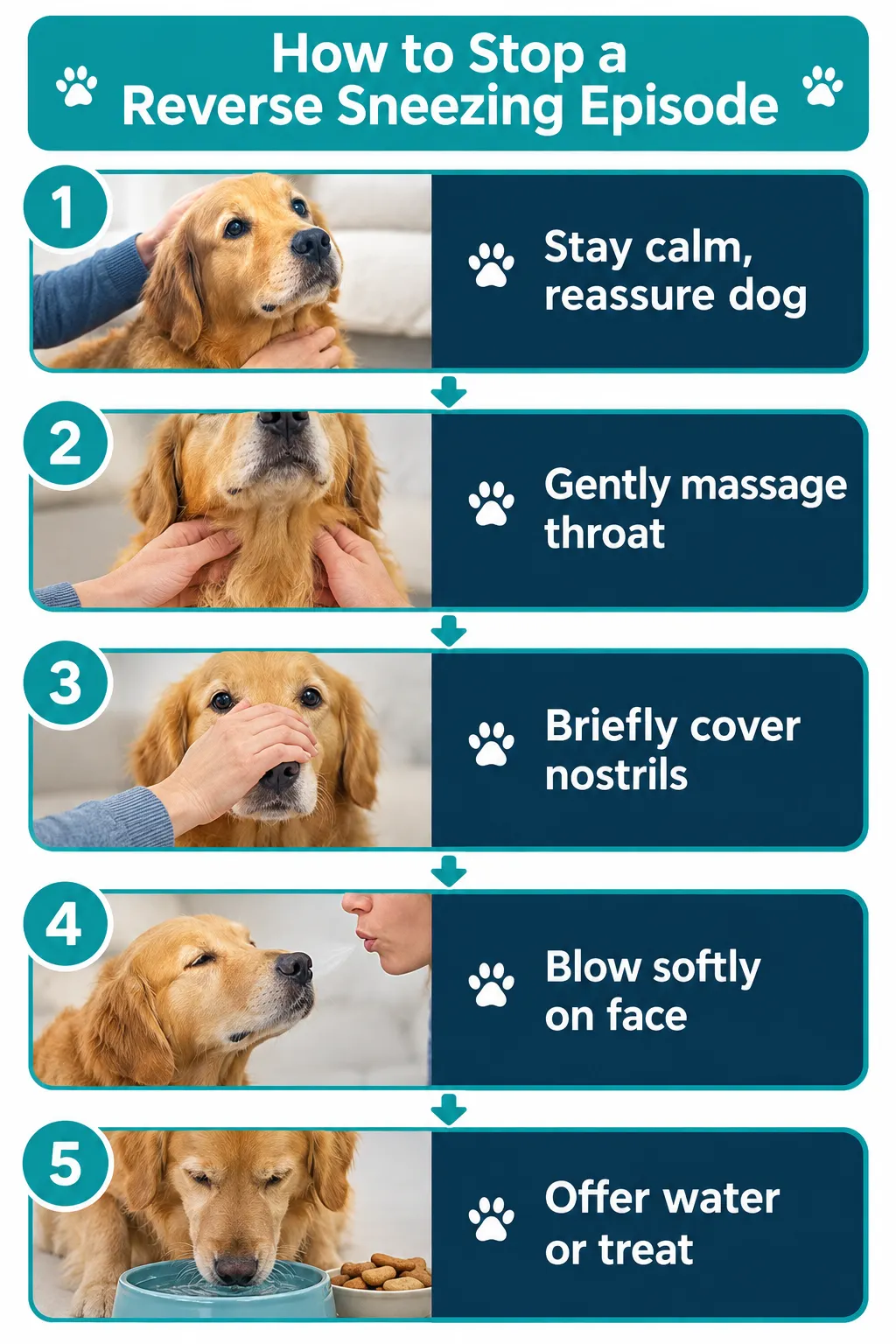
Most reverse sneezing episodes stop on their own within 30 seconds. But there are a few gentle techniques that can help end an episode faster.
Effective home techniques:
- Stay calm – your anxiety transfers to your dog and can prolong the episode
- Gently massage the throat – soft strokes along the neck can encourage swallowing
- Briefly cover both nostrils – this prompts the dog to swallow and often resets the reflex
- Blow softly on the dog’s face – a gentle puff can interrupt the pattern
- Offer water or a small treat – swallowing helps clear minor irritants
Cornell University’s Canine Health Center confirms these as reasonable comfort measures – not essential treatments, but genuinely helpful. Avoid rough handling or panicking, as that can make your dog more distressed.
For dogs that experience stress-related episodes, learning how to calm dogs during fireworks can offer useful general calming strategies that apply here too.
Can Allergies Cause Reverse Sneezing in Dogs?
Yes – allergies are one of the most common underlying causes of frequent reverse sneezing in dogs. Environmental allergens like pollen, dust mites, and mold irritate the nasopharyngeal lining and trigger the reflex repeatedly.
Chewy’s veterinary resource on reverse sneezing notes that identifying and minimizing exposure to the specific allergen is the most effective long-term management strategy. Your vet may also recommend allergy therapy if episodes are frequent and quality of life is affected.
Signs allergies may be the trigger:
- Episodes are seasonal (spring/fall)
- Worse after exposure to specific sprays or cleaning products
- Dog also has itchy skin, watery eyes, or frequent sneezing
- Episodes reduce when the dog is in a different environment
What Breeds Are Prone to Reverse Sneezing?
Brachycephalic (flat-faced) breeds are the most prone to reverse sneezing due to their compressed airway anatomy. However, any dog can experience it.
Higher-risk breeds:
- Bulldogs (English and French)
- Pugs
- Boxers
- Shih Tzus
- Boston Terriers
- Cavalier King Charles Spaniels
- Maltese
If you own a Maltese, our Maltese Dogs 101 guide covers their unique health tendencies in detail, including airway sensitivities.
Smaller dogs in general tend to have more episodes than large breeds, though the reason isn’t fully understood.
How Long Does Reverse Sneezing Last in Dogs?
A single reverse sneezing episode typically lasts between 5 and 30 seconds. In some dogs, episodes can stretch to a minute, but that’s less common.
After the episode ends, your dog should return to completely normal behavior – eating, playing, and acting like nothing happened. If your dog seems confused, weak, or distressed after an episode, that’s a sign to call your vet.
Frequency is more telling than duration. One or two brief episodes per week is very different from multiple daily clusters.
Reverse Sneezing in Dogs – When to Call the Vet
Most cases don’t need a vet visit. But certain signs change that calculation quickly.
Call your vet if you notice:
- Episodes happening multiple times per day or in long clusters
- Nasal discharge (especially yellow, green, or bloody)
- Nosebleeds alongside reverse sneezing
- Coughing or wheezing between episodes
- Lethargy, reduced appetite, or weight loss
- Your dog faints, collapses, or has blue-tinged gums during an episode
- Episodes that suddenly increase in frequency with no obvious cause
WebVet’s reverse sneezing guidance emphasizes that persistent or worsening episodes warrant imaging and a full nasal examination to rule out foreign bodies, masses, or structural disease.
For dogs that seem generally under the weather alongside their reverse sneezing episodes, check for hidden signs of dehydration in dogs – dehydration can worsen mucous membrane irritation.
Can Reverse Sneezing in Dogs Be Prevented?
You can’t prevent reverse sneezing entirely, but you can reduce how often it happens by managing known triggers.
Practical prevention steps:
- Switch from a collar to a harness if leash pulling triggers episodes
- Avoid aerosol sprays, strong perfumes, and scented candles around your dog
- Keep the home well-ventilated and dust levels low
- Ask your vet to check for nasal mites if episodes are frequent and unexplained
- Treat underlying allergies or infections promptly
- Keep your dog’s weight healthy – obesity can worsen airway compression in prone breeds
For dogs with anxiety-related episodes, regular calming routines and healing massage points for dogs may help reduce the overall frequency of stress-triggered episodes.
FAQ
Q: Is reverse sneezing painful for dogs?
No. Reverse sneezing is not painful. It may look distressing, but dogs typically show no signs of pain during or after an episode.
Q: Can puppies get reverse sneezing?
Yes. Puppies can reverse sneeze, and it’s just as harmless in young dogs as it is in adults. Puppies may be more prone to it as their airways are still developing.
Q: Should I go to the emergency vet if my dog reverse sneezes?
Not for a typical brief episode. Only seek emergency care if your dog collapses, has blue gums, or cannot breathe normally after the episode ends.
Q: Why does my dog reverse sneeze more at night?
Lying down can cause post-nasal drip or mucus to pool near the nasopharynx, triggering nighttime episodes. Dust in bedding is another common nighttime trigger.
Q: Can stress or anxiety cause reverse sneezing in dogs?
Yes. Excitement and anxiety can both trigger episodes. Dogs that are highly reactive or anxious may reverse sneeze more frequently during stressful events.
Q: Is there medication for reverse sneezing in dogs?
Medication is rarely needed for occasional reverse sneezing. If allergies or infections are the underlying cause, treating those conditions often reduces episodes significantly.
Q: Does reverse sneezing get worse with age?
It can, especially in brachycephalic breeds whose soft palate may elongate further with age. Regular vet check-ups help catch any worsening airway changes early.
Q: Can I give my dog antihistamines for reverse sneezing?
Only under veterinary guidance. Some antihistamines are safe for dogs, but dosing and formulation matter. Never give human antihistamines without checking with your vet first.
Conclusion
Reverse sneezing in dogs sounds alarming, but it’s almost always harmless. That honking, snorting noise your dog makes is simply their body clearing an irritant from the upper airway – nothing more dramatic than that.
Your action plan as a dog owner:
- Stay calm during episodes – your dog takes cues from you
- Try gentle throat massage or briefly covering the nostrils to help end the episode faster
- Identify and reduce triggers – allergens, aerosol sprays, and leash pressure are the most common culprits
- Track frequency – occasional episodes are normal, daily clusters are not
- Call your vet if you see nasal discharge, nosebleeds, coughing between episodes, or any sign of breathing difficulty
Most dogs that reverse sneeze live completely normal, happy lives. Knowing what’s happening – and what to watch for – means you can handle the next honking episode with confidence instead of panic.