Last updated: September 30, 2026
Quick Answer
You teach your dog “drop it” by trading, not taking. Show a low-value toy, say the cue, present a high-value treat, and reward the exact moment your dog opens its mouth. Practice in short, five-minute sessions daily, and your dog will start dropping items on cue within one to three weeks for most dogs.
Key Takeaways
- “Drop it” means your dog releases something already in its mouth, in exchange for something better, according to the American Kennel Club.
- “Drop it” and “leave it” are different commands – one is for items already in the mouth, the other stops a grab before it happens.
- Most healthy dogs, puppies through seniors, can learn a reliable “drop it” in one to three weeks with daily short sessions.
- Trading works better than chasing, because chasing and yelling can make a dog guard items harder, not release them faster.
- Start with boring toys, then work up to socks, tissues, and anything else your dog tends to snatch.
- You do not need treats forever. Toy-for-toy trades work as a treat-free alternative once the behavior is solid.
- Dogs with resource guarding history need slower, more careful trades and sometimes a trainer’s help.
What Does “Drop It” Mean for Dogs (and Why Does It Matter)?
“Drop it” is a cue that tells your dog to release whatever is currently in its mouth, willingly, without a fight. It is not about yanking a toy away or prying open your dog’s jaw.
Leading veterinary and training organizations, including the AKC, VCA Animal Hospitals, and the Anti-Cruelty Society, all describe it the same way: the dog chooses to let go because something better is on offer. That is the whole method in one sentence.
This matters for more than convenience. A reliable “drop it” can stop your dog from swallowing something dangerous, like a chicken bone, a sock, or a piece of a toy. Shelter safety programs treat this cue as a bite-prevention and safety habit, not just a party trick.
If your dog has ever grabbed something off the counter and bolted, you already know why this skill earns its place on your top command training list. And if counter grabs are a regular problem, it is worth also reading about stopping counter surfing, since the two habits often go hand in hand.
Before you start, I want to mention something that changed how fast my own training clicked. There is a Free Dog Training Workshop built around the same methods professional service dog trainers use to housebreak dogs, fix problem behaviors, and build rock-solid obedience, and it walks through cues like “drop it” in a way that’s easy to follow even for total beginners.
“Drop It” vs “Leave It”: What’s the Real Difference?
“Drop it” applies to something already in your dog’s mouth. “Leave it” applies to something your dog hasn’t touched yet and is about to grab.
Think of “leave it” as prevention and “drop it” as damage control. RSPCA Brighton and several SPCA training handouts list this as one of the most common mix-ups new owners make.
Here’s a quick side-by-side to keep them straight:
| Cue | When you use it | What the dog does |
|---|---|---|
| Leave it | Before the dog touches an item | Ignores or backs away from the item |
| Drop it | Item is already in the dog’s mouth | Opens mouth and releases the item |
Both cues rely on the same trading principle. Neither one works well if you grab, yell, or chase. If you want a broader set of calm, no-yelling cues to pair with this one, 15 hand commands that get instant results without yelling is a solid next stop.
How to Teach Your Dog “Drop It” in 5 Minutes a Day: Step-by-Step
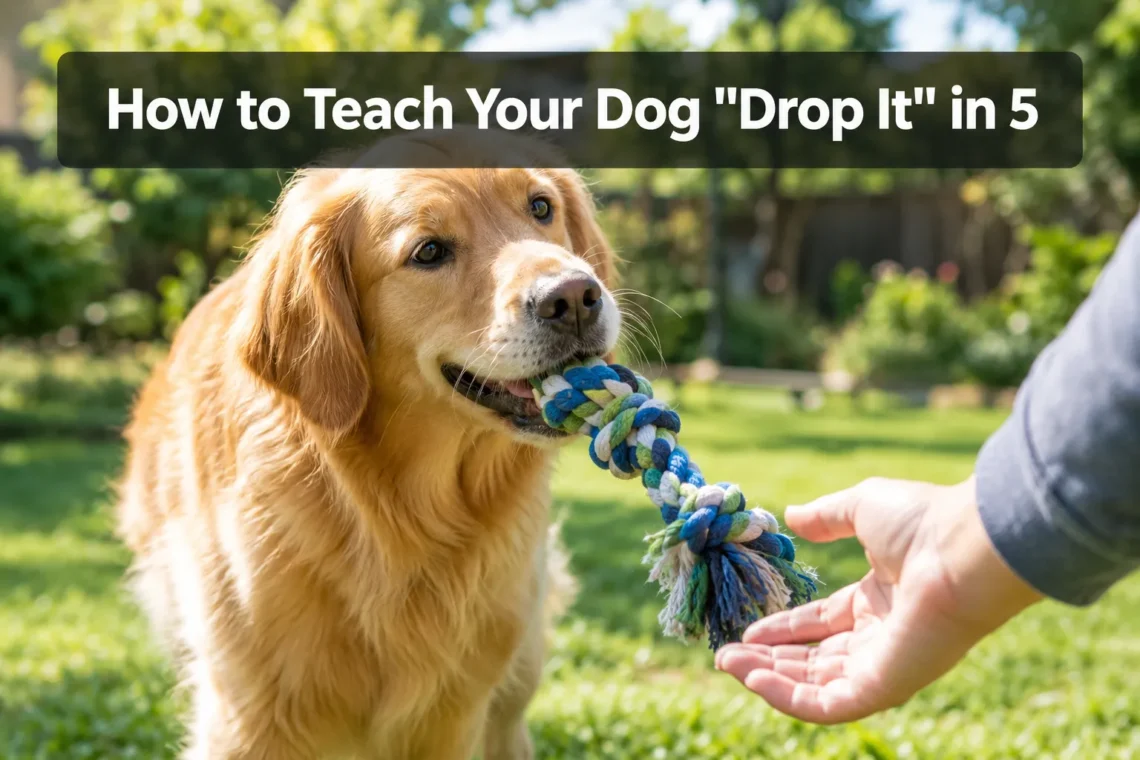
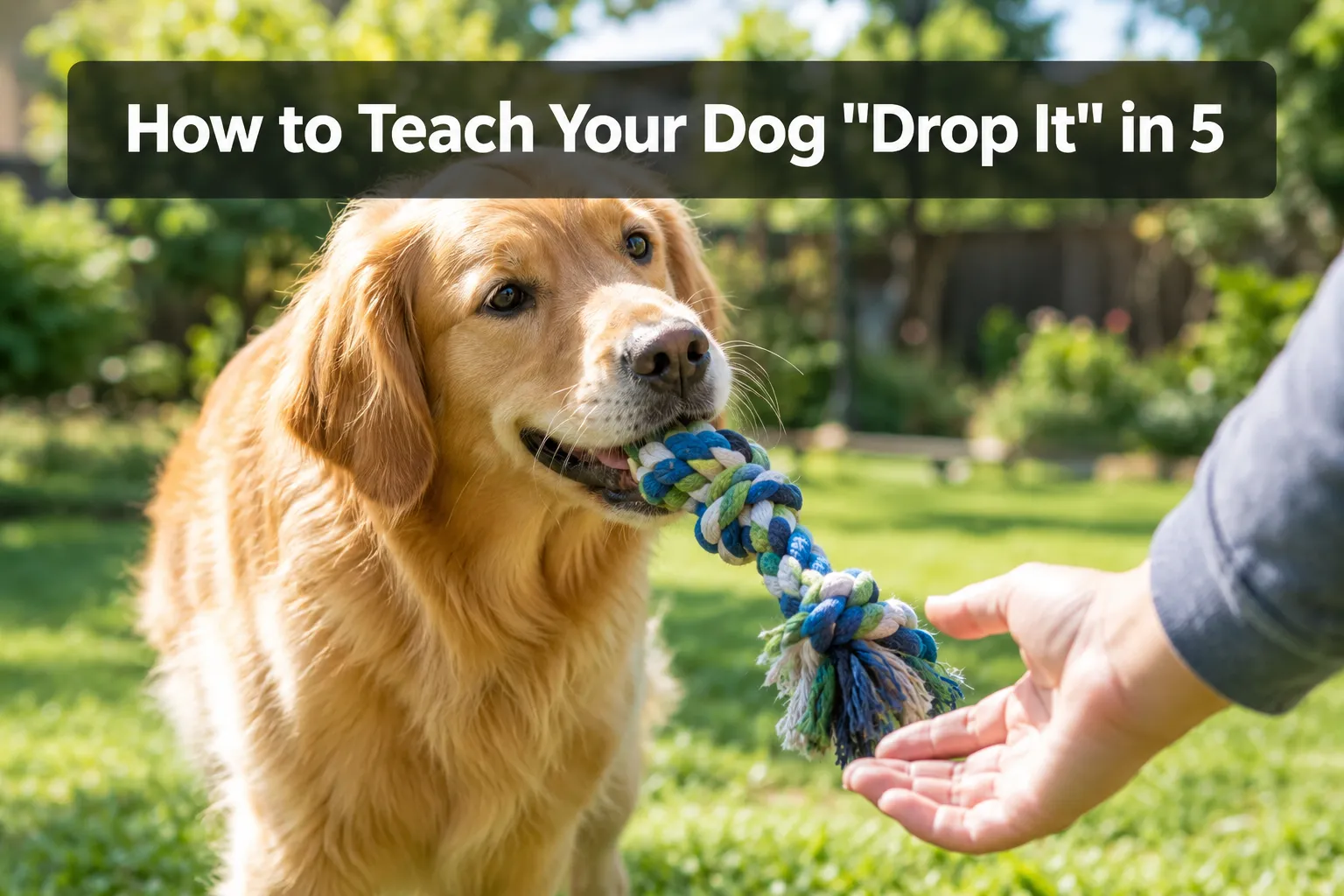
You teach “drop it” by pairing a low-value toy with a high-value treat, marking the release, and giving the toy back so your dog never feels like it’s losing something. This whole cycle takes about five minutes, done once or twice a day.
Here’s the exact sequence, based on protocols from the AKC, VCA, and PreventiveVet:
- Pick a mildly interesting toy. Not a favorite. Nothing your dog would fight for.
- Let your dog pick it up. Wait a couple of seconds.
- Say “drop it” once, calmly. No repeating, no raising your voice.
- Present a high-value treat right at your dog’s nose. Cheese, chicken, or a training treat works well.
- Mark the release the instant it happens. Say “yes!” and pay the treat.
- Give the toy back. This step matters more than people think, since it teaches the dog that dropping isn’t losing.
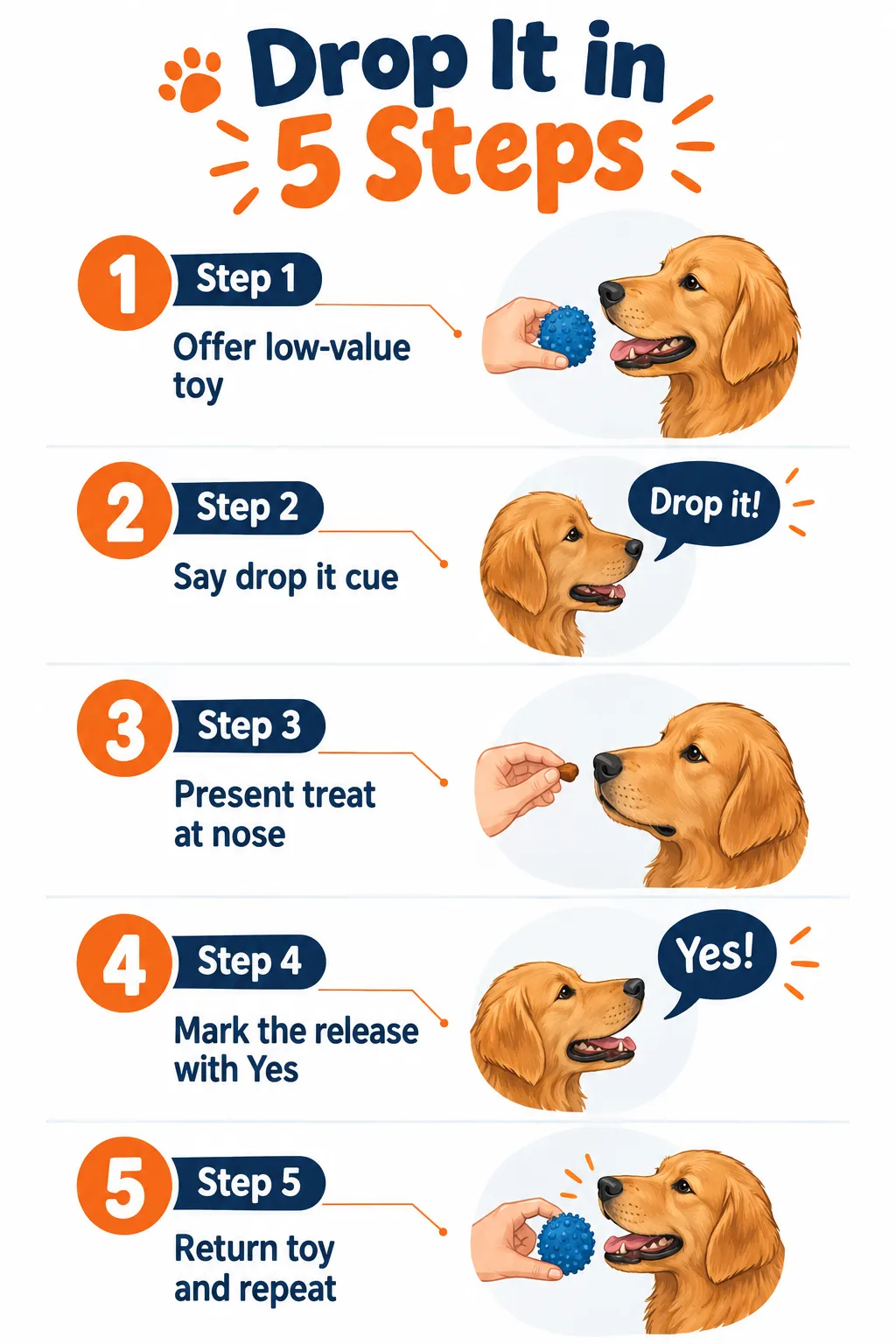
Repeat this cycle five to ten times per session. That’s your five minutes.
The AKC’s March 2026 guide suggests offering a “jackpot” of treats the first several times your dog drops the toy, to build a fast, eager response early on. Once your dog is dropping toys reliably, start trading up: socks, tissues, chew toys, and eventually higher-value items.
Tug-of-war can actually help here too. AVSAB training guidance recommends playing a short tug game, then calmly presenting a treat at the dog’s nose while giving the cue, so the dog learns releasing the tug predicts something good, not a loss of the game.
If your dog already knows a few basic cues, pairing “drop it” with hand signals can speed things along, especially in noisy environments where a verbal cue gets lost.
How Long Does It Take to Teach “Drop It”? Puppies, Adults, and Seniors
Most dogs learn a basic “drop it” in one to three weeks of daily five-minute sessions. Puppies often pick it up fastest because they haven’t practiced holding onto things out of habit yet.
Adult dogs with an established “keep-away” pattern may need a little longer, mainly because they’ve learned that holding an item leads to a chase. Once you remove the chase and replace it with a trade, most adult dogs catch on within a similar timeframe.
Can you teach an old dog “drop it”? Yes. Age isn’t the limiting factor here, motivation and consistency are. Senior dogs with strong food motivation often learn this cue just as fast as younger dogs, sometimes faster, since they tend to be calmer around training in general.
Decision rule: if your dog is already showing signs of stress or guarding around toys, slow down and use smaller steps. If your dog drops the toy easily for a treat every single time, you’re ready to move to real household items like socks or tissues.
Puppies benefit from combining this cue with basic foundation skills. If you’re just starting out, pairing it with lay down training or general bonding activities builds a stronger training relationship overall.
Best Treats to Use When Teaching “Drop It” (and a No-Treat Method)
The best treats for “drop it” training are soft, high-value, and easy to swallow fast, like small pieces of cooked chicken, cheese, or hot dog. You want something your dog rates way higher than the toy in its mouth.
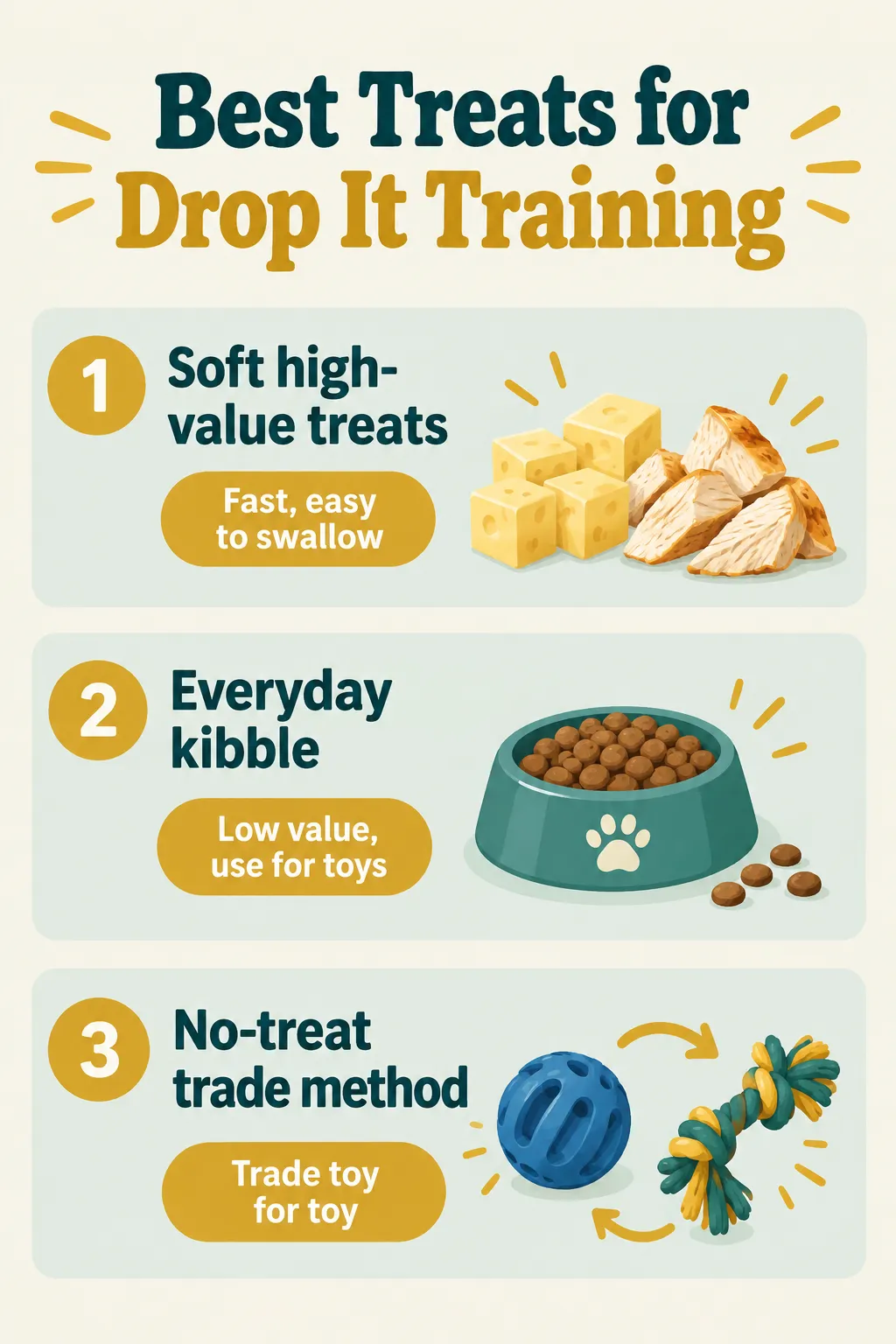
Here’s why soft treats beat crunchy ones for this specific skill: crunchy treats take longer to chew, which slows down your marking timing and can make the whole session drag. Soft treats disappear in one bite, so you can move to the next repetition fast, which is exactly what a five-minute session needs.
Drop it without treats: if you’d rather not rely on food, use a toy-for-toy trade instead. Offer a second toy of similar or slightly higher value the instant your dog drops the first one. This works especially well for dogs that are more toy-motivated than food-motivated, and it’s a great long-term maintenance method once the cue is solid.
Dog Won’t Drop It? Common Troubleshooting Fixes
If your dog won’t drop it, the treat probably isn’t valuable enough, or you’re accidentally reaching for the toy at the same time you give the cue. Both of these make dogs hold on tighter, not let go.
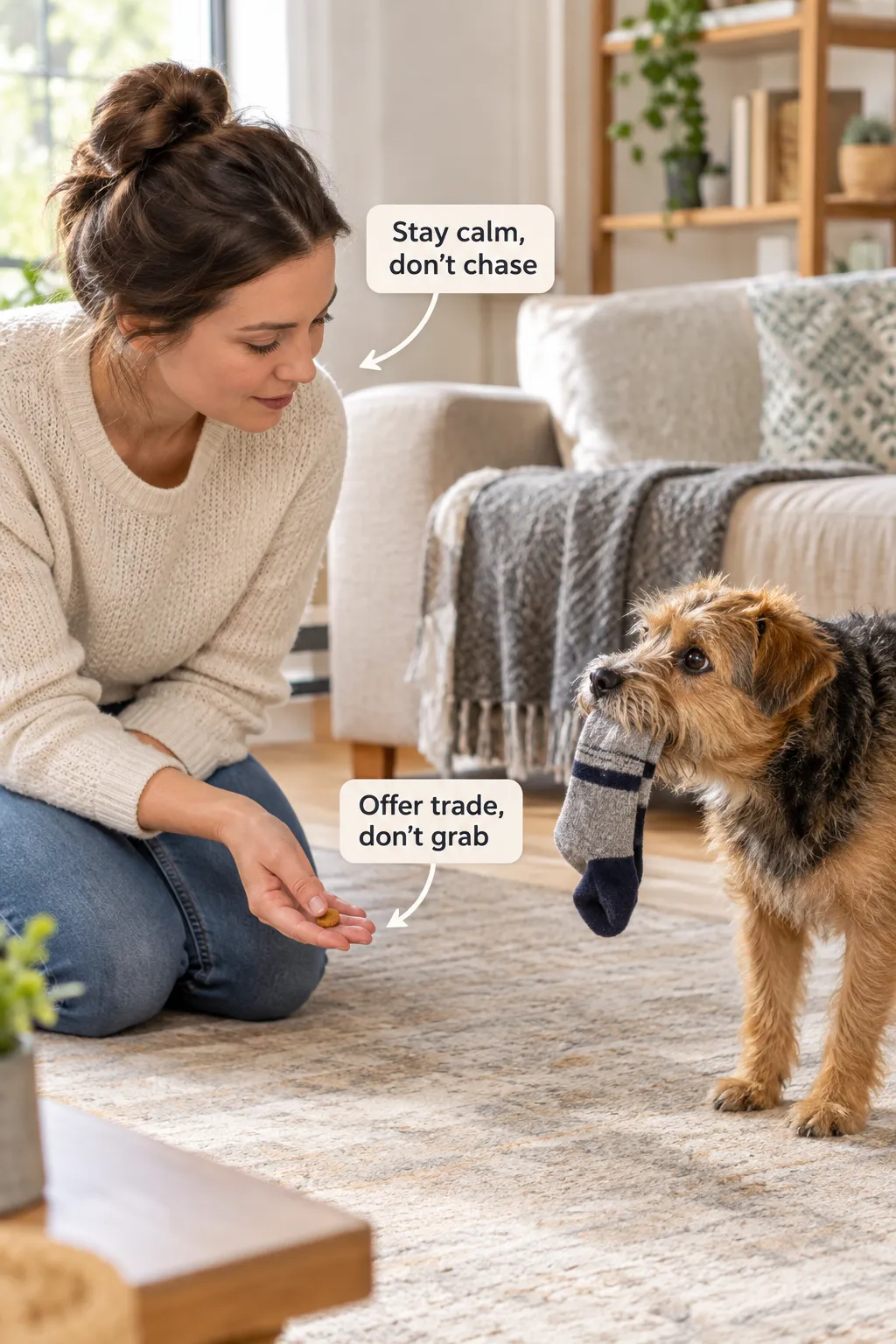
Common mistakes and quick fixes:
- Reaching for the item while saying the cue, stop reaching. Keep hands still until the drop happens, then reward.
- Using a treat your dog doesn’t care about, upgrade to real chicken, cheese, or freeze-dried liver.
- Practicing only with boring toys, that’s fine at first, but you also need reps with things your dog actually values, or the cue won’t generalize.
- Chasing when the dog runs off with the item, chasing turns this into a game your dog wins by keeping the item. Walk away instead and let curiosity bring the dog back to you.
- Yelling or grabbing at the mouth, this is the fastest way to teach a dog to swallow first and ask questions later.
Drop it not working at all? Go back to step one with a boring toy and rebuild the pattern from scratch. Skipping ahead too fast is the number one reason this cue falls apart.
Is “Drop It” Training Safe for Resource Guarding or Aggressive Dogs?
Yes, but it needs to go slower and with more caution than a typical dog. Dogs with resource guarding history should start with items they don’t care much about, and every single drop needs to be rewarded generously so the dog never associates the cue with loss.
Welfare organizations including Battersea and PAWS Chicago specifically warn against confrontation with dogs that guard items, noting that chasing or forcing a release increases the risk of a bite. For dogs that growl, freeze, or stiffen around items in their mouth, work with a certified trainer before attempting hands-on trades.
If your dog shows early guarding signs, like stiffening or a hard stare when you approach a toy, this often overlaps with broader tension issues. It’s worth reading about calming a dog without stress or yelling and, if reactivity shows up in other situations too, socializing a reactive dog without stress.
A 2026 review in Frontiers in Veterinary Science on professional trainer perspectives found broad support among trainers for reward-based methods over aversive tactics, reinforcing why trading beats confrontation for cues like this one.
How to Practice “Drop It” Every Day (Without It Eating Your Schedule)
Practicing “drop it” daily just means running five to ten short repetitions once a day, using the play-cue-drop-reward-replay cycle, for about five minutes total.
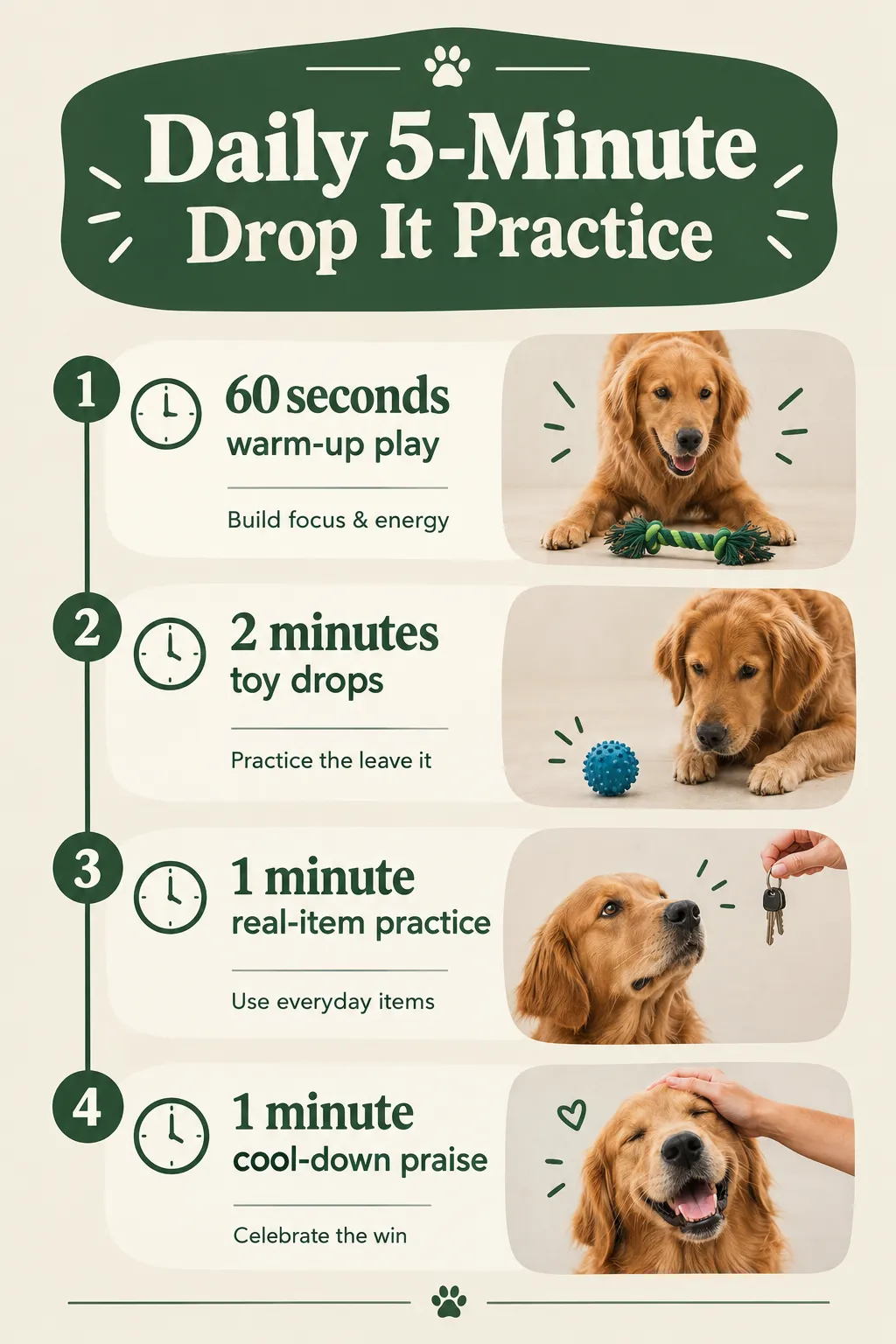
A simple daily structure that works:
- 60 seconds: warm-up play with a toy
- 2 minutes: toy drop repetitions (5-10 reps)
- 1 minute: practice with a “real-life” item like a sock
- 1 minute: cool-down praise and free play
Shelter training documents from Maddie’s Fund and the Anti-Cruelty Society both emphasize that short, frequent sessions beat long drills, both for learning speed and for keeping training fun. If your dog gets bored easily, mixing this into regular enrichment play keeps motivation high without turning training into a chore.
Frequently Asked Questions
Does “drop it” work the same for puppies and adult dogs?
The method is identical for both. Puppies often learn faster since they have no established habit of running off with items, but adult dogs catch up quickly once chasing stops.
What if my dog swallows the item before dropping it?
This usually happens when the item is small, edible, or highly valued, and the dog senses a chase coming. Slow down, use lower-value items while training, and never chase, since chasing speeds up swallowing. If your dog swallows something dangerous, know the signs of choking and how to respond ahead of time.
Can I use “drop it” and “leave it” interchangeably?
No. “Leave it” prevents a grab before it happens, while “drop it” releases something already in the mouth. Train both separately for the clearest results.
How many reps per session are ideal?
Five to ten reps per session is plenty. More than that risks boredom or a full dog that stops caring about the treat.
Is it bad to always give the toy back after a drop?
No, it’s actually recommended. Giving the toy back teaches your dog that dropping doesn’t mean losing, which builds a faster, more willing response over time.
What if my dog only drops it for treats, never for praise?
That’s normal early on. Gradually fade the treat to every other rep, then every third rep, while keeping praise consistent, so the behavior holds up without constant bribery.
Should I ever physically take an item from my dog’s mouth?
Avoid it when possible. Physically removing items, especially repeatedly, is one of the most common triggers for resource guarding, according to shelter behavior teams.
Conclusion
Teaching “drop it” comes down to one simple shift: stop chasing, start trading. Offer something better, mark the release, and hand the item back so your dog never feels like it’s losing.
Run this for five minutes a day, and most dogs get reliable within a few weeks, no yelling, no wrestling matches over a sock required.
Start today with a boring toy and a handful of real chicken. And if you want a deeper, structured system that covers “drop it” alongside full obedience and behavior fixes, the Free Dog Training Workshop breaks down the exact methods service dog trainers use, step by step, at no cost.