Last updated: November 11, 2026
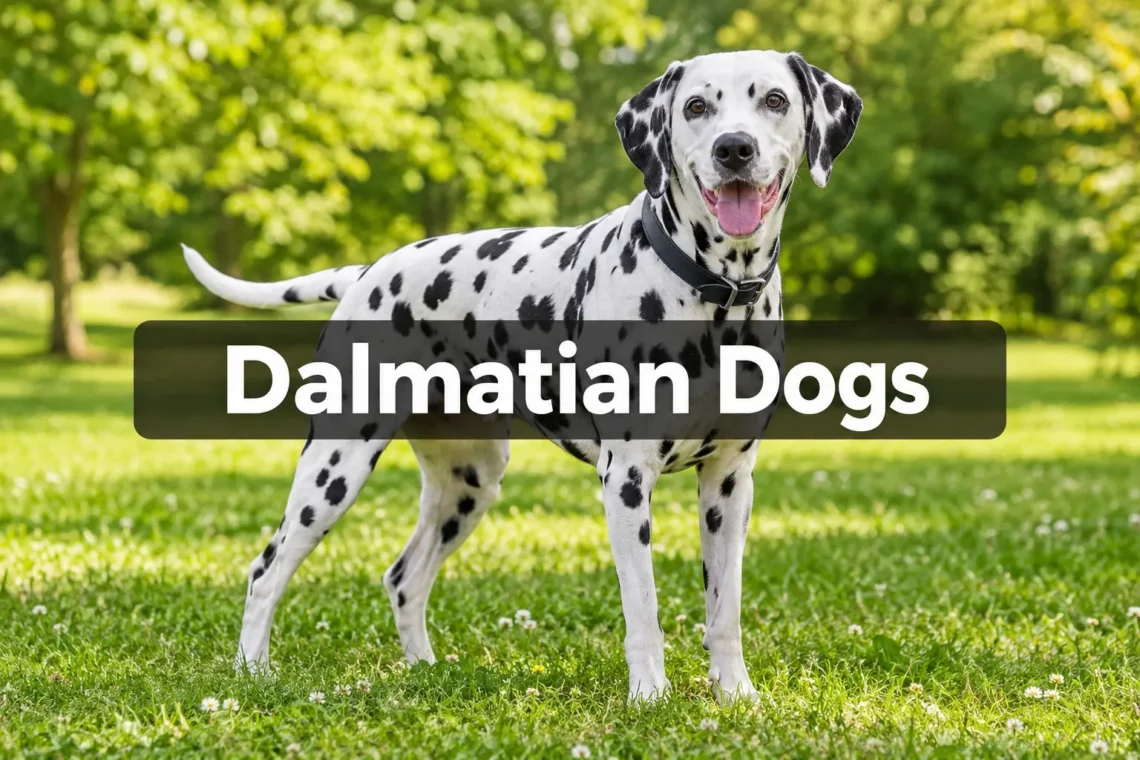
A dalmatian puppy is born completely white. The spots that make this breed instantly recognizable don’t show up until a few weeks later, and no two dalmatians ever end up with the same exact pattern. That single fact tells you a lot about why dalmatian dogs have fascinated dog lovers for generations, long before “101 Dalmatians” made the breed a household name.
Quick Answer
Dalmatian dogs are medium-sized, high-energy dogs known for their spotted coat, strong loyalty, and need for daily exercise and mental stimulation. They were originally bred as carriage dogs and later served as firehouse mascots, and today they need active families, careful diet management for urinary health, and early socialization to prevent behavior problems.
Key Takeaways
- Dalmatian dogs typically need one to three hours of daily exercise, including walks and vigorous play, according to Royal Canin and Orvis.
- Puppies are born without spots; the pattern develops within the first few weeks of life.
- Many dalmatians carry a gene linked to congenital deafness in one or both ears.
- The breed’s unique uric acid metabolism raises the risk of urinary stones, so a low-purine diet matters.
- Dalmatians shed heavily year-round and need weekly brushing plus full grooming every 6 to 8 weeks, per Dogster.
- Dalmatian puppy prices vary widely depending on breeder reputation and location.
- The breed is loyal and affectionate but can be strong-willed, so training and socialization start early.
- Dalmatians are less common in shelters than many mixed breeds, which partly explains why you rarely see one on a walk.
What health problems do dalmatians have
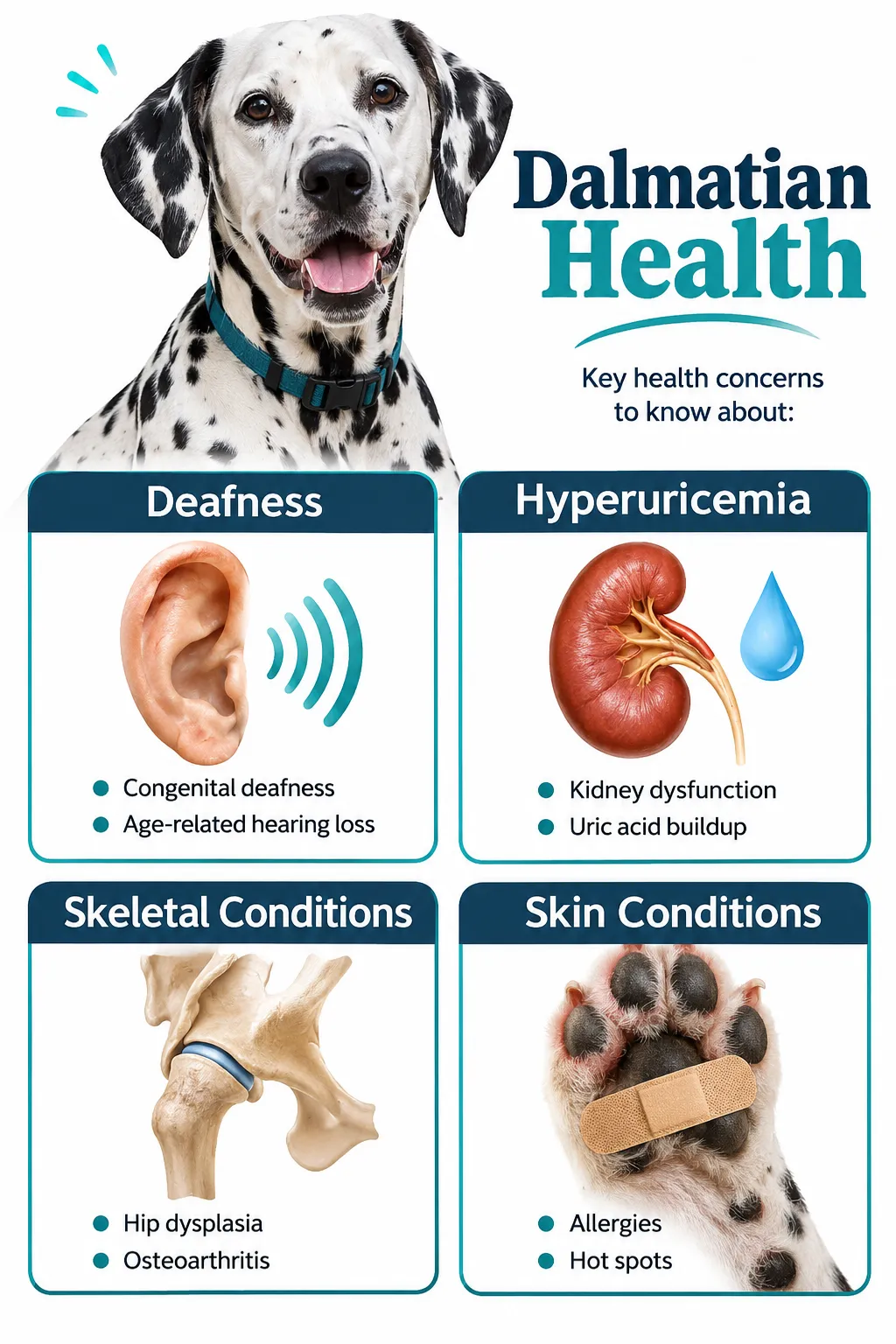
Dalmatian dogs face several breed-specific health conditions, with deafness, urinary stones, and skin sensitivities topping the list. These conditions are well documented by veterinary sources and breed clubs, and most are manageable with proactive care.
The most talked-about issue is congenital sensorineural deafness. Studies on dalmatians have found that hearing loss in one or both ears is common in the breed, which is why many breeders and the British Dalmatian Club recommend BAER testing puppies before they go to new homes. A BAER test checks brainstem response to sound and can confirm whether a dalmatian puppy hears normally, is unilaterally deaf, or is deaf in both ears.
Other common conditions include:
- Hyperuricemia – dalmatians have a unique uric acid transporter issue that makes them prone to urate bladder stones, according to PetMD.
- Skeletal conditions – hip dysplasia and other joint issues can affect the breed as they age.
- Dermatological conditions – skin allergies and irritation are fairly common, especially with their short, dense coat.
A dalmatian puppy with confirmed hearing in both ears and health-tested parents is generally a safer long-term choice than one from an unverified source. If you’re also caring for an older dog at home, our guide on senior dog care covers useful overlap for joint and kidney health as dalmatians age.
How much does a dalmatian puppy cost
A dalmatian puppy from a reputable breeder usually costs between $800 and $2,000, though exact pricing depends on breeder reputation, location, and whether the parents have been health tested, including BAER hearing tests. Adoption through a rescue or shelter is typically far cheaper, often just a few hundred dollars in adoption fees.
Beyond the purchase price, new owners should budget for set-up costs like a crate, bedding, food bowls, leash, collar, and initial vet visits. Ongoing costs include food, routine vet care, grooming supplies, and pet insurance if you choose it. Choosing a breeder who performs BAER testing on dalmatian puppies costs more upfront but can save significant veterinary expense and heartbreak later, since deafness in dalmatians is a known risk tied directly to their coat genetics.
Are dalmatians good family pets
Dalmatian dogs can be excellent family pets for active households with older children, but they are not the best fit for low-energy homes or families with very young kids who can’t handle a boisterous, strong dog. The breed is loyal, affectionate, and historically bonded closely with people during its carriage-dog and firehouse-mascot days.
Dalmatians tend to do well with children once trained, but their high energy and size mean toddlers can get knocked over during play. They generally get along with other pets if socialized early, though their strong prey drive around very small animals should be monitored.
Decision rule: choose a dalmatian if your family already walks, runs, or plays outside daily. Skip the breed if your household is mostly sedentary.
Why do dalmatians have spots
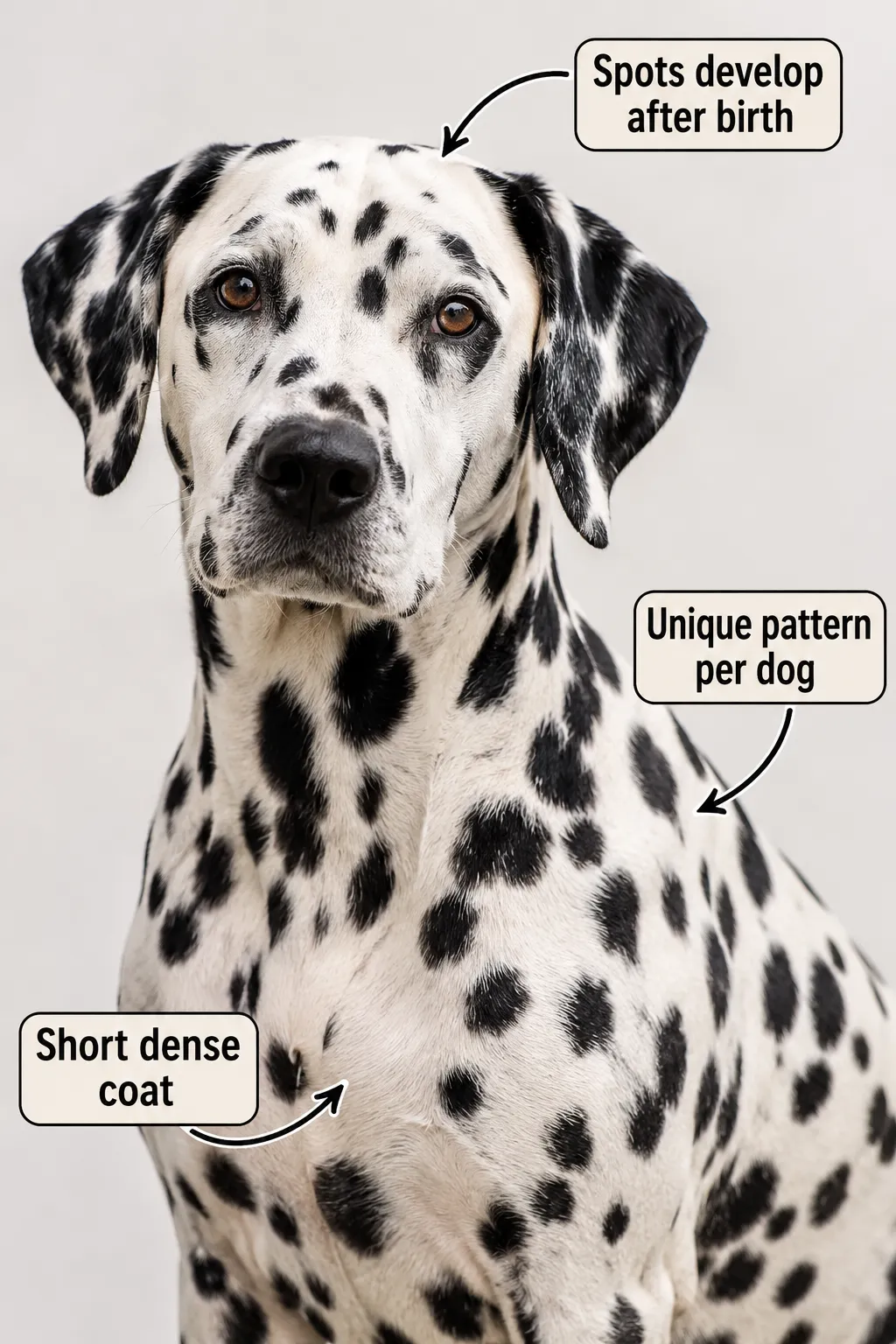
Dalmatian puppies are born pure white, and their signature black or liver spots develop over the first few weeks of life as pigment cells activate in the skin and coat. This is one of the most frequently asked questions about the breed, and it’s a genuine biological quirk rather than a myth.
The spotting pattern is unique to each dog, similar to a fingerprint. No two dalmatians share the exact same spot arrangement, which is part of why the breed has remained visually iconic since appearing in “101 Dalmatians.”
Dalmatians vs pointers: which breed is better
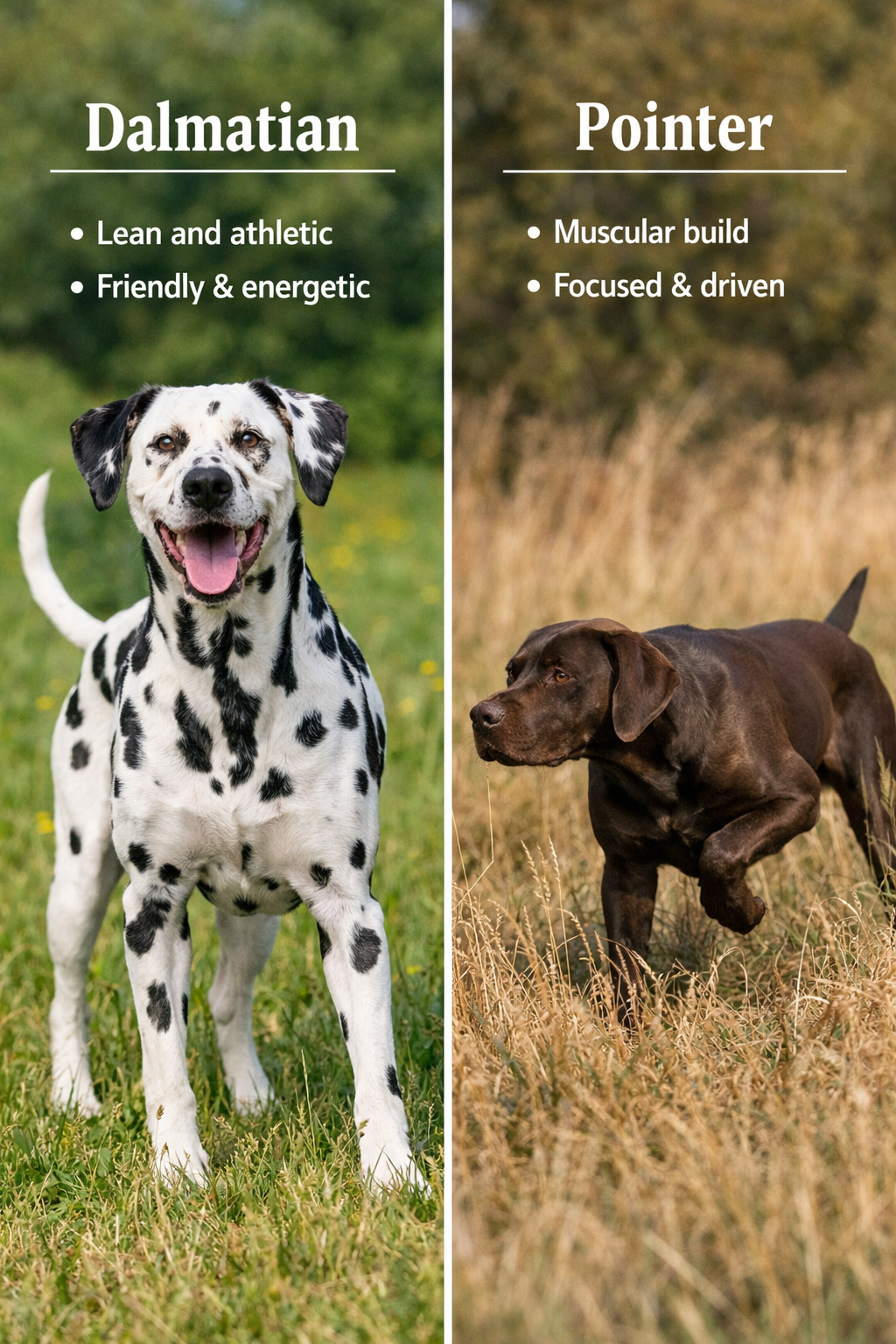
Neither breed is objectively “better” since dalmatians and pointers were bred for different jobs and suit different lifestyles. Dalmatians were historically carriage and firehouse dogs, while pointers were bred specifically for hunting and locating game birds.
Dalmatians tend to be more people-oriented companions with a distinct spotted coat, while pointers are typically more singularly focused on scent work and field tasks. Interestingly, breed history includes a documented dalmatian-pointer backcross project, undertaken to introduce a gene for normal uric acid metabolism into the dalmatian gene pool without losing the breed’s characteristic look, a notable example of using another breed to address a health issue through the broader dalmatian heritage project.
Choose a dalmatian if you want a striking companion dog for an active family. Choose a pointer if you want a dedicated hunting or field-sport partner.
How much exercise do dalmatians need daily
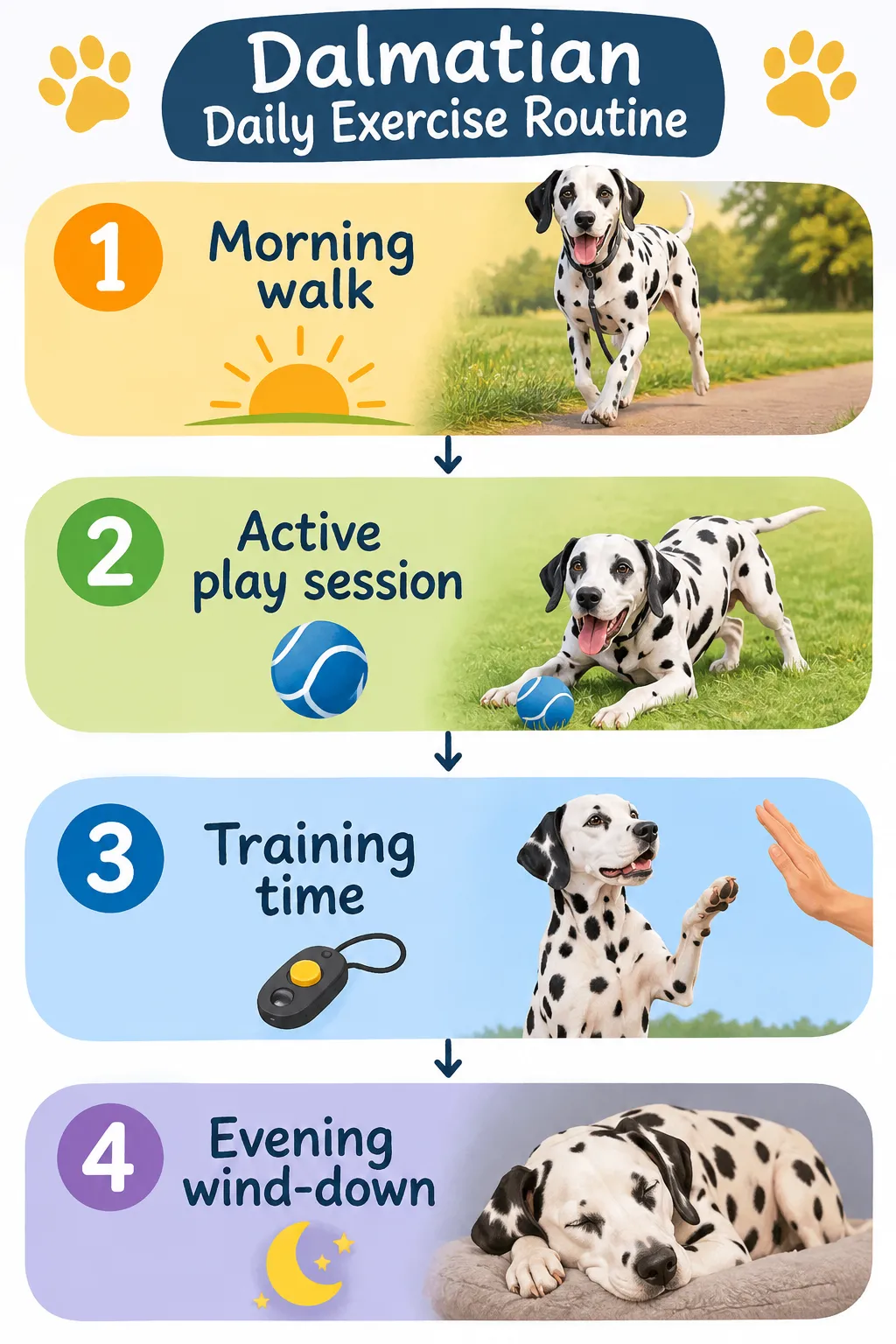
Dalmatian dogs need roughly one to three hours of daily exercise, combining structured walks, vigorous play, and mental stimulation, according to multiple current care guides from Royal Canin and Orvis. Some sources put the minimum at one to two hours of vigorous activity, while others recommend at least two hours of active or “sporting” time per day.
This breed was built for stamina, originally trotting alongside horse-drawn carriages for miles. A dalmatian dog that doesn’t get enough exercise is far more likely to develop destructive chewing, excessive barking, or restlessness indoors. If you need help managing chewing behavior specifically, see our tips on stopping dogs from chewing everything.
Are dalmatians aggressive or dangerous
Dalmatians are not inherently aggressive, but they can become reactive or anxious without proper training, socialization, and exercise. Like most strong-willed breeds, a poorly socialized dalmatian puppy can develop guarding behavior or nervousness around strangers.
Early socialization with other dogs, people, and new environments during puppyhood significantly reduces the odds of fear-based aggression later. Dalmatians historically served as guard dogs for carriages and firehouses, which gave them a naturally alert, protective instinct, but that’s different from being dangerous. A well-socialized dalmatian is typically friendly, loyal, and good with visitors.
Dalmatian grooming and shedding: how bad is it
Dalmatian dogs shed heavily year-round despite having a short coat, and their grooming needs are more involved than people expect. Weekly brushing with a rubber curry comb or grooming mitt helps manage loose hair, according to Dogster and PetMD.
A fuller grooming session, including bathing, nail trims, and ear checks, is recommended every 6 to 8 weeks. Nail trims on their own should happen about monthly, and teeth brushing several times a week (ideally daily with dog-specific toothpaste) helps limit plaque buildup. Bathing frequency depends on activity level: once a month is usually enough for a typical pet dalmatian, but active dogs that get dirty often may need baths every one to two weeks. Always check and clean ears after baths or swimming, since debris can build up in the ear canal.
If you’re used to grooming a different coat type, our Havanese grooming guide shows how differently coat maintenance can look across breeds.
Do all dalmatians have hearing problems
Not all dalmatians are deaf, but congenital sensorineural deafness is unusually common in the breed compared with most other dogs. A study found that a meaningful percentage of dalmatians have hearing loss in at least one ear, and a smaller percentage are deaf in both ears.
This is why BAER testing (Brainstem Auditory Evoked Response) has become standard practice among responsible breeders affiliated with groups like the Dalmatian Club of America and the American Kennel Club. A dalmatian deaf in one ear can usually live a normal life with some training adjustments, while a dog deaf in both ears needs specialized communication methods. Our guide to hand signals for deaf dogs is a useful resource for owners in that situation.
Are dalmatians good for apartments
Dalmatians are generally not well suited to apartment living because of their high exercise needs and tendency to bark when under-stimulated. A dalmatian confined to a small space without enough daily activity is prone to restlessness, destructive habits, and vocalizing.
That said, a dalmatian dog with a committed owner who provides two or more hours of exercise daily, access to a dog park, and mental enrichment can adapt to apartment life. It’s the exception, not the rule. If you live in a smaller space, our apartment dog care routine walks through how to structure a day that still meets high-energy needs.
Common dalmatian behavior problems
The most common dalmatian behavior problems are excessive barking, separation anxiety, and destructive chewing, nearly all linked to insufficient exercise or inconsistent training. Dalmatians are smart dogs that get bored quickly without a job to do.
Other issues owners report include stubbornness during training and occasional resource guarding if socialization is skipped early. Consistent, positive-reinforcement training and structured routines solve most of these problems. Our top commands for daily training guide offers a practical starting point for a dalmatian puppy or an adult dog still learning manners.
What breeds are similar to dalmatians
Breeds often compared to dalmatians include pointers, English pointers, and other short-coated sporting or carriage-type dogs, due to shared energy levels and historical working roles. Some owners also compare dalmatians to breeds like the German Shepherd for alertness, though the two differ greatly in size and coat.
If you’re exploring other high-energy breeds before committing to a dalmatian, our German Shepherd facts guide and Australian Shepherd facts are both good comparisons for activity level and trainability.
Dalmatian lifespan and how long do they live
Dalmatian dogs typically live between 11 and 13 years with proper care, diet, and regular veterinary checkups. This lifespan is fairly standard for a medium-to-large breed dog.
Dalmatians that stay lean, get consistent exercise, and have their urinary health monitored tend to live longer, healthier lives. Routine bloodwork and urinalysis can catch hyperuricemia-related stones before they become emergencies.
Are dalmatians hard to train
Dalmatians are moderately challenging to train because they’re intelligent but strong-willed, meaning they need consistent, engaging methods rather than repetitive drills. Positive reinforcement works far better than harsh correction with this breed.
Early socialization and puppy classes make a measurable difference. A dalmatian puppy that starts basic obedience training at 8 to 10 weeks old typically adapts faster to household rules than one that starts training later. Owners who also have multiple dogs at home may find value in our guide on helping two dogs get along.
Dalmatian history and duties
Dalmatian dogs have a documented history as carriage dogs, guard dogs, and firehouse mascots, a role that cemented their place in American culture. Historians trace the breed’s original standard back centuries, though exact origins remain debated among kennel clubs.
During the horse-drawn fire engine era, dalmatians ran alongside carriages to clear the path and calm the horses, a duty that explains their endurance and strong bond with working animals. The breed standard maintained by the American Kennel Club and groups like the Dalmatian Club of America still reflects this athletic build today. Pop culture cemented their fame decades later through “101 Dalmatians,” which introduced the breed to millions of new fans, though it also led to a surge in impulsive adoptions by people unprepared for the breed’s energy and health needs.
Caring for your dalmatian dog
Caring for a dalmatian dog well means combining daily exercise, a managed low-purine diet, routine grooming, and regular vet visits focused on hearing and urinary health. Skipping any one of these areas tends to show up as a behavior or health problem down the road.
Feeding deserves special attention. Because dalmatians process uric acid differently than most dogs, a diet low in purines, with no rich table scraps, helps prevent painful bladder stones. Fresh water should always be available. Some owners also use slow-feeder bowls and smaller, more frequent meals to reduce bloat risk, and it’s wise to avoid heavy exercise for about two hours before and after meals.
Real-world examples show the payoff of patient care. A shelter dalmatian who showed “no interest” in visitors was eventually adopted after a woman visited him daily just to play, a story detailed by Pethelpful. Another rescued dalmatian was recently seen joyfully playing ball with his new family after leaving the pound. Even working dalmatians get the spotlight: a two-year-old named Chief became the first dalmatian bat dog in professional baseball history, performing retrieving tricks and drum solos for crowds, according to the News-Press. A puppy named Bowie even won Purina’s national “Chief Snuggle Officer” contest in October 2026, raising $10,000 for a California animal shelter, per the Santa Cruz Sentinel.
FAQ
Is a Dalmatian a good family dog?
Yes, dalmatian dogs can be great family dogs for active households, especially with older children who can handle their energy. They are loyal and affectionate but need daily exercise, consistent training, and early socialization to prevent boisterous or anxious behavior around young kids.
How much do Dalmatian dogs cost?
Dalmatian puppies from reputable breeders typically cost between $800 and $2,000 depending on location, breeder reputation, and health testing like BAER hearing exams. Adopting from a shelter or rescue is usually much cheaper, often just a few hundred dollars in fees.
Why do you rarely see Dalmatians?
Dalmatians are less common than many breeds partly because of their intense exercise needs, breed-specific health issues, and a drop in popularity after the “101 Dalmatians” adoption boom faded. One shelter reported its first available dalmatian since 2011, showing how uncommon the breed is in some rescue systems today.
Is a Dalmatian high maintenance?
Yes, dalmatians are considered moderately high maintenance due to their need for one to three hours of daily exercise, weekly grooming, a carefully managed low-purine diet, and consistent training. They are not a good fit for owners wanting a low-effort companion dog.
Conclusion
Dalmatian dogs reward active owners with loyalty, striking looks, and genuine personality, but they’re not a casual pet choice. Between their exercise demands, grooming routine, and breed-specific health risks like deafness and urinary stones, this is a breed that asks for real commitment.
If you’re considering a dalmatian puppy, start by asking breeders about BAER hearing tests and parent health screening. If you already share your home with one, prioritize daily exercise, a low-purine diet, and regular vet checkups to keep your dog healthy for the long run. Either way, a well-cared-for dalmatian dog can be one of the most devoted companions you’ll ever own.