

Last updated: November 6, 2026
A Frenchie beat the Labrador Retriever to the top of the American Kennel Club’s popularity list for the fourth year running in 2025, and that one fact says a lot about where dog ownership is headed: smaller, more compact, and built for city life. Cute small dogs aren’t just adorable Instagram fodder anymore. They’re the practical choice for millions of people living in apartments, condos, and tight urban spaces.
I’ve lived in a one-bedroom apartment with a 14-pound dog for years, and I can tell you the size difference changes everything, from vet bills to how fast you can clean up after a muddy walk. This guide walks through what actually counts as a small dog, which cute small dogs fit apartment life best, and what care, training, and health issues to expect along the way.
Quick Answer
Cute small dogs weighing under about 20-25 pounds, such as French Bulldogs, Shih Tzus, Chihuahuas, and Havanese, tend to do best in apartments because of their modest exercise needs and compact size. But according to AKC experts, temperament and barking tendency often matter more than weight alone when choosing the best apartment dogs.
Key Takeaways
- French Bulldogs are the most popular dog breed in the U.S. for 2025, a title they’ve held for four years straight, according to AKC data.
- Small dog breeds generally weigh under 20-25 pounds and were often bred as companion or lap dogs.
- Not every tiny breed is quiet; Chihuahuas and Yorkshire Terriers are known barkers.
- Shih Tzus and Havanese were essentially bred for small-space, lap-dog living.
- Small size doesn’t always mean low exercise; some toy breeds still need daily walks and mental stimulation.
- Energy level and trainability matter more than size for apartment success, per USA Today’s 2026 report.
- Small dogs can live longer than large breeds, often reaching 12-16 years.
- Separation anxiety is common in small companion breeds that bond tightly with one person.
What counts as a small dog breed
A small dog breed generally weighs between 4 and 25 pounds and stands under about 16 inches at the shoulder. This includes toy breeds like the Chihuahua and small companion breeds like the Shih Tzu, Havanese, and French Bulldog.
Breed standards vary slightly by organization, but most small dog breeds share a few traits:
- Compact bone structure and shorter legs
- Lower food and daily calorie needs than medium or large dogs
- A tendency toward lap-dog or companion temperaments
- Often originally bred for companionship rather than work or herding
Many small dog breeds, like the Havanese, top out around 13 pounds according to Elanco’s apartment dog guide, which makes them easy to carry, transport, and manage in tight living spaces. If you want dogs that look like tiny puppies their whole lives, check out this list of small dogs that stay puppy-sized forever.
Best cute small dogs for apartment living
The best cute small dogs for apartments combine a compact body with calm indoor energy, not just low body weight. French Bulldogs, Shih Tzus, Chihuahuas, Havanese, and Bichon Frise all show up repeatedly across breed roundups for small-space living.
Here’s a rundown of ten cute small dogs that regularly make apartment-friendly lists:
- French Bulldog – The #1 most popular breed in the U.S. for 2025, Frenchies are compact, don’t need much exercise, and are described as well suited to city living by AKC.
- Shih Tzu – Bred as lap dogs for Chinese royalty, they’re described as “made for apartment living” by Daily Paws.
- Chihuahua – A small dog with a huge personality. Tiny size and low exercise needs make it a go-to choice for studios.
- Yorkshire Terrier – Low exercise needs but can be vocal, per Royal Canin’s apartment guide.
- Maltese – Gentle, affectionate, and low-shedding.
- Bichon Frise – Fluffy, cheerful, and great in small homes.
- Havanese – Weighs around 13 pounds and adapts well to apartments.
- Pug – Easygoing temperament that suits close quarters.
- Dachshund – Ranked #5 in AKC’s 2025 popularity list and compact enough for small spaces, per Good Housekeeping.
- Cavalier King Charles Spaniel – Sweet, adaptable, and good with other pets.
Choose a French Bulldog if you want a dog breed with minimal grooming demands and low exercise needs. Choose a Havanese if you want an active companion that’s still small enough for city living.
How much do small dogs cost
Small dog breeds generally cost less to feed and medicate than large breeds, but purchase prices vary widely by breed popularity and breeder reputation. Popular breeds like the French Bulldog often come with higher upfront prices simply due to demand, since Labs alone saw about 58,500 new AKC registrations in 2025 while Frenchies still outranked them overall, according to AKC’s 2025 rankings.
Ongoing costs to expect:
- Food: smaller portions mean lower monthly food costs
- Routine vet care and vaccinations
- Hygiene supplies: shampoo, nail trimmers, ear cleaner
- Toys, bowls, and training accessories
- Pet insurance, which is often cheaper for small breeds
Everyday low prices on food and basic supplies are common for small dog owners since portion sizes are smaller than for large dogs. If you’re building a budget-friendly routine, look at homemade dog food recipes for small senior dogs to cut costs without skipping nutrition.
Small dogs that don’t shed much
Several small dog breeds shed very little, including the Bichon Frise, Maltese, Havanese, and Shih Tzu. These breeds grow hair similar to human hair rather than shedding fur in seasonal cycles, which makes them popular picks for apartment dwellers who want less vacuuming.
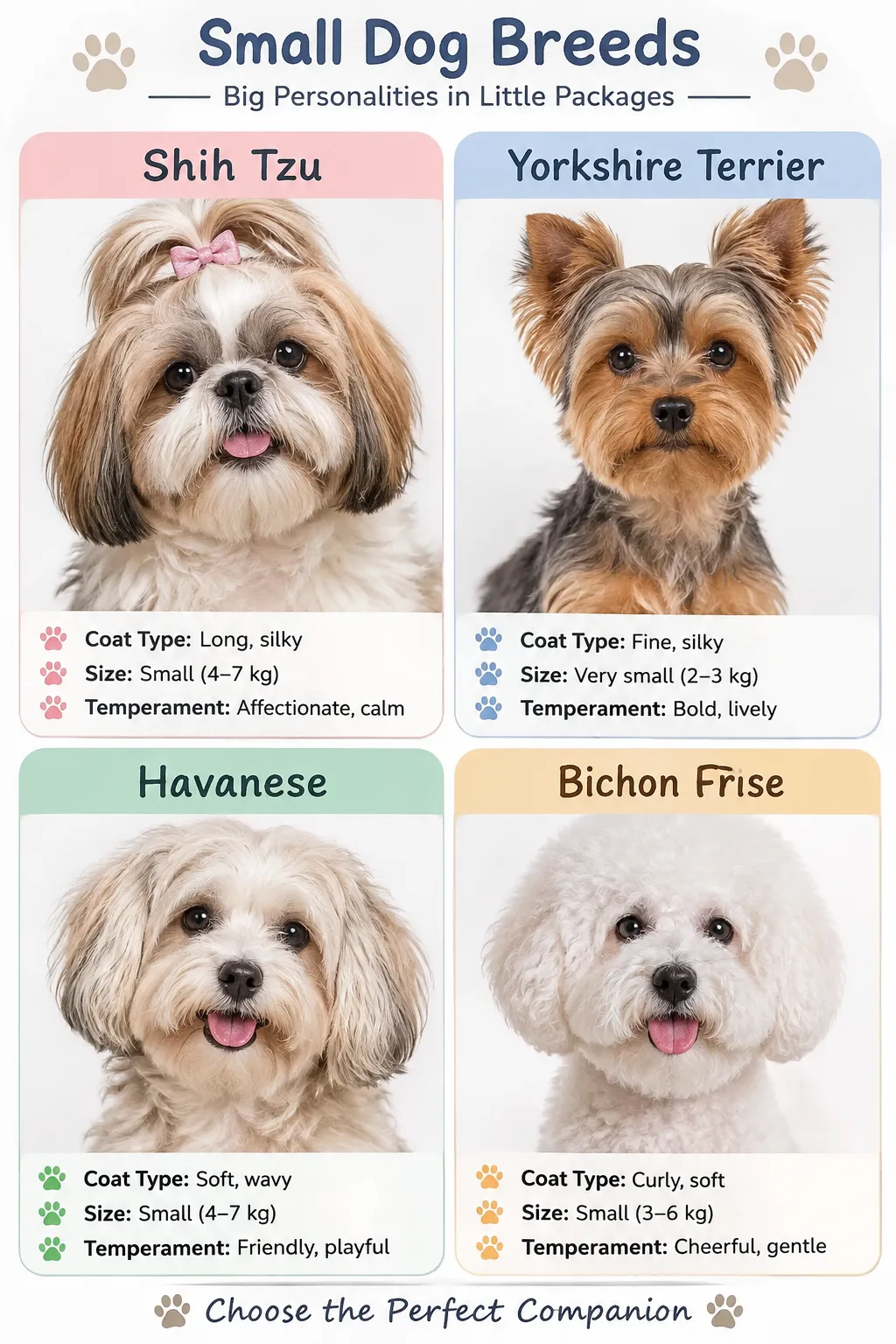
Low-shedding doesn’t mean low-maintenance, though. These breeds typically need:
- Regular brushing, often daily, to prevent mats
- Professional grooming every 4-6 weeks
- Consistent hygiene care around the face and paws
If shedding is a dealbreaker, a Bichon Frise or Maltese is a smart choice. If you don’t mind some fur on the couch, a Pug or Dachshund might suit your lifestyle better.
Small dog breeds good for first time owners
Shih Tzus, Cavalier King Charles Spaniels, and Havanese are generally considered good small dog breeds for first-time owners because of their friendly, easygoing temperaments. These breeds tend to be more forgiving of training mistakes than independent toy breeds like the Chihuahua.
A common mistake new owners make is assuming all small breeds are equally easy. Chihuahuas and Yorkshire Terriers can be stubborn and prone to barking, which takes more patience to manage than a mellow Cavalier.
If you’re a first-time owner in an apartment, I’d personally recommend starting with a Cavalier King Charles Spaniel or Havanese. Both breeds show up repeatedly in apartment-friendly lists from Petfinder and tend to be more adaptable to new owners.
Do small dogs need less exercise than big dogs
Small dogs generally need less exercise than large breeds, but “less” doesn’t mean “none.” Most small dog breeds still need at least one or two short walks daily plus some indoor play to stay healthy.
According to USA Today’s 2026 analysis, even large dogs like Great Danes can do fine in apartments if their calm indoor temperament is paired with proper outdoor activity, which shows that exercise tolerance, not just size, drives apartment success.
Edge case: Jack Russell Terriers and small herding mixes are technically small but have high energy and need far more exercise than a Bichon Frise or Pug.
Small dogs with the longest lifespan
Small dog breeds often live longer than large breeds, with many toy and small companion breeds reaching 12 to 16 years. Chihuahuas, Maltese, and Dachshunds are frequently cited as long-lived small dogs.
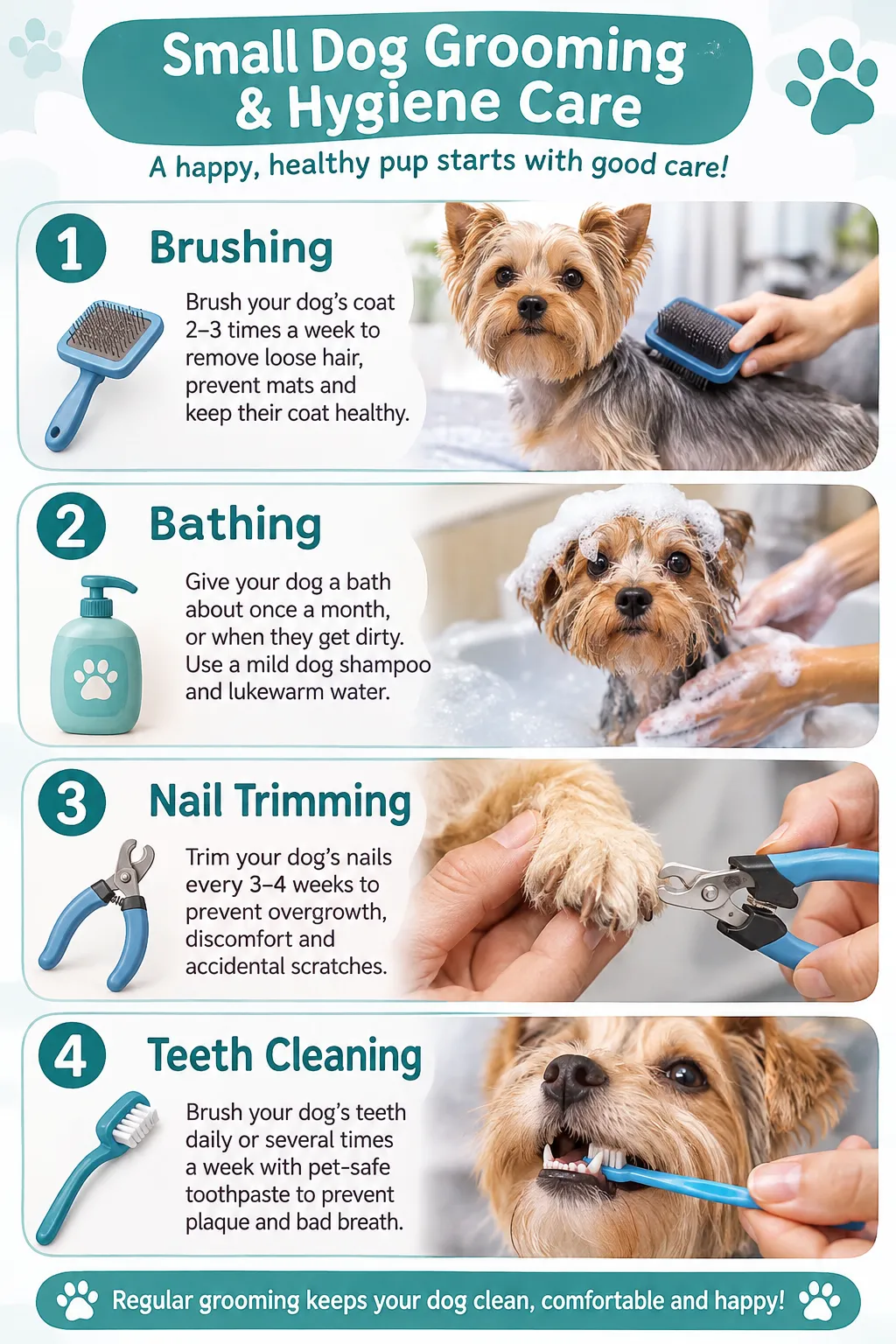
Genetics, weight management, and dental care all affect lifespan. Keeping a small dog at a healthy weight and brushing its teeth regularly can add years to its life expectancy. For senior small dogs, check out this guide on arthritis signs in dogs to catch joint issues early.
Small dog breeds good with kids
Beagles, Cavalier King Charles Spaniels, and Pugs are generally considered good small dog breeds for families with kids because of their patient, sociable temperaments. Some tiny toy breeds, like the Chihuahua, can be more fragile and less tolerant of rough handling from young children.
If your household has small kids, choose a sturdier small breed like a Beagle or Pug rather than a fragile toy breed. For more family-focused breed advice, see gentle giant breeds for families if you’re also weighing larger dog options.
Are small dogs easier to train
Small dogs are not automatically easier to train than large dogs; trainability depends more on breed temperament than body size. Toy breeds like Chihuahuas can be notoriously stubborn, while small companion breeds like the Havanese and Poodle mixes tend to be quick learners.
Training tips that work well for small dog breeds:
- Use short, frequent training sessions (5-10 minutes)
- Reward-based methods work better than harsh corrections
- Start potty training early, since small dogs have small bladders
If you’re working on apartment-specific routines, this apartment potty training method and positive reinforcement training tips are both solid starting points.
Small dogs that bark the least
Bichon Frise, Basset Hounds, and Cavalier King Charles Spaniels tend to bark less than other small dog breeds. Chihuahuas and Yorkshire Terriers, by contrast, are frequently flagged for excessive barking, according to Royal Canin’s apartment living guide.
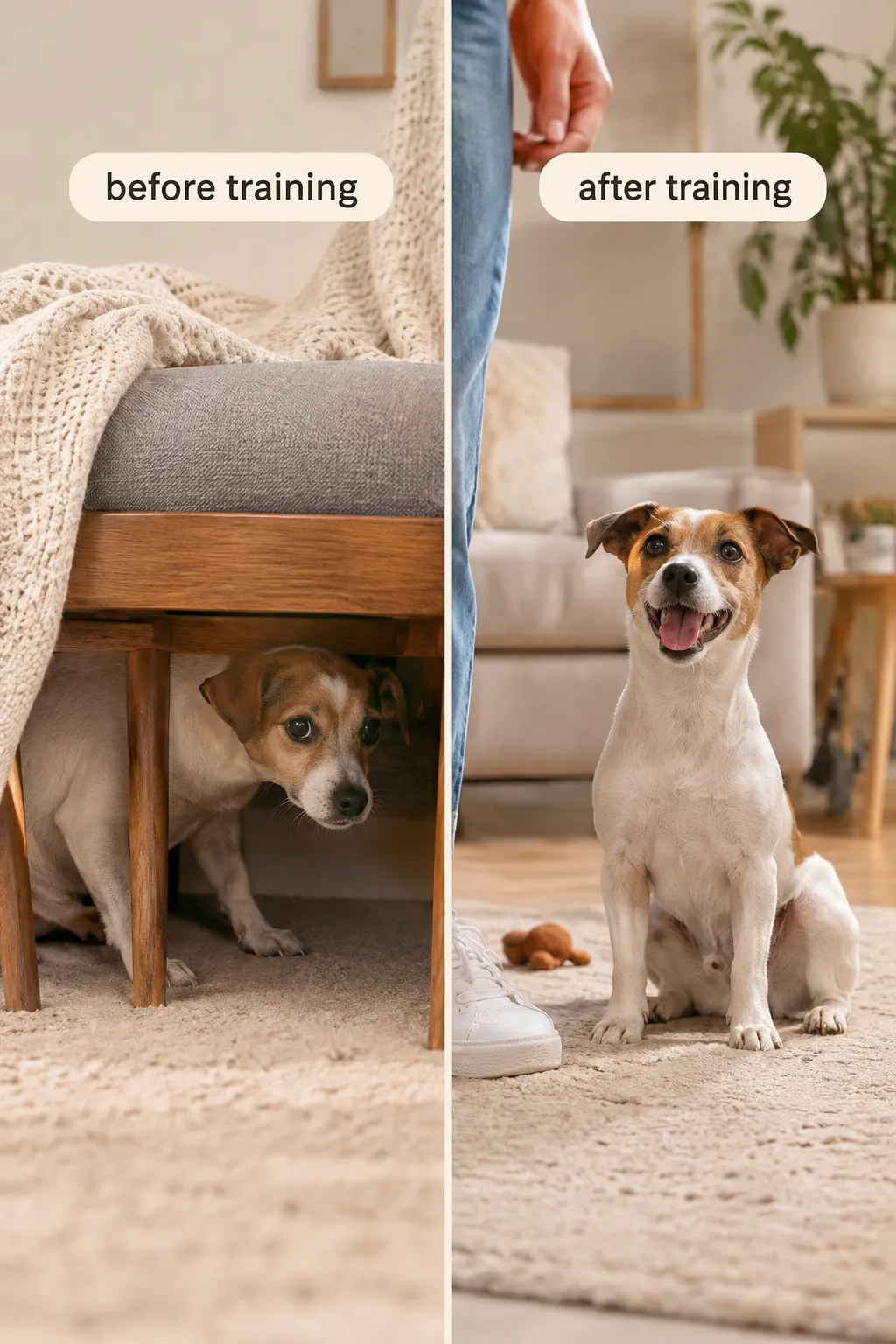
If noise complaints from neighbors are a concern, pick a quieter breed from the start rather than hoping training alone will solve a barking-prone dog’s instincts.
Common health problems in tiny dog breeds
Tiny dog breeds commonly face dental disease, luxating patellas, and tracheal collapse due to their small jaw structure and delicate joints. Flat-faced small breeds like the French Bulldog and Pug can also experience breathing difficulties.
Common issues to watch for:
- Dental crowding and early tooth loss
- Knee joint slippage (luxating patella)
- Hypoglycemia in very small toy breeds
- Heart murmurs, especially in Cavalier King Charles Spaniels
Regular vet checkups catch most of these issues early. If you notice unusual breathing or coughing, review signs of heart problems in dogs for warning signs worth discussing with your vet.
Small dogs vs cats: which pet is better
Neither small dogs nor cats are universally “better”; the right choice depends on your schedule, living space, and desire for interaction. Small dogs generally need daily walks and more hands-on care, while cats are more independent and lower-maintenance for busy owners.
If you want a pet that greets you at the door and needs daily walks, a small dog is the better fit. If you’re gone long hours and want a lower-maintenance animal, a cat might suit your lifestyle better. Many apartment dwellers actually keep both a small dog and a cat successfully when introductions are handled slowly.
How to help a small dog with separation anxiety
Small dogs with separation anxiety benefit most from gradual desensitization, a consistent departure routine, and mentally stimulating toys left during alone time. Companion breeds like the Havanese and Shih Tzu are especially prone to anxiety because they were bred to stay close to their people.
Steps that help:
- Practice short departures and slowly increase time away
- Leave a puzzle toy or treat-dispensing toy to redirect focus
- Avoid dramatic goodbyes or hellos
- Consider calming aids or a pet sitter for severe cases
For more enrichment ideas, try these DIY mental stimulation games for dogs, which work well for anxious small breeds stuck indoors.
Best small dog breeds for seniors
Shih Tzus, Pugs, and Havanese are often recommended as the best small dog breeds for seniors because of their calm temperaments and manageable size. These breeds don’t require intense daily exercise, which suits owners with limited mobility.
A senior-friendly small dog should be easy to lift, not overly energetic, and good-natured with visitors like caregivers or grandchildren. If you’re caring for an aging small dog yourself, this list of homemade dog food recipes for small senior dogs offers practical, budget-friendly meal ideas.
Conclusion
Cute small dogs earned their spot as America’s favorite companions for good reason: they fit apartment life, cost less to feed, and often live longer than larger breeds. But size alone doesn’t guarantee a good match. Temperament, barking tendency, exercise needs, and your own daily routine all matter just as much as how many pounds a dog weighs.
If you’re choosing your first small dog breed, start by listing your must-haves: low shedding, quiet temperament, easy training, or kid-friendliness. Then match that list against the breeds above rather than picking based on cuteness alone. Visit a local shelter or reputable breeder, ask about health history, and spend time with the dog before committing. A little research now saves a lot of frustration later, and sets both you and your new small dog up for a happy life together in whatever space you call home.
FAQ
What is the cutest small dog breed?
Cuteness is subjective, but Pomeranians, Shih Tzus, and Cavalier King Charles Spaniels are frequently named among the cutest small dog breeds for their fluffy coats and expressive faces.
What are the top 10 small dog breeds?
Popular small dog breeds include the French Bulldog, Shih Tzu, Chihuahua, Yorkshire Terrier, Maltese, Bichon Frise, Havanese, Pug, Dachshund, and Cavalier King Charles Spaniel.
What is the smallest dog breed that stays small forever?
The Chihuahua is widely considered the smallest dog breed, often staying under 6 pounds its entire life.
Are small dogs good for families?
Many small dog breeds, like Beagles, Pugs, and Cavalier King Charles Spaniels, do well with families, though supervision is always recommended with young kids.
Do small dogs bark more than big dogs?
Some small dog breeds, particularly Chihuahuas and Yorkshire Terriers, are known for barking more frequently, though this varies by individual dog and training.
What small dog breed is best for a studio apartment?
Chihuahuas and Shih Tzus are often described as ideal for studio apartments due to their tiny size and low exercise requirements.
Are small dogs easier to care for than big dogs?
Small dogs generally require less food and are easier to transport, but they still need regular grooming, training, and vet care like any other dog.