Last updated: September 26, 2026
Quick Answer: DIY mental stimulation games for dogs use problem-solving, scent work, and foraging challenges to tire dogs out without physical exercise. Research shows that structured brain games can reduce boredom-related behaviors and help dogs settle more quickly – making them especially useful on rainy days, during recovery, or when walks aren’t possible. Most dogs need 2-3 short sessions of 10-20 minutes per day to feel the benefit.
Key Takeaways
- Mental stimulation engages a dog’s brain the same way physical exercise engages their body – both lead to genuine tiredness and rest
- DIY games cost little to nothing and use items you already have at home
- Start with easy puzzles and increase difficulty gradually to avoid frustration
- Nose work and foraging games are especially effective because a dog’s primary sense is smell
- Aim for 2-3 sessions per day, 10-20 minutes each, rather than one long session
- Rotate games every 3-7 days to keep things fresh and prevent boredom
- Anxious and destructive dogs often show improvement when mental enrichment is added consistently
- Senior dogs and puppies both benefit, but need age-appropriate difficulty levels
- Always supervise DIY games and remove sharp objects like staples or tape
- Mental enrichment does not fully replace walks but can meaningfully reduce the impact of a missed one
What Are Mental Stimulation Games for Dogs and Why Do They Matter?
Mental stimulation games are activities that require a dog to think, problem-solve, sniff, or figure something out to get a reward. They matter because a bored dog is often a destructive, anxious, or noisy dog.
Dogs evolved to work – herding, hunting, tracking, guarding. Most modern dogs spend hours alone with nothing to do. That mismatch between their natural drive and their daily reality is one of the biggest causes of problem behaviors at home.
Research published in Frontiers in Veterinary Science found that structured mental enrichment – including problem-solving tasks and puzzle feeders – supports improved learning and can reduce certain stress-related behaviors compared to minimally enriched environments.
The good news? You don’t need expensive toys. A muffin tin, some kibble, and a tennis ball can do the job just as well.
How Do Puzzle Toys and Brain Games Actually Tire Out Dogs?
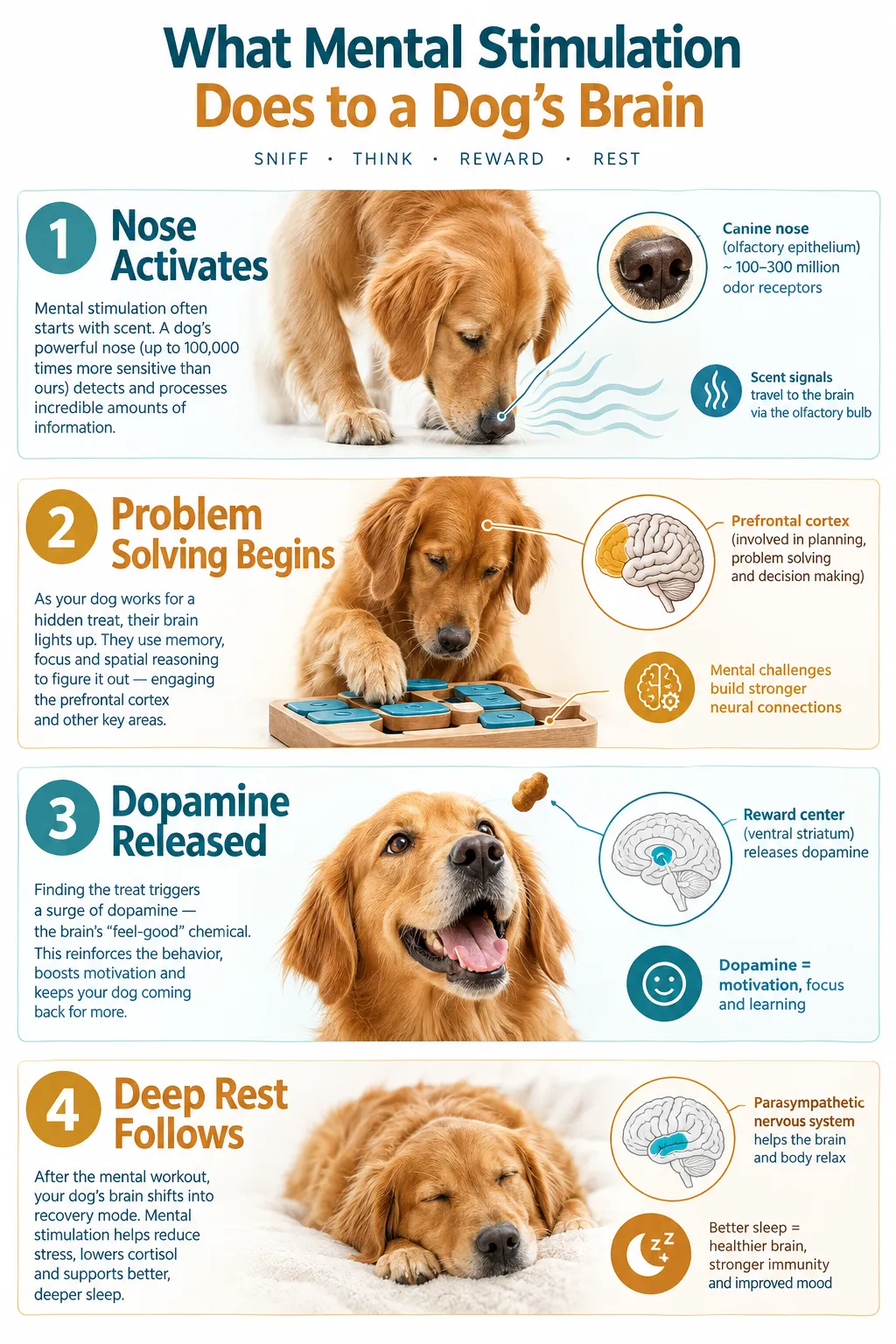
Brain games tire dogs out by activating their nervous system in a different but equally demanding way than physical exercise. When a dog sniffs, problem-solves, or works to access food, their brain releases dopamine – the same reward chemical triggered by play and exercise.
Here’s what happens during a good brain game session:
- Nose activates – the dog picks up a scent and begins tracking
- Problem-solving kicks in – the dog tries different strategies to access the reward
- Dopamine is released – success triggers a satisfaction response
- The dog settles – mental effort leads to genuine rest, not just physical fatigue
This is why many dog owners notice their dog naps deeply after a 15-minute puzzle session, even without a walk. The brain has done real work.
For more ideas on games that double as training, check out these 7 powerful playtime games that secretly train your dog.
What’s the Difference Between Physical Exercise and Mental Stimulation for Dogs?
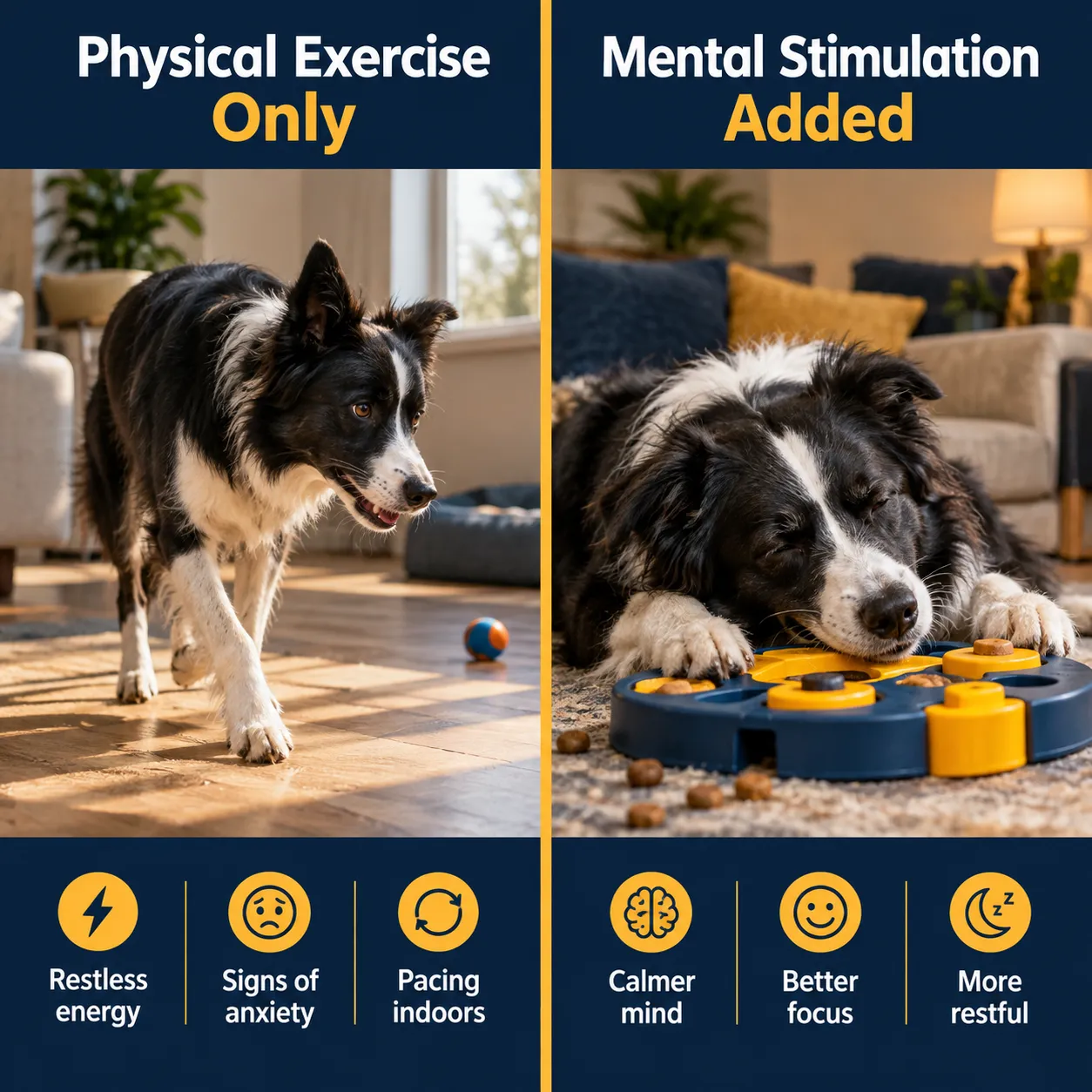
Physical exercise burns energy through the body – muscles, heart, lungs. Mental stimulation burns energy through the brain – focus, problem-solving, sensory processing. Both are necessary, but they’re not interchangeable.
A dog that only gets physical exercise can still be anxious or destructive if their mind is understimulated. Likewise, a dog that only gets mental games but no movement may become restless over time.
Think of it this way:
| Type | What It Tires | Best For |
|---|---|---|
| Physical exercise | Muscles, cardiovascular system | High-energy breeds, daily routine |
| Mental stimulation | Brain, nervous system | Rainy days, recovery, anxious dogs |
| Combined approach | Both | Ideal for most dogs |
The ASPCA’s canine DIY enrichment guide treats puzzle feeders and scent games as core care tools – not optional extras – precisely because mental and physical needs are separate.
9 DIY Mental Stimulation Games for Dogs You Can Make at Home
These nine games use household items and take minutes to set up. They’re ranked roughly from easiest to more involved.
1. Muffin Tin Puzzle
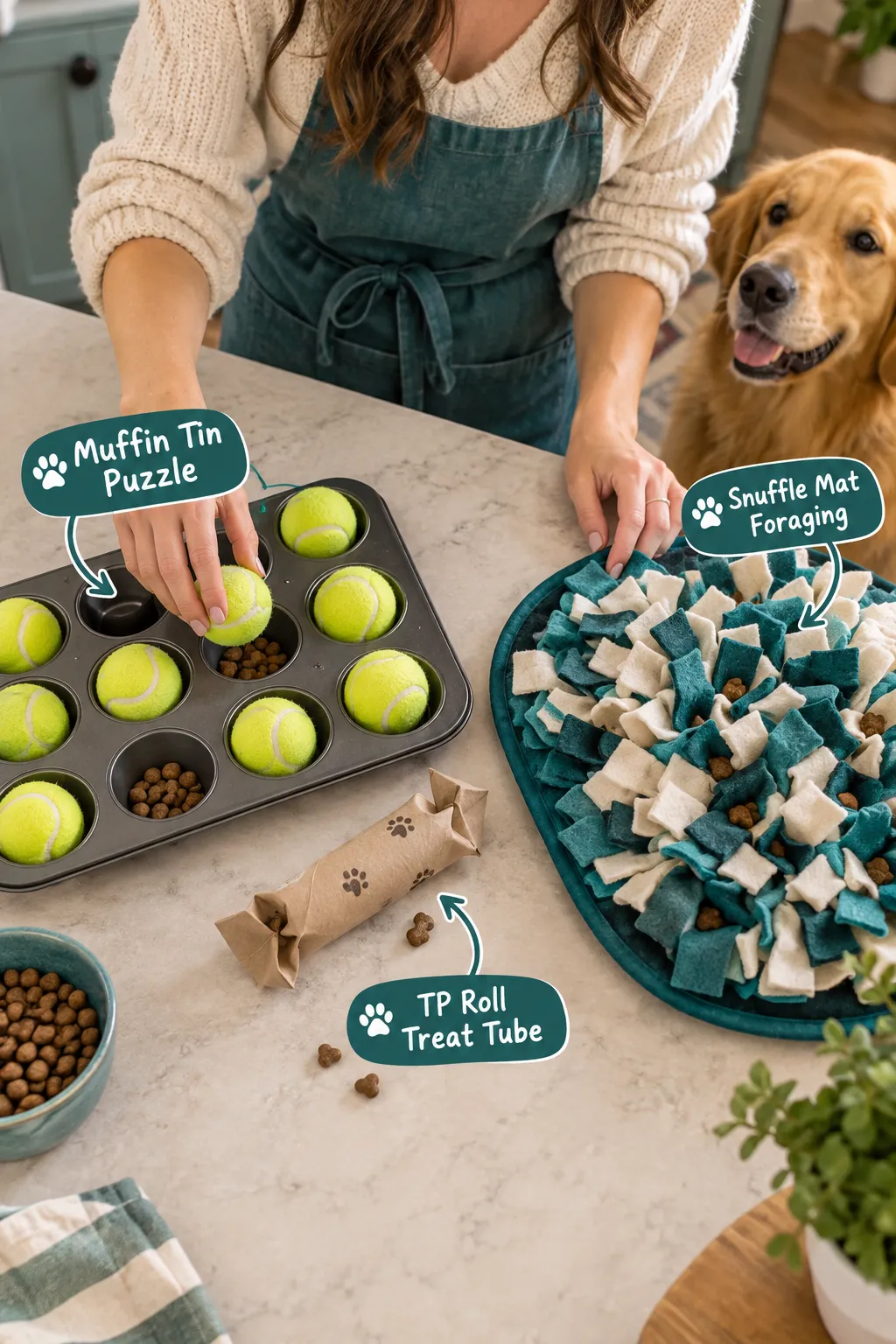
Place kibble or small treats in the cups of a muffin tin, then cover each cup with a tennis ball. Your dog has to nudge or paw the balls off to find the food. It’s simple, but dogs love it.
Make it harder: Cover only some cups so your dog has to sniff out which ones have treats.
2. Toilet Paper Roll Treat Puzzle
Fold one end of an empty TP roll closed, drop in a few treats, then fold the other end. Your dog has to figure out how to open it. Guide Dogs UK recommends this exact setup as a low-cost way to provide indoor enrichment.
Tip: Use 3-5 rolls at once and scatter them around the room for a foraging challenge.
3. Snuffle Mat (Towel Version)
Lay a bath towel flat, scatter kibble across it, then fold and roll the towel loosely. Your dog has to unroll and sniff through it to find every piece. This engages their nose intensely.
Why it works: Nose work is cognitively exhausting for dogs. Their sense of smell is estimated to be 10,000 to 100,000 times more sensitive than ours (according to estimates from veterinary sensory research), so using it takes real effort.
4. Cardboard Box Treasure Hunt
Fill a cardboard box with scrunched newspaper or paper bags. Hide treats throughout. Let your dog dig, sniff, and forage through it. The ASPCA recommends cardboard box setups as one of the most accessible DIY enrichment tools available.
Safety note: Remove any tape, staples, or stapled seams before giving the box to your dog.
5. Plastic Cup Shell Game
Place three plastic cups upside down on the floor. Hide a treat under one. Let your dog sniff and choose. Once they get the idea, shuffle the cups slowly before letting them pick.
This game builds impulse control and focus – both mentally tiring skills. Pair it with the “wait” cue for extra cognitive work. You can find more structured approaches in this guide to fun cognitive training games for dogs from the AKC.
6. Frozen Treat Puzzle
Fill an ice cube tray with your dog’s kibble, add a little water or low-sodium broth, and freeze it. Your dog has to lick and work at the ice to access the food. Dogster’s brain games guide recommends this approach specifically for dogs that need extended mental work without extra calories.
This is also a great option for dogs who solve puzzles too quickly.
7. Stacking Bowl Game
Stack two or three bowls inside each other with treats hidden between each layer. Your dog has to figure out how to separate the bowls to reach the rewards. Start with just two bowls, then add a third once they get the hang of it.
8. Hide and Seek With Treats
Scatter 10-15 small treats around a room while your dog waits in another room or behind a closed door. Then release them with a “find it” cue. This is pure nose work and incredibly tiring.
Level up: Once your dog understands the game, hide treats in harder spots – under a folded blanket, behind a chair leg, inside a paper bag.
9. Box-in-a-Box Treasure Hunt
Place a treat inside a small box, put that box inside a medium box, and put both inside a large box. Your dog has to work through each layer. PetSmart’s indoor enrichment guide lists this as one of the most effective “walk replacement” games for days when outdoor activity is limited.
How Long Should Dogs Play Mental Stimulation Games?
The current expert consensus is 2-3 sessions per day, each lasting 10-20 minutes. This is enough to provide genuine mental fatigue without overwhelming your dog.
Short bursts work better than one long session because:
- Dogs’ focus naturally fades after 15-20 minutes
- Multiple sessions spread enrichment across the day
- Shorter sessions reduce the risk of frustration
The Humane Society Silicon Valley’s enrichment guide specifically recommends 5-10 minute training bursts alongside DIY puzzles, warning that “a frustrated dog won’t get far” – so always start easy and build up.
Are Puzzle Games Good for Anxious or Destructive Dogs?
Yes – mental stimulation is one of the most recommended tools for anxious and destructive dogs. Boredom and under-stimulation are common root causes of chewing, barking, digging, and anxiety.
Adding consistent brain game sessions gives these dogs an appropriate outlet for their mental energy. Over time, many owners report fewer destructive incidents and calmer overall behavior.
If your dog is also a barker, see our guide on how to stop dogs from barking without yelling or punishment – mental enrichment pairs well with those techniques.
For dogs showing stress signals, check out this guide to recognizing stress signals in dogs so you can monitor how your dog responds to new games.
What Household Items Can I Use for Dog Brain Games?
You likely already have everything you need. Here’s a quick reference:
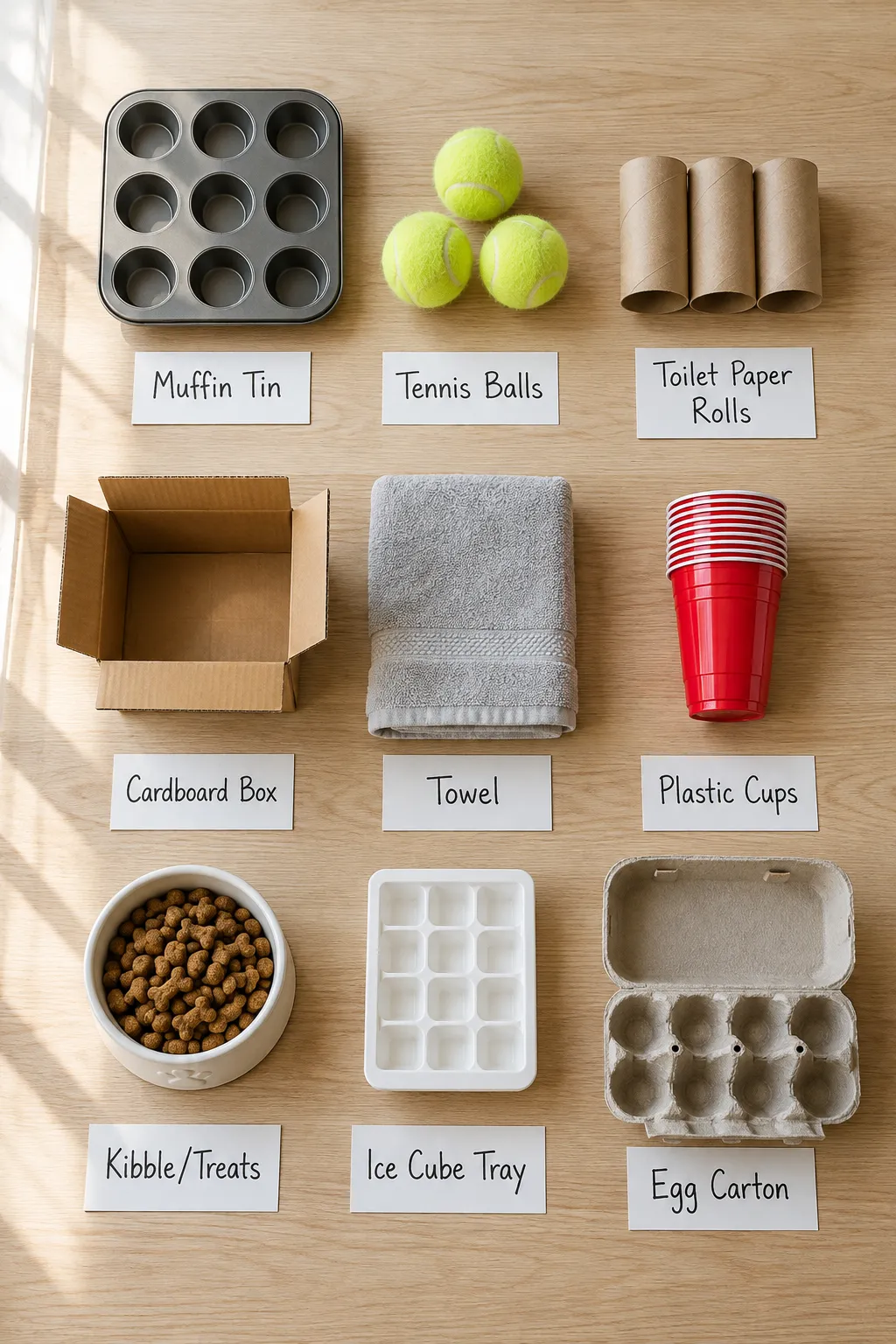
- Muffin tin – base for the classic tennis ball puzzle
- Tennis balls – covers for muffin tin cups
- Toilet paper rolls – fold into treat dispensers
- Cardboard boxes – treasure hunt containers
- Old towels – roll into snuffle mats or foraging rolls
- Plastic cups – shell game pieces
- Ice cube trays – frozen treat puzzles
- Egg cartons – simple treat-hiding puzzles (remove staples first)
- Paper bags – crinkle and hide treats inside
Always supervise your dog with DIY items, especially cardboard and paper, and remove anything with sharp edges or adhesives.
Can Mental Stimulation Replace Daily Walks for Dogs?
Mental stimulation can reduce the impact of a missed walk but shouldn’t permanently replace physical exercise. Dogs need both.
That said, on days when walks aren’t possible – bad weather, illness, injury, or a packed schedule – a good DIY brain game session is a genuinely effective substitute. Many dogs are calmer and more settled after a solid puzzle session than after a short, rushed walk.
For dogs who are bored and restless at home, combining mental games with short indoor training sessions covers a lot of ground.
Which Dogs Benefit Most From Puzzle Games and Brain Work?
Almost every dog benefits, but some benefit more than others:
- Working and herding breeds (Border Collies, German Shepherds, Huskies) – bred for mental tasks, need more stimulation than average
- High-energy dogs that seem impossible to tire out physically
- Anxious or reactive dogs – mental work channels nervous energy productively
- Senior dogs – gentler brain games keep cognitive function sharp without joint stress
- Puppies – short, easy games build focus and confidence early
- Dogs recovering from injury or surgery – mental games maintain engagement when physical activity is restricted
For more on 12 brain games that boost focus and beat boredom, that guide covers additional options by difficulty level.
Do Senior Dogs or Puppies Need Different Types of Mental Games?
Yes – age matters when choosing puzzle difficulty and session length.
For puppies:
- Keep sessions to 5-10 minutes maximum
- Use very easy puzzles (treats in an open muffin tin, no covers at first)
- Focus on building positive associations with problem-solving
- Too much frustration early on can put them off games entirely
For senior dogs:
- Avoid games that require a lot of pawing or jumping if joints are stiff
- Nose work and snuffle mats are ideal – low physical demand, high mental engagement
- Shorter sessions (10-15 minutes) are usually enough
- Watch for signs of mental fatigue like disengagement or confusion
How Do I Know If My Dog Is Getting Enough Mental Stimulation?
A well-stimulated dog is calm, settles easily, sleeps well, and doesn’t engage in destructive or attention-seeking behaviors. Signs your dog may need more mental enrichment include:
- Excessive chewing or destructive behavior
- Persistent barking or whining
- Restlessness or inability to settle
- Attention-seeking behaviors like nudging, pawing, or stealing objects
- Digging – if this is a problem, also read how to stop dogs from digging holes in the yard
If your dog finishes a puzzle in under two minutes and immediately looks for more, that’s a sign to increase difficulty or add more sessions.
FAQ
Can I use my dog’s regular kibble for puzzle games?
Yes, and it’s actually recommended. Using part of your dog’s daily food ration for puzzle games means you’re not adding extra calories while still providing enrichment.
How often should I rotate DIY games?
Every 3-7 days is a good rule. Rotating games prevents your dog from getting bored with the same puzzle and keeps each session feeling novel.
My dog gets frustrated and gives up. What should I do?
Make the puzzle easier. If they can’t solve it, they won’t enjoy it. Start one level below what you think they can handle and build up gradually.
Are DIY games as good as commercial puzzle toys?
For most dogs, yes. The key factor is the challenge level and novelty, not the price tag. A toilet paper roll can be just as engaging as a $30 puzzle toy.
How do I introduce a new game to a dog that’s never done puzzles before?
Let them watch you place the treats. Start with the reward fully visible, then gradually make it harder over several sessions.
Is it safe to leave my dog with DIY games unsupervised?
No. Always supervise, especially with cardboard, paper, and plastic items. Once you know how your dog interacts with a specific game, you can make a judgment call – but start supervised.
Can brain games help with separation anxiety?
They can help as part of a broader plan. A puzzle left with your dog when you leave can ease the transition, but severe separation anxiety usually needs professional support alongside enrichment.
What if my dog isn’t food motivated?
Try using a favorite toy as the reward, or use high-value treats like small pieces of cooked chicken. Some dogs also respond better to games that involve sniffing their owner’s scent rather than food.
Conclusion
DIY mental stimulation games for dogs are one of the most practical, low-cost tools you have as a dog owner. They don’t require a big backyard, perfect weather, or expensive equipment – just a few household items and 15 minutes of your time.
Here’s where to start:
- Pick one game from this list – the muffin tin puzzle or TP roll treat tubes are the easiest entry points
- Use part of your dog’s regular kibble so you’re not adding extra calories
- Run two short sessions today (10-15 minutes each) and watch how your dog settles afterward
- Rotate to a new game every few days to keep things interesting
- Gradually increase difficulty as your dog gets better at problem-solving
The goal isn’t to replace walks – it’s to give your dog’s brain the workout it needs every single day, regardless of weather, schedule, or circumstance. A mentally tired dog is a happy dog, and a happy dog makes for a much calmer home.