Last updated: November 8, 2026
Quick Answer
Winter dog walking essentials include an insulated waterproof coat, paw protection (boots or balm), a reflective collar and leash, a drying towel or bag for after walks, and a plan for shorter outings when wind chill drops near freezing. The right combination depends on your dog’s size, coat type, age, and health, but every dog walking outside in the dark and cold needs to be seen, kept warm enough, and protected from ice and road salt.
Key Takeaways
- Shorten walks once wind chill nears 32°F (0°C) for small, short-coated, senior or ill dogs, according to veterinary guidance from Weather.com.
- Several short walks beat one long freezing walk, says PAAW’s winter dog safety guide.
- Reflective gear and LED attachments are now considered essential, not optional, for dark winter walks per Ruffwear’s 2026 collection notes.
- Paw balm or boots prevent salt burns, ice buildup, and pad cracking on icy sidewalks, according to paw protection guidance.
- Harnesses with short, fixed leashes offer better control than retractable leads on ice, per Cornell’s winter safety update.
- Dogs can’t judge ice stability, so avoid frozen ponds and sloped driveways entirely, warns the Ontario SPCA.
- Senior dogs and dogs with arthritis need extra traction and shorter outings in snow and ice.
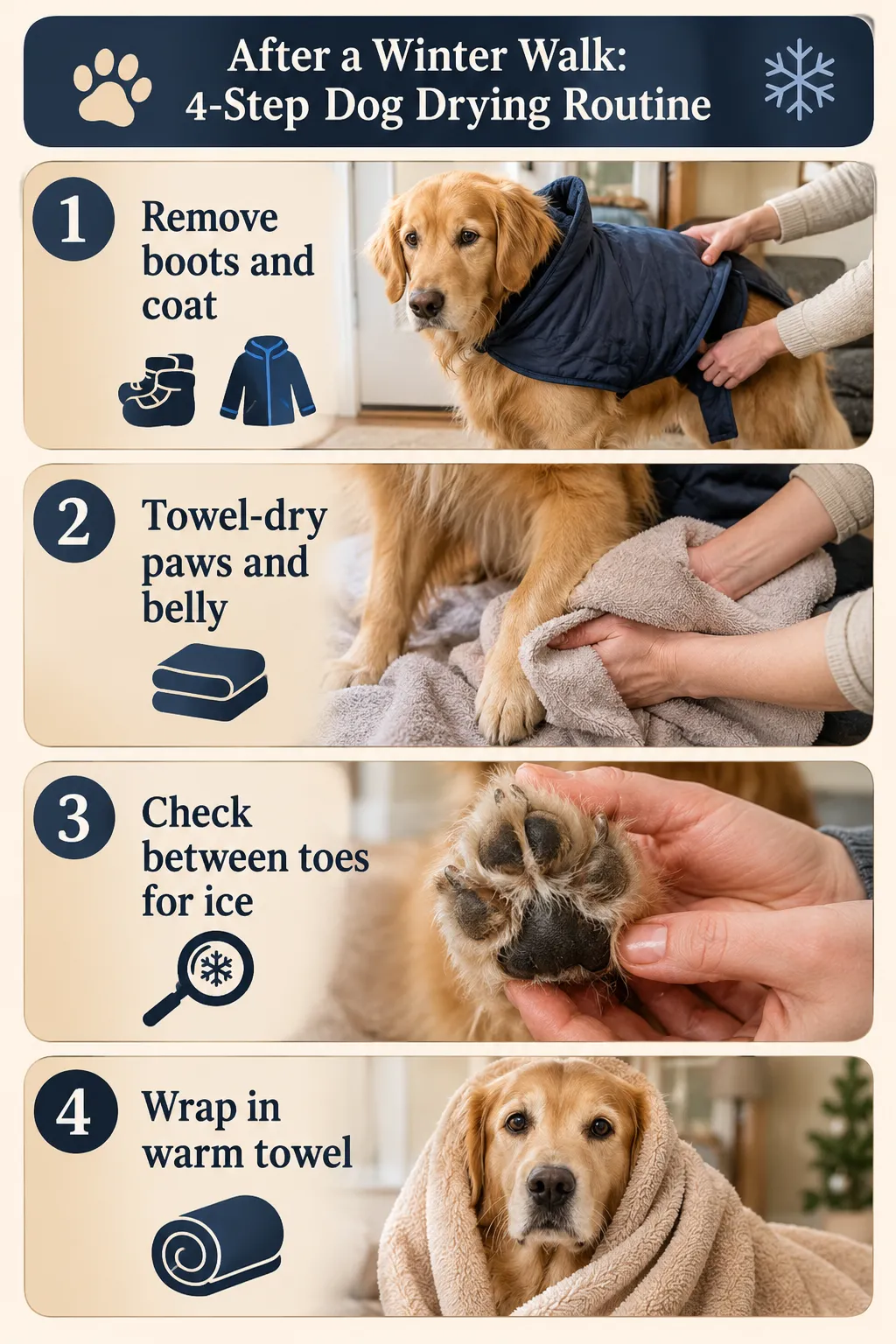
- Always dry paws, legs, and belly after every winter walk to remove salt residue.
I’ve walked my own dog through more icy sidewalks than I’d like to admit, and the mornings I skipped a coat or a towel were always the mornings I regretted it most. Winter dog walking essentials aren’t just about looking cute in a sweater. They’re about keeping a dog safe, warm, and visible on cold, dark, icy pavement. This guide covers exactly what gear matters, what’s optional, and what mistakes to avoid when the temperature drops.
What Gear Does My Dog Actually Need for Winter Walks
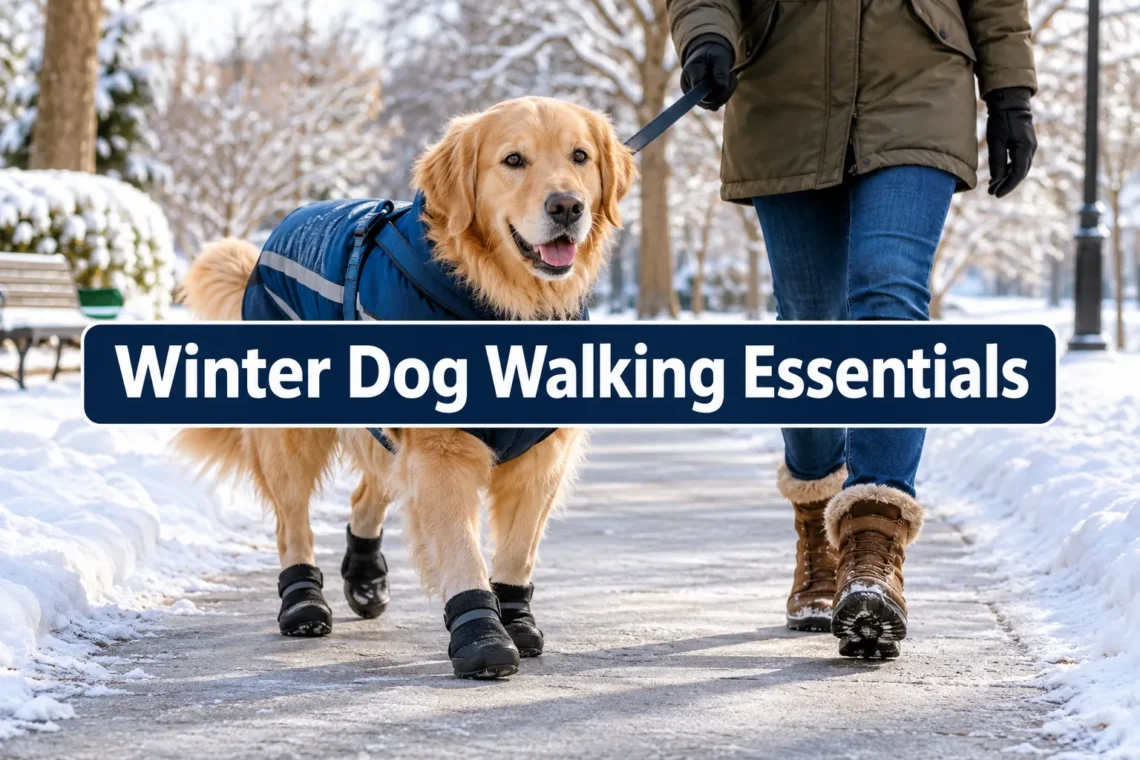
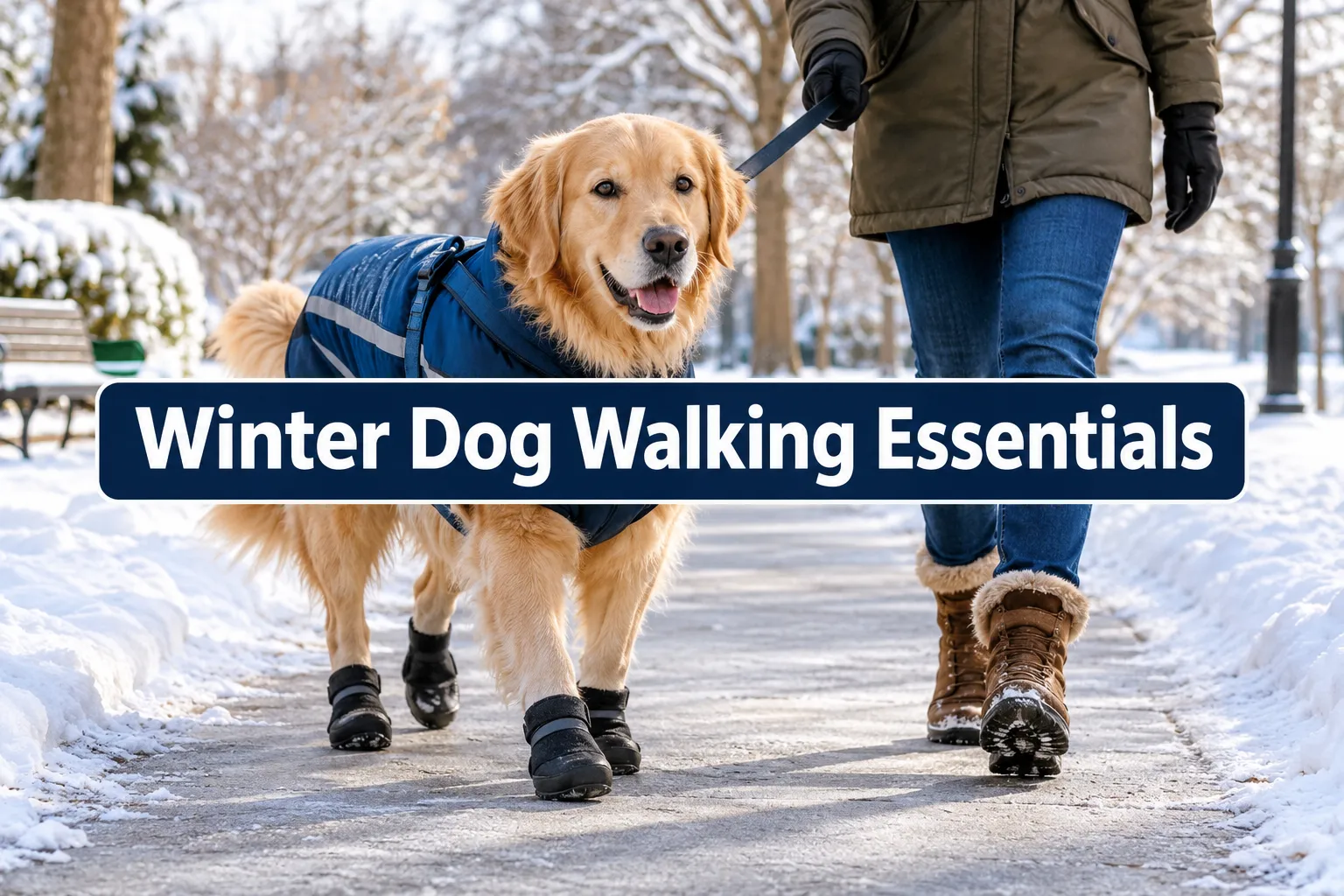
The core winter dog walking essentials are a warm coat, paw protection, a sturdy collar or harness, a reflective leash, and a drying towel for after. These five items cover warmth, visibility, traction, and cleanup, which are the four biggest winter walking problems.
Here’s a simple checklist I keep by the door every winter:
- Insulated, water-resistant coat with chest and belly coverage for short-coated or small dogs
- Boots or paw balm for icy, salted sidewalks
- Reflective collar and leash or a harness with built-in reflective strips
- A drying towel or dog drying bag for wet paws and bellies
- Collapsible water bowl since dogs still get thirsty in cold weather
- Poop bags that won’t freeze stiff in your pocket
A quick guide I give new dog owners: if your dog shivers within five minutes outside, that’s your sign the gear list above isn’t optional anymore. For a broader rundown of everyday supplies, check our dog essentials checklist.
Best Winter Dog Coat for Extreme Cold
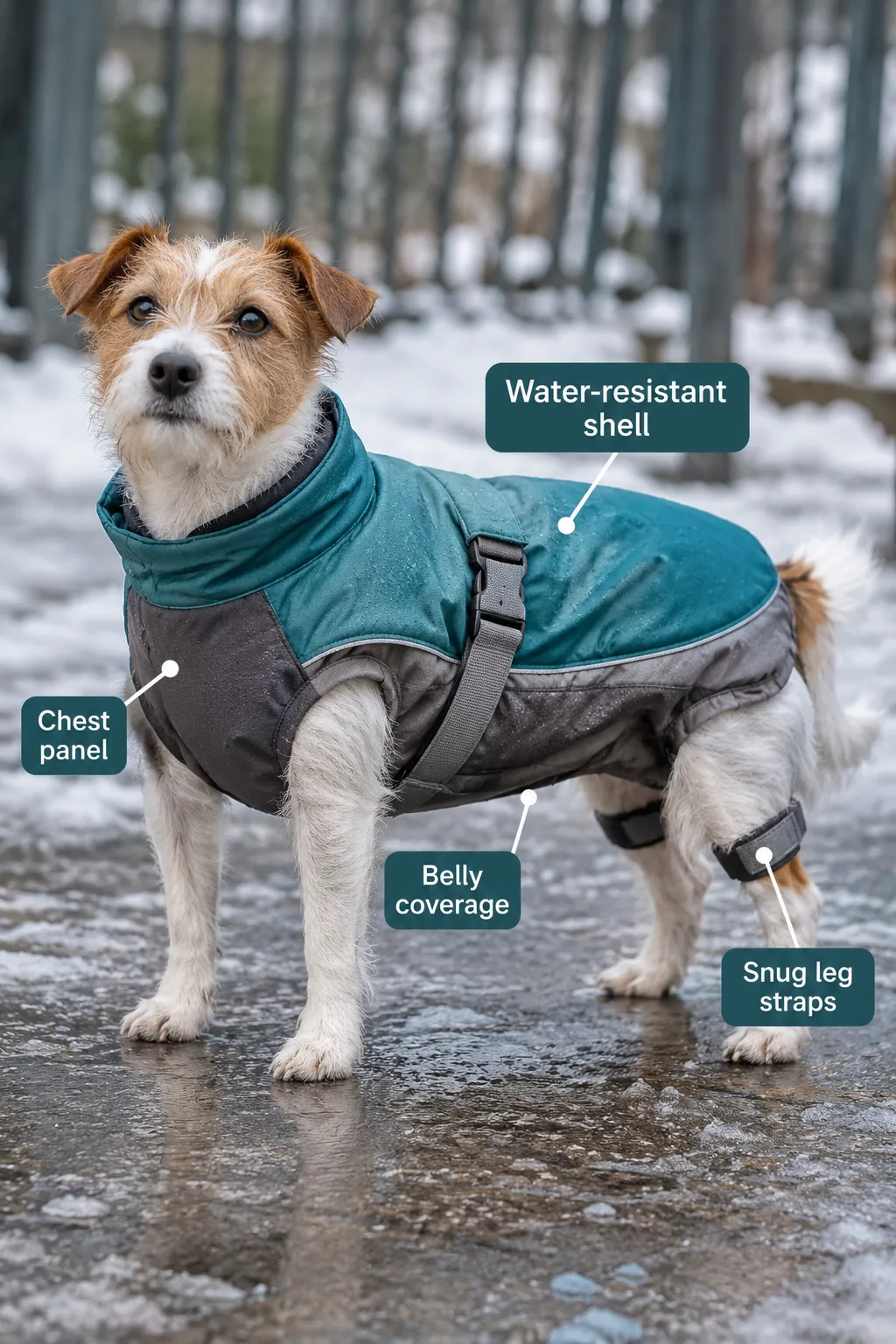
The best winter dog coat for extreme cold is a fitted, insulated, waterproof coat that covers the chest and belly, not just the back. Thin single-layer coats look nice but do little in temperatures below freezing.
Look for coats with:
- A waterproof or water-resistant outer shell
- Fleece or synthetic insulation lining
- Chest and belly panels, since heat loss happens there fastest
- Adjustable straps so the coat doesn’t shift during walks
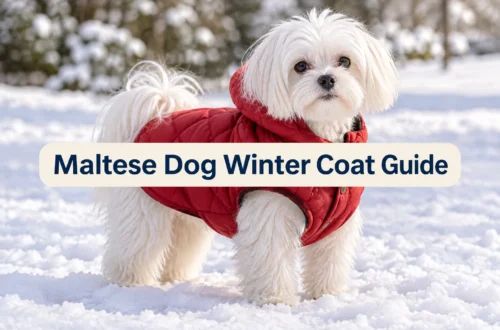
Guides from pet gear retailers in late 2026 point out that function matters more than style when it comes to insulated coats for thin-coated and small dogs, prioritizing warmth and moisture protection over branding, according to Pawbench’s apparel reviews. If you’re shopping for a specific breed, our dogs winter clothes guide by breed and our Maltese winter coat fitting guide both break down sizing by coat type and breed.
Do Dogs Need Booties in Snow or Is It Unnecessary
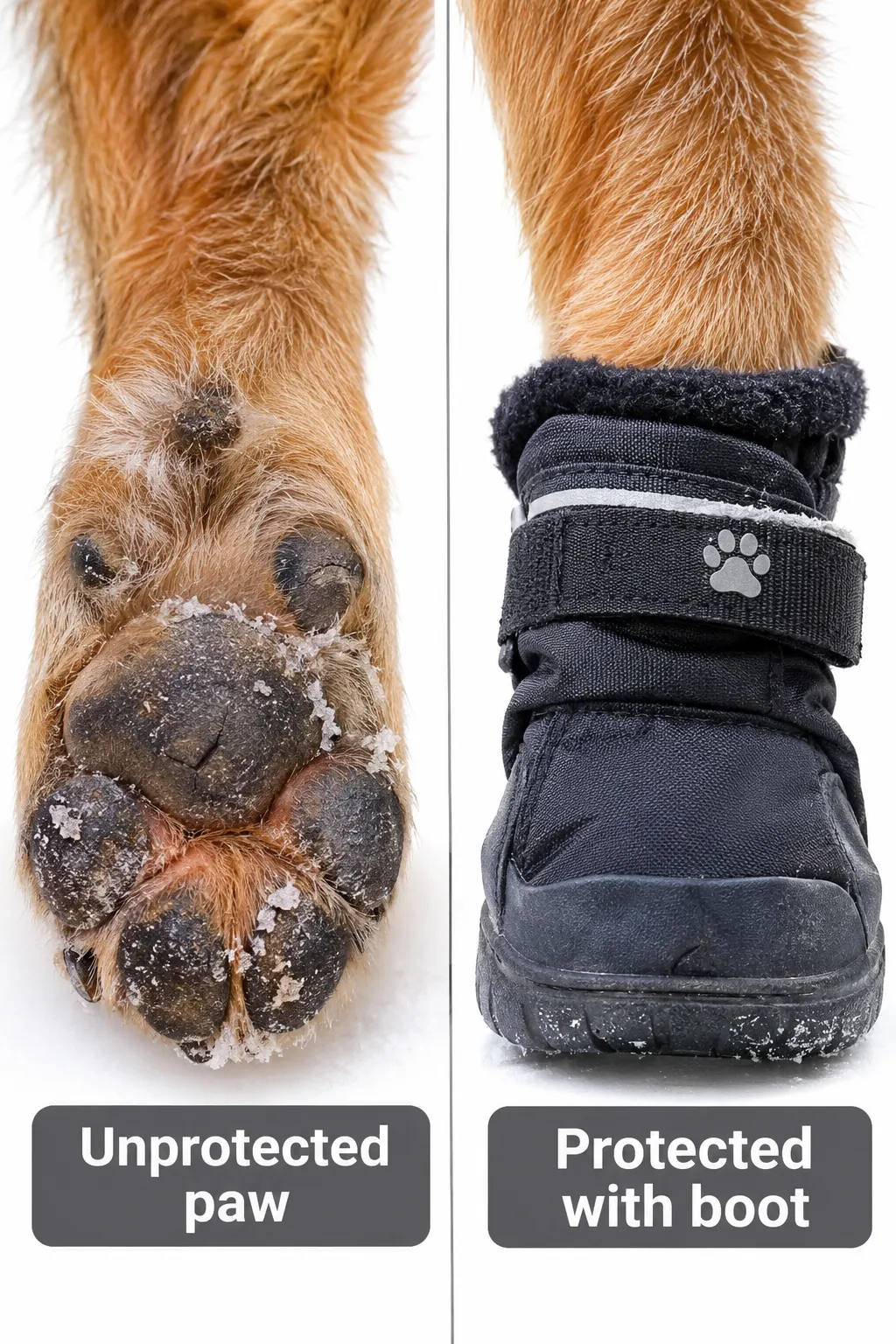
Dogs with thick, well-conditioned pads may tolerate brief snow without boots, but most dogs benefit from boots on salted or icy sidewalks. Booties aren’t strictly required for every dog, but they are strongly recommended whenever de-icing chemicals are present.
Boots help with:
- Preventing salt and chemical burns on pads
- Reducing ice buildup between toes
- Improving traction on slick pavement
If your dog refuses boots, paw balm is a reasonable alternative, though it offers less protection against sharp ice or rock salt.
How to Protect Dog Paws From Salt and Ice
Protect your dog’s paws from salt and ice by applying a protective balm before walks and rinsing or wiping paws immediately after. Reapplying balm is recommended on walks longer than about an hour, according to winter paw protection guidance.
Steps that actually work:
- Apply paw wax or balm before heading out the door.
- Check paws mid-walk for ice balls between toes.
- Rinse paws, legs, and belly with lukewarm water after the walk.
- Dry thoroughly, including between toes, to prevent cracking.
Skipping the rinse step is one of the most common mistakes I see. Salt left on paws can cause irritation hours later, long after the walk is over.
Signs Your Dog Is Too Cold During Winter Walks
A dog that shivers, lifts its paws repeatedly, slows down, or tries to turn back toward home is telling you it’s too cold. These are the clearest signals to end a walk immediately rather than pushing to a fixed time limit.
Other warning signs include:
- Whining or reluctance to walk further
- Curling the tail tightly or tucking it
- Seeking shelter behind you or near buildings
- Lethargy once back indoors
Winter safety guides increasingly recommend ending walks based on these behavioral cues rather than a strict clock, since cold tolerance varies so much by dog, per PAAW’s safety tips. If your pup seems off after a walk, our guide on recognizing colds in dogs covers related warning signs worth watching.
Winter Dog Walking Gear for Small Breeds vs Large Dogs
Small breeds generally need more layers, more frequent coat coverage, and shorter walks than large dogs with thick double coats. A Chihuahua and a Husky simply don’t experience the same winter.
- Small breeds: coats are nearly mandatory below 40°F, boots recommended on ice, shorter and more frequent walks
- Large, double-coated breeds (Huskies, Malamutes): often comfortable without a coat, but still need paw protection on salted roads
- Medium short-coated breeds (Boxers, Pitbulls): fall in between, usually need a coat below freezing
Coat type matters more than size alone, so judge each dog individually rather than assuming big dogs never get cold.
Budget Winter Dog Walking Essentials Under 50 Dollars
A functional winter kit under $50 can include a basic insulated coat, a tube of paw balm, a reflective collar, and a microfiber towel. You don’t need premium gear to keep a dog safe this winter.
Practical budget picks:
- Basic fleece-lined coat
- Small tin of paw wax
- Reflective nylon collar
- Absorbent microfiber towel for drying
Many shops run seasonal sales on winter accessories, and checking for a shop discount before the season peaks can stretch a tight budget further. Payment options like American Express, Apple Pay, PayPal, and Shop Pay make it easy to grab deals quickly when they appear.
Dog Sweater vs Jacket for Freezing Weather, Which Is Better
A jacket is better than a sweater for freezing, wet, or windy conditions because it adds waterproofing and wind resistance that a knit sweater lacks. Sweaters work fine for mild chill indoors or short trips to the mailbox, but not for real winter weather.
- Sweater: light warmth, no water resistance, best for 50-60°F indoor chill
- Jacket/coat: insulated, often waterproof, best for below-freezing walks and precipitation
If you’re only buying one item, pick the jacket. It covers more scenarios.
How Often Should I Walk My Dog When It’s Really Cold
In harsh cold, shorter and more frequent walks are safer than one long walk. Most dogs do better with three or four 10-minute outings than a single 40-minute walk in freezing wind.
This approach reduces continuous cold exposure while still meeting exercise and bathroom needs. It’s especially useful for puppies, seniors, and small dogs that can’t regulate body heat as well. If you’re also working on winter potty training, our cold-weather potty training tips pair well with this shorter-walk strategy.
Alternatives to Dog Booties for Paw Protection
Paw balm or wax is the main alternative to booties, forming a protective barrier against salt and ice without the fit issues some dogs have with boots. Petroleum-free balms are widely available and simple to apply before each walk.
Other options include:
- Avoiding heavily salted routes entirely
- Sticking to cleared, dry sidewalks when possible
- Rinsing and drying paws thoroughly after every outing
None of these fully replace boots on very icy terrain, but they help on moderate days.
Common Mistakes People Make When Winter Dog Walking
The most common mistake is judging cold tolerance by human comfort instead of the dog’s size, coat, age, and health. A thick-coated Husky owner may underestimate the cold, while a Chihuahua owner might overestimate how much coat coverage is enough.
Other frequent mistakes:
- Skipping paw rinsing after salted walks
- Using a retractable leash on ice instead of a short, fixed one
- Walking too close to frozen ponds or lakes
- Forgetting reflective gear on short “quick” walks after dark
Cornell’s winter safety update specifically recommends harnesses with short, non-extending leashes for better control near roads and steps in freezing rain, per the Cornell Riney Canine Health Center.
Can Dogs Get Frostbite on Their Paws From Walks
Yes, dogs can get frostbite on paws, ears, and tails during prolonged exposure to extreme cold, especially below about 20°F (-6°C). Frostbite risk rises with wind chill, wet fur, and longer exposure times.
Watch for pale, grey, or hard skin on paw pads or ear tips after a walk. If you notice this, warm the area gradually with lukewarm (not hot) water and contact a vet. Dogs with thin coats, short legs, or poor circulation are at higher risk, according to Cornell’s canine health topics.
Best Reflective Gear for Winter Walks in the Dark
Reflective collars, leashes, and vests with large reflective panels are the best gear for staying visible on dark winter walks. Products with built-in loops for clip-on LED lights add an extra layer of visibility beyond passive reflective material.
What to look for:
- High-contrast colors like orange or bright yellow
- Large reflective panels, not just thin piping
- Attachment points for LED beacons or clip lights
- Reflective leash in addition to collar, since leashes move more and catch headlights differently
Ruffwear’s 2026 Lumenglow vest redesign focuses specifically on high-contrast colors and dedicated LED attachment loops for this reason, according to Ruffwear’s product announcement. Charities echo this, recommending reflective gear for both dog and owner combined with well-lit walking routes, per the Ontario SPCA’s winter walk guide.
Winter Dog Walking for Senior Dogs or Dogs With Arthritis
Senior dogs and dogs with arthritis need shorter walks, better traction, and supportive gear like boots to reduce pain and falls on ice. Cold weather tends to stiffen arthritic joints, making slow, cautious walks the better choice.
Tips specific to senior or arthritic dogs:
- Choose boots with grippy soles over smooth-soled options
- Avoid stairs and sloped icy driveways when possible
- Keep walks brief, several times a day, instead of one long outing
- Watch closely for limping or reluctance, which can signal joint pain in the cold
This guidance matches broader advice from veterinary sources noting that older dogs and those with mobility issues face higher winter risk, per Cornell’s winter safety tips. If your senior dog needs gentler movement options overall, our article on safe exercises for senior dogs offers useful alternatives to long outdoor walks.
A Note on Training Collars and Winter Walking
Many owners ask about training collars, like a stainless steel or steel prong collar such as the Herm Sprenger 4.0, during icy winter walks. A properly fitted Sprenger prong collar can offer more control on slippery sidewalks where a dog pulling hard increases fall risk for both dog and owner.
A quick collar guide for winter use:
- Make sure any training collar, including a prong collar, is sized correctly and sits high on the neck
- Use a quick-release or quick-add style clasp for easy on/off with gloved hands
- Pair training collar use with basic leash training so the dog pulls less on ice in the first place
If you’re new to this kind of gear, our dog training category has broader guidance on leash manners that reduces how often a training collar is even needed. Always introduce any new collar gradually and never leave a prong collar on an unsupervised dog.
Winter Dog Walking Essentials FAQs
Do dogs sleep more in winter?
Many dogs do sleep more in winter, partly due to shorter daylight hours and colder temperatures reducing outdoor activity. This is normal and not usually a health concern unless paired with other symptoms like appetite loss.
Do dogs feel the cold in the UK?
Yes, dogs in the UK feel the cold, especially short-coated, small, senior, or ill dogs during damp, windy winter weather. UK winters combine cold with high humidity, which can make temperatures feel colder than the number on a thermometer suggests.
What to do if my dog’s ears are cold?
If your dog’s ears feel cold but are a normal color, gently warm them with your hands or bring the dog indoors and monitor for improvement. If ears look pale, grey, or feel hard, treat it as a possible frostbite sign and contact a vet promptly.
Conclusion
Winter dog walking essentials come down to five things: warmth, paw protection, visibility, control, and a drying routine. A good coat, boots or balm, a reflective collar and leash, and a towel waiting by the door cover almost every scenario you’ll face on cold, dark, icy walks.
Start small if you’re building a kit from scratch. Grab a coat and reflective leash first, then add boots or balm before your next icy forecast. Watch your dog’s behavior more than the thermometer, and shorten walks the moment shivering or paw-lifting starts.
For more cold-season prep, check out our guides on keeping your house smelling fresh with a dog and dog-friendly winter activities to round out your season.