
Last updated: September 15, 2026
Quick Answer: The safest senior dog exercises are short leash walks, gentle swimming, balance work, nose work, and slow sit-to-stand drills – done in 2-3 short sessions totaling 20-40 minutes per day. The key is keeping sessions brief, surfaces soft, and pace dog-led. Always watch for limping, heavy panting, or stiffness as signs to stop and rest.
Key Takeaways
- Senior dogs still need daily movement – stopping exercise entirely can worsen joint stiffness and muscle loss.
- Aim for 2-3 short sessions of 10-15 minutes each, rather than one long walk.
- The best senior dog exercises are low-impact: leash walks, swimming, balance drills, nose work, and gentle range-of-motion movements.
- Always warm up with 2-3 minutes of slow movement before any session.
- Watch for warning signs: limping, reluctance to move, heavy panting, or next-morning stiffness.
- Dogs with arthritis benefit most from water therapy and short, flat leash walks.
- Slippery floors, steep hills, and jumping should be avoided for most senior dogs.
- A vet check every 6 months helps adjust the exercise plan as your dog ages.
- Nutrition supports exercise recovery – consider homemade food for senior dogs to boost energy and joint health alongside a movement routine.
- Mental stimulation through nose work counts as exercise and reduces fatigue on the body.
What Exercises Are Safe for Senior Dogs?
Safe senior dog exercises are low-impact, controlled, and done on forgiving surfaces. The goal is to keep muscles active and joints mobile without adding stress to aging cartilage or bones.
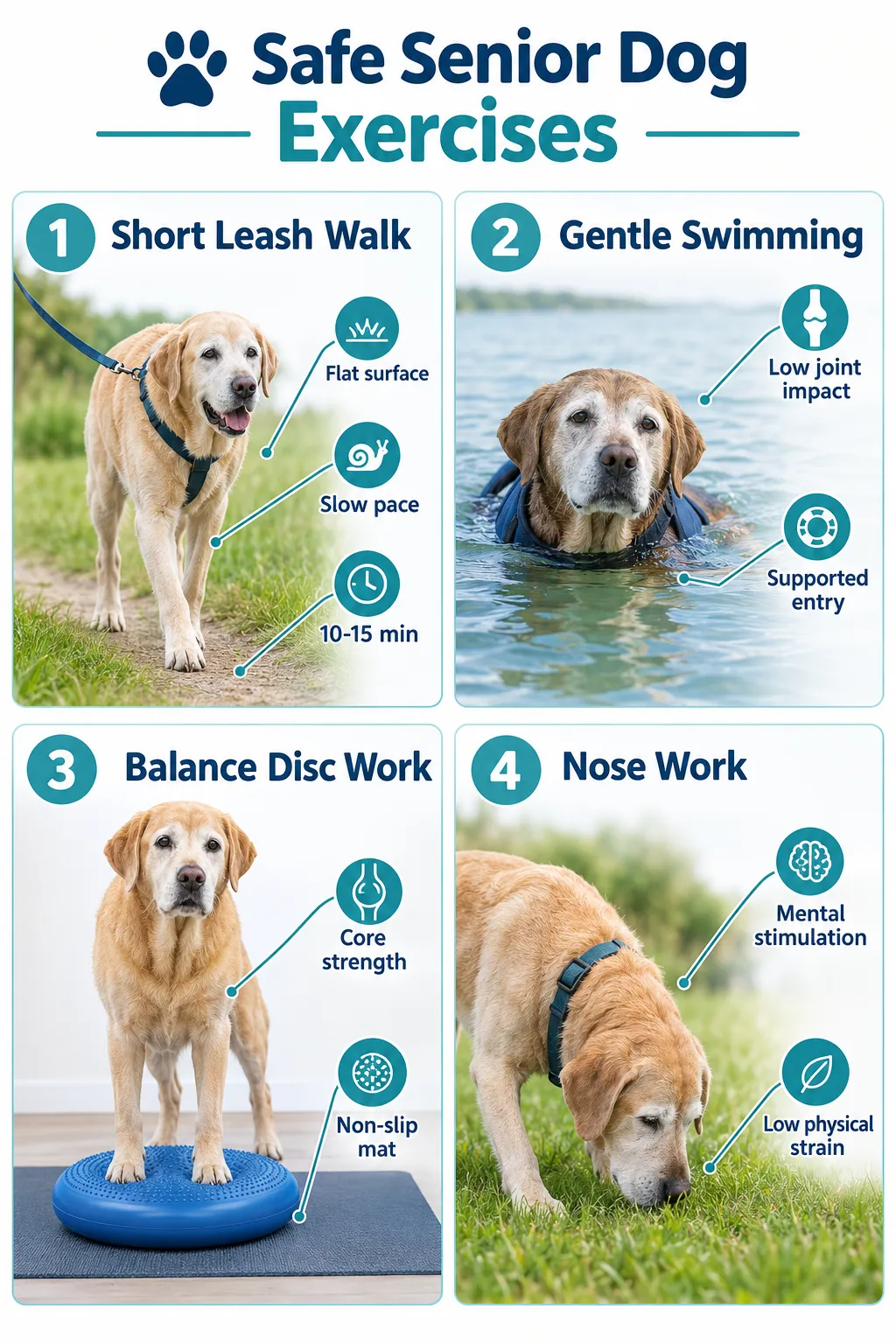
The seven exercises most consistently recommended by veterinary and welfare sources are:
- Short leash walks on flat, grassy, or textured paths
- Gentle swimming or water therapy in calm, shallow water
- Nose work and scent games – sniffing-based mental and physical activity
- Sit-to-stand repetitions – slow, controlled transitions that build rear-end strength
- Balance disc or cushion work – standing on a soft, slightly unstable surface
- Cavaletti rail walking – stepping over low poles placed on the ground
- Gentle range-of-motion stretches – slow, supported limb movements
These activities keep your dog moving without the jarring impact of running, jumping, or rough play. According to guidance on gentle exercise plans for older dogs, the “little and often” principle is the most important rule for senior fitness.
“Movement is medicine for senior dogs – but the dose matters just as much as the activity itself.”
How Much Exercise Does an Old Dog Need Per Day?
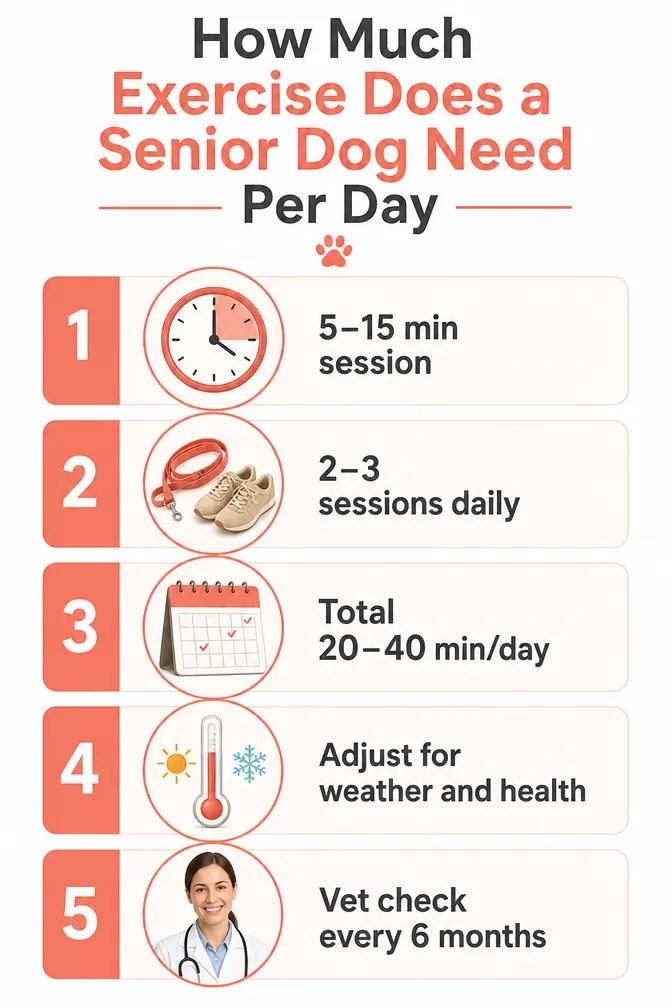
Most senior dogs do best with 20-40 minutes of total activity per day, split into 2-3 short sessions rather than one long outing.
A typical daily pattern might look like this:
- Morning: 10-15 minute leash walk at a relaxed pace
- Midday: 5-10 minutes of nose work or a gentle indoor drill
- Evening: 10-15 minute walk or calm outdoor sniff session
Exercise guidance for senior pets suggests starting with 5-minute sessions if your dog is new to a routine or recovering from a health issue, then gradually adding time only when they finish each session comfortably.
The exact amount depends on breed, weight, and health status. A healthy 8-year-old Labrador will tolerate more than a 12-year-old Chihuahua with joint issues. For more on matching exercise to your dog’s needs, see how much exercise does my dog need.
Rule of thumb: If your dog seems stiff the next morning, the previous day’s activity was too much. Cut back by 20-30% and rebuild slowly.
Best Low-Impact Senior Dog Exercises
Low-impact exercises protect aging joints while still building muscle tone, improving balance, and supporting mental health. These are the best options for most senior dogs, including those with mild arthritis or reduced mobility.
Here’s a quick comparison of the top options:
| Exercise | Joint Impact | Best For | Session Length |
|---|---|---|---|
| Leash walk (flat) | Low | All seniors | 10-15 min |
| Swimming | Very low | Arthritis, weight issues | 5-10 min |
| Nose work | Minimal | All seniors, low energy dogs | 10-15 min |
| Sit-to-stand | Low-moderate | Rear-end weakness | 5 reps, 2x daily |
| Balance disc | Low | Core strength, coordination | 3-5 min |
| Cavaletti rails | Low | Gait improvement | 5-10 min |
| Range-of-motion stretches | Minimal | Stiff joints, post-rest | 3-5 min |
According to senior dog mobility exercise resources, dogs with no noticeable mobility limitation can do two daily walks plus one strength drill. Dogs with mild limitations should shorten walks and add more rest between sets.
Can Senior Dogs Do Swimming and Water Therapy?
Yes – swimming and water therapy are among the best exercises for senior dogs, especially those with arthritis or joint pain. Water supports body weight, which dramatically reduces stress on hips, knees, and spine while still working the muscles.
A few important points:
- Always use a calm, shallow entry point. Jumping into deep water can injure aging joints.
- Keep sessions short – 5-10 minutes is plenty to start.
- Use a canine life vest if your dog is a weak swimmer or has significant mobility issues.
- Underwater treadmill therapy (hydrotherapy) is an even more controlled option available through veterinary rehabilitation clinics.
Arthritis management guidance referencing Cornell University’s Riney Canine Health Center lists swimming and underwater treadmill work as core strategies for senior dogs with joint disease.
Not every dog enjoys water, and that’s fine. If your dog resists, don’t force it – nose work or balance drills offer similar low-impact benefits.
Signs My Senior Dog Is Overexercising
Your senior dog is overdoing it if you notice any of these warning signs during or after exercise:
- 🐾 Limping or favoring a leg – even slightly
- 🐾 Reluctance to get up after resting
- 🐾 Heavy, prolonged panting that doesn’t settle within 5 minutes of stopping
- 🐾 Stiffness the morning after a session
- 🐾 Refusing to walk or turning back early on a route they usually enjoy
- 🐾 Whimpering or vocalizing during movement
According to exercise adjustment guidance for aging dogs, owners should watch how their dog moves for the rest of the day and the following morning. Delayed stiffness or soreness is a clear sign the previous session was too intense.
If any of these signs persist for more than 24 hours, contact your vet before resuming exercise.
How to Exercise a Senior Dog With Arthritis
Senior dogs with arthritis need the same core principle applied even more carefully: short, gentle, consistent movement on soft, flat surfaces. Stopping exercise entirely is not recommended – inactivity weakens the muscles that support arthritic joints.
Practical steps for arthritic senior dogs:
- Start with 10-minute leash walks on grass or a rubber-matted path, 2-3 times daily.
- Avoid steep hills, stairs, and slippery floors entirely.
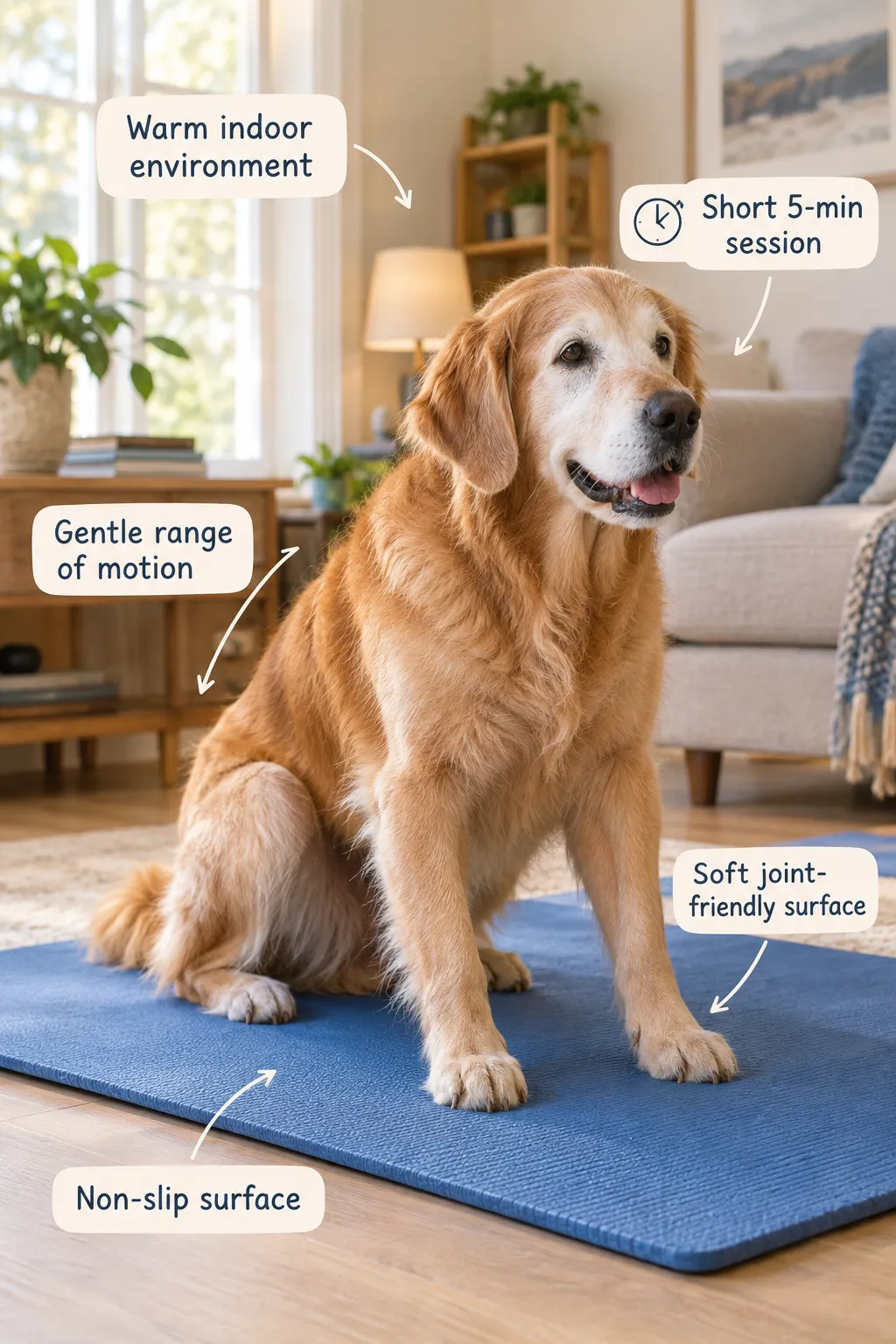
- Use a non-slip mat for any indoor balance or sit-to-stand work.
- Add a 2-3 minute slow warm-up walk before each session.
- Consider water therapy if a facility is accessible – it’s the most joint-friendly option available.
- Ask your vet about anti-inflammatory support before and after exercise sessions.
Low-impact exercise guidance for senior pets emphasizes that uncontrolled running, jumping, and prolonged hill climbing can sharply worsen pain in dogs with joint disease.
Pair movement with joint-supportive nutrition. Chicken bone broth gummy treats that support joints naturally can be a great complement to an arthritis-friendly exercise routine.
Senior Dog Exercises vs Young Dog Exercise Differences
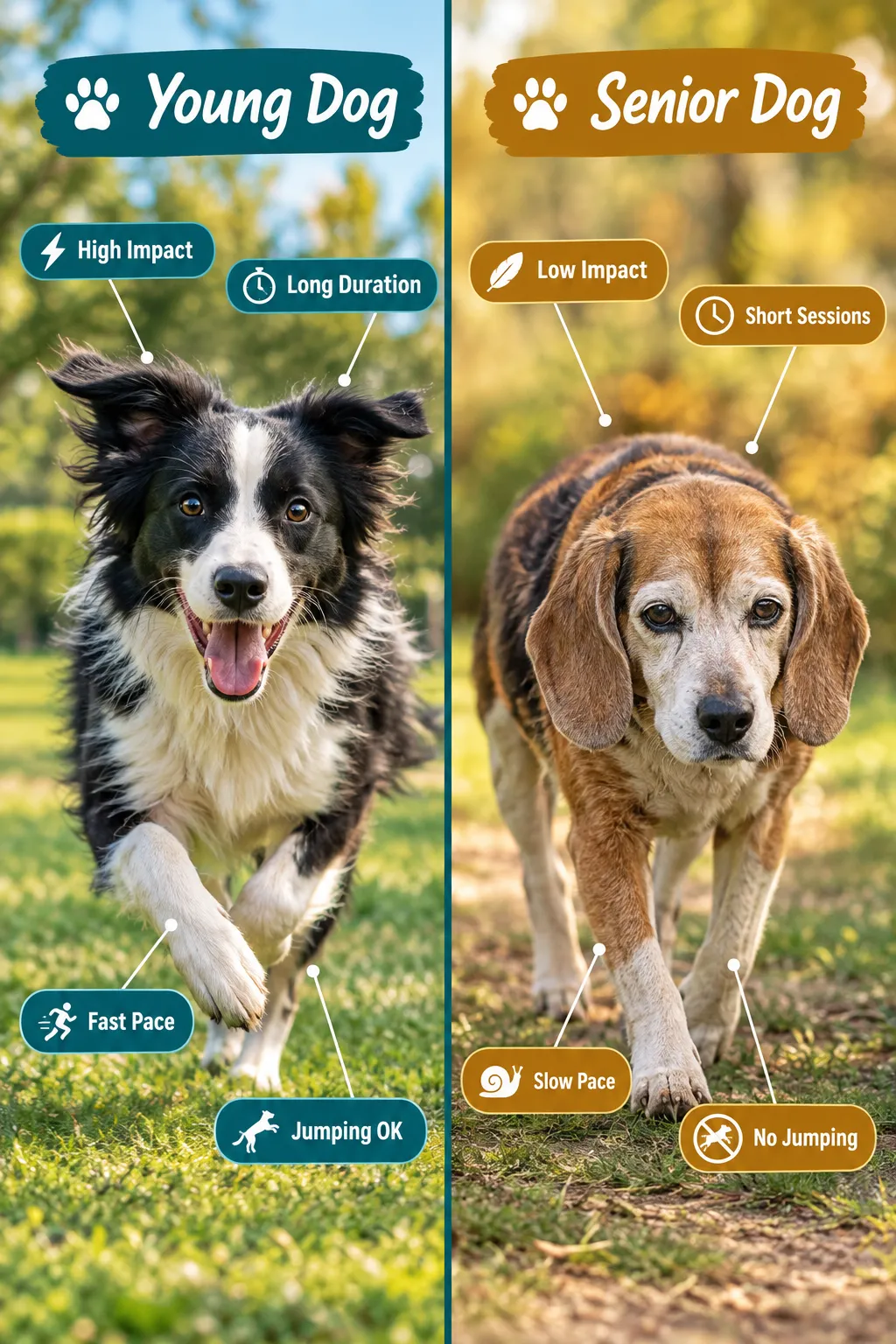
Senior dog exercises differ from young dog workouts in four key ways: duration, intensity, surface requirements, and recovery time.
| Factor | Young Dog | Senior Dog |
|---|---|---|
| Session length | 30-60+ min | 10-15 min |
| Daily total | 60-120 min | 20-40 min |
| Intensity | High – running, jumping | Low – walking, swimming |
| Surface needs | Flexible | Soft, non-slip required |
| Recovery | Same day | May need 24 hours |
| Mental vs physical | Mostly physical | Balance of both |
Young dogs build fitness through intensity and duration. Senior dogs maintain function through consistency and gentleness. Pushing a senior dog to keep up with its younger self is one of the most common mistakes owners make.
For a broader look at matching exercise to your dog’s life stage, see puppy exercise ideas and fun ways to keep them active.
Indoor Senior Dog Exercises for Bad Weather
Senior dogs can get their full daily movement indoors when weather makes outdoor walks unsafe or uncomfortable. Cold, icy, or very hot conditions are genuinely risky for older dogs who can’t thermoregulate as well as younger ones.
Best indoor senior dog exercises:
- Nose work and scent games – hide treats or a favorite toy around the house for your dog to find. This is mentally tiring in the best possible way.
- Sit-to-stand repetitions on a non-slip mat – 5 reps, twice daily, builds rear-end strength without needing any equipment.
- Slow stair work (if your dog is comfortable) – one or two gentle trips up and down, only on carpeted stairs.
- Balance cushion standing – have your dog stand with two front paws on a soft balance disc for 20-30 seconds at a time.
- Gentle range-of-motion stretches – slowly guide each leg through its natural range of motion while your dog stands or lies comfortably.
PDSA guidance on exercising senior dogs recommends keeping indoor sessions on non-slip rubber matting and avoiding polished floors, which can cause falls and joint injuries in older dogs.
For more ways to keep your senior dog engaged indoors, 12 brain games for dogs that boost focus and beat boredom has some great ideas that double as low-impact activity.
Is Walking Enough Exercise for an Old Dog?
For most senior dogs, yes – walking is the foundation of a good exercise routine and often provides everything they need. The key is that walks are short, frequent, and paced by the dog, not the owner.
A flat 10-15 minute leash walk on soft ground, done 2-3 times daily, covers cardiovascular health, joint mobility, muscle maintenance, and mental stimulation through sniffing.
Walking becomes insufficient only when:
- Your dog has significant muscle loss and needs targeted strength work (sit-to-stands, balance drills).
- Your dog has severe arthritis and walking causes pain – in which case water therapy is a better primary exercise.
- Your dog is bored and needs more mental engagement – add nose work alongside walks.
PetMD’s guidance on exercising senior dogs notes that sniff breaks during walks should be encouraged, not rushed. Sniffing is genuinely tiring for dogs and adds mental value to a short physical outing.
Also see how long you should walk your dog for signs that even gentle walks might be running too long.
When Should I Stop Exercising My Senior Dog?
You should pause exercise – not stop it permanently – when your dog shows persistent pain, injury, or a sudden change in mobility. Complete rest is rarely the right answer; even very limited movement helps prevent muscle atrophy and joint stiffening.
Stop the current session immediately if:
- Your dog starts limping mid-walk
- They sit or lie down and refuse to continue
- Panting becomes heavy and doesn’t ease within a few minutes of rest
Seek vet guidance before resuming if:
- Limping or stiffness lasts more than 24 hours after exercise
- Your dog stops wanting to go outside at all
- You notice sudden changes in gait or posture
The only time to stop exercise entirely is under direct veterinary instruction – for example, after surgery or during an acute flare of a health condition. Even then, gentle range-of-motion work is often continued under supervision.
For a full guide on caring for your aging dog beyond exercise, see how to care for senior dogs.
FAQ
What age is considered senior for a dog?
Most dogs are considered senior from around 7-10 years old, depending on size. Large and giant breeds age faster – a Great Dane may be senior at 6, while a small terrier might not reach senior status until 10 or 11.
Can I still take my senior dog hiking?
Short, flat hikes on soft trails are fine for many healthy senior dogs. Avoid steep terrain, rocky paths, and long distances. Watch for stiffness the next day and shorten the route if it appears.
How do I know if my senior dog is getting enough activity?
Signs of adequate activity include a healthy weight, good muscle tone over the hindquarters, willingness to go for walks, and no excessive stiffness after rest. A vet can assess muscle condition score at regular checkups.
Should I warm up my senior dog before exercise?
Yes. Start every session with 2-3 minutes of very slow walking or gentle movement before picking up pace. This reduces injury risk and helps stiff joints loosen up gradually.
Is fetch safe for senior dogs?
Short, slow fetch sessions on grass can be fine, but avoid hard stops, sharp turns, and jumping catches. Many senior dogs are better served by nose work or slow walking than by fetch, which encourages sudden bursts of speed.
Can a senior dog with hip dysplasia still exercise?
Yes, with modifications. Short leash walks, swimming, and underwater treadmill therapy are the safest options. Avoid stairs, jumping, and hard surfaces. Always follow your vet’s specific guidance for hip dysplasia management.
What surfaces are safest for senior dog exercises?
Grass, rubber matting, and textured paths are best. Avoid polished tiles, hardwood floors, steep sand, and loose gravel, which can cause slipping and joint strain.
How do I start a senior dog on an exercise routine if they’ve been mostly inactive?
Start with just 5 minutes of slow walking once or twice daily. Add 2-3 minutes per session each week only if your dog shows no soreness or stiffness. Build up over 4-6 weeks before reaching a full routine.
Does nose work really count as exercise for senior dogs?
Absolutely. Scent work is mentally demanding and physically gentle, making it ideal for senior dogs. It tires them out without stressing joints and can replace or supplement physical activity on difficult days.
Should I feed my senior dog before or after exercise?
Wait at least 30-60 minutes after feeding before exercising, especially for larger breeds. Light activity before meals is generally fine. Avoid vigorous exercise immediately after eating to reduce the risk of digestive issues.
Conclusion
Keeping your senior dog active doesn’t mean pushing them to their limits – it means finding the right balance between movement and rest. Short, consistent sessions of low-impact senior dog exercises do far more good than occasional long outings that leave your dog stiff and sore.
Your action steps:
- Start with two 10-minute leash walks daily on flat, soft ground.
- Add one gentle indoor drill – sit-to-stands or nose work – on most days.
- Watch for warning signs after each session: limping, stiffness, reluctance.
- Book a vet check every 6 months to adjust the plan as your dog ages.
- Pair movement with joint-supportive nutrition and plenty of rest between sessions.
Your older dog still wants to move with you. They just need you to slow down a little and let them lead the pace. 🐾