

Last updated: September 14, 2026
Quick Answer: Yes, dogs can have pineapple – but only the fresh, raw flesh, in small amounts, and not every day. The fruit is non-toxic to healthy adult dogs and offers real nutritional perks, but the skin, core, canned versions, and juice can cause digestive trouble or worse. Follow five simple rules and your dog can enjoy this tropical treat safely.
Key Takeaways
- Fresh pineapple flesh is safe and non-toxic for most healthy adult dogs
- Always remove the skin, crown, and fibrous core before feeding
- Serve only a few small, bite-size cubes at a time – not a full bowl
- Pineapple should be an occasional treat, not a daily snack
- Canned pineapple, pineapple juice, and dried rings are not safe due to high sugar content
- Puppies, senior dogs, and toy breeds need extra-small portions or none at all
- Dogs with diabetes or digestive issues should only have pineapple with vet approval
- Watch for diarrhea, gas, or vomiting after the first serving and stop if any appear
- Pineapple contains bromelain, vitamin C, manganese, and fiber – modest but real benefits
- The “10% treat rule” applies: pineapple calories should stay within your dog’s daily treat allowance
Is Pineapple Safe for Dogs to Eat?
Yes – pineapple is safe for dogs to eat when prepared correctly. According to the American Kennel Club, fresh raw pineapple flesh is non-toxic and can be a healthy occasional treat for most adult dogs.
The key word is “prepared.” Raw pineapple flesh gets a green light. But the spiky skin, tough fibrous core, and leafy crown are a different story – those parts are hard to digest and can cause choking or gut blockages, especially in smaller breeds.
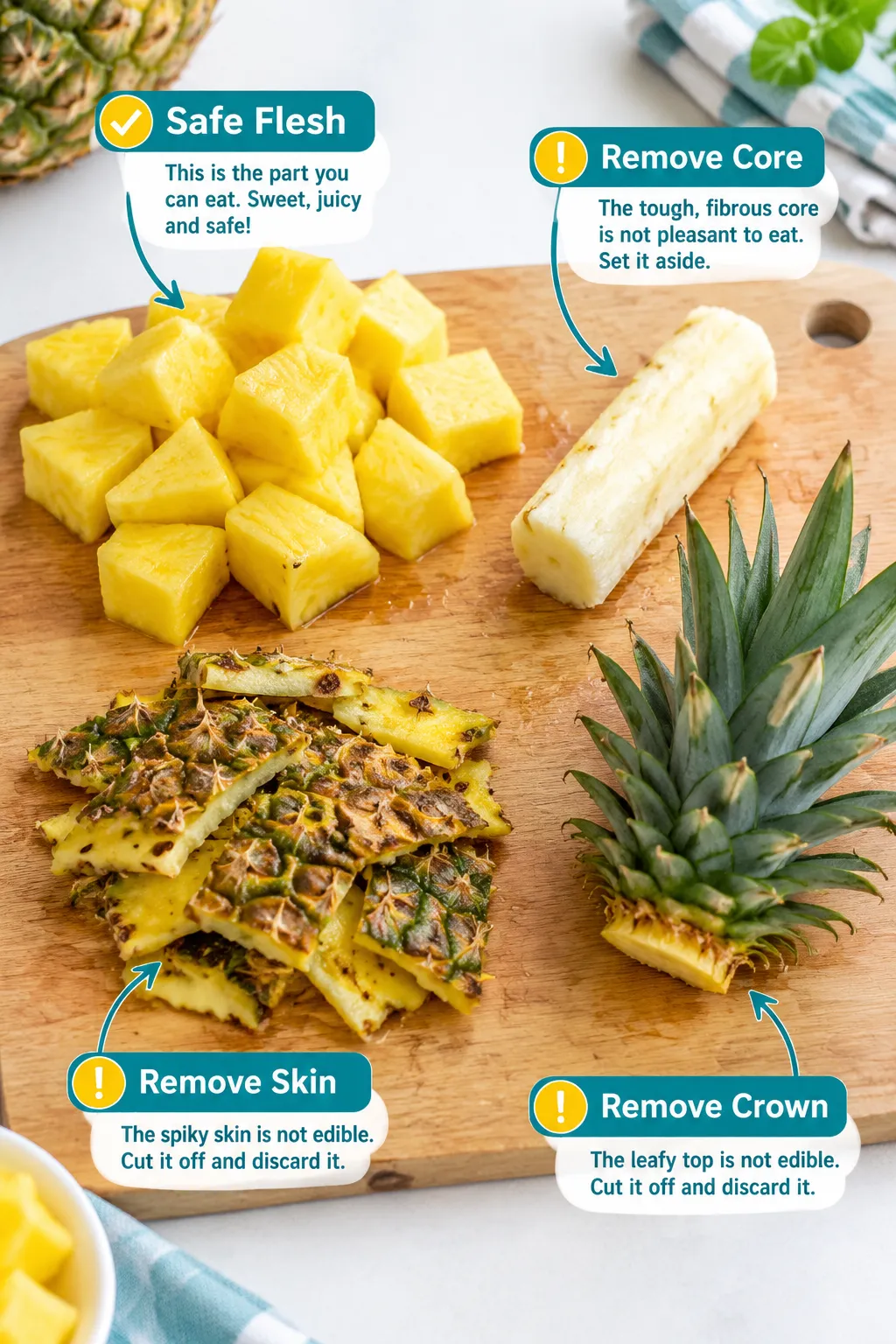
Pineapple is naturally high in sugar and citric acid, which is why even the safe flesh needs to be given in moderation. A couple of cubes as an occasional reward is fine. A large bowl of it is not.
Can Dogs Have Pineapple Skin and Core?
No – dogs should never eat pineapple skin or the fibrous core. Hill’s Pet Nutrition and multiple vet-reviewed guides consistently flag these parts as choking hazards and potential causes of intestinal obstruction.
Here is why each part is a problem:
- Skin (outer rind): Tough, spiky, and nearly impossible for a dog to digest. Can cause blockages in the gut.
- Core: Stringy and fibrous. Even if a dog swallows it, it can get stuck in the digestive tract.
- Crown/leaves: Not toxic, but rough and fibrous – not worth the risk.
Rule of thumb: If you would not eat it yourself without difficulty, do not give it to your dog. Stick to the soft, golden flesh only.

What Are the Health Benefits of Pineapple for Dogs?
Pineapple offers a handful of genuine nutritional benefits for dogs, though they are modest and should not replace a complete, balanced diet.
Key nutrients in fresh pineapple flesh include:
- Bromelain – a natural enzyme that may support protein digestion and has mild anti-inflammatory properties
- Vitamin C – an antioxidant that supports immune health (dogs produce their own, but extra from food does not hurt)
- Manganese – supports bone health and metabolism
- Fiber – aids healthy digestion in small amounts
- Water content – pineapple is about 86% water, making it a hydrating snack on hot days
These benefits are real but small. Petful’s nutrition guide on pineapple for dogs notes that while the nutrients are worthwhile, pineapple should stay within the general “10% of daily calories from treats” guideline that most vet nutritionists recommend.
For more ideas on fruit-based nutrition for dogs, check out can dogs eat apples – 9 surprising benefits and risks and can dogs eat bananas – 5 smart portion tips.
The 5 Feeding Rules Every Dog Owner Should Know
These five rules are the difference between a safe tropical treat and a vet visit. Follow all five, every time.
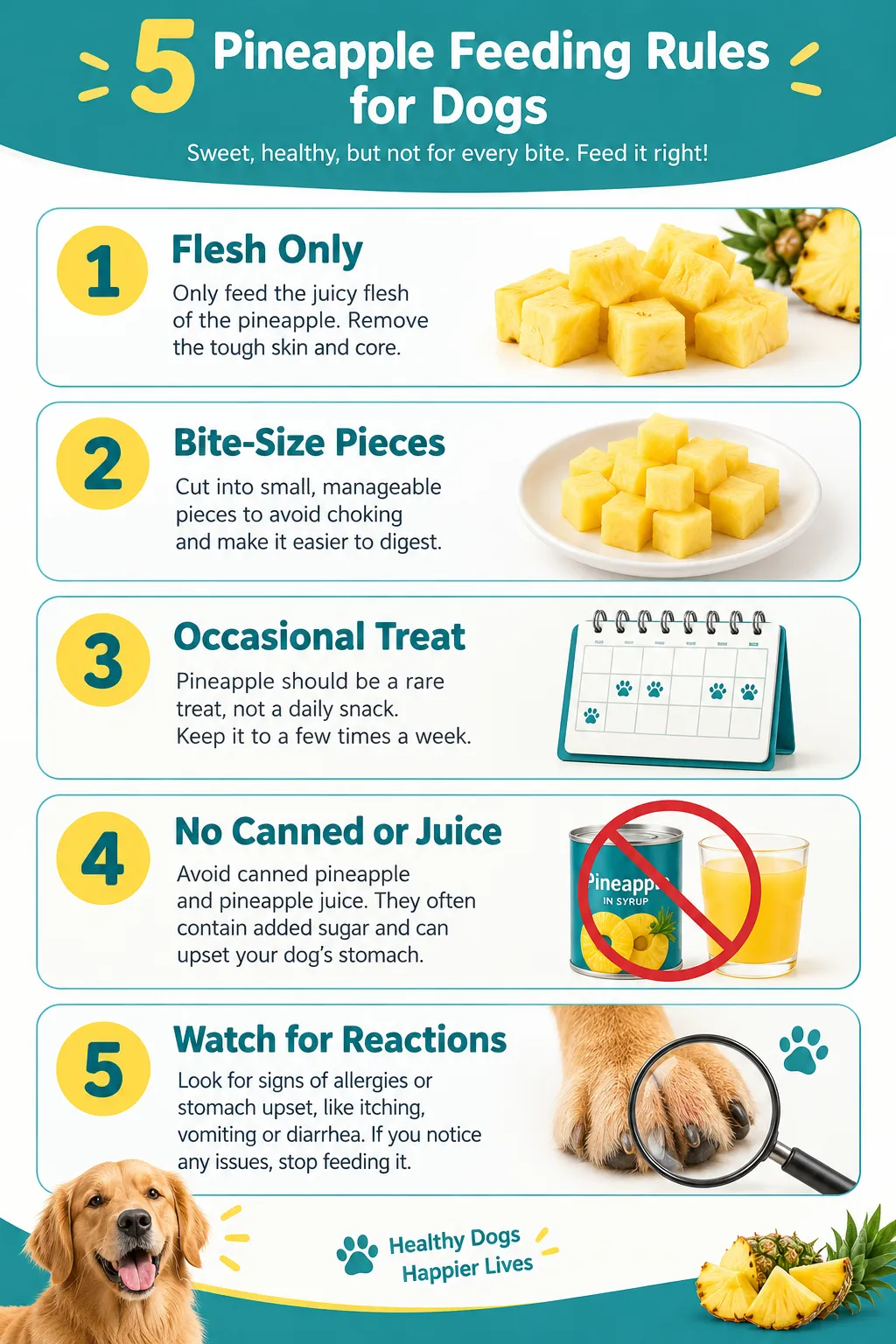
Rule 1 – Flesh Only, Always
Remove the skin, core, and crown completely before your dog gets anywhere near the fruit. Cut the flesh into small cubes – roughly thumbnail size for medium dogs, smaller for little ones.
Rule 2 – Keep Portions Small
A few cubes is a treat. A full cup is too much. For a medium-sized dog (around 30-50 lbs), two to three small cubes is a reasonable serving. Smaller dogs should get even less – think one small cube.
Rule 3 – Occasional, Not Daily
SafeForDogs.com.au and other nutrition-focused guides recommend treating pineapple as an occasional fruit day snack – not something on the daily menu. A couple of times a week at most for healthy adults is the general guidance.
Rule 4 – Fresh Only, No Canned or Juice
Canned pineapple – even “juice-packed” varieties – contains significantly more sugar than fresh fruit. Pineapple juice is even more concentrated. Petco’s dog nutrition guide warns that the added sugars and syrups in canned products raise real risks for obesity, dental problems, and pancreatitis over time.
Dried pineapple rings are also off the table – they are essentially concentrated sugar with all the water removed.
Rule 5 – Watch Your Dog After the First Bite
Start with one small piece and wait 24 hours. Watch for loose stools, gas, vomiting, or any signs of itching or discomfort. If your dog handles it well, you can offer it again occasionally. If not, stop and check with your vet.
Can Pineapple Upset a Dog’s Stomach?
Yes, pineapple can upset a dog’s stomach – especially if given in large amounts or too frequently. The natural sugar and citric acid in pineapple are the main culprits.
Common signs of too much pineapple include:
- Loose stools or diarrhea
- Gas and bloating
- Vomiting
- Stomach discomfort or restlessness
The Pet Bench’s comprehensive pineapple guide notes that even healthy dogs can experience digestive upset if pineapple is introduced too quickly or given in excess. Always start small and increase slowly only if your dog tolerates it well.
If your dog shows any digestive symptoms after eating pineapple, stop offering it and give their gut a few days to settle. Persistent vomiting or diarrhea warrants a call to your vet.
Is Canned Pineapple OK for Dogs?
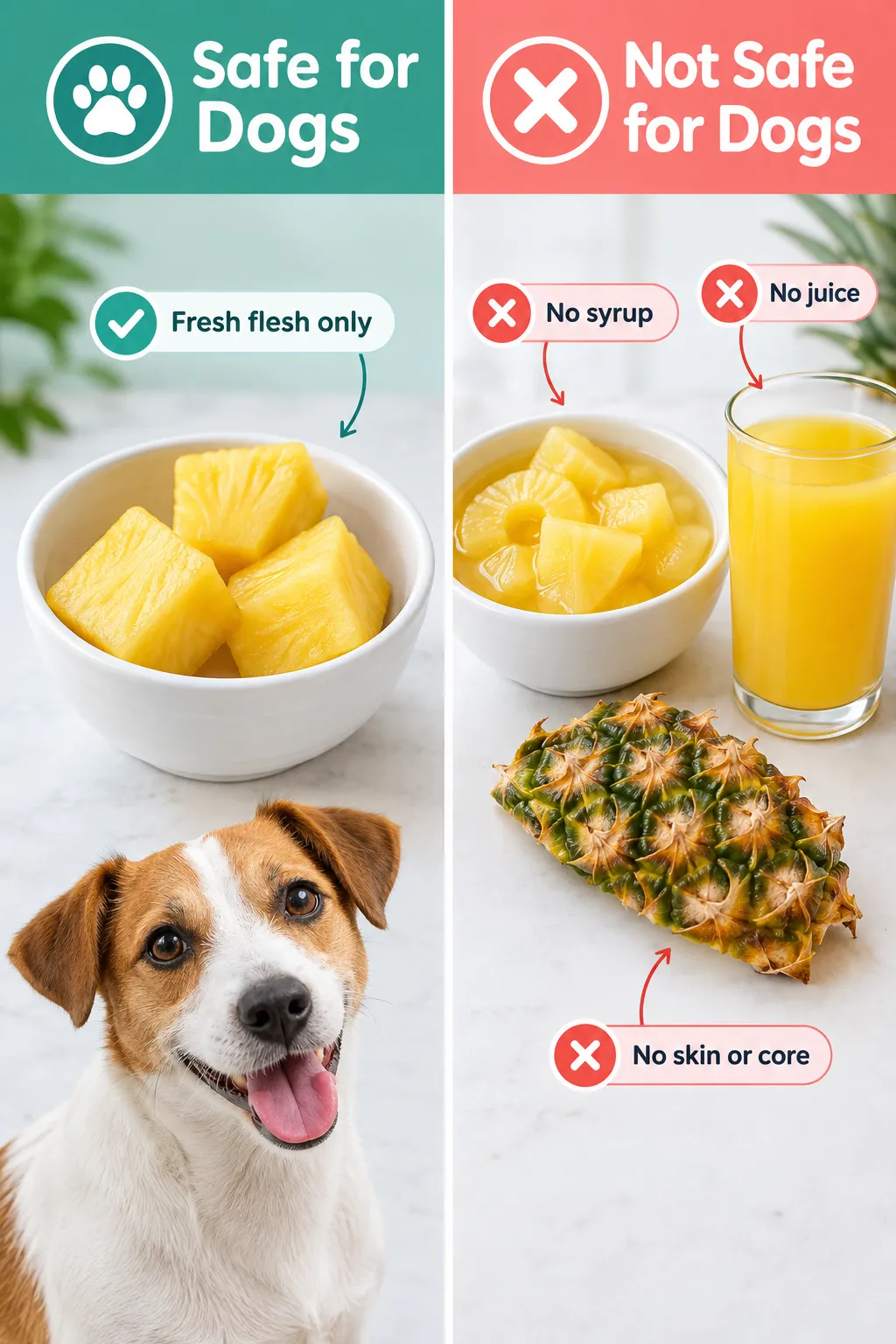
No – canned pineapple is not recommended for dogs. Even varieties labeled “in natural juice” or “no added sugar” tend to have significantly higher sugar content than fresh pineapple, because the canning process concentrates the fruit’s natural sugars.
The risks of canned pineapple for dogs:
- High sugar load – can contribute to weight gain and blood sugar spikes
- Preservatives and additives – some canned products contain ingredients that are not dog-friendly
- Syrup-packed versions – these are especially dangerous and should never be given to dogs
Stick to fresh, raw pineapple flesh only. It is the safest and most nutritious form for your dog.
Can Puppies Have Pineapple?
Puppies can technically have a very small amount of fresh pineapple flesh, but it is best to wait until they are older and their digestive systems are more developed.
Petfinder’s dog feeding resource advises extra caution with puppies, toy breeds, and senior dogs. Their digestive systems are more sensitive, and even a small amount of high-fiber, high-sugar fruit can cause stomach upset.
If you do offer pineapple to a puppy:
- Wait until at least 3-4 months of age
- Offer only one tiny piece (smaller than a pea for small breeds)
- Watch closely for any reaction
- Check with your vet first if you are unsure
For more on feeding young dogs safely, the pitbull puppy feeding schedule and 7 feeding mistakes guide covers portion principles that apply broadly to puppies of all breeds.
Does Pineapple Help with Dog Breath?
This is a popular claim, but the evidence is limited. The idea is that bromelain in pineapple may help break down proteins that contribute to bad breath, and that the fruit’s acidity might reduce odor-causing bacteria.
In practice, pineapple is not a reliable or consistent solution for dog breath. If your dog has persistent bad breath, the cause is usually dental disease, not diet – and pineapple will not fix that.
For real breath improvement, regular tooth brushing is the most effective approach. Check out how to brush your dog’s teeth – 5 easy hacks for practical tips. You can also look at how to remove tartar from dogs teeth for a deeper clean routine.
Pineapple can be a tasty treat, but do not rely on it as a dental hygiene tool.
What Fruits Are Better for Dogs Than Pineapple?
Pineapple is a fine occasional treat, but several other fruits are lower in sugar and equally safe – making them better everyday options for dogs.
| Fruit | Key Benefit | Sugar Level | Notes |
|---|---|---|---|
| Blueberries | Antioxidants | Low | Great everyday snack |
| Watermelon | Hydration | Low-moderate | Remove seeds and rind |
| Apples | Fiber, vitamins | Moderate | Remove core and seeds |
| Strawberries | Vitamin C | Low-moderate | Remove tops, slice small |
| Bananas | Potassium | Moderate-high | Occasional only |
| Pineapple | Bromelain, hydration | Moderate-high | Occasional treat only |
For a deeper look at safe fruit options, can dogs eat strawberries – 9 sweet feeding rules is a great companion read.
What Happens If a Dog Eats Too Much Pineapple?
If a dog eats too much pineapple in one sitting, expect digestive upset – usually within a few hours. The high sugar and fiber content can overwhelm a dog’s gut quickly.
Short-term effects of overeating pineapple:
- Diarrhea or very loose stools
- Vomiting
- Gas and bloating
- Stomach pain or restlessness
In most cases, symptoms resolve within 12-24 hours if no more pineapple is given and the dog has access to fresh water. If symptoms persist beyond 24 hours or are severe, contact your vet.
Long-term overfeeding risks include weight gain, elevated blood sugar (especially concerning for dogs prone to diabetes), and dental erosion from the fruit’s natural acids.
Can Dogs With Allergies Have Pineapple?
Dogs with known food allergies can sometimes have pineapple, but it depends on the specific allergy. Pineapple is not a common allergen for dogs, but individual reactions are always possible.
Hill’s Pet Nutrition advises checking with your vet before introducing any new food to a dog with a history of allergies or digestive sensitivities. Signs of an allergic reaction to watch for include:
- Itching or skin redness
- Swelling around the face or mouth
- Hives
- Vomiting or diarrhea shortly after eating
If your dog scratches frequently or has unexplained skin issues, read why do dogs scratch all the time to help identify whether food could be a trigger.
Dogs with diabetes, pancreatitis, or other metabolic conditions should not have pineapple without explicit vet approval, due to the fruit’s natural sugar content.
Is Frozen Pineapple Safe for Dogs?
Yes – frozen pineapple is safe for dogs, as long as it is plain frozen flesh with no added sugar, syrup, or flavorings. In fact, frozen pineapple cubes can be a refreshing summer treat.
A few things to keep in mind:
- Freeze only fresh, peeled, cored pineapple flesh
- Keep pieces small to avoid a choking hazard, especially for small dogs
- Do not use store-bought frozen pineapple blends that may contain other fruits or sweeteners
- Let very hard frozen pieces thaw slightly for puppies, seniors, or dogs with dental issues
Frozen fruit treats are a fun way to keep dogs cool. For more hydrating treat ideas, check out 7 water bowl alternatives and hydrating treats for dogs.
FAQ
Can dogs eat pineapple every day?
No. Pineapple is high in natural sugar and should be an occasional treat – a couple of times a week at most for healthy adult dogs. Daily feeding increases the risk of weight gain and digestive upset.
How much pineapple can I give my dog?
For a medium-sized dog (30-50 lbs), two to three small cubes per serving is a safe amount. Smaller dogs should get one small cube or less. Always stay within the 10% daily calorie treat limit.
Can dogs eat pineapple leaves?
No. The leaves and crown are fibrous, rough, and not digestible. They pose a choking risk and offer no nutritional benefit to dogs.
Is pineapple juice safe for dogs?
No. Pineapple juice is highly concentrated in sugar and citric acid. Even a small amount can cause stomach upset. Fresh water is always the better choice.
Can pineapple cause diarrhea in dogs?
Yes, it can – especially if given in large amounts or introduced too quickly. The natural sugar and fiber in pineapple can loosen stools. Start with one small piece and monitor your dog’s response.
Does pineapple stop dogs from eating poop?
This is a popular home remedy, but scientific evidence supporting it is very limited. Some owners report success, but it does not work consistently. For more on this behavior, see why do dogs eat poop – 7 surprising reasons.
Can senior dogs have pineapple?
In very small amounts, yes – but with extra caution. Senior dogs often have more sensitive digestion and may have underlying health conditions. Check with your vet first and offer only a tiny piece.
What should I do if my dog ate a lot of pineapple?
Monitor for vomiting, diarrhea, or discomfort. Offer fresh water and withhold food for a few hours if the stomach seems upset. If symptoms are severe or last more than 24 hours, call your vet.
Can dogs eat pineapple upside-down cake or pizza with pineapple?
No. Baked goods and pizza toppings contain ingredients like sugar, butter, onion, and garlic that are harmful to dogs. Only plain, fresh pineapple flesh is safe.
Is bromelain in pineapple good for dogs?
Bromelain is a natural enzyme that may support protein digestion and has mild anti-inflammatory properties. The amounts in a few pineapple cubes are small, but not harmful – and potentially mildly beneficial.
Conclusion
So, can dogs have pineapple? Absolutely – with the right preparation and a little restraint. Fresh pineapple flesh is a non-toxic, hydrating, and mildly nutritious treat that most healthy adult dogs can enjoy.
The five rules are simple: flesh only, small cubes, occasional servings, no canned or juice versions, and always watch your dog’s reaction the first time. Follow those, and pineapple becomes a safe and fun addition to your dog’s treat rotation.
Your next steps:
- Grab a fresh pineapple, peel it, remove the core, and cut a few small cubes
- Offer one cube to your dog and wait 24 hours before giving more
- If all goes well, add it to your occasional treat list – a couple of times a week at most
- If your dog has any health conditions, check with your vet before starting
For more guidance on what dogs can and cannot eat safely, explore what can dogs eat and not eat – essential tips for every dog owner and the secret behind 15 superfoods for dogs that vets wish every owner knew.
Your dog does not need pineapple – but they will probably love it. 🍍