
Last updated: August 29, 2026
Quick Answer: Some dogs simply won’t drink enough plain water, no matter how many times you refill the bowl. The fix is to deliver moisture through food – specifically through hydrating treats for dogs like frozen fruit cubes, bone broth ice pops, cucumber slices, and high-moisture toppers. These water bowl alternatives work because dogs eat them eagerly, even when they ignore their bowl entirely.
Key Takeaways
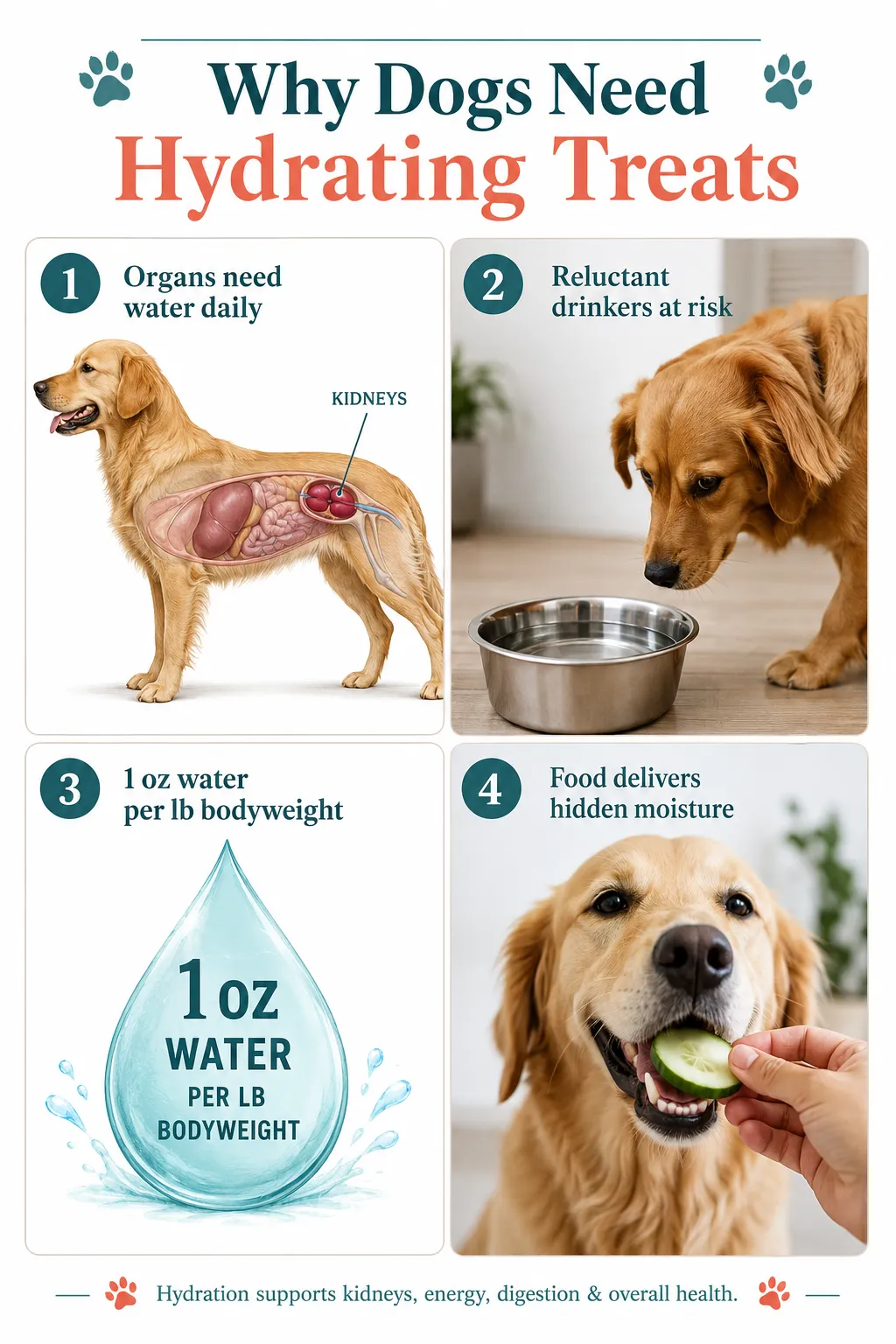
- Dogs need roughly 1 ounce of water per pound of body weight per day (estimate based on general veterinary guidance).
- Hydrating treats for dogs deliver moisture through food rather than a bowl – great for picky or reluctant drinkers.
- Frozen treats, fresh fruit slices, bone broth ice cubes, and gel pouches are all proven water bowl alternatives.
- Watermelon (about 92% water) and cucumber are among the safest, most hydrating snacks you can offer.
- Always use xylitol-free ingredients and low-sodium broths when making homemade hydrating treats.
- Senior dogs and dogs with kidney or urinary issues may need extra hydration support – check with your vet first.
- The 10% rule applies: all treats combined should stay under roughly 10% of your dog’s daily calorie intake.
- Store-bought hydration gels and high-moisture pouches are now widely available at major retailers.
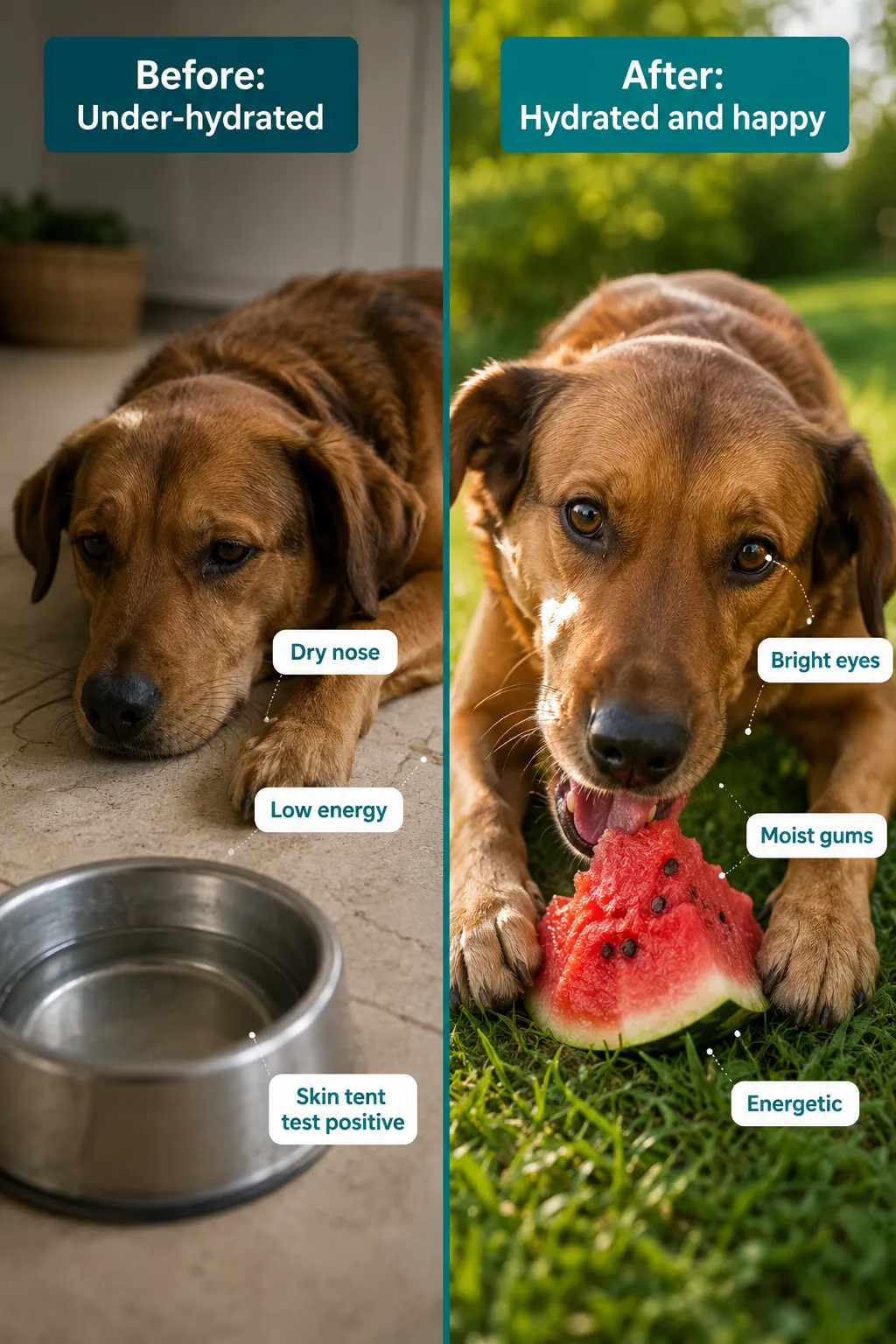
- Signs of dehydration include dry gums, skin tenting, low energy, and sunken eyes.
- Hydrating treats are a supplement to fresh water – never a full replacement.
What Are Hydrating Treats for Dogs and Why Do Dogs Need Them?
Hydrating treats for dogs are snacks, frozen items, or wet foods with a high water content – designed to add moisture to a dog’s daily intake when plain water isn’t doing the job. They matter because dehydration in dogs can cause kidney stress, low energy, and digestive problems, even when symptoms seem mild at first.
Some dogs are just stubborn drinkers. Others slow down their water intake in winter, after illness, or simply because they prefer the taste of something else. That’s where water bowl alternatives come in.
Common reasons dogs under-drink:
- Picky about water source – some dogs refuse tap water but will drink filtered.
- Dry kibble diet – kibble contains very little moisture, unlike wet food.
- Boredom or anxiety – stressed dogs often forget to drink.
- Age – senior dogs have a reduced sense of thirst.
- Post-illness recovery – nausea makes dogs avoid their bowl.
Hydrating treats for dogs solve this by sneaking moisture into something your dog actually wants to eat. According to a veterinary guide on top hydrating dog treats, options like blended watermelon with yogurt, cucumber-mint ice cubes, and pumpkin-peanut butter cubes all add real moisture while still counting as treats. The key note: they complement, not replace, access to clean drinking water.
Signs Your Dog Isn’t Drinking Enough Water
You can spot dehydration early if you know what to look for. The most reliable quick test is the skin tent check – gently pinch the skin at the back of your dog’s neck, then release. In a well-hydrated dog, the skin snaps back immediately. If it stays tented or returns slowly, your dog may be dehydrated.
Other signs to watch for:
- Dry or sticky gums (healthy gums should feel moist and slippery)
- Sunken or dull eyes
- Thick, ropy saliva
- Lethargy or low energy
- Dark yellow urine or reduced urination
- Loss of appetite
If you’re seeing several of these together, check out our article on 5 hidden signs of dehydration in dogs for a deeper breakdown. Mild dehydration can often be addressed at home with hydrating treats and fresh water. Severe dehydration needs a vet visit – don’t wait.
How Much Water Should Dogs Drink Per Day?
A commonly cited guideline is roughly 1 ounce of water per pound of body weight per day – so a 30-pound dog needs about 30 ounces, or just under 4 cups. This is an estimate, and actual needs vary based on activity level, diet, weather, and health status.
Dogs on wet food diets naturally consume more moisture through their meals and may drink less from the bowl. Dogs on dry kibble need more supplemental water.
Quick reference by weight (estimate):
| Dog Weight | Approximate Daily Water Need |
|---|---|
| 10 lbs | ~10 oz (1.25 cups) |
| 25 lbs | ~25 oz (3 cups) |
| 50 lbs | ~50 oz (6+ cups) |
| 75 lbs | ~75 oz (9+ cups) |
These are estimates only. Hot weather, exercise, and illness all increase needs. If your dog is consistently below these amounts and showing symptoms, talk to your vet.
7 Best Water Bowl Alternatives and Hydrating Treats for Dogs
These seven options work because they deliver moisture in a form dogs actually want. Each one is a practical swap for the ignored water bowl.
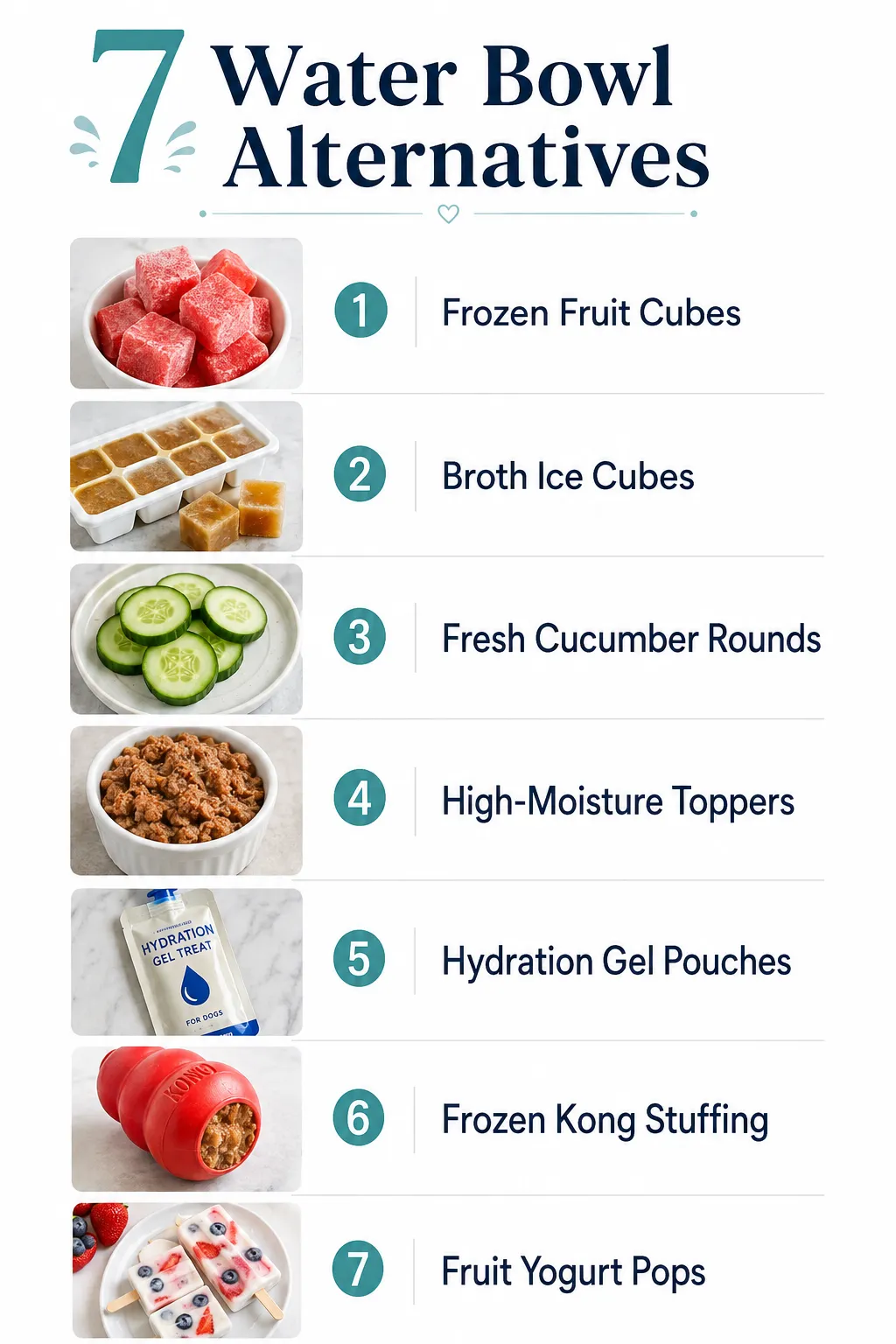
1. Frozen Watermelon Cubes
Watermelon is approximately 92% water, making it one of the most hydrating snacks you can offer, according to a spring hydration guide from a canine rehabilitation practice. Remove seeds and rind, cut into chunks, and freeze. Dogs love the cold, sweet texture.
2. Bone Broth Ice Cubes
Pour low-sodium, onion-free, garlic-free bone broth into an ice cube tray and freeze. Each cube is a small burst of flavor and fluid. These are especially popular with picky dogs who ignore plain water. You can explore our homemade bone marrow broth recipe for dogs for a vet-friendly base recipe.
3. Cucumber Rounds
Cucumber is low in calories and high in water content. Slice into rounds and serve chilled or frozen. It’s a great training reward during warm months – and most dogs enjoy the crunch.
4. High-Moisture Spoonable Treats
Products like Inaba’s Churu Terrine are specifically designed as hydrating, high-moisture dog treats – soft, lickable, and easy to serve from a dish or directly from the package. These are ideal for dogs who resist drinking but will happily lick a soft treat.
5. Hydration Gel Pouches
The 2026 Vanguard Awards spotlighted H2GO! Hydration Gel treats for dogs as a new format for delivering fluids and electrolytes in treat form. These gel-based treats appeal to reluctant drinkers and are increasingly available at major retailers.
6. Frozen Kong Stuffing
Fill a Kong toy with a mix of plain yogurt, blended fruit, and a splash of low-sodium broth. Freeze overnight. Your dog works for the treat and gets a steady flow of moisture as it melts. It doubles as enrichment for bored or restless dogs.
7. Broth-Coconut Water Pouches
Products like LYX Essential Hydration blend savory beef broth with coconut water – a natural source of electrolytes – in single-serve pouches. These “drinkable treats” are designed for dogs that ignore plain water but respond to flavor.
Are Watermelon and Cucumber Safe Hydrating Treats for Dogs?
Yes – both watermelon and cucumber are safe for most dogs when prepared correctly. Watermelon should be served seedless and without the rind (the rind can cause digestive upset). Cucumber should be plain, unpeeled or peeled, and sliced into manageable pieces to avoid choking.
Neither contains anything toxic to dogs. Both are low in calories and high in water content, making them two of the easiest and most affordable hydrating treats for dogs you can offer.
Avoid: Pickled cucumber (too much sodium), watermelon with seeds left in, or any fruit prepared with added sugar, salt, or spices.
If you’re curious about other safe fruits, our guide on what dogs can eat and not eat covers a wide range of options.
Can Frozen Treats Help Dogs Stay Hydrated?
Yes – frozen treats are one of the most effective water bowl alternatives, especially in warm weather. According to veterinary guidance on frozen treats in hot weather, dog-friendly fruits like blueberries and watermelon, plain yogurt, and xylitol-free peanut butter can all be used to make safe frozen hydrating treats. New foods should be introduced gradually to avoid stomach upset.
A UK veterinary clinic also confirms that ice cubes in bowls, frozen stuffed Kongs, and homemade frozen treats are considered acceptable by major animal welfare organizations, with one caution: avoid very hard ice for small dogs or dogs with dental issues. Crushed or shaved ice is safer.
One important safety note: frozen treats are for hydration and enrichment, not for cooling down a dog in heatstroke. If your dog shows signs of heatstroke, skip the ice and go straight to the vet.
Homemade Hydrating Dog Treat Recipes
Making your own hydrating treats at home is simple, affordable, and lets you control every ingredient. These five recipes are vet-friendly and easy to prepare.
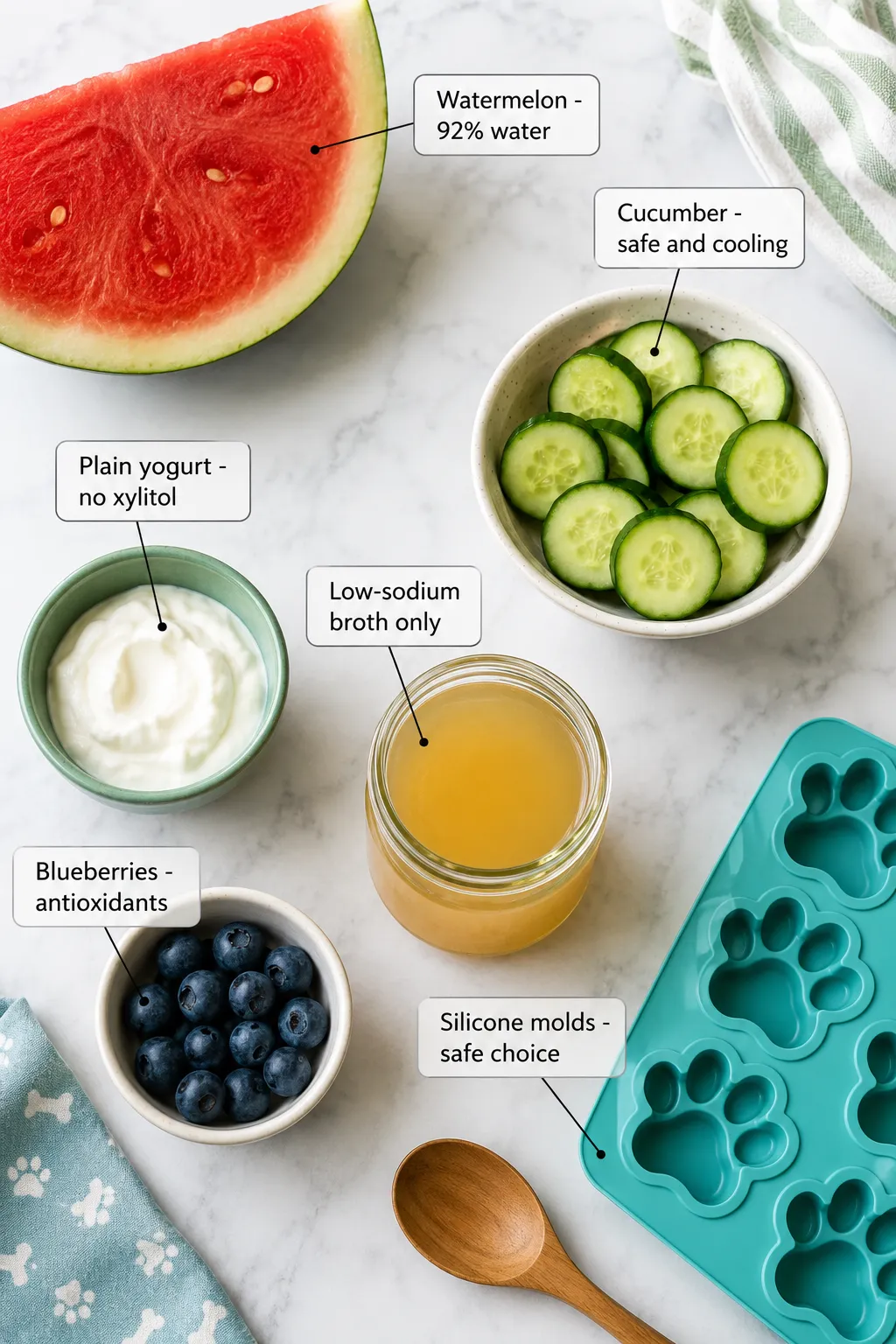
1. Watermelon-Yogurt Pops
Blend seedless watermelon with a spoonful of plain, xylitol-free yogurt. Pour into silicone paw molds and freeze. Serve one at a time.
2. Cucumber-Mint Ice Cubes
Blend cucumber with a few fresh mint leaves and water. Pour into an ice cube tray and freeze. The mint adds a fresh scent dogs seem to enjoy.
3. Pumpkin-Peanut Butter Cubes
Mix plain canned pumpkin (not pie filling) with xylitol-free peanut butter and a little water. Freeze in small portions. Pumpkin also supports digestion.
4. Berry Water Cubes
Drop a few blueberries or strawberries into an ice cube tray, fill with water, and freeze. Simple, fast, and dogs love fishing out the berries as the ice melts.
5. Apple-Carrot Slush
Blend apple (no seeds or core) with carrot and water into a thin slush. Freeze in small cups. You can also check out our beef and apple stew for dogs for a warm-weather variation.
Safety reminder: Never use broths with added salt, garlic, onion, or chives. These are toxic or harmful to dogs, even in small amounts.
Hydrating Dog Treats vs. Regular Treats – What’s the Difference?
Regular dog treats are primarily designed for taste, training rewards, or dental benefits. Most are dry, baked, or semi-moist with low water content. Hydrating treats for dogs, by contrast, are specifically formulated or chosen for their high moisture content – they deliver both flavor and fluid.
| Feature | Regular Treats | Hydrating Treats |
|---|---|---|
| Water content | Low (under 15%) | High (50-92%) |
| Primary purpose | Reward, training | Moisture + reward |
| Best for | Any dog | Reluctant drinkers, seniors |
| Format | Biscuits, chews | Frozen, gel, fresh fruit |
By 2026, KibbleLab’s updated rankings of hydration-support dog treats reflect a growing category of treats specifically marketed to support moisture intake – a sign the market has matured enough to treat hydration as a distinct functional benefit.
Do Senior Dogs Need More Hydrating Treats?
Senior dogs are at higher risk of dehydration because their sense of thirst naturally decreases with age. They may also be on medications that affect fluid balance, or dealing with conditions like kidney disease that make hydration especially important.
For older dogs, hydrating treats are less of a bonus and more of a daily strategy. Soft, easy-to-chew options like high-moisture toppers, warm bone broth ice cubes (served slightly thawed), and spoonable gel treats work better than hard frozen chunks that could stress aging teeth.
If your senior dog has kidney disease or urinary issues, always check with your vet before introducing new treats. Some fruits and broths contain potassium or phosphorus levels that need to be managed carefully for dogs with compromised kidney function.
Are Store-Bought Hydrating Dog Treats Worth It, or Should You Make Them at Home?
Both options work – the best choice depends on your time, budget, and your dog’s preferences.
Choose store-bought if:
- You want consistent nutrition labeling and quality control.
- Your dog is picky and responds better to commercially formulated flavors.
- You need a portable, mess-free option for travel or outings.
Make them at home if:
- You want full control over ingredients (especially important for dogs with allergies or kidney issues).
- You’re on a budget – frozen fruit and broth ice cubes cost almost nothing.
- Your dog has dietary restrictions that limit commercial options.
A good middle ground: use store-bought hydration gels or pouches for convenience, and supplement with homemade frozen treats at home. Our chicken bone broth gummies for dogs recipe is a great starting point if you want something easy and homemade.
How Often Should You Give Dogs Hydrating Treats?
Veterinarian Dr. Woodley recommends the 10% rule for all treats combined – meaning treats should not exceed about 10% of your dog’s daily calorie intake. For an average medium-sized dog, that often translates to one to two small hydrating treats per day.
For dogs that are actively under-drinking, you can offer hydrating treats more strategically:
- Morning: One frozen fruit cube alongside breakfast.
- Midday: A slice of cucumber or a broth ice cube as a training reward.
- Afternoon (hot days): A frozen Kong or watermelon chunk during rest time.
This approach spreads moisture delivery throughout the day without overloading on calories or sugar from fruit.
Can Picky Dogs Eat Hydrating Treats?
Yes – and picky dogs are often the best candidates for hydrating treats. The key is finding the right texture and flavor. Some picky dogs won’t touch a frozen cube but will eagerly lick a soft spoonable treat. Others go wild for watermelon but ignore cucumber.
Tips for picky eaters:
- Start with strong-smelling options like bone broth ice cubes.
- Offer treats slightly thawed rather than rock-solid frozen.
- Try different textures – some dogs prefer gel pouches over frozen chunks.
- Mix a small amount of a known favorite (like peanut butter) into a new hydrating treat to build acceptance.
Hydrating Treats for Dogs With Kidney Disease or Urinary Issues
Dogs with kidney disease or urinary problems need extra hydration, but they also need careful ingredient management. High-potassium fruits like bananas may need to be limited. Phosphorus levels in broths can be a concern for dogs with advanced kidney disease.
Safe general options for most dogs with urinary issues include:
- Plain water ice cubes (simplest and safest).
- Cucumber slices (low in everything problematic).
- Diluted, unseasoned, low-sodium chicken or beef broth ice cubes.
Always get your vet’s sign-off before introducing new treats for a dog managing a health condition. What works for a healthy dog may not suit a dog on a therapeutic diet.
FAQ
Q: Can I give my dog ice cubes as a water bowl alternative?
Yes. FirstVet confirms that dogs can eat ice in moderation, and crushed or shaved ice is especially safe for small dogs. Add ice to the water bowl or offer ice chips as a treat during hot weather.
Q: Is watermelon really 92% water?
Yes, watermelon is approximately 92% water by weight, making it one of the most hydrating fruits you can offer a dog. Always remove seeds and rind before serving.
Q: What fruits are safe hydrating treats for dogs?
Watermelon (seedless), cucumber, blueberries, strawberries, and apple (no seeds or core) are all safe options. Avoid grapes, raisins, and any fruit with added sugar or seasoning.
Q: Can I use regular popsicle molds to make dog treats?
Use silicone molds rather than plastic ones with wrappers a dog could ingest. Paw-shaped or bone-shaped silicone molds are widely available and easy to use.
Q: How do I know if my dog is dehydrated?
The skin tent test is the quickest check – pinch the skin at the back of the neck and release. If it doesn’t snap back immediately, your dog may be dehydrated. Dry gums, sunken eyes, and low energy are also warning signs.
Q: Are commercial hydration gels safe for dogs?
Yes, when purchased from reputable brands and used as directed. Products recognized in industry awards like the Vanguard Awards are vetted for safety and efficacy. Always check the ingredient list for anything toxic.
Q: Can puppies have hydrating treats?
Yes, in small amounts and with simple ingredients. Avoid anything with added salt, sugar, or artificial sweeteners. Plain frozen fruit and diluted broth ice cubes are the safest starting points.
Q: What’s the biggest mistake people make with hydrating treats?
Using broths that contain garlic, onion, chives, or added salt. These ingredients are toxic or harmful to dogs even in small quantities. Always use plain, unseasoned, low-sodium broth.
Q: Do hydrating treats replace the water bowl?
No. Hydrating treats supplement water intake but should never replace free access to clean, fresh drinking water. Always keep a fresh bowl available.
Q: How long can I store homemade frozen dog treats?
Most homemade frozen treats stay fresh in a sealed container in the freezer for up to two weeks. Label them with the date and discard anything that looks or smells off.
Conclusion
If your dog barely glances at the water bowl, you don’t have to fight that battle every day. Hydrating treats for dogs give you a practical, enjoyable way to boost moisture intake without the stress.
Start simple: freeze some watermelon chunks this week, or drop a few blueberries into an ice cube tray with water. If your dog responds well, layer in bone broth ice cubes, cucumber rounds, or a commercial hydration gel pouch for variety.
Actionable next steps:
- Do the skin tent test today to check your dog’s current hydration level.
- Pick one recipe from this article and make a batch this week.
- Track how much your dog drinks over three days to establish a baseline.
- If your dog is a senior or has a health condition, run your hydration plan by your vet before adding new treats.
- Keep fresh water available at all times – hydrating treats are a supplement, not a substitute.
Small changes add up. A frozen cucumber round here, a broth ice cube there, and your reluctant drinker might just stay healthier than you expected.