
Last updated: September 3, 2026
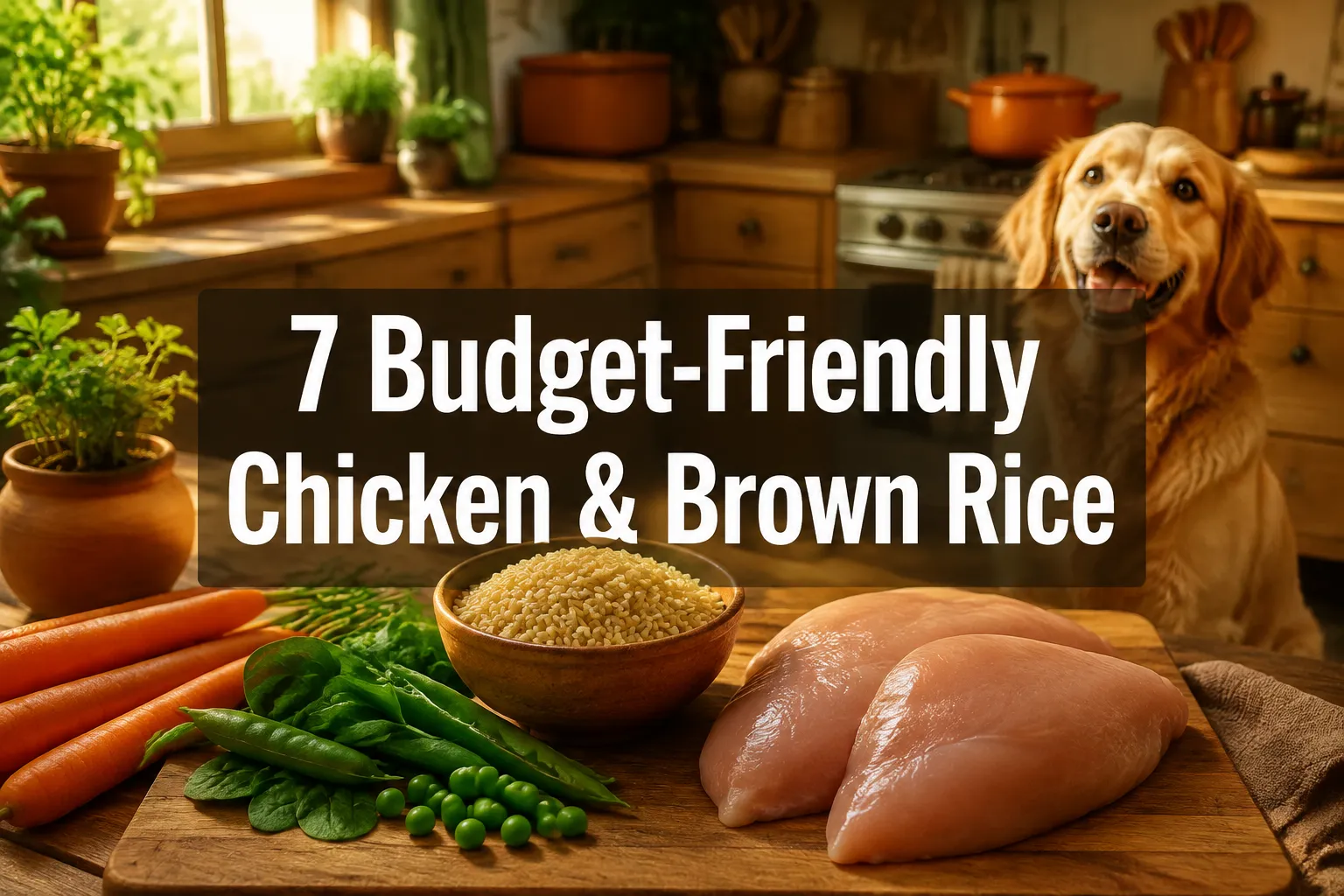
Quick Answer: Homemade dog food recipes with chicken and brown rice are one of the most affordable ways to feed your dog real, whole ingredients – often costing less per meal than premium commercial kibble. A basic batch uses 1-2 pounds of chicken, 2 cups of brown rice, and budget vegetables like carrots and peas. Always add a vet-recommended supplement to fill nutritional gaps, and consult your vet before making homemade food a long-term staple.
Key Takeaways
- Chicken and brown rice homemade dog food recipes can cost significantly less per meal than premium commercial dog food when bought in bulk.
- A basic recipe needs just chicken breast or ground chicken, brown rice, and safe vegetables like carrots, peas, and spinach.
- Brown rice is slightly more nutritious than white rice for dogs – it has more fiber and a lower glycemic index.
- Simple chicken-and-rice mixtures are NOT nutritionally complete on their own. You must add a vitamin/mineral supplement.
- You can batch-cook and freeze individual portions for up to 3 months, making one cooking session feed your dog for weeks.
- Transition your dog slowly – mix 25% homemade food with 75% current food and increase over 7-10 days.
- Puppies, pregnant dogs, and dogs with medical conditions need a vet-formulated recipe, not a generic one.
- Always remove chicken skin, bones, and visible fat before cooking.
- Safe add-in vegetables include carrots, peas, green beans, zucchini, and spinach. Avoid onion, garlic, and grapes.
- Check in with your vet every 3-6 months to monitor your dog’s weight, coat, and bloodwork.
What Are the Health Benefits of Homemade Dog Food With Chicken and Brown Rice?
Homemade chicken and brown rice dog food gives you full control over ingredients – no fillers, no artificial preservatives, and no mystery proteins. Chicken is a lean, highly digestible protein source, and brown rice provides steady energy through complex carbohydrates.
Here are the main benefits dog owners notice:
- Lean protein from chicken supports muscle maintenance and healthy weight.
- Brown rice provides B vitamins, magnesium, and fiber that support digestion.
- Fresh vegetables add antioxidants, vitamins, and variety.
- No artificial additives – you know exactly what goes in the bowl.
- Easier digestion for many dogs, especially those with mild food sensitivities.
Chicken and rice are also the classic bland diet vets recommend for dogs with an upset stomach. According to WikiHow’s guide on preparing chicken and rice for dogs, a 1:2 ratio of chicken to rice, fed in small amounts every two hours, can help settle GI distress.
That said, health benefits depend heavily on recipe balance. A plain chicken-rice mix without supplements is not a complete diet for long-term feeding.
Is Homemade Dog Food Cheaper Than Commercial Dog Food?
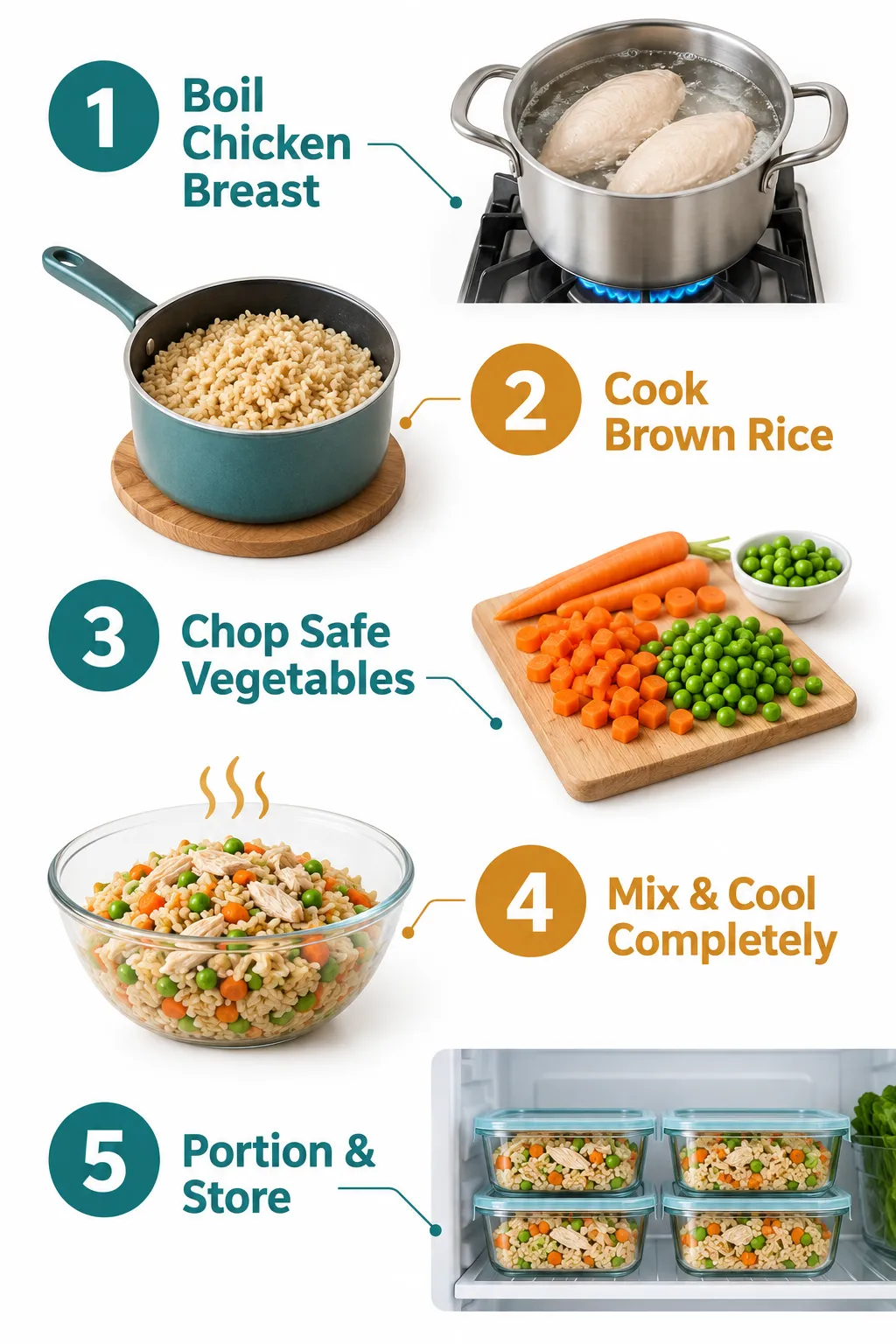
Yes – for most dog owners, homemade dog food recipes with chicken and brown rice cost less per serving than premium commercial brands, especially when you buy ingredients in bulk.
A rough comparison:
| Meal Type | Estimated Cost Per Day (Medium Dog) |
|---|---|
| Premium dry kibble | Higher end, varies by brand |
| Homemade chicken & brown rice | Lower when bought in bulk |
| Fresh delivery meal services | Typically highest cost |
Buying chicken in bulk, using store-brand brown rice, and adding low-cost vegetables like frozen peas and carrots keeps the grocery bill low. Check out homemade dog food recipes on a budget for more money-saving strategies.
One important note: the cost of a vet-approved supplement needs to be factored in. Without it, you’re saving money but potentially creating a nutritional gap.
7 Budget-Friendly Homemade Dog Food Recipes Chicken Brown Rice
These recipes use simple, affordable ingredients. Each one feeds a medium-sized dog (about 30-50 lbs) for approximately 2-3 days. Scale up or down based on your dog’s size.
Recipe 1 – Classic Chicken & Brown Rice
Ingredients:
- 1.5 lbs boneless, skinless chicken breast
- 2 cups brown rice (dry)
- 1 cup frozen peas
- 1 cup diced carrots
- 4 cups water
Instructions: Boil chicken for 20 minutes until fully cooked. Shred and remove all bones. Cook rice separately. Combine with vegetables and cool completely before serving. Add your vet-recommended vitamin supplement after cooling.
Recipe 2 – Ground Chicken Veggie Bowl
Ingredients:
- 1.5 lbs lean ground chicken
- 2 cups cooked brown rice
- 1 cup spinach (chopped)
- 1/2 cup zucchini (diced)
- 1 tbsp fish oil (added after cooking)
Instructions: Brown ground chicken in a pan with no oil. Add vegetables and cook until soft. Mix in cooked rice. Cool, then stir in fish oil. The fish oil adds omega-3 fatty acids that support skin, coat, and joint health.
Recipe 3 – Slow Cooker Chicken & Rice
This is the best recipe for batch cooking. According to Kinship’s crockpot chicken brown rice guide, simmering chicken, brown rice, and vegetables on low for 6-8 hours produces a large, tender batch with minimal active cooking time.
Ingredients:
- 2 lbs chicken thighs (skinless, boneless)
- 2.5 cups brown rice
- 1 cup green beans
- 1 cup diced carrots
- 5 cups water or low-sodium broth
Instructions: Add all ingredients to the crockpot. Cook on low 6-8 hours. Shred chicken, stir, cool, and portion into containers.
For more slow cooker ideas, see these vet-approved crockpot dog food recipes.
Recipe 4 – Weight Management Bowl
For overweight dogs, this lower-calorie version uses equal parts cooked brown rice and cooked carrots with lean chicken breast. The high fiber content keeps dogs feeling full. Always add a vitamin supplement to maintain adequacy.
Recipe 5 – Chicken, Rice & Egg Protein Boost
Add 1-2 scrambled eggs (no butter or salt) to the basic chicken and rice recipe. Eggs add protein and healthy fat. This works well for active or working dogs needing extra energy.
Recipe 6 – Chicken & Rice with Flaxseed Oil
Swap fish oil for flaxseed oil if your dog dislikes the fish smell. Use 1 teaspoon per cup of food. Flaxseed oil provides plant-based omega-3s and supports a healthy coat.
Recipe 7 – Simple Chicken, Rice & Pumpkin Blend
Add 1/4 cup of plain canned pumpkin (not pie filling) to the basic recipe. Pumpkin is high in fiber and great for dogs with loose stools or constipation. This is one of the most budget-friendly add-ins available.
What Vegetables Can I Add to Chicken and Brown Rice Dog Food?
Safe, affordable vegetables make these recipes more nutritious without adding much cost. The best options are:
- ✅ Carrots – cheap, high in beta-carotene
- ✅ Peas (frozen, no salt added) – protein and fiber
- ✅ Green beans – low calorie, filling
- ✅ Zucchini – mild, easy to digest
- ✅ Spinach – iron and vitamins (use in small amounts)
- ✅ Plain pumpkin – fiber and digestion support
Avoid these completely:
- ❌ Onions and garlic – toxic to dogs
- ❌ Grapes and raisins – toxic
- ❌ Corn on the cob – choking hazard
- ❌ Frozen vegetables with added salt or seasonings
For a full list of what to keep away from your dog, see 15 everyday foods that can kill your dog.
Do I Need to Add Supplements to Homemade Dog Food Recipes?
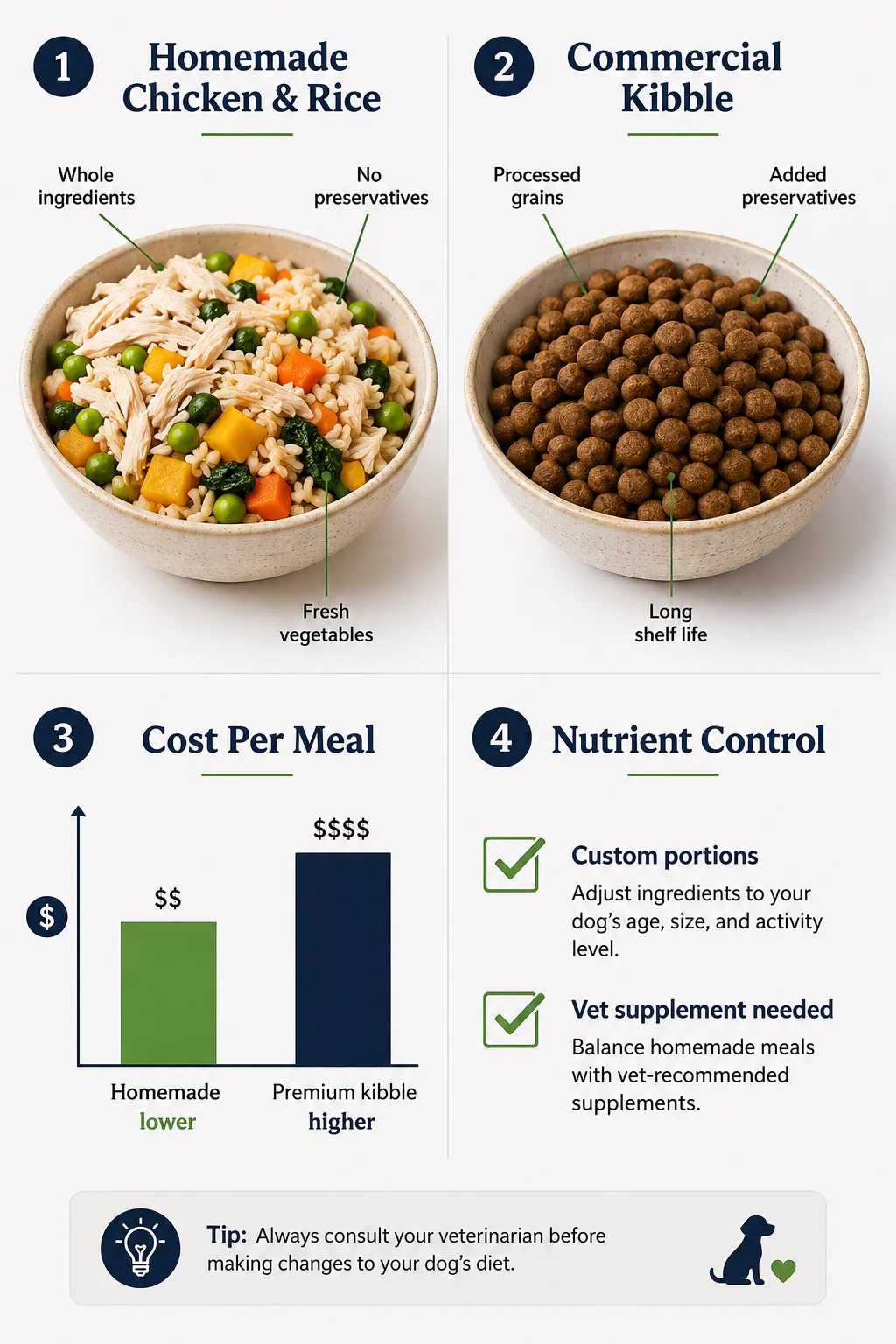
Yes – this is one of the most important things to understand. A plain chicken and brown rice mixture is not nutritionally complete on its own.
According to a nutrient checklist for homemade dog food, dogs need at least 45g of protein per 1,000 kcal, a calcium-to-phosphorus ratio between 1:1 and 2:1, and at least 110mg of omega-3 per 1,000 kcal. Basic chicken-rice recipes rarely hit these targets without added supplements.
An evidence review from the Pet Evidence Project gives home-cooked diets a grade of F for nutritional completeness when used alone – but an A when the recipe is formulated or reviewed by a board-certified veterinary nutritionist and followed exactly.
What to add:
- A vet-recommended vitamin/mineral premix
- Fish oil or flaxseed oil for omega-3s
- Calcium source (if not using bone meal) – plain eggshell powder is a budget option
Always ask your vet which supplement fits your dog’s specific needs.
Is Brown Rice Better Than White Rice for Dogs?
Brown rice is slightly better than white rice for dogs in most situations. It has more fiber, more B vitamins, and a lower glycemic index – meaning it causes a slower rise in blood sugar.
White rice is easier to digest, which makes it the better choice when your dog has an upset stomach or diarrhea. For everyday feeding in healthy dogs, brown rice is the stronger nutritional choice.
Choose brown rice if: your dog is healthy, at a healthy weight, and eating homemade food regularly.
Choose white rice if: your dog has GI upset, diarrhea, or is recovering from illness.
How Much Chicken and Brown Rice Should I Feed My Dog Per Day?
The right amount depends on your dog’s weight, age, and activity level. A general starting point is feeding about 2-3% of your dog’s body weight per day in total food.
For a 30-pound dog, that’s roughly 10-14 oz of food per day, split into two meals.
For detailed daily feeding guidance, see how much food should I feed my dog daily.
Important: Homemade food is often less calorie-dense than kibble. Weigh your dog monthly and adjust portions if they’re losing or gaining unexpectedly.
Can I Make a Month’s Worth of Dog Food and Freeze It?
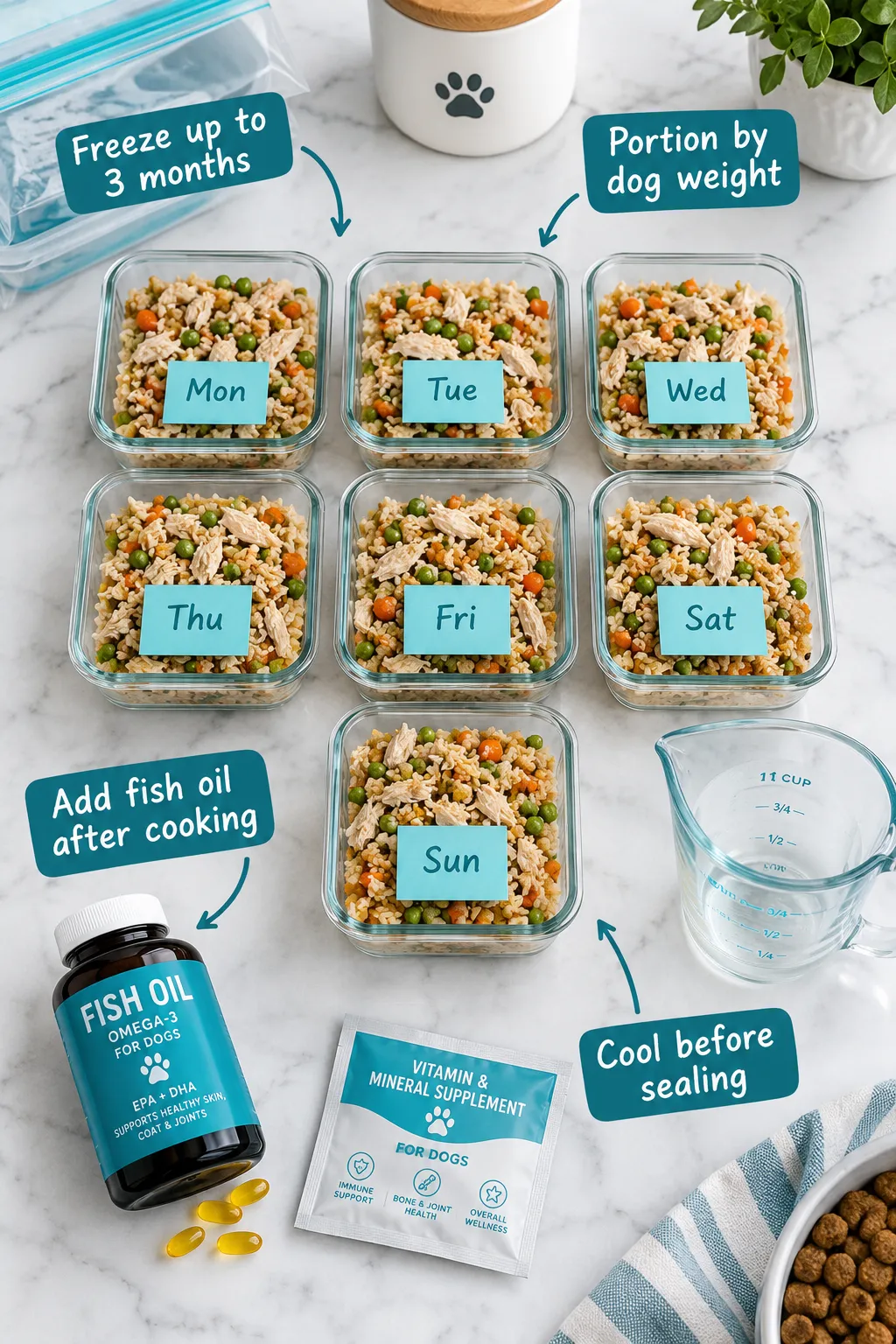
Yes – batch cooking and freezing is one of the best ways to save both time and money with homemade dog food recipes.
Storage guidelines:
- Refrigerator: 3-4 days in an airtight container
- Freezer: up to 3 months in portioned containers or zip-lock bags
According to Princess Pinky Girl’s homemade dog food guide, portioning food before freezing makes daily feeding much easier – just thaw overnight in the fridge.
Tips for freezing:
- Use silicone molds or muffin tins to freeze single-serving portions
- Label containers with the date
- Never refreeze food that has already been thawed
- Always cool food completely before freezing
Can Dogs With Allergies Eat Chicken and Brown Rice?
Chicken and brown rice are actually among the most common proteins and grains used in elimination diets for dogs with food allergies – but that’s also why some dogs develop sensitivities to them.
If your dog has never eaten chicken before, it’s a good “novel protein” option for allergy testing. But if your dog has been eating chicken-based kibble for years and still has skin issues or GI problems, chicken may be the allergen.
For dogs with confirmed chicken allergies, try these alternatives: turkey, salmon, or venison with brown rice. See 7 homemade dog food recipes for a sensitive stomach for more allergy-friendly options.
Rule of thumb: If your dog is itchy, has chronic ear infections, or has ongoing GI issues, talk to your vet before switching to any homemade diet.
What Are Common Mistakes When Making Homemade Dog Food?
Most mistakes come from good intentions but incomplete information. Here are the most common ones:
- Skipping supplements – The single biggest mistake. Plain chicken and rice is not complete nutrition.
- Using seasoned or salted ingredients – No garlic, onion, salt, or spices. Ever.
- Feeding food that’s still warm – Always cool completely to avoid bacterial growth.
- Not removing all bones – Even small cooked chicken bones are a choking and splintering hazard.
- Making it the only food without vet guidance – Especially risky for puppies and seniors.
- Not adjusting portions over time – Dogs’ needs change with age, weight, and activity.
For more guidance on what to avoid, the Pups Gourmet Kitchen chicken and rice recipes page covers safety steps in detail.
How Do I Transition My Dog to Homemade Food Without Upsetting Their Stomach?
Switching food too fast is a guaranteed way to cause diarrhea or vomiting. A slow transition over 7-10 days works best for most dogs.
Transition schedule:
- Days 1-3: 25% homemade, 75% current food
- Days 4-6: 50% homemade, 50% current food
- Days 7-9: 75% homemade, 25% current food
- Day 10+: 100% homemade (if vet-approved)
Watch for loose stools, vomiting, or changes in energy. If any of these appear, slow the transition down further.
Is Chicken and Brown Rice Safe for All Dog Breeds and Ages?
For healthy adult dogs of any breed, chicken and brown rice is generally safe as part of a balanced, supplemented diet.
Special considerations:
- Puppies need higher levels of calcium, phosphorus, and DHA. Generic recipes are not adequate. See fresh puppy food recipes for age-appropriate options.
- Senior dogs may need softer food and adjusted protein levels. Check out homemade dog food for senior dogs.
- Large breeds need careful calcium-to-phosphorus balance to protect joint health.
- Dogs with kidney disease may need lower protein – always consult a vet first.
How Do I Know If My Dog Is Getting Enough Nutrients From Homemade Food?
Watch for these signs that your dog is thriving on homemade food:
- ✅ Shiny, soft coat
- ✅ Consistent energy levels
- ✅ Firm, regular stools
- ✅ Healthy weight (you can feel but not see ribs)
- ✅ Clear eyes and clean ears
Warning signs of nutritional gaps:
- ❌ Dull or thinning coat
- ❌ Lethargy or weakness
- ❌ Loose stools consistently
- ❌ Weight loss or gain without explanation
Schedule a vet checkup every 3-6 months, including bloodwork, when feeding homemade food long-term. A vet can catch deficiencies before they become serious problems.

FAQ
Can I feed my dog chicken and brown rice every day?
Yes, but only if the recipe includes a complete vitamin/mineral supplement. Plain chicken and rice alone is not nutritionally complete for daily long-term feeding.
How long does homemade chicken and rice dog food last in the fridge?
3-4 days in an airtight container. For longer storage, freeze in individual portions for up to 3 months.
Do I cook the chicken before mixing it with rice?
Yes. Always cook chicken fully – about 20 minutes of boiling for chicken breasts – until no pink remains. Never feed raw chicken without specific raw diet guidance from a vet.
Can I use chicken thighs instead of chicken breast?
Yes. Thighs are often cheaper and still lean enough for most dogs. Remove the skin and any visible fat before cooking.
What ratio of chicken to rice should I use?
A good starting ratio is roughly 1 part chicken to 2 parts cooked rice, plus vegetables making up about 10-15% of the total. Adjust based on your dog’s protein needs.
Is canned chicken okay for homemade dog food?
Plain, unsalted canned chicken works in a pinch. Avoid any canned chicken with added salt, broth, or seasonings.
Can I add eggs to chicken and brown rice dog food?
Yes. Plain scrambled or hard-boiled eggs (no butter, no salt) are a great protein and fat boost. One egg per serving is plenty for a medium-sized dog.
My dog won’t eat the homemade food. What should I do?
Try warming it slightly to release the aroma, or mix a small amount of low-sodium chicken broth on top. Some dogs take a few days to adjust to new textures.
Do I need a vet’s approval to start making homemade dog food?
It’s strongly recommended, especially for long-term feeding. A vet or veterinary nutritionist can confirm your recipe is balanced for your specific dog’s age, weight, and health status.
Is homemade dog food safe for pregnant dogs?
Pregnant and lactating dogs have significantly higher nutritional demands. A generic recipe is not sufficient – consult a veterinary nutritionist for a specifically formulated plan.
Can I add sweet potato instead of brown rice?
Yes. Sweet potato is a nutritious, budget-friendly carbohydrate alternative. It’s high in fiber and beta-carotene. Use it in similar proportions to rice.
What’s the best way to add calcium to homemade dog food?
Clean, dried eggshell powder is a budget-friendly calcium source. Grind dried eggshells into a fine powder and add about 1/2 teaspoon per pound of food. Confirm the exact dose with your vet.
Conclusion
Making homemade dog food recipes with chicken and brown rice is one of the most practical ways to feed your dog real, whole ingredients without overspending. The recipes in this guide are simple, flexible, and easy to batch-cook and freeze.
Your next steps:
- Pick one recipe from this list and make a small test batch this week.
- Talk to your vet about which vitamin/mineral supplement is right for your dog.
- Start the 7-10 day transition plan to avoid stomach upset.
- Set a monthly reminder to weigh your dog and check their coat and energy.
- Schedule a vet checkup every 3-6 months to monitor bloodwork.
The goal isn’t perfection – it’s progress. Even replacing a few meals per week with a well-balanced homemade recipe is a step toward better health for your dog and more control over what goes in their bowl.