

Last updated: September 3, 2026
Quick Answer: Dogs chase their tails for many reasons – from playful curiosity in puppies to boredom, anxiety, or medical problems in adults. Most occasional tail chasing is harmless. But if your dog can’t stop, seems distressed, or has tail damage, it may signal a compulsive disorder or a physical health issue that needs a vet’s attention.
Key Takeaways 🐾
- Occasional tail chasing in puppies is almost always normal body exploration.
- In adult dogs, new or increasing tail chasing is more likely tied to boredom, anxiety, or a medical cause.
- About one-third of dogs shown chasing their tails in videos display signs of a clinically relevant problem – yet owners often miss it.
- The 30-second check: if the behavior stops when you redirect your dog, looks joyful, and the tail is undamaged, it’s likely play.
- Red flags include: can’t be interrupted, daily episodes, biting the tail, hair loss, or signs of distress.
- Medical causes include fleas, skin allergies, anal gland disease, and spinal pain.
- Never punish tail chasing – it can worsen anxiety and make the behavior worse.
- Some breeds, like Bull Terriers and German Shepherds, are more prone to compulsive tail chasing.
- If in doubt, a vet visit is always the right call.
Why Do Dogs Chase Their Tails?
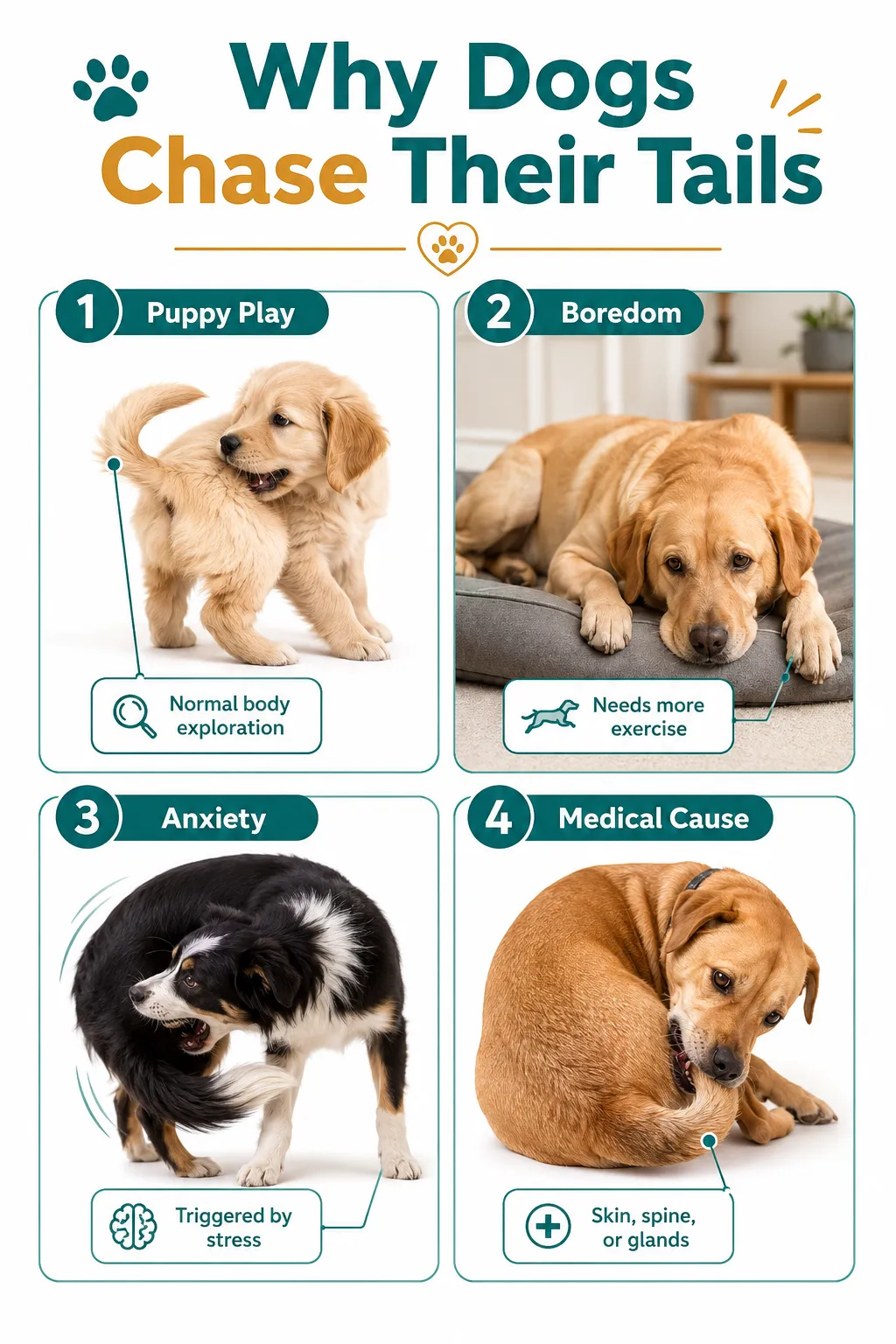
Dogs chase their tails for several reasons, and the cause often depends on the dog’s age, breed, and environment. The most common reasons are play and curiosity, boredom, attention-seeking, anxiety, and underlying medical issues.
According to VCA Animal Hospitals, tail chasing can be a normal, harmless behavior – especially in young dogs – but it can also be a sign of a compulsive disorder or physical discomfort when it becomes frequent or intense.
Here’s a quick breakdown of the main causes:
- Play and curiosity – Puppies discover their tail like a new toy. It moves, it’s attached to them, and chasing it is fun.
- Boredom – A dog with too little exercise or mental stimulation may spin to entertain itself.
- Attention-seeking – If you’ve ever laughed or filmed your dog chasing its tail, you may have accidentally rewarded the behavior. Dogs learn fast.
- Anxiety or stress – Chronic stress can trigger repetitive spinning as a coping outlet.
- Medical causes – Fleas, skin infections, allergies, anal gland problems, or spinal pain can make the tail area uncomfortable, prompting the dog to chase or bite it.
Is It Normal for Dogs to Chase Their Tails?
Yes, occasional tail chasing is normal – especially in puppies. It becomes a concern when it’s frequent, intense, or hard to interrupt.
The AKC notes that most puppies and young dogs will chase their tails at some point as part of normal play. In adult dogs, however, the behavior warrants a closer look if it’s new or escalating.
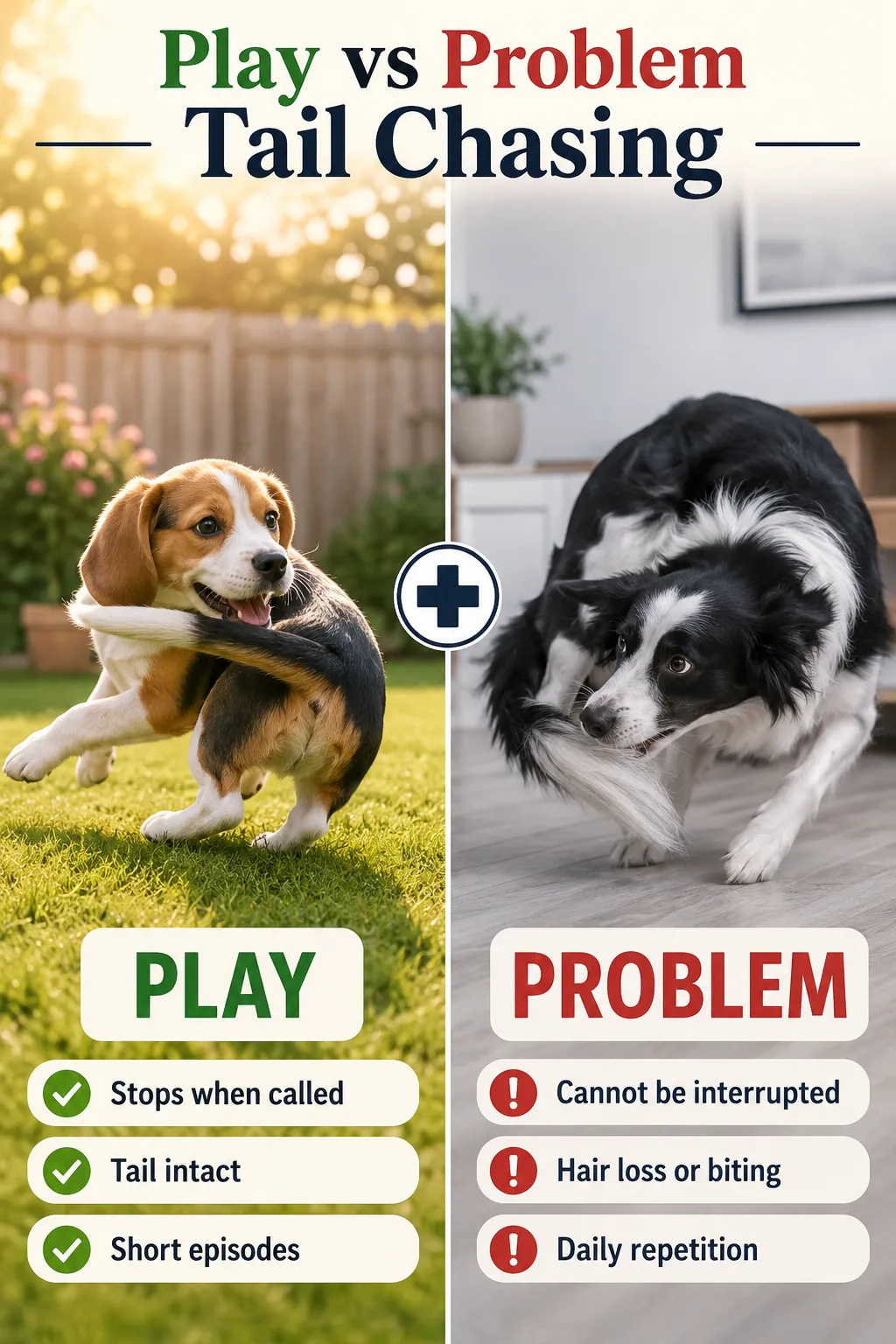
A useful rule of thumb: normal tail chasing is brief, playful, and stops easily. Concerning tail chasing is repetitive, intense, and continues even when you try to distract the dog.
When Do Puppies Start Chasing Their Tails?
Puppies typically begin chasing their tails between 3 and 6 months of age, as they become more aware of their own bodies. It’s a form of self-discovery and play.
At this age, a puppy’s coordination is still developing, and the tail appears to be a moving object worth investigating. Most puppies naturally grow out of frequent tail chasing as they mature and find more interesting things to do.
If a puppy’s tail chasing seems obsessive – lasting many minutes or happening dozens of times a day – that’s worth monitoring even at a young age.
The 30-Second Check: How to Tell If Tail Chasing Is Play or a Problem
You can do a quick, practical check in about 30 seconds to figure out whether what you’re seeing is harmless fun or a red flag. Watch your dog during an episode and ask yourself these questions:
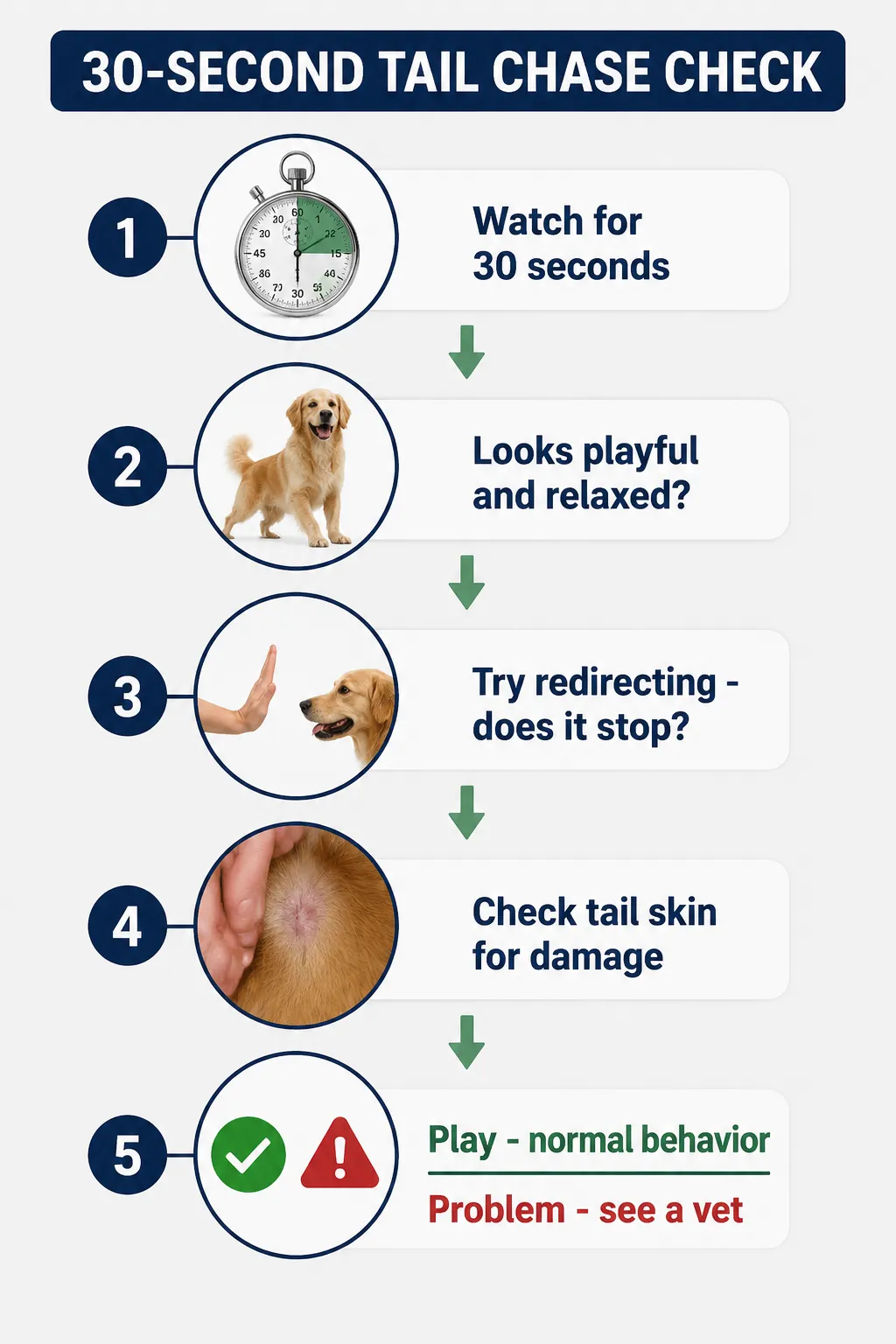
Step 1 – Watch the body language. Does your dog look relaxed and happy, with a loose body and soft eyes? Or does it look tense, frantic, or distressed?
Step 2 – Try to redirect. Call your dog’s name, offer a toy, or make a noise. Does the chasing stop immediately? If yes, that’s a good sign.
Step 3 – Check the tail. Look for bald patches, redness, broken skin, or bite marks. Any of these is a red flag.
Step 4 – Think about frequency. Is this a once-in-a-while thing, or does it happen every day – sometimes for long stretches?
| Sign | Likely Play | Likely Problem |
|---|---|---|
| Stops when you call | ✅ Yes | ❌ No |
| Looks joyful, relaxed | ✅ Yes | ❌ No |
| Tail skin is healthy | ✅ Yes | ❌ Hair loss or biting |
| Happens occasionally | ✅ Yes | ❌ Daily or many times |
| Triggered by excitement | ✅ Yes | ❌ Triggered by stress |
| Short episodes | ✅ Under 1 min | ❌ Several minutes |
According to Vetster’s guide on tail chasing, normal tail chasing is brief, obviously playful, and does not damage the tail. Concerning tail chasing is repetitive, triggered by stress, and continues despite attempts to interrupt.
What Does Excessive Tail Chasing Mean in Dogs?
Excessive tail chasing – meaning daily, prolonged, or hard-to-stop spinning – is considered a compulsive disorder in dogs. It falls under the broader category of canine compulsive behaviors, similar to flank sucking or repetitive pacing.
A Royal Veterinary Center overview of compulsive disorders explains that behavior becomes pathological when episodes last more than a few minutes, occur daily, cause self-injury, interfere with normal activities, or cannot be interrupted by normal cues.
Compulsive tail chasing often starts during a stressful period – like moving to a new home, a change in the household, or a traumatic event. Over time, the behavior can become self-reinforcing even after the original trigger is gone.
If you’re also noticing other anxious behaviors, check out this guide on why dogs put their ears back – it can give you more context on reading your dog’s stress signals.
Tail Chasing in Dogs: Medical Reasons You Shouldn’t Ignore
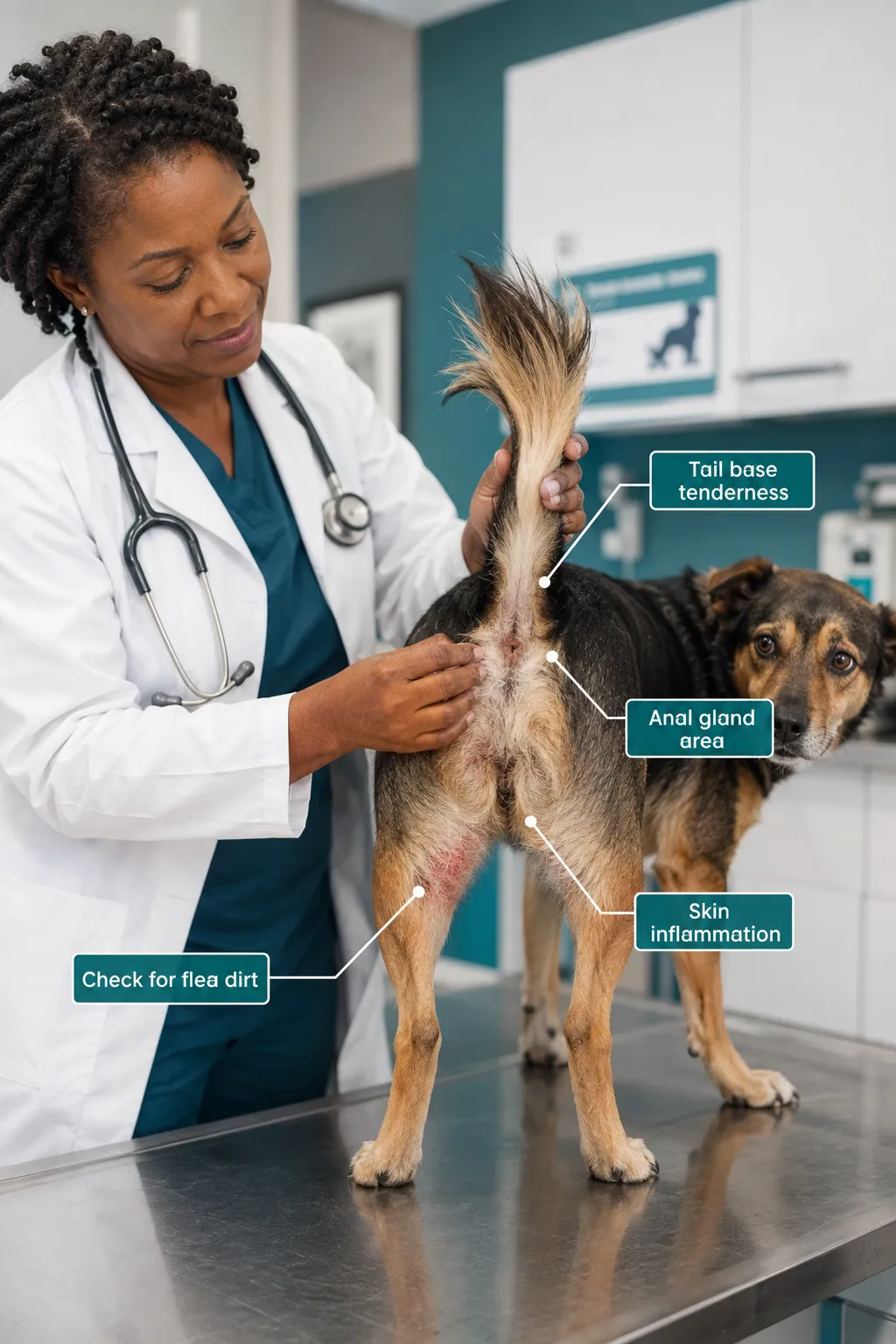
Tail chasing isn’t always behavioral – sometimes there’s a physical reason your dog is fixating on its tail. Medical causes are especially worth considering if the behavior came on suddenly or involves biting.
Common medical causes include:
- Fleas or ticks – Flea bites near the tail base cause intense itching. Check for flea dirt (tiny black specks) in the fur.
- Skin allergies – Environmental or food allergies can cause itchy, inflamed skin around the tail. If your dog also chews its paws, these two issues often go together. See our article on why dogs chew on their paws for more detail.
- Anal gland problems – Impacted or infected anal glands cause discomfort near the tail base, prompting spinning and biting.
- Spinal or hip pain – Nerve pain or arthritis can make a dog feel sensations in the tail area.
- Skin infections – Bacterial or fungal infections cause itching and discomfort.
WebMD Pets and VetWest both recommend a vet exam if tail chasing is accompanied by biting, hair loss, or broken skin.
If you’re also noticing your dog scratching frequently, our guide on why dogs scratch all the time covers the overlap between skin issues and repetitive behaviors.
Is Tail Chasing a Sign of Anxiety in Dogs?
Yes, tail chasing can absolutely be a sign of anxiety. Veterinary behaviorists now routinely link pathological tail chasing to chronic stress, conflict in the home, and a lack of mental outlets.
Dogs that feel anxious and have no way to control their environment may develop repetitive behaviors – like spinning – as a way to cope. The behavior gives them something predictable to do when everything else feels uncertain.
Signs that anxiety is the root cause:
- Tail chasing happens after stressful events (visitors, loud noises, changes in routine)
- Your dog also shows other anxious behaviors like pacing, excessive barking, or destructive chewing
- The behavior is worse when the dog is left alone
If anxiety is a factor, check out our guide on how to calm dogs during fireworks – the same calming principles apply to general anxiety management.
What Breeds Chase Their Tails More?
Some breeds are genetically more prone to compulsive tail chasing than others. Breed predisposition is a real factor, especially when the behavior is intense or started early.
Breeds with higher reported rates of compulsive tail chasing include:
- Bull Terriers – One of the most well-documented breeds for compulsive spinning and tail chasing
- German Shepherds – Prone to anxiety-related compulsive behaviors
- Australian Shepherds – High-energy herding breeds with strong chase instincts
- Jack Russell Terriers – Energetic and easily under-stimulated
That said, any dog of any breed can develop tail chasing if the conditions are right – or wrong. Breed just raises or lowers the baseline risk.
Tail Chasing Behavior in Senior Dogs
New or worsening tail chasing in a senior dog is a bigger concern than in a puppy. In older dogs, it’s more likely to reflect pain, cognitive changes, or a medical issue than simple play.
Conditions to consider in senior dogs include:
- Arthritis or nerve pain near the tail or hips
- Cognitive dysfunction (canine dementia), which can cause repetitive, confused behaviors
- Skin conditions that worsen with age
- Anal gland disease, which becomes more common in older dogs
If your senior dog suddenly starts chasing its tail after years of not doing it, a vet visit is the right first step – not a training fix.
How to Stop a Dog From Chasing Their Tail
The right approach depends on the cause. Here’s a practical breakdown:
If it’s play or boredom:
- Increase daily exercise – more walks, fetch sessions, or off-leash time
- Add puzzle toys and nose-work games for mental stimulation
- Teach an incompatible behavior, like “go to your mat” or fetching a toy on cue
- Avoid reacting with laughter or attention during tail chasing – this rewards it
If it’s anxiety-driven:
- Identify and reduce stress triggers
- Create a predictable daily routine
- Use calm, positive reinforcement training
- Consider calming supplements or speak to your vet about behavioral medication for severe cases
If it’s medical:
- Treat the underlying cause first (fleas, allergies, anal glands, etc.)
- The tail chasing often reduces or stops once the discomfort is resolved
The Dog Clinic and Walkerville Vet both emphasize that punishment is never the answer – it increases anxiety and can make compulsive behaviors worse.
For dogs that need more structured behavioral work, our guide on 9 top commands for dogs for smart daily training is a good starting point for building better habits.
When Should I Be Worried About Dog Tail Chasing?
Call your vet if you notice any of these signs:
- The behavior happens every day or multiple times a day
- Your dog cannot be interrupted or redirected
- There is visible damage – hair loss, redness, broken skin, or bleeding
- Your dog seems distressed rather than playful during episodes
- The behavior started suddenly after a stressful event
- Your dog is missing meals or losing sleep because of it
- The behavior is getting worse despite your efforts to redirect
Early intervention matters. Compulsive behaviors are harder to treat the longer they go on.
FAQ: Why Do Dogs Chase Their Tails?
Q: Is it normal for a dog to chase its tail every day?
A: Daily tail chasing is not considered normal. Occasional chasing is fine, but daily episodes – especially if they’re hard to stop – suggest boredom, anxiety, or a compulsive disorder worth addressing with your vet.
Q: How long is normal for a dog to chase its tail?
A: A normal episode lasts under a minute and stops easily when you redirect the dog. Episodes lasting several minutes, or that can’t be interrupted, are a red flag.
Q: Do all dogs chase their tails?
A: Most dogs will chase their tail at least once, especially as puppies. Not all dogs do it regularly, and many never develop it as a habit. It’s common but not universal.
Q: Can tail chasing hurt my dog?
A: Yes, if the dog bites its tail repeatedly. This can cause wounds, infections, and hair loss. Even without physical injury, compulsive spinning can interfere with normal life.
Q: Should I ignore my dog when it chases its tail?
A: For attention-seeking tail chasing, yes – ignoring it removes the reward. But don’t ignore it entirely. Redirect calmly to a toy or command, and monitor for any escalation.
Q: Can tail chasing be cured?
A: Play-based tail chasing usually resolves on its own or with more enrichment. Compulsive tail chasing can be managed – often very well – with behavioral modification, environmental changes, and sometimes medication. It rarely disappears overnight.
Q: Is tail chasing linked to seizures?
A: In rare cases, tail chasing or spinning can be associated with focal seizure activity. If your dog appears dazed, unresponsive, or confused during or after episodes, see a vet promptly.
Q: My puppy just started chasing its tail. Should I worry?
A: Probably not. Puppies between 3 and 6 months commonly chase their tails as part of normal play and body discovery. Watch for the red flags above – if none are present, it’s likely harmless.
Q: Does tail chasing mean my dog is happy?
A: Sometimes, yes – a playful, joyful spin is a happy dog behavior. But not always. Distressed dogs also spin. Watch the whole body, not just the tail.
Q: What’s the difference between tail chasing and tail biting?
A: Tail chasing is the spinning behavior. Tail biting – where the dog actually grabs and chews the tail – is more urgent and almost always signals a physical problem like fleas, allergies, or pain.
Conclusion
So, why do dogs chase their tails? The short answer is: it depends. For puppies, it’s usually innocent play. For adult dogs, it can still be harmless – but it can also point to boredom, anxiety, or a medical issue that needs attention.
The 30-second check is your fastest tool. Watch the episode, try to redirect, and inspect the tail. If your dog stops happily and the tail looks healthy, you’re probably fine. If the behavior is daily, intense, or involves biting and damage, treat it as a potential problem and get your vet involved.
Your next steps:
- Do the 30-second check the next time your dog spins.
- Note how often it happens and whether it stops when you redirect.
- Check the tail for any skin or hair changes.
- If any red flags appear, book a vet appointment – don’t wait.
- Add more exercise and mental enrichment regardless. It almost always helps.
Your dog can’t tell you when something hurts or when anxiety is building. Paying attention to small behaviors like tail chasing is one of the best ways to stay ahead of bigger problems.