Last updated: August 29, 2026
Quick Answer: One simple pumpkin-based dough – made with pumpkin puree, peanut butter, oats, and an egg – can be shaped, frozen, dehydrated, or stuffed into toys to create five completely different DIY fall dog treats. You don’t need five recipes. You just need one good dough and a little creativity.
Key Takeaways 🐾
- A single fall dough (pumpkin + peanut butter + oats + egg) is the base for all five treat formats
- You can bake it into biscuits, freeze it into cubes, dehydrate it into chips, stuff it into KONGs, or press it into molds
- Never use nutmeg in dog treats – it’s toxic to dogs; cinnamon is safe in small amounts
- Plain canned pumpkin (not pie filling) is the safest choice
- Always check peanut butter labels for xylitol, which is deadly to dogs
- Homemade treats give you full control over ingredients and portion size
- Store baked treats in the fridge for up to 7 days, or freeze for up to 3 months
- Puppies can eat these treats in smaller portions – just adjust the size
- Dogs with allergies can swap oats for coconut flour or use sunflower seed butter instead of peanut butter
- Dehydrated treats last the longest at room temperature – up to 2 weeks in an airtight container
What Are the Best Ingredients for Homemade Fall Dog Treats?
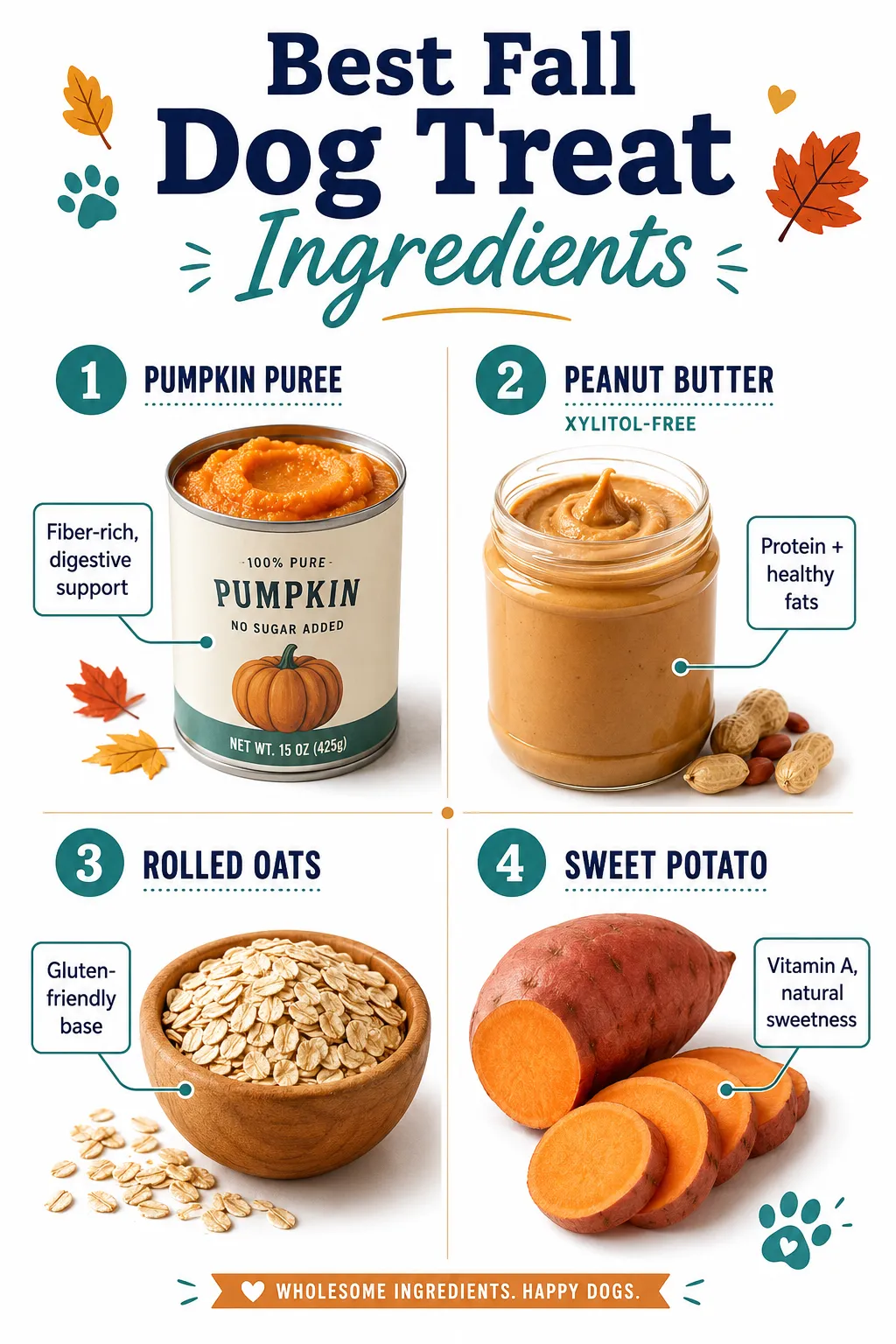
The best ingredients for DIY fall dog treats are plain canned pumpkin, xylitol-free peanut butter, rolled oats, and eggs. These four ingredients form a safe, nutritious base that most dogs digest easily.
Fall is actually a great season for dog treat baking because so many autumn staples – pumpkin, sweet potato, apple, and carrots – are naturally dog-safe and packed with fiber and vitamins.
Here’s a quick breakdown of the safest fall ingredients:
| Ingredient | Benefit | Notes |
|---|---|---|
| Plain pumpkin puree | Fiber, digestive support | Not pie filling |
| Rolled oats | Gentle on stomach | Use gluten-free if needed |
| Xylitol-free peanut butter | Protein, healthy fats | Check label every time |
| Sweet potato | Vitamin A, natural sweetness | Cooked, no skin |
| Apple | Antioxidants, crunch | Remove seeds and core |
| Carrots | Low-calorie, vitamin C | Raw or cooked both fine |
| Eggs | Binding, protein | One per batch |
According to The Drake Center for Veterinary Care’s fall treat guide, pumpkin, oats, and sweet potatoes are among the most easily digestible seasonal ingredients for dogs.
The One Fall Dough Recipe (Base for All 5 Treats)
This is the master dough. Everything else in this article starts here.
Base Dough Ingredients:
- 1 cup plain canned pumpkin puree
- 2 tablespoons xylitol-free peanut butter
- 1 egg
- 2.5 cups rolled oats (ground into flour in a blender, or use oat flour)
- 1/4 teaspoon cinnamon (optional)
- Pinch of salt
Instructions:
- Preheat oven to 350°F.
- Mix pumpkin, peanut butter, and egg in a bowl until smooth.
- Stir in oat flour gradually until a stiff dough forms.
- Add cinnamon and salt if using.
- Knead briefly until the dough holds together without sticking.
That’s it. Now here’s how to turn it into five completely different treats.
How Do You Make 5 Different Treats From One Fall Dog Treat Dough?
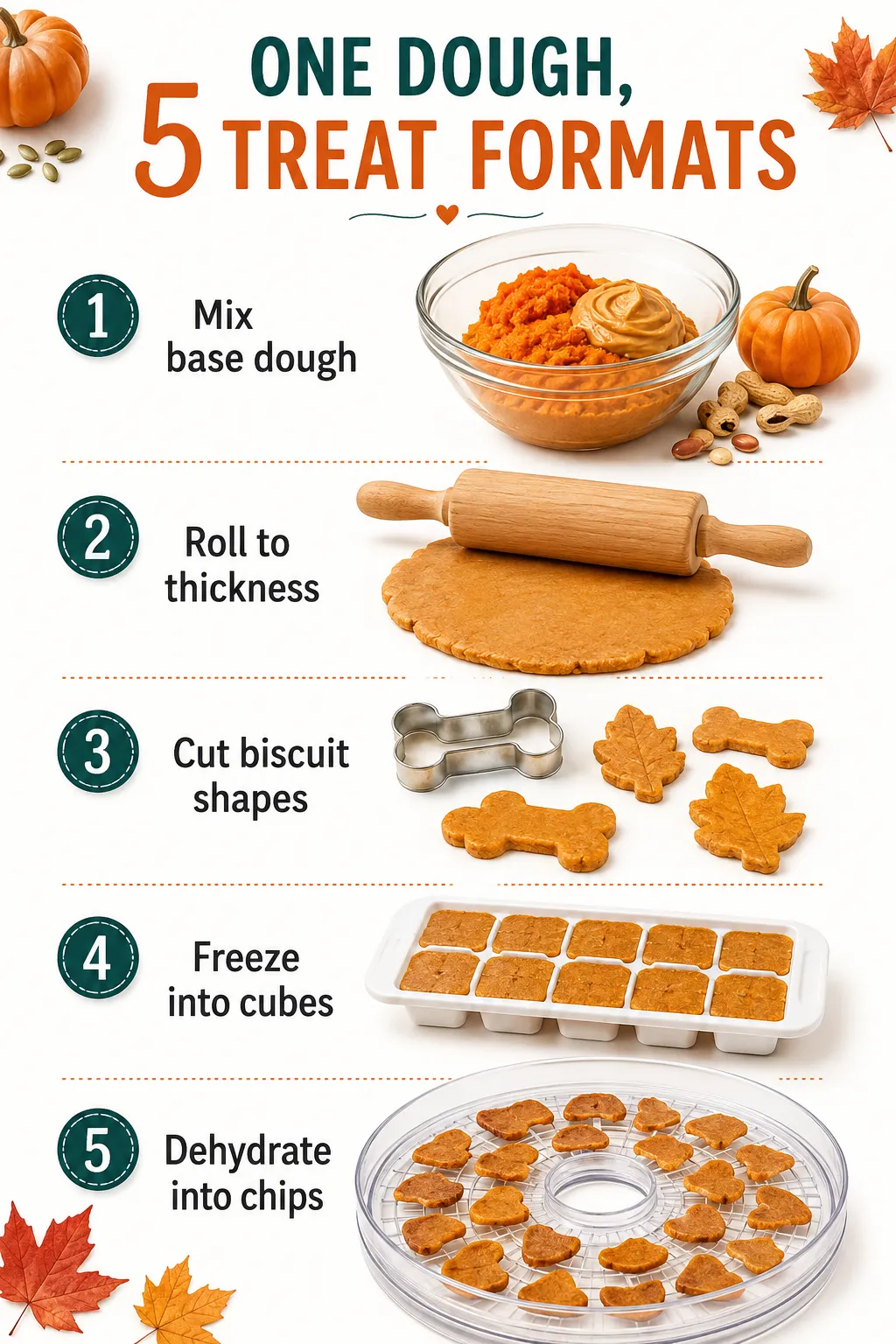
One dough, five formats. The secret is in how you handle the dough after mixing – not in changing the recipe.
Pook’s Pantry’s pumpkin dog treat guide notes that a rolled pumpkin dough can be cut into different shapes and sizes to produce training bites, large biscuits, and themed seasonal shapes from a single batch.
Here are the five formats:
Treat 1 – Classic Baked Biscuits (Rolled and Cut)
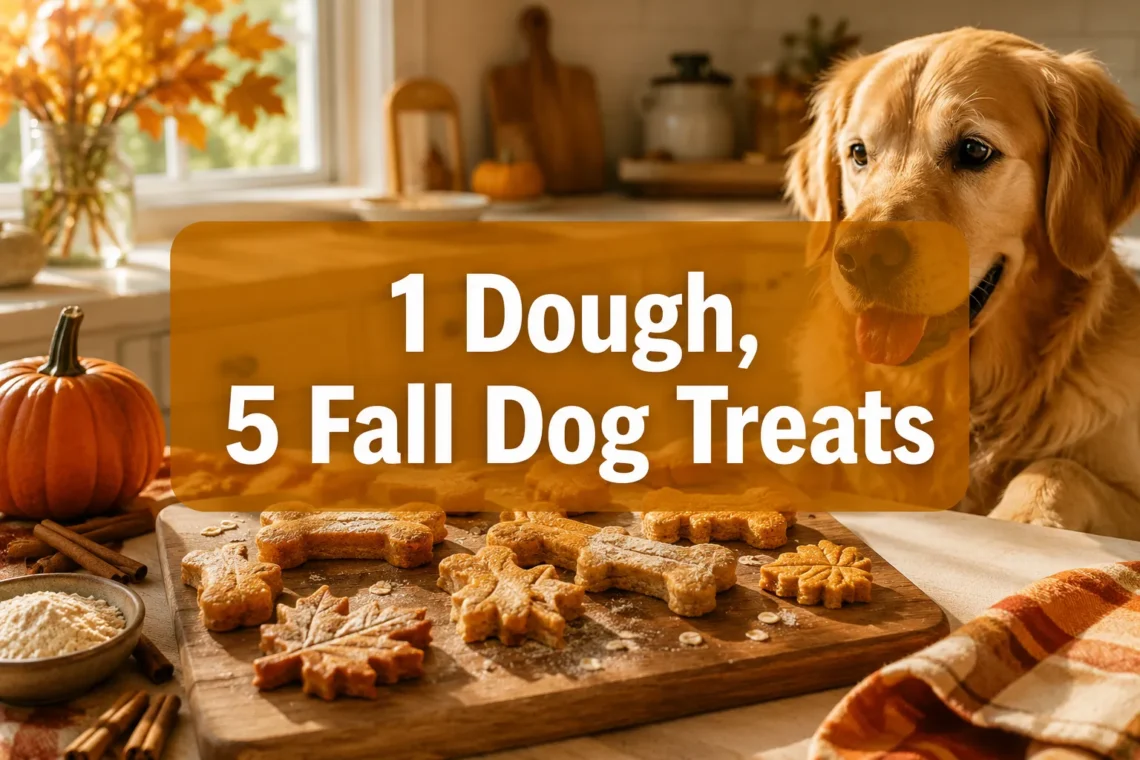
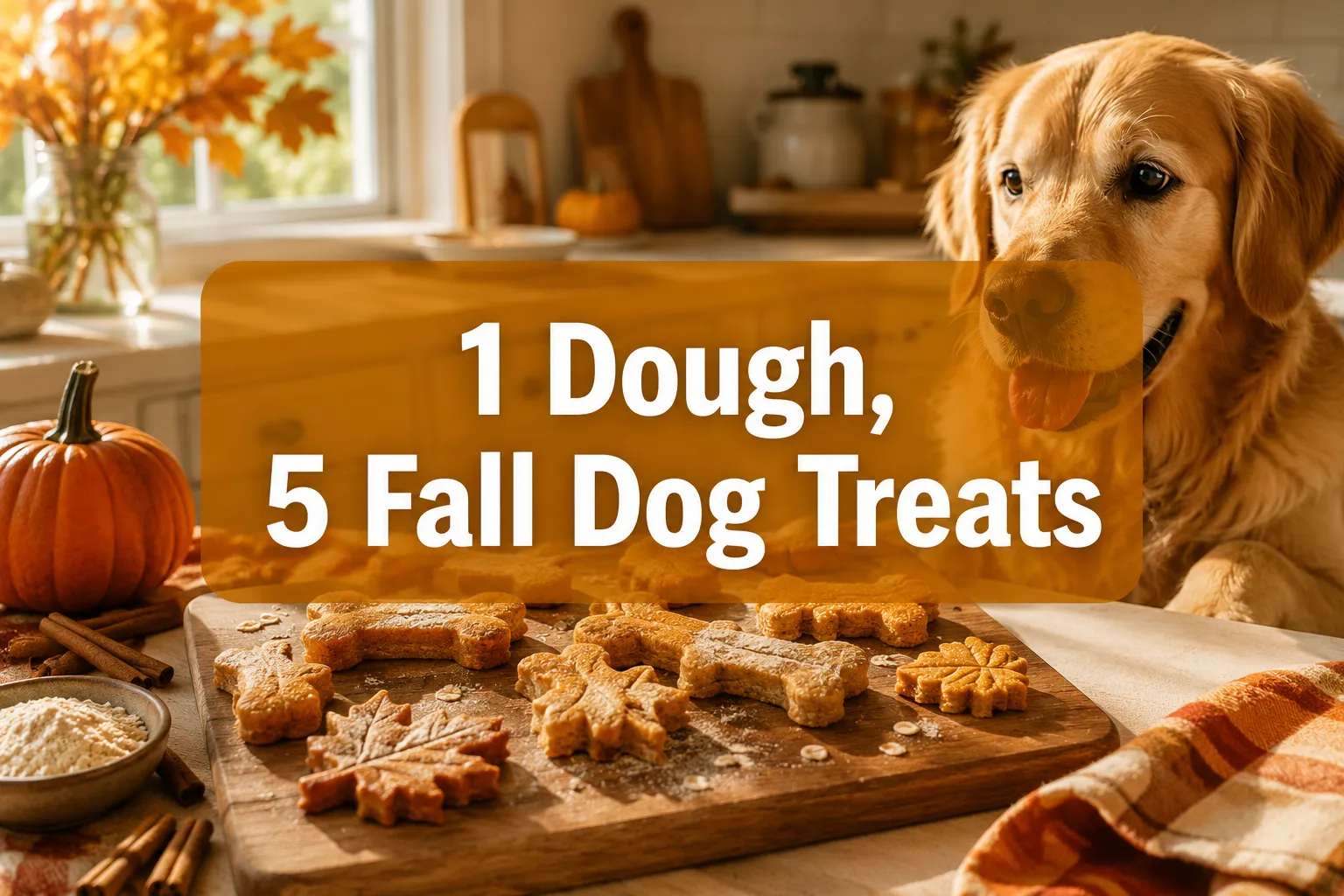
Roll the dough to about 1/4 to 1/2 inch thick on a lightly floured surface. Use bone-shaped, leaf, or pumpkin cookie cutters for a seasonal touch. Place on a parchment-lined baking sheet 1 inch apart.
Bake at 350°F for 35-40 minutes until hard and dry. Thinner cuts (1/8 inch) bake in about 16-18 minutes for a crispier result.
Pro tip: Re-roll leftover scraps to get the most out of your dough.
Treat 2 – Frozen Cube Treats
Press or spoon the dough into an ice cube tray or silicone mold. Freeze for at least 4 hours. These are perfect for hot fall afternoons or as a slow-release snack.
Spot & Tango’s fall treat guide recommends freezing fall ingredient mixes in ice cube trays as an easy way to create bite-sized rewards from a single base.
Treat 3 – KONG Stuffing (Soft and Spreadable)
Add a splash of water or low-sodium broth to the dough to soften it into a thick paste. Stuff it into a KONG toy and freeze for 30-60 minutes. This turns a simple treat into a long-lasting enrichment activity.
Dogtopia’s fall dog treat article highlights pumpkin and apple-based mixtures stuffed into KONGs as a great way to keep dogs mentally engaged.
Treat 4 – Dehydrated Treat Chips
Roll the dough thin (about 1/8 inch) and cut into small strips or rounds. Bake at 350°F for 12 minutes to set the shape, then reduce the oven to 200°F and bake with the door propped open for another 60-120 minutes until completely dry and crisp.
According to Pups Gourmet Kitchen’s dehydrated dog treat recipes, this low-and-slow method produces treats that are light, crunchy, and shelf-stable longer than standard baked biscuits.
Treat 5 – Silicone Mold Treats (Paw Prints, Bones, Leaves)
Press the dough firmly into silicone molds (paw prints, leaves, or acorns work great for fall). Bake at 350°F for 20-25 minutes depending on mold depth. Pop them out once cooled. These look adorable and make great gifts for other dog owners too. 🍂
Can Dogs Eat Fall Spices Like Cinnamon and Nutmeg?
Cinnamon is safe for dogs in small amounts (under 1/4 teaspoon per batch). Nutmeg is toxic to dogs and must never be used in dog treat recipes.
This is one of the most important safety points for anyone making DIY fall dog treats. Many human fall recipes call for pumpkin spice blends – but those blends almost always contain nutmeg.
- ✅ Cinnamon – safe in small doses, adds warmth and flavor
- ✅ Ginger – safe in small amounts, can help digestion
- ✅ Turmeric – safe, anti-inflammatory properties
- ❌ Nutmeg – toxic, can cause tremors and seizures in dogs
- ❌ Xylitol (sometimes in spice blends) – deadly to dogs
- ❌ Cloves – can cause liver damage in large amounts
Fido & Stitch’s fall dog treat recipes include turmeric and cinnamon as functional add-ins for fall biscuits, which aligns with the growing trend of adding gentle anti-inflammatory ingredients to homemade treats.
Always check every ingredient label. “Pumpkin spice” is not dog-safe. Plain cinnamon is.
What’s the Difference Between Dog Treats and Human Fall Treats?
Dog treats and human fall treats use many of the same seasonal flavors, but the key difference is sugar, fat, and spice levels. Human treats are made to taste good to people – they’re loaded with sugar, butter, and spice blends that can harm dogs.
A human pumpkin cookie might have:
- Refined sugar
- Butter or vegetable shortening
- Nutmeg and cloves
- Vanilla extract (contains alcohol)
A dog version swaps all of that for:
- No added sugar (pumpkin is naturally sweet)
- Peanut butter or coconut oil for fat
- Safe spices only (cinnamon, turmeric)
- Oat flour instead of refined white flour
The goal with homemade fall dog treats is to use simple, whole-food ingredients that dogs can digest without added sugar, salt, or artificial flavoring.
Is Peanut Butter Safe in Fall Dog Treat Recipes?
Yes – peanut butter is safe for dogs as long as it does not contain xylitol. Xylitol is an artificial sweetener found in some “natural” or “reduced sugar” peanut butter brands, and it is extremely toxic to dogs.
How to check your peanut butter:
- Read the full ingredient list, not just the front label
- Look for: xylitol, birch sugar, or “natural sweetener”
- Stick to plain peanut butter with just peanuts and salt
- Brands like Jif Original and Skippy Original (as of 2026) do not contain xylitol – but always verify before buying
If you’re unsure, sunflower seed butter is a safe, nut-free alternative that works just as well in this dough. For more simple recipes using peanut butter, check out these easy 3-ingredient dog treat recipes.
Are Store-Bought Fall Dog Treats Better Than Homemade?
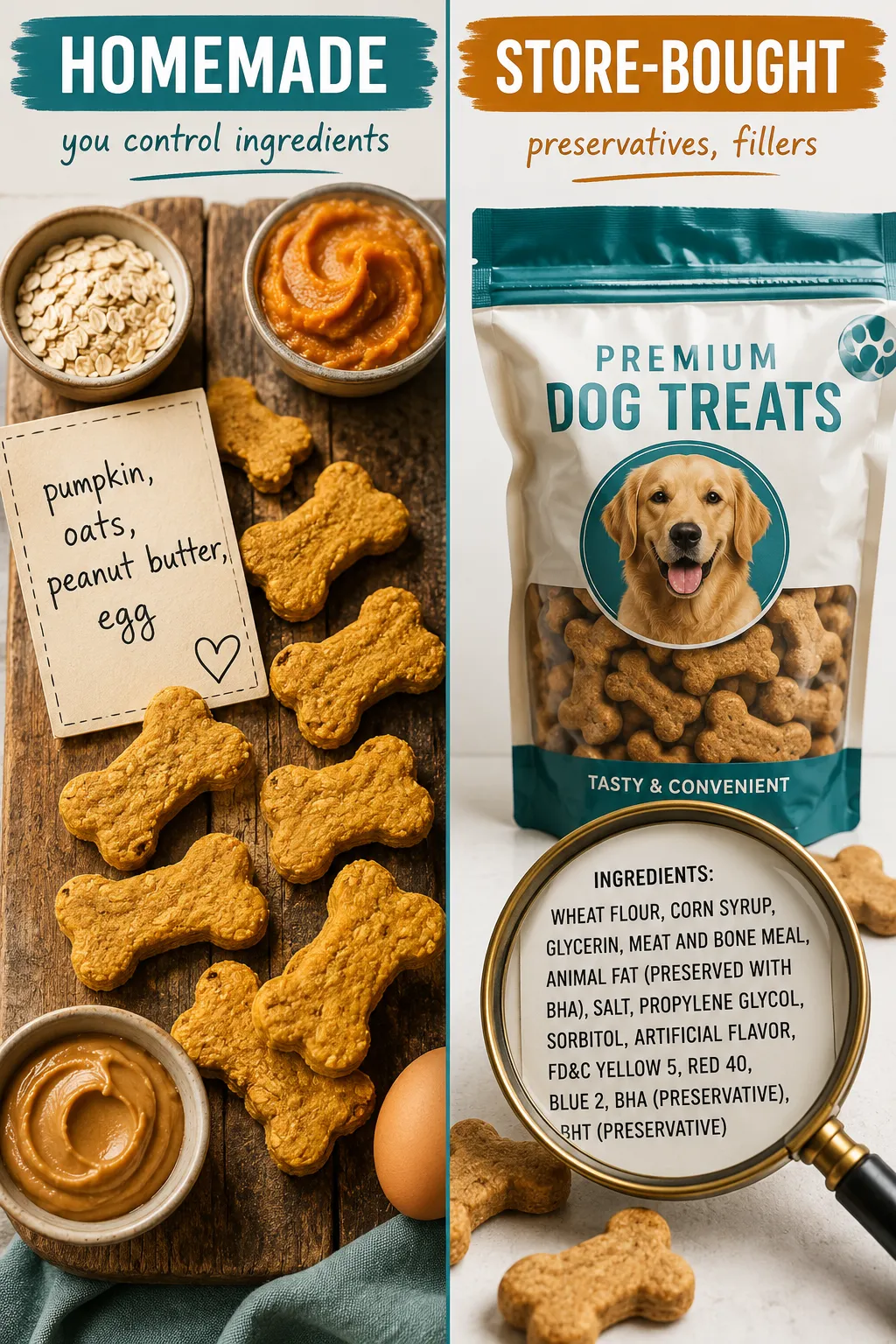
Homemade fall dog treats give you full control over ingredients, freshness, and portion size – which store-bought treats cannot match. That said, commercial treats are convenient and shelf-stable.
The real advantage of DIY fall dog treats is knowing exactly what’s in them. Many commercial treats contain preservatives, artificial colors, and low-quality fillers.
Choose homemade if:
- Your dog has allergies or a sensitive stomach
- You want to control calorie content
- You’re using treats for training (you can make them tiny)
- You want seasonal, fun shapes for photos or gifting
Choose store-bought if:
- You’re traveling and can’t bake
- You need a long shelf life without freezing
- Your vet has recommended a specific commercial diet
What If My Dog Has Allergies – Can I Still Make Fall Treats?
Yes. This dough is easy to modify for dogs with common allergies. The most frequent allergens in dog treats are wheat, eggs, and peanuts – all of which can be swapped out.
Common substitutions:
- Grain-free: Replace oat flour with coconut flour (use 1/2 the amount – coconut flour absorbs more liquid)
- Egg-free: Use 1 tablespoon of flaxseed meal mixed with 3 tablespoons of water (let sit 5 minutes before adding)
- Peanut-free: Use sunflower seed butter or tahini (plain, no added sugar)
- Pumpkin sensitivity: Swap pumpkin for cooked, mashed sweet potato
For dogs with skin allergies, it’s also worth reading about how to treat dog skin allergies without expensive vet bills to understand whether diet is a contributing factor.
Always introduce new ingredients one at a time so you can spot any reactions early.
How Long Do Homemade Dog Treats Last, and How Do You Store Them?
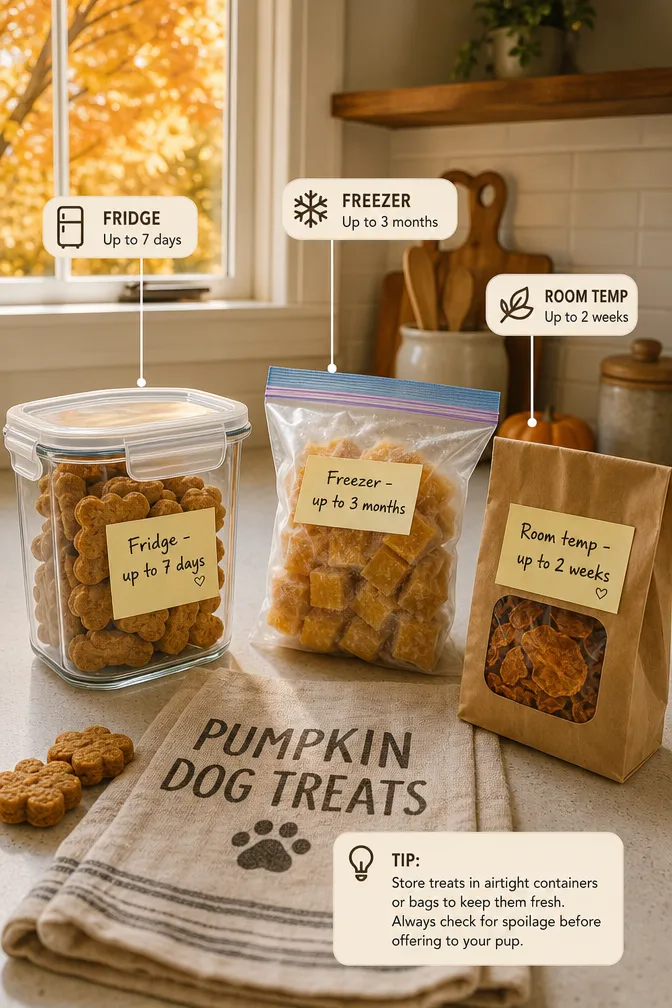
Storage life depends on the treat format. Baked biscuits last up to 7 days in the fridge, frozen treats last up to 3 months, and dehydrated treats last up to 2 weeks at room temperature in an airtight container.
Storage guide by format:
| Treat Format | Room Temp | Fridge | Freezer |
|---|---|---|---|
| Baked biscuits | 3-4 days | 7 days | 3 months |
| Frozen cubes | N/A | N/A | 3 months |
| KONG stuffing | N/A | 3 days | 1 month |
| Dehydrated chips | 2 weeks | 1 month | 3 months |
| Silicone mold treats | 3-4 days | 7 days | 3 months |
Key storage tips:
- Always let baked treats cool completely before storing – moisture causes mold
- Use airtight glass jars or zip-lock bags
- Label bags with the date you made them
- If treats smell off or show any mold, discard immediately
Can Puppies Eat Fall Dog Treats, or Just Adult Dogs?
Puppies can eat these fall treats, but in smaller portions and with softer textures. Hard biscuits baked for 35+ minutes may be too crunchy for young puppies with developing teeth.
For puppies under 6 months:
- Make treats smaller (thumbnail size)
- Bake for less time so they stay softer (20-25 minutes at 350°F)
- Avoid large chunks of apple or carrot that could be a choking hazard
- Stick to the simplest version of the dough without add-ins like turmeric or coconut flour until their digestion is established
Treats should make up no more than 10% of any dog’s daily calorie intake – puppies or adults.
What Common Mistakes Do People Make With Homemade Dog Treats?
The most common mistake is using human baking ingredients without checking if they’re dog-safe. The second most common is under-baking, which leads to treats that mold quickly.
Mistakes to avoid:
- Using pumpkin pie filling instead of plain pumpkin puree – pie filling has sugar and spices added
- Adding nutmeg or cloves from a “pumpkin spice” blend
- Not checking peanut butter for xylitol – this is a life-threatening mistake
- Under-baking biscuits – they need to be fully dry to last more than a day or two
- Making treats too large – oversized treats add unnecessary calories
- Skipping the cool-down before storing – warm treats create condensation and mold
- Using salted butter or heavy cream as a fat source – too much fat causes digestive upset
If you want more ideas for simple, safe recipes, these 11 easy oatmeal dog treats use similarly gentle ingredients and are great for beginners.
What Equipment Do You Need to Make Dog Treats at Home?
You don’t need much. A mixing bowl, a rolling pin, and an oven are enough to get started. A few extras make the process easier and more fun.
Basic setup:
- Mixing bowl
- Wooden spoon or silicone spatula
- Rolling pin
- Parchment paper
- Baking sheet
- Cookie cutters (bone, leaf, pumpkin shapes for fall)
Nice to have:
- Blender or food processor (to grind oats into flour)
- Silicone molds (paw prints, acorns, leaves)
- Ice cube trays (for frozen treats)
- KONG toy (for stuffed treats)
- Kitchen scale (for consistent portions)
That’s genuinely it. No special equipment is required. The 3-ingredient pumpkin oat dog treats guide is a great example of how minimal the setup can be.
Are There Fall Dog Treats for Dogs With Sensitive Stomachs?
Yes. The base dough in this guide is already well-suited for sensitive stomachs because it uses plain pumpkin (a known digestive aid) and oats (gentle and fiber-rich). Dogs with sensitive stomachs do best with limited-ingredient treats.
Tips for sensitive stomach dogs:
- Use plain pumpkin – the fiber helps regulate digestion in both directions
- Skip peanut butter if your dog has a fat sensitivity; use a small amount of coconut oil instead
- Avoid apple in the dough if your dog reacts to fruit sugars
- Keep treats small to avoid overwhelming the digestive system
- Introduce new treats gradually – one or two the first day
For more ideas on gentle treat options, check out these 7 healthy long-lasting pumpkin dog treats that also focus on easy-to-digest ingredients.
FAQ
Can I use fresh pumpkin instead of canned?
Yes. Cook and puree fresh pumpkin first, then drain off excess water before adding it to the dough. Canned plain pumpkin is easier and more consistent.
How do I know if a dog treat recipe is actually healthy?
Look for short ingredient lists with whole foods – pumpkin, oats, eggs, lean protein. Avoid recipes with added sugar, salt, artificial flavoring, or spice blends that include nutmeg or cloves.
Can I add protein to this fall dough?
Yes. A tablespoon of plain, unseasoned cooked chicken or turkey mixed in works well. Keep added meat portions small to avoid changing the dough texture too much.
What size should I cut the treats for training?
Cut training treats to thumbnail size – about 1/2 inch square. Small treats let you reward frequently without overfeeding during a session.
Can I double the recipe?
Absolutely. This dough scales up well. Make a large batch, bake what you need, and freeze the rest in portioned bags.
My dough is too sticky – what do I do?
Add oat flour one tablespoon at a time until the dough pulls away from the bowl cleanly. Humidity and pumpkin water content can vary, so some batches need a little more flour.
Can I use almond butter instead of peanut butter?
Plain almond butter without xylitol is generally considered safe in small amounts, but it’s higher in fat than peanut butter. Use it sparingly and confirm with your vet if your dog has any existing health conditions.
Are these treats okay for senior dogs?
Yes. Softer versions (baked for less time) are easier on older teeth. Keep portions small and consider adding a pinch of turmeric for its gentle anti-inflammatory properties.
What if my dog doesn’t like pumpkin?
Swap pumpkin for mashed sweet potato or unsweetened applesauce in equal amounts. Both work as binders and add natural sweetness dogs tend to love.
Do I need to grease the baking sheet?
Parchment paper is enough. It prevents sticking and makes cleanup easy. Greasing adds unnecessary fat.
Can I make these treats without an oven?
Yes. The frozen cube and KONG stuffing formats require no baking at all. You can also use a dehydrator if you have one.
How do I make the treats crunchier?
Bake them longer at a lower temperature. After the initial bake at 350°F, turn the oven down to 250°F and leave them in for another 20-30 minutes. Let them cool completely – they firm up as they cool.
Conclusion
One good fall dough really can do it all. Mix pumpkin, peanut butter, oats, and an egg – then decide what kind of treat your pup needs today.
Your next steps:
- Make the base dough this weekend using the recipe above
- Try at least two formats from the five options – biscuits and frozen cubes are the easiest starting points
- Double-check your peanut butter label for xylitol before you start
- Store leftovers properly and label them with the date
- Adjust for your dog’s specific needs – smaller for puppies, softer for seniors, allergen-free swaps if needed
DIY fall dog treats don’t have to be complicated. One dough, five treats, one happy dog. 🐶🍂