

Last updated: September 4, 2026
Quick Answer: Yes, dogs can have butternut squash. It is non-toxic and safe for dogs when served as plain, cooked flesh with the skin and seeds removed. It’s a nutritious occasional treat that most dogs enjoy, but portion size and preparation method matter a lot.
Key Takeaways 🐾
- Butternut squash is safe for dogs when cooked, plain, and served without skin or seeds.
- Raw butternut squash is not recommended – the tough texture can cause digestive upset or choking.
- Remove skin and seeds every time – they are hard to digest and can cause blockages.
- No seasonings – skip salt, butter, garlic, onion, or any spices.
- Start small – introduce it gradually and watch for any digestive reactions.
- Great for digestion – the fiber content can help dogs with mild constipation or sensitive stomachs.
- Portion control matters – treats should make up no more than 10% of your dog’s daily calories.
- Puppies can eat it too – in very small amounts, cooked and plain.
- Dogs with diabetes or kidney disease should only have it under vet guidance.
- Butternut squash and pumpkin are both safe options, with slightly different nutritional profiles.
Can Dogs Have Butternut Squash? What the Experts Say
Yes, dogs can absolutely have butternut squash. Multiple veterinary and pet nutrition sources confirm it is safe and non-toxic for dogs, and it’s even listed among the best types of squash to offer your pup.
I first started adding a spoonful of cooked butternut squash to my dog Biscuit’s bowl last fall, mostly because I had leftovers and was curious. He went absolutely wild for it. Turns out, I was onto something good.
The key rules are simple: cook it, skip the skin and seeds, and keep it plain. Do those three things, and butternut squash becomes a genuinely healthy addition to your dog’s diet.
What Are the Health Benefits of Butternut Squash for Dogs?
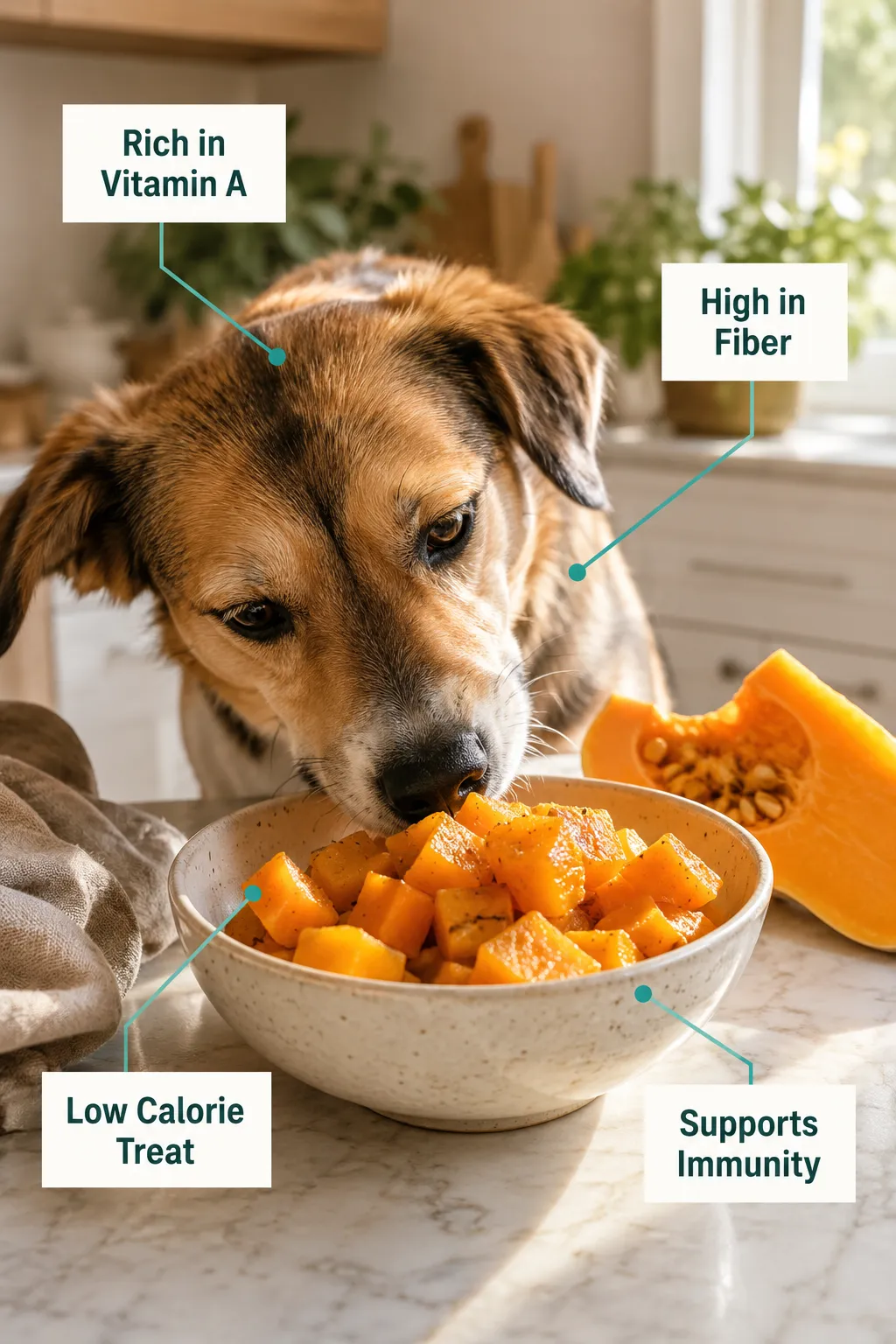
Butternut squash is packed with nutrients that benefit dogs in real, measurable ways. It’s not just filler – it’s a functional food when used correctly.
Here’s what your dog gets from a small serving of cooked butternut squash:
- Vitamin A – supports eye health, immune function, and skin condition
- Vitamin C – acts as an antioxidant and supports immune defense
- Potassium – helps maintain healthy muscle and nerve function
- Fiber – promotes healthy digestion and regular bowel movements
- Beta-carotene – the pigment that gives squash its orange color, linked to antioxidant benefits
- Low calories – a good treat option for dogs that need weight management
According to Pure Pet Food’s nutrition breakdown, butternut squash can be a regular ingredient in balanced dog food recipes, and its vitamins and minerals genuinely contribute to overall wellness when served as part of a varied diet.
For more ideas on boosting your dog’s health naturally, check out these 9 ways to boost your dog’s immune system naturally.
Can Dogs Eat Raw Butternut Squash, or Does It Need to Be Cooked?
Cooking is strongly recommended. Raw butternut squash is not toxic, but its dense, fibrous texture makes it genuinely risky for dogs to eat.
Raw squash can cause:
- Gastrointestinal upset, including gas and bloating
- Difficulty chewing, especially for small dogs or seniors
- Choking hazard from large or tough chunks
- Potential intestinal blockage if swallowed in big pieces
Hepper’s vet-reviewed guide explicitly advises against feeding raw butternut squash for these reasons. The safest and most digestible form is cooked flesh – steamed, boiled, or baked until soft, with no added seasonings.
Bottom line: Always cook it first. Your dog’s gut will thank you.
How Much Butternut Squash Can I Give My Dog Safely?
Start with small amounts and scale based on your dog’s size. A general guideline used by many vet-reviewed sources is the 10% treat rule – treats of any kind, including vegetables, should not exceed 10% of your dog’s total daily calorie intake.
Here’s a rough size guide:
| Dog Size | Starting Amount | Max Per Day |
|---|---|---|
| Small (under 10 lbs) | 1 teaspoon | 1-2 teaspoons |
| Medium (10-50 lbs) | 1 tablespoon | 2-3 tablespoons |
| Large (50+ lbs) | 2 tablespoons | 3-4 tablespoons |
These are estimates based on general vet guidance. Always introduce any new food gradually over several days while watching for vomiting, loose stool, or gas.
Kinship’s dog nutrition guide recommends starting with just a small bite and increasing slowly if your dog tolerates it well.
Is Butternut Squash Good for Dogs with Digestive Issues?
Yes, in many cases it can help. Cooked butternut squash is a good source of soluble and insoluble fiber, which supports healthy gut motility.
For dogs with constipation: The fiber in butternut squash can help get things moving again. It’s often recommended as part of a bland diet for dogs with mild digestive upset, alongside plain boiled chicken and rice.
For dogs with diarrhea: Smaller amounts of cooked squash may help firm up loose stools due to its fiber content.
Important caveat: If your dog has a chronic gastrointestinal condition – like inflammatory bowel disease or pancreatitis – always check with your vet before adding new foods. Bella and Duke’s nutrition team notes that dogs with pre-existing GI conditions may need more careful portion management.
You might also want to explore the best vegetables for dogs for more gut-friendly options to rotate into your dog’s diet.
Can Dogs Eat Butternut Squash Seeds and Skin?
No – skip both the seeds and the skin every time. This is one of the most important preparation rules.
- The skin is tough, fibrous, and hard for dogs to digest. It can cause stomach upset and is a choking risk.
- The seeds can pose a choking hazard, especially for smaller dogs, and may cause intestinal blockage if swallowed whole.
Petful’s squash safety guide is clear on this: only the soft, cooked flesh should be served to dogs, cut into small, bite-sized pieces.
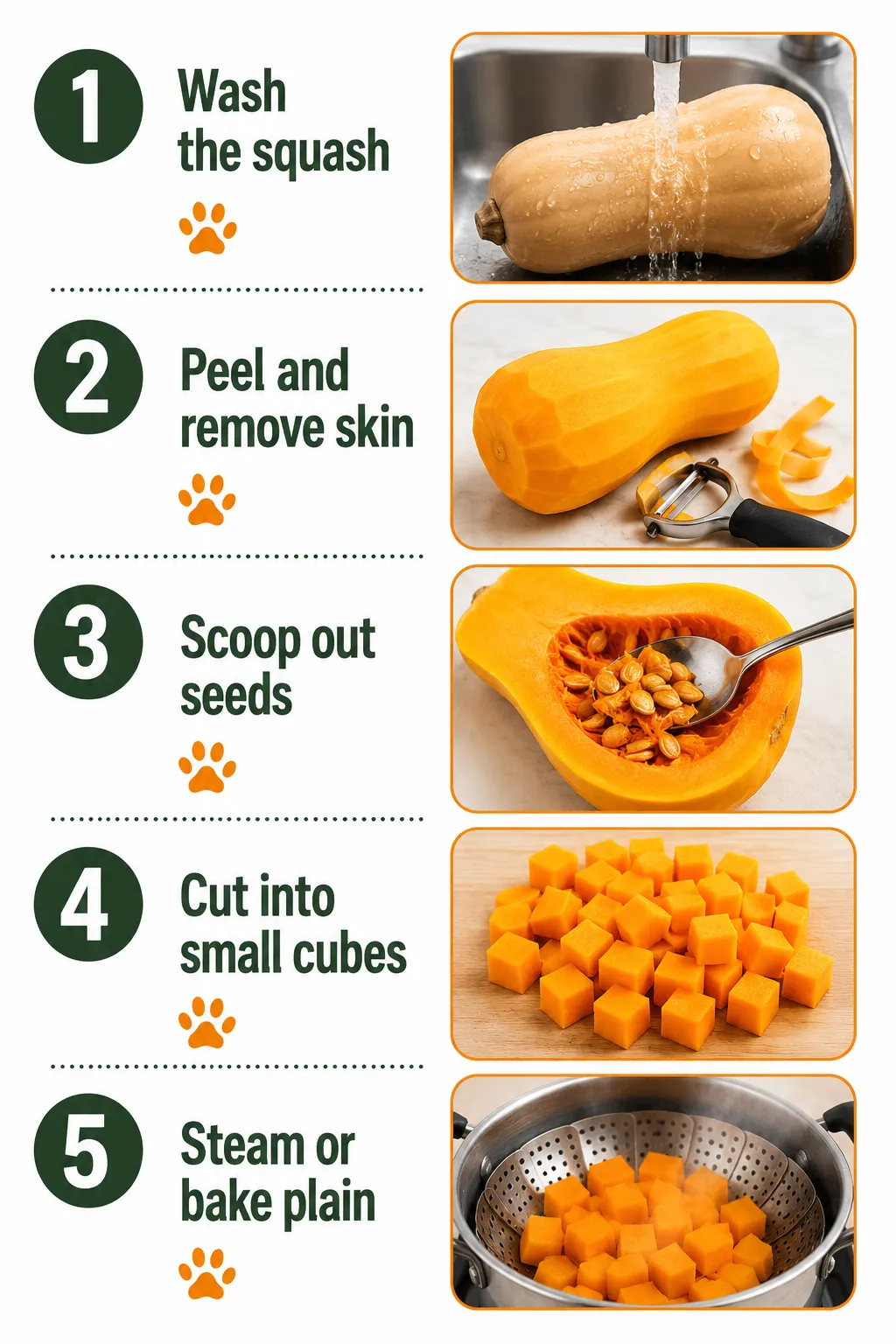
Always peel the squash, scoop out all seeds, and cook only the inner flesh.
Butternut Squash vs Pumpkin for Dogs – Which Is Better?
Both are safe, nutritious options for dogs. The choice often comes down to what’s convenient and what your dog prefers.
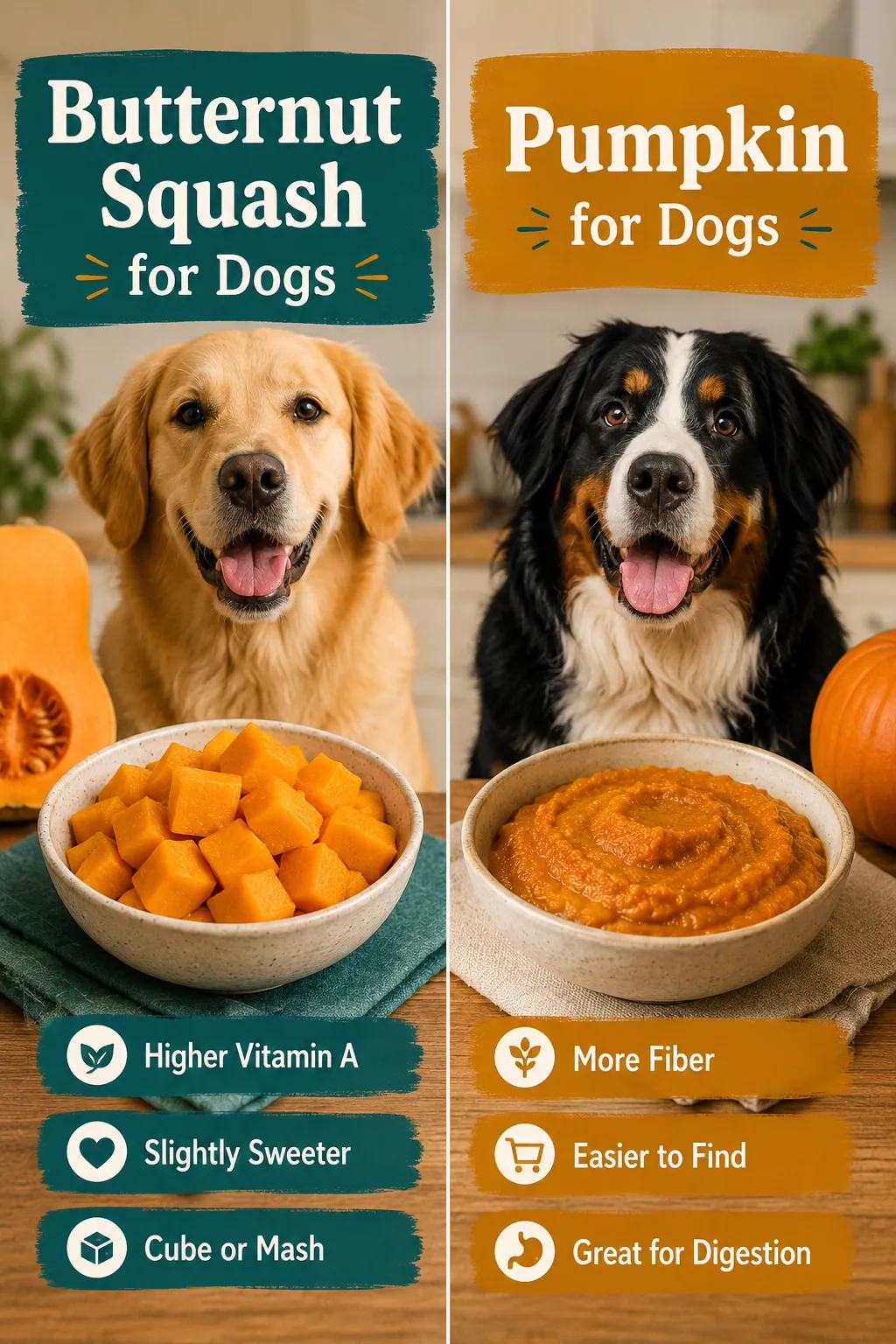
Here’s how they compare:
Butternut Squash:
- Slightly higher in Vitamin A
- A bit sweeter in flavor
- Best served cooked and cubed or mashed
- Less commonly stocked in canned form
Pumpkin:
- Higher in fiber per serving
- Widely available as plain canned puree (convenient)
- A classic go-to for dog digestive issues
- Easier to portion for small dogs
Choose butternut squash if you want a slightly richer nutrient profile and have fresh squash on hand.
Choose pumpkin if you want a quick, easy option – plain canned pumpkin (not pie filling) is a pantry staple for many dog owners.
Both work well. You can even rotate between the two to add variety. For a deeper look at another great veggie option, check out can dogs eat sweet potatoes for another nutrient-dense alternative.
Can Butternut Squash Cause Allergies in Dogs? Are There Dogs That Shouldn’t Eat It?
Butternut squash allergies in dogs are rare but possible. Any new food can trigger a reaction in sensitive dogs.
Signs of a possible food sensitivity:
- Itchy skin or hives
- Vomiting or diarrhea after eating
- Excessive gas or bloating
- Swollen face or lips (rare but serious – call your vet immediately)
If you notice any of these after introducing butternut squash, stop feeding it and consult your vet.
Dogs that should avoid or limit butternut squash:
- Dogs with diabetes – butternut squash has natural sugars that can affect blood glucose
- Dogs with kidney disease – the potassium content may need to be monitored
- Dogs on prescription diets – always check with your vet before adding any extras
- Obese dogs – while low in calories, portion control still matters
For most healthy dogs, butternut squash is a safe and welcome addition to their diet.
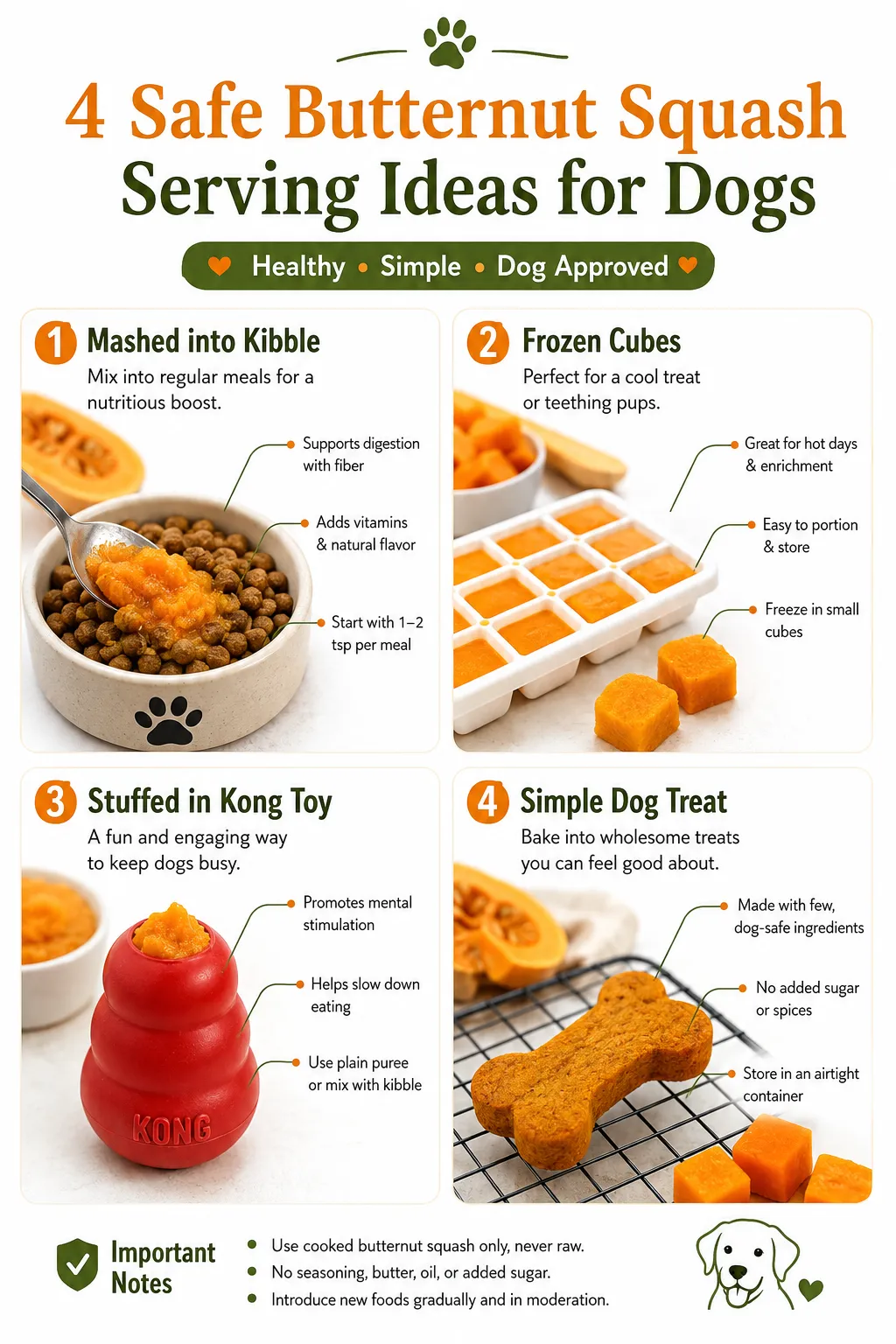
7 Safe Ways to Serve Butternut Squash to Your Dog
Here are the best preparation methods, all vet-aligned and dog-approved. 🐶
1. Steamed cubes
Steam plain flesh until soft, cut into small cubes, and let it cool completely before serving. Simple and effective.
2. Baked plain
Bake squash flesh at 400°F with no oil, salt, or seasoning. Scoop out the soft interior and mash or cube it.
3. Mashed into kibble
Stir a spoonful of plain mashed squash into your dog’s regular dry food. Great for picky eaters or dogs that need extra moisture. This also works well if you’re looking for ideas on what to add to your dog’s dry food.
4. Frozen squash cubes
Pour pureed cooked squash into an ice cube tray and freeze. These make excellent summer treats and keep for weeks.
5. Stuffed in a Kong or puzzle feeder
Fill a Kong toy with pureed squash and freeze it. This keeps dogs mentally stimulated and makes the treat last longer.
6. Mixed into a bland diet
If your dog has an upset stomach, mix small amounts of cooked squash with plain boiled chicken and white rice for a gentle, soothing meal.
7. Homemade dog treats
Incorporate cooked, mashed butternut squash into simple dog biscuit recipes. Pair it with dog-safe flour options for a wholesome homemade snack.
Always remember: No butter, no salt, no garlic, no onion, no spices. Plain is always the safest choice.
What If My Dog Ate Too Much Butternut Squash?
Don’t panic – a small overage is unlikely to cause serious harm. Butternut squash is not toxic, so the main concern is digestive discomfort.
Likely symptoms from too much:
- Loose stools or diarrhea
- Gas and bloating
- Mild vomiting
These usually resolve on their own within 12-24 hours. Withhold squash, keep your dog hydrated, and feed a bland diet if needed.
When to call your vet:
- Vomiting that doesn’t stop after a few hours
- Signs of lethargy or abdominal pain
- Blood in stool
- Your dog ate the skin or seeds in large quantities
According to Native Pet’s dog health blog, most healthy dogs recover quickly from an accidental overindulgence. The bigger risk from seeds or skin is a potential blockage, which does warrant a vet call if you’re concerned.
Can Puppies Eat Butternut Squash?
Yes, puppies can eat butternut squash. The same rules apply: cooked, plain, no skin, no seeds, and small portions.
Because puppies have more sensitive digestive systems than adult dogs, start with an even smaller amount – just a tiny bit mixed into their food. Watch carefully for any signs of stomach upset over the first day or two.
Pooch and Mutt’s nutrition team recommends introducing new foods to puppies very gradually and always prioritizing their complete, balanced puppy food as the main diet source.
Butternut squash should be a small supplement, not a meal replacement, for growing pups.
For more puppy-specific ideas, browse these puppy exercise ideas and fun ways to bond to keep your new dog healthy and happy.
FAQ: Can Dogs Have Butternut Squash?
Q: Is butternut squash toxic to dogs?
No. Butternut squash is classified as non-toxic to dogs by major animal poison control authorities. It is safe when prepared correctly.
Q: Can dogs eat butternut squash every day?
It’s best served as an occasional treat, not a daily staple. Too much fiber from squash can disrupt a dog’s balanced diet over time.
Q: Can dogs eat canned butternut squash?
Only if it is plain with no added salt, sugar, or seasonings. Check the label carefully – many canned squash products contain additives that are not safe for dogs.
Q: What’s the best way to cook butternut squash for dogs?
Steaming or baking plain flesh until soft is ideal. Both methods preserve nutrients without adding fat or sodium.
Q: Can dogs eat butternut squash soup?
Generally no. Most soups contain onion, garlic, cream, or salt – all of which are harmful to dogs. Stick to plain cooked flesh only.
Q: How do I know if my dog is allergic to butternut squash?
Introduce a tiny amount first and watch for itching, vomiting, diarrhea, or swelling over 24-48 hours. If any symptoms appear, stop feeding it and consult your vet.
Q: Is butternut squash good for overweight dogs?
It can be a lower-calorie treat option compared to many commercial treats, but portion control still applies. Always factor it into the daily calorie count.
Q: Can dogs eat butternut squash puree from a jar?
Only if it is 100% plain butternut squash with no added ingredients. Read labels carefully.
Q: Does butternut squash help with dog constipation?
Yes, the fiber in cooked butternut squash can help relieve mild constipation. Start with a small amount and monitor your dog’s response.
Q: Can I freeze butternut squash treats for my dog?
Absolutely. Pureed cooked squash frozen in ice cube trays makes a great treat, especially in warm weather.
Conclusion
So, can dogs have butternut squash? Yes – and it’s actually a genuinely good choice when prepared the right way.
The simple rules to remember:
- Always cook it – steamed, baked, or boiled, plain and soft
- Remove skin and seeds every single time
- No seasonings – plain is always best
- Start small and watch for any reactions
- Keep portions modest – a treat, not a meal
Butternut squash brings real nutritional value to your dog’s diet – vitamins, fiber, antioxidants, and a flavor most dogs genuinely love. Whether you mix it into kibble, freeze it into cubes, or stuff it in a Kong, it’s one of the easiest healthy additions you can make.
If your dog has any health conditions, always run new foods by your vet first. But for most healthy dogs, butternut squash is a simple, affordable, and nutritious treat worth adding to the rotation. 🎃🐾