Last updated: July 26, 2026
Quick Answer: A proper pitbull puppy feeding schedule means feeding 3-4 measured meals per day from 8 weeks to 6 months, then dropping to 2-3 meals daily until 12 months. Use a large-breed puppy formula with balanced calcium and phosphorus levels. Avoid free-feeding, overfeeding, and switching to adult food too early – these are the top mistakes that slow healthy growth and damage developing joints.
Key Takeaways
- 🐾 Feed pitbull puppies 3-4 times daily from 8 weeks to 6 months old
- 🐾 Switch to 2 meals per day around 12 months, not before
- 🐾 Use a puppy food labeled “growth” or “all life stages” – not regular adult food
- 🐾 Balanced calcium-to-phosphorus ratio (around 1.2:1) is critical for bone health [1]
- 🐾 Free-feeding is one of the most common and damaging mistakes new pitbull owners make
- 🐾 Overfeeding causes rapid growth that stresses developing joints [10]
- 🐾 Expect to spend roughly $40-$80/month on quality puppy food depending on brand and size
- 🐾 Signs your pup is eating enough: steady weight gain, shiny coat, firm stools, good energy
- 🐾 Never add calcium supplements unless a vet specifically prescribes them [7]
- 🐾 Transition to adult food gradually over 7-10 days to avoid digestive upset
How Often Should You Feed a Pitbull Puppy?
Pitbull puppies need 3 to 4 meals per day from 8 weeks to 6 months old. After 6 months, you can reduce to 3 meals, then move to 2 meals daily around 12 months.
Young puppies have tiny stomachs and fast metabolisms. Spreading their daily food across multiple meals keeps blood sugar stable, supports muscle development, and reduces the risk of bloat.
Here’s a simple breakdown:
- 8 to 12 weeks: 4 meals per day
- 3 to 6 months: 3 meals per day
- 6 to 12 months: 2 to 3 meals per day
- 12 months and up: 2 meals per day
Sticking to consistent meal times also helps with house training. A predictable feeding schedule means predictable bathroom breaks – which is a win for everyone. Check out these puppy potty training tips that actually work to pair with your feeding routine.
Pitbull Puppy Feeding Schedule by Age
A pitbull puppy’s nutritional needs change significantly every few months. What works at 8 weeks won’t cut it at 6 months, and what works at 6 months isn’t right for a 1-year-old dog.
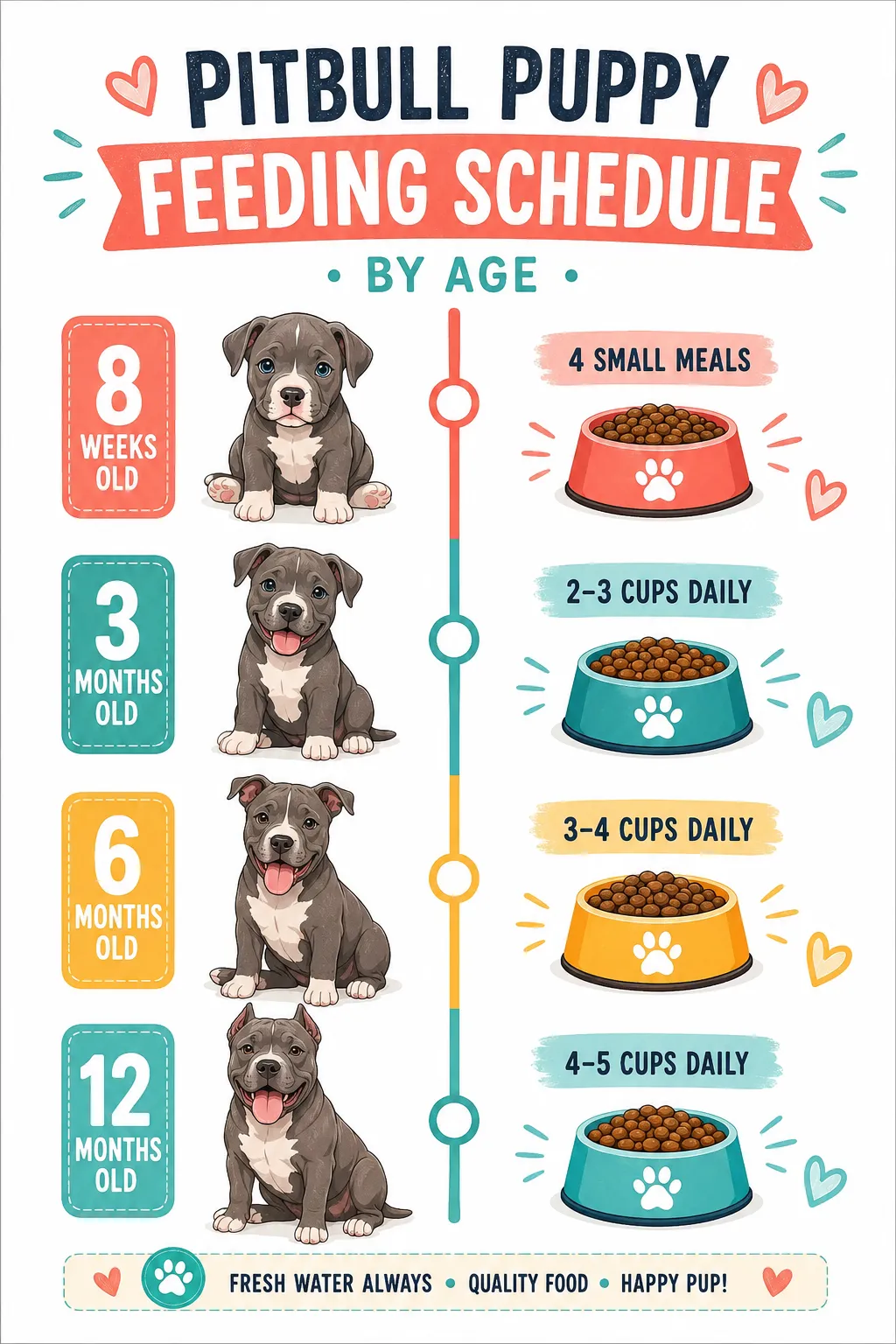
Here’s a detailed age-by-age guide [4] [5]:
| Age | Meals Per Day | Approximate Daily Amount |
|---|---|---|
| 8 – 12 weeks | 4 | 1 to 1.5 cups |
| 3 – 4 months | 3 | 1.5 to 2 cups |
| 5 – 6 months | 3 | 2 to 2.5 cups |
| 7 – 9 months | 2 to 3 | 2.5 to 3 cups |
| 10 – 12 months | 2 | 3 to 3.5 cups |
Important: These are general estimates for a medium-sized pitbull (estimated adult weight 40-65 lbs). Always check the feeding guide on your specific food bag and adjust based on your pup’s body condition. [5]
Pitbulls are a medium-to-large breed, and their growth plates don’t fully close until around 12-18 months. Feeding the right amounts at each stage protects those developing bones and joints. [10]
How Much Should a Pitbull Puppy Eat Per Day?
Most pitbull puppies need between 1 and 3.5 cups of dry kibble per day, depending on their age, weight, and the calorie density of the food you’re using. [4] [5]
The number on the bag is a starting point, not a rule. Every puppy is different. A more active pup may need slightly more. A puppy that’s already looking chunky needs a little less.
How to check if you’re feeding the right amount:
- Run your hands along your pup’s ribs. You should feel them easily but not see them.
- Your puppy should have a visible waist when viewed from above.
- Stools should be firm and well-formed – loose stools can mean overfeeding.
- Weight gain should be steady, not sudden.
If you’re unsure, your vet can do a quick body condition score check at any routine visit. You can also use our vet-approved dog health checklist to track your puppy’s overall condition between appointments.
What’s the Best Food for Pitbull Puppies?
The best food for a pitbull puppy is one that meets AAFCO nutritional standards for “growth” or “all life stages,” has real meat as the first ingredient, and has a controlled calcium-to-phosphorus ratio appropriate for large-breed puppies. [3] [7]
Pitbulls are muscular, active dogs. They need high-quality protein to build lean muscle, healthy fats for energy and coat health, and the right mineral balance to support bone development.
What to look for on the label:
- First ingredient: chicken, beef, lamb, or salmon (a named protein source)
- AAFCO statement saying “formulated for growth” or “all life stages”
- Calcium content between 1.0% and 1.8% (dry matter basis) [1]
- Phosphorus content balanced with calcium at roughly a 1.2:1 ratio [7]
- No excessive fillers like corn syrup or artificial preservatives
Best Puppy Food Brands for Pitbulls
Several well-regarded brands consistently perform well for pitbull puppies. Here are options worth considering:
- Royal Canin Medium Puppy – well-balanced, vet-recommended
- Purina Pro Plan Puppy Large Breed – strong protein profile, widely available
- Blue Buffalo Life Protection Puppy – real meat first, added DHA
- Hill’s Science Diet Puppy Large Breed – controlled calcium levels
- Merrick Grain-Free Puppy – high protein, good for sensitive stomachs
💡 “Large breed puppy” formulas are often the right choice for pitbulls because they have controlled calcium levels that prevent too-fast bone growth. [6]
Do Pitbull Puppies Need Special Nutrition?
Yes, pitbull puppies have specific nutritional needs that differ from toy or small breeds. They’re a muscular, medium-to-large breed with fast early growth, which makes calcium and phosphorus balance especially important. [7]
Too much calcium during the growth phase can actually cause skeletal problems – not just too little. [1] This is why a purpose-formulated puppy food matters more than just picking any “premium” brand.
Can Pitbull Puppies Eat Regular Dog Food?
No – pitbull puppies should not eat regular adult dog food as their primary diet. Adult formulas don’t have the right protein-to-calorie ratio or the specific mineral balance that growing puppies need. [3]
Adult dog food is formulated for maintenance, not growth. It often has lower protein, different fat ratios, and mineral levels that don’t support rapid bone and muscle development in puppies.
The one exception is food labeled “all life stages” – these are formulated to meet both puppy and adult nutritional needs and are acceptable for puppies. [6]
Choose puppy food if: your pitbull is under 12 months old.
Adult food is fine if: your pitbull is over 12-14 months and fully grown.
7 Critical Pitbull Puppy Feeding Mistakes to Avoid
These are the mistakes I see most often – and they’re the ones that do the most damage during the most important growth window of your puppy’s life.
Mistake 1 – Free-Feeding Instead of Measured Meals
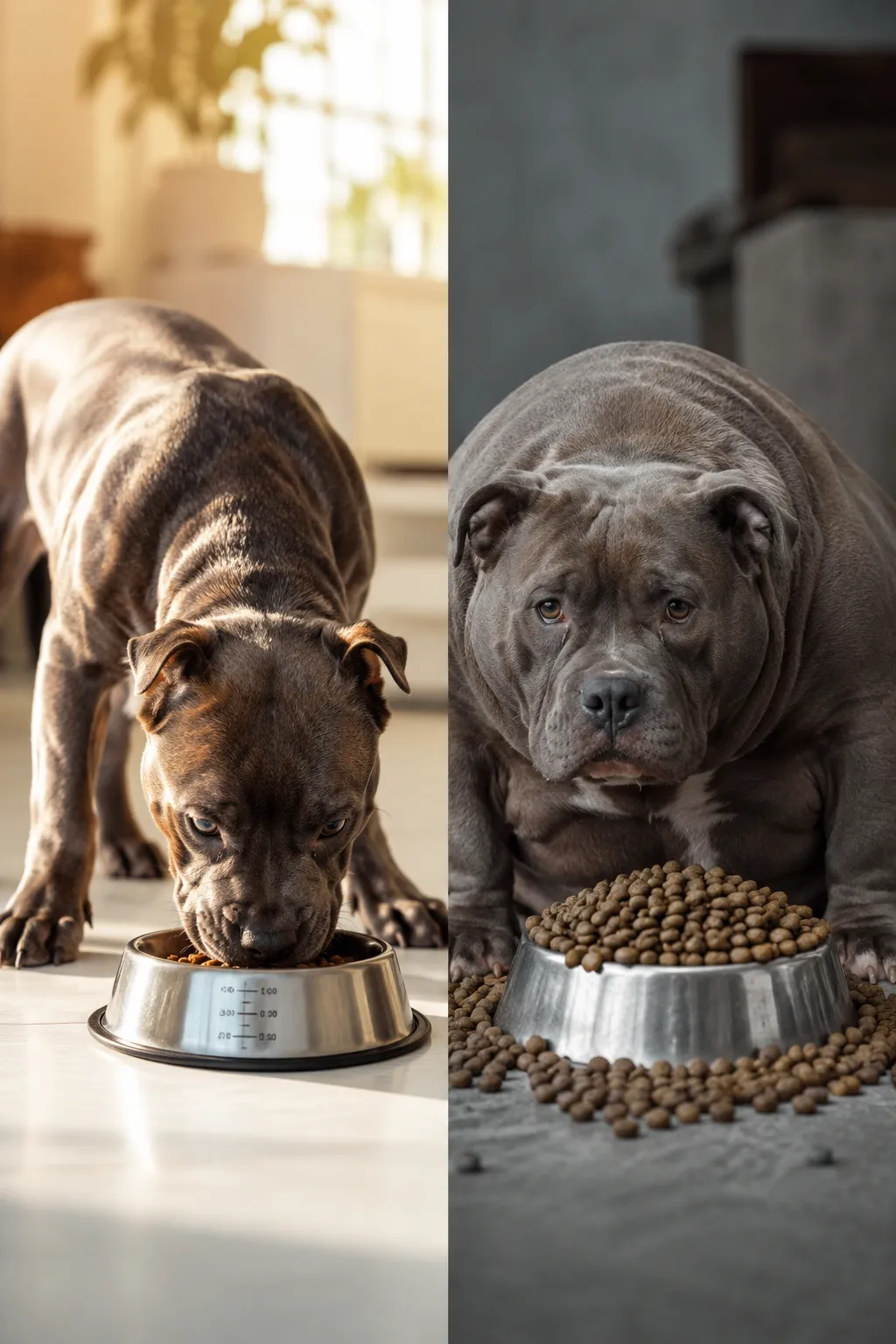
Free-feeding means leaving a full bowl of food out all day. It sounds convenient, but it’s one of the worst things you can do for a growing pitbull.
Without portion control, most puppies overeat. This leads to rapid weight gain, which puts serious stress on developing joints and bones. [10] Measured meals give you control over how much your puppy actually eats.
Mistake 2 – Overfeeding and Allowing Rapid Growth
More food doesn’t mean a bigger, stronger dog. It means a heavier dog with joints that weren’t designed to carry that weight during development.
Rapid growth in puppies – especially medium and large breeds – is directly linked to developmental orthopedic conditions like hip dysplasia and osteochondrosis. [10] [8] Keep your puppy lean. You can always add muscle later through exercise and proper nutrition.
Mistake 3 – Switching to Adult Food Too Early
Some owners switch to adult food at 6 months because their puppy “looks big enough.” This is a mistake.
Pitbulls aren’t fully grown until 12-18 months. Their bones and joints are still developing. Adult food doesn’t provide the right nutrient profile for this stage. [3] Stick with puppy food until at least 12 months, then transition gradually.
Mistake 4 – Adding Calcium Supplements
This is a well-meaning mistake. Owners assume more calcium means stronger bones. But excess calcium during growth actually disrupts normal bone development and can cause skeletal abnormalities. [1] [7]
Unless your vet specifically prescribes a supplement due to a diagnosed deficiency, don’t add calcium to a puppy already eating a complete and balanced food.
Mistake 5 – Using the Wrong Formula
Not all “puppy food” is created equal. A formula designed for small breeds has very different nutrient levels than one designed for large breeds. [6]
For pitbulls, look for a food labeled “large breed puppy” or one that specifically mentions suitability for medium-to-large breeds. These formulas have controlled energy density and mineral ratios that protect growing joints. [3]
Mistake 6 – Inconsistent Meal Times
Skipping meals or feeding at random times disrupts your puppy’s digestive rhythm and makes house training harder. Puppies thrive on routine.
Set specific meal times and stick to them. This also helps you notice quickly if your puppy suddenly loses interest in food – which can be an early sign of illness.
Mistake 7 – Ignoring Treats in the Daily Calorie Count
Treats add up fast. If you’re training your puppy (which you should be – check out this 14-day dog training plan for a great starting point), treats can easily account for 10-20% of daily calories without you realizing it.
Keep treats to no more than 10% of total daily calories. Reduce the main meal slightly on heavy training days to compensate.
What Happens If You Overfeed a Pitbull Puppy?
Overfeeding a pitbull puppy causes rapid weight gain that stresses developing bones and joints, increasing the risk of orthopedic problems like hip dysplasia and elbow dysplasia. [10] [8]
Beyond joint issues, overfeeding can cause:
- Loose, frequent stools
- Bloating and gas
- Obesity that carries into adulthood
- Reduced energy and stamina
- Skin and coat issues from nutritional imbalance
The damage from overfeeding during puppyhood can be permanent. Keeping your pitbull puppy lean during the first 12 months is one of the best long-term health investments you can make. [9]
Pitbull Puppy Not Eating – What Should I Do?
A pitbull puppy that suddenly stops eating is usually dealing with one of a few common causes: stress from a new environment, teething discomfort, a food they don’t like, or an underlying health issue.
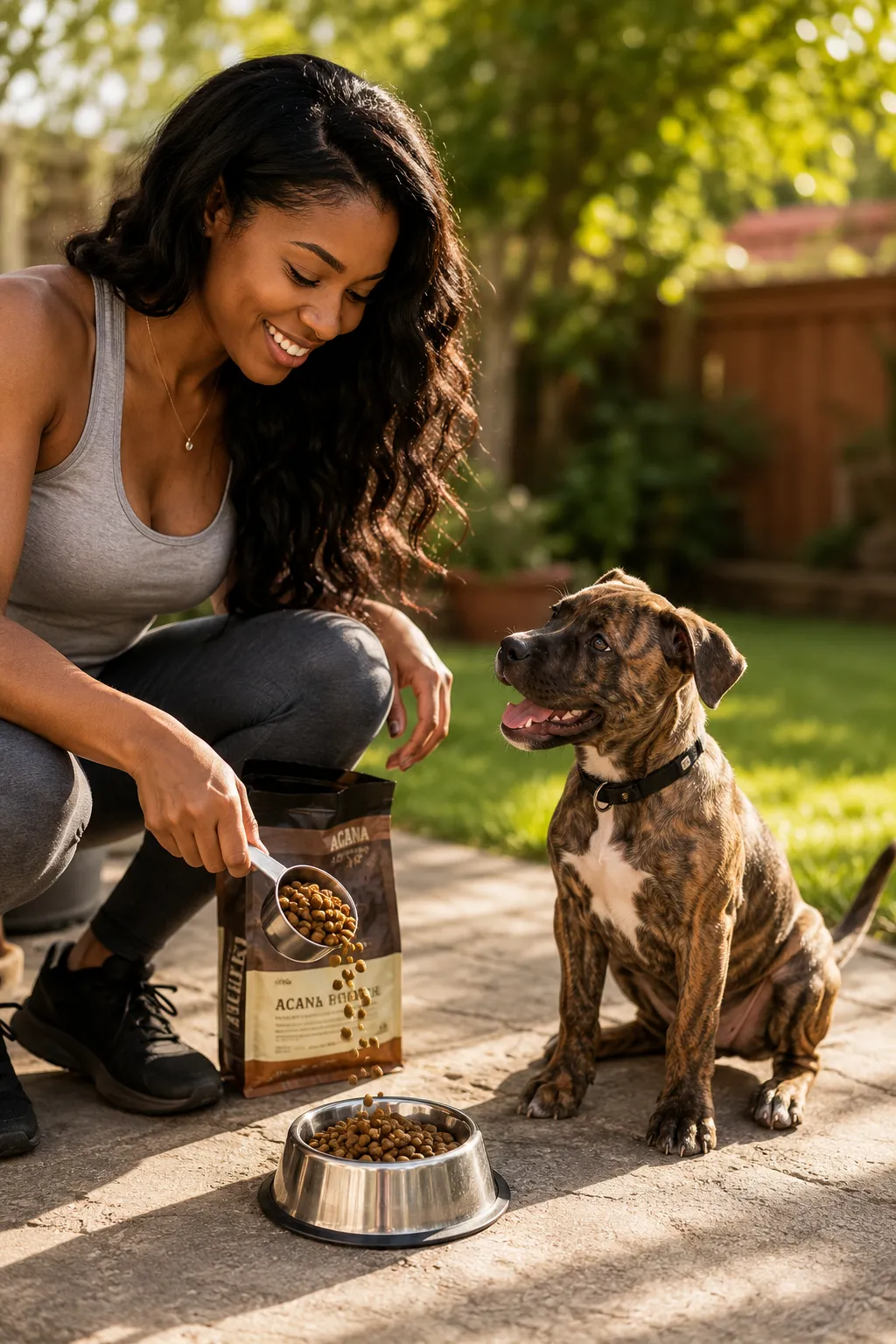
Try these steps first:
- Check that the food hasn’t expired or gone stale
- Reduce distractions during meal time
- Stick to a consistent feeding schedule for 3-4 days
- Try warming the food slightly to enhance the smell
- Avoid adding too many toppers – it can create picky eating habits
If your puppy hasn’t eaten in more than 24-48 hours, or if there are other symptoms like vomiting, lethargy, or diarrhea, call your vet. Puppies can go downhill quickly when they’re not eating.
A new puppy adjusting to a new home often skips a meal or two in the first few days. That’s normal. Our first week with a new puppy survival guide covers what to expect during this transition.
How to Transition a Pitbull Puppy to Adult Food
Transition your pitbull puppy to adult food gradually over 7 to 10 days, starting around 12 months of age. A sudden switch can cause digestive upset, loose stools, and food refusal.
Transition schedule:
- Days 1-3: 75% puppy food, 25% adult food
- Days 4-6: 50% puppy food, 50% adult food
- Days 7-9: 25% puppy food, 75% adult food
- Day 10+: 100% adult food
Watch for loose stools or vomiting during the transition. If your pup reacts badly, slow the process down and give their gut more time to adjust.
For pitbulls that are still lean and muscular at 12 months, some vets recommend waiting until 14-16 months to switch, especially if they’re still very active. Ask your vet what’s right for your specific dog.
Signs Your Pitbull Puppy Is Eating Enough
A well-fed pitbull puppy shows it through their body and behavior. You don’t need a scale every day – just know what to look for.
Good signs your puppy is eating the right amount:
- Ribs are easily felt but not visible
- Visible waist when viewed from above
- Steady, gradual weight gain each week
- Shiny, smooth coat
- Firm, well-formed stools
- Good energy levels and playfulness
- No begging or food obsession between meals
Signs your puppy may not be eating enough:
- Ribs, spine, or hip bones visibly protruding
- Low energy or lethargy
- Dull or dry coat
- Constantly searching for food or eating non-food items
- Slow weight gain over multiple weeks
If you’re seeing signs of nutritional gaps, it’s worth reading about superfoods for dogs that vets recommend to see if there are healthy additions that could help.
Pitbull Puppy Feeding Cost Per Month
Most pitbull puppy owners spend between $40 and $80 per month on quality dry kibble, depending on the brand, bag size, and where they buy it. Premium or prescription diets can push that higher.
Here’s a rough breakdown:
- Budget-friendly brands (Purina Puppy Chow, Pedigree): $30-$45/month
- Mid-range quality (Blue Buffalo, Taste of the Wild): $50-$70/month
- Premium brands (Royal Canin, Hill’s Science Diet): $65-$90/month
- Fresh/raw food services (The Farmer’s Dog, Nom Nom): $100-$180/month
Don’t forget to factor in treats, especially during training. A bag of training treats can add another $10-$20/month.
Buying larger bags is usually more cost-effective per pound, but make sure you can use the food before it goes stale (typically 6 weeks after opening for dry kibble).
When Can Pitbull Puppies Eat Once a Day?
Pitbull puppies should not eat just once a day until they are fully grown adults, typically after 18 months. Even then, twice a day is generally better for digestion and energy levels.
Once-a-day feeding for puppies creates long gaps between meals that can cause blood sugar dips, increase hunger-related anxiety, and may contribute to bloat in deep-chested dogs.
For adult pitbulls, twice daily is the standard recommendation from most vets. Once a day is technically acceptable for healthy adults but isn’t ideal for an active, muscular breed like a pitbull. [9]
FAQ: Pitbull Puppy Feeding Schedule
Q: How many cups of food should a 3-month-old pitbull puppy eat?
A: Around 1.5 to 2 cups of large-breed puppy kibble per day, split across 3 meals. Always check the specific brand’s feeding guide since calorie density varies. [4]
Q: Can I feed my pitbull puppy twice a day instead of three times?
A: Under 6 months, twice daily isn’t enough. Young puppies need 3-4 meals to maintain stable blood sugar and support rapid growth. Twice daily is fine after 6-12 months.
Q: Is wet food or dry food better for pitbull puppies?
A: Dry kibble is generally recommended because it supports dental health and is easier to measure. Wet food can be mixed in for picky eaters or added hydration, but shouldn’t replace kibble entirely.
Q: Should I feed my pitbull puppy a grain-free diet?
A: Not necessarily. The FDA investigated a potential link between grain-free diets and dilated cardiomyopathy in dogs. Unless your vet recommends grain-free due to an allergy, a standard formula with grains is fine.
Q: My pitbull puppy eats too fast. Is that a problem?
A: Yes. Eating too fast increases the risk of bloat and digestive upset. Use a slow-feeder bowl or a puzzle feeder to slow them down.
Q: Can I give my pitbull puppy homemade food?
A: Homemade food can work but requires careful balancing of nutrients. If you want to try it, check out these vet-approved homemade dog food recipes and consult your vet before switching.
Q: How do I know if my pitbull puppy has a food allergy?
A: Common signs include itchy skin, ear infections, loose stools, and vomiting after eating. If you suspect an allergy, talk to your vet about an elimination diet trial.
Q: What human foods are safe to give as occasional treats?
A: Plain cooked chicken, carrots, blueberries, and plain rice are safe options. Avoid grapes, onions, chocolate, and xylitol – these are toxic to dogs.
Q: How long does a bag of puppy food typically last?
A: A 30-lb bag fed to a 4-month-old pitbull puppy eating about 2 cups/day will last roughly 3-4 weeks. Always check the “best by” date and seal the bag tightly after opening.
Q: Should I soak dry kibble for young pitbull puppies?
A: For puppies 8-10 weeks old that are newly weaned, soaking kibble in warm water for 10-15 minutes can make it easier to chew and digest. By 12 weeks most puppies handle dry kibble fine.
Conclusion: Build the Right Pitbull Puppy Feeding Schedule From Day One
Getting your pitbull puppy’s feeding schedule right isn’t complicated – but it does require consistency and attention to detail.
The biggest wins are simple: measure every meal, feed at consistent times, use a large-breed puppy formula, and don’t rush the transition to adult food. Avoid the 7 mistakes outlined above, and you’ll give your puppy the best possible foundation for healthy growth.
Your action steps starting today:
- Choose a high-quality large-breed puppy food that meets AAFCO growth standards
- Set fixed meal times based on your puppy’s age (3-4 meals for under 6 months)
- Measure portions using a measuring cup – no eyeballing
- Monitor body condition weekly using the rib and waist check
- Schedule a vet check at 3-4 months to confirm your pup is on track
- Keep treats under 10% of daily calories
- Plan the transition to adult food at 12-14 months
A well-fed pitbull puppy grows into a lean, muscular, energetic adult dog. And that’s a beautiful thing to be part of. 🐾
For more on keeping your new puppy healthy and happy, check out our new puppy checklist with must-have supplies and tips and learn more about pitbull facts every dog lover should know.
References
[1] Heinze, Nutritional Support Prevention of Orthopedic Disease – https://www.mmhimages.com/production/Creative/1OldBackup/fetch_Backup/CVC_DC_2013_proceedings/data/PDFs/Heinze/Heinze,%20Nutritional%20Support%20Prevention%20of%20Orthopedic%20Disease.pdf
[3] Large Breed Puppy Nutrition – https://www.vetsouth.co.nz/blog/post/94847/large-breed-puppy-nutrition/
[4] Pitbull Puppy Feeding Chart: A Comprehensive Guide To Proper Nutrition – https://www.uahpet.com/blogs/post/pitbull-puppy-feeding-chart-a-comprehensive-guide-to-proper-nutrition
[5] Pitbull Feeding Chart – https://www.caninejournal.com/pitbull-feeding-chart/
[6] Large Breed Puppy Nutrition Guide – https://paws-tales.com/puppy-care/large-breed-puppy-nutrition-guide
[7] Nutritional Considerations For Large And Giant Breed Dogs – https://vcahospitals.com/know-your-pet/nutritional-considerations-for-large-and-giant-breed-dogs
[8] Filepv0510 Nutrition – https://vetfolio-vetstreet.s3.amazonaws.com/mmah/e6/72e6a0e04344e1a1036fa4f52e03ee/filePV0510_Nutrition.pdf
[9] Pitbull Feeding Chart – https://www.pupvine.com/pitbull-feeding-chart/
[10] Developmental Orthopedic Conditions – https://www.purinainstitute.com/centresquare/therapeutic-nutrition/developmental-orthopedic-conditions