Last updated: July 24, 2026
Quick Answer: A DIY paracord dog collar is a handmade collar woven from 550 paracord rope using simple knotting patterns like the cobra weave. Most beginners can finish one in under two hours using about 38 feet of paracord, a buckle, a D-ring, scissors, and a lighter. The result is a strong, customizable, and affordable collar that often outlasts store-bought options.
Key Takeaways
- 🐶 A basic diy paracord dog collar costs roughly $3-$6 in materials, compared to $15-$40 for a quality store-bought collar.
- 🪢 The cobra weave (also called the Solomon bar) is the best starting pattern for absolute beginners.
- 📏 Always measure your dog’s neck and add 1-2 inches for a safe, comfortable fit.
- 💧 Paracord is water-resistant and dries quickly, making it great for active or outdoor dogs.
- ✂️ You need about 38 feet of 550 paracord for a standard medium-sized dog collar. [7]
- 🔒 Always use a quick-release buckle so you can remove the collar fast in an emergency.
- 🏷️ You can add a D-ring to any paracord collar to attach an ID tag or leash.
- ⚠️ Inspect your collar monthly for fraying, loose knots, or hardware wear.
- 🎨 Paracord comes in hundreds of colors, so you can fully personalize the look.
- 🆘 In a true emergency, paracord can be unraveled to access the inner strands for use as cordage.
What Is Paracord and Why Use It for Dog Collars?
Paracord (short for parachute cord) is a lightweight nylon rope originally used in parachute suspension lines. For dog collars, crafters use Type III 550 paracord, which has a minimum breaking strength of 550 pounds and contains 7-9 inner nylon strands inside a braided outer sheath. [10]
It’s an excellent collar material because it’s:
- Strong – far stronger than most nylon webbing collars at the same price point
- Lightweight – dogs barely notice it
- Water-resistant – it dries fast after swimming or rain
- Customizable – available in hundreds of solid colors and patterns
- Affordable – a 100-foot spool costs around $8-$12 at most craft stores
The inner strands also serve a practical purpose. In a survival situation, you can unravel the collar to access several feet of usable cordage. That’s a real bonus if you’re a hiker or camper. If you love outdoor adventures with your dog, check out this dog camping checklist for more gear ideas.
How to Measure Your Dog’s Neck for a Paracord Collar
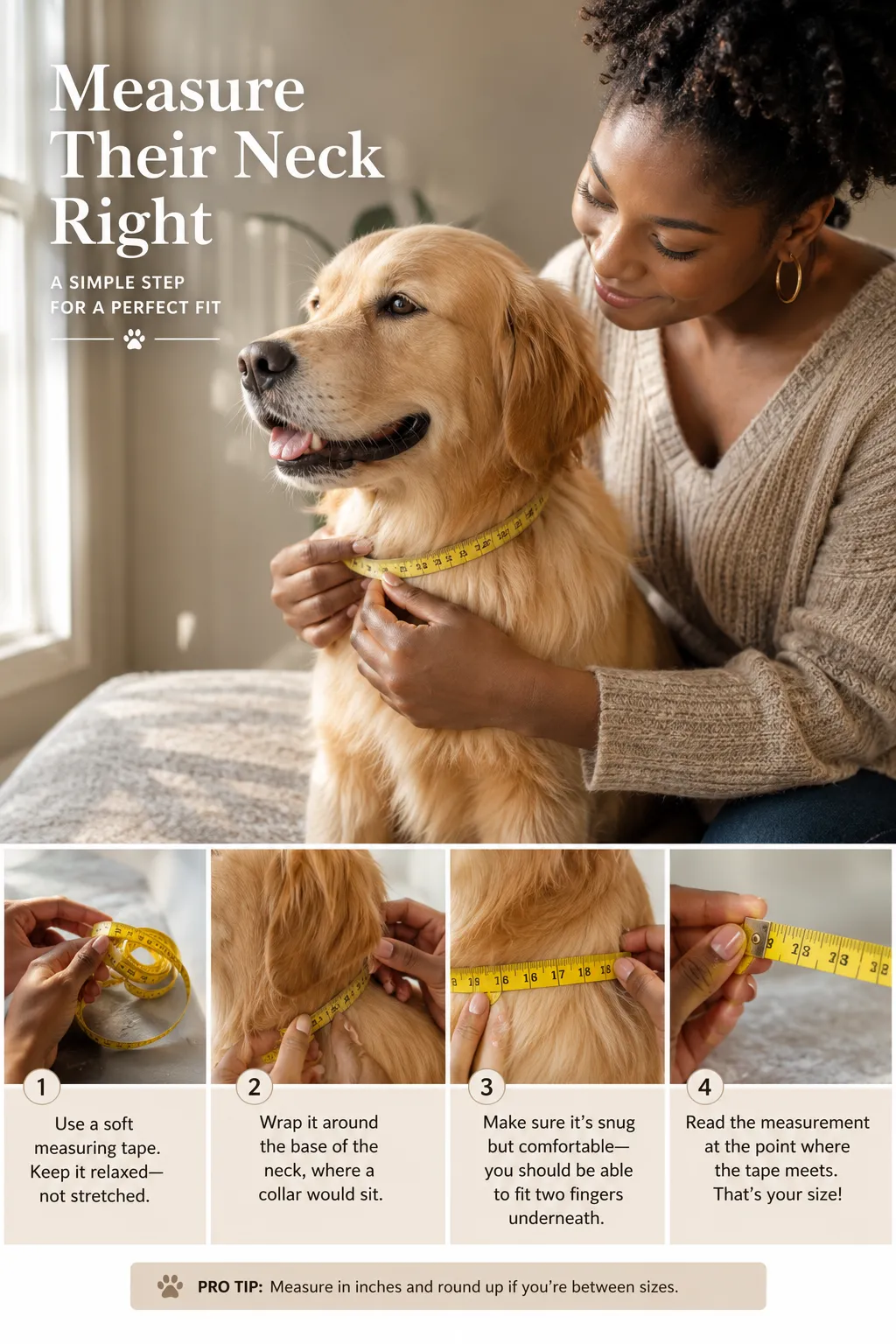
Accurate measurement is the single most important step before you start weaving. A collar that’s too tight can restrict breathing; one that’s too loose can slip off. [6]
Here’s how to measure correctly:
- Use a soft fabric measuring tape (or a piece of string you then measure against a ruler).
- Wrap it around the base of your dog’s neck where the collar will sit.
- Keep two fingers between the tape and your dog’s neck – this ensures a safe, comfortable fit.
- Write down that number. Add 1 inch for small dogs and 2 inches for medium to large dogs.
Quick size reference:
| Dog Size | Neck Circumference | Finished Collar Length |
|---|---|---|
| Small (under 20 lbs) | 8-12 inches | 10-14 inches |
| Medium (20-60 lbs) | 12-16 inches | 14-18 inches |
| Large (over 60 lbs) | 16-22 inches | 18-24 inches |
Always recheck the fit once the collar is finished. You should be able to slide two fingers under it easily.
What Size Paracord for Small Dogs?
For small dogs, use standard 550 paracord (the most common type) but plan for a shorter finished length. A small dog collar typically needs around 20-25 feet of paracord, compared to 38 feet for a medium dog. [7]
Choose X if:
- Small dog (under 10 lbs): Use 550 paracord in a single-strand cobra weave. The collar will be thinner and lighter on a tiny neck.
- Toy breeds like Chihuahuas or Yorkies: Consider a single-strand design rather than a double cobra, which can feel bulky. Learn more about small breed needs in our guide to Yorkie personality traits.
- Puppies: Skip paracord collars until they reach adult size – puppies grow fast and you’ll be remaking it within weeks.
Best Paracord Weaving Patterns for Beginners
The 9 patterns below range from super simple to mildly challenging. Every one of them is achievable on your first try. [8] [9]
1. Cobra Weave (Solomon Bar)
The most popular beginner pattern. Two working strands weave back and forth over two core strands. It creates a flat, wide collar with a clean look.
2. Half Cobra (Single Pass)
Exactly like the cobra but you only pass the knot from one side. The result is a spiral twist pattern – great for a unique look with half the complexity.
3. King Cobra (Double Cobra)
You complete a full cobra weave first, then weave a second layer over the top. The collar is thicker and more padded. [3]
4. Fishtail Weave
Two strands alternate crossing over each other in a simple over-under pattern. It looks braided and works up quickly.
5. Box Knot (Square Knot)
Four strands form a square cross-section collar. It’s slightly rounder and more cushioned than the flat cobra.
6. Diamond Braid
Four or more strands braided in a diagonal pattern. Looks professional and is surprisingly easy once you get the rhythm.
7. Two-Color Cobra
Same as the standard cobra but using two different colored strands. The color alternates with each pass, creating a striped effect.
8. Trilobite Weave
A slightly more decorative variation of the cobra with an extra pass that adds a raised center ridge. Great for a second project.
9. Personalized Name Collar
Using a base cobra weave and contrasting color thread, you can spell out your dog’s name along the collar. [2] This takes patience but the result is genuinely impressive.
Pro tip: Always practice a new pattern on a short 12-inch test piece before committing to a full collar length. It saves paracord and frustration.
How to Make a DIY Paracord Dog Collar Step by Step
This walkthrough covers the cobra weave, the best diy paracord dog collar pattern for beginners. [1] [7]
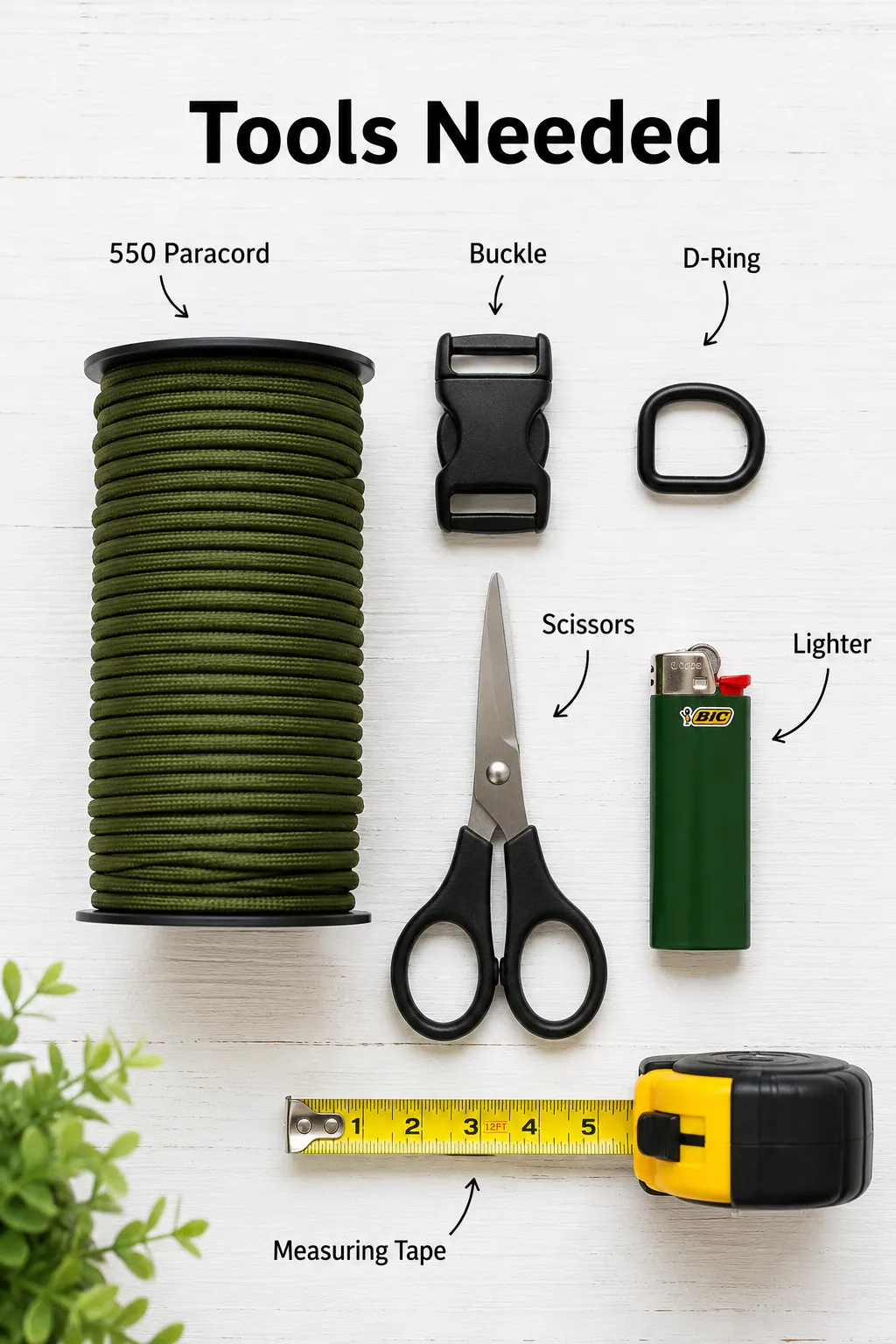
What you need:
- 38 feet of 550 paracord (for a medium dog)
- 1 side-release plastic buckle (3/4 inch wide)
- 1 D-ring (3/4 inch)
- Scissors
- A lighter (to melt and seal cord ends)
Steps:
- Cut your cord. Cut two lengths: one at 28 feet (working cord) and one at 10 feet (core cord).
- Set up the buckle. Fold the core cord in half. Loop both ends through the female end of the buckle. Thread the ends through the D-ring, then through the male end of the buckle.
- Attach the working cord. Find the midpoint of your 28-foot working cord. Attach it to the core strands just below the buckle with a lark’s head knot.
- Start the cobra weave. Take the right working strand, pass it over the core strands and under the left working strand. Then take the left strand, pass it under the core strands and up through the loop on the right. Pull tight.
- Alternate sides. Repeat from the left side now. Continue alternating right-left until you reach your desired collar length.
- Finish and seal. Thread the working cord ends through the last few knots to lock them. Trim any excess close to the collar. Use the lighter to carefully melt the cut ends so they don’t fray.
- Test the fit. Clip the buckle and check the length against your dog’s neck measurement.
For a helpful visual walkthrough, the Sea Lemon YouTube tutorial covers small, medium, and large sizes clearly. [4]
How to Attach a Buckle to a Paracord Dog Collar
The buckle is what holds everything together, so getting this step right matters. Use a side-release (quick-release) buckle rated for your dog’s size – most craft suppliers label them by width (3/4 inch for small-medium dogs, 1 inch for large dogs). [1]
The key steps:
- Thread the core cords through the female (socket) end of the buckle first.
- Pass both core ends through the D-ring before threading through the male (plug) end.
- This keeps the D-ring centered and prevents it from sliding around.
- Always test the buckle by clipping and unclipping it several times before you start weaving.
Common mistake: Skipping the D-ring entirely. Without it, you have nowhere to attach a leash or ID tag. Always include a D-ring, even if you’re making a decorative collar.
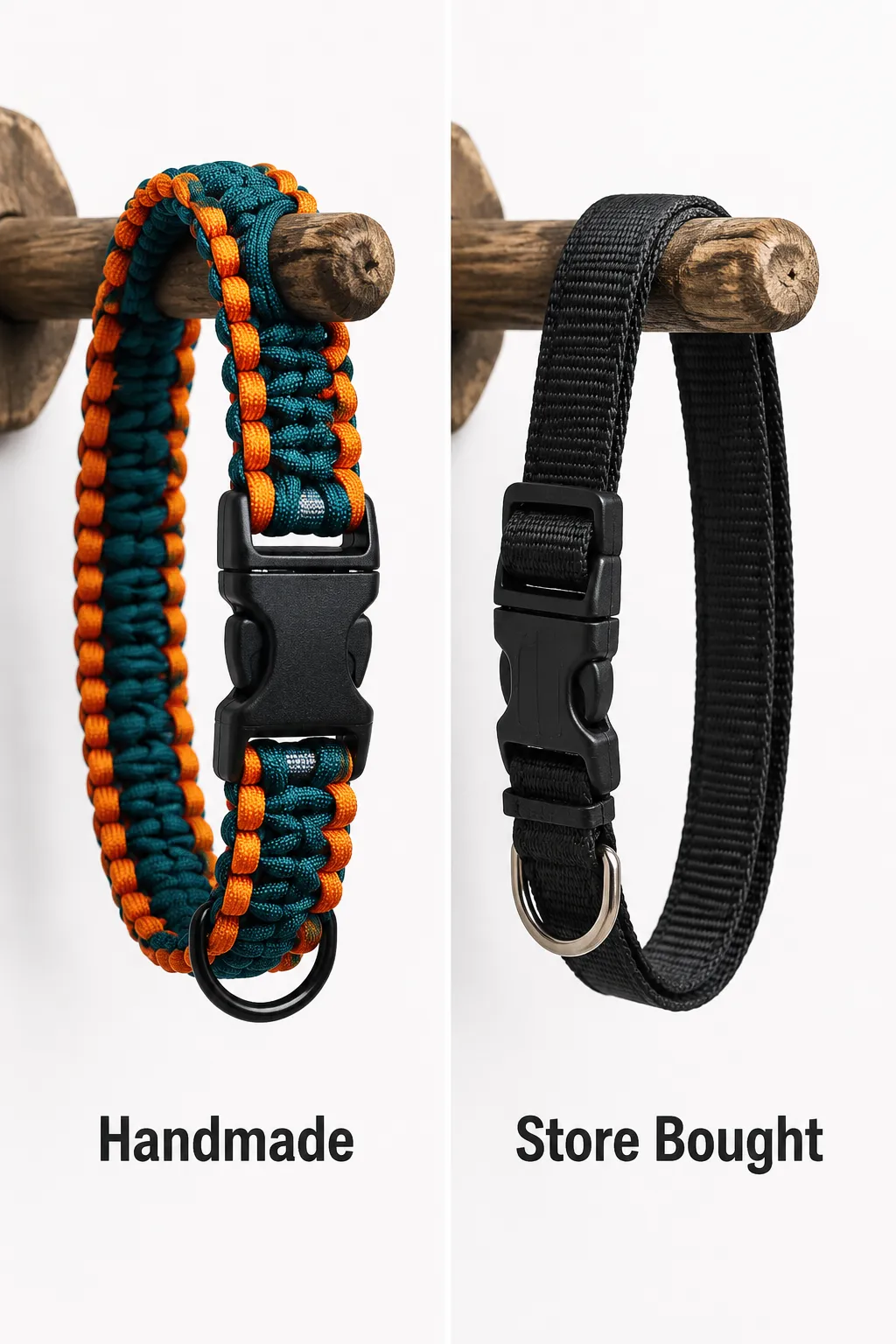
Paracord Dog Collar vs Store-Bought Collars
A handmade diy paracord dog collar competes well against most store-bought options in both strength and durability. [10] Here’s how they compare at a glance:
Paracord collar advantages:
- Much cheaper per collar ($3-$6 vs $15-$40)
- Fully customizable colors and patterns
- Stronger tensile strength than basic nylon webbing
- Water-resistant and quick-drying
- Can be unraveled for emergency cordage
Store-bought collar advantages:
- Faster to acquire (no crafting time)
- Reflective strips and LED options available
- Professionally tested for specific weight ratings
- Easier to find in exact sizes
Bottom line: For everyday use on a healthy adult dog, a well-made paracord collar is a great choice. For dogs with specific medical needs (like trachea issues), always ask your vet before switching collar types.
Can Paracord Collars Get Wet?
Yes – paracord handles water very well. The nylon construction is water-resistant, not waterproof, meaning it will absorb a small amount of moisture but dries quickly. It won’t rot, stiffen, or develop mildew the way some leather collars can.
After swimming or rain, just shake off excess water and let the collar air dry. Avoid leaving it soaking in standing water for extended periods, as the metal hardware (D-ring and buckle) can develop surface rust over time if it’s a lower-quality zinc alloy.
Best practice: Rinse the collar with fresh water after ocean swims (salt accelerates metal corrosion). If your dog swims daily, consider stainless steel hardware instead of standard zinc.
Paracord Collar Safety Concerns for Dogs
Paracord collars are generally safe, but there are a few things to watch for. [6]
Key safety rules:
- Always use a quick-release buckle – never a fixed knot that requires scissors to remove.
- Check the two-finger rule every time you put the collar on.
- Never leave a paracord collar on an unsupervised dog in a crate – any collar can become a snag hazard.
- Inspect the collar monthly for fraying knots, cracked buckle plastic, or bent D-rings.
- Replace the collar if you notice any structural damage.
Who should NOT use paracord collars:
- Dogs with brachycephalic (flat-faced) breeds prone to breathing issues – use a harness instead.
- Dogs recovering from neck injuries.
- Very young puppies (under 3 months).
If your dog tends to pull hard on the leash, pair the collar with a no-pull harness. See our guide on leash training a dog that pulls for help with that.
How Long Does a DIY Paracord Collar Last?
A well-made paracord collar typically lasts 2-4 years with regular use and basic maintenance. [10] The cord itself is very durable, but the buckle and D-ring hardware are usually the first components to wear out.
Factors that affect lifespan:
- Quality of the buckle (cheap plastic buckles crack faster)
- How often the dog swims or gets wet
- Whether the collar is removed during crate time
- The dog’s activity level and pulling habits
Signs it’s time to replace:
- Fraying or fuzzing on the outer cord sheath
- Buckle that doesn’t click firmly into place
- Rust spots on the D-ring
- Knots that feel loose when you tug the collar
Cheapest Way to Make Paracord Dog Collars
The most budget-friendly approach is to buy paracord in bulk spools (100 feet or more) rather than pre-cut packs. A 100-foot spool typically costs $8-$12 and makes 2-3 medium collars, bringing the per-collar material cost down to roughly $3-$5. [9]
Cost breakdown for one medium collar:
- Paracord (38 feet from a bulk spool): ~$3.00
- Side-release buckle: ~$0.75-$1.50
- D-ring: ~$0.50
- Total: roughly $4-$5 per collar
Buy buckles and D-rings in multi-packs from craft stores or online suppliers – they’re significantly cheaper per unit that way.
If you enjoy making DIY projects for your dog, you might also love these braided dog toys you can make in minutes or even a DIY dog bandana to complete the look.
Paracord Dog Collar Emergency Uses
One of the most practical features of a paracord collar is what’s inside it. Each foot of 550 paracord contains 7-9 inner nylon strands. A standard 16-inch collar holds roughly 8-10 feet of woven paracord, giving you access to 56-90 feet of inner strand cordage when unraveled.
Real emergency uses:
- Improvised leash if yours breaks on a hike
- Temporary splint tie for an injured limb
- Securing gear in a pinch
- Emergency tourniquet material (inner strands)
This is especially useful for hiking dogs and their owners who spend time on trails far from help.
How to Add an ID Tag to a Paracord Collar
The D-ring you included during construction is your attachment point. Standard split-ring ID tags clip directly onto the D-ring just like they would on any store-bought collar.
Tips for ID tags on paracord collars:
- Use a stainless steel or brass tag – they last longer than aluminum.
- Make sure the D-ring is at least 3/4 inch wide so standard tag rings clip on easily.
- Consider a silicone tag silencer (a rubber sleeve around the tag) to prevent the metal-on-metal jingling sound.
- Engrave both your dog’s name and your phone number on the tag.
For extra security, you can also embroider or weave your contact info directly into a personalized collar design. [2]
Are Paracord Collars Comfortable for Dogs to Wear?
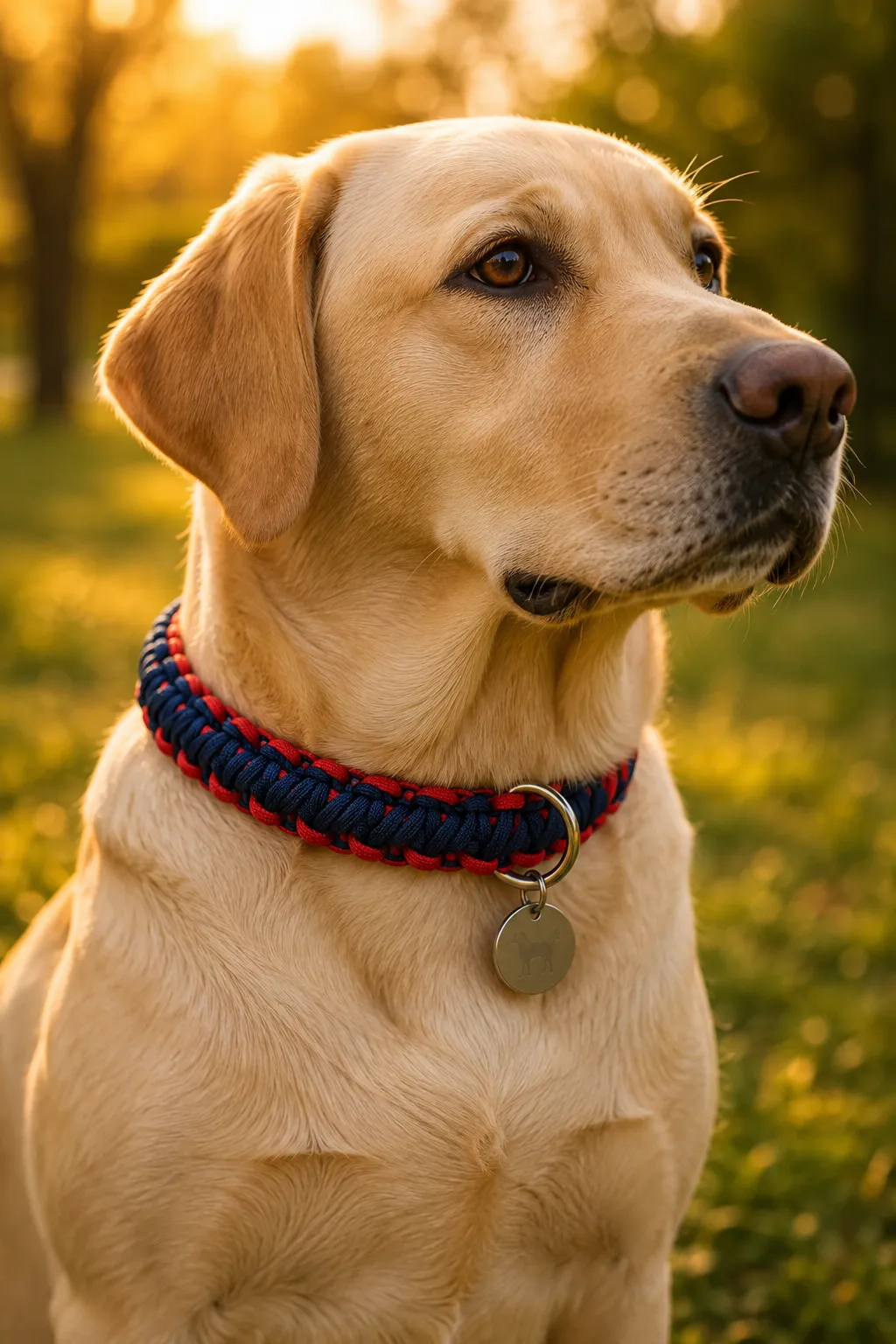
Yes – most dogs adapt to paracord collars quickly because the woven cord is smooth, flexible, and lightweight. The cobra weave pattern creates a flat surface that sits evenly against the neck without bunching or twisting.
Comfort factors to consider:
- Width: A wider weave (king cobra or double cobra) distributes pressure more evenly for larger dogs.
- Texture: Freshly made collars can feel slightly stiff. After a day or two of wear, the cord softens and conforms to the dog’s neck.
- Weight: Paracord collars are lighter than leather collars of the same size, which most dogs prefer.
Watch your dog for the first few days. If they scratch at the collar constantly or seem irritated, check the fit and inspect for any rough cord ends that weren’t properly melted and sealed.
Frequently Asked Questions
Q: How much paracord do I need for a dog collar?
A: About 38 feet of 550 paracord for a medium dog collar using the cobra weave. Small dogs need roughly 20-25 feet, and large dogs may need up to 50 feet. [7]
Q: What type of paracord is best for dog collars?
A: Type III 550 paracord is the standard choice. It’s strong, widely available, and comes in hundreds of colors. Avoid decorative or “nano” paracord – it’s too thin to hold up.
Q: Can I wash a paracord dog collar?
A: Yes. Hand wash with mild soap and warm water, then air dry. Avoid machine drying – heat can weaken the nylon and warp plastic buckles.
Q: Is a paracord collar safe if my dog chews on it?
A: No collar is safe for a dog that actively chews it. If your dog chews the collar, remove it when unsupervised and redirect the chewing behavior. See our tips on how to stop dogs from chewing everything.
Q: How do I stop the paracord ends from fraying?
A: Melt the cut ends with a lighter immediately after trimming. Hold the flame close but don’t touch it to the cord – the heat alone is enough to fuse the nylon fibers.
Q: Can I make a paracord collar without a buckle?
A: Technically yes, using a slip knot design – but it’s not recommended for safety reasons. Always use a quick-release buckle so you can remove the collar fast if it gets snagged.
Q: What’s the difference between cobra weave and king cobra weave?
A: King cobra is a cobra weave done twice – you weave a second layer of cobra knots over the first. The result is a thicker, more padded collar. [3]
Q: How do I make a paracord collar for a puppy?
A: Wait until your puppy is at least 3-4 months old and measure frequently – puppies grow fast. Use a shorter length and plan to remake the collar as they grow.
Q: Can I add a name plate to a paracord collar?
A: Yes. Small slide-on metal name plates designed for collars work well with paracord collars. Thread the collar through the name plate before attaching the buckle.
Q: Do I need any special tools?
A: No special tools required. Scissors, a lighter, and a ruler are all you need. A paracord jig (a small board with pegs) can help keep tension even, but it’s optional.
Conclusion
Making your own diy paracord dog collar is one of the most satisfying and practical dog projects you can tackle. It costs a fraction of store-bought collars, lasts for years, and gives you full control over the fit, color, and style.
Your next steps:
- Measure your dog’s neck today using the two-finger method.
- Pick up a 100-foot spool of 550 paracord and a pack of buckles from a craft store or online.
- Start with the cobra weave on a short test piece before making the full collar.
- Once you’re comfortable, try a two-color design or the king cobra for your next project.
The first collar might take you 90 minutes. By your third one, you’ll be done in under 30. And every time your dog trots out the door wearing something you made with your own hands, it feels pretty great.
If you enjoy making things for your dog, explore more DIY fun with these braided dog toys or treat your pup to some homemade dog treats after all that crafting.
References
[1] Make A Paracord Dog Collar – https://www.instructables.com/Make-A-Paracord-Dog-Collar/?utm_source=openai
[2] Personalized Paracord Dog Collar – https://www.instructables.com/Personalized-Paracord-Dog-Collar/?utm_source=openai
[3] Paracord Dog Collar Tutorial – https://www.instructables.com/Paracord-dog-collar-tutorial/?utm_source=openai
[4] Watch (Sea Lemon DIY Paracord Dog Collar Video) – https://www.youtube.com/watch?v=7OBeUnFht0g&utm_source=openai
[5] Diy Biothane Zeus Dog Collar Kit – https://www.paracord.shop/diy-biothane-zeus-dog-collar-kit?utm_source=openai
[6] Paracord Dog Collar Halti Collar – https://www.instructables.com/Paracord-Dog-Collar-Halti-Collar/?utm_source=openai
[7] How To Make A Paracord Dog Collar – https://www.instructables.com/How-To-Make-A-Paracord-Dog-Collar/?utm_source=openai
[8] Paracord Dog Collar Patterns – https://auth.recode.net/patterns/paracord-dog-collar-patterns.html?utm_source=openai
[9] Diy Paracord Dog Collar – https://factorydirectcraft.com/factorydirectcraft_blog/diy-paracord-dog-collar/?utm_source=openai
[10] Make Paracord Dog Collar – https://diyprojects.com/make-paracord-dog-collar/?utm_source=openai